
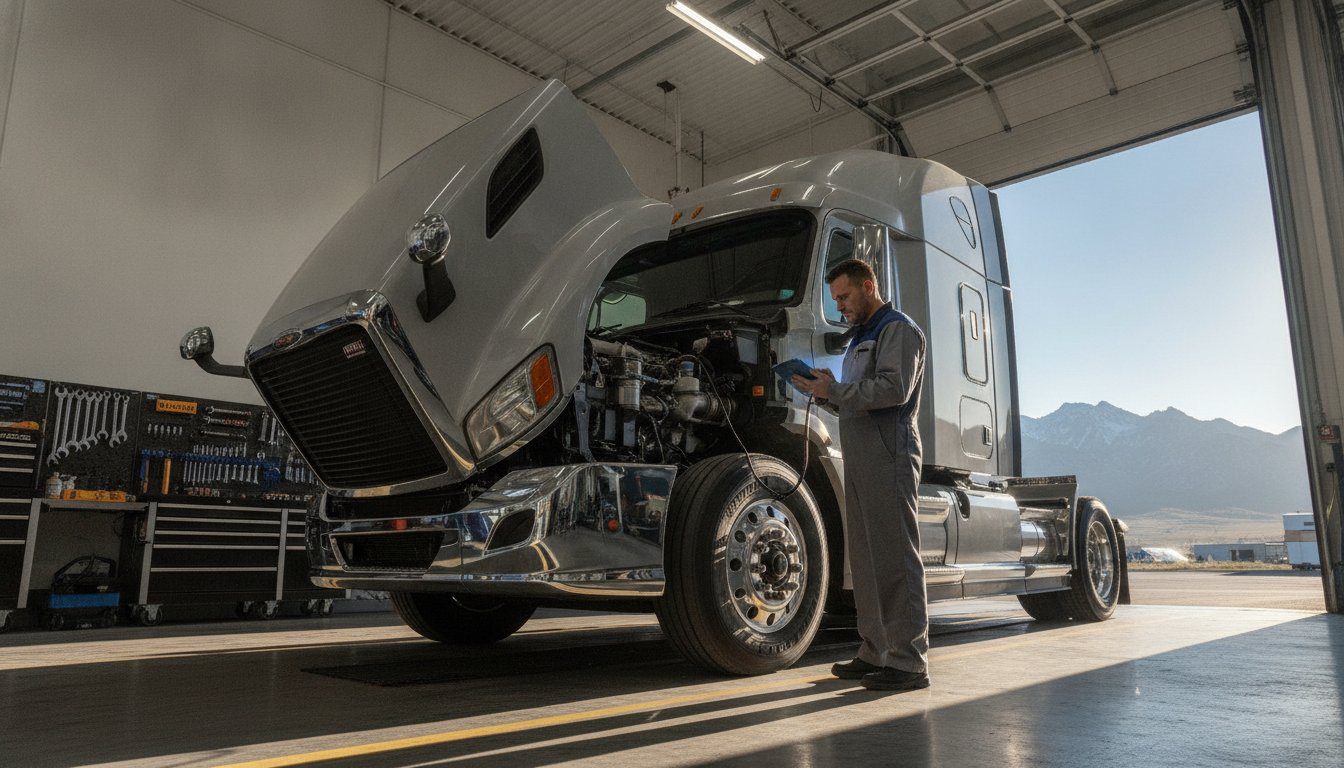
Diesel Engine Power Loss Diagnosis in Utah: Restoring Your Truck’s Performance

Imagine you’re hauling a heavy load up Parley’s Canyon when your engine suddenly feels like it’s fighting through molasses. This isn’t just an inconvenience; it’s a direct threat to your bottom line. When your truck struggles on steep grades, a professional diesel engine power loss diagnosis utah specialists perform is the only reliable way to stop the guesswork. You’ve likely felt the sting of unplanned downtime or the frustration of replacing expensive sensors that didn’t actually solve the underlying issue.
We understand that your fleet needs to be at full strength to remain profitable, especially with diesel prices averaging $4.662 per gallon in Utah this July. In this article, you’ll discover the root causes of performance drops, including the fuel injection issues that account for roughly 40% of power loss cases. We’ll outline the specialized diagnostic steps used to identify failure points quickly and accurately. You’ll learn how a precise, warrantied repair can restore your factory power levels and ensure you meet the latest 2026 state emissions requirements without wasting resources on unnecessary parts.
Key Takeaways
- Learn how to interpret exhaust smoke colors as diagnostic indicators to distinguish between fuel, air, and mechanical failures.
- Discover why a professional diesel engine power loss diagnosis utah specialists perform is essential for managing the thermal stress of high-altitude mountain hauling.
- Identify the “Big Three” restrictions in your fuel, air, and exhaust systems that commonly cause sluggish performance on steep Utah grades.
- Understand how advanced OEM-level scan tools and dynamic pressure testing eliminate the need for expensive and inaccurate DIY guesswork.
- Explore the benefits of specialized diesel repair for light, medium, and heavy-duty fleets to ensure long-term reliability and factory-level power.
Recognizing the Red Flags: Symptoms of Diesel Power Loss
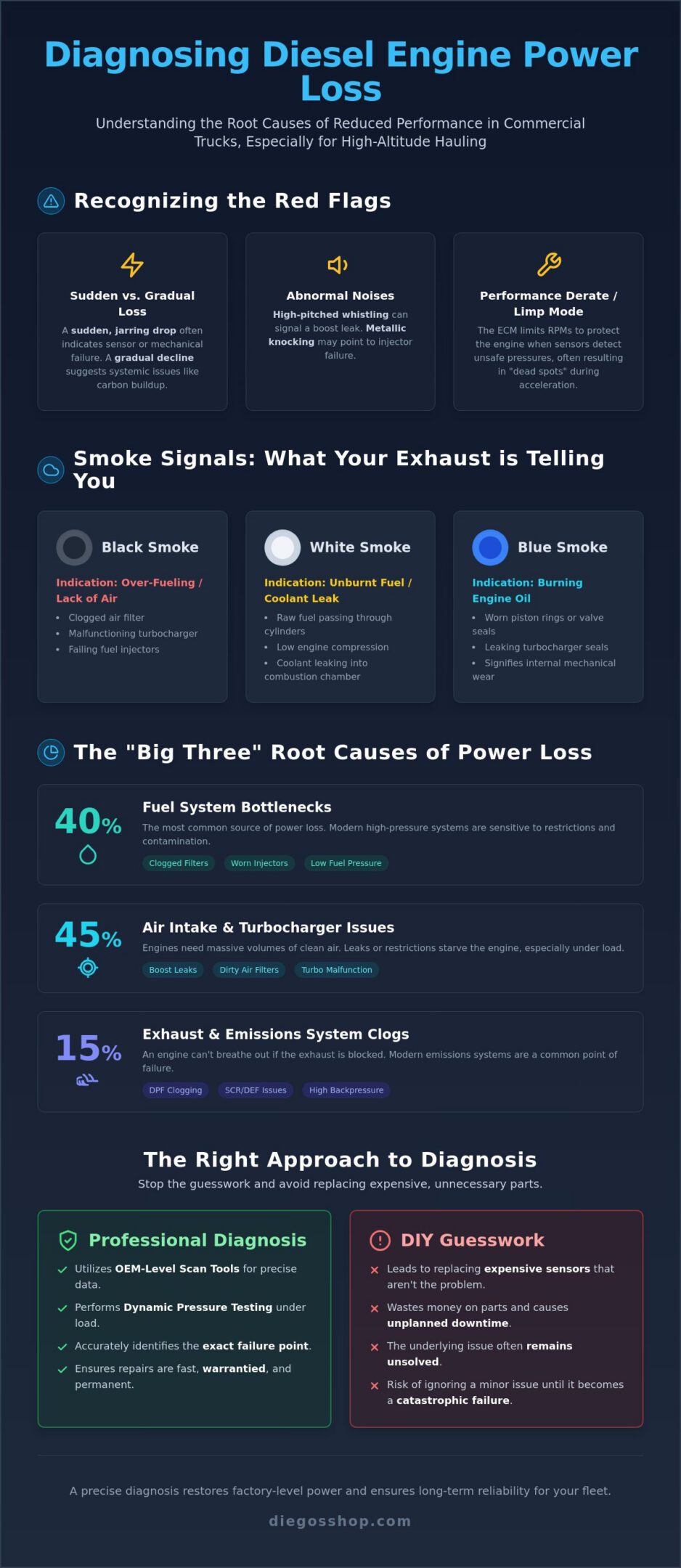
Identifying a drop in performance early can be the difference between a minor sensor replacement and a $25,000 out-of-frame rebuild. Your truck communicates its internal health through various signals, but you have to know how to interpret them. The first step in a professional diesel engine power loss diagnosis utah specialists perform is determining the timeline of the failure. A sudden, jarring loss of power usually points to a mechanical failure like a ruptured intercooler boot or a failed sensor. Conversely, a gradual decline suggests a systemic issue, such as carbon buildup in the intake or a degrading fuel pump.
Abnormal noises also provide critical clues. A high-pitched whistling under load often indicates a boost leak, while a rhythmic metallic knocking might suggest an injector is failing to atomize fuel correctly. Don’t ignore a steady drop in fuel economy, either. When your engine loses efficiency, it works harder to maintain speed, burning more of that $4.662 per gallon diesel fuel while delivering less torque to the wheels.
Smoke Signals: What Your Exhaust is Telling You
The color of your exhaust smoke is a direct window into the combustion chamber. Black smoke is the most common and typically indicates an “over-fueling” condition where there isn’t enough air to burn the injected diesel. This often stems from a clogged air filter or a malfunctioning turbocharger. White smoke is more concerning; it often means raw, unburnt fuel is passing through the cylinders, or coolant is leaking into the combustion path. Blue smoke is a definitive sign of oil consumption. It suggests that engine oil is bypassing the piston rings or leaking through turbocharger seals, signaling internal mechanical wear that requires immediate attention.
Performance Hesitation and Limp Mode
Modern diesel engines are governed by an Engine Control Module (ECM) that acts as a fail-safe. If sensors detect boost pressures or fuel rail pressures that fall outside of safe parameters, the ECM will trigger “limp mode.” This safety-related power derate limits your RPMs and speed to protect the turbo and internal components from catastrophic damage. You might also notice “dead spots” during acceleration, especially when the transmission shifts. These hesitations occur when the ECM receives conflicting data from the mass airflow or manifold pressure sensors. Industry data from 2026 indicates that approximately 40% of these power loss cases are tied directly to the fuel injection system. Identifying these triggers accurately ensures your repair is fast, effective, and permanent.
The Big Three: Fuel, Air, and Exhaust Restrictions
Diesel engines are built for durability, but they rely on a precise balance of fuel, air, and exhaust flow to generate torque. When any of these three systems becomes restricted, performance drops instantly. A professional diesel engine power loss diagnosis utah experts provide often reveals that a single clogged filter can mimic the symptoms of a catastrophic mechanical failure. Identifying the exact bottleneck requires a systematic approach to avoid the expense of unnecessary parts. If your truck is struggling, scheduling routine fleet maintenance can often catch these restrictions before they lead to a roadside breakdown.
Fuel System Bottlenecks
Modern common-rail fuel injection systems operate under extreme pressures and require surgical precision to function. Industry analysis from 2026 indicates that approximately 40% of diesel power loss cases originate within the fuel system. We begin by testing fuel rail pressure against manufacturer specifications to ensure the lift pump and high-pressure pump are delivering adequate volume. Clogged fuel filters or contaminated diesel supplies are frequent culprits that starve the engine. When injectors become worn or fouled, they fail to atomize fuel correctly, leading to incomplete combustion and a noticeable loss of pulling power.
Air Intake and Turbocharger Integrity
Your engine needs a massive volume of clean air to match the fuel delivery, especially under heavy load. Restricted air intake is responsible for roughly 25% of power loss issues. We inspect the air filters and charge air coolers for blockages or debris. Boost leaks are another common problem; even a small crack in the intercooler piping or a loose clamp in the intake manifold can cause a significant drop in manifold pressure. Additionally, turbocharger malfunctions account for about 20% of cases. We evaluate turbocharger vane movement and wastegate operation to ensure the system provides the required boost throughout the RPM range.
Exhaust Backpressure and Emissions Systems
An engine is essentially a large air pump. If it cannot breathe out, it cannot breathe in. Saturated Diesel Particulate Filters (DPF) create excessive backpressure that chokes engine output and forces the ECM to limit power. Carbon buildup in the Exhaust Gas Recirculation (EGR) valve further complicates this by recirculating soot back into the intake. It’s important to remember that tampering with these systems is illegal under Utah law. Instead, professional cleaning or replacement is the only way to restore flow. A full DPF replacement can cost between $3,000 and $8,000, which makes identifying the root cause of soot accumulation critical to protecting your investment.
The Utah Factor: Altitude and Load Challenges
Operating a diesel truck in Utah presents environmental challenges that sea-level diagnostics simply don’t account for. When you’re pulling a full trailer up the 6% grades of Parleys Canyon or navigating the high passes of Spanish Fork Canyon, your engine faces a unique combination of thin air and extreme thermal stress. A specialized diesel engine power loss diagnosis utah experts provide must account for these regional variables to ensure your truck remains reliable under pressure. Performance issues that seem minor on flat ground quickly become magnified when elevation and load come into play.
Utah’s high desert climate also introduces seasonal variables like winter-blend fuels. While these blends are essential for preventing fuel gelling during Wasatch Front winters, they possess a lower energy density than standard #2 diesel. This often results in a subtle but noticeable drop in power and fuel economy that can confuse an inexperienced technician. Distinguishing between these environmental factors and a true mechanical failure is a hallmark of specialized diesel service.
Elevation and Turbocharger Compensation
At higher elevations, the air is significantly less dense. To maintain the same oxygen levels for combustion, your turbocharger must work much harder, spinning at higher RPMs to achieve the required boost. This puts the unit at risk of “overspeeding,” which can lead to premature bearing failure or compressor wheel damage. Diagnostic sensors, particularly those reading barometric and manifold absolute pressure, must be perfectly calibrated. If these sensors provide even slightly inaccurate data, the ECM cannot accurately compensate for the altitude, resulting in a sluggish response, excessive smoke, and increased soot production.
Thermal Management Under Heavy Hauls
Heat is the primary enemy of engine longevity, especially during heavy hauls in the Utah heat. High temperatures cause air density to drop even further, which kills engine performance and forces the cooling system to work at its absolute limit. Heat soak occurs when the cooling stack can no longer dissipate the thermal energy generated by the engine and turbocharger. Following a strict schedule for preventive maintenance is the only way to ensure your radiator, intercooler, and fan clutch are prepared for the climb. For fleet owners in Utah County, specialized service for cooling components is a requirement to avoid safety-related power derates on the road.
The Professional Diagnostic Process at Diego’s Shop
At Diego’s Shop, we don’t believe in “throwing parts” at a problem. We follow a specialized protocol for diesel engine power loss diagnosis utah drivers trust because it identifies the root cause before a single wrench is turned. Our process begins with a comprehensive baseline of your engine’s current state. We combine digital precision with old-school mechanical scrutiny to ensure nothing is overlooked. This rigorous approach prevents the wasted revenue and frustration associated with inaccurate DIY diagnoses that fail to address the core issue.
Advanced Electronic Interrogation
We utilize advanced OEM-level scan tools to pull active and historic fault codes that generic readers often miss. By reading live data streams in real-time, our technicians catch intermittent sensor glitches that only occur under specific operating conditions. We pay close attention to injector balance rates; this allows us to find the “weak link” in your cylinders before it causes a complete failure. Since industry data confirms fuel injection problems account for about 40% of diesel power loss cases, this step is non-negotiable. We also verify your ECM software version, as manufacturers frequently release updates to improve performance and fuel efficiency.
Mechanical and Pressure Testing
Once the electronics are cleared, we move to physical verification. We perform a cylinder contribution test to verify the internal health and compression of each cylinder. Because air intake issues account for roughly 25% of power loss cases, we use specialized smoke machines to find microscopic boost and vacuum leaks that are invisible to the naked eye. We also test fuel return flow. This diagnostic step is critical for evaluating high-pressure pump efficiency and ensuring your common-rail system isn’t bleeding off pressure. We also conduct a thorough physical inspection of all mechanical linkages and hoses to check for wear or fatigue.
Our diagnosis concludes with a road test under load. We replicate real-world Utah driving conditions to see how the engine responds to the thermal and barometric stresses discussed earlier. You’ll receive a transparent report that prioritizes necessary repairs and provides clear cost estimates. This approach ensures you spend money only on what is broken, restoring your truck to factory specifications without unnecessary filler or guesswork. If you’re experiencing a drop in performance, schedule your diagnostic appointment today to get back on the road with confidence.
Restoring Performance with Specialized Diesel Repair
Once the root cause is identified, the focus shifts to execution. A precise diesel engine power loss diagnosis utah specialists provide is only as valuable as the repair that follows. At Diego’s Shop, we don’t just patch symptoms; we restore your truck to its peak operating capacity. Our facility in Springville serves as the central hub for diesel excellence in Utah County, providing the technical mastery required to handle the complex systems found in modern engines. We recognize that high-altitude performance requires more than just standard part replacement; it requires a systemic restoration of power.
Long-term reliability is the foundation of our service model. By utilizing expert diesel engine repair techniques, we ensure your vehicle doesn’t just leave the shop, but stays on the road. We focus on light, medium, and heavy-duty diesel specializations because we know that a work truck and a long-haul semi face different mechanical stresses. Our goal is to eliminate the cycle of recurring power loss through meticulous attention to detail and a commitment to factory-level performance standards.
Commercial Fleet and Medium-Duty Focus
For commercial operators, every hour of unplanned downtime represents lost revenue. We specialize in servicing diverse platforms, including Peterbilt, Kenworth, Isuzu, and Ford commercial trucks. OTR haulers and local delivery fleets alike benefit from our structured fleet maintenance protocols. These plans are designed to catch wear before it triggers a power derate or an expensive roadside failure. We offer customized service plans for local Springville and Utah County businesses, ensuring your equipment is ready for the steep grades of the Wasatch Front.
The Diego’s Shop Guarantee: Warrantied Excellence
We approach every repair with the mindset of a seasoned master craftsman. This means we prioritize integrity and accountability in every bolt we torque and every sensor we calibrate. We stand behind our work with comprehensive service warranties, giving you the peace of mind that your investment is protected. This commitment to quality is why fleet managers across the region rely on us to maintain their competitive edge. Don’t let a sluggish engine compromise your productivity or safety. Schedule your diesel diagnostic at Diego’s Shop today and experience the difference that specialized expertise makes for your truck’s performance.
Restore Your Truck’s Pulling Power Today
Regaining your engine’s peak performance starts with moving beyond guesswork. By understanding the smoke signals your exhaust sends and how Utah’s high-altitude environment stresses your turbocharger, you can address power loss before it results in a permanent failure. A professional diesel engine power loss diagnosis utah experts provide ensures that every repair is based on data rather than assumptions. This precision is what keeps your fleet reliable and your fuel costs manageable.
At Diego’s Shop, we bring a master craftsman’s approach to every vehicle, from light-duty pickups to heavy-duty commercial haulers. We specialize in identifying the systemic failures that others miss, providing warrantied repair work that gives you total peace of mind. Serving Springville and the entire Wasatch Front, our team is ready to restore the factory-level power your truck needs for the road ahead. You don’t have to settle for sluggish performance on the climb.
Get Your Diesel Power Back; Schedule a Diagnostic at Diego’s Shop
Frequently Asked Questions
Why does my diesel truck lose power only when going uphill?
Uphill climbs place the highest load on your engine, which demands maximum fuel delivery and turbocharger boost. A small boost leak or a weak lift pump might not be noticeable on flat roads, but these issues fail to meet the high-pressure requirements of a steep grade. The engine simply cannot maintain the necessary torque when the system is under heavy stress.
Can a bad sensor cause a sudden loss of engine power?
Yes, a malfunctioning sensor can cause an immediate and total loss of power. Sensors like the Manifold Absolute Pressure (MAP) or fuel rail pressure sensor provide the ECM with the data it needs to manage fuel delivery. If the data is missing or incorrect, the engine enters a protective state to prevent internal damage.
How often should I change my diesel fuel filters in Utah?
Fuel filters in Utah should typically be replaced every 15,000 miles or according to your specific manufacturer’s interval. Heavy-duty fleet operators often choose shorter intervals to combat the effects of winter-blend fuels and environmental dust. Regular changes are the cheapest way to protect your high-pressure fuel pump and injectors.
Will a clogged DPF cause my truck to go into limp mode?
A clogged Diesel Particulate Filter will absolutely trigger limp mode. The ECM monitors pressure sensors across the filter and will limit engine output if it detects that exhaust flow is dangerously restricted. This prevents excessive backpressure from damaging the turbocharger or causing an engine fire.
What is the most common cause of black smoke and power loss?
The most common cause is a lack of sufficient air during the combustion cycle. This imbalance usually stems from a restricted air intake or a leak in the charge air cooler system that prevents the engine from burning all the injected fuel. It results in unburnt carbon exiting the exhaust as thick black smoke.
Is it safe to drive my truck if it has a significant power loss?
Driving with significant power loss is not recommended. Beyond the safety risk of being unable to maintain highway speeds, the underlying issue could cause catastrophic failure of expensive components like the turbocharger. Ignoring the problem often turns a minor sensor fix into a major mechanical overhaul.
How long does a professional diesel diagnostic service take?
A thorough diesel engine power loss diagnosis utah technicians conduct usually requires between two and four hours. This window provides enough time to pull historic fault codes, perform high-pressure fuel tests, and execute a loaded road test. We ensure every diagnostic is accurate before recommending any repair work.
Does high altitude affect my diesel engine’s horsepower?
High altitude significantly impacts performance because thinner air contains less oxygen for combustion. Modern engines use turbochargers to maintain air density, but these components must spin much faster to achieve the same boost levels seen at sea level. This extra work can lead to higher operating temperatures and reduced effective horsepower during heavy hauls.