

The 2026 Diesel Maintenance Handbook: Rugged Reliability for the Long Haul

Nothing stalls a deadline faster than an unexpected breakdown in the middle of a haul. For long-haul drivers and fleet owners, the rising costs of modern diesel components and the mounting complexity of DPF and DEF systems can make engine upkeep feel like a losing battle. At Diego’s Shop, we understand that your equipment needs to work as hard as you do. Mastering proactive diesel maintenance is the only way to protect your investment and ensure that every mile is backed by rugged reliability.
In this comprehensive handbook, we provide the technical mastery you need to navigate the 2026 landscape with confidence. You will gain a clear, actionable maintenance schedule and a deep understanding of exactly why critical parts fail before their time. Our goal is to replace the stress of potential downtime with the peace of mind that comes from knowing your service is “Done Right.” Whether you are managing a single light-duty pickup or a fleet of heavy-duty giants, these essentials will keep you road-ready for the long haul.
Key Takeaways
- Learn why engine longevity is earned through proactive care, debunking the myth that a million miles is guaranteed without a strict diesel maintenance plan.
- Master the “Pillars of Diesel Health” by understanding how air intake mastery and fuel purity act as your engine’s first line of defense.
- Navigate modern emission complexities like DPF and EGR systems to keep your vehicle out of “limp mode” and avoid costly legal liabilities.
- Implement a tiered “pre-flight” inspection protocol that differentiates the specific needs of light-duty pickups from heavy-duty long-haulers.
- Discover why technical mastery and specialist diagnostic tools are essential for ensuring your rugged reliability is built to last and done right.
Why Diesel Maintenance is a High-Stakes Investment in 2026
The “1,000,000-mile diesel” is a staple of automotive lore, but in 2026, that milestone is earned through technical mastery, not guaranteed by design. While the heavy-duty components of a diesel engine are built for endurance, their longevity depends entirely on the proactive management of three critical systems: lubrication, filtration, and cooling.
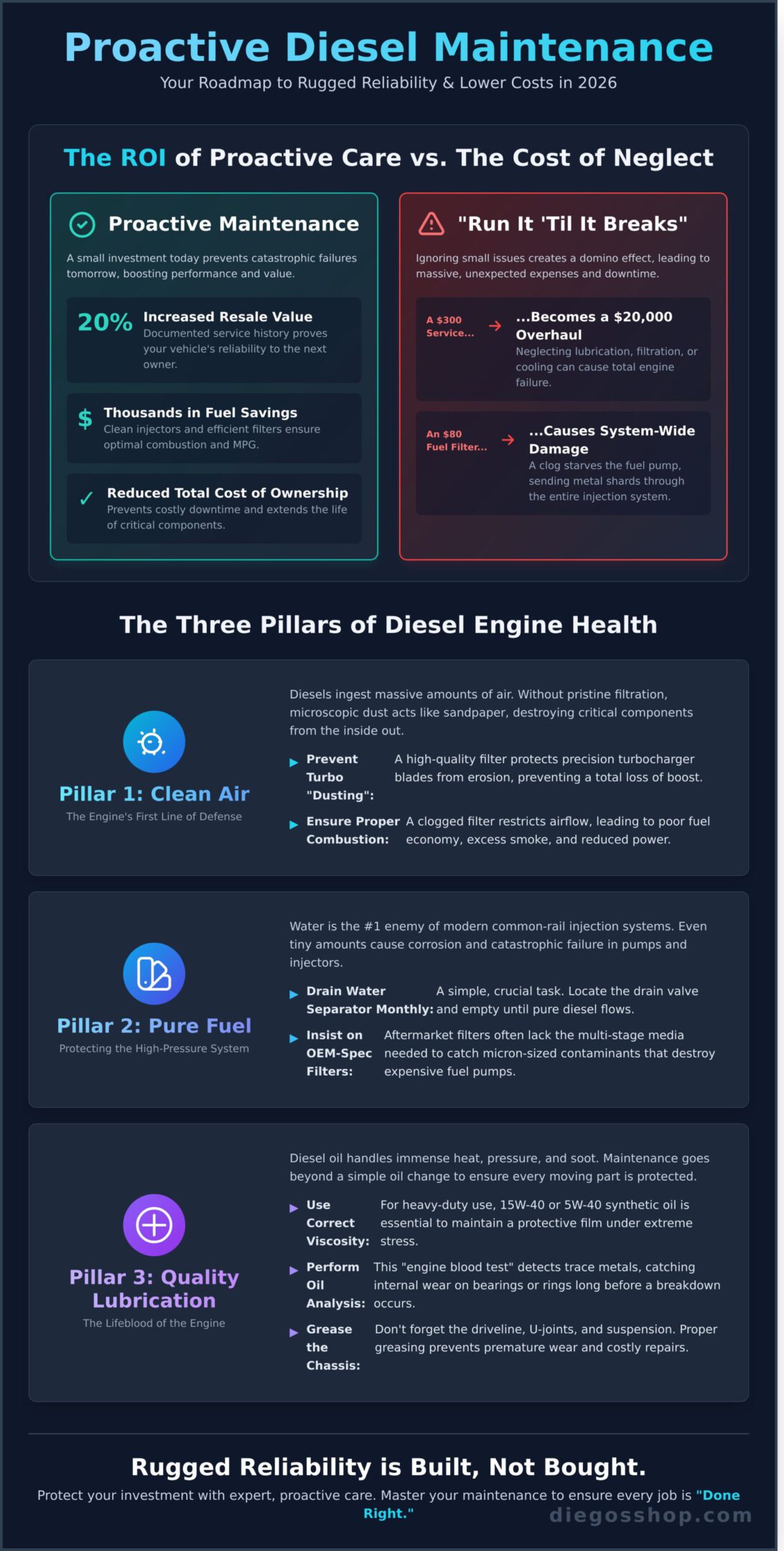
Effective diesel maintenance is no longer just about changing oil when the light comes on. Understanding how diesel engines work reveals that modern powerplants (2010 and newer) operate under extreme pressures and tighter tolerances than their mechanical predecessors. Neglecting a $300 comprehensive service today can easily escalate into a $20,000 engine overhaul tomorrow. At Diego’s Shop, we believe reliability is built, not bought.
The ROI of Rugged Reliability
Investing in a consistent diesel maintenance schedule delivers a measurable return on investment. For owner-operators and commercial fleets in Utah County, documented service history can increase a vehicle’s resale value by up to 20%. Beyond resale, clean injectors and high-efficiency filters ensure optimal combustion, saving thousands in annual fuel costs. We focus on reducing your Total Cost of Ownership by ensuring every component performs at its peak, providing the peace of mind that your workhorse is “Done Right.”
The Hidden Risks of ‘Running Until It Breaks’
The “run it until it breaks” mentality is a recipe for financial disaster in the modern diesel landscape. Small failures rarely stay small. For example:
- Secondary Damage: A clogged $80 fuel filter can starve a high-pressure fuel pump, causing a catastrophic failure that sends metal shards through the entire injection system.
- The Downtime Tax: For a professional, a truck sitting in the shop during peak season represents lost revenue that far outweighs the cost of a scheduled inspection.
- Safety Compromises: Neglecting heavy-duty braking and steering systems puts more than just your engine at risk; it compromises the safety of everyone on the road.
In a worst-case scenario where a catastrophic failure makes repairs impractical, it’s important to know your options. While based in a different region, services like Cash For Junk Cars Michigan provide a model for how to get value from a non-running vehicle, turning a potential loss into a manageable outcome.
By choosing precision over procrastination, you protect your asset and your livelihood. True rugged reliability starts with a commitment to honest, expert care.
The Pillars of Diesel Health: Fuel, Air, and Lubrication
A diesel engine is a high-compression powerhouse, but it is effectively a “garbage in, garbage out” machine. Unlike gasoline engines, diesels rely on extreme precision and internal cleanliness to function. If your fuel, air, or oil is compromised, performance drops and repair costs skyrocket. Consistent diesel maintenance ensures these three pillars remain unshakeable, providing the rugged reliability your vehicle was built for.
The air intake system is your engine’s first line of defense. Because diesels operate with massive suction power, they pull in significantly more air than gas engines. A high-quality air filter is critical; even microscopic dust particles can “dust” a turbocharger, eroding the precision blades and leading to a total loss of boost. Similarly, diesel oil must be formulated to handle heavy soot loads and extreme thermal stress that would cause standard motor oil to shear and fail.
Fuel System Integrity and the Water Separator
Water is the primary enemy of modern common-rail injection systems. Even a small amount of moisture can lead to catastrophic injector corrosion and high-pressure pump failure. To keep your system “Done Right,” you must prioritize the water separator.
- Locate and Drain: Find the drain valve on your fuel filter housing or remote separator.
- The Process: Place a container underneath, open the valve, and drain the accumulated water until pure diesel flows.
- Frequency: Perform this monthly, or immediately if your “Water in Fuel” light illuminates.
Always use OEM-spec fuel filters. Aftermarket filters often lack the multi-stage media required to catch micron-sized contaminants that destroy fuel pumps.
Lubrication Beyond the Oil Change
In Utah, heavy-duty towing through mountain passes demands specific oil viscosity-typically 15W-40 or 5W-40 synthetic-to maintain a protective film under extreme heat. However, diesel maintenance goes beyond just swapping fluids. We recommend periodic oil analysis; think of it as an “engine blood test” that identifies trace metals like copper or iron to catch internal wear before it becomes a breakdown.
Finally, remember the chassis. Grease points on the driveline, U-joints, and suspension are the forgotten half of lubrication. Keeping these components greased prevents the “clunks” and vibrations that lead to expensive drivetrain repairs, ensuring your truck remains as dependable as the day it left the lot.
Navigating Modern Complexity: DPF, EGR, and the CP4 Issue
Modern diesel engines are marvels of engineering, but they require a higher level of technical mastery than the mechanical engines of the past. Effective diesel maintenance today involves managing sophisticated emissions systems and high-pressure fuel components. While some owners consider “deleting” these systems, it is a significant liability. In 2026, strict regulations and advanced vehicle inspections make removals a legal risk, while the mechanical imbalance can compromise engine longevity and destroy resale value. At Diego’s Shop, we believe in doing it right-maintaining these systems so they work for you, not against you.
Demystifying Emission System Maintenance
Maintaining the Diesel Particulate Filter (DPF) is primarily about heat management. “Passive” regeneration occurs naturally during sustained highway driving, while “active” regeneration injects fuel to burn off soot when the filter reaches capacity. To prevent the dreaded “limp mode,” ensure your vehicle sees regular highway miles to complete these cycles. Furthermore, the quality of Diesel Exhaust Fluid (DEF) is non-negotiable. Poor-quality fluid leads to crystal buildup that clogs injectors and sensors. If you notice white smoke or mysterious coolant loss, your EGR cooler may be failing-a silent engine killer that requires immediate attention to prevent internal damage.
Addressing Common Failure Points (CP4 & Beyond)
The Bosch CP4 high-pressure fuel pump is a known vulnerability in many modern light-duty pickups. Because it relies on diesel fuel for lubrication, even minor contamination can cause the pump to fail internally, sending metal shards through the entire fuel system. Proactive diesel maintenance is the only way to safeguard your investment against this “ticking time bomb.” We recommend the following strategies:
- Lubricity Additives: High-quality fuel additives improve pump lubrication and combat the “dry” nature of modern ultra-low sulfur diesel.
- Disaster Prevention Kits: These kits reroute fuel flow so that if a pump fails, the debris is captured before it ruins your injectors and fuel rails.
- Specialized Diagnostics: Modern engine management systems require advanced diagnostic tools. We use these to monitor sensor data and catch soot buildup or pump wear before they lead to a breakdown.
By addressing these complexities with rugged reliability and technical expertise, you ensure your truck remains a dependable partner for the long haul.
The 2026 Diesel Maintenance Schedule: Daily to Annual Protocols
Effective diesel maintenance requires a disciplined approach that balances daily vigilance with long-term technical mastery. At Diego’s Shop, we believe every reliable engine begins with a “pre-flight” inspection. Before starting your engine, take two minutes to check for fluid puddles, inspect belt tension, and verify your oil and coolant levels. This simple habit identifies minor leaks before they become catastrophic failures on the road.
Maintenance needs vary significantly by vehicle class. While a light-duty Ford F-250 requires frequent oil monitoring due to stop-and-go wear, OTR long-haulers like Peterbilt or Kenworth rigs require rigorous attention to air systems and drivetrain lubrication. For business owners, implementing a formal Preventive Maintenance (PM) program is the only way to ensure rugged reliability. A successful PM program moves beyond guesswork, using scheduled intervals to keep your fleet operational and profitable.
For modern fleets, especially those with a diverse, multilingual workforce, ensuring that maintenance schedules and safety protocols are understood by every driver is just as critical. When technical documents need to be accessible in multiple languages, professional services like Translators USA can be an invaluable resource for ensuring clarity and compliance.
Utah-Specific Maintenance Considerations
Utah’s extreme climate demands specialized care. Along the Wasatch Front, winterizing is critical; we recommend testing glow plugs and using fuel anti-gel additives before the first sub-zero snap to prevent gelling. For those tackling steep grades like Parleys Canyon on I-15, cooling system flushes and brake inspections are non-negotiable to prevent overheating. Furthermore, Utah’s heavy construction and desert dust mean your air filters likely need replacement well before the manufacturer’s suggested interval to maintain peak performance.
A Standardized Diesel Service Timeline
To ensure your diesel maintenance is “Done Right,” follow this structured milestone guide:
- The 5,000-Mile Check: Perform a comprehensive oil and filter change, rotate tires, and conduct a full visual inspection of the chassis and suspension.
- The 15,000-Mile Milestone: Replace primary and secondary fuel filters. This is also the time for an air induction cleaning to remove carbon deposits and maintain efficiency.
- Annual Deep-Dive: Schedule a professional cooling system pressure test, battery load testing, and a full diagnostic scan to catch hidden sensor issues.
For expert service that prioritizes integrity and accountability, visit diegosshop.com to schedule your next inspection. We provide the technical mastery required to keep your diesel running at its best, regardless of the season or the load.
Rugged Reliability Done Right: Why Expert Service Matters
A general mechanic might understand the basics of an internal combustion engine, but diesel maintenance requires a specialized level of technical mastery. At Diego’s Shop, we recognize that diesel engines are precision-engineered machines that demand more than just a standard wrench. True expertise comes from combining seasoned craftsmanship with advanced diagnostic tools that pinpoint issues before they result in a breakdown.
This demand for specialized skill applies across all heavy-duty industries. In the maritime world, for instance, the operational and technical work performed by specialists like Panama Ship Service is essential for keeping the massive diesel engines of global shipping fleets running reliably.
Choosing a specialist means choosing personal accountability. We provide “Honest Diesel Service” backed by 100% warrantied work. This commitment to integrity ensures that your vehicle receives a long-term solution, not a temporary fix. For truck owners in Springville and across Utah County, partnering with a dedicated shop is the only way to guarantee the rugged reliability these vehicles are built for.
The Diego’s Shop Approach
Our “Done Right” philosophy is the foundation of every repair, whether for commercial fleets or residential pickups. We utilize comprehensive inspection protocols designed to catch the $500 problem today before it becomes a $5,000 catastrophic failure tomorrow. Our technicians possess the specialized knowledge required to service the giants of the industry, including:
- Heavy-Duty Haulers: Peterbilt and Kenworth.
- Medium-Duty Specialists: Isuzu and specialized fleet vehicles.
- Light-Duty Pickups: Ford F-Series and other residential diesel trucks.
Getting Started with a Maintenance Plan
The secret to fleet success and vehicle longevity is a proactive diesel maintenance plan. During your first comprehensive diagnostic at Diego’s Shop, we evaluate your vehicle’s current health and identify potential vulnerabilities. For business owners in Springville, we offer tailored fleet assessments to ensure your trucks stay on the road and out of the bay.
Don’t wait for a warning light to take action. Secure your investment with a team that values technical mastery and honest communication. Schedule your diesel maintenance at Diego’s Shop today and experience the peace of mind that comes with service done right.
Secure Your Investment with Rugged Reliability
Maintaining a diesel engine in 2026 demands more than just basic oil changes; it requires a commitment to technical mastery and proactive care. By prioritizing the core pillars of fuel, air, and lubrication, and staying ahead of complex emissions components like the DPF and EGR, you ensure your vehicle remains a dependable asset rather than a liability. Consistent diesel maintenance is the only way to safeguard your investment against the high stakes of modern road demands and prevent costly, unexpected downtime.
At Diego’s Shop, we specialize in providing that peace of mind. Whether you are hauling heavy loads in a Peterbilt or Kenworth, or navigating daily tasks in a Ford diesel pickup, our team delivers comprehensive service designed to last. Located in Springville and serving all of Utah County, we stand behind every job with 100% warrantied repair work. Don’t leave your engine’s health to chance when you can have it handled by seasoned experts who believe in doing the job right the first time.
Keep Your Diesel Running Right-Schedule Your Maintenance at Diego’s Shop
Your journey depends on a truck that won’t quit-let’s work together to keep you on the road for the long haul.
Frequently Asked Questions
How often should I really change the oil in my diesel truck?
While many manufacturers suggest intervals of 10,000 miles, we recommend changing your oil every 5,000 to 7,500 miles for rugged reliability. Heavy towing and stop-and-go driving in Utah’s varied climate increase soot loading. Regular diesel maintenance is the most effective way to prevent internal wear and ensure your engine performs with technical mastery for hundreds of thousands of miles.
Is it better to keep my diesel idling or shut it off?
For modern diesel engines, it is generally better to shut the engine off if you are stopping for more than five minutes. Excessive idling leads to carbon buildup on valves and can prematurely clog your Diesel Particulate Filter (DPF). Shutting it down preserves fuel and protects your fuel injectors from unnecessary wear, ensuring your truck stays dependable and efficient.
What are the first signs of a failing diesel fuel injector?
The first signs usually include a rough idle, engine misfires, or a noticeable decrease in fuel economy. You may also notice “knocking” sounds or excess smoke during acceleration. Because fuel delivery requires precision, these symptoms should be diagnosed immediately. Addressing injector issues early ensures the repair is done right and prevents expensive damage to the cylinders or pistons.
Do I really need to use fuel additives in every tank?
You do not need additives in every tank, but they are essential during Utah’s cold winters to prevent fuel gelling. Quality additives also improve lubricity, which protects the high-pressure fuel pump. Including a high-quality treatment as part of your diesel maintenance routine provides peace of mind and keeps your fuel system clean from deposits and moisture buildup.
Why is my diesel engine blowing black, white, or blue smoke?
Smoke color is a diagnostic roadmap. Black smoke typically indicates a restricted air intake or a rich fuel mixture. White smoke often points to unburnt fuel or a coolant leak, while blue smoke is a clear sign of burning oil. Each requires a comprehensive inspection by a specialist to identify the root cause and restore the rugged reliability of your engine.
Can a general auto shop perform a DOT truck inspection?
No, a general shop cannot perform a DOT inspection unless they have the specific certifications and technical mastery required by federal law. At Diego’s Shop, we provide certified inspections for everything from Ford F-250s to heavy-duty Peterbilts. We ensure your vehicle meets all safety standards, providing you with an honest assessment and warrantied repairs to keep you compliant.
What should I do if my truck goes into ‘Limp Mode’ on the highway?
If your truck enters Limp Mode, it is limiting power to protect the engine from catastrophic failure. You should pull over safely and avoid driving further, as this can exacerbate the underlying issue. Contact a trusted specialist to pull the diagnostic codes. Getting a professional diagnosis ensures the problem is identified quickly and the repair is done right the first time.
How long do diesel glow plugs typically last in Utah’s climate?
In Utah, glow plugs typically last between 60,000 and 100,000 miles. The extreme temperature swings put significant stress on the heating elements during cold starts. If you notice hard starting or white smoke on cold mornings, it is likely time for a replacement. We use high-quality components to ensure your truck maintains its rugged reliability even in sub-zero temperatures.