
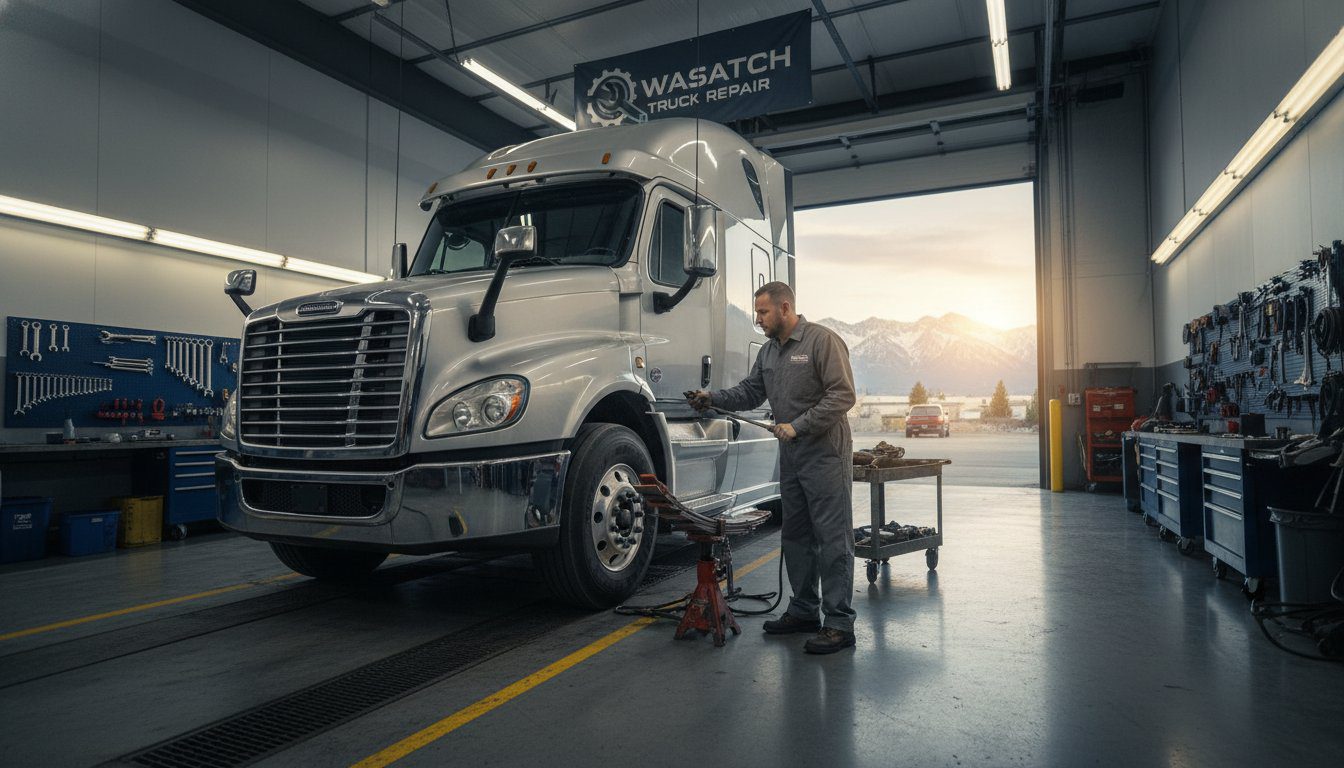
Commercial Truck Suspension Repair: Ensuring Fleet Stability and Safety in 2026

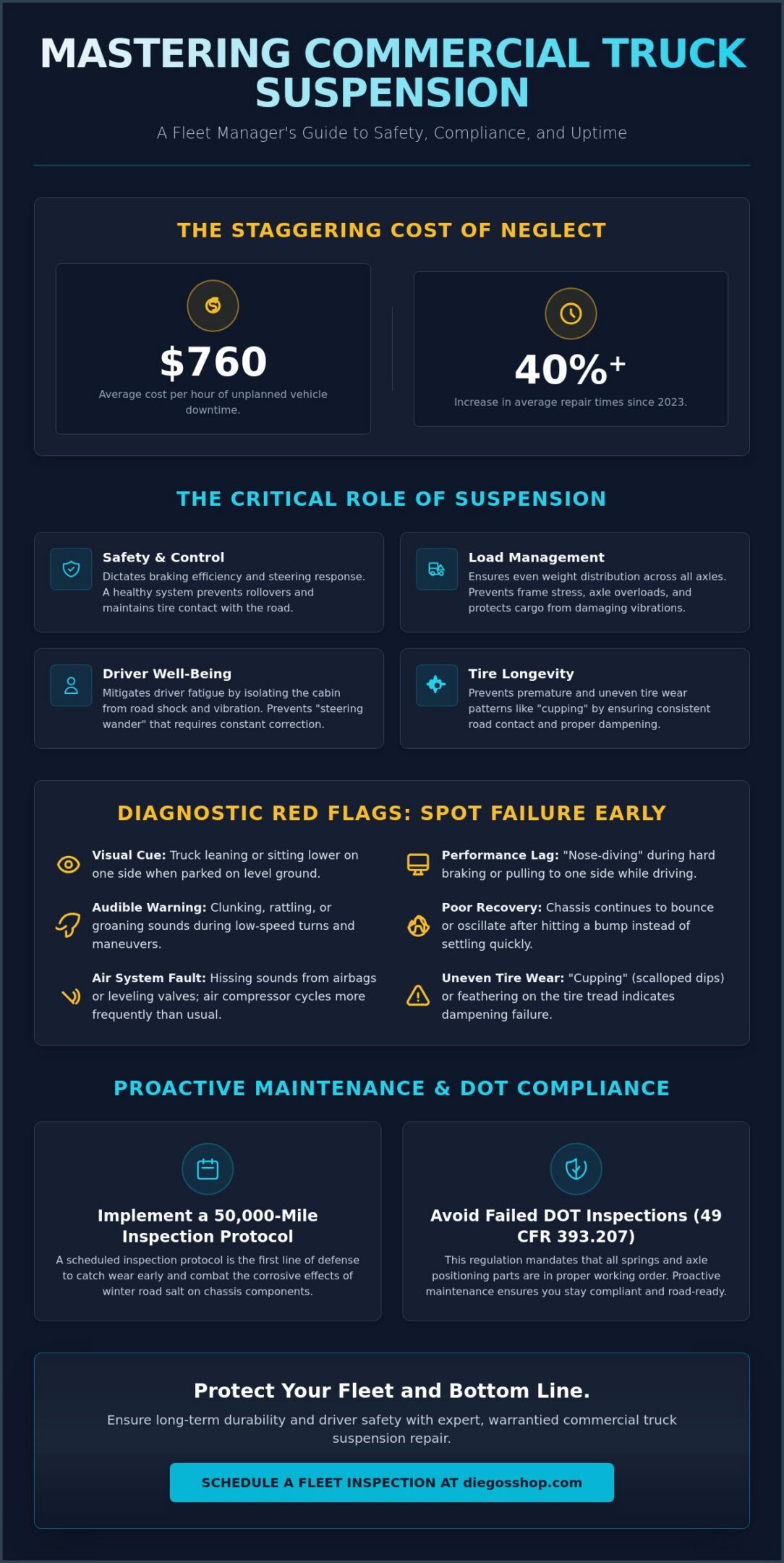
Did you know that unplanned downtime for a commercial vehicle now costs fleets an average of $760 per hour in lost productivity and related expenses? You already know that a rough ride is more than just a nuisance for your drivers; it’s a direct threat to your cargo and your bottom line. When a truck pulls to one side or an air bag begins to leak, securing expert commercial truck suspension repair becomes an urgent priority. Ignoring these signs often leads to failed DOT inspections under 49 CFR 393.207, which mandates that all axle positioning parts and springs remain in proper working order.
We understand the stress of keeping an aging fleet compliant while repair times have increased by up to 40 percent since 2023. This article provides the roadmap you need to master heavy-duty suspension maintenance. You’ll learn how to protect your cargo, ensure driver safety, and maintain vehicle stability throughout 2026. We also preview the impact of Utah’s recent inspection fee deregulation and show how predictive maintenance can help you avoid the long wait times currently plagueing understaffed repair shops.
Key Takeaways
- Learn how suspension health dictates braking efficiency and steering control when hauling heavy loads.
- Identify early warning signs of failure, including uneven tire wear patterns and audible groaning during low-speed maneuvers.
- Understand the technical requirements for commercial truck suspension repair, specifically regarding heavy-duty leaf spring and airbag replacement.
- Implement a 50,000-mile inspection protocol to combat the corrosive effects of Utah’s winter road salt on your chassis.
- Ensure your fleet remains DOT compliant and road-ready with warrantied repair work designed for long-term durability.
The Critical Role of Commercial Truck Suspension in Fleet Safety
Your truck’s suspension is more than a set of springs for driver comfort; it’s the structural foundation that connects the chassis to the road. This complex system of heavy duty springs, shock absorbers, and linkages must manage thousands of pounds of force every second. When these components work correctly, they maintain tire contact with the pavement. When they fail, the entire vehicle’s stability is compromised. Effective commercial truck suspension repair ensures that your fleet remains controllable under the most demanding conditions, especially when navigating the challenging terrain of the Wasatch Front.
Suspension health directly dictates how well a truck brakes and steers. Worn shock absorbers allow the tires to bounce, which significantly increases braking distances as the rubber loses consistent contact with the road. This lack of stability is amplified during steering maneuvers. If the suspension is loose, the truck may lean excessively into turns, creating a high risk of a rollover. Furthermore, poor suspension alignment is a primary cause of premature tire failure. Issues like “cupping” or uneven tread wear often signal that the dampening system is no longer protecting the tires from road impact.
Utah’s geography places unique demands on these systems. Steep mountain grades and winding canyon roads require higher performance standards than flat highway hauling. A truck descending a mountain pass relies on its suspension to stay level and predictable during heavy braking. If the system is compromised, the vehicle becomes unpredictable, putting the driver and other motorists at risk.
Weight Distribution and Load Management
A healthy suspension ensures that the weight of the cargo is distributed evenly across all axles. When leaf springs or Air suspension systems fail, the load shifts. This can lead to axle overloads and structural stress on the frame. During steep mountain descents, shifting loads place immense pressure on the front suspension, which can cause components to snap or leak under the strain. Maintaining these parts protects your cargo integrity by minimizing the vibrations and road shocks that cause freight damage.
Driver Comfort and Fatigue Mitigation
The human cost of poor suspension is often overlooked. A rough ride leads to rapid driver fatigue, as the body constantly works to stabilize itself against cabin vibrations. Modern suspension technology is designed to isolate the driver from these forces. When bushings wear out, drivers often experience “steering wander,” where they must constantly correct the wheel to stay in their lane. This constant struggle is exhausting and dangerous. Investing in commercial truck suspension repair isn’t just about the machine; it’s about keeping your drivers alert and capable throughout their entire shift. Professional maintenance keeps the ride smooth and the steering precise. That is the standard your fleet deserves.
Diagnostic Red Flags: Identifying Commercial Suspension Failure
Identifying a failing suspension requires more than a quick glance. While some issues are glaring, many manifest as subtle changes in handling or noise. If you notice your truck “nose-diving” during hard braking or pulling to one side on a level road, it’s time to consider professional commercial truck suspension repair. These performance indicators often point to worn shock absorbers or misaligned axles that compromise your control. Catching these signs early is the difference between a scheduled fix and an emergency tow.
Check for a leaning chassis when the truck is parked on level ground. If one side sits lower, a spring or airbag has likely reached its limit. Listen for clunking or groaning during low-speed turns; these are the sounds of failing components under stress. Unlike passenger vehicles, the “bounce test” for a heavy-duty rig is difficult to perform manually. Instead, you must watch how the truck recovers after hitting a bump at speed. If the chassis continues to oscillate rather than settling immediately, the dampening system is no longer effective and is likely causing excessive tire wear.
Inspecting Airbags and Pneumatic Components
Airbags are prone to “dry rot,” a condition where the rubber develops fine cracks due to age and environmental exposure. Small cracks might seem minor, but they often lead to a sudden roadside blowout when the truck is under a full load. Check for slow leaks by listening for a faint hiss near the leveling valves when the engine is off. If your air compressor cycles more frequently than usual, it’s overworking to compensate for a leak in the lines or bags. Staying ahead of these leaks is a core part of adhering to federal safety regulations, which require air systems to remain leak-free and fully functional. A leaking bag isn’t just a maintenance issue; it’s a safety violation.
Mechanical Wear in Leaf Springs and Bushings
During your pre-trip inspection, look specifically for shifted leaf spring leaves. If the stack isn’t perfectly aligned, the center bolt may be sheared. Cracks in the metal are automatic out-of-service violations and require immediate commercial truck suspension repair. You should also examine the bushings for signs of “squish” or missing material. When rubber or polyurethane bushings fail, metal-on-metal contact creates excessive vibration and noise. Don’t overlook the U-bolts; if they’re loose, the axle can shift, ruining your alignment and destroying tires in a matter of miles. If you spot these red flags, scheduling a comprehensive suspension diagnostic can save you from a costly roadside breakdown. Our team maintains total control over these complex mechanical systems to ensure your fleet remains dependable.
Common Repairs: Leaf Springs, Airbags, and Shock Absorbers
Heavy-duty suspension systems endure millions of load cycles. Eventually, even the most robust components require professional intervention. Replacing leaf springs on an OTR hauler is a high-tension task that demands precision. The process involves safely supporting the frame, removing the U-bolts, and installing a balanced spring stack. We don’t just swap parts; we ensure the center bolt is seated perfectly to prevent the axle from shifting. This level of detail in commercial truck suspension repair is what prevents a return trip to the shop for alignment issues just weeks later.
Fleet managers often face a difficult choice: repair or replace? As a rule, structural components like cracked leaf springs or collapsed airbags must be replaced. Attempting to “patch” these parts is a liability. However, wearable items like leveling valves, bushings, or individual hangers can often be replaced to extend the life of the larger system. Deciding based on cost-effectiveness requires looking at the vehicle’s age and duty cycle. If a truck has surpassed 500,000 miles, a full suspension overhaul is often more economical than frequent, piecemeal repairs that lead to repeated downtime. All repairs must strictly adhere to federal suspension safety standards to ensure the vehicle remains legal and safe.
Shock absorbers are frequently neglected until they leak. If you see “wet” shocks, they’ve already failed. Without functional shocks, your springs take the full force of every road impact. This leads to rapid metal fatigue and eventual snapping. Furthermore, steering binding is often a symptom of neglected suspension geometry. When components wear out, they can shift the axle slightly, causing the steering linkage to bind or pull. Quick action on these repairs protects your tires and your steering box from premature failure.
Air Suspension System Overhauls
Modern air systems require a logical diagnostic approach. We begin by identifying failing airbags and testing the leveling valves for accuracy. Since these systems share an air supply with your brakes, a major leak can impact braking performance. Calibration is the final, critical step. Ensuring the correct ride height is essential; if it’s off by even an inch, you risk driveline vibrations that can destroy U-joints and transmissions. We maintain total control over the pneumatic calibration to ensure your truck sits level under any load.
Kingpin and Bushing Replacement
Precision is non-negotiable when replacing kingpins. Worn kingpins are a primary cause of “death wobble” and steering wander. We use high-quality bushings and specialized pressing equipment to restore steering accuracy to factory specifications. This work is a cornerstone of effective fleet maintenance. By replacing these small but vital components before they fail, you eliminate the metal-on-metal contact that ruins expensive steer axles. It’s a straightforward way to keep your drivers confident and your steering crisp. Our warrantied repair work stands behind every bushing we press.
Preventive Maintenance: Avoiding Unscheduled Downtime
Unplanned downtime is a fleet’s greatest enemy. With heavy-duty repair times increasing by up to 40 percent since 2023, waiting for a component to snap is no longer a viable strategy. You must establish a 50,000-mile suspension inspection protocol to catch wear before it stops your truck. This interval allows us to identify thinning leaf springs, leaking shocks, and worn bushings before they trigger a roadside crisis. Consistent oversight is the only way to maintain total control over your operational costs.
Utah’s winter road conditions demand a more aggressive maintenance schedule. Magnesium chloride and traditional road salt are highly corrosive to heavy-duty steel. Along the Wasatch Front, this salt spray penetrates deep into shackle pins and spring hangers, causing them to seize or rot prematurely. To mitigate this, we recommend high-pressure undercarriage washes followed by a rigorous greasing of all zerk fittings. Regular lubrication of kingpins and shackle pins every 10,000 to 15,000 miles is essential to prevent the friction that leads to commercial truck suspension repair. We also utilize advanced diesel diagnostics services to monitor how chassis vibrations might be impacting sensitive engine sensors and electronics.
The Pre-Trip Suspension Checklist
The first line of defense is the driver. Every pre-trip inspection should include a visual scan of the wheel wells for “leaning” or shifted spring packs. Drivers should check for air pressure stability by listening for audible leaks and watching the dash gauges for rapid pressure drops. Documenting minor wear now allows you to schedule a shop visit on your terms. This proactive approach helps you avoid the stress and high costs associated with emergency diesel repairs during a haul.
Alignment and Tire Rotation Synergy
Suspension and alignment are two sides of the same coin. A professional alignment is mandatory after any commercial truck suspension repair to ensure the new components aren’t fighting the road. Perfect geometry provides a massive financial ROI through tire longevity. When your axles are square and your springs are level, you eliminate the scrubbing that kills tread. This level of care also ensures you pass your annual DOT truck inspections without a single violation. Salt eats steel, but a disciplined maintenance plan keeps your fleet moving. Contact us to schedule a comprehensive fleet suspension audit and secure your chassis for the road ahead.
Why Diego’s Shop is Utah County’s Choice for Suspension Service
When your fleet’s safety is on the line, you need a specialist who understands the heavy-duty nature of the industry. Diego’s Shop has established itself as the authority for commercial truck suspension repair across the Wasatch Front. We focus on the specific needs of medium and heavy-duty diesel systems, providing the technical mastery required to keep your trucks upright and stable. Our commitment to warrantied repair work ensures that every fix is a permanent solution. We take personal accountability for every axle we align and every spring we replace. Our reputation is built on the durability of our work and the integrity of our service.
Accessibility is vital for busy fleet managers. Our shop is strategically located in Springville, offering easy access from I-15 and US-89. This allows your drivers to get in and out quickly without fighting unnecessary city traffic. We pride ourselves on a no-nonsense approach to fleet communication. You’ll receive honest assessments and direct answers about the state of your equipment. We don’t hide behind jargon; we provide the facts you need to make informed decisions about your uptime and budget. We maintain total control over the repair process to ensure your vehicle meets the highest safety standards before it leaves our bay.
Specialized Tools for Heavy-Duty Rigs
General repair shops often lack the heavy-duty lifts and high-capacity diagnostic equipment needed for a 30,000-pound rig. We’ve invested in the specialized tools required to perform precise commercial truck suspension repair on the largest haulers. Our team of certified diesel mechanics understands that a suspension failure is often a symptom of deeper mechanical stress. The Diego’s Shop promise is simple: reliable performance and total peace of mind for every hauler. We don’t just patch problems; we restore the structural integrity of your chassis.
Supporting the Utah Trucking Community
We tailor our services to meet the demands of both local Springville businesses and long-haul OTR fleets. Our focus on comprehensive diesel maintenance reduces your long-term costs by preventing the cascading failures that start with a worn bushing or a leaking airbag. This proactive stance is your best defense against failed DOT inspections. We ensure your suspension components are not just functional, but compliant with every federal regulation. We understand that a clean inspection report is the lifeblood of your operation. Contact us today for a suspension assessment that prioritizes your uptime. We know that if your wheels aren’t turning, you aren’t earning. Dependable service. Proven results.
Secure Your Fleet’s Performance for the Road Ahead
Maintaining a commercial vehicle requires more than just engine work; it requires a commitment to the structural integrity of your chassis. By identifying red flags early and sticking to a 50,000-mile inspection cycle, you protect your drivers and your cargo from the high costs of unplanned downtime. Professional commercial truck suspension repair is the foundation of a safe, compliant fleet that can handle Utah’s demanding mountain passes and corrosive winter roads. It’s the difference between a successful haul and a costly out-of-service violation.
Diego’s Shop provides the technical mastery your business depends on. Our team of Certified Diesel Mechanics delivers warrantied repair work that stands up to the heaviest loads. We don’t cut corners because we know how much is riding on your axles. We have been serving Springville and Utah County since our inception, maintaining total control over every repair to ensure your peace of mind. Your uptime is our priority.
Schedule your commercial suspension repair at Diego’s Shop today and keep your fleet moving with confidence.
Frequently Asked Questions
How much does commercial truck suspension repair usually cost?
Industry data for 2026 indicates that professional leaf spring replacement typically ranges between $843 and $1,008. Shock absorber replacement for heavy duty trucks generally costs between $450 and $900 per axle. These figures depend on the specific components and the complexity of the vehicle’s configuration. For a precise quote that reflects the needs of your specific rig, a professional diagnostic at a specialized shop is the most reliable approach.
What are the most common signs that my truck’s leaf springs are failing?
The most obvious signs include a leaning chassis or visible cracks in the metal leaves. You should also look for “shifting” in the spring stack, which indicates a sheared center bolt. Audible clunking or grinding noises during low speed maneuvers often point to failed bushings or broken leaves. If you notice the truck bottoming out over minor bumps, the springs have likely lost their tension and require immediate attention.
Can I drive my commercial truck if an airbag has a slow leak?
You shouldn’t operate a vehicle with any air suspension leak, regardless of how slow it seems. Federal regulation 49 CFR 393.207 specifically prohibits audible leaks in air systems. A leak forces your air compressor to run constantly, which leads to premature compressor failure and potential braking issues. Furthermore, a compromised bag can fail completely under a full load, causing an immediate loss of vehicle control and a dangerous roadside situation.
How often should I have my truck’s suspension professionally inspected?
While daily pre-trip inspections are a legal requirement, you should schedule a professional commercial truck suspension repair audit every 50,000 miles. Fleets operating in Utah often require more frequent checks due to the stress of mountain driving and corrosive road salt. Regular intervals allow technicians to grease kingpins and check for “dry rot” in airbags before these minor issues escalate into expensive, unscheduled downtime for your business.
Will a worn suspension cause my truck to fail a DOT inspection?
Yes, suspension defects are a primary cause of failed DOT inspections and out-of-service violations. Inspectors look for cracked or missing leaves, loose U-bolts, and leaking air bags as mandated by federal safety standards. Any component that is broken, loose, or missing is an automatic violation. Keeping your suspension in top condition is the only way to ensure you pass your annual inspection without facing steep penalties or lost productivity.
What is the difference between air suspension and spring suspension for heavy trucks?
Air suspension uses pressurized rubber bags to support the load, offering a smoother ride and adjustable ride height for different trailers. Spring suspension relies on stacks of tempered steel leaves, which are prized for their extreme durability and simplicity in vocational applications. While air systems provide better cargo protection and driver comfort, they require more frequent pneumatic maintenance to prevent leaks and valve failures compared to traditional mechanical springs.
How does road salt in Utah affect my truck’s suspension components?
Road salt and magnesium chloride act as aggressive catalysts for corrosion on steel hangers, pins, and springs. This chemical exposure thins the metal and causes shackle pins to seize, which prevents the suspension from moving through its intended range of motion. To combat this, you must prioritize high-pressure undercarriage washes and maintain a strict greasing schedule. Regular commercial truck suspension repair and cleaning are essential for vehicles frequently traversing the Wasatch Front in winter.
Should I replace all shock absorbers at once or just the leaking one?
You should always replace shock absorbers in pairs across the same axle to maintain balanced dampening. Replacing only one side creates an imbalance in how the truck handles bumps, which leads to uneven tire wear and unpredictable steering. For total control and long-term durability, we recommend replacing all shocks on the vehicle simultaneously if they have reached the end of their service life. This ensures consistent performance and protects your other suspension components from unnecessary stress.