
What to Expect After a Diesel Engine Overhaul: The 2026 Break-In Guide

Your diesel engine overhaul isn’t finished when the mechanic hands you the keys. In reality, the most critical phase of the engine’s life is just beginning. Investing in a complete rebuild is a major commitment that often comes with a mix of relief and genuine anxiety. You’ve likely heard a dozen different stories about how to handle those first few trips, and the fear of a premature leak or part failure is enough to keep any owner or fleet manager on edge.
We understand that you need certainty, not guesswork, when it comes to your equipment. This guide cuts through the conflicting advice to show you exactly what to expect after a diesel engine overhaul so you can protect your investment from day one. By mastering the first few hundred miles, you ensure that your rebuilt power plant delivers the peak performance and longevity you paid for.
We’ll walk through the essential 2026 break-in timeline, identify the difference between normal settling and red-flag behaviors, and establish a maintenance plan designed for maximum ROI. Your engine is ready for a second life; we’re here to help you make sure it lasts another 500,000 miles.
Key Takeaways
- Understand what to expect after a diesel engine overhaul by monitoring the critical first 50 miles for normal burn-off smells and potential external leaks.
- Learn why seating the piston rings requires specific cylinder pressure and why you must avoid excessive idling during the first 500 miles of operation.
- Identify the difference between normal fuel economy fluctuations and red-flag indicators like excessive blow-by to gauge your engine’s health accurately.
- Reset your maintenance log to zero and schedule your first oil change much earlier than usual to clear out initial wear metals from the rebuilt system.
- Discover how to maximize your ROI by pairing warrantied repair work with a specialized preventive maintenance plan.
The Critical First 50 Miles: Immediate Post-Overhaul Observations
The moment the ignition turns over for the first time after a rebuild, the clock starts on a critical window of observation. At Diego’s Shop, our technicians perform a rigorous final test drive before handover, but the responsibility shifts to the operator once the truck hits the road. Knowing what to expect after a diesel engine overhaul allows you to distinguish between the natural settling of new components and a genuine mechanical emergency. Your focus during these first few hours should be on thermal stability and fluid integrity.
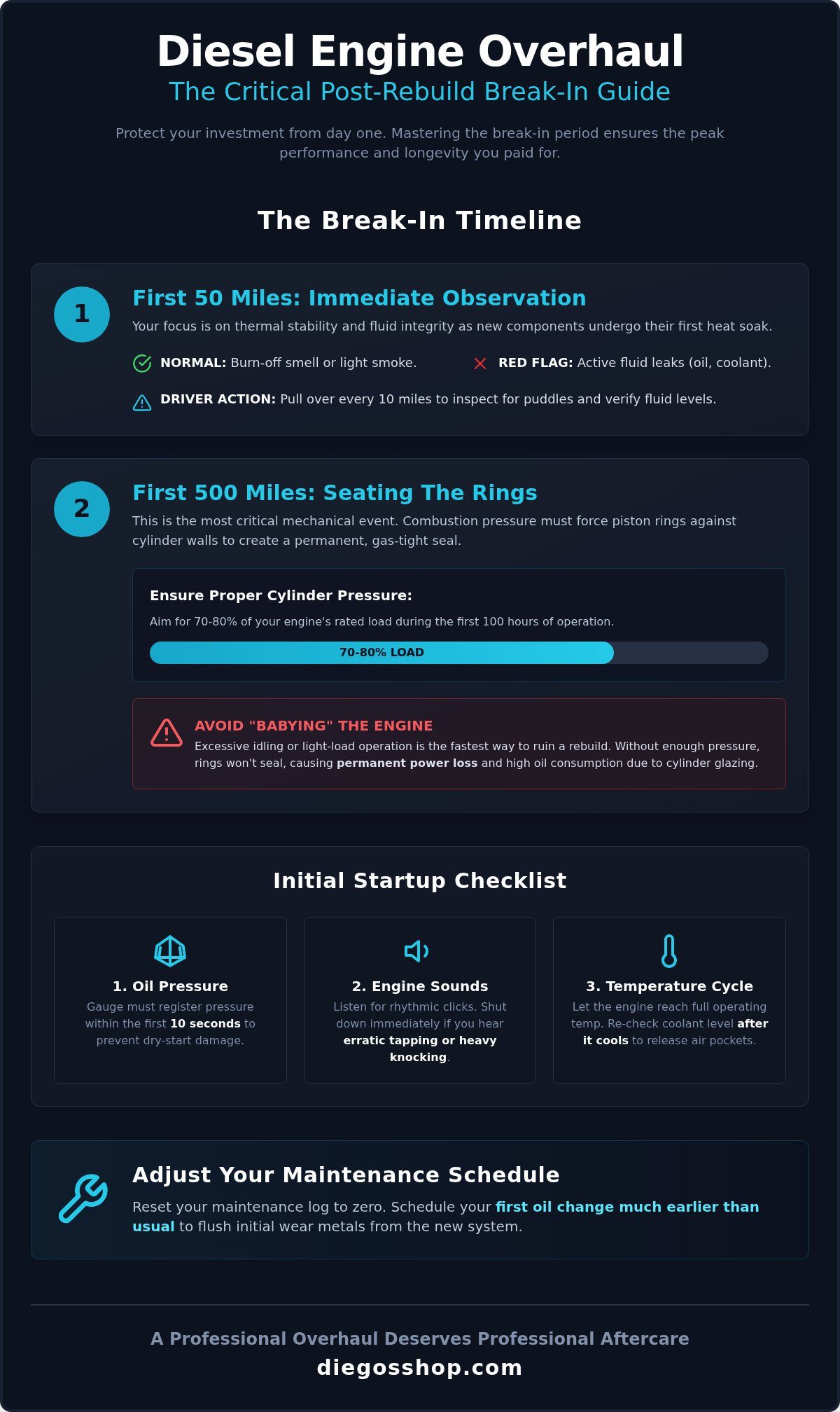
During the first 50 miles, the engine undergoes its first major heat soak. You will likely notice a distinct new engine smell or even a small amount of light smoke rising from the exhaust manifold. This is usually just the burn-off of paint, finger oils, or protective coatings applied during the assembly process. It’s a standard part of The Science of the Break-In Period, where new surfaces begin to mate under operational temperatures. However, don’t get complacent. You should pull over every 10 miles during this first trip to verify fluid levels and inspect the ground for any fresh puddles. When planning for what to expect after a diesel engine overhaul, the first 50 miles are the most labor-intensive for the driver.
The Initial Startup Checklist
A successful overhaul relies on immediate lubrication and thermal stability. When you first start the engine, watch the oil pressure gauge. It must register within the first 10 seconds to prevent dry-start damage to the new bearings. Listen closely for a rhythmic, consistent click in the valve train. Any erratic tapping or heavy knocking is a signal to shut down immediately. Finally, let the engine reach full operating temperature until the thermostat cycles. Re-check the coolant level once the system cools, as air pockets often burp out during this first cycle.
Normal vs. Abnormal Leakage
Not every drop of fluid under the truck is a cause for panic. You might see small traces of assembly lube, which is a thick, tacky substance used to protect parts during the build. This will often run off as the engine heats up. Similarly, a new water pump might show a tiny amount of moisture at the weep hole as the internal seal seats itself. This is common and should stop quickly.
The Red Fluid Rule is your primary guide. If you see bright red transmission fluid, fresh green or red coolant, or dark, flowing engine oil, stop the vehicle. Active leaks won’t fix themselves. Catching a loose fitting or a pinched gasket in the first 50 miles prevents a minor nuisance from turning into a catastrophic failure. Our goal is to ensure your equipment stays on the road, and that starts with a vigilant first trip.
Seating the Rings: The Science of the Break-In Period
Seating the rings is the most critical mechanical event during the first 500 miles of operation. It’s not just about “wearing things in”; it’s a precise process where combustion pressure forces the piston rings against the cylinder walls to create a gas-tight seal. If this seal isn’t established early, your engine will suffer from permanent power loss and high oil consumption. Understanding What’s Normal vs. Red Flags during this phase is essential for any owner learning what to expect after a diesel engine overhaul.
The choice of lubricant is vital here. We often use specialized break-in oil rather than standard 15W-40. Standard heavy-duty oils are designed to minimize friction as much as possible, but some controlled friction is actually necessary for the rings to mate with the cylinder’s cross-hatch pattern. Break-in oils typically have fewer friction modifiers and higher levels of zinc and phosphorus to protect the valvetrain while the rings find their seat. Once that seal is established, you can transition back to your preferred high-performance oil.
The Dangers of ‘Babying’ the Engine
Many drivers mistakenly believe that light driving or excessive idling protects a new engine. In reality, low-load operation is the fastest way to ruin a rebuild. Without sufficient combustion pressure, the rings don’t expand fully against the walls. This allows oil to bypass the rings and bake into a hard, glass-like varnish called glazing. Once a cylinder is glazed, the rings will never seat properly. You should aim for 70% to 80% of your rated load during the first 100 hours to ensure the rings are pushed hard enough to do their job.
Thermal Cycling in the Wasatch Front
Utah’s geography offers a distinct advantage for breaking in a diesel engine. The long, steady grades found along the Wasatch Front provide the consistent load required for excellent ring seating. However, our high altitude means thinner air, which can lead to higher Exhaust Gas Temperatures (EGTs) during a climb. It’s a balancing act. You need the load from the mountain pass, but you must watch your gauges to avoid overheating the new components.
Always allow for a three-to-five-minute cool-down period after a heavy pull before shutting the engine off. This prevents oil from coking in the turbocharger and allows the block to shed heat evenly. If you’re coordinating a transition for multiple trucks, our fleet maintenance programs can help ensure every vehicle in your lineup follows these critical protocols. Consistent thermal management during these early miles dictates the next half-million miles of service.
Performance Markers: What’s Normal vs. Red Flags
Understanding what to expect after a diesel engine overhaul involves looking beyond the first few trips and into the first 5,000 miles of service. During this stabilization phase, your engine is transitioning from a collection of new parts into a synchronized power plant. You shouldn’t expect peak fuel economy or perfectly stable oil levels immediately. Internal friction is slightly higher as the cross-hatch on the cylinder walls smooths out, and the Electronic Control Module (ECM) works to recalibrate fuel trims based on the new mechanical tolerances.
Monitoring blow-by is one of the most effective ways to gauge engine health during this period. Blow-by occurs when combustion gases leak past the piston rings into the crankcase. While a small amount is expected while the rings are still seating, it should noticeably decrease as you approach the 2,000-mile mark. Similarly, oil consumption may be slightly higher than normal during the first few thousand miles. If you’re adding a quart between the first and second check-ups, don’t panic. However, if consumption doesn’t level off after the rings have fully seated, it’s time for a diagnostic review.
Normal ‘Settling’ Symptoms
You might notice minor variations in idle smoothness during the first few days of operation. As the valve train and injectors find their rhythm, these small tremors typically disappear. It’s also common to see operating temperatures run about 5 to 10 degrees higher than usual during the first 20 hours of heavy use. This is simply the result of the initial friction between fresh components. Modern engines also rely on the ECM to “re-learn” how to manage the system. You might see slight fluctuations in boost pressure or throttle response as the computer optimizes its sensor calibration for the rebuilt assembly.
Warning Signs to Report to Your Shop
While some variation is normal, certain symptoms require immediate professional intervention. A sudden drop in oil pressure once the engine reaches full operating temperature is a primary red flag. This often indicates a problem with bearing clearances or an issue with the oil pump. You should also listen for any rhythmic, metallic knocking that increases in volume or frequency with engine RPM. This is distinct from standard diesel clatter and suggests a mechanical interference. Finally, while light smoke is normal during the first hour of burn-off, persistent blue smoke (oil) or white smoke (unburnt fuel or coolant) after the first day indicates a seal or timing issue that needs correction. Quick action at this stage protects your warrantied repair work and prevents secondary damage.
Adjusting Your Maintenance Schedule Post-Overhaul
An overhaul is a total rebirth for your engine, and that means your old maintenance log is now obsolete. The most important step in managing what to expect after a diesel engine overhaul is abandoning your previous service intervals. You’re now operating on a “Zero-Hour” clock. Your previous records reflect wear patterns and clearances that no longer exist. Following those old, extended drain intervals on a fresh rebuild can lead to premature failure of your new components before they’ve even had a chance to settle.
For those managing multiple vehicles along the Wasatch Front, integrating professional fleet maintenance protocols immediately is the best way to protect your investment. This consistency allows you to track the performance of the rebuild against the rest of your lineup. It also ensures that every driver is following the same rigorous standards during this sensitive period. Accountability in the shop leads to reliability on the road.
The 100-Hour Service Milestone
The first major service usually happens around the 100-hour mark or roughly 3,000 to 5,000 miles. This is not a standard “oil and grease” job. You must change the oil and all filters much earlier than a broken-in engine would require. This early flush is non-negotiable. It removes the microscopic wear metals and leftover assembly debris that naturally accumulate during the initial seating process. Part of knowing what to expect after a diesel engine overhaul is understanding that this first batch of oil will likely look darker or more metallic than usual; that’s exactly why we’re draining it early.
We also perform a critical “overhead set” or valve lash adjustment during this window. New valves, rocker arms, and bridges settle into their seats during the first few thousand miles. This settling can alter the clearances, leading to poor fuel economy or valvetrain noise if not corrected. We also take this time to inspect all belt tensions and hose clamps. Initial thermal cycles and vibrations can loosen external hardware that was torqued during assembly. Catching these minor shifts early prevents major downtime later.
Long-Term Fluid Analysis Strategy
Moving forward, your goal is to establish a new health baseline for the engine. Regular oil analysis is your most powerful diagnostic tool. By catching elevated levels of iron, chrome, or copper in these early stages, we can verify that the rings and bearings are wearing in as intended. We also monitor your coolant chemistry closely. Proper supplemental coolant additives (SCAs) are vital to prevent liner cavitation, which is a common and expensive killer of rebuilt diesel blocks.
Ultimately, a disciplined approach to preventive maintenance is the only way to protect your warranty. It provides a documented paper trail of care that proves you’ve done your part to maintain the equipment. If you want to ensure your rebuilt engine reaches its full half-million-mile potential, schedule your post-overhaul inspection with our team today. We’ll help you build a custom schedule that keeps your truck earning and out of the shop.
Why a Professional Overhaul at Diego’s Shop is Different
An engine overhaul is a complex operation that requires more than just a set of new parts. It demands a level of technical mastery that accounts for the intricate balance of modern emissions systems and electronic engine management. When you choose Diego’s Shop, you aren’t just getting a service. You’re gaining a partner that stays with you long after the truck leaves the bay. Understanding what to expect after a diesel engine overhaul is much simpler when you have clear documentation and a specialist who stands behind every hour of labor performed.
Our approach focuses on the long-term health of your equipment. We manage the high-pressure tolerances and sensor calibrations that define 2026 diesel technology with precision. For OTR haulers and local Utah fleets, this means less time worrying about immediate failures and more time focusing on the road ahead. We treat your engine as a precision instrument, ensuring that every component is synchronized for maximum durability.
The Diego’s Shop Warranty Commitment
We provide warrantied repair work in Springville because we believe in the durability of our craftsmanship. Accountability is at the core of our brand. When a personal name is on the sign, every bolt and gasket matters. We provide comprehensive records for your fleet logs, ensuring you have a clear paper trail for compliance and resale value. Our shop is dedicated to keeping Utah County moving, one reliable engine at a time. We don’t just fix engines; we build trust through technical excellence.
Partnering for the Next Million Miles
A successful diesel engine repair is the foundation for the next million miles of service. We offer custom maintenance plans tailored specifically to the needs of commercial OTR haulers and heavy-duty fleets. Our team provides technical consultation to help fleet managers optimize their ROI and minimize unplanned downtime. We speak the language of the hardworking machinery we service, and we understand the pressure of maintaining a schedule.
Your next step is critical. Don’t wait for a warning light to schedule your post-overhaul follow-up inspection. Visit our Springville location or call us to set a date for your 100-hour service. We’ll verify that every component is seating perfectly and that your engine is ready for the long haul. Dependability isn’t an accident. It’s the result of expert care, rigorous standards, and personal accountability. Let’s make sure your investment pays off for years to come.
Secure Your Investment for the Long Haul
Rebuilding a diesel engine is a massive undertaking, but the real work starts the moment you leave the shop. You now have a clear roadmap for what to expect after a diesel engine overhaul, from those initial heat soaks to the vital 100-hour service milestone. By avoiding excessive idling and maintaining consistent load during the break-in period, you ensure the rings seat perfectly and the block maintains thermal stability. This disciplined approach is what separates a short-lived repair from a half-million-mile success story.
At Diego’s Shop, we combine specialized diesel mastery with a commitment to warrantied workmanship to give you total peace of mind. We’ve spent years serving Utah County and the Wasatch Front, helping commercial fleets turn complex repairs into long-term reliability. Your engine deserves a partner that understands the stakes and stays with you after the job is done. Schedule Your Post-Overhaul Inspection at Diego’s Shop today to verify your break-in is on track. Let’s keep your equipment moving forward with confidence.
Frequently Asked Questions
How many miles is the break-in period for a diesel overhaul?
The standard break-in period for a diesel overhaul typically spans the first 500 to 1,000 miles, though the engine isn’t fully stabilized until around 5,000 miles. Understanding what to expect after a diesel engine overhaul involves recognizing that the first few hundred miles are when the piston rings do the majority of their seating. You should avoid steady speeds and excessive idling during this window to ensure the components mate properly for long-term durability.
Is it normal for a rebuilt engine to use oil?
It’s common for a rebuilt engine to consume a small amount of oil during the initial seating phase. Until the piston rings create a perfect seal against the cylinder liners, some oil may bypass them and burn off during combustion. This consumption should steadily decrease as you approach the 2,000-mile mark. If you notice high consumption persisting after the first 5,000 miles, it’s a sign that the rings didn’t seat correctly.
Can I pull a full load immediately after an overhaul?
You shouldn’t pull a maximum capacity load during the first 50 miles, but you must apply a substantial load shortly after that. Operating at 70% to 80% of the engine’s rated capacity is actually required to generate the cylinder pressure needed to seat the rings. Running the engine too light or “babying” it can lead to cylinder glazing. Once you’ve cleared the initial heat-soak check, putting the engine to work is beneficial.
When should I perform the first oil change after a rebuild?
You should perform the first oil change at approximately 100 operating hours or between 3,000 and 5,000 miles. This early service is critical for removing microscopic wear metals and assembly lubricants that accumulate during the initial run-in. Draining this first batch of oil protects the new bearings and turbocharger from abrasive particles. It’s also the ideal time to perform a full fluid analysis to establish a baseline for your engine’s future health.
Why is my engine running hotter than usual after being overhauled?
New engines often run 5 to 10 degrees hotter during the first 20 to 50 hours of operation due to increased internal friction. As new bearings, rings, and valvetrain components mate together, they generate more heat than they will once fully broken in. This is a normal part of the process. However, if the temperature continues to climb or the cooling system can’t stabilize the heat, you should check for air pockets or restricted flow.
Do I need to adjust the valves after the break-in period?
Yes, a valve lash adjustment, often called an overhead set, is a standard requirement after the initial break-in period. New valves and rocker arms settle into their permanent positions during the first few thousand miles, which can slightly alter clearances. Re-adjusting these to factory specifications ensures peak fuel efficiency and prevents unnecessary wear on the valvetrain. Most manufacturers recommend this service during the same window as your first post-overhaul oil change.
What does a ‘warrantied repair’ at Diego’s Shop actually cover?
A warrantied repair at Diego’s Shop covers the workmanship and technical mastery involved in your engine rebuild. We stand behind our service to provide peace of mind for commercial fleets and individual owners across the Wasatch Front. This coverage ensures that the assembly and installation meet our rigorous standards for durability. Knowing what to expect after a diesel engine overhaul includes having the confidence that your repair is backed by a professional, accountable shop.
How can I tell if my piston rings have seated properly?
You can tell the piston rings have seated properly when your oil consumption stabilizes and crankcase blow-by decreases. During the first few thousand miles, you’ll see a noticeable drop in the amount of vapor exiting the breather tube. Fuel economy will also begin to level out as internal friction reduces and combustion efficiency improves. A professional blow-by test or a cylinder leakage test can provide a definitive measurement if you have concerns about the seating process.