

How Preventive Maintenance Reduces Fleet Operating Costs in 2026

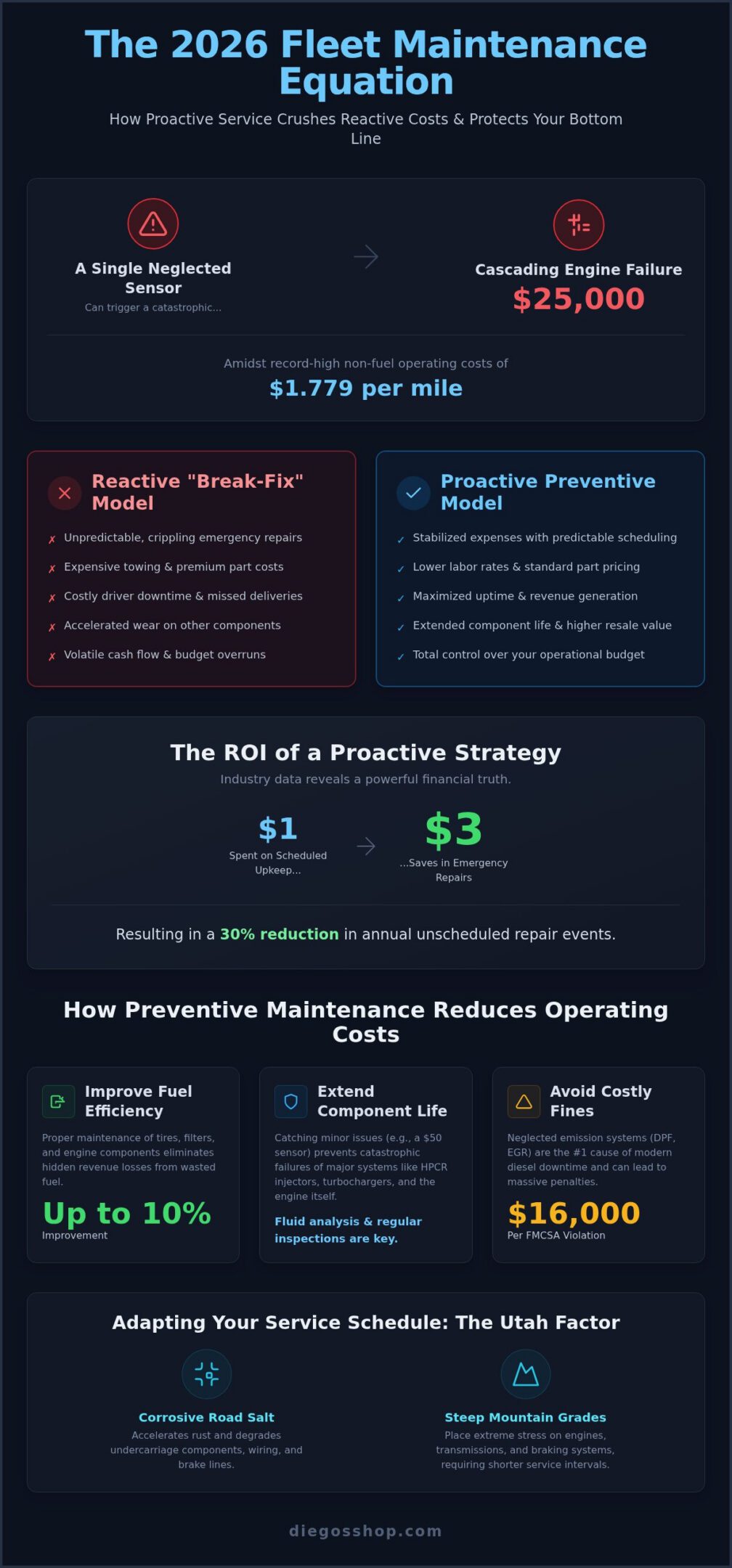
In 2026, a single neglected sensor in a modern diesel engine can trigger a catastrophic cascading failure that costs your fleet $25,000 in a single afternoon. You’re already feeling the pressure of record-high non-fuel operating costs, which have reached $1.779 per mile. It’s frustrating when unpredictable repair costs hit your bottom line or when driver downtime leads to missed deliveries. This guide explains exactly how preventive maintenance reduces fleet operating costs by turning emergency breakdowns into predictable, manageable line items.
We understand that maintaining a fleet along the Wasatch Front requires more than just software logs; it requires technical mastery. You’ll learn how a proactive strategy slashes downtime, improves fuel efficiency, and protects your assets from rising FMCSA fines that can reach $16,000 per violation. We will also cover how to navigate Utah’s new heavy-duty emissions compliance fees while extending the service life of your equipment. By the end, you’ll have a roadmap for higher resale values and the peace of mind that comes from a fleet that stays on the road.
Key Takeaways
- Shift from a reactive “break-fix” model to a Total Cost of Ownership approach to stabilize monthly expenses and avoid the most expensive emergency repairs.
- Discover how preventive maintenance reduces fleet operating costs by stopping minor sensor issues from escalating into $25,000 engine failures.
- Improve your fleet’s fuel efficiency by up to 10% and eliminate the hidden revenue losses caused by unscheduled vehicle downtime.
- Adapt your service schedule to survive the Utah factor, accounting for the corrosive road salt and steep mountain grades unique to the Wasatch Front.
- Protect your investment with warrantied repair work from specialized master craftsmen who understand the specific needs of modern diesel emission systems.
The Financial Reality: Reactive vs. Preventive Fleet Maintenance
Many fleet managers view maintenance as an interruption to their schedule. In reality, waiting for a truck to fail is the most expensive way to run a business. This “break-fix” trap creates a cycle of emergency fees, towing costs, and lost revenue that can cripple a small operation. Understanding What is Preventive Maintenance? is the first step toward reclaiming control over your assets. In 2026, Total Cost of Ownership (TCO) includes more than just the monthly payment; it accounts for every hour a truck sits idle and every missed delivery window.
The true price of a breakdown is rarely found on the initial repair invoice. You have to consider the indirect costs, such as driver downtime, late delivery penalties, and the accelerated wear on other components. Industry data suggests a 3:1 rule: every dollar spent on scheduled upkeep typically saves three dollars in emergency repairs. This is exactly how preventive maintenance reduces fleet operating costs over the long term. You aren’t just paying for an oil change; you’re buying insurance against a $25,000 engine overhaul.
Breaking Down the ROI of a Proactive Strategy
A seized engine block is a finality that most budgets can’t absorb without significant pain. Scheduled service allows our shop to source parts during regular business hours rather than paying premium overnight shipping for emergency components. This proactive approach also secures lower labor rates because the work is planned, not panicked. When parts are ordered in advance, we can ensure they are high-quality components that meet warrantied repair standards. For a medium-duty diesel truck, the ROI of a preventive program is realized through a 30% reduction in annual unscheduled repair events.
Why 2026 Fleet Budgets Require Predictability
Parts availability remains a challenge in 2026. If you wait until a turbocharger fails, your truck might sit for weeks waiting for a replacement. A structured fleet maintenance program turns these potential disasters into scheduled line items. This stabilizes your cash flow by removing the “surprise” element from your monthly ledger. It serves as a financial hedge against inflation and the rising costs of diesel technicians. By controlling the timing of your repairs, you maintain total authority over your operational budget and keep your drivers on the road.
Extending Component Life: The Mechanical Science of Cost Reduction
Modern diesel engines are marvels of engineering, but they are also highly sensitive to minor component failures. A $50 pressure sensor might seem insignificant until it fails to report a drop in oil pressure, leading to a catastrophic engine seizure. This is the “cascading failure” effect. By catching these small issues early, we demonstrate exactly how preventive maintenance reduces fleet operating costs. Instead of replacing a $20,000 engine, you are replacing a small electronic part during a scheduled inspection.
High-pressure common rail (HPCR) injectors and turbochargers operate under extreme tolerances. Contaminated fuel or oil can cause micro-abrasions that destroy these components from the inside out. We use fluid analysis as a diagnostic tool to predict internal wear before it becomes audible. It identifies metal shavings or chemical imbalances that signal a pending failure. This allows you to schedule a repair before a truck ends up on the shoulder of a busy highway.
Protecting the Diesel Heart: Engine Longevity
Diesel engines generate significant soot, which eventually thickens the oil and increases friction. Following strict diesel oil change intervals is essential to keep these abrasive particles away from your bearings. We also focus on cooling system integrity to prevent liner cavitation, a common but preventable cause of internal engine damage. Even air filtration plays a role; a single tear in a filter can allow dust to sandblast your turbocharger blades. If you’re concerned about your engine’s long-term health, our preventive maintenance services provide the thorough oversight your fleet needs.
The Cost of Neglecting Emission Controls
Emissions systems, specifically the Diesel Particulate Filter (DPF) and Exhaust Gas Recirculation (EGR) valve, are the leading causes of modern diesel downtime. When these systems clog, the truck enters “limp mode,” which restricts speed and power to protect the environment at the expense of your delivery schedule. Maintaining these components is a primary way how preventive maintenance reduces fleet operating costs for modern diesel owners. Preventive EGR cleaning is a fraction of the cost of a full system replacement. Properly scheduled DPF cleaning removes accumulated ash before it hardens, preventing the total failure of a filter that can cost thousands to replace. This proactive care ensures your fleet avoids the most common source of roadside calls in 2026.
Beyond the Repair Bill: Eliminating Indirect Operating Expenses
While the repair invoice is the most visible expense, the true financial drain on a fleet often comes from invisible inefficiencies. This is where the real value of a proactive strategy emerges. Understanding how preventive maintenance reduces fleet operating costs requires looking past the shop floor and into your fuel ledger and insurance premiums. A well-maintained diesel engine isn’t just a reliable asset; it’s a precision instrument that operates at peak efficiency.
Fuel is typically a fleet’s largest variable expense. When injectors are clogged or filters are restricted, the engine works harder to deliver the same power, often burning 5% to 10% more fuel than necessary. Beyond the engine, simple mechanical issues like poor wheel alignment or improper tire pressure create rolling resistance that further drains your tank. Using professional diesel engine repair to restore factory-spec performance ensures that every gallon of fuel translates into maximum mileage.
Then there is the “downtime tax.” When a truck is off the road, you aren’t just paying for the repair; you’re losing the revenue that vehicle should be generating every hour it sits idle. This loss of productivity often exceeds the cost of the mechanical work itself. Additionally, a documented service history protects your fleet’s resale value. Buyers in 2026 are wary of neglected assets; a vehicle with a comprehensive, professional maintenance log can command thousands more at trade-in than a similar truck with spotty records.
Optimizing Fuel Efficiency Through Mechanical Precision
Mechanical drag and engine inefficiency are silent profit killers. Clogged air filters force the turbocharger to work harder, increasing heat and reducing the oxygen available for combustion. This leads to incomplete fuel burn and increased soot loading in your emissions system. We focus on the fine details, like verifying fuel rail pressures and checking for parasitic drag in the drivetrain, to ensure your trucks remain as efficient as the day they left the factory.
Reducing the Burden of DOT Compliance
Roadside inspections shouldn’t be a source of anxiety. Pre-empting failed DOT truck inspections through monthly check-ups is a primary way how preventive maintenance reduces fleet operating costs. In 2026, DOT compliance fines range from $1,099 to $16,550 per violation. A scheduled inspection at our shop is a small investment compared to the cost of an “out-of-service” order that strands your driver and cargo. Providing safe, reliable equipment also boosts driver morale. Drivers who trust their equipment are more productive and stay with your company longer, which is vital during the ongoing industry labor shortage.
Implementing a 2026 Fleet Maintenance Strategy in Utah
Operating a fleet in the Intermountain West presents challenges that generic maintenance plans simply don’t address. The steep mountain grades of Parleys Canyon and the corrosive road salt used during Wasatch Front winters require a specialized approach. This regional context is fundamental to how preventive maintenance reduces fleet operating costs in Utah. A truck hauling heavy loads over Provo Canyon needs a different service cadence than one performing local deliveries in Orem. By tailoring your strategy to the environment, you prevent the premature wear that mountain driving and extreme temperature swings inevitably cause.
A modern strategy also integrates advanced diagnostics with seasoned technical expertise. In 2026, we don’t just wait for a dashboard light; we use predictive data to identify parts nearing the end of their service life. This shift from “preventive” to “predictive” is a primary way how preventive maintenance reduces fleet operating costs by allowing for repairs during planned shop visits. Partnering with a local specialist ensures faster turnaround times and access to technicians who understand the specific needs of Utah County fleets.
Adapting to the Wasatch Front Environment
Brake systems are your first line of defense on Utah’s grades. Constant downhill braking creates immense heat, leading to glazed pads and warped rotors. Our inspections prioritize brake thickness and air system integrity to ensure your drivers stay safe on the descent. We also prepare your diesel engines for sub-zero mornings by testing battery health and glow plug resistance. In the winter, we focus on corrosion control for chassis and suspension components, as road salt can eat through metal and electrical harnesses if left unchecked. These proactive steps ensure your equipment remains durable regardless of the season.
The 5-Step Implementation Framework
Success begins with a comprehensive asset audit. Whether you manage a fleet of Peterbilts, Kenworths, or Ford Powerstrokes, each vehicle has unique service requirements. Next, you must define service intervals based on duty cycles. While over-the-road trucks might use mileage-based intervals, local delivery trucks often require hour-based or fuel-burn metrics to account for excessive idling. The final, most critical step is establishing a relationship with a diesel repair Utah specialist who can execute these protocols with master craftsman precision. If you’re ready to stabilize your budget and extend your asset life, contact us to start your fleet maintenance program today.
Why Professional Diesel Maintenance is a Strategic Investment
Professional diesel maintenance isn’t a line item to be minimized; it’s a strategic lever for business growth. When you choose a specialized diesel shop over a generalist, you’re hiring technical mastery that understands the unique pressures of heavy-duty equipment. This specialized knowledge is a primary reason how preventive maintenance reduces fleet operating costs. A general mechanic might miss the subtle signs of injector wear or DPF soot loading that a master craftsman identifies instantly. Catching these issues before they require a tow truck is the hallmark of a seasoned expert.
The difference between a generic corporate hub and Diego’s Shop is personal accountability. We don’t just process vehicles; we manage assets. Every repair we perform is backed by our reputation for integrity and durability. This grounded approach ensures that your fleet isn’t just “fixed” but optimized for the long haul. You’re shifting your mindset from spending on repairs to investing in the uptime of your business. In an industry where a single day of downtime can cost thousands in lost revenue, having a reliable expert in your corner is your greatest competitive advantage.
The Value of Warrantied Reliability
Warrantied repair work is the ultimate hedge against financial uncertainty. It protects your investment by ensuring that the labor and parts used in your fleet meet a specific standard of quality. This guarantee reduces long-term risk and builds a partnership that scales as your fleet grows. When every truck in your yard is covered by a standard of technical excellence, you gain the peace of mind to focus on logistics rather than mechanical failures. Our goal is to provide a service that pays for itself through increased vehicle lifespan and predictable monthly costs. Contact Diego’s Shop for a custom fleet maintenance plan.
Your Partner in Springville, UT
Our location in Springville serves as the central hub for Utah County and Wasatch Front fleets. We provide the technical mastery required for modern diesel engine management, ensuring your trucks meet the rigorous demands of mountain hauling. Our expertise in emission control systems and heavy-duty drivetrain maintenance keeps your vehicles compliant and efficient. We pride ourselves on hands-on expertise and fundamentally honest service that speaks your language. Fleet durability is the foundation of your business success, and we are here to maintain that foundation with total control. Quality is our promise.
Securing Your Fleet’s Future on the Wasatch Front
Running a profitable fleet in 2026 requires more than just keeping trucks on the road; it demands a shift in how you view every service interval. You’ve seen how preventive maintenance reduces fleet operating costs by eliminating the expensive “break-fix” cycle and optimizing mechanical fuel efficiency. By accounting for Utah’s demanding mountain grades and corrosive winters, you protect your assets from the catastrophic failures that stall business growth. Technical mastery is no longer optional; it’s the foundation of your operational budget.
At Diego’s Shop, we provide the specialized diesel diagnostics and technical mastery your heavy-duty trucks deserve. We take pride in offering warrantied repair work on all fleet services, ensuring your investment is protected by a master craftsman’s standard of quality. Proudly serving Springville and the Wasatch Front, we invite you to Request a Custom Fleet Maintenance Plan for Your Diesel Trucks. Your fleet is the engine of your success. Let’s keep it running strong. Quality is our promise.
Frequently Asked Questions
How much can preventive maintenance actually reduce my fleet’s operating costs?
A proactive strategy can reduce your expenses by up to 30% annually. This is exactly how preventive maintenance reduces fleet operating costs; it prevents the “break-fix” cycle where emergency repairs and towing fees drain your budget. For every dollar you invest in scheduled upkeep, you typically save three dollars in catastrophic repair costs. It turns unpredictable financial surprises into manageable line items that protect your business profit.
What is the most important maintenance task for a diesel fleet?
Oil and filter changes remain the most critical task for diesel longevity. Diesel engines generate significant soot, which thickens the oil and increases internal friction if left too long. Regular changes protect high-pressure common rail injectors and turbochargers from abrasive particles. Neglecting this foundation leads to premature wear on bearings and cylinder liners, eventually resulting in a full engine overhaul that could’ve been easily avoided with routine care.
How often should my commercial trucks be in the shop for an inspection?
Most commercial trucks benefit from a thorough inspection every 10,000 to 15,000 miles, or at least once per month for local delivery units. In Utah, the harsh winters and steep mountain grades accelerate wear on brakes and suspension systems. We recommend a tiered schedule based on your specific duty cycle. Regular shop visits allow master craftsmen to identify minor leaks or sensor issues before they strand a driver in Provo Canyon.
Is it cheaper to do fleet maintenance in-house or outsource it to a diesel shop?
Outsourcing to a specialized diesel shop is often more cost-effective than managing an in-house team. You eliminate the overhead of expensive diagnostic equipment, specialized tooling, and technician benefits. Professional shops provide warrantied repair work, which offers a level of financial protection that in-house repairs rarely match. This partnership allows you to focus on logistics while experts handle the technical mastery required to keep your modern diesel emission systems compliant.
How does preventive maintenance improve my fleet’s fuel economy?
Peak fuel economy is only possible when every engine component operates at factory specifications. Clogged air filters and dirty injectors force your engine to work harder, burning 5% to 10% more fuel to maintain speed. Understanding how preventive maintenance reduces fleet operating costs includes recognizing that simple tasks, like maintaining proper tire pressure and wheel alignment, reduce rolling resistance. These small adjustments lead to significant savings at the pump over thousands of miles.
What happens if my fleet fails a DOT inspection due to poor maintenance?
Failing a DOT inspection results in immediate out-of-service orders and heavy fines. In 2026, DOT compliance fines range from $1,099 to $16,550 per violation, depending on the severity. Beyond the fine, you lose the revenue the truck would’ve generated while it sits in an impound lot or roadside repair area. Regular PM ensures your equipment remains safe and compliant, protecting your company’s safety rating and legal standing.
Can preventive maintenance extend the life of my diesel engines by years?
Consistent maintenance can double the service life of expensive diesel assets. Engines from brands like Peterbilt, Kenworth, and Ford are designed for longevity, but they require precise care to reach their full potential. By preventing “cascading failures” where a small part kills a major component, you keep your trucks on the road for hundreds of thousands of additional miles. This extended life significantly improves the total return on your equipment investment.
Why is fluid analysis such a critical part of a PM program?
Fluid analysis acts as an early warning system for your engine’s internal health. By testing oil, coolant, and fuel, we can identify microscopic metal shavings or chemical contaminants that signal a pending failure. This allows us to replace a bearing or seal before it causes a total engine seizure. It’s a non-invasive way to maintain total control over your machinery and prevent the most expensive types of roadside breakdowns.