
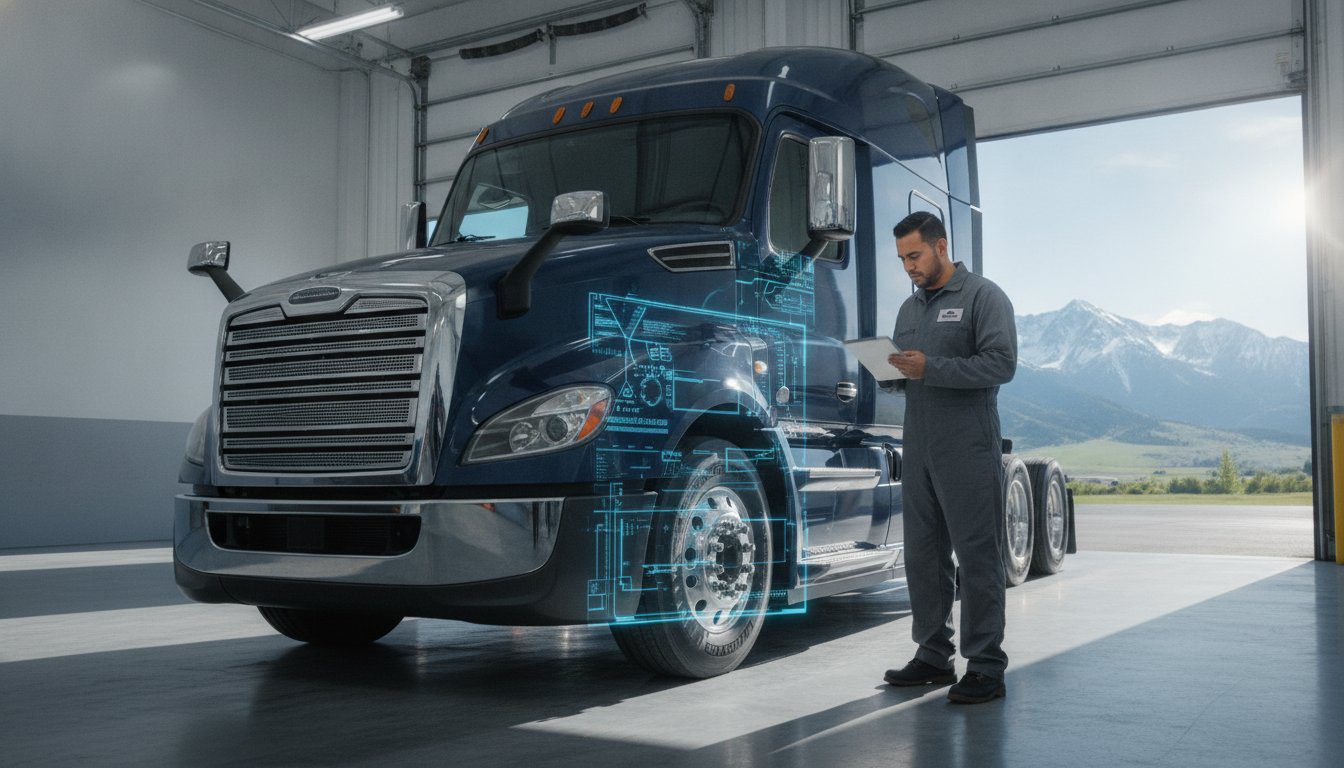
Commercial Truck Steering Repair: Ensuring Safety and Precision for Utah Fleets

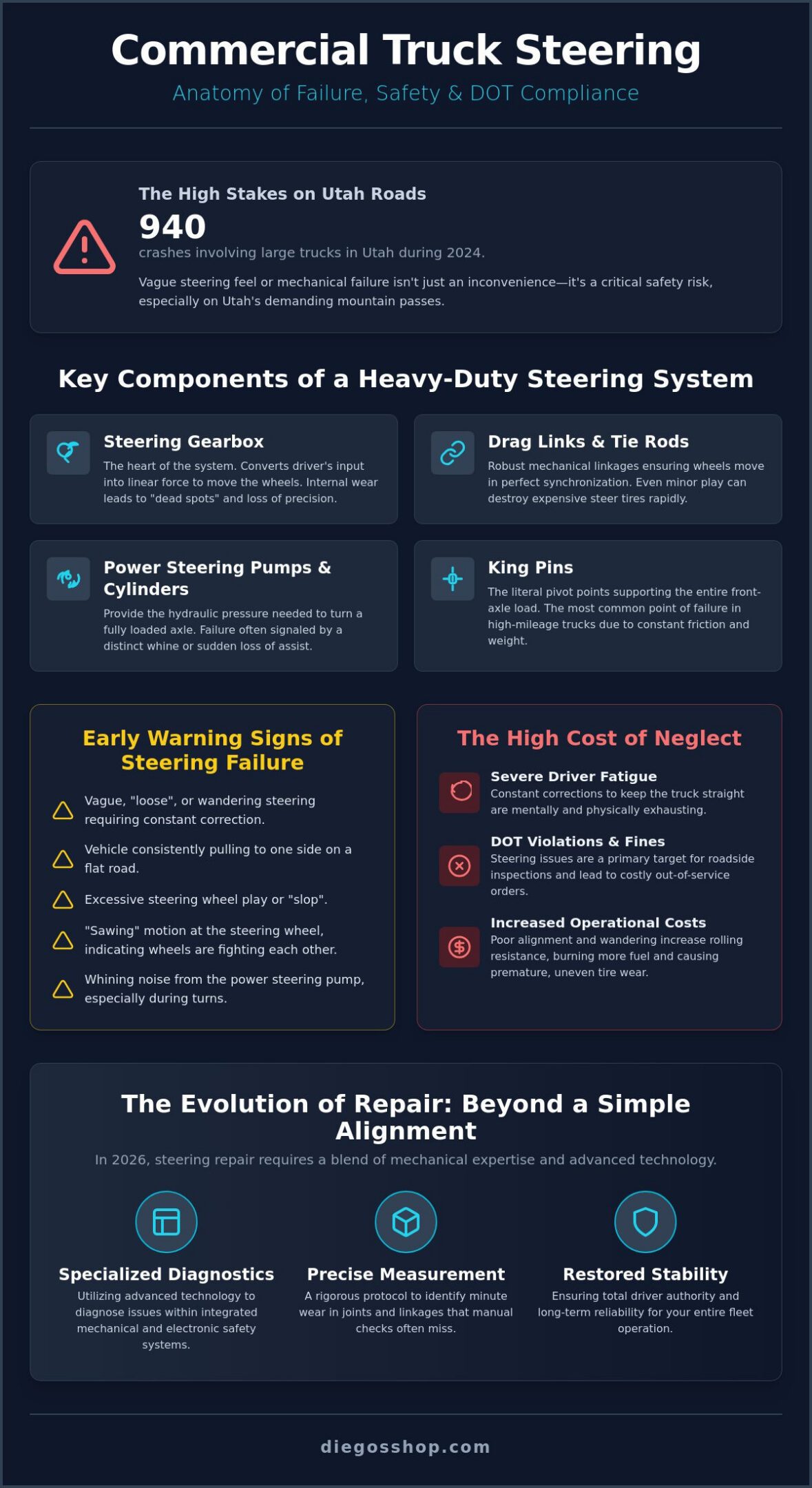
Did you know that in 2024, there were 940 crashes involving large trucks in Utah? While many factors contribute to these incidents, a vague steering feel or a mechanical failure on a mountain pass can turn a routine haul into a disaster. You understand that keeping your fleet on the road requires more than just engine power; it requires absolute precision control. When a driver reports “loose” steering or a pull to one side, it isn’t just an inconvenience. It’s a looming DOT violation and a major safety risk that leads to driver fatigue.
Finding reliable commercial truck steering repair in Utah County shouldn’t be a guessing game. You need a partner who understands the high stakes of fleet maintenance and the technical demands of heavy-duty systems. This article will help you identify the critical signs of steering failure and explain how to maintain DOT compliance to avoid costly out-of-service orders. We’ll preview how expert fleet maintenance and warrantied repair work can restore directional stability and ensure long-term reliability for your entire operation.
Key Takeaways
- Understand why modern heavy-duty steering systems in 2026 require specialized diagnostic technology that goes beyond simple mechanical alignments.
- Identify the critical roles of gearboxes and king pins in maintaining vehicle control and supporting heavy front-axle loads.
- Learn how to spot early warning signs like excessive wheel play or pulling to maintain DOT compliance and avoid costly roadside out-of-service orders.
- Discover how professional commercial truck steering repair utilizes a precise measurement protocol to restore directional stability and reduce driver fatigue.
- Access expert fleet maintenance and warrantied repair work tailored to the unique terrain and weight limits found in Utah County.
Understanding Commercial Truck Steering Repair in 2026
Commercial truck steering repair is the rigorous diagnostic and mechanical restoration of heavy-duty directional components. It isn’t just about fixing a leak; it’s about ensuring the driver has total authority over the vehicle’s path. In 2026, the industry has moved far beyond simple mechanical alignments. We now deal with integrated systems where mechanical parts work in tandem with electronic safety modules. Relying on manual checks alone is no longer enough to ensure a truck is safe for the long haul.
Precision steering is a non-negotiable part of proactive fleet maintenance. When steering health declines, your operational costs climb. Vague steering or “wandering” causes the truck to deviate from its line, forcing constant corrections. This friction increases rolling resistance, which directly impacts fuel efficiency. For OTR haulers, maintaining steering precision is one of the most effective ways to maximize tire longevity and keep overhead low. A truck that tracks straight is a truck that saves money.
The Evolution of Heavy-Duty Steering Systems
The transition from manual gearboxes to sophisticated power-assist cylinders has changed how we approach repairs. Modern heavy-duty trucks utilize high-pressure hydraulic systems that require surgical cleanliness and exact pressure settings. Electronic sensors now play a major role in medium and heavy-duty steering, providing real-time data to stability control systems. This complexity is why specialized diesel shops are better equipped for these tasks than general automotive garages. A deep understanding of the Key Components of a Heavy-Duty Steering System allows technicians to diagnose hydraulic failures that might look like mechanical wear to the untrained eye.
Why Steering Integrity Matters for Utah Drivers
Utah drivers face some of the most demanding conditions in the country. Negotiating the steep grades of the Wasatch Front with a full load puts immense pressure on the entire front-end assembly. Mountain driving isn’t just hard on brakes; it accelerates wear on king pins, tie-rod ends, and drag links due to constant weight transfer and cornering forces. If these parts aren’t tight, the truck becomes difficult to manage in high winds or on icy descents.
Utah’s climate also plays a role. The extreme heat of the desert and the freezing temperatures of the mountain passes cause hydraulic fluids to expand and contract, which stresses seals and hoses. A professional commercial truck steering repair program accounts for these local factors. We ensure that your steering system can handle the temperature swings and the physical toll of Utah’s rugged terrain. Maintaining this integrity is the only way to keep your fleet reliable and your drivers safe.
Key Components of a Heavy-Duty Steering System
A heavy-duty steering system is a complex chain of command that must function perfectly under immense pressure. The steering gearbox acts as the heart of this operation. It takes the driver’s input from the steering column and converts it into the linear force required to move the front wheels. Whether your rig is equipped with a Sheppard or TRW model, internal wear in the gearbox can lead to “dead spots” or hydraulic leaks that compromise your control. When these internal components fail, the precision of the entire system vanishes.
Connecting the gearbox to the wheels requires robust mechanical linkages, specifically drag links and tie rods. These components ensure that both wheels move in perfect synchronization. If a tie rod end develops even a small amount of play, the wheels will begin to fight each other. This creates a “sawing” motion at the steering wheel and can destroy a set of expensive steer tires in a remarkably short time. Professional commercial truck steering repair focuses on identifying these worn joints before they lead to a total loss of directional stability.
The muscle behind the movement comes from power steering pumps and assist cylinders. These parts provide the hydraulic pressure needed to turn a fully loaded axle at low speeds. A failing pump often signals its demise with a distinct whine or a sudden, dangerous loss of assist during a turn. Keeping these components in top shape is a core part of reliable warrantied repair work that keeps your fleet moving safely.
The Critical Role of King Pins
King pins are the literal pivot points of your front suspension, supporting the entire front-axle load. Because they endure constant friction and weight, they’re the most common point of failure in high-mileage trucks. Technicians distinguish between “play,” which causes a dangerous wheel shimmy, and “binding,” which makes the steering feel stiff and prevents the wheel from returning to center after a turn. King pin failure is the primary cause of erratic steering feel. Maintaining these pivot points is essential for meeting the strict requirements for DOT compliance for steering systems.
Hydraulic Power Steering Components
Hydraulic integrity is about more than just comfort; it’s a matter of fire safety. A ruptured high-pressure hose can spray flammable fluid onto a hot engine, which is a common cause of catastrophic roadside fires. We often find that power steering fluid contamination is the silent killer of pumps and gearboxes. If the fluid appears dark or smells burnt, it’s already abrasive and is wearing down internal seals. Regular inspections of hoses and fluid quality prevent these expensive, and potentially deadly, hydraulic failures.
Warning Signs and DOT Compliance for Steering Systems
Identifying steering issues before they result in a roadside breakdown is a critical skill for any fleet manager or owner-operator. Reliable commercial truck steering repair is often the only thing standing between a successful delivery and a failed inspection. Drivers should be trained to notice even subtle changes in how the rig handles. If the steering wheel feels loose or has excessive “play” before the wheels actually turn, the system is already compromised. Similarly, a truck that pulls to one side on a level stretch of I-15 isn’t just an alignment issue; it often points to a binding component or a hydraulic imbalance that needs immediate attention.
Unusual noises are another clear indicator of trouble. A clunking sound when hitting a bump usually suggests worn tie rod ends or a loose steering gearbox mount. Squealing or grinding during low-speed maneuvers, such as backing into a tight dock, often points to a failing power steering pump or contaminated fluid. These defects are exactly what officers look for during DOT truck inspections near me. Catching these signs early prevents a minor mechanical issue from spiraling into a major safety violation.
Steering Defects That Will Ground Your Truck
The Department of Transportation takes steering integrity very seriously. Certain defects will result in an immediate “out-of-service” order, meaning the truck cannot move until it’s repaired on-site. These violations include loose or missing mounting bolts, cracked welds in the steering column, and leaking hydraulic lines. Inspectors also strictly enforce the 10-degree rule for steering wheel lash. For a standard 20-inch steering wheel, any play exceeding two inches is a federal violation. These failures don’t just stop your truck; they damage your fleet’s CSA score and can lead to significantly higher insurance premiums over time.
Secondary Damage Caused by Poor Steering
Ignoring a steering problem creates a domino effect of mechanical damage. When the steering system is out of sync, your steer tires pay the price. You’ll notice cupping or feathered wear patterns that can ruin a new set of tires in just a few thousand miles. This misalignment also puts unnecessary stress on the front suspension and leaf springs, leading to premature failure of those components. Perhaps most importantly, poor steering causes extreme driver fatigue. Fighting a truck that won’t track straight is physically exhausting and mentally draining, which directly increases the risk of a fatigue-related accident. Keeping the steering tight is as much about protecting your people as it is about protecting your equipment.
Our Specialized Diagnostic and Repair Protocol
Effective commercial truck steering repair requires a systematic approach that eliminates guesswork. We don’t believe in the “parts-cannon” method of replacing components until the problem disappears. Instead, our shop follows a rigorous, five-step protocol designed to identify the root cause of steering instability. This process ensures that every truck leaving our bay tracks straight and remains compliant with federal safety standards. Precision is our baseline for every job.
- Step 1: Visual Inspection. We examine all mechanical linkages, hydraulic seals, and dust boots. We look for the subtle signs of stress, such as weeping fluid or polished metal, that indicate components are rubbing or binding.
- Step 2: Precision Measurement. Using dial indicators, we measure king pin play and steering wheel lash. This data-driven step ensures we catch wear that is invisible to the naked eye.
- Step 3: Hydraulic Testing. We utilize specialized pressure gauges to verify the performance of the power steering pump and gearbox. This identifies internal failures that might mimic mechanical looseness.
- Step 4: Mechanical Restoration. Worn parts are replaced with OEM or high-quality aftermarket components. We focus on parts that meet or exceed the original manufacturer’s Gross Vehicle Weight Rating (GVWR).
- Step 5: Alignment and Road Test. No repair is complete without a final alignment. We perform a thorough road test to verify the truck’s “straight-tracking” performance under real-world conditions.
Precision Diagnostics at Diego’s Shop
Our diagnostic capabilities allow us to detect internal gearbox bypass issues that many general shops miss. By applying the same rigorous standards we use for diesel engine repair, we ensure your steering system is as reliable as your powertrain. We utilize specialized manufacturer torque specifications on every fastener to ensure the structural integrity and long-term durability of the repair. This level of detail is necessary for heavy-duty rigs that face the daily grind of Utah’s highways.
Quality Parts for Rugged Reliability
When a gearbox fails, we help you choose between rebuilding the existing unit or installing a remanufactured one based on your fleet’s specific needs. We only install heavy-duty tie rod ends and drag links rated for the maximum loads your truck carries. Our commitment to warrantied repair work means we select parts that can stand up to the Wasatch Front’s steep grades and seasonal temperature swings. If your truck is wandering or the steering feels heavy, it’s time to bring it in for a professional assessment. We provide the technical expertise needed to keep your fleet in total control.
Why Utah County Fleets Trust Diego’s Shop for Steering Service
Utah County fleets require a service partner that understands the specific demands of the Wasatch Front. At Diego’s Shop, we provide more than just a mechanical fix; we offer the technical mastery required to keep heavy-duty rigs safe on our steep mountain passes and high-speed corridors. Our strategic location in Springville allows us to serve the entire region efficiently, from local owner-operators to large regional fleets. We take personal accountability for every vehicle that enters our bay. This master craftsman approach ensures that your commercial truck steering repair is handled with the same precision as a complex engine rebuild.
Our reputation for excellence in diesel repair in Utah is built on a foundation of technical integrity and transparent communication. We don’t hide behind vague estimates or unnecessary parts. Instead, we provide clear diagnostics and durable solutions that stand up to the heavy loads and harsh weather typical of our state. When you trust us with your steering system, you’re getting the expertise of technicians who live and work in the same environment your drivers face every day. We speak your language and respect your schedule.
A Partner in Fleet Uptime
Downtime is the enemy of profitability. We understand that every hour your truck sits in a bay is an hour it isn’t generating revenue. To minimize these disruptions, we coordinate steering inspections and repairs with your regular diesel maintenance schedule. This proactive approach allows us to catch worn drag links or weeping gearbox seals during routine service rather than waiting for a roadside failure. Our team specializes in efficient parts sourcing and rapid turnaround times for both OTR long-haulers and local dump trucks. We focus on keeping your equipment moving safely and predictably. Uptime is our priority.
Get Back on the Road with Confidence
There is no substitute for the peace of mind that comes from a warrantied, professional steering repair. Commercial drivers prefer our shop because we “speak diesel” fluently and understand the high stakes of their profession. We don’t just tighten a bolt and send you on your way; we ensure the entire directional system is calibrated for maximum stability and minimal driver fatigue. Whether you’re navigating a construction site in Provo or hauling a full load down Spanish Fork Canyon, you deserve steering you can trust. Don’t leave your safety to chance or settle for a general mechanic’s guesswork. Schedule your steering inspection at Diego’s Shop today and experience the difference that specialized expertise makes. Precision is our standard.
Secure Your Fleet’s Path with Precision Steering
Maintaining a heavy-duty steering system is about more than avoiding a DOT violation; it’s about protecting your drivers and your bottom line. We’ve explored how modern technology and rigorous diagnostic protocols are essential for managing the unique stresses of Utah’s terrain. By identifying early warning signs like steering wheel lash or hydraulic leaks, you can prevent minor wear from becoming a catastrophic failure on the road. Precision control is the foundation of every safe haul.
Diego’s Shop is conveniently located in Springville, Utah, and we specialize in heavy-duty diesel diagnostics for the industry’s most trusted brands. Whether you operate Peterbilt, Kenworth, or Isuzu fleets, our master craftsman approach ensures your commercial truck steering repair is handled with total accountability. Don’t let vague steering feel or mechanical instability compromise your operation. Trust a partner who understands the high stakes of fleet maintenance and delivers warrantied results every time.
Schedule Your Commercial Steering Repair at Diego’s Shop today and keep your fleet moving with absolute confidence.
Frequently Asked Questions
How often should commercial truck steering components be inspected?
Steering components should be inspected during every preventive maintenance service or at least every 25,000 miles for trucks operating in mountainous terrain. Regular checks allow technicians to catch weeping seals or loose tie rod ends before they lead to an out-of-service order. For OTR haulers on flatter routes, an inspection every 50,000 miles is often sufficient to maintain safety and operational efficiency.
What causes a commercial truck to pull to one side even after an alignment?
A truck that continues to pull after a professional alignment often has a binding king pin or an internal hydraulic bypass issue in the steering gearbox. If one side of the system is providing more assist than the other, the vehicle will drift regardless of the mechanical wheel position. This situation requires a specialized diagnostic check of the hydraulic pressures and mechanical pivot points to find the root cause.
Can a loose steering gearbox be adjusted, or does it need to be replaced?
You can sometimes adjust the sector shaft preload to reduce minor steering wheel lash, but this is often a temporary fix for a deeper problem. If the internal gears are pitted or the hydraulic seals have failed, a full replacement or remanufactured unit is necessary to restore precision. Over-tightening an old gearbox to fix play can lead to dangerous binding during turns, which compromises driver safety.
How much steering wheel play is allowed during a DOT inspection?
The federal limit for steering wheel play is determined by the size of the steering wheel, following the 10-degree rule. For a standard 20-inch wheel, the DOT allows no more than 2 inches of movement before the wheels begin to turn. Any lash exceeding this measurement is a safety violation that will result in the truck being placed out of service during a roadside inspection.
What are the signs that my truck’s king pins are failing?
Failing king pins typically manifest as a noticeable wheel shimmy or kickback through the steering wheel when hitting bumps. You might also notice uneven tire wear on the inside or outside edges of the steer tires. If the pins are binding due to lack of lubrication, the steering will feel unusually stiff and the wheels won’t naturally return to the center position after a turn.
Is it safe to drive a commercial truck with a power steering leak?
It is never safe to operate a commercial vehicle with a known power steering leak. Beyond the risk of a sudden loss of steering assist, hydraulic fluid is highly flammable; if a high-pressure line ruptures and sprays fluid onto a hot engine, it can trigger a catastrophic fire. Prompt commercial truck steering repair is the only way to mitigate these safety and fire risks effectively.
How long does a typical commercial truck steering repair take?
Most commercial truck steering repair tasks, such as replacing tie rod ends or drag links, can be completed within two to four hours. More intensive jobs, like replacing king pins or a steering gearbox, typically require a full day in the shop to ensure proper fitment and alignment. We prioritize efficient service to minimize your fleet’s downtime while maintaining our strict safety standards.
Why is my steering wheel vibrating at highway speeds?
Vibration at highway speeds is often caused by out-of-balance steer tires or cupping wear patterns resulting from worn steering joints. If the tie rod ends or the steering gearbox have excessive play, they can’t hold the wheels steady against road forces, leading to a persistent shake. A comprehensive front-end inspection is necessary to determine if the issue is the tire itself or the components holding it in place.