
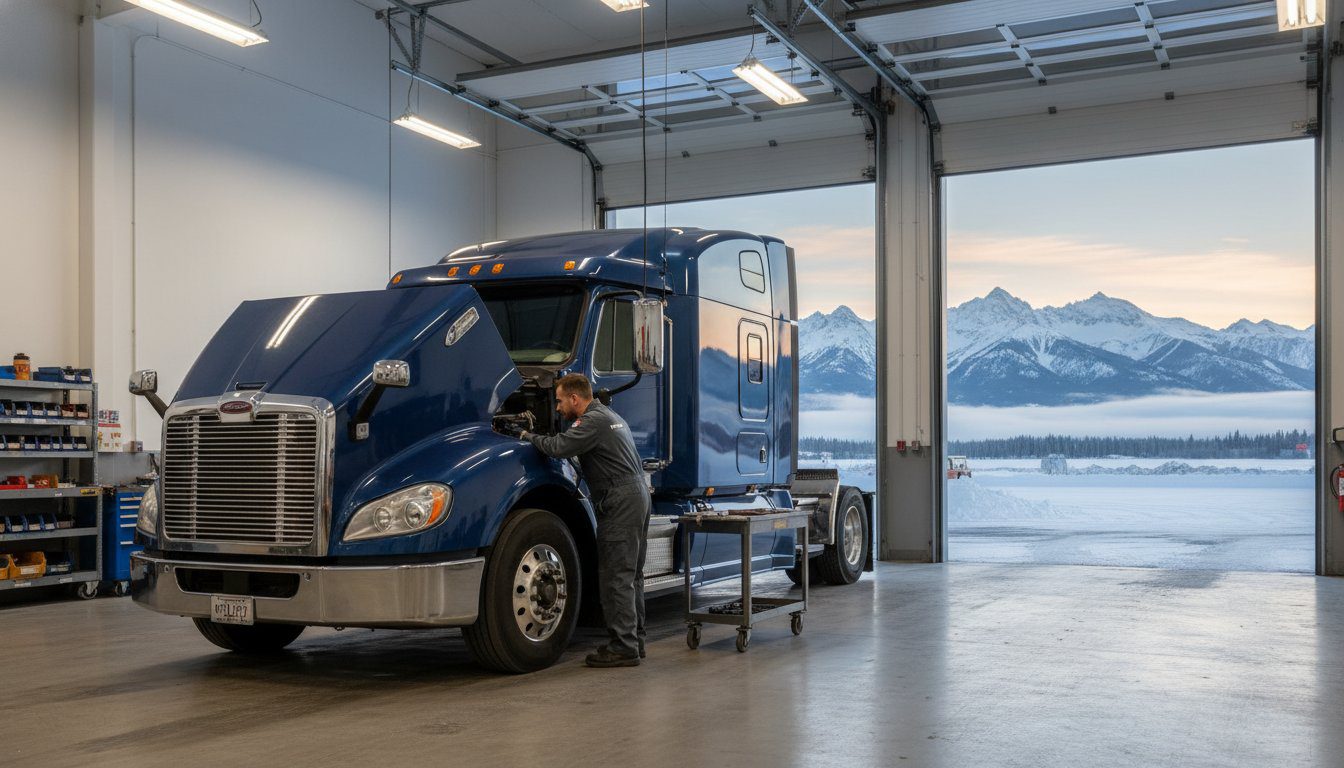
Winterizing a Commercial Truck Fleet: The 2026 Preventive Maintenance Guide

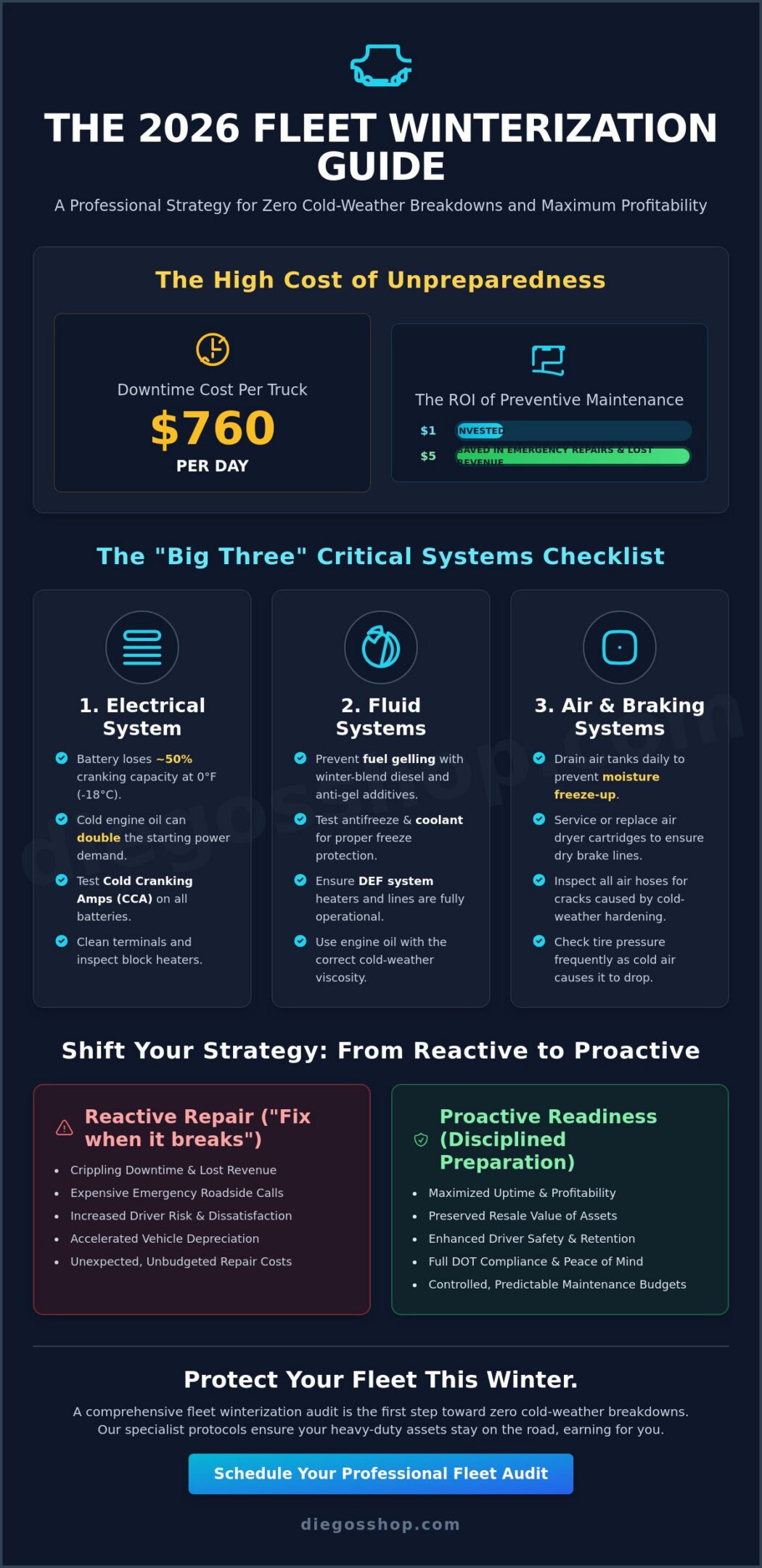
Did you know that every $1 invested in preventive maintenance can save your fleet up to $5 in emergency repair costs and lost revenue? You already know that winter isn’t just a change in weather; it’s a technical assault on your equipment. With downtime costs reaching $760 per day during peak season, a single cold-start failure or a gelled fuel line does more than just delay a shipment. It erodes your margins and puts your drivers at risk on dangerous mountain passes. Successfully winterizing a commercial truck fleet requires more than just checking the antifreeze levels.
This 2026 guide provides a professional-grade strategy to protect your bottom line, ensure total compliance with regional traction laws, and achieve zero cold-weather breakdowns. We’ll cover advanced diesel engine repair protocols, the latest in extended-life coolant technology, and the specific fleet maintenance steps needed to keep your heavy-duty assets moving through the harshest conditions. By following these specialist protocols, you can extend component life and maintain total control over your operational costs this season. Dependable equipment starts with disciplined preparation.
Key Takeaways
- Learn how to safeguard your 2026 logistics margins by calculating and mitigating the true cost of winter-related downtime.
- Identify the “Big Three” critical systems that require specialized technical attention before temperatures drop below freezing.
- Master the science of preventing fuel gelling and DEF system failures when winterizing a commercial truck fleet in extreme environments.
- Protect your assets from the specific corrosive impacts of Utah County road salts and the unique temperature swings of the Wasatch Front.
- Discover the advantage of a comprehensive fleet winterization audit to ensure your heavy-duty diesel equipment stays on the road.
The Strategic Importance of Winterizing a Commercial Truck Fleet in 2026
Winterizing a commercial truck fleet in 2026 is a multi-system preventive protocol. It’s a rigorous technical standard designed to protect heavy-duty assets from the structural and mechanical stresses of sub-zero operation. It’s the difference between a profitable quarter and one buried in red ink. As logistics margins tighten, the financial impact of winter downtime becomes more severe. A single Class 8 truck sitting idle due to a frozen air line or a failed battery loses roughly $760 per day in revenue. Proactive maintenance ensures that modern diesel engine management systems don’t suffer accelerated wear from cold-start cycles that stress sensitive sensors and lubrication circuits.
This strategy marks a shift from reactive repair to proactive readiness. In the current economic climate, waiting for a failure is a liability. With average repair invoices rising 7.2% year-over-year, the “fix it when it breaks” mentality is a relic of the past. Professional fleet managers now treat winter prep as a technical survival strategy for their modern diesel systems. They understand that extreme cold doesn’t just cause breakdowns; it accelerates vehicle depreciation by stressing every component from the block to the frame.
Protecting Your ROI Through Preventive Care
Scheduled care is significantly more cost-effective than emergency roadside assistance. Industry data suggests that every dollar spent on specialized 2026 diesel maintenance handbook protocols can save up to five dollars in avoided repairs. This technical discipline also preserves the resale value of medium-duty and heavy-duty trucks alike. A documented history of winterization is a certificate of durability for future buyers. Even a specialized winter service vehicle relies on these same preventive principles to remain operational when the weather is at its worst. Reliable fleets are built on consistent, expert-level attention to detail.
Safety and Compliance Standards
Meeting 2026 DOT safety requirements starts with reliable DOT truck inspections that identify cold-weather vulnerabilities before they lead to roadside violations. Compliance is about more than just avoiding fines; it’s about driver retention. Drivers are your most valuable asset. They stay with fleets that prioritize their safety and provide equipment that actually starts when the temperature hits zero. Providing a winter-ready truck shows your team that you value their time and their safety. Reliable equipment builds a culture of trust and professional accountability that keeps your best operators behind the wheel.
Critical Diesel Systems: A Technical Winterization Checklist
Standard preventive maintenance schedules often fall short when temperatures plummet. When you’re winterizing a commercial truck fleet, you have to look beyond basic oil changes and tire rotations. Sub-zero environments expose every hidden weakness in a heavy-duty diesel engine. We focus on the “Big Three” critical systems: Electrical, Fluids, and Air. High-quality filtration is also a priority because winter fuel starvation often stems from microscopic debris and moisture that wouldn’t cause issues in July. Cooling systems require a full pressure test now. Thermal contraction can cause small leaks at hose clamps and seals that only manifest when the mercury drops.
This technical checklist isn’t just about avoiding a jump-start. It’s about maintaining the integrity of your modern diesel management systems. Proactive care ensures that your equipment remains dependable when your competitors are stuck in the yard. Every component we inspect is a potential point of failure that could lead to a $760 daily downtime loss. We take a no-nonsense approach to these inspections to keep your trucks moving.
The Electrical System: Batteries and Block Heaters
Cold weather is a battery’s worst enemy. At 0°F, a standard lead-acid battery loses approximately 50% of its cranking capacity. Simultaneously, the cold, thickened oil in the crankcase can double the engine’s starting demand. We test Cold Cranking Amps (CCA) to ensure every unit meets the manufacturer’s minimum specifications for winter operation. Our technicians clean corrosion-prone terminals and apply protective sealants to maintain a high-amperage connection. We also verify block heater functionality and cord integrity for every unit. A frayed cord or a burnt-out heating element is a common but avoidable cause of Monday morning cold-start failures.
Air Systems and Brake Reliability
Moisture is the primary threat to air brake reliability. If water vapor bypasses the air dryer, it can freeze inside the lines and valves, potentially locking up wheels while in transit. We service air dryers by replacing desiccant cartridges and draining air tanks to remove accumulated water and oil sludge. Reliable stopping on slick, snow-covered roads also depends on mechanical health. We verify brake pad thickness and rotor condition to ensure consistent performance during mountain descents. Our specialized fleet maintenance protocols are designed to catch these air system vulnerabilities before they become roadside emergencies.
Fluid Management and Lubrication
Transitioning to lower-viscosity synthetic oils is a smart move for better cold-start flow and reduced internal friction. We also test coolant freeze points and supplemental coolant additive (SCA) levels. Proper chemical balance prevents liner pitting and prevents the block from cracking in extreme freezes. This is also the critical window for preventing diesel fuel gelling by inspecting fuel-water separators and heater circuits. Finally, we ensure all windshield washer fluid is rated for -20°F or lower. Clear visibility is a non-negotiable safety requirement for every driver in your fleet.
Managing Diesel-Specific Winter Challenges: Fuel Gelling and DEF Systems
Diesel engines face unique chemical and physical challenges when the temperature drops. Unlike gasoline, #2 diesel fuel contains paraffin wax. This wax is a vital component for lubrication and energy content, but it precipitates into solid crystals as temperatures fall. This process, known as gelling, can clog fuel filters and starve the engine of fuel in minutes. Successfully winterizing a commercial truck fleet requires a proactive approach to fuel chemistry. Some fleet owners view anti-gel additives as an unnecessary expense, but this is a dangerous misconception. A single bottle of high-quality additive costs a fraction of an emergency service call or a missed delivery window.
Fuel-water separators also play a critical role during the winter months. Water is naturally present in diesel fuel systems due to condensation. In sub-zero weather, this water freezes into ice crystals that can block injectors or damage sensitive fuel pump components. We prioritize the inspection and replacement of these separators to ensure your fuel remains clean and liquid. Modern diesel systems are precise instruments. They don’t tolerate ice or wax buildup in the high-pressure common rail.
Defeating Fuel Gelling Before it Starts
Preventing a gelled system is always easier than thawing one. We recommend using winter-blend fuels provided by reputable suppliers in colder regions. These blends are pre-treated to lower the “cloud point” of the fuel. Additionally, keeping your fuel tanks full minimizes the headspace where moisture-laden air can condense into water. If a truck does gel up on the side of the road, emergency “thaw” products can help, but they should be used sparingly. These chemicals are harsh on seals and components. Professional-grade preventive maintenance is the only way to ensure total reliability.
DEF and DPF System Winter Care
Modern emission systems require specialized attention. Diesel Exhaust Fluid (DEF) is approximately 67.5% deionized water, which means it freezes at 12°F. While modern Selective Catalytic Reduction (SCR) systems are designed to self-thaw using engine coolant, they’re vulnerable during the initial startup. Never overfill your DEF tanks in the winter. Because the fluid contains so much water, it expands as it freezes. An overfilled tank can crack under the pressure of expanding ice, leading to costly leaks and system failures.
Short-tripping is another major winter risk. If a truck doesn’t reach full operating temperature, the Diesel Particulate Filter (DPF) cannot perform a natural regeneration. This leads to rapid soot buildup and “limp mode” errors. If your emission system begins to fail, you’ll need expert diesel engine repair to restore compliance and performance. We focus on ensuring these systems stay clear and functional throughout the coldest months. Dependable power depends on a clean exhaust path.
Preparing for the Wasatch Front: Regional Winterization Strategies
Operating along the Wasatch Front presents a unique set of technical hurdles that standard maintenance guides often overlook. High altitude and extreme temperature swings in Utah County create a volatile environment for heavy-duty diesel engines. A truck may start the day in 40-degree weather at the valley floor and face sub-zero temperatures and thin air at the summit of Parley’s Canyon or Spanish Fork Canyon just an hour later. Successfully winterizing a commercial truck fleet in this region requires a localized strategy that accounts for these rapid atmospheric changes. We focus on ensuring your equipment can handle the increased torque demands of mountain grades without compromising system integrity.
Beyond the weather, the chemical environment on Utah highways is exceptionally harsh. The Utah Department of Transportation (UDOT) relies heavily on magnesium chloride to keep roads clear. While effective for ice, this compound is significantly more corrosive than traditional rock salt. It clings to the chassis and penetrates deep into electrical connectors, leading to “green rot” in wiring harnesses that can disable a vehicle without warning. We implement specific protocols to neutralize these chemical threats before they cause permanent damage.
Corrosion Mitigation for Chassis and Wiring
Longevity for your fleet depends on aggressive corrosion management. We prioritize thorough undercarriage washing and the application of specialized protective coatings that create a barrier against magnesium chloride. Our technicians inspect every inch of exposed wiring, looking for small cracks in the insulation that allow salt-water intrusion. This level of detail is why diesel repair in Utah requires a specialist who understands structural integrity. We don’t just fix what’s broken. We protect your assets from the environment they operate in every day.
Traction and Torque for Mountain Driving
Mountain pass driving demands maximum traction and reliable power delivery. From October 1 to April 30, Utah’s chain laws are strictly enforced for commercial vehicles with a GVWR of 12,000 lbs or more. We perform mandatory tire chain inspections and verify that every unit has the required traction devices on board. We also evaluate tire tread depth and rubber compounds to ensure they meet the performance standards for snow and ice. Finally, we check differential and transmission fluids to ensure they can handle the high thermal loads of heavy-load mountain operation. Dependable torque is a requirement, not an option.
Don’t wait for a blizzard to discover a weakness in your regional prep. Contact us today for professional fleet maintenance that’s built for the Wasatch Front. We keep your drivers safe and your trucks moving.
Partnering with Diego’s Shop for Professional Fleet Winterization
Choosing the right partner for winterizing a commercial truck fleet is the most critical decision a fleet manager makes before the first snowfall. General repair centers often treat winter prep as a routine checklist, but for a specialized diesel shop, it’s a technical mission. We understand the specific vulnerabilities of heavy-duty assets operating in the 2026 logistics environment. With average repair invoices rising 7.2% year-over-year, you can’t afford a surface-level approach. Our technicians focus exclusively on diesel systems, ensuring that every diagnostic check and component replacement meets our rigorous standards for durability.
Our comprehensive fleet winterization audit is a deep-dive into the mechanical health of your vehicles. We don’t just check boxes; we perform technical evaluations of your engine’s thermal management, electrical capacity, and emission system integrity. When we implement our fleet maintenance plans, we’re looking for the subtle signs of wear that lead to $760 daily downtime losses. We provide warrantied repair work because we’re confident in our technical skill and the durability of our service. This commitment to quality provides the peace of mind you need to keep your trucks moving through March.
The Diego’s Shop Difference
We maintain a deep technical mastery of Peterbilt, Kenworth, and International systems. These aren’t generic machines, and they don’t respond well to generic care. Our team prioritizes direct, no-nonsense communication with every fleet manager. You’ll get a clear, honest assessment of your fleet’s readiness without unnecessary jargon or filler. We take personal accountability for the reliability of every truck that leaves our bay. It’s a matter of pride in our craft and respect for your bottom line. We speak the language of the drivers and owners who keep the Wasatch Front moving.
Schedule Your Fleet Audit Today
Your fleet’s survival on the mountain passes depends on the quality of its preparation. We invite all Springville and Utah County fleet owners to visit our facility at North Parkway Court for a professional consultation. Whether you manage five units or a regional fleet, we have the capacity and the expertise to handle your seasonal prep. Don’t let a preventable cold-start failure or a gelled fuel line compromise your driver safety. Contact us today to schedule your comprehensive winterization audit and secure your equipment for the season ahead. Rugged reliability for the long haul.
Secure Your Fleet’s Performance for the 2026 Winter Season
Winterizing a commercial truck fleet is an investment in your operational survival. By focusing on the critical electrical, air, and fluid systems while addressing the chemical challenges of Utah highways, you protect your assets from the most aggressive environmental stressors. Proactive maintenance ensures your modern diesel systems remain compliant and efficient, even when temperatures drop well below freezing on the mountain passes. Every technical step you take now prevents a costly roadside failure later.
At Diego’s Shop, we provide the specialist expertise required to keep heavy-duty fleets moving. Our Springville facility offers expert diagnostics for heavy-duty diesel fleets and warrantied repair work on all major brands. We understand the specific demands of the Wasatch Front and the critical nature of your delivery schedules. Don’t leave your reliability to chance this season. Our team is ready to deliver the durability your business depends on.
Schedule your professional fleet winterization at Diego’s Shop today. We’re here to ensure your fleet stays on the road and your business stays profitable. Rugged reliability starts with a professional plan.
Frequently Asked Questions
What temperature does diesel fuel start to gel?
Paraffin wax begins to precipitate at the cloud point, which is typically around 32°F for untreated #2 diesel. Actual gelling that stops fuel flow usually occurs between 10°F and 15°F. Using winter-blend fuels and high-quality anti-gel additives lowers these temperature thresholds significantly. We recommend treating your fuel systems before the ambient temperature reaches these critical levels to maintain reliable operation.
How often should I change my air dryer cartridge in the winter?
You should replace your air dryer cartridge at least once a year, ideally every autumn before the first freeze. When you’re winterizing a commercial truck fleet, ensuring the desiccant is fresh is the only way to prevent moisture from entering the brake lines. Frozen water vapor in the air system is a leading cause of winter roadside failures and locked wheels.
Is it safe to use starting fluid on a modern diesel engine?
It’s generally unsafe to use starting fluid on modern diesel engines equipped with intake grid heaters or glow plugs. The ether in starting fluid is highly combustible and can ignite prematurely, which causes catastrophic engine damage or personal injury. We recommend using functional block heaters to ensure safe, reliable starts in sub-zero conditions without risking your engine’s internal components.
How do I prevent my DEF tank from cracking in freezing weather?
Prevent DEF tank damage by never filling the reservoir beyond the 90% mark during the winter months. Since Diesel Exhaust Fluid is approximately 67.5% deionized water, it freezes at 12°F and expands as it turns to ice. Leaving headspace in the tank allows for this expansion without putting structural pressure on the tank walls or the pump assembly.
What are the specific tire chain laws for commercial trucks in Utah?
Utah law requires commercial vehicles with four or more drive wheels to carry and affix chains to at least four drive tires from October 1 to April 30. This mandate applies when traction restrictions are active on designated highways like I-80 or US-6. For vehicles over 12,000 GVWR, all drive tires must have traction devices when the traction law is in effect.
Can cold weather cause a DPF to clog faster?
Cold weather leads to increased idling and shorter trip cycles, which often prevent the exhaust from reaching the temperatures needed for a natural DPF regeneration. This causes soot to accumulate much faster, leading to frequent “limp mode” events and failed sensors. Maintaining high engine loads and minimizing idle time are essential for maintaining exhaust system health during the winter months.
Why is my truck’s battery dying faster in the winter than in the summer?
Batteries lose roughly 50% of their cranking power at 0°F because the internal chemical reaction slows down in the cold. Simultaneously, the engine requires significantly more amperage to turn over because the oil has thickened. This combination of reduced power supply and increased mechanical demand is why weak batteries fail during the first major cold snap of the season.
Should I switch to a different engine oil for the winter months?
Switching to a lower-viscosity synthetic oil, such as 5W-40, provides much better flow and lubrication during cold starts. Standard 15W-40 oil can become too thick in extreme cold, which causes delayed oil pressure and increased wear on sensitive engine bearings. We verify all manufacturer specifications to ensure the chosen oil weight supports your specific engine’s warranty and performance requirements.