

Signs of Diesel Engine Failure: The Fleet Manager’s Guide to Avoiding Costly Downtime

A single ignored knock in a heavy-duty engine can turn a profitable haul into a catastrophic expense in a matter of miles. For a fleet manager along the Wasatch Front, missing the early signs of diesel engine failure isn’t just a technical oversight; it’s a week of lost revenue and a broken promise to a client. You likely feel the constant pressure of keeping trucks on the road while worrying that your drivers might miss the subtle clues of a looming disaster. It’s frustrating when minor issues go unreported until they become total breakdowns that stall your entire operation.
This guide will teach you how to identify these critical warnings before they lead to a total engine replacement. We’ll show you exactly which symptoms require an immediate pull-over and which ones mean it’s time to schedule preventive maintenance. You’ll learn to decode exhaust smoke colors, monitor oil consumption patterns, and recognize the sounds that signal internal distress. We’re providing a clear roadmap to help you maintain total control over your fleet’s health and avoid the high cost of unplanned downtime. By the time you finish reading, you’ll know how to protect your equipment and when to call in a specialist to ensure your trucks stay dependable.
Key Takeaways
- Early detection prevents catastrophic engine failure and saves thousands in core charges and labor costs.
- Learn to identify the specific signs of diesel engine failure hidden in exhaust smoke colors and unusual engine knocking.
- Recognize performance-based red flags like power loss on heavy hauls or hard starting during extreme Utah temperatures.
- Determine exactly when to shut down a vehicle immediately versus when it is safe to limp to a Springville repair shop.
- Protect your fleet’s longevity with specialized diagnostics and warrantied repair work that keeps your operations moving.
The High Cost of Silence: Why Identifying Diesel Failure Early Matters
In the diesel world, ignoring a small problem is a gamble you’ll eventually lose. There is a sharp distinction between minor component wear and catastrophic engine failure. Minor wear might involve a failing sensor or a leaking gasket. Catastrophic failure means a thrown rod or a seized block. Identifying the early signs of diesel engine failure saves thousands of dollars because it preserves the “core” of the engine. When the block or crankshaft is destroyed, you lose the ability to rebuild, and core charges alone can devastate your maintenance budget.
The Wasatch Front adds a unique layer of stress to your fleet. Climbing Parleys Canyon or the Point of the Mountain under heavy loads forces engines to operate at peak cylinder pressures for extended periods. Modern diesel engines, specifically those manufactured after 2010, handle these stresses differently than older models. While older engines might give you a mechanical warning like a visible leak, newer engines often rely on complex sensors and emissions systems that can mask internal mechanical fatigue until it’s too late.
Sudden vs. Gradual Engine Failure
Some engine issues act like a ticking time bomb. A sudden drop in oil pressure or a metallic clack can lead to immediate seizure within seconds. Other failures are a slow burn. You might notice a gradual decline in fuel efficiency or a slight loss of compression that makes cold starts difficult. Thermal fatigue occurs when the constant cycle of extreme heating during steep Utah mountain hauls followed by rapid cooling causes metal components to expand, contract, and eventually develop microscopic fractures. These small cracks are the quiet precursors to a total breakdown.
The Economics of Preventive Maintenance
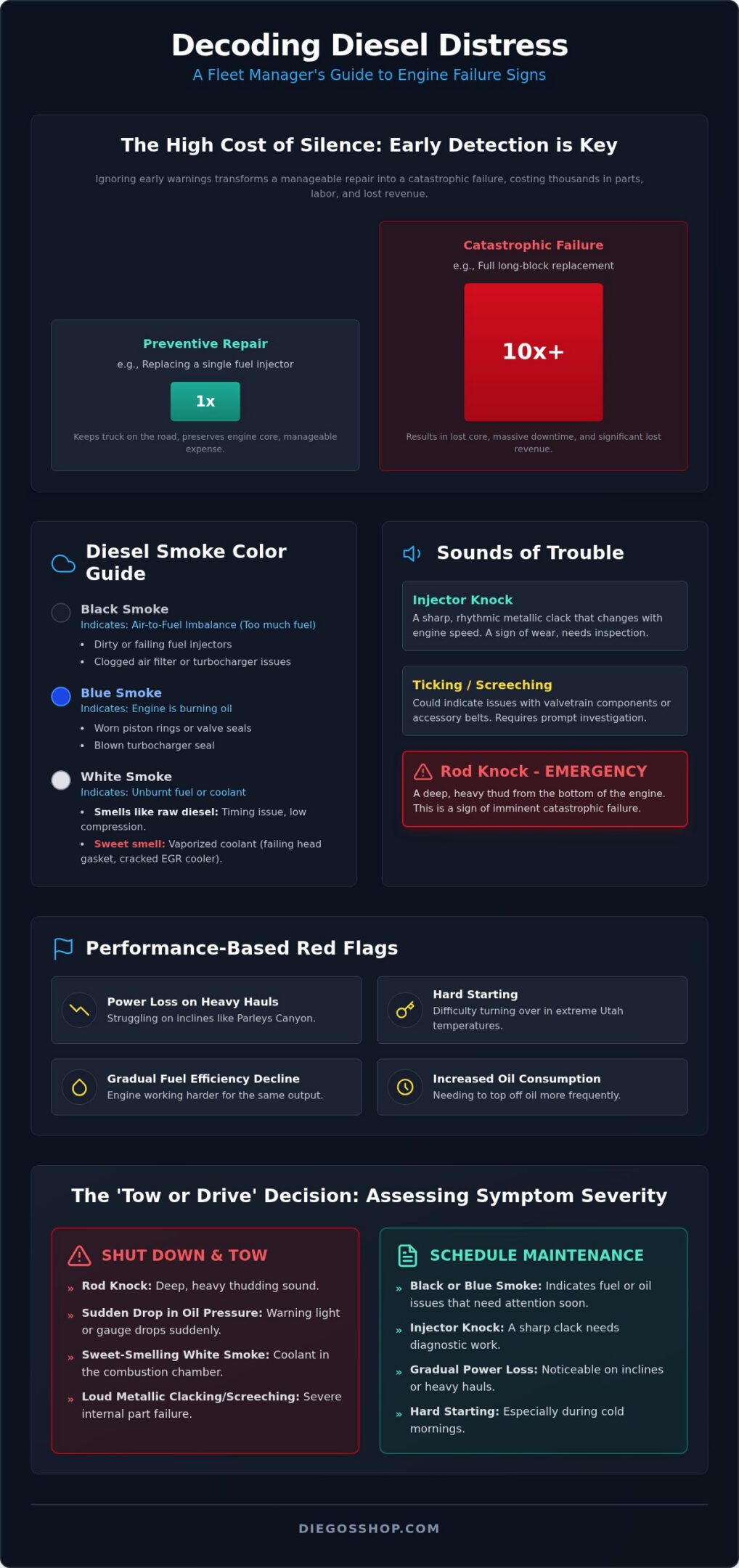
The math is simple but harsh. Replacing a single fuel injector is a manageable expense that keeps a truck on the road. Waiting until that injector fails and washes out a cylinder requires a full long-block replacement, which costs ten times more in parts and labor. Comprehensive fleet maintenance is designed to catch these signs of diesel engine failure before the “Check Engine” light even flickers. For a commercial fleet in Springville, the real cost isn’t just the repair bill; it’s the lost revenue from a truck sitting in a bay instead of moving freight. Catching failure early keeps your schedule intact and your profitability high.
Visual and Auditory Red Flags: Smoke, Sounds, and Smells
Your senses are often the first line of defense against a total breakdown. You don’t always need a diagnostic computer to spot the most obvious signs of diesel engine failure. Often, the engine will tell you exactly what is wrong through the tailpipe or the sounds coming from under the hood. Recognizing these sensory red flags early allows you to pull over before a small mechanical hiccup turns into a catastrophic seizure.
The Diesel Smoke Color Guide
Exhaust smoke is the most visible indicator of engine health. Healthy modern diesels should have clear exhaust once they reach operating temperature. If you see persistent colors, pay attention:
- Black Smoke: This usually indicates an air-to-fuel ratio imbalance. It’s often caused by dirty fuel injectors, a clogged air filter, or turbocharger lag. It means the engine is burning too much fuel and not enough air.
- Blue Smoke: This is a clear sign that the engine is consuming its own oil. Worn piston rings, failing valve seals, or a blown turbocharger seal allow oil to enter the combustion chamber.
- White Smoke: If the smoke smells like raw diesel, it’s unburnt fuel caused by timing issues or low compression. If it has a sweet smell, it’s vaporized coolant, which points to a failing head gasket or a cracked EGR cooler.
The “blow-by” test is another vital visual check for internal engine health. By loosening the oil filler cap while the engine idles, you can check for excessive crankcase pressure. If the cap dances or smoke bellows out like a steam locomotive, it’s a sign that the piston rings are no longer sealing properly.
These diagnostic principles aren’t limited to heavy-duty trucks; similar indicators are vital for marine engines, where specialists like compassmarine.co.za use these signs to keep outboard, inboard, and jet ski motors in peak condition.
Sounds of Trouble: Knocking, Ticking, and Screeching
Mechanical sounds provide a map of internal wear. You must learn to differentiate between a minor annoyance and a terminal failure. An “injector knock” is usually a sharp, rhythmic metallic clack that changes with engine speed. In contrast, a “rod knock” is a deep, heavy thud coming from the bottom of the engine. A rod knock is an emergency that requires an immediate shutdown to save the engine block. A ‘thumping’ sound often points to intake valve issues because the compression is escaping back through the intake manifold rather than staying in the combustion chamber.
If your turbocharger starts to sound like a high-pitched dentist’s drill or a screeching whistle, you likely have a boost leak or failing bearings. These auditory signs of diesel engine failure shouldn’t be ignored. If you notice these symptoms while moving freight through Utah County, scheduling a professional diesel diagnostic can help you catch the problem before the engine stops on its own. Trusting your ears today can save your fleet’s bottom line tomorrow.
Performance-Based Signs of Diesel Engine Failure
When your truck is hauling a full load up the steep grades of I-15, performance isn’t just about speed; it’s about safety and reliability. A sudden loss of power while climbing is one of the most reliable signs of diesel engine failure. You might notice the engine struggling to maintain RPMs even when the pedal is floored. This often coincides with increased fluid consumption. If you find yourself topping off oil or coolant between scheduled services, your engine is “drinking” fluids to compensate for internal leaks or excessive heat. These symptoms shouldn’t be ignored as “old truck” quirks.
Utah’s summer months introduce “heat soak” issues that test the integrity of your cooling and fuel systems. After a long haul, the engine remains at extreme temperatures even after it’s turned off. If the truck refuses to restart until it has cooled down for an hour, your fuel system or starter is likely failing under the stress. Rough idling and surging at stoplights in Salt Lake or Springville further signal that the fuel-to-air mixture is inconsistent. This instability often points to deeper mechanical distress that will eventually leave a driver stranded.
Fuel System and Compression Red Flags
Hard starting is frequently the first indicator of low compression. In a diesel engine, heat from compression ignites the fuel. If the piston rings or valves are worn, the cylinder can’t generate enough heat to fire when cold. Fuel contamination is another silent killer. Water or debris in the fuel can cause a catastrophic high-pressure pump failure, sending metal shards through the entire system. Professional diesel engine repair restores lost horsepower by addressing these root causes before they lead to a total rebuild.
Modern Emission System Failures (DPF & EGR)
Modern trucks often show signs of diesel engine failure through their emission systems. If your truck enters “Regen” cycles more frequently than usual, it’s often a symptom of an upstream engine problem like leaking injectors or high oil consumption. A leaking EGR cooler is particularly dangerous. It can leak coolant into the intake, leading to engine hydrolock. This happens when the pistons attempt to compress liquid, resulting in bent connecting rods and total engine destruction. Ignoring “Limp Mode” warnings is a risk no fleet manager should take. These protocols are designed to protect the engine from self-destruction during a critical failure event.
The ‘Tow or Drive’ Decision: Assessing Symptom Severity
Every fleet manager eventually receives a high-stakes phone call from a driver on the shoulder of the road. Deciding whether to limp the truck to a shop or call a heavy-duty tow truck is a choice that can save or cost you twenty thousand dollars. While some signs of diesel engine failure allow for a slow trip to the nearest bay, others demand an immediate roadside shutdown to preserve the engine block. Driving just five extra miles with zero oil pressure or a major coolant leak can turn a repairable issue into a total loss.
When to Call for a Tow
Certain symptoms are non-negotiable. If your driver experiences any of the following, the truck must stay exactly where it is until a tow arrives:
- Oil Pressure Drop: An oil pressure light combined with any mechanical knocking means the bearings are starving. Shutdown must be instantaneous.
- Uncontrolled Temperature: Coolant temperatures that climb rapidly while the truck is under a light load indicate a water pump failure or a major head gasket breach.
- Metal Contamination: Finding visible silver or gold flakes in a fuel filter or on the oil dipstick means internal components are already disintegrating.
One of the most dangerous scenarios is the onset of ‘Diesel Runaway.’ This occurs when the engine begins to consume its own crankcase oil as an unregulated fuel source. If the engine starts revving uncontrollably or produces thick, billowing blue-white smoke that doesn’t stop when the key is turned off, the engine is at risk of a violent explosion. The driver should never attempt to drive a truck showing these early onset symptoms.
Diagnostic Steps for the Driver
Before making the final call, have the driver perform a few basic checks. First, inspect the oil for a “milkshake” consistency, which indicates coolant is mixing with the oil. Second, have the driver document specific dash fault codes, specifically the SPN (Suspect Parameter Number) and FMI (Failure Mode Identifier). These codes provide the technical context needed for a specialist to determine the severity of the situation.
For fleet owners, professional oil analysis acts as the ultimate early warning system. By regularly testing for trace amounts of lead, copper, or chromium, we can identify failing bearings or rings weeks before they cause a breakdown. If you are unsure about a truck’s status, using professional diesel diagnostics services is the only way to get a definitive answer. Don’t gamble with your equipment; contact Diego’s Shop to evaluate your engine’s health and prevent a catastrophic failure.
Professional Solutions: How Diego’s Shop Stops Failure in Its Tracks
Diego’s Shop in Springville, UT, understands that a truck in the bay is a truck losing money. We’ve built our reputation on technical mastery and a no-nonsense approach to commercial fleet maintenance. When you identify the early signs of diesel engine failure, you need a partner who can translate those symptoms into a definitive repair plan. Our diagnostic protocol is designed to eliminate guesswork, ensuring we find the root cause before we ever turn a wrench. We focus on reducing downtime for Utah County businesses by getting the job done right the first time.
We provide warrantied repair work because we stand behind the durability of our craftsmanship and want to provide total peace of mind. For fleet managers along the Wasatch Front, this accountability is essential for long-term planning. You aren’t just paying for a temporary fix; you’re investing in the continued reliability of your heavy-duty assets. We customize every preventive maintenance program to account for Utah’s extreme temperature swings and high-altitude mountain hauls, which stress engines far beyond standard operating conditions.
Advanced Diagnostics and Specialized Tooling
Generic code readers often fail to capture the full story of internal engine health. We utilize specialized tooling to dig deep into Cummins, Powerstroke, and Duramax systems to find the source of intermittent performance issues. Our technicians have the seasoned experience required to interpret “ghost” codes that often lead less experienced shops to replace expensive, functional parts. OEM-level software is an essential component of our fleet troubleshooting process because it provides access to manufacturer-specific data and real-time calibration updates. This level of technical depth is how we maintain total control over complex repair situations.
Next Steps for Utah County Fleet Owners
Don’t wait for a roadside emergency to evaluate your equipment. We recommend scheduling a baseline inspection for any high-mileage units in your fleet to identify hidden wear before it manifests as a breakdown. Empowering your drivers is equally important for fleet longevity. Implementing a diesel maintenance handbook protocol ensures your team knows how to spot the signs of diesel engine failure before they turn into catastrophic expenses.
Take a proactive stance on your fleet’s health today. Contact Diego’s Shop for a professional assessment of your engine’s condition and keep your business moving forward with confidence. We specialize in expert diagnostics for Peterbilt, Kenworth, Isuzu, and Ford to ensure your trucks stay on the road where they belong.
Protect Your Fleet’s Future with Proactive Maintenance
Identifying the signs of diesel engine failure before they leave a truck stranded on I-15 is the most effective way to protect your business’s bottom line. You’ve learned how to decode exhaust smoke colors, interpret mechanical knocks, and make the critical decision between driving to the shop or calling a tow. These skills turn unplanned downtime into manageable maintenance. By staying vigilant and listening to what your equipment is telling you, you prevent the high costs of total engine replacement and keep your operations moving smoothly.
Reliable performance doesn’t happen by accident. It’s the result of technical mastery and consistent oversight. Diego’s Shop is located in Springville and serves the entire Wasatch Front with specialized commercial fleet support. We provide warrantied repair work on all engines to ensure your trucks remain durable and dependable for the long haul. Don’t wait for a minor symptom to become a catastrophic failure. Schedule Your Diesel Diagnostic at Diego’s Shop Today and gain the peace of mind that comes with expert care. Your fleet is the backbone of your business; let’s keep it running strong.
Frequently Asked Questions
What is the most common sign of diesel engine failure?
Hard starting and excessive exhaust smoke are the most frequent initial indicators of mechanical distress. While individual symptoms vary, these issues often signal a loss of cylinder compression or fuel system wear. Recognizing these early signs of diesel engine failure allows fleet managers to schedule maintenance before a truck becomes immobile. Ignoring a slow start today often leads to a costly tow tomorrow.
Can a diesel engine fail without showing a check engine light?
Yes, many mechanical failures occur without triggering a check engine light until the damage is severe. Sensors primarily monitor emissions and electronic parameters, but they can’t always detect a spun bearing or a cracked piston in real time. You must rely on auditory and visual cues like knocking or increased oil consumption. Professional diagnostics are essential for identifying internal wear that the dashboard computer misses.
What does black smoke from a diesel exhaust mean?
Black smoke indicates an incomplete combustion cycle caused by an imbalance in the air-to-fuel ratio. This is typically the result of restricted airflow from a dirty filter, failing fuel injectors, or a malfunctioning turbocharger. While it might seem like a minor performance quirk, persistent black smoke leads to soot buildup in the DPF. Addressing the root cause quickly prevents expensive downstream emissions system repairs.
Is it safe to drive a diesel truck that is knocking?
It’s never safe to continue driving a diesel truck that is producing a heavy mechanical knock. A deep, rhythmic thud usually indicates a rod bearing failure, which can lead to the piston exiting the side of the engine block. Operating the vehicle under these conditions will turn a rebuildable engine into scrap metal. Shutdown the engine immediately and call for a professional assessment to save the block.
How much does a typical diesel engine diagnostic service cost?
The cost of a diagnostic service varies based on the complexity of the engine and the specialized tooling required for a definitive answer. A basic scan might identify simple sensor faults, but a comprehensive mechanical evaluation involves cylinder contribution tests and physical inspections. Investing in a professional diagnostic is always more affordable than replacing an entire engine due to a misdiagnosed symptom. Contact a specialist for an evaluation based on your specific fleet needs.
How can I tell if my diesel fuel is contaminated?
You can identify contaminated fuel by checking your primary fuel filters for sediment, cloudiness, or a distinct separation of water. Performance-based clues include a rough idle, frequent stalling, or a “water in fuel” dashboard warning. Contamination causes rapid wear on high-pressure fuel pumps and injectors. If you suspect your fuel supply is compromised, draining the tanks and cleaning the system is necessary to prevent total fuel system failure.
What causes a diesel engine to lose power suddenly?
A sudden loss of power is frequently caused by fuel starvation or a major leak in the turbocharger boost system. If the engine’s computer detects a critical parameter out of range, it may also trigger “Limp Mode” to protect the hardware. This protocol significantly reduces horsepower to prevent further damage. Identifying these signs of diesel engine failure early helps you determine if the issue is a simple clogged filter or a failing high-pressure pump.
What are the signs of a failing turbocharger in a diesel engine?
A failing turbocharger typically manifests as a high-pitched whistling sound or a thick cloud of blue exhaust smoke. You’ll also notice a significant drop in boost pressure and sluggish acceleration under load. These symptoms often point to worn bearings or failing oil seals within the turbo unit. If left unaddressed, a turbo failure can send metal debris directly into the engine intake, causing catastrophic internal damage to the cylinders.