
Reducing Diesel Engine Downtime: Fleet Manager’s Guide

Every hour your truck sits idle on the side of the road isn’t just a repair bill; it’s a direct hit to your bottom line. You know that missed deliveries and emergency roadside fees can dismantle a monthly budget in a single afternoon. Learning how to reduce diesel engine downtime is the difference between a profitable quarter and a financial crisis. It’s frustrating to feel like you’re constantly reacting to the next dashboard warning light. Downtime isn’t an inevitability of diesel ownership; it’s often a symptom of reactive management that ignores the early warning signals modern engines provide.
This guide will show you how to implement the professional maintenance protocols and technical diagnostics used by master mechanics to eliminate unexpected breakdowns. We’ll explore how to interpret sensor data, establish a predictable maintenance rhythm, and transform your service approach into a strategic revenue protection plan. You’ll discover how specialized technical mastery over your Peterbilt, Kenworth, or Ford diesel platforms can lower your total cost of ownership and provide the peace of mind that comes with a truly reliable fleet.
Key Takeaways
- Understand why reactive repairs are significantly more expensive and how to identify the hidden costs that drain your fleet’s profitability.
- Discover how fluid analysis and air intake integrity serve as early warning systems to prevent catastrophic engine failure.
- Master the technical protocols for EGR and DPF management to learn exactly how to reduce diesel engine downtime through proactive emission system care.
- Build a tiered maintenance schedule designed to handle the specific stresses of high-altitude operation and steep mountain grades.
- Learn the benefits of partnering with a master craftsman for warrantied repairs that keep your medium and heavy-duty trucks on the road.
The True Cost of Diesel Downtime in 2026
When a heavy-duty truck stops unexpectedly, the financial impact ripples far beyond the repair invoice. You’re still paying for driver wages, insurance, and permits, but the vehicle isn’t generating a cent of revenue. In 2026, supply chain dynamics have made parts availability the single biggest risk to your uptime. A simple sensor failure that used to be a one-day fix can now sideline a truck for weeks if components are backordered. Understanding how to reduce diesel engine downtime is no longer just about maintenance; it’s about business continuity.
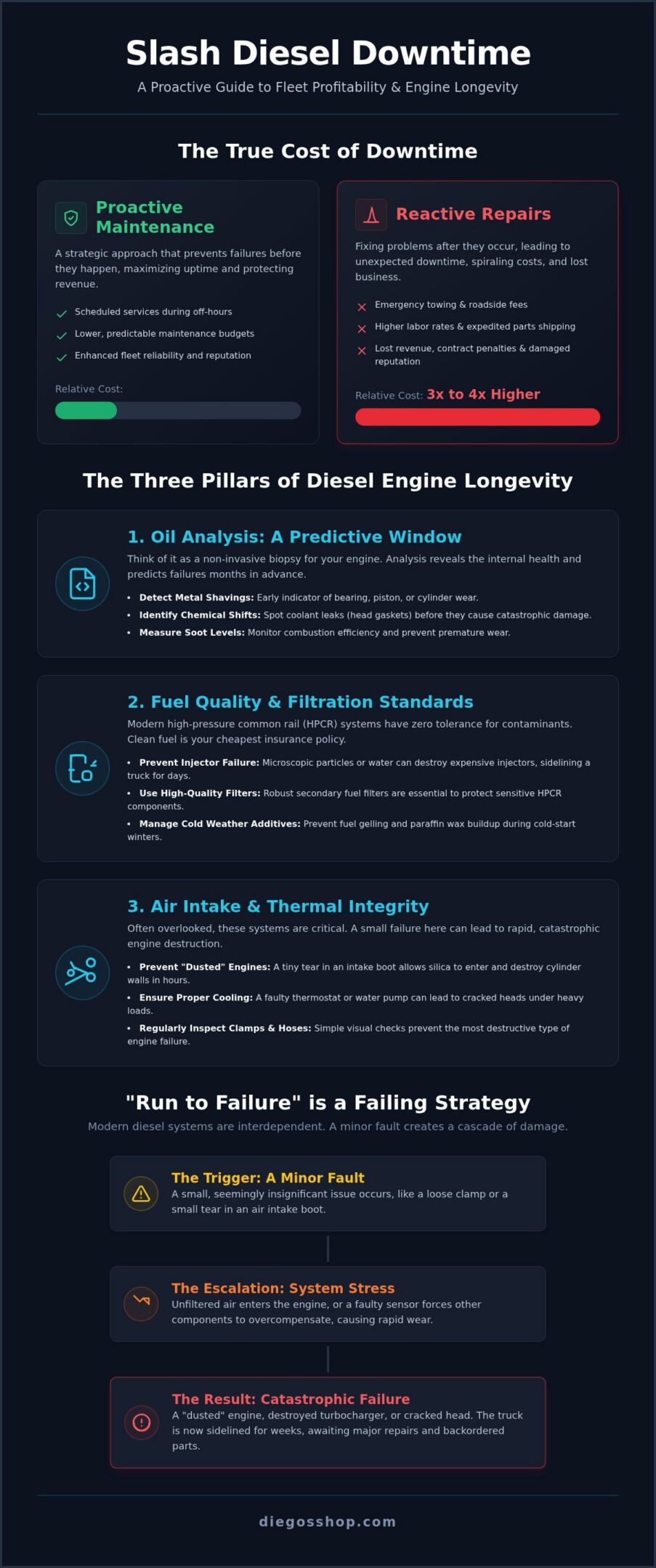
Reactive repairs typically cost 3 to 4 times more than planned preventive maintenance. This multiplier accounts for emergency towing, expedited shipping for parts, and the higher labor rates associated with urgent diagnostics. Beyond the immediate cash drain, frequent breakdowns damage your reputation. Shippers prioritize reliability; if you can’t guarantee a delivery window because your fleet is poorly maintained, you’ll lose those high-value contracts to more disciplined competitors.
Calculating Your Fleet’s Hourly Loss
To justify an aggressive maintenance budget, you must quantify the loss of an idle asset. Start by adding the driver’s hourly rate and benefits to the daily revenue target for that specific truck. Don’t forget to factor in “opportunity cost” during peak shipping seasons in Utah. If a missed delivery results in a contract penalty or a lost client, that single event could cost tens of thousands of dollars. Using hard data shifts the conversation from how much a service costs to how much revenue that service actually protects.
Why ‘Run to Failure’ is a Failing Strategy
A “run to failure” mindset creates a cascading effect of damage. Modern diesel systems are highly interdependent. A small leak in the air intake system or a faulty sensor can quickly lead to a “dusted” engine or a destroyed turbocharger. To prevent this, you need a basic understanding of how diesel engines work and how one system’s failure stresses the others. Constant firefighting takes a psychological toll on fleet managers, leading to burnout and sloppy oversight. Shifting to a “Master Craftsman” approach means prioritizing comprehensive diagnostics and catching minor wear before it triggers a catastrophic failure. This proactive stance is the only way to maintain total control over your fleet’s performance and your annual budget.
The Three Pillars of Diesel Engine Longevity
Achieving maximum vehicle uptime requires a shift from simply fixing what’s broken to monitoring the health of internal systems. These three pillars represent the core technical protocols for how to reduce diesel engine downtime. By focusing on fluid health, air integrity, and fuel hygiene, you identify wear before it leads to a catastrophic failure on the highway. Consistent attention to these areas transforms your maintenance from a cost center into a revenue protection strategy.
Oil Analysis as a Predictive Window
Routine fluid checks do more than just lubricate; they serve as a diagnostic record of your engine’s internal environment. Oil analysis is a non-invasive biopsy for engines. By measuring metal shavings, chemical shifts, and soot levels, you can spot bearing wear or head gasket leaks months before they cause a breakdown. Setting the right diesel oil change interval for heavy-duty use ensures you aren’t running on depleted additives while navigating steep mountain grades. This data-driven approach allows you to schedule repairs during planned shop time rather than during a delivery run.
Fuel Quality and Filtration Standards
Modern high-pressure common rail (HPCR) systems are incredibly efficient but have zero tolerance for contamination. Microscopic particles or water droplets can score injectors and cause expensive failures that sideline a truck for days. Implementing robust Preventive Maintenance Strategies includes the use of high-quality secondary fuel filters. These act as the cheapest insurance policy you can buy for your fleet. In Utah, managing fuel additives is essential for preventing paraffin wax buildup during cold-start winters. Clean fuel is the lifeblood of a reliable engine.
Air intake integrity is often overlooked until an engine is “dusted,” meaning abrasive particles have bypassed the filter and destroyed the cylinder walls. A small tear in an intake boot or a loose clamp allows silica to enter the combustion chamber, grinding down piston rings in a matter of hours. Thermal management is equally critical; a faulty thermostat or a degraded water pump leads to cracked heads under the stress of heavy loads. Maintaining a Peterbilt or Kenworth requires a deep understanding of these thermal cycles. Our technicians at Diego’s Shop focus on the integrity of every seal and hose to prevent small leaks from becoming major roadside emergencies. Mastering these pillars is the most effective way to learn how to reduce diesel engine downtime while protecting your investment.
Mastering Modern Emission Systems (EGR & DPF)
Modern emission systems are responsible for more than half of all unexpected roadside failures in the trucking industry. While these components are essential for environmental compliance, they often act as a bottleneck for engine performance. If you’re focused on how to reduce diesel engine downtime, you must understand the Exhaust Gas Recirculation (EGR) and Diesel Particulate Filter (DPF) failure cycles. These systems are highly sensitive to carbon buildup. When soot accumulates in the EGR valve, it doesn’t just hurt your fuel economy; it can trigger a total engine derate, leaving your driver stranded in “limp mode.”
Proactive maintenance is the only way to stay ahead of these failures. At Diego’s Shop, we emphasize that a professional truck EGR service is a critical defensive measure. Cleaning these components prevents carbon from migrating into the turbocharger, which protects the expensive Variable Geometry Turbo (VGT) found on Peterbilt and Kenworth platforms. Additionally, the quality of your Diesel Exhaust Fluid (DEF) matters. Contaminated or low-quality DEF can crystallize in the SCR catalyst, leading to repairs that cost thousands and take days to complete. High-purity DEF and clean filters are non-negotiable for fleet reliability.
Preventing DPF Clogging and Face-Plugging
Your DPF relies on three types of regeneration: passive, active, and forced. Passive regeneration happens naturally during long-haul highway driving when exhaust temperatures are high. Active regeneration occurs when the engine injects extra fuel to burn off soot. “Short-tripping,” or frequent stop-and-go driving, is the primary enemy here. It prevents the system from reaching the temperatures needed for a clean burn, leading to “face-plugging” where the filter surface becomes blocked. Don’t wait for a red dashboard light to take action. Scheduling a professional DPF cleaning before the filter reaches its limit is a master mechanic’s strategy for keeping a fleet profitable.
EGR Cooler and Valve Maintenance
EGR coolers are prone to internal leaks that can be difficult to diagnose until it’s too late. If you notice white smoke from the exhaust or frequent coolant loss without a visible leak, the cooler is likely the culprit. This moisture mixes with soot to create a thick paste that seizes EGR valves and sticks VGT vanes. When these vanes stick, the engine loses boost control and power. A seasoned master craftsman knows the secret is to remove and clean these valves before they seize entirely. This small, technical protocol is a proven way to learn how to reduce diesel engine downtime while extending the life of your heavy-duty engine’s most sensitive components.
Building a 2026 Preventive Maintenance Schedule
A reactive fleet is an expensive fleet. To master how to reduce diesel engine downtime, you need a tiered schedule that accounts for both mileage and the harsh environmental stressors of the Intermountain West. A standard factory manual often fails to account for the thinning air and steep grades found in Utah. Your 2026 strategy should move beyond fixed intervals and embrace condition-based maintenance. This approach uses real-time data to dictate service needs rather than relying on a generic calendar.
We recommend a three-tier system for maximum reliability. The “A-Service” focuses on lubrication and basic safety checks every 10,000 to 15,000 miles. The “B-Service” is a deeper dive into the engine’s health, occurring every 30,000 miles, where we analyze emission systems and perform technical diagnostics on the fuel system. Finally, the “C-Service” involves a comprehensive inspection of the drivetrain and cooling systems. By leveraging telematics and sensor data, you can catch a failing injector or a clogged filter before it forces an emergency stop.
The 10-Minute Pre-Trip Protocol
A master mechanic’s most valuable tool is a pair of trained eyes and ears. Every driver should perform a disciplined 10-minute walk-around before every departure. This protocol identifies leaks, frayed serpentine belts, and “soft” codes that haven’t yet triggered a dashboard light. Check for coolant residue around hose clamps and listen for unusual whistling that might indicate a boost leak. This walk-around is the most cost-effective tool in your fleet management arsenal.
Seasonal Adjustments for the Wasatch Front
Operating along the Wasatch Front requires seasonal vigilance. Before the winter freeze, ensure block heaters are functional and batteries are load-tested. Cold-start failures are entirely preventable with proper preventive maintenance. Summer heat creates extreme thermal stress when pulling heavy loads up Spanish Fork Canyon. We recommend cooling system stress tests during the shoulder seasons to ensure radiators and fan clutches are ready for the climb. To ensure your fleet is ready for the road, schedule your fleet maintenance with Diego’s Shop today.
Partnering with Diego’s Shop for Fleet Reliability
Managing a fleet across the Wasatch Front requires more than just a mechanic; it requires a technical partner who understands the high stakes of your operation. At Diego’s Shop in Springville, we specialize in comprehensive diesel engine repair that prioritizes your bottom line. Our master craftsmen don’t just clear codes; they identify the root cause of failures to ensure your trucks stay on the road where they belong. Whether you operate a single OTR long-hauler or a diverse fleet of local dump trucks, our customized service plans provide a clear roadmap for how to reduce diesel engine downtime through disciplined, technical oversight.
Our location in Springville serves the entire Wasatch Front, offering a specialized alternative to overcrowded dealership service centers. We understand that every hour of downtime is a missed delivery and a potential loss of revenue. By positioning preventive maintenance as a revenue protection service, we help fleet managers transition from a state of constant emergency to a predictable, profitable maintenance rhythm. We speak the language of heavy-duty performance and are dedicated to the durability of your equipment.
Advanced Diagnostics and Technical Mastery
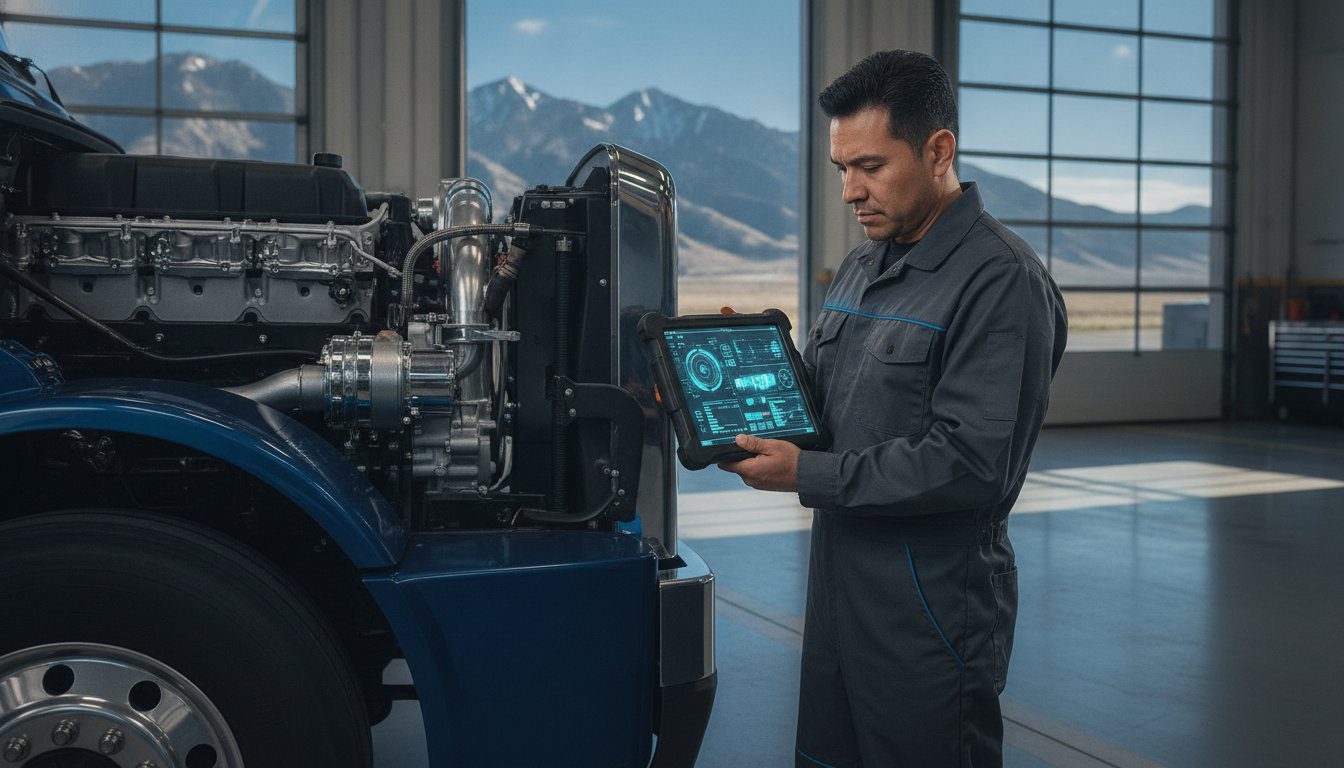
Modern diesel platforms like Peterbilt, Kenworth, Isuzu, and Ford require specialized software to communicate with complex engine control modules. We utilize high-level diagnostic tools equivalent to those found at major dealerships, allowing us to catch “ghost codes” and intermittent electrical faults that general shops often overlook. This technical mastery ensures that we spend less time guessing and more time performing precise, durable repairs. As a family-named shop, we offer a level of personal accountability and hands-on expertise that large corporate centers often lack. We treat every vehicle as a critical asset in your business strategy.
Warrantied Repairs for Peace of Mind
Reliability is built on the foundation of integrity and technical skill. We stand behind our work with a warrantied repair work guarantee, giving you total confidence in the durability of every fix. Our rigorous quality control protocols are designed to eliminate “comeback” downtime, ensuring that when a truck leaves our shop, it’s ready for the heavy loads and steep grades of the Utah landscape. By centralizing your maintenance with Diego’s Shop Fleet Services, you gain a partner dedicated to lowering your total cost of ownership. We take pride in the longevity of the engines we service and the profitability of the fleets we support. This is technical service centered on trust and proven capability. Master craftsmanship for the long haul.
Protecting Your Fleet’s Future
Protecting your fleet’s future requires a shift from emergency repairs to technical foresight. You now have the protocols to transform your maintenance department into a revenue protection engine. By prioritizing fluid analysis, mastering emission system cycles, and maintaining a disciplined schedule, you eliminate the uncertainty that drains your profits. Mastering how to reduce diesel engine downtime is a long-term commitment to operational excellence that keeps your drivers safe and your deliveries on time.
At Diego’s Shop, we provide the specialized technical mastery needed to maintain your medium and heavy-duty trucks. We utilize dealership-level diagnostic equipment and back our efforts with warrantied repair work on all diesel engines. Based in Springville, we’re proud to serve the entire Wasatch Front with honest, durable service. Don’t let the next breakdown dictate your schedule. Schedule your fleet’s preventive maintenance assessment at Diego’s Shop today. Your fleet is the backbone of your business; keep it strong with a partner you can trust.
Frequently Asked Questions
What is the #1 cause of unexpected diesel engine downtime?
Emission system failures are widely cited by industry professionals as the primary cause of unexpected downtime. These modern systems are extremely sensitive to carbon buildup and sensor errors. Neglecting routine maintenance on these components often leads to engine derates or “limp mode.” Establishing a preventive protocol is the most effective way to address this risk and learn how to reduce diesel engine downtime before it impacts your schedule.
How often should I perform an oil analysis on my commercial fleet?
We recommend performing an oil analysis at every service interval, typically between 10,000 and 20,000 miles depending on your engine’s duty cycle. This diagnostic test reveals metal shavings, fuel dilution, and coolant leaks that aren’t visible to the naked eye. Consistent testing creates a baseline of health for your Peterbilt or Kenworth fleet. It allows you to catch internal wear before it results in a catastrophic roadside failure.
Can a DPF cleaning really save me from a full filter replacement?
Yes, professional DPF cleaning can significantly extend the life of your filter and prevent a costly full replacement. Over time, ash builds up that cannot be removed by the truck’s onboard regeneration process. By having the filter cleaned in a specialized facility, you restore exhaust flow and engine efficiency. This is a critical step for fleet managers who want to lower their total cost of ownership and ensure reliable performance.
What are the early warning signs of an EGR cooler failure?
The most common early warning signs include white smoke from the exhaust and a mysterious loss of coolant without visible external leaks. You might also notice a thick, black soot buildup in the intake manifold. If these symptoms are ignored, the leaking coolant can mix with soot to create a paste that seizes the EGR valve and damages the turbocharger. Early detection through technical diagnostics is essential for maintaining fleet reliability and durability.
Is it worth upgrading to a more frequent maintenance schedule for older trucks?
It’s absolutely worth shortening your service intervals as trucks age and accumulate higher mileage. Older engines often have increased blow-by and worn seals that require more frequent monitoring. A tighter schedule allows technicians to identify “ghost codes” and minor fluid leaks before they escalate into major failures. This proactive approach is a proven method for how to reduce diesel engine downtime in aging fleets. It ensures your older assets remain profitable.
How does high-altitude operation in Utah affect my maintenance intervals?
High-altitude operation creates thinner air, which can lead to higher exhaust gas temperatures and increased strain on your turbocharger. When combined with the steep grades of the Wasatch Front, your engine works harder and generates more soot. We recommend more frequent air filter inspections and cooling system stress tests for trucks operating in Utah. This customized approach accounts for the unique geographic stressors that standard factory manuals often overlook during fleet service.
What should I do if my truck enters ‘limp mode’ on the highway?
If your vehicle enters “limp mode,” you should safely pull over and contact a specialist immediately. This state is a defensive measure taken by the engine control module to prevent permanent damage, usually due to an emission system failure or critical sensor error. Driving in this state can cause compounding damage to your turbo or DPF. A master craftsman with dealership-level diagnostic software can identify the root cause and perform a warrantied repair for you.
Does Diego’s Shop provide warranties on commercial fleet repairs?
Yes, Diego’s Shop provides a warrantied repair work guarantee on all diesel engine services. We stand behind the technical mastery of our work to give fleet managers total peace of mind. Whether we are performing a complex EGR service or routine preventive maintenance, our commitment to durability is absolute. We focus on getting the job done right the first time to eliminate “comeback” downtime and keep your commercial fleet operational and profitable.