
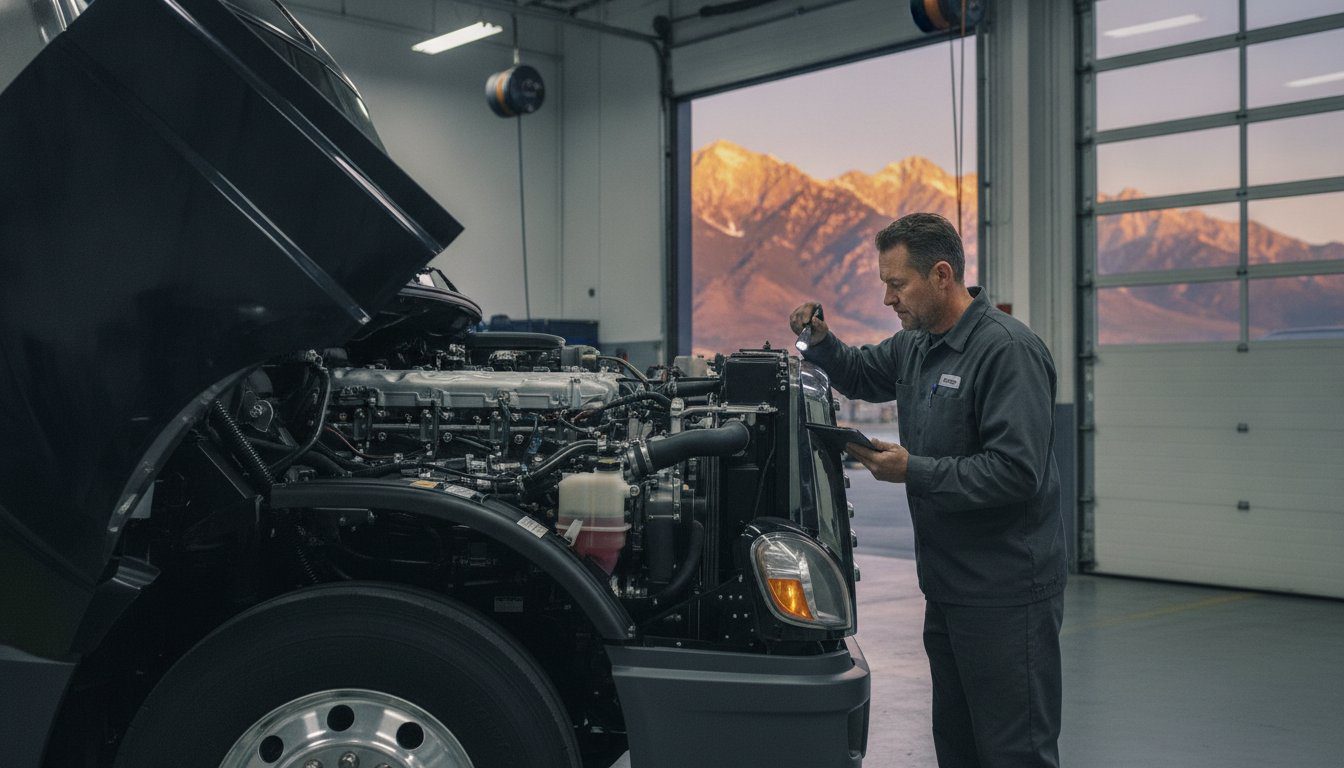
Maintenance for High Mileage Diesel Engines: The 2026 Longevity Guide

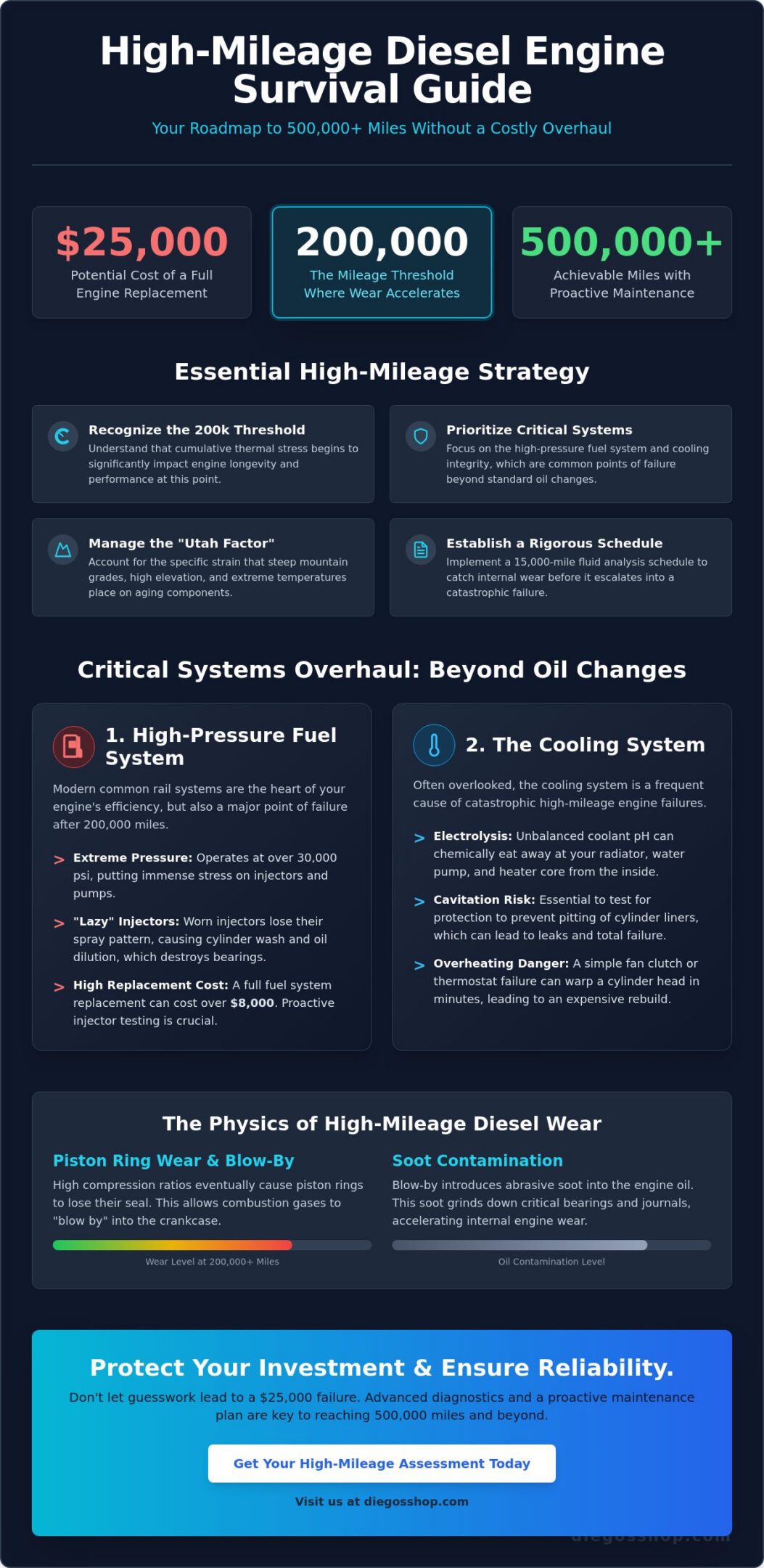
With a full diesel engine replacement now costing as much as $25,000, hitting the 200,000-mile mark shouldn’t feel like a countdown to financial disaster. You’ve likely noticed the rising costs of parts and the increasing complexity of 2026 emissions regulations, including Utah’s new High Emissions Heavy Duty Vehicle fees. It’s frustrating to face unpredictable downtime when your commercial vehicle is your livelihood. Proper maintenance for high mileage diesel engines is no longer about following a generic manual; it’s about a specialized strategy to combat the unique wear caused by Utah’s steep mountain grades and extreme temperature swings.
I’ll show you how to reach 500,000 miles without an expensive out-of-frame overhaul. We’ll cover the essential protocols for high-pressure fuel systems, the critical distinction between API CK-4 and FA-4 oils, and which high-mileage fixes actually protect your investment. You’ll gain a clear roadmap for priority repairs that ensure reliable performance and total peace of mind on the road.
Key Takeaways
- Identify the 200,000-mile threshold where cumulative thermal stress begins to impact engine longevity and performance.
- Learn why proactive maintenance for high mileage diesel engines must prioritize the high-pressure common rail fuel system and cooling integrity.
- Prepare your vehicle for Utah’s demanding environment by managing the specific strain that elevation and mountain towing place on aging components.
- Establish a rigorous 15,000-mile fluid analysis schedule to catch internal wear before it results in an expensive engine rebuild.
- Understand the value of advanced professional diagnostics in identifying the root causes of performance issues rather than simply clearing error codes.
Defining High Mileage: The 200,000-Mile Threshold for Diesel Engines
For most modern diesels, the transition into high mileage begins between 150,000 and 200,000 miles. This is the point where components move beyond their initial design life and enter a phase where wear becomes non-linear. In 2026, this threshold carries more weight because of stricter emissions compliance and Utah’s specific registration fees for older heavy-duty vehicles, such as the $250 fee for trucks model year 2009 or older. While a well-kept engine can last much longer, the complexity of 2026 standards means that neglecting maintenance for high mileage diesel engines leads to cascading failures that are now more expensive to resolve than in previous years.
Every heat cycle adds to the cumulative thermal stress on your engine block and cylinder heads. Over hundreds of thousands of miles, these cycles can lead to micro-cracking or warping that compromises head gasket integrity. It’s not just about the odometer, though. A truck with 200,000 highway miles is often in better mechanical shape than a medium-duty truck with 100,000 miles and high idle hours. High idle time increases soot accumulation and prevents the engine from reaching optimal operating temperatures, which accelerates internal wear and DPF clogging.
The Physics of Diesel Engine Wear
Diesel engines operate on high compression ratios, which is a core part of Diesel engine fundamentals. This constant pressure eventually takes a toll on piston ring sealing. When rings wear, you experience blow-by, where combustion gases escape into the crankcase. This process introduces soot into your oil at a higher rate. This soot acts as an abrasive that grinds down bearings and journals over time. High-mileage diesel maintenance is the proactive management of tolerances and seal integrity.
Light-Duty vs. Heavy-Duty Longevity Expectations
Longevity expectations vary by engine class. A Ford Powerstroke in a light-duty pickup might hit its senior phase at 200,000 miles, whereas a Peterbilt’s PACCAR engine is often just getting started. Medium-duty commercial trucks often hit a wall sooner because of the stop-and-go nature of city delivery cycles. You’ll know your engine is entering this phase when you see increased oil consumption, a slight drop in fuel economy, or slower turbo response. These indicators signal that the engine requires a more rigorous service protocol to reach the 400,000-mile mark without a total rebuild.
Critical Systems Overhaul: Beyond the Standard Oil Change
Reaching 200,000 miles is a testament to the durability of your engine block. However, the peripheral systems are often nearing the end of their reliable service life at this stage. Standard oil changes keep the internal components lubricated, but they don’t protect the high-pressure common rail (HPCR) fuel system or the cooling network from age-related degradation. Effective maintenance for high mileage diesel engines requires a deep dive into these critical sub-systems before they cause a total engine failure. This proactive approach is what separates a truck that makes it to 500,000 miles from one that ends up in the scrap yard.
Fuel System Integrity and Injector Life
Modern HPCR systems operate under extreme pressures, sometimes exceeding 30,000 psi. At the 200,000-mile mark, fuel injectors often become ‘lazy.’ They might not fail outright, but they lose their precise spray pattern and timing. This leads to cylinder wash, where unburnt fuel strips the lubricating oil from the cylinder walls, and oil dilution, which rapidly wears down your bearings. Ultra-low sulfur diesel (ULSD) provides less natural lubrication than older fuels, putting more stress on the high-pressure pump. Since a full fuel system replacement can cost upwards of $8,000, proactive fuel filter changes and injector testing are the smartest investments you can make. Catching a failing injector early prevents a catastrophic meltdown and ensures your maintenance for high mileage diesel engines stays on track.
The Cooling System: The Often Forgotten Engine Killer
The cooling system is a frequent source of high-mileage breakdowns. Over time, coolant can suffer from silicate dropout or pH imbalances that lead to electrolysis. This chemical reaction literally eats away at your radiator, heater core, and water pump from the inside out. Testing for cavitation protection is essential for high-mileage blocks to prevent cylinder liners from pitting and eventually leaking. If your fan clutch or thermostat fails, the resulting overheat can warp a cylinder head in minutes. Comprehensive Expert Diesel Engine Repair: A Guide to Service Done Right ensures these components are verified before a steep grade puts them to the test. If you notice your temperature gauge fluctuating more than usual, it’s time for a professional cooling system audit.
The air intake system also faces ‘invisible’ threats as the miles climb. Turbochargers with variable geometry (VGT) vanes often suffer from carbon buildup, which causes the vanes to stick and results in poor throttle response or over-boost codes. You should also inspect for boost leaks in dry-rotted vacuum lines and intercooler boots. These small leaks force the turbo to work harder to maintain pressure, which leads to premature bearing failure. Taking the time to perform Preventive Maintenance on these rubber components can save you from a multi-thousand dollar turbo replacement later this year.
The Utah Factor: High-Mileage Challenges on the Wasatch Front
Operating a diesel in Utah isn’t like driving on flat, sea-level terrain. Our geography demands more from every mechanical component, especially once you cross the 200,000-mile mark. At elevations of 4,000 feet and higher along the Wasatch Front, the air is significantly thinner. This forces your turbocharger to work harder and spin faster to achieve the same boost levels. This extra effort spikes your Exhaust Gas Temperatures (EGTs). If you’re neglecting maintenance for high mileage diesel engines, these elevated temperatures can lead to cracked manifolds or turbo bearing failure during a standard climb up Parleys Canyon.
The canyons also put immense stress on aging transmissions. Towing heavy loads through Spanish Fork Canyon requires consistent torque, which generates massive internal heat. For a high-mileage transmission, this heat is the primary cause of fluid oxidation and clutch slippage. Beyond the mechanical strain, Utah’s winter road treatments are a constant threat. Road salt and magnesium chloride are highly corrosive. They don’t just eat your body panels; they attack chassis-mounted components like fuel lines, brake lines, and electrical connectors. Keeping these parts clean and inspected is a non-negotiable part of a 2026 longevity strategy.
Managing Heat During Mountain Hauls
High-mileage cooling systems struggle more at altitude because the boiling point of liquids drops as elevation increases. A system that works fine in the valley might boil over halfway up a mountain grade. Monitoring your EGTs is the only way to prevent a turbo meltdown when the engine is under a heavy load. For fleets operating between Salt Lake City and St. George, we recommend shorter coolant flush intervals to ensure the additives that prevent boil-over and cavitation remain at peak strength. Reliable performance on Utah’s grades requires total cooling system integrity.
Cold Weather Preparation for Aging Diesels
Springville winters present a different set of challenges with extreme temperature swings. You might face a cold start at 0°F in the morning followed by a heavy haul in much warmer afternoon sun. This cycle is brutal on aging glow plugs and intake heater grids. If these components aren’t 100% functional, you’ll experience hard starts that put unnecessary strain on your batteries and starter motor. Using high-quality synthetic oils is essential for faster lubrication during those sub-zero mornings. You can find a detailed schedule for these seasonal adjustments in The 2026 Diesel Maintenance Handbook. Proper preparation ensures your engine starts every time, regardless of the temperature. Dependable service keeps you on the move.
The Master High-Mileage Maintenance Checklist for 2026
Managing a diesel engine with over 200,000 miles requires a shift from reactive repairs to predictive service. While the Utah climate and elevation introduce unique stressors, following a structured checklist ensures that small wear patterns don’t escalate into catastrophic failures. This 2026 guide prioritizes the components most likely to fail as tolerances widen and seals age. Implementing these steps is the most effective way to manage maintenance for high mileage diesel engines and protect your bottom line.
- Fluid Analysis: Perform a comprehensive analysis of oil, coolant, and transmission fluid every 15,000 miles.
- Rubber Inspection: Check all hoses, belts, and bushings for dry rot, cracking, or softening caused by oil exposure.
- EGR Service: Clean or replace the Exhaust Gas Recirculation (EGR) valve every 100,000 miles to prevent carbon choking.
- DPF Monitoring: Monitor ash levels in the Diesel Particulate Filter (DPF) and perform manual regenerations when passive cycles aren’t enough.
- Electrical Integrity: Clean and tighten engine grounds and battery cables to prevent voltage drops that confuse modern sensors.
Fluid Analysis: The Engine’s Blood Test
A fluid report is the only way to see what’s happening inside your engine without taking it apart. When we analyze an oil sample, we look for specific metal concentrations. High iron levels often point to cylinder liner wear, while copper and lead suggest your main bearings are thinning. Detecting internal coolant leaks early is equally vital. A trace amount of glycol in your oil can destroy bearings in a few hundred miles. For those running heavy loads, consistent Preventive Maintenance that includes transmission fluid testing is the best defense against a burned-out gearbox.
Emissions System Health (DPF & EGR)
High-mileage diesels naturally produce more soot as ring sealing degrades. This extra soot puts a massive burden on your emissions equipment. Ignoring a ‘service exhaust system’ warning is a gamble that usually ends in a $5,000 to $10,000 repair bill. A clogged EGR cooler is a common culprit for mystery coolant loss. If you see white smoke from the tailpipe, it’s often a sign that the cooler has failed internally. Proactive Fleet Maintenance: A Complete Guide to Preventing Downtime helps you stay ahead of these complex systems. We recommend a full emissions system audit every year to ensure your truck remains compliant and efficient.
Don’t wait for a dashboard light to tell you something is wrong. Schedule your professional Fleet Maintenance today to get a comprehensive health report on your high-mileage engine. Expert care is the only way to ensure 500,000-mile reliability. Quality service builds lasting trust.
Professional Diagnostics: Why Guesswork Fails at 250,000 Miles
When your diesel engine crosses the 250,000-mile mark, the margin for error in your repair strategy disappears. At this stage, a simple “check engine” light could signal anything from a minor sensor drift to a terminal high-pressure fuel pump failure. Relying on cheap, consumer-grade scanners is a dangerous gamble. These tools only read generic codes; they can’t perform the bi-directional tests or analyze the live data streams required for effective maintenance for high mileage diesel engines. Professional diagnostics look past the symptom to find the root cause, preventing you from throwing expensive parts at a problem that hasn’t been properly identified.
A warrantied repair provides a level of security that DIY guesswork simply can’t match. For commercial fleets and owners of high-value diesel assets, the cost of an emergency roadside tow and the resulting downtime far exceeds the price of a scheduled diagnostic audit. We analyze fuel injector balance rates, turbocharger vane response, and cranking compression to build a complete profile of your engine’s health. This data-driven approach allows us to predict failures before they leave you stranded on a Utah highway. Professional preventive maintenance is the only reliable way to keep your operating costs predictable.
The Diego’s Shop Advantage in Springville
We’ve built our reputation on technical mastery and personal accountability. Our team provides specialized expertise across major platforms, including Peterbilt, Kenworth, Isuzu, and Ford diesel systems. We don’t just clear codes; we interpret the complex relationship between your engine’s mechanical state and its electronic controls. Integrity means telling you exactly what your truck needs to stay on the road and nothing more. You can learn more about our commitment to quality in our guide on Expert Diesel Repair in Utah: Why Drivers Trust Diego’s Shop. We get the job done right the first time.
Securing Your Fleet’s Future
For businesses in Utah County, your diesel equipment is a significant investment that must deliver a high return. Our customized preventive maintenance programs are designed to maximize the ROI of your high-mileage assets by extending their service life well beyond the industry average. We focus on the specific stressors of our local climate to ensure your fleet remains a competitive advantage rather than a liability. Total control over your maintenance schedule is the key to long-term profitability. Don’t leave your engine’s longevity to chance. Contact Diego’s Shop today for a comprehensive high-mileage inspection and secure the future of your equipment. Quality service is our promise.
Secure the Next 200,000 Miles Today
Your diesel engine is a durable tool. Its continued reliability past the 200,000-mile mark depends on shifting your strategy from basic oil changes to comprehensive system management. By prioritizing high-pressure fuel systems and addressing the unique thermal stresses of the Wasatch Front, you can avoid the rising costs of total engine overhauls. Effective maintenance for high mileage diesel engines is a commitment to precision and technical integrity that pays for itself in reduced downtime and extended service life.
At Diego’s Shop, we bring specialized expertise to light, medium, and heavy-duty diesel platforms. We stand behind every job with warrantied repair work that provides total peace of mind for every mile you drive. Proudly serving Springville and the broader Wasatch Front, our team understands the demands placed on your machinery. We focus on the details that keep your business moving forward so you don’t have to worry about unpredictable mechanical failures.
Schedule Your High-Mileage Diesel Inspection at Diego’s Shop to ensure your fleet remains a productive, reliable asset for years to come. Your high-mileage engine has plenty of work left to do, and we’re here to make sure it stays on the road. Quality service is our promise to you.
Frequently Asked Questions
Is it worth fixing a diesel engine with over 300,000 miles?
Yes, repairing a high-mileage diesel is often the most financially sound decision for commercial owners. Since a full engine replacement in 2026 can cost up to $25,000, investing in targeted repairs like a fuel system overhaul or cooling system refresh provides a much higher return on investment. If the engine block and cylinder heads are structurally sound, these machines can reliably reach 500,000 miles or more with professional care.
What is the best oil for a high-mileage diesel engine in Utah’s climate?
You should use a high-quality API CK-4 synthetic oil for maximum protection. CK-4 is the industry standard for engines older than 2017 and provides the necessary backward compatibility for aging seals and bearings. Avoid FA-4 oils in older engines as they lack the viscosity required for high-mileage tolerances. Synthetic blends are particularly effective for Utah’s extreme temperature swings, ensuring fast lubrication during sub-zero mornings in Springville.
How often should I change my fuel filters on a high-mileage truck?
Change your fuel filters every 10,000 to 15,000 miles to protect your high-pressure common rail system. Older fuel tanks often accumulate sediment and moisture over hundreds of thousands of miles, which can easily bypass an aged or clogged filter. Proactive maintenance for high mileage diesel engines requires keeping the fuel supply pristine to prevent abrasive wear on injectors that can cost thousands to replace.
Can high-mileage additives actually prevent engine failure?
Additives can’t fix mechanical breakage, but they do serve as a valuable secondary defense. Quality fuel lubricants help compensate for the low lubricity of modern ultra-low sulfur diesel, which is hard on high-mileage pumps. However, you shouldn’t use additives to mask symptoms like rough idling or smoke. If your engine is showing signs of distress, professional diagnostics are required to identify the root cause before a total failure occurs.
Why is my high-mileage diesel truck losing power on mountain grades?
Power loss on steep grades is usually a symptom of boost leaks or a failing turbocharger. As rubber components age, intercooler boots and vacuum lines can develop small cracks that bleed off pressure under load. In Utah’s thin air, your turbocharger already works harder to maintain performance. Even a minor leak or carbon buildup on variable geometry vanes will significantly reduce your torque when climbing through the canyons.
What are the first signs of fuel injector failure in a diesel engine?
Early indicators include a rough idle, increased exhaust smoke, or a noticeable drop in fuel economy. You might also hear a distinct “injector rattle” or knocking sound during acceleration. These signs suggest that the injectors are no longer providing a precise spray pattern. Catching these issues early is critical for maintenance for high mileage diesel engines, as failing injectors can lead to cylinder wash and permanent engine damage.
How does high altitude in Utah affect my diesel engine’s longevity?
High altitude forces the turbocharger to spin at higher RPMs to achieve the required boost, which increases internal heat. This elevated thermal stress can lead to cracked exhaust manifolds and premature turbo bearing failure over time. Consistently high Exhaust Gas Temperatures are common at 4,000+ feet, so you must ensure your cooling system is operating at 100% efficiency to dissipate this extra heat and protect the cylinder heads.
Should I clean or replace my DPF filter on a high-mileage vehicle?
Professional cleaning is the preferred choice if the filter’s internal ceramic structure is still intact. By the time a truck reaches 250,000 miles, the ash accumulation often exceeds what an on-truck regeneration cycle can handle. A specialized off-truck cleaning can remove this deep-seated ash and restore exhaust flow for a fraction of the cost of a new unit. Replacing the filter is only necessary if the core is melted or cracked.