

How to Avoid Costly Truck Repairs: A Proactive Guide for 2026

In 2026, a single overlooked emissions component can lead to a cascading failure that sidelines your vehicle for weeks. You already know that unpredictable downtime is the fastest way to wreck your delivery schedule and your profit margins. It’s frustrating to watch the cost of diesel parts skyrocket while wondering if a shop has the technical expertise to actually solve the problem. If you want to avoid costly truck repairs, you must move beyond basic oil changes and adopt a strategy built on technical foresight and specialized oversight.
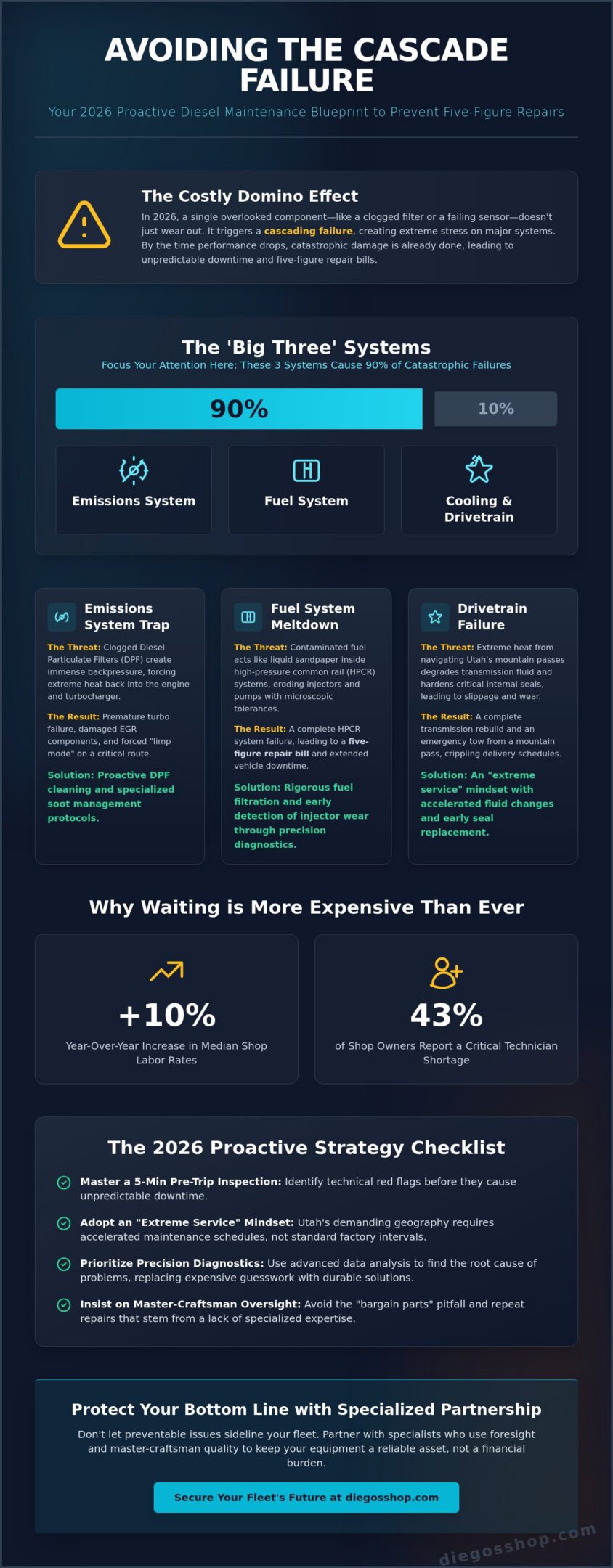
We understand the pressure of keeping a fleet moving across the Wasatch Front. This guide provides the specific maintenance strategies and technical red flags you need to prevent five-figure diesel repair bills. We will focus on the three systems, emissions, fuel, and cooling, that cause 90% of catastrophic failures. We will also look at how to stay ahead of Utah safety and emissions requirements. By mastering these proactive steps, you can extend your vehicle’s lifespan and ensure your equipment remains a reliable asset rather than a financial burden.
Key Takeaways
- Identify the specific mechanical systems responsible for 90% of catastrophic failures and learn how to monitor them before they lead to five-figure bills.
- Discover how a specialized soot management protocol and a proactive maintenance schedule help you avoid costly truck repairs across the Wasatch Front.
- Understand the financial risk of using “bargain” parts and why master-craftsman oversight is essential for preventing repeat repairs and excessive labor costs.
- Master a high-impact, five-minute pre-trip inspection checklist that identifies technical red flags before they result in unpredictable downtime.
- Learn how to navigate 2026 Utah safety and emissions regulations while lowering your fleet’s total cost of ownership through expert partnership.
The ‘Big Three’: Identifying the Most Costly Truck Repairs in 2026
Diesel repair costs have surged recently, far outpacing general inflation. This trend is driven by a 10% year-over-year increase in median shop labor rates and a significant technician shortage that 43% of shop owners identified as their primary concern. For operators trying to avoid costly truck repairs, the financial gap between routine maintenance and a total system failure has never been wider. It’s no longer just about the cost of parts; it’s about the specialized technical expertise required to manage complex modern engines.
The most expensive bills often stem from the “cascade effect.” This happens when a minor component, like a clogged filter or a leaking seal, fails and places extreme stress on a major system. By the time a driver notices a performance drop, the damage has often spread through the entire drivetrain. Applying comprehensive fleet management principles means prioritizing precision diagnostics over guesswork. A master technician uses advanced tools to see these failures before they happen, saving you from the unpredictable downtime that ruins delivery schedules and customer trust.
Professional diagnostics are your first line of defense. In 2026, guesswork is a liability you can’t afford. Modern trucks generate thousands of data points every hour. A specialist knows how to interpret this data to find the root cause of a problem rather than just treating the symptoms. This authoritative approach ensures that every repair is necessary, durable, and performed to the highest standards of master-craftsman quality. To avoid costly truck repairs, you must identify technical red flags before they trigger a catastrophic chain reaction.
Engine and Fuel System Meltdowns
Modern diesel engines rely on high-pressure common rail (HPCR) systems that operate with microscopic tolerances. When fuel becomes contaminated, it acts as an abrasive that erodes precision injectors and pumps from the inside out. This leads to five-figure repair bills that could have been prevented with better soot management and fuel filtration. Many general shops miss the early signs of injector wear, such as subtle changes in idle quality or fuel economy, until the system reaches a point of total failure. Precision is everything in fuel delivery.
Transmission and Drivetrain Failures
Operating across the Wasatch Front puts unique stress on heavy-duty transmissions. The constant shifting and heat generation required to navigate Utah’s mountain passes can degrade transmission fluid and harden internal seals. If you wait until the transmission starts “slipping,” you’re likely facing a total rebuild. A proactive approach involves identifying cooling issues and replacing seals early. This small investment prevents the massive expense of a complete drivetrain failure. It’s the difference between a controlled maintenance stop and an emergency tow from a mountain pass.
Why Diesel Maintenance Differs: The High Cost of Neglect
Diesel engines are built for durability, but they operate under extreme physical conditions that gasoline engines never encounter. High compression ratios generate intense heat and pressure inside the combustion chamber. This environment makes soot management a critical priority. Soot is essentially carbon, and when it accumulates in your oil, it becomes an abrasive paste. This paste grinds down engine bearings and cylinder walls over time. To avoid costly truck repairs, you must treat your oil changes as a decontamination process rather than a simple fluid swap.
Utah’s unique geography demands an “extreme service” mindset for every fleet owner. Climbing Parley’s Canyon or hauling through the dust of the West Desert puts your engine under a high load nearly 100% of the time. Standard manufacturer intervals often assume ideal, flat-land conditions. Following an accelerated schedule is mandatory if you want to reduce heavy-duty repair costs and prevent roadside failures. Routine inspections catch small leaks before they turn into over-the-road nightmares that ruin your delivery schedule.
The Emissions System Trap: DPF and EGR
Modern diesel engines are essentially giant air pumps restricted by complex emissions hardware. The Diesel Particulate Filter (DPF) traps soot, but if it’s not cleaned regularly, it creates massive backpressure. This pressure pushes heat back into the turbocharger, leading to premature and expensive failure. Similarly, EGR cooler leaks can introduce coolant into the combustion chamber, which often causes catastrophic hydro-locking. While some operators consider “deleting” these systems, the legal risks and mechanical liabilities far outweigh the cost of proper, professional service. Integrity in maintenance prevents legal headaches.
Lubrication and Cooling: The Lifeblood of Diesel
Lubrication and cooling are the primary defenses for your engine. You can find more detail in our diesel maintenance handbook, but the core principles are straightforward. High-torque applications cause “oil shear,” where the oil loses its ability to protect metal surfaces under heavy loads. Additionally, coolant pH levels are critical. If the coolant becomes too acidic, it causes “liner pitting.” This is where tiny bubbles implode against the cylinder liners and eventually eat through the metal. Scheduling a regular preventive maintenance service is the most effective way to identify these chemical imbalances before they destroy your engine block. We maintain total control over these complex variables so you don’t have to.
Avoiding Technician Error and the ‘Cheap Parts’ Pitfall
Technical skill is the foundation of vehicle reliability. While a general mechanic might understand basic engine principles, a master diesel technician possesses the specialized knowledge required to manage high-pressure systems and complex electronics. Choosing the wrong shop often results in “parts swapping,” a practice where technicians replace components blindly until the problem disappears. This approach is expensive and ineffective. To avoid costly truck repairs, you must partner with experts who utilize advanced diagnostic software to identify the root cause of a failure before a single wrench turns.
Warrantied repair work provides the security every commercial fleet requires. When a shop stands behind its labor and components, it demonstrates a commitment to integrity and accountability. In 2026, the complexity of diesel systems means that a minor installation error can lead to a total system meltdown. A master craftsman ensures that every seal, bolt, and sensor is installed to exact specifications. This level of precision is the only way to maintain total control over your maintenance budget and ensure your trucks stay on the road.
The Hidden Cost of Inexperienced Shops
Generalist shops often struggle with the nuances of diesel engine repair, leading to common mistakes like improper torque sequences or misdiagnosed sensor failures. These errors cause repeat visits and doubled labor costs. A specialized facility understands the unique requirements of brands like Peterbilt, Isuzu, and Cummins. They know that a fault code on a Cummins X15 requires a different diagnostic path than a similar code on an Isuzu N-Series. Expertise prevents the guesswork that inflates your final bill.
OEM vs. Aftermarket: Choosing Long-Term Durability
Part quality directly impacts your fleet’s uptime. Research shows that 78% of fleet operators prefer OEM parts for critical engine components because of their proven reliability. While aftermarket parts are often 25% to 40% cheaper initially, they frequently fail prematurely. For example, trucks using OEM suspension and brake components report 32% fewer repeat repairs within two years compared to those using budget alternatives. To avoid costly truck repairs, you must weigh the initial savings against the risk of a roadside failure. Investing in high-quality components is the most effective way to lower your total cost of ownership over the long haul.
A Proactive Strategy: The 2026 Checklist for Utah Fleet Owners
Success in the trucking industry requires a shift from reactive fixing to proactive management. You must view maintenance as a fixed operational cost rather than a surprise emergency. Establishing a rigorous fleet maintenance schedule is the first step. This plan should account for the extreme heavy-duty cycles your vehicles face while hauling across the Intermountain West. By integrating telematics and real-time engine data, you can identify performance dips before they trigger a check engine light. This data-driven approach is the most reliable way to avoid costly truck repairs while ensuring your fleet remains compliant with local regulations.
The simplest tool in your arsenal is the five-minute pre-trip inspection. It sounds basic, but catching a frayed belt or a weeping water pump in the yard can save you $5,000 in towing and emergency repair fees later. Look for puddles. Listen for air leaks. Feel for loose components. These small habits build a culture of accountability that protects your bottom line and keeps your delivery schedules intact. Consistency in these small checks is what separates profitable fleets from those constantly sidelined by preventable failures.
Seasonal Adjustments for the Wasatch Front
Utah’s climate is brutal on diesel engines. As winter approaches, you must prepare fuel systems for sub-zero temperatures to prevent gelling. This involves testing heater elements and ensuring your fuel filters are fresh. In the summer, the Salt Lake Valley heat places immense stress on cooling systems. We recommend a full stress test of your radiator and fan clutch before the first heatwave hits. Additionally, you must protect electrical systems from the corrosive road salt used on our mountain passes. Clean connections and protective coatings prevent the phantom electrical issues that baffle general shops.
Monitoring Early Warning Signs
Your truck communicates its health through smoke and sound. Black smoke often indicates a fuel-to-air ratio imbalance, while white smoke can signal coolant entering the combustion chamber. Blue smoke is a clear sign of oil consumption. If you notice a change in engine rhythm or a new vibration, don’t ignore it. These are early indicators of internal wear that require immediate diesel repair Utah expertise to diagnose. Regular oil analysis is another master-craftsman secret. It detects microscopic metal shavings that reveal which components are failing long before they snap.
To secure your fleet’s performance and avoid costly truck repairs, book your next preventive maintenance appointment with our master technicians today.
Partnering with Specialists: How Diego’s Shop Protects Your Bottom Line
Partnering with a specialized facility is the most effective way to protect your investment. At Diego’s Shop, we provide more than just mechanical fixes; we offer a partnership built on accountability and technical mastery. Our Springville facility serves as the primary hub for diesel excellence across the Wasatch Front. We understand that your trucks are the backbone of your business. By choosing a team that prioritizes integrity, you can avoid costly truck repairs that stem from poor workmanship or missed red flags. Our seasoned technicians treat every vehicle with the respect a hardworking machine deserves. We maintain total control over complex situations to ensure your fleet remains a productive asset.
Compliance is another pillar of our service. Our dot truck inspections near me keep your fleet safe and fully aligned with 2026 Utah Highway Patrol standards. We don’t just check boxes. We perform thorough assessments to ensure every vehicle is roadworthy and efficient. This proactive oversight prevents the fines and forced downtime that often disrupt local operations. We identify technical issues during the inspection that general shops frequently overlook. This level of detail is essential for operators who value reliable performance across the mountain passes of Utah.
We believe in a direct and grounded approach to service. This means we avoid jargon and speak with the authority of specialists who live and breathe diesel engines. Our reputation is built on the durability of the work we perform. When you bring your vehicle to us, you’re engaging with a no-nonsense master craftsman who takes pride in technical skill. This commitment to excellence is the foundation of our business and the reason why fleet owners trust us to avoid costly truck repairs year after year.
Warrantied Repairs for Peace of Mind
Standing behind our work is a core value. We provide warrantied repair work because we have total confidence in our master-craftsman quality. Using advanced diagnostics, we ensure every repair is done right the first time. This eliminates the stress of commercial truck ownership by providing transparent service and predictable results. You deserve a shop that takes personal accountability for the durability of your equipment. When we fix a system, it stays fixed. This commitment to quality is how we help you lower your total cost of ownership over the long haul.
Comprehensive Fleet Management Solutions
Every fleet has unique needs. We develop customized maintenance plans for light, medium, and heavy-duty vehicles. Whether you manage OTR haulers or local delivery trucks, our focus remains on minimizing downtime. We manage the complex technical details so you can stay focused on your customers. We speak the language of fleet owners who value reliability over flashy promises. Ready to secure your fleet? Contact Diego’s Shop today for a consultation. Expert service is our promise of quality.
Secure Your Fleet’s Performance for the Long Haul
Maintaining a commercial fleet in 2026 requires more than basic oversight; it demands a commitment to technical precision. By prioritizing soot management and utilizing real-time engine data, you can effectively avoid costly truck repairs and keep your vehicles moving across the Wasatch Front. The difference between a minor service and a five-figure engine overhaul often comes down to the quality of your technician and the durability of the parts they install. Expert oversight is your best defense against unpredictable downtime.
At Diego’s Shop, we bring master-level mastery to every service. We specialize in the complex high-pressure systems found in Peterbilt, Kenworth, Isuzu, and Ford diesel engines. Our Springville facility offers warrantied repair work on all diesel services, providing you with the accountability and integrity your business deserves. We maintain total control over every repair so you can focus on your delivery schedules with complete peace of mind. Our team is dedicated to the hardworking nature of the machinery we service. Expert service is our promise of quality.
Protect your investment and schedule your preventive maintenance at Diego’s Shop today. Your fleet is the backbone of your operation, and we’re here to ensure it stays that way. We look forward to keeping you on the road.
Frequently Asked Questions
What is the single most expensive truck repair to avoid?
Catastrophic engine failure is the most expensive repair, often requiring a full in-frame overhaul. These failures typically stem from neglected cooling or lubrication systems that cause the engine to seize or melt down. By maintaining these systems, you can avoid costly truck repairs that result in five-figure bills and weeks of unpredictable downtime. This proactive approach protects your profit margins and your vehicle’s lifespan.
How can I tell if my diesel technician is actually an expert?
An expert diesel technician uses advanced diagnostic software and demonstrates deep knowledge of specific brands like Cummins or Detroit Diesel. They focus on identifying the root cause of a fault code instead of blindly swapping parts. A master craftsman also stands behind their labor with warrantied repair work and clear, honest communication. This technical mastery ensures your truck is fixed right the first time without unnecessary expenses.
Is preventive maintenance really cheaper than repairing failures as they happen?
Yes, preventive maintenance is significantly more cost-effective than reactive repairs. It allows you to replace wear items like seals and filters before they cause a major system failure. This proactive approach ensures reliable performance across the Wasatch Front and lowers your total cost of ownership by preventing the “cascade effect.” You can avoid costly truck repairs by investing in small, controlled service stops instead of emergency roadside calls.
Why are diesel emissions repairs so expensive?
Diesel emissions repairs are expensive due to the technical complexity of DPF and EGR systems. These components use precious metals and precision sensors to meet strict environmental standards. Neglecting soot management leads to backpressure that can destroy your turbocharger or cause internal engine damage. Because these systems are interconnected, a failure in one component often requires expensive cleaning or replacement of the entire aftertreatment assembly.
How often should I have my commercial truck inspected in Utah?
All commercial vehicles in Utah with a GVWR over 10,001 pounds must undergo an annual DOT safety inspection enforced by the Utah Highway Patrol. Additionally, diesel vehicles in Salt Lake, Davis, Weber, and Utah counties require emissions testing to remain compliant. Staying current with these regulations prevents legal issues and identifies mechanical red flags before they cause a breakdown. Regular inspections are a fundamental part of any professional fleet maintenance strategy.
Does idling my truck increase the risk of costly repairs?
Excessive idling increases repair risks by causing incomplete combustion and rapid soot accumulation in the combustion chamber. This soot clogs the DPF and EGR systems, leading to more frequent regenerations and premature component failure. Idling also dilutes your engine oil with unburned fuel, which reduces its ability to lubricate critical bearings. Limiting idle time is a simple, effective way to preserve engine health and improve overall fuel efficiency.
What are the first signs of a failing diesel fuel injector?
The first signs of failing injectors include rough idling, unusual exhaust smoke color, and a noticeable drop in fuel economy. You might also hear a distinct “knocking” sound or feel a loss of power during heavy acceleration. Catching these symptoms early prevents internal engine abrasion and catastrophic cylinder damage. Professional diagnostics can pinpoint which injector is failing before it causes a total engine shutdown or a costly roadside emergency.
Can poor quality diesel fuel cause permanent engine damage?
Poor quality diesel fuel causes permanent damage by introducing water and particulates into high-pressure common rail systems. These contaminants act as abrasives that erode precision injectors and fuel pumps from the inside out. Using high-quality fuel and replacing filters at recommended intervals is essential for protecting your engine’s internal components from premature wear. Clean fuel is the foundation of a reliable diesel engine and a healthy bottom line.