
Diesel Truck Electrical System Repair: Professional Solutions for Utah Fleets

What if the most expensive part of your fleet isn’t the engine or the transmission, but a single intermittent electrical ghost that general shops simply can’t find? You know that unplanned downtime is more than an inconvenience. It’s a drain on your bottom line that can cost thousands of dollars every single day. When a truck sits idle because of a complex wiring issue or a feared ECM failure, your reputation and your revenue are both on the line.
We understand the stress of chasing faults that disappear the moment a technician plugs in a scanner. This article will help you master the complexities of your fleet’s wiring and show you how professional diesel truck electrical system repair keeps your vehicles compliant and operational. You’ll learn to identify early warning signs, prevent cold-weather failures common in the Wasatch Front, and ensure your trucks meet Utah’s strict annual safety inspection requirements. From fast, accurate diagnostics to reliable repairs that stand up to heavy use, we provide the technical solutions you need to maintain total control over your fleet’s performance.
Key Takeaways
- Understand the high-torque cranking requirements of diesel engines and why dual-battery configurations are essential for heavy-duty reliability.
- Learn to identify the subtle warning signs that indicate a need for diesel truck electrical system repair before they lead to unplanned downtime.
- Discover how Utah’s extreme cold and road salts damage chassis wiring and what proactive steps you can take to prevent these issues.
- Gain insights into precision troubleshooting techniques that find the root cause of “electrical ghosts” to avoid expensive, unnecessary part replacements.
What Makes Diesel Truck Electrical Systems Unique?
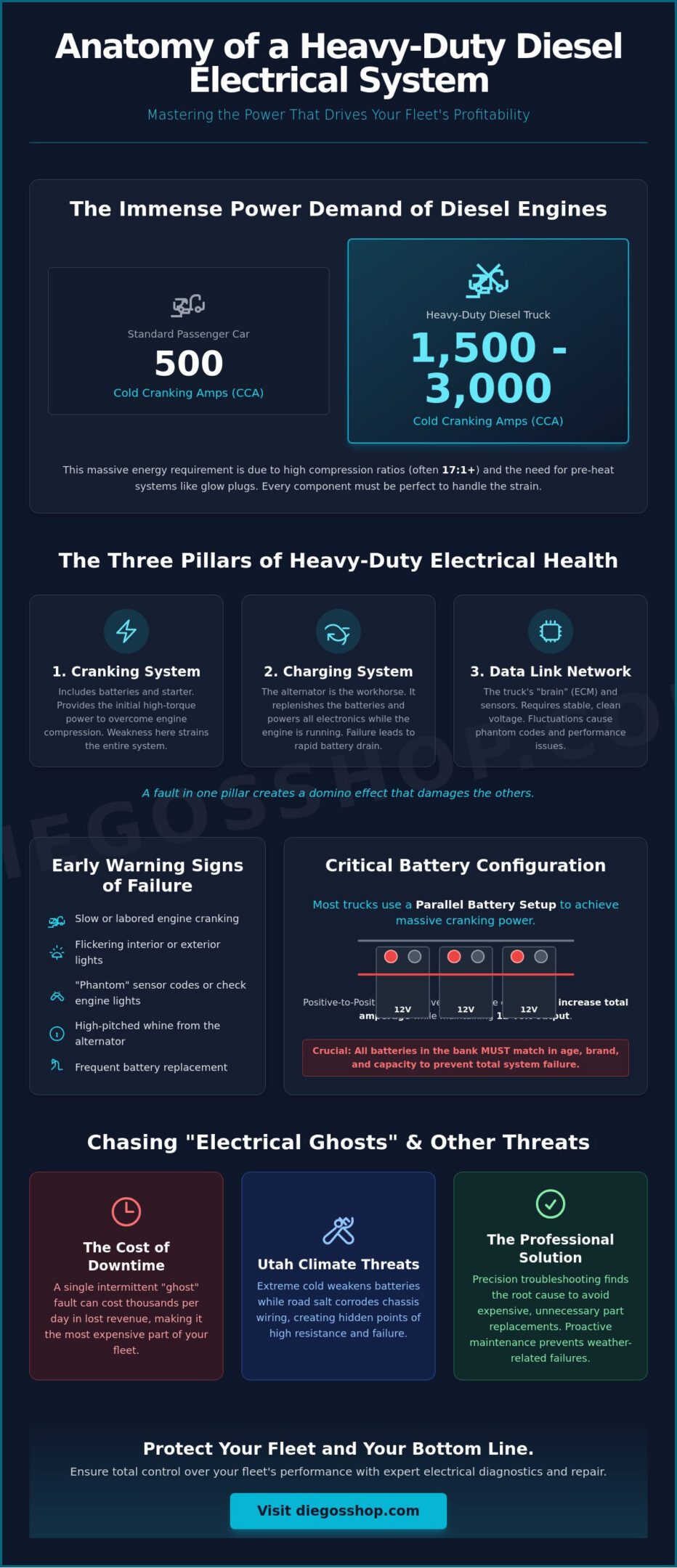
Diesel engines operate on the principle of compression ignition. This requires significantly more energy to turn the crankshaft over than a standard gasoline engine. While a typical passenger car might require 500 Cold Cranking Amps (CCA), a heavy-duty diesel engine often demands 1,500 to 3,000 CCA to overcome massive internal resistance. This high initial draw puts immense strain on every cable, terminal, and connection in the circuit. If these paths aren’t perfectly clean and secure, the resistance generates heat, which leads to rapid component degradation.
The electrical load cycle of a diesel truck begins before the engine even rotates. Components like glow plugs or intake air heaters must pre-heat the combustion environment to ensure the fuel ignites under pressure. These systems draw heavy current for several seconds, often while the batteries are at their coldest. Professional diesel truck electrical system repair ensures these pre-heat circuits function correctly, as failure here leads to excessive cranking and starter burnout.
Modern fleet reliability depends on sophisticated automotive electronic systems that govern fuel injection timing and emissions compliance. These computers require stable, “clean” voltage. Even minor fluctuations or electrical noise can trigger phantom sensor codes or cause an Engine Control Module (ECM) to malfunction. Maintaining a steady flow of power is the only way to protect the expensive digital brains of your trucks.
The Demand of High-Compression Ignition
Turning over a 15L heavy-duty engine is a massive physical task. High compression ratios, often exceeding 17:1, create significant resistance that the starter motor must overcome. When battery voltage is low, the starter draws more amperage to compensate, which creates internal heat. This heat melts insulation and shortens the motor’s life. Relying on “just enough” power to start the truck is a recipe for premature failure. We focus on ensuring your system provides a surplus of power to keep components cool and functional.
Parallel vs. Series Battery Setups
Most commercial trucks in the United States utilize a 12V system, but they achieve their massive cranking power through multi-battery banks. It is vital to match the age, brand, and capacity of every battery in that bank. If one battery is weak, it will constantly drain the others, leading to a total system failure. In a parallel battery configuration for heavy-duty trucks, multiple batteries are connected positive-to-positive and negative-to-negative to increase total amperage while maintaining a consistent 12-volt output. This specific wiring strategy is the foundation of diesel truck electrical system repair for large fleets.
The Three Pillars of Heavy-Duty Electrical Health
Every heavy-duty electrical system rests on three critical pillars: the cranking system, the charging system, and the data link network. These components don’t operate in isolation. They form a continuous loop of power generation, storage, and communication. In the world of diesel truck electrical system repair, we often see how a minor fault in one pillar creates a domino effect that destroys the others. For example, a weak battery bank forces the starter to draw excessive amperage, which generates heat and eventually burns out the solenoid. Simultaneously, the alternator works overtime to replenish the drained batteries, leading to premature regulator failure. Maintaining all three pillars is the only way to ensure long-term reliability.
Modern diesel trucks also rely on these pillars to manage complex emissions equipment. If your voltage isn’t perfectly stable, the sensors governing your Diesel Particulate Filter (DPF) and Exhaust Gas Recirculation (EGR) systems may report “ghost” codes. These false readings can trigger unnecessary forced regenerations or even put your truck into a derate mode. True expertise in this field requires an understanding of professional technician training standards, which emphasize the deep connection between electronic stability and mechanical performance.
Alternators and the Charging Cycle
Commercial alternators are the workhorses of the electrical system. After a cold start, the charging system must manage a massive recharge demand to stabilize the battery bank. High-output alternators are designed for this task, but they aren’t invincible. Heat-soak is a primary enemy during long-haul operations. As the engine bay temperature rises, the efficiency of the voltage regulator can drop. Common signs of trouble include a high-pitched whine from the bearings or flickering interior lights, which often indicate a failing internal diode. We recommend a proactive charging system test if you notice your voltmeter dipping during idle.
The Nervous System: Wiring and Data Links
The third pillar is the most complex: the wiring harness and CAN bus network. This is the truck’s nervous system, allowing the ECM to communicate with various modules. Corroded ground wires are the single most common cause of “unsolvable” electrical issues. A single loose ground can cause multiple unrelated sensor failures, leading to hours of wasted diagnostic time at general shops. Our approach to fleet maintenance focuses on identifying these harness vulnerabilities before they leave your driver stranded. We don’t just clear codes; we find the physical break or corrosion point that caused the fault in the first place. This level of precision is what defines high-quality diesel truck electrical system repair.
Common Signs Your Truck Needs Electrical System Repair
Identifying an electrical failure before it leaves a driver stranded is the difference between a minor scheduled fix and a massive towing bill. Your truck often provides subtle warnings before a total system collapse occurs. Recognizing these early indicators of a failing circuit can save you from the high costs and logistical headaches of emergency diesel truck electrical system repair. If you notice a driver reporting slow cranking or a rapid “clicking” sound during start-up, the system is likely failing to deliver the massive amperage required to turn over a high-compression engine.
Other symptoms are more internal. Erratic dashboard gauge behavior or flickering headlights during idle often point to a struggling charging system. A “burning plastic” smell is perhaps the most urgent warning sign. This scent indicates that high resistance is physically melting wire insulation, which is the final stage before a harness fire. Additionally, if your batteries are dead after a single night of sitting, you’re likely dealing with a parasitic draw, where a faulty module or a short to ground continues to pull power even when the ignition is off.
Intermittent Faults and Ghost Codes
Low voltage is the primary architect of “ghost codes” that frustrate fleet owners. When voltage drops even slightly below the required threshold, the Engine Control Module (ECM) can no longer verify sensor data accurately. This often triggers false EGR or DPF fault codes that lead general shops to replace perfectly good emissions components. These fluctuations also impact Allison transmission shifting patterns; low voltage prevents solenoids from engaging with the precision needed for smooth gear transitions. A “Check Engine” light might actually be a battery issue because modern engine control modules require a very narrow voltage range to accurately interpret sensor signals.
Physical Signs of Electrical Distress
A visual inspection often reveals the root cause of electrical instability. Look for “green crust” or white powdery corrosion on battery terminals and frame grounds. This buildup acts as an insulator, creating a barrier that blocks the flow of electricity. You should also check for swollen battery cases or leaking electrolyte, which are signs of internal shorts or a failing voltage regulator that is overcharging the bank. Old, high-resistance battery cables can cause significant “voltage drops,” where the power leaves the battery but never fully reaches the starter. Professional diesel truck electrical system repair involves testing these cables under load to ensure they can still carry the current your fleet demands. We find that catching these physical signs early prevents the cascading failures that destroy starters and alternators.
Proactive Maintenance: Preventing Failure in Utah’s Climate
Utah’s climate is notoriously hard on commercial vehicles. Along the Wasatch Front, winter temperatures frequently drop low enough to reduce battery capacity by up to 50 percent. This chemical slowdown happens exactly when your engine requires the most energy to overcome thickened oil and cold internal components. If your fleet hasn’t undergone recent diesel truck electrical system repair or a thorough inspection, these cold snaps will expose every hidden weakness in your cranking circuit. A truck that starts fine in October may be dead on the lot by December.
Chemical corrosion is another major threat. State road crews use magnesium chloride and road salt to keep mountain passes clear. These substances are highly conductive and aggressively corrosive. They find their way into unsealed connectors and tiny pinholes in wire insulation, creating high-resistance shorts that are incredibly difficult to track. Cleaning and sealing every exposed connection before the first snow is a non-negotiable part of professional diesel maintenance. We also emphasize load testing over simple voltage testing. A battery can show a healthy 12.6 volts while sitting idle but fail instantly under a 500-amp load test. We use advanced testers to ensure your batteries have the actual “punch” needed for a Utah winter.
Winterizing Your Diesel Electrical System
In Springville and the surrounding valleys, using block heaters and battery blankets is essential for reducing the initial electrical load. It is a common misconception that winter kills batteries. In reality, Utah’s intense summer heat is the primary culprit. High temperatures evaporate electrolyte and warp internal plates. The battery simply waits until the first cold morning to finally quit. We recommend a full system audit in the fall to identify these damaged batteries before they fail. If you want to avoid morning no-starts, schedule a comprehensive fleet electrical audit to secure your trucks against the elements.
Corrosion Control and Grounding
We utilize the “Voltage Drop Test” to find hidden resistance that a standard continuity test might miss. This involves measuring voltage while the circuit is under load. It is the only reliable way to find a cable that looks fine on the outside but is rotting on the inside. For long-term protection, we apply dielectric grease and specialized terminal sealants to all grounding points. On Peterbilt and Kenworth frames, the wiring along the frame rails is particularly vulnerable to salt spray. Protecting these high-risk areas prevents the harness failures that lead to expensive, unplanned downtime. We don’t just fix the break; we seal the system to prevent it from happening again.
Expert Electrical Diagnostics and Repair at Diego’s Shop
At Diego’s Shop, we specialize in diesel truck electrical system repair for fleets across Utah County and the entire Wasatch Front. Our facility in Springville is equipped with the advanced computer diagnostics required to interface with all major brands, including Kenworth, Peterbilt, Ford, and Isuzu. We understand that fleet owners don’t just need a list of fault codes; they need a definitive solution that prevents the truck from returning to the shop next week. Our technicians focus on precision troubleshooting that identifies the root cause of a failure rather than just treating the visible symptoms.
When you bring a vehicle to our shop, you’re investing in warrantied repair work that provides genuine peace of mind. We take personal accountability for every circuit we test and every harness we pin out. Whether your fleet is battling the intermittent “ghost codes” mentioned earlier or needs a complete starter circuit overhaul, we provide the technical expertise to get the job done right. We’re not a high-volume retail center; we’re a specialized shop dedicated to the durability and reliability of heavy-duty machinery.
Professional Tooling vs. Guesswork
Generic code readers often fail where our specialized diesel software succeeds. A standard scanner might tell you a sensor is out of range, but it won’t tell you if the issue is the sensor itself, a corrupted data link, or a frayed wire three feet down the harness. We combine high-level digital diagnostics with a master craftsman’s eye for physical inspections. Often, the solution to a complex engine management issue is found during a physical harness check where we look for the vibration-induced chafing that computers can’t see. For more information on our comprehensive approach, see our expert diesel engine repair page.
The Diego’s Shop Promise
We believe in direct, no-nonsense communication about your truck’s electrical health. You’ll receive a clear explanation of what failed, why it failed, and how we intend to fix it to prevent a recurrence. We prioritize minimizing your downtime through efficient, accurate diagnostic protocols that avoid the “parts cannon” approach common at less experienced shops. Our goal is to keep your fleet moving safely and profitably through every Utah season. Don’t let a minor wiring fault turn into a major loss. Schedule your electrical diagnostic at Diego’s Shop today and experience the difference that specialized expertise makes for your bottom line.
Quality work. Honest service. Proven results.
Secure Your Fleet’s Performance on the Road
Maintaining a reliable fleet requires more than just mechanical upkeep. It demands a deep understanding of the complex electrical networks that govern modern engine management and emissions compliance. By addressing the three pillars of electrical health and staying ahead of Utah’s aggressive road salt and extreme cold, you protect your bottom line from the high costs of unplanned downtime. Professional diesel truck electrical system repair isn’t just a fix; it’s an investment in the long-term durability of your heavy-duty equipment.
Diego’s Shop has served Springville and Utah County with integrity and technical excellence since our inception. We provide warrantied repair work on all electrical services and utilize specialized diagnostics for Peterbilt, Kenworth, and Ford Powerstroke trucks. We don’t guess with your livelihood. We find the root cause and deliver repairs that stand up to the most demanding long-haul conditions. Keep your fleet moving with expert electrical repair at Diego’s Shop. Let’s get your trucks back on the road with the power and precision they deserve.
Frequently Asked Questions
How many batteries does a diesel truck actually need?
Most heavy-duty diesel trucks require two to four high-capacity batteries connected in parallel. This configuration provides the massive cold cranking amps needed to turn over a high-compression engine. Using fewer batteries than recommended leads to rapid starter wear and frequent no-start conditions, especially when powering sleeper cab accessories or auxiliary equipment.
Why does my diesel truck struggle to start in Utah’s winter?
Extreme cold reduces the chemical activity inside your batteries, often cutting their output capacity by nearly half. Simultaneously, engine oil thickens, creating significantly more resistance for the starter to overcome. This combination of reduced power and increased demand is why a professional diesel truck electrical system repair audit is essential before the Wasatch Front winter begins.
Can a bad alternator cause my truck to throw engine codes?
A failing alternator is a common cause of “ghost” engine codes. When the charging system fails to provide stable voltage, the engine control module (ECM) can’t accurately interpret sensor data. This instability often triggers false fault codes for emissions systems or transmission sensors that have no actual mechanical issues. Stable voltage is the foundation of modern engine management.
What is a parasitic draw and how do you find it?
A parasitic draw is an electrical drain that continues to pull power from your batteries after the ignition is turned off. We identify these leaks by using a multimeter to measure amperage draw across the fuse block while the truck is in a “sleep” state. This precision troubleshooting process pinpoints the specific module or short circuit responsible for your dead batteries.
Is it safe to jump-start a heavy-duty diesel truck with a car?
You shouldn’t attempt to jump-start a heavy-duty truck with a passenger car. Most cars lack the amperage required to turn over a large diesel engine, which can lead to overheating the car’s alternator or melting jumper cables. More importantly, the voltage spikes involved in such an attempt can damage the sensitive computers in both vehicles.
How often should I have my truck’s electrical system inspected?
We recommend a comprehensive electrical inspection at least twice a year. Scheduling these checks in the spring and fall allows you to identify heat-damaged batteries before winter hits and clear out road salt corrosion before the summer heat arrives. Regular inspections are a core part of effective fleet maintenance and help prevent expensive emergency repairs.
Why do my headlights flicker when the heater turns on?
Flickering headlights usually indicate high resistance in the circuit or a failing voltage regulator. When the heater blower motor turns on, it creates a significant electrical load. If the alternator or your ground connections can’t handle the sudden demand, the voltage drops momentarily, causing your lights to dim or flicker. This is a clear sign your charging system is struggling.
What is the difference between a load test and a simple voltage test?
A voltage test only measures the electrical potential of a battery, while a load test measures its actual performance under stress. A battery might show a healthy 12.6 volts while sitting idle but fail instantly when asked to deliver 500 amps. Load testing is the only way to confirm a battery is truly healthy for diesel truck electrical system repair.