
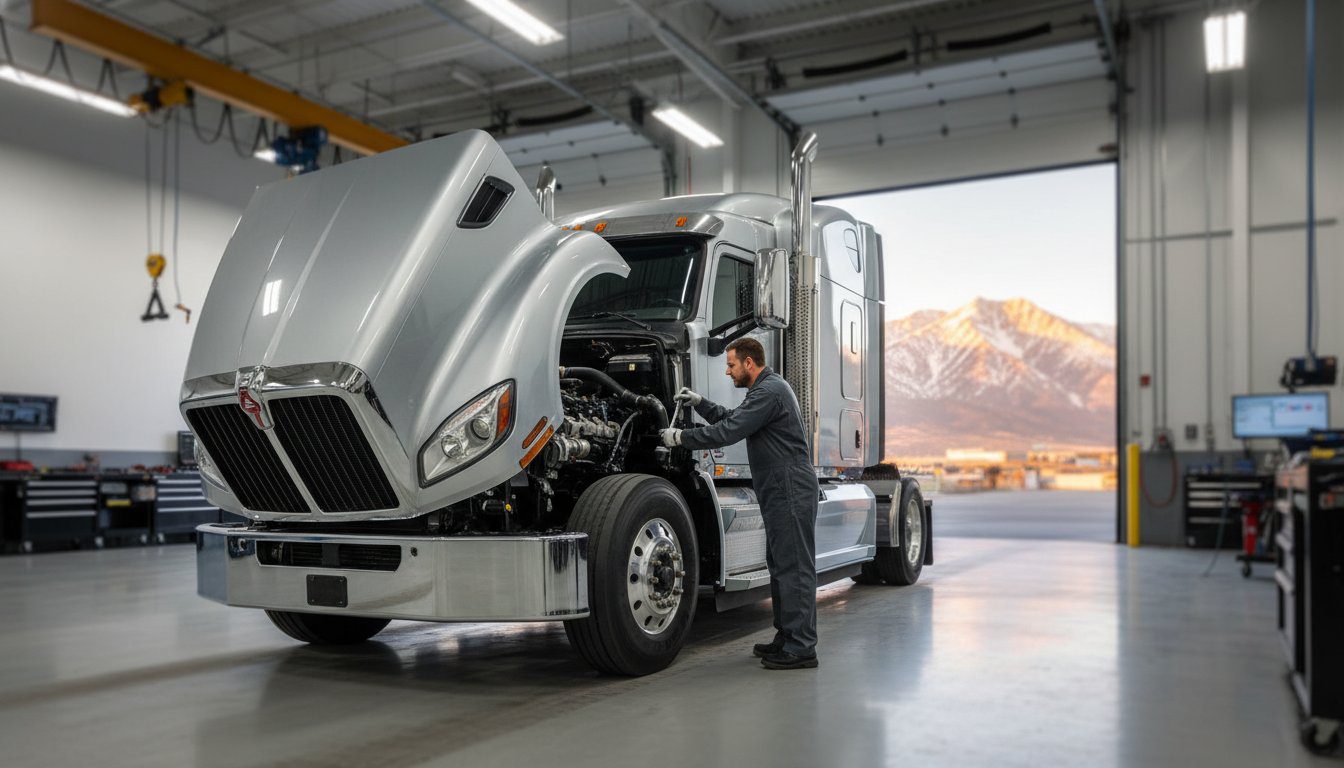
Diesel Engine Coolant System Service: The Fleet Owner’s Guide to Engine Longevity

Did you know that 40% of all heavy-duty diesel engine failures stem from the cooling system? According to the Society of Automotive Engineers, this single system is responsible for nearly half of your most expensive mechanical headaches. Your coolant is effectively a chemical sacrificial lamb. If that chemistry fails, your engine block is the next thing to suffer.
You’ve likely felt the frustration of a truck sidelined by an EGR failure or overheating during a brutal Utah summer haul. It’s a common burden for fleet owners who manage tight schedules and high overhead. A professional diesel engine coolant system service is not just a simple fluid swap; it’s a critical layer of defense for your heavy-duty investment. This guide explains how specialized service prevents cylinder liner pitting and ensures total winter reliability. We’ll examine the shift toward nitrite-free technology and provide a roadmap for maintaining warranty compliance while eliminating the threat of costly downtime.
Key Takeaways
- Understand the “wet sleeve” liner design common in heavy-duty engines and why specialized chemical protection is essential to prevent cylinder liner pitting.
- Learn why a professional backflush and comprehensive pressure testing are superior to a standard “drain and fill” for maintaining system integrity.
- Identify early warning signs of cooling system failure, including the distinct “sweet smell” of internal leaks that often precede expensive EGR cooler damage.
- Discover how the Wasatch Front’s extreme temperature swings impact hose expansion and why a tailored diesel engine coolant system service is vital for Utah fleet reliability.
- Maintain warranty compliance and engine longevity by utilizing OEM-spec fluids and specialized diagnostics for light, medium, and heavy-duty diesel systems.
Why Diesel Cooling Systems Require Specialized Service
A heavy-duty diesel engine is a different beast than a standard gasoline engine. While both rely on a liquid-based engine cooling system to manage heat, the mechanical stresses inside a diesel block require a more aggressive maintenance approach. According to the Society of Automotive Engineers (SAE), approximately 40% of all problems in heavy-duty diesel engines are related to the cooling system. A professional diesel engine coolant system service is much more than a simple fluid exchange. It’s a comprehensive chemical and mechanical restoration designed to protect the very architecture of your engine.
Most heavy-duty diesel engines utilize a “wet sleeve” liner design. In this configuration, the cylinder liners are directly exposed to the circulating coolant. This allows for superior heat dissipation, but it also creates a unique vulnerability called cavitation. Without the right chemical protection, the mechanical movement of the engine will eventually destroy these liners from the outside in. This is why fleet owners can’t treat a diesel flush like a standard automotive service.
The Threat of Cylinder Liner Pitting
Cavitation begins with the rapid vibration of the piston during the combustion cycle. As the piston moves, the cylinder liner wall vibrates at a high frequency. This movement creates tiny vacuum bubbles in the coolant. When these bubbles collapse, they implode with incredible force against the liner wall. These microscopic implosions erode the outer wall of the cylinder one tiny pit at a time.
If left unchecked, these pits eventually become pinholes. Once a hole forms, coolant leaks directly into the combustion chamber or the oil pan. This leads to catastrophic coolant-in-oil contamination, which destroys bearings and results in total engine failure. Preventing this requires a service that focuses on the fluid’s ability to withstand these pressure changes through proper chemical fortification.
Chemical Depletion and pH Balance
Coolant “wears out” because its protective additives are sacrificial. They’re consumed as they neutralize acids and coat metal surfaces to prevent rust. Even if a truck isn’t driven hard, the fluid’s pH level will shift over time due to thermal cycling and oxidation. If the pH drops too low, the coolant becomes acidic and begins to corrode internal components like the radiator, water pump, and heater core.
Maintaining a precise pH range is critical for the durability of gaskets and seals. When the chemistry is out of balance, the cooling system becomes a liability rather than a protector. Supplemental Coolant Additives (SCAs) serve as the primary defense against liner erosion by creating a thin, protective film on the metal. A scheduled diesel engine coolant system service ensures these additive levels remain potent enough to stop cavitation and corrosion before they cause permanent damage.
The Anatomy of a Professional Diesel Coolant System Flush
A simple “drain and fill” is often more of a cosmetic change than a mechanical one. When you simply pull the plug, up to 40% of the old, degraded fluid remains trapped inside the engine block and heater core. This residual fluid contains the very contaminants you’re trying to remove. A professional diesel engine coolant system service uses a pressurized approach to ensure every gallon of old fluid is replaced with fresh, high-performance chemistry. It’s the difference between a surface wipe and a deep industrial scrub.
The 5-Step Professional Service Protocol
- Step 1: Initial Diagnostics: We perform a comprehensive pressure test to find weak hoses or weeping gaskets before the service begins.
- Step 2: Chemical Cleaning: We introduce specialized detergents to break down scale, rust, and oil deposits that have bonded to the metal walls.
- Step 3: High-Volume Backflushing: We pump fluid in the opposite direction of normal flow to dislodge debris from the narrow passages of the radiator and heater core.
- Step 4: Vacuum-Assist Refill: We use vacuum technology to pull a negative pressure on the system, which ensures the new coolant fills every void without leaving air pockets.
- Step 5: Final Calibration: We conduct a technical analysis of diesel coolant to confirm the pH balance and Supplemental Coolant Additive (SCA) levels are perfect.
Pressure testing is a non-negotiable part of our process. We test the system both before and after the flush. This confirms that the cleaning process didn’t reveal a hidden weakness and that the new fluid is securely contained. It’s about providing the peace of mind that your fleet is ready for the road. If you haven’t reviewed your current service intervals, now is the time to align them with your broader fleet maintenance protocols.
Protecting the EGR Cooler
The Exhaust Gas Recirculation (EGR) cooler is one of the most sensitive components in your engine. It relies on a constant, clean flow of coolant to lower the temperature of exhaust gases. When coolant breaks down and forms sludge, it coats the internal fins of the EGR cooler. This leads to localized hot spots, thermal cracking, and eventually, coolant leaking into the intake. If you see white smoke from the exhaust, the damage is already done. Regular diesel engine coolant system service acts as a primary defense, preventing the need for an expensive diesel engine repair caused by emissions system failure.
Using the correct OEM-spec coolant is essential. Mixing Inorganic Additive Technology (IAT) with Organic Acid Technology (OAT) can lead to “gelation,” where the fluids react to form a thick paste. This paste clogs the oil cooler and starves the engine of vital temperature regulation. We ensure your coolant matches the manufacturer’s requirements for your specific light, medium, or heavy-duty application. High-quality service ensures your equipment stays on the road where it belongs.

Warning Signs and Common Cooling System Failures
Early detection of cooling system issues is the difference between a routine maintenance stop and a total engine overhaul. While a professional diesel engine coolant system service is your best defense, drivers and fleet managers must stay vigilant between service intervals. Diesel engines operate under immense pressure. A small leak or a minor chemical imbalance can escalate into a catastrophic failure within a single long-haul trip. Identifying these symptoms early keeps your trucks on the road and your repair bills manageable.
One of the most telling signs of an internal cooling failure is the “sweet smell” of glycol. If you notice a sugary aroma coming from the vents or the exhaust, it usually indicates that coolant is leaking into the intake or combustion chamber. This is often a precursor to EGR cooler failure or head gasket issues. Additionally, keep an eye on your temperature gauge. If the needle “hunts” or fluctuates rapidly between normal and hot, your thermostat is likely failing to regulate flow properly. This constant thermal cycling puts unnecessary stress on every seal in the system.
Visible vs. Invisible Leaks
External leaks are usually straightforward to spot. Look for bright green, red, or orange puddles under the chassis or crusty residue around radiator seams and hose clamps. However, some leaks are more subtle. The water pump weep hole is a critical early warning system. If you see even a small amount of moisture dripping from this hole, it means the internal pump seal has failed. The pump is telling you it’s about to quit. Replacing a weeping pump is a minor task compared to the damage caused if the pump seizes and throws a belt.
Invisible leaks are far more dangerous. These occur when coolant is consumed internally. If your low coolant light illuminates but you don’t see any puddles, the engine is likely “eating” the fluid. Ignoring this can lead to oil dilution, which quickly destroys crankshaft bearings. Never simply top off a diesel engine without investigating why the level was low in the first place. A consistent loss of fluid is a clear signal that your system needs professional attention.
Symptoms of Chemical Failure
Chemical failure is often silent until it’s too late. Open the reservoir and look for “coolant sludge” or “drop-out.” This looks like a thick, gritty paste or a layer of mud at the bottom of the tank. This happens when Supplemental Coolant Additives (SCAs) fall out of suspension due to age or improper mixing. This sludge acts like sandpaper, grinding away at your water pump impeller and clogging the radiator’s narrow passages.
Another invisible threat is electrolysis. This occurs when the coolant’s chemistry breaks down and the fluid becomes electrically conductive. It creates a literal battery effect that eats through aluminum radiators and heater cores from the inside out. To prevent this, we use a refractometer as the only reliable way to check coolant freeze points and ensure the water-to-glycol ratio is exactly 50/50 for maximum protection. Regular diesel engine coolant system service ensures these chemical levels remain in the safe zone, protecting your fleet from the inside out.
Maintenance Schedules and Utah Climate Considerations
Utah isn’t just another state for heavy-duty engines; it’s a rigorous testing ground. High-altitude driving combined with extreme seasonal shifts creates a punishing environment for every cooling component. While national guidelines offer a baseline, a specialized diesel engine coolant system service must account for the specific stresses of the Intermountain West. If your trucks are climbing steep grades or idling in extreme weather, your maintenance strategy needs to be more proactive than the average owner’s.
Severe Duty and Fleet Intervals
Most manufacturers define “Severe Duty” as any operation involving heavy loads, frequent idling, or mountain driving. If your trucks are hauling through the Wasatch Front or spending hours in stop-and-go traffic, they fit this category. Traditional mileage-based intervals are often misleading for commercial operators. We recommend tracking engine hours to get a more accurate picture of fluid degradation. For those looking for a deeper dive into long-term reliability, our diesel maintenance guide provides a comprehensive breakdown of rugged fleet management.
The Utah Winter/Summer Challenge
The Wasatch Front sees temperature swings that can exceed 110 degrees over a single year. You might start a morning at -10°F in Springville and find yourself pulling a heavy load up Parleys Canyon in 100°F heat by mid-afternoon. These cycles cause rubber hoses to expand and contract aggressively. This constant movement fatigues the material and leads to sudden bursts during peak operation. A professional diesel engine coolant system service includes a physical inspection of these components to catch fatigue before it causes a roadside emergency.
Altitude also plays a significant role in how your engine manages heat. At higher elevations, the boiling point of water drops significantly. Your cooling system relies on a pressurized environment and a precise 50/50 coolant-to-distilled-water ratio to keep the engine from boiling over. This “Goldilocks” ratio provides the best balance of freeze protection and heat transfer. We also pay close attention to plastic expansion tanks. The combination of high UV exposure and extreme cold cycles makes these components brittle over time. A mandatory fall check ensures your fleet is prepared for the first deep freeze and the high-pressure demands of mountain hauling.
Protect your investment by staying ahead of the weather. If you haven’t had your cooling system pressure-tested recently, schedule a professional fleet inspection to ensure your trucks are ready for the upcoming season.
Comprehensive Diesel Cooling Solutions at Diego’s Shop
At Diego’s Shop, we don’t just swap fluids; we restore the thermal efficiency of your entire powertrain. Every diesel engine coolant system service we perform is grounded in the expertise of seasoned master craftsmen. We understand that for a fleet owner in Utah County, a truck in the bay is a truck that isn’t making money. That’s why we prioritize precision and speed, ensuring your cooling system is built to withstand the unique stresses of the Wasatch Front. Our commitment to warrantied repair work and the use of OEM-spec fluids means you can leave our shop with total confidence in your engine’s longevity.
We utilize professional-grade vacuum-fill and pressure-testing equipment that far exceeds the capabilities of general automotive shops. This advanced technology allows us to identify microscopic leaks and eliminate air pockets that lead to localized hotspots in your cylinder head. By maintaining total control over the chemical and mechanical integrity of your cooling system, we provide a level of reliability that generic service centers simply can’t match. We treat your fleet like the heavy-duty investment it is.
Expertise Across All Diesel Platforms
Our technicians possess deep mastery across the full spectrum of diesel powerplants. Whether you’re running light-duty pickups or heavy-duty OTR rigs, we have the specialized tools and knowledge to handle the job. Our expertise includes:
- Power Stroke: Specialized care for Ford’s cooling requirements and EGR cooler protection.
- Cummins: Precise additive management to prevent liner pitting in high-torque applications.
- Duramax: Comprehensive diagnostics for water pump and radiator seal integrity.
- Heavy-Duty OTR: Scalable solutions for Class 8 trucks and commercial fleet maintenance.
This platform-specific knowledge is why we are a trusted name for diesel repair Utah drivers rely on. We don’t guess; we diagnose based on the specific engineering of your engine.
Schedule Your Coolant Service Today
Managing a fleet requires a partner who understands the stakes of downtime. We’ve streamlined our intake process for fleet managers in Springville and the surrounding areas to get your equipment back on the road fast. A proactive diesel engine coolant system service is the most cost-effective way to prevent the $15,000 engine overhaul that follows a cooling failure. Don’t wait for a low-coolant light or a sweet smell in the cab to tell you there’s a problem.
Contact us today for a comprehensive cooling system health check. We’ll verify your pH levels, test your pressure seals, and ensure your fleet is ready for the upcoming season. We stand behind every turn of the wrench with a promise of durability and honest, no-nonsense service. Your engine’s longevity is our primary goal. Expert service. Total reliability. Diego’s Shop.
Secure Your Fleet’s Future with Specialized Cooling Care
Maintaining a healthy cooling system is the most effective way to avoid catastrophic engine failure and unmanageable downtime. By prioritizing the chemical balance of your fluid and the mechanical integrity of your hoses and seals, you protect your fleet from the hidden dangers of liner pitting and EGR cracking. Your trucks face unique challenges on Utah’s mountain passes, making a localized approach to maintenance essential for long-term reliability.
At Diego’s Shop, we provide the master-craftsman oversight your equipment deserves. Our team specializes in fleet maintenance for commercial clients, offering warrantied repair work on all diesel systems. We bring deep expertise in modern diesel emissions and cooling integration to every diesel engine coolant system service we perform. Don’t leave your engine’s survival to chance. Schedule your professional diesel coolant service at Diego’s Shop today to ensure your fleet remains rugged and reliable for the long haul. Your trucks are built to work hard, and we’re here to make sure they stay that way.
Frequently Asked Questions
What is the difference between green, orange, and yellow diesel coolant?
Color coding identifies the chemical technology used to protect your engine. Green usually signifies Inorganic Additive Technology (IAT), which requires frequent changes, while orange or red often represents Organic Acid Technology (OAT) designed for extended life. Yellow is typically a Hybrid (HOAT) that blends these chemistries. You should never mix these colors, as the different additives can react to form a thick gel that clogs your radiator and oil cooler.
Can I use tap water to top off my diesel cooling system in an emergency?
You should avoid tap water because it contains minerals like calcium and magnesium that form scale on internal engine surfaces. This scale acts as an insulator, significantly reducing the system’s ability to transfer heat. If you use tap water during a roadside emergency, it’s vital to schedule a professional diesel engine coolant system service immediately. This ensures all minerals are flushed out and replaced with the correct distilled water and glycol mix.
How often should a commercial diesel truck have its coolant flushed?
Service intervals depend on the specific coolant type and your truck’s duty cycle. Conventional green coolant typically requires replacement every two years or 30,000 miles. Many modern Extended Life Coolants (ELCs) claim a life of up to 600,000 miles, but commercial fleets operating in Utah’s extreme temperatures should perform chemical testing every six months. Regular testing confirms the protective additives are still active regardless of the mileage.
What are Supplemental Coolant Additives (SCAs) and why do I need them?
SCAs are chemical boosters that create a sacrificial protective film on your cylinder liners. This film is the primary defense against cavitation, a process where microscopic bubbles implode and erode the iron liner walls. Without these additives, the mechanical vibrations of the engine will eventually “drill” holes through the metal. Maintaining the correct SCA concentration is a core part of a high-quality diesel engine coolant system service.
Why is my diesel truck losing coolant but there are no visible leaks?
Internal leaks are the most likely culprit when you don’t see puddles on the ground. The coolant is likely being consumed by a failing EGR cooler, a leaking head gasket, or through pinholes in the cylinder liners caused by pitting. If you notice a sugary smell in the cab or white smoke from the exhaust, the engine is burning the fluid internally. This requires immediate diagnostic attention to prevent catastrophic bearing damage from oil contamination.
Can a faulty cooling system cause my truck to fail a DOT inspection?
Yes, a cooling system issue can lead to a DOT violation. Inspectors look for active leaks, cracked or bulging hoses, and proper fluid levels in the expansion tank. An active leak that creates a visible spray or a puddle is a safety concern that can result in your vehicle being placed out of service. Keeping your hoses and connections in top condition is a basic requirement for commercial compliance.
What is cavitation and how does it affect my diesel engine block?
Cavitation occurs when piston vibrations create tiny vacuum bubbles in the coolant surrounding the cylinder liner. When these bubbles collapse, they implode with enough force to chip away microscopic pieces of the iron liner. Over time, this erosion creates deep pits that eventually turn into pinholes. Once a pinhole forms, coolant enters the combustion chamber, which usually leads to a total engine failure and an expensive overhaul.
Is a coolant flush necessary if my engine is not overheating?
A flush is absolutely necessary even if your temperature gauge appears normal. The protective additives in your coolant deplete over time, leaving your engine vulnerable to corrosion, electrolysis, and liner pitting. These issues often happen silently and don’t cause overheating until the damage is already severe. Proactive maintenance ensures the fluid’s chemistry remains stable enough to prevent long-term mechanical erosion before it becomes a crisis.