
Diesel Emissions System Repair in Utah County: Maximizing Fleet Reliability

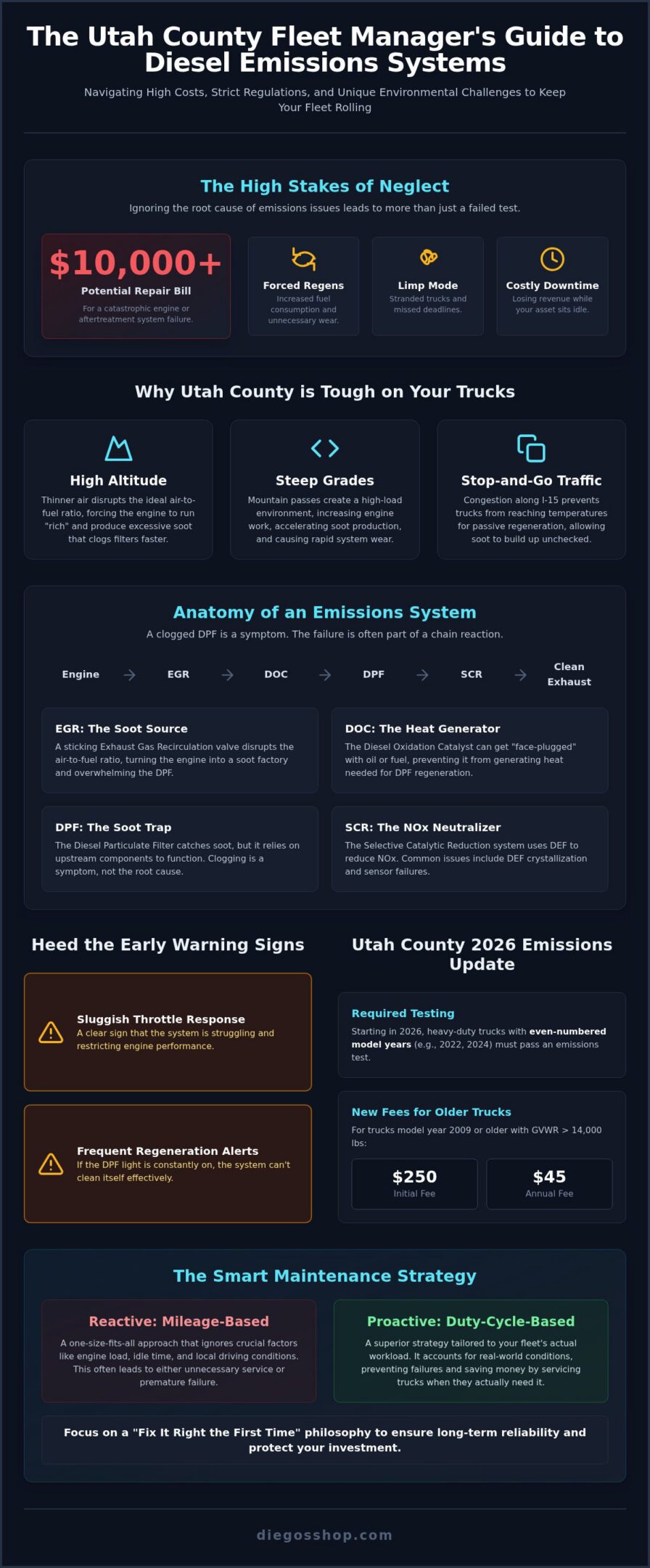
Most fleet managers think a DPF cleaning is a permanent fix, but cleaning a filter without addressing why it’s clogged is just a temporary bandage on a deeper wound. If you’re managing heavy-duty trucks, you know that ignoring the root cause of soot-loading leads straight to forced regens and the dreaded limp mode. When your truck is stuck on the side of the road, you aren’t just losing time; you’re risking a repair bill that can easily exceed $10,000. Finding reliable diesel emissions system repair Utah County is about more than just passing a test; it’s about keeping your fleet on the road and your business profitable.
It’s a constant challenge to stay ahead of Utah County’s strict 2026 emissions standards while avoiding missed deadlines. You need to know that your equipment is compliant and, more importantly, dependable. This guide explains how specialized emissions system repair prevents catastrophic engine failure and keeps your heavy-duty trucks running within local standards.
We will look at the 2026 testing requirements for even-numbered model years and the impact of the new High Emissions Heavy Duty Vehicle fee on older trucks. You’ll also learn the specific preventive maintenance protocols that protect your bottom line from the high costs of neglected systems.
Key Takeaways
- Understand how Utah County’s high altitude and steep grades increase engine load, leading to faster soot accumulation in your DPF and EGR systems.
- Learn to identify early warning signs of failure, such as sluggish throttle response and frequent regeneration alerts, before they trigger a costly limp mode event.
- Discover why a duty-cycle-based maintenance schedule is more effective than standard mileage intervals for professional diesel emissions system repair Utah County.
- Gain insight into the complexities of SCR systems and how to prevent common issues like DEF crystal buildup and sensor failures.
- Find out how warrantied repair work and a “fix it right the first time” philosophy at Diego’s Shop protect the longevity of Peterbilt, Kenworth, and other heavy-duty fleets.
Why Diesel Emissions System Repair in Utah County is Critical for Fleet Longevity
Aftertreatment is the integrated series of components that manage exhaust gases after they leave the engine. While these systems are designed to keep heavy-duty trucks clean, they’re incredibly sensitive to how and where you drive. In Utah County, the environment is particularly harsh on these components. The combination of steep mountain grades and high elevations creates a high-load environment that forces engines to work harder. For fleet operators, staying ahead of diesel emissions system repair Utah County is a necessity because local conditions accelerate soot production and system wear.
Traffic patterns also play a massive role in system health. The constant stop-and-go congestion along the I-15 corridor prevents your truck from reaching the sustained exhaust temperatures required for passive regeneration. When the system can’t clean itself naturally, soot builds up rapidly. This leads to frequent forced regenerations, increased fuel consumption, and eventually, the dreaded limp mode that sidelines your equipment during a critical delivery.
The Impact of Utah’s Altitude on Combustion
The Wasatch Front sits at elevations where the air is thinner than at sea level. This lack of oxygen disrupts the ideal air-to-fuel ratio, often forcing the engine to run “rich.” When there isn’t enough oxygen to burn fuel completely, the engine produces excessive particulate matter. This heavy soot quickly overwhelms the Diesel Particulate Filter (DPF) and leads to premature clogging in the EGR cooler. Without specialized diagnostics to adjust engine parameters for these high-altitude conditions, your trucks will face recurring failures. It’s a cycle of soot-loading that standard maintenance schedules often miss.
Compliance and the Utah County Emissions Test
Staying compliant in Utah County is becoming more complex as regulations tighten. In 2026, vehicles with even-numbered model years, such as 2022 or 2024, must pass an emissions test. Additionally, heavy-duty trucks with a GVWR over 14,000 pounds that are model year 2009 or older now face a $250 initial registration fee and a $45 annual compliance fee. These rules are designed to push older, high-polluting trucks off the road.
Simply clearing a fault code isn’t enough to pass a professional opacity test. If your aftertreatment system isn’t functioning at peak efficiency, you risk registration holds and heavy fines. Investing in diesel emissions system repair Utah County ensures your Peterbilt or Kenworth fleet stays legal and avoids the high costs of non-compliance. We focus on fixing the root cause of emissions failures so your trucks stay on the road and out of the citation office.
Beyond the Filter: Understanding DPF, EGR, and SCR Systems
Modern diesel emissions aftertreatment systems are complex networks where each component relies on the health of the others. Many shops treat a clogged filter as an isolated issue, but a master craftsman knows the filter is usually the victim, not the cause. When you seek diesel emissions system repair Utah County, you’re often dealing with a cascade of failures rather than a single broken part. A clogged Diesel Particulate Filter (DPF) is frequently the result of a leaking fuel injector or a sticking Exhaust Gas Recirculation (EGR) valve that has turned the engine into a soot factory.
A comprehensive repair must also include an inspection of the Diesel Oxidation Catalyst (DOC). This component sits upstream of the DPF and is prone to “face plugging,” where unburned fuel or oil coats the catalyst surface. If the DOC suffers thermal damage or plugging, it can’t generate the heat necessary for a successful regeneration. This leaves the DPF vulnerable to permanent damage. Our diagnostic process at Diego’s Shop involves checking the entire stream to ensure every component is performing its specific role in the exhaust cycle.
The EGR System: The Root of Most Soot Issues
The EGR system is designed to lower combustion temperatures and reduce NOx, but it’s often the primary source of maintenance headaches. A sticking EGR valve disrupts the air-to-fuel ratio, leading to massive soot production that quickly overwhelms the aftertreatment system. Even worse, EGR cooler leaks can introduce coolant into the exhaust stream, which mimics the symptoms of a blown head gasket and destroys the DPF substrate. For a deeper look at how these systems interact with your engine’s core, see our Expert Diesel Engine Repair: A Guide to Service Done Right. Addressing these issues early prevents the “soot-loading” cycle that leads to expensive downtime.
SCR and DEF: The Chemistry of Clean Diesel
Selective Catalytic Reduction (SCR) relies on Diesel Exhaust Fluid (DEF) to neutralize NOx emissions. This system is highly sensitive; even small amounts of “dirty” DEF or a failing pump can trigger an immediate power de-rate. On heavy-duty rigs from Isuzu or Ford, we frequently see crystal buildup in the DEF injectors and sensor errors that put trucks into limp mode. Our diagnostic protocols for SCR systems focus on verifying pump pressure and injector spray patterns to ensure the chemistry is correct. If your truck is struggling with recurring de-rates, it’s time for a professional fleet maintenance inspection to identify the failing sensor or clogged injector before it stops your haul. We believe that diesel emissions system repair Utah County isn’t just about clearing codes; it’s about restoring the technical integrity of the entire system.
Recognizing the Signs of Emissions System Failure
Ignoring the early warning signs of a failing exhaust system is a gamble with your truck’s uptime. While modern dashboards are equipped with various alerts, some symptoms are more subtle and require an observant driver. Catching these indicators early allows for timely diesel emissions system repair Utah County, preventing a small sensor issue from cascading into a total engine shutdown. When your aftertreatment system begins to struggle, it leaves a trail of evidence that every fleet manager should monitor.
- Frequent ‘Regen Required’ alerts: If your truck requests a parked regeneration more than once a week or shortly after completing a highway run, the DPF is likely reaching its ash capacity.
- Sluggish throttle response: A noticeable loss of engine power, especially when pulling a grade, often indicates that exhaust backpressure is choking the engine.
- Falling fuel economy: As the engine fights against a restricted exhaust stream, it consumes more fuel to maintain the same power output. A sudden drop in MPG is a red flag for emissions health.
- Visible soot: Modern diesel trucks should not emit black smoke. If you see soot accumulation around the tailpipe, the DPF substrate may be cracked or bypassed.
The Progression to ‘Limp Mode’
The engine control module (ECM) is programmed to protect the engine from damage caused by emissions failures. This protection manifests as a staged de-rate process. Initially, you might notice a 25% reduction in available power. If the issue persists, the system will escalate to a severe de-rate, eventually limiting the vehicle to a 5 MPH crawl. This “limp mode” is designed to force the vehicle into a service bay. Many drivers try to bypass this by repeatedly forcing parked regenerations, but this is dangerous. Excessive heat from back-to-back regens can cause the DPF substrate to melt or crack, turning a repairable filter into a scrap heap. For a detailed look at maintaining your fleet’s durability, consult The 2026 Diesel Maintenance Handbook.
Diagnostic ‘Ghost Codes’
Master technicians don’t just wait for a check engine light; they look for “ghost codes” or sensor drift. Over time, NOx and pressure sensors can begin to report inaccurate data that stays just within the acceptable range to avoid triggering a hard fault. These inaccuracies lead to improper DEF dosing and inefficient regeneration cycles. We use live data streaming to catch these intermittent faults while the engine is under load. On heavy-duty Kenworth and Peterbilt trucks, we also pay close attention to harness integrity. Vibration and heat often cause wiring issues that mimic sensor failure. True diesel emissions system repair Utah County requires a master craftsman who understands that the software is only as good as the physical connections feeding it data.
Proactive Maintenance Strategies for Utah Fleet Operators
Reactive repairs are the enemy of fleet profitability. Every hour your truck sits in a bay for unscheduled diesel emissions system repair Utah County is an hour it isn’t generating revenue. For many operators, a single day of downtime can cost between $500 and $1,500 in lost gross income; this doesn’t even account for the actual repair bill or potential late-delivery penalties. Transitioning to a proactive maintenance model is the only way to protect your margins. This starts with Fleet Maintenance: A Complete Guide to Preventing Downtime, which emphasizes addressing soot-loading before it triggers a de-rate.
Low-ash engine oils and high-quality fuel additives are essential tools for reducing the burden on your aftertreatment system. These lubricants are specifically formulated to minimize the metallic compounds that create permanent ash buildup in the DPF. While soot can be burned off during regeneration, ash can only be removed through professional pneumatic cleaning. Using the right fluids extends the life of your filters and ensures the technical integrity of the entire exhaust stream.
Custom Maintenance Schedules for Commercial Rigs
A long-haul Kenworth cruising the interstate operates in a completely different thermal environment than a local dump truck working a construction site in Orem. Vocational trucks that endure high idle times and frequent short trips require much shorter inspection intervals because they rarely achieve the temperatures needed for passive cleaning. We recommend scheduling DPF health checks to coincide with your Reliable DOT Truck Inspections in Utah County. This alignment ensures that your emissions system is tested under load and verified for compliance before a failure occurs on the road.
Sourcing the Right Components
When a component fails, the choice between new and remanufactured parts depends on the specific failure point. New OEM sensors are almost always the better choice for SCR systems. Cheap aftermarket alternatives often report “ghost codes” that lead to recurring diesel emissions system repair Utah County. However, remanufactured DPFs can offer a cost-effective solution if they have been certified and flow-tested by a specialist. Understanding How to Find the Right Diesel Parts Center for Your Truck is vital for balancing repair costs with long-term reliability. To keep your fleet moving with confidence, contact Diego’s Shop today for a comprehensive preventive maintenance evaluation.
Expert Diesel Emissions System Repair in Utah County at Diego’s Shop
Navigating the technical landscape of modern aftertreatment requires a specialist’s eye. At Diego’s Shop in Springville, we provide the technical mastery necessary for light, medium, and heavy-duty vehicles. Our technicians understand the specific needs of Peterbilt and Kenworth rigs as well as Isuzu and Ford commercial trucks. When you choose us for diesel emissions system repair Utah County, you’re getting a diagnostic process that looks beyond the surface of a fault code to restore the technical integrity of your engine.
Our “fix it right the first time” philosophy is the cornerstone of our service. We know that every hour your truck is sidelined is an hour of lost revenue for your business. Our Springville facility is equipped with specialized software and tools designed for high-precision fleet work, ensuring we catch issues that generic scanners miss. Every repair we perform is backed by our warrantied repair work guarantee, providing the peace of mind that comes from professional accountability and seasoned expertise.
The Master Craftsman Approach to Emissions
A master craftsman doesn’t stop at replacing a clogged filter; we investigate the root cause of the failure. If a system is loading with soot prematurely, we analyze the fuel delivery and air intake systems to find the source of the imbalance. This level of investigative care is Why Drivers Trust Diego’s Shop for their most challenging fleet issues. We maintain transparent communication with fleet managers, providing detailed reports on component health and practical advice to prevent recurring downtime.
Strategic Fleet Support for the Wasatch Front
Located centrally in Springville, our shop provides a logistical hub for operators in Provo, Orem, and Spanish Fork. We have designed our workflow to reduce the friction of commercial maintenance, allowing your drivers to get back to their routes with minimal delay. The Diego’s Shop promise is built on rugged reliability, integrity, and a deep respect for the heavy-duty machinery that powers our local economy. We speak the language of fleet managers who prioritize uptime and durable results.
Don’t let a failing aftertreatment system compromise your operations or your compliance status. Our team is ready to provide the technical expertise your fleet needs to stay efficient and powerful under load. Contact Diego’s Shop today to secure your vehicle’s performance and ensure you are ready for the long haul. Rugged reliability starts with expert care.
Secure Your Uptime with Precision Emissions Care
Maintaining a reliable fleet in the high-altitude environment of the Wasatch Front requires more than just reactive fixes. You understand how altitude increases soot-loading and how ignoring early warning signs like frequent regens leads directly to costly de-rates. True reliability comes from understanding the interdependence of your DPF, EGR, and SCR systems. By choosing a partner who investigates the root cause of every failure, you protect your trucks from permanent damage and ensure compliance with Utah’s evolving standards.
Diego’s Shop provides the technical mastery your heavy-duty equipment needs to stay profitable. Our Springville facility offers specialized diagnostics for Peterbilt, Kenworth, and Isuzu, ensuring that every diesel emissions system repair Utah County is handled with precision. We back our expertise with warrantied repair work on all emissions components, giving you the peace of mind that your trucks are built to last. Don’t wait for a limp mode alert to sideline your operations.
Schedule Your Diesel Emissions Diagnostic at Diego’s Shop and keep your fleet moving with rugged reliability.
Frequently Asked Questions
How often should a DPF be cleaned for a commercial truck in Utah?
Cleaning intervals depend heavily on your specific duty cycle rather than just mileage. While long-haulers might reach 200,000 miles before needing service, local vocational trucks in Utah County often require cleaning much sooner. The high-altitude environment and steep mountain grades increase engine load, which accelerates soot accumulation. We recommend scheduling a DPF health check every 100,000 miles or alongside your annual DOT inspection to prevent unplanned downtime and ensure system longevity.
Can I drive my diesel truck if the emissions light is on?
You shouldn’t continue driving with an active emissions light because it often signals an impending engine de-rate. Ignoring the warning can lead to a “limp mode” situation where the truck is restricted to 5 MPH for safety. Driving with a restricted exhaust also increases backpressure, which can damage turbochargers and internal engine components. Addressing the light immediately with professional diesel emissions system repair Utah County prevents a simple sensor issue from becoming a catastrophic failure.
What is the difference between a DPF cleaning and a DPF restoration?
A standard cleaning uses pneumatic air and thermal baking to remove soot and loose ash from the filter. Restoration is a more intensive process used when a filter is severely plugged or face-plugged with oil and fuel. This often involves specialized aqueous cleaning or chemical treatments to restore the substrate’s flow characteristics. Our master technicians evaluate the filter’s integrity to determine if it can be saved or if internal cracking requires a full replacement.
Will an emissions system failure cause my truck to go into limp mode?
Yes, the Engine Control Module (ECM) will trigger a staged de-rate process to protect the engine from damage. This typically begins with a 25% power reduction and can progress to a severe speed limit if the fault isn’t corrected. These protocols are designed to prevent the high exhaust temperatures and backpressure associated with failed aftertreatment systems from melting the DPF substrate or damaging the turbo. Prompt diagnostics are essential to avoid being stranded on the roadside.
Are emissions system repairs covered by Diego’s Shop warranty?
Every emissions repair performed at our Springville facility is backed by our warrantied repair work guarantee. We take pride in our technical skill and the durability of our services, so we stand behind the work we perform on Peterbilt, Kenworth, and other heavy-duty brands. This commitment to accountability ensures that you can trust the integrity of our repairs. We focus on fixing the root cause to provide long-term reliability and peace of mind for fleet managers.
What causes an EGR cooler to fail prematurely in high-altitude areas?
High-altitude environments like the Wasatch Front have thinner air, which can disrupt the ideal air-to-fuel ratio and lead to rich combustion. This produces excessive soot that clogs the EGR cooler’s internal passages more quickly than at sea level. Over time, this soot buildup creates hot spots that lead to thermal stress and eventually cause the cooler to crack. Regular diesel emissions system repair Utah County includes inspecting these coolers for early signs of leakage or heavy carbon accumulation.
Is it legal to delete the emissions system on my diesel truck in Utah County?
It is illegal to remove or bypass emissions control equipment under both federal EPA regulations and Utah County ordinances. Tampering with these systems can result in heavy fines, failed emissions inspections, and vehicle registration holds. Utah County specifically requires OBD and visual tampering inspections for diesel vehicles model year 2007 and newer. Instead of illegal deletes, we focus on maintaining and repairing these systems to ensure they remain reliable without compromising your legal standing or vehicle value.
How much does a typical diesel emissions system repair cost?
Repair costs vary significantly based on the specific component that has failed and the extent of the damage. A simple sensor replacement is a relatively minor investment, whereas a full DPF replacement or SCR system overhaul represents a more substantial cost. Factors like the truck’s make, model, and the severity of soot-loading also influence the final bill. We recommend a comprehensive diagnostic to identify the exact failure point rather than guessing with expensive parts that might not be needed.