
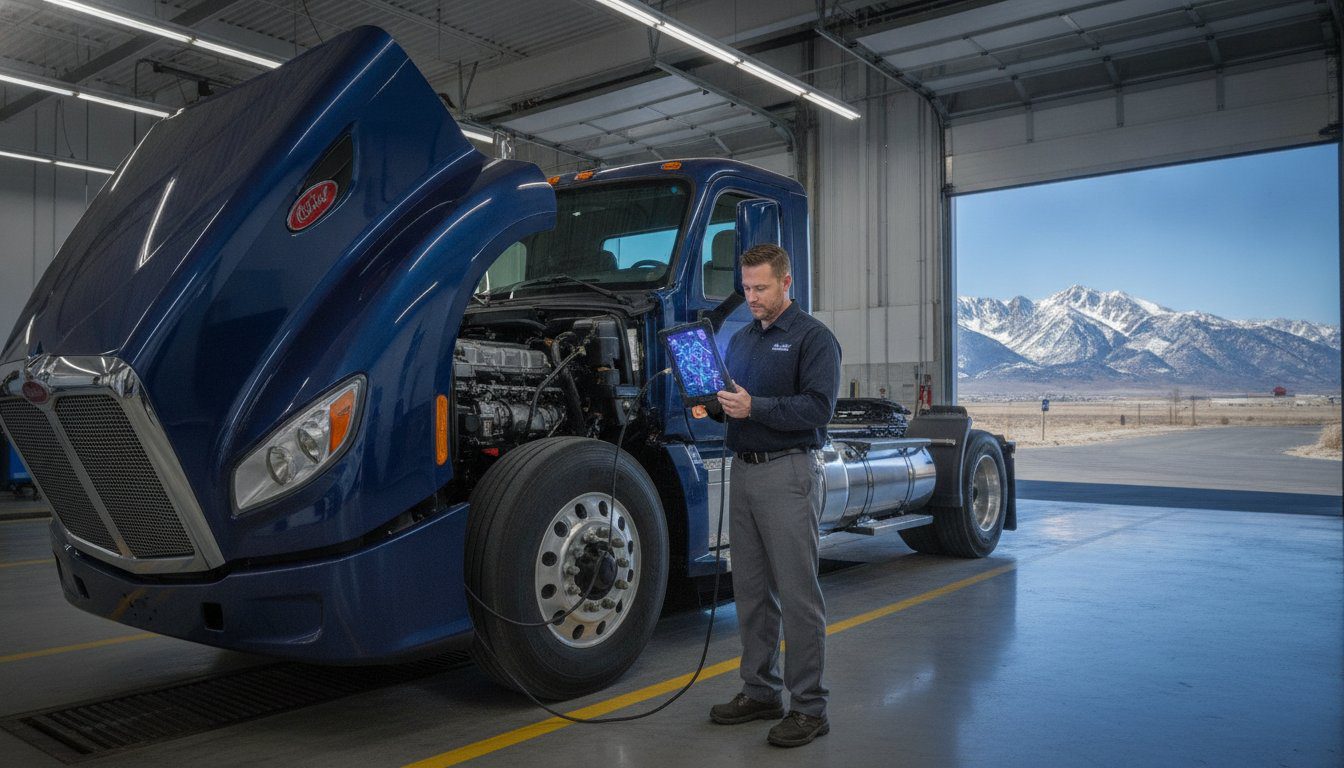
Common Peterbilt Engine Problems: A 2026 Guide to Reliability and Repair

You are halfway through a tight delivery window when a sudden engine derate forces your Peterbilt to the shoulder. It’s a scenario every owner-operator dreads, yet understanding common Peterbilt engine problems is often the only thing standing between a quick fix and a week of lost revenue. You shouldn’t have to guess what a flashing dashboard code means while your profit margins slip away. We recognize the stress of managing complex machinery when your livelihood depends on every mile.
We know that unexpected downtime and high repair costs are your biggest hurdles in 2026. This guide provides a clear roadmap to the most frequent failures affecting PACCAR MX and Cummins X15 engines, from the recent fuel pump recalls to the persistent headaches of DPF and EGR systems. You’ll learn how proactive maintenance keeps your truck out of the shop and on the road where it belongs. Our goal is to provide the peace of mind that comes from technical certainty.
We will break down the critical differences between PACCAR and Cummins vulnerabilities, offer troubleshooting steps for common faults, and show you how a specialized Utah-based repair partner can safeguard your fleet against the upcoming 2027 emissions shifts. It is time to take total control of your truck’s reliability and performance.
Key Takeaways
- Understand why emissions systems like the DPF and EGR remain the primary source of unexpected downtime for modern heavy-duty rigs.
- Identify common Peterbilt engine problems involving high-pressure fuel systems and complex electronics that often trigger confusing dashboard fault codes.
- Compare the specific mechanical vulnerabilities of PACCAR MX-13 and Cummins X15 engines to better anticipate your truck’s maintenance needs.
- Learn how specialized oil analysis and proactive fleet maintenance programs can push your uptime toward 99% by catching internal wear early.
- Locate reliable, warrantied diesel engine repair services in Springville to handle the advanced diagnostics required for 2026-era Peterbilt trucks.
Common Peterbilt Engine Problems: An Overview of Modern Rig Reliability
Peterbilt trucks have earned a reputation for being the “Class” of the industry. Looking back through the Peterbilt Motors Company history, it is clear that these machines were built to outlast their drivers. However, a 2026 model year truck operates in a vastly different environment than its predecessors. While the aluminum cab and steel frame remain legendary for their durability, the heart of the rig has become a sophisticated network of sensors and high-pressure components. Understanding common Peterbilt engine problems is no longer just about mechanical intuition. It requires a deep grasp of how modern powerplants interact with digital controls.
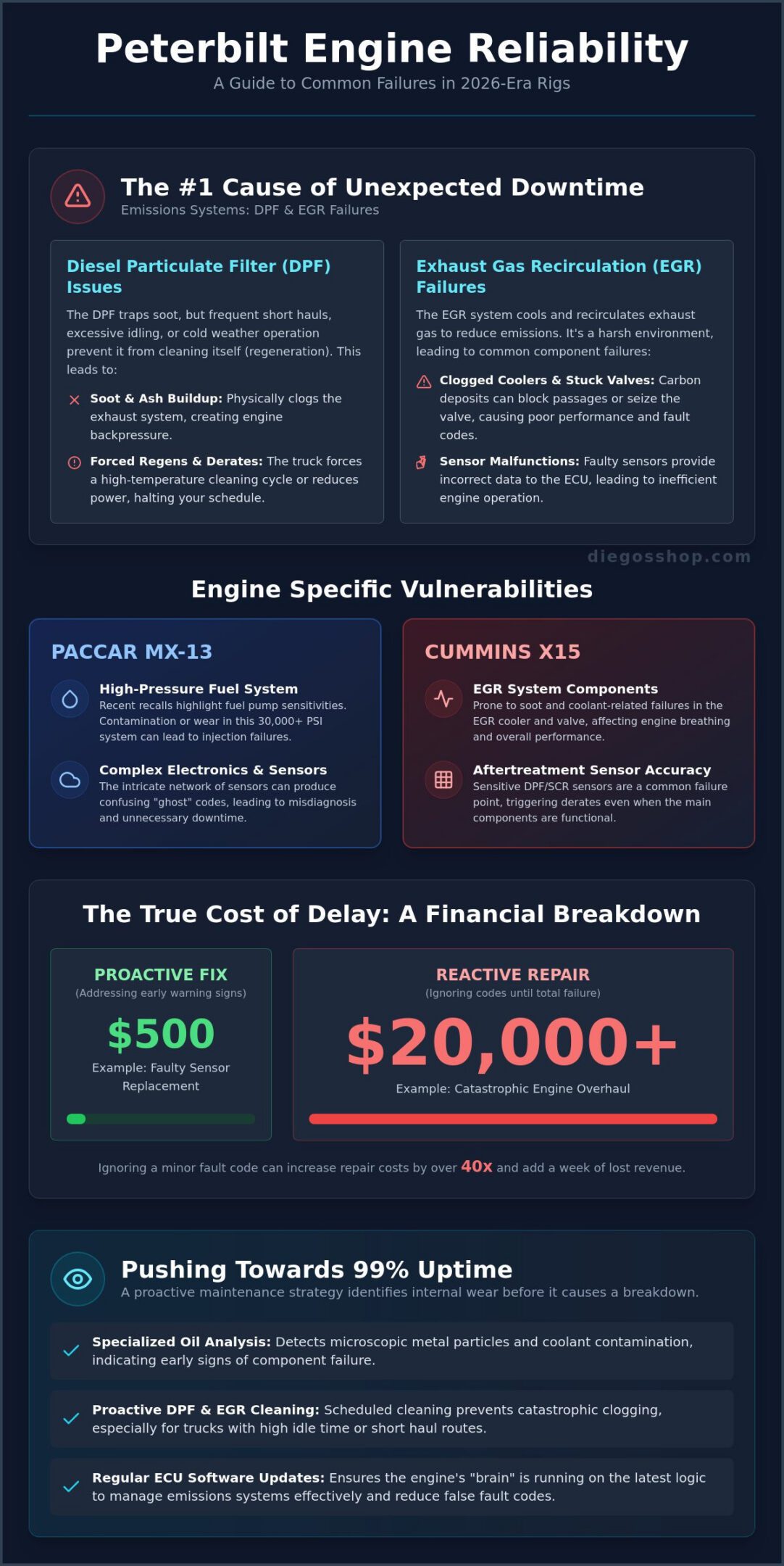
Your choice of engine significantly dictates your maintenance path. Most modern Peterbilts are powered by either PACCAR MX series or Cummins X15 engines. Both are capable of million-mile lifespans. However, they possess unique failure points that can catch an unprepared owner off guard. Catching a faulty sensor early might cost you $500. Ignoring that same fault code until the engine shuts down on a steep grade can easily lead to a $20,000 overhaul. We believe in providing the technical clarity you need to make those decisions before the situation becomes critical. Technical mastery is the only way to ensure your equipment remains an asset rather than a liability.
Why Modern Diesel Engines Face Different Challenges
The push for cleaner air has fundamentally changed diesel architecture. To meet 2026 emissions standards, engines utilize complex aftertreatment systems that were non-existent twenty years ago. High-pressure common rail (HPCR) fuel systems now deliver diesel at pressures exceeding 30,000 PSI to ensure complete combustion. While this improves efficiency, it leaves zero room for contamination or wear. Electronic Control Units (ECUs) act as the brain of the operation. These units manage massive amounts of data, but they can occasionally misinterpret signals from a failing sensor. This leads to unnecessary derates or “ghost” codes that disrupt your schedule and cause unneeded stress.
The True Cost of Ignoring Engine Warning Signs
Ignoring a dashboard light is a gamble with your profit margins. A “forced regen” is often a symptom of a deeper issue within the DPF system. If you find yourself performing these frequently, you’re burning extra fuel. You’re also shortening the life of your aftertreatment components. Minor oil leaks are another silent killer. A small weep near the turbocharger might seem insignificant, but it can lead to oil starvation and catastrophic failure of the turbine blades. Relying on expert diesel engine repair ensures that these minor issues are diagnosed with precision. We focus on accountability and durability in every repair. Our goal is to fix the root cause so you don’t face the same problem twice.
The Emissions Headache: DPF and EGR System Failures
The most reliable engine in the world is useless if its exhaust system is choked. In our experience, the Diesel Particulate Filter (DPF) and Exhaust Gas Recirculation (EGR) systems are the leading causes of downtime. These components act as the “lungs” of your truck. When they become restricted by soot and ash, the entire powerplant suffers. These common Peterbilt engine problems often start as minor sensor alerts but quickly escalate into full engine derates that leave you stranded at the worst possible moment. We prioritize understanding these systems because they represent the thin line between a profitable haul and an expensive tow bill.
Soot buildup is the primary enemy of modern heavy-duty engine longevity. This carbon byproduct is supposed to be burned off during regeneration cycles. However, these cycles often fail if the engine doesn’t maintain optimal operating temperatures for a sufficient period. Short hauls, excessive idling, or operating in extreme cold can prevent the “passive” regeneration process from completing. When this happens, soot accumulates until the filter is physically blocked. This creates backpressure that strains the turbocharger and reduces your fuel efficiency. Industry data on Paccar MX13 vs Cummins X15 reliability suggests that while both engines are robust, their emissions hardware requires different diagnostic approaches to maintain peak performance.
Symptoms of a Failing DPF System
You shouldn’t ignore the warning signs of a struggling aftertreatment system. If your dashboard frequently displays “Requesting Regen” alerts that won’t clear after a highway run, your DPF is likely reaching its capacity. You may also notice a significant drop in throttle response. In some cases, a distinct “burning” smell or unusual exhaust smoke indicates that the system is trying, and failing, to incinerate trapped particulates. Catching these symptoms early allows for a professional cleaning rather than a total replacement of the filter assembly.
EGR Valve and Cooler Troubleshooting
The EGR system’s job is to recirculate a portion of exhaust gas back into the cylinders to lower combustion temperatures. Unfortunately, the EGR valve can become “stuck” due to heavy carbon deposits. This leads to rough idling, surging, and poor acceleration. Even more concerning is the EGR cooler. These units are prone to internal leaks. When a cooler fails, it introduces coolant into the combustion chamber. If you see white smoke from the stack or notice your coolant levels dropping without a visible external leak, you must act immediately. Integrating these checks into your preventive maintenance schedule is the only way to catch a leaking cooler before it causes catastrophic cylinder damage. A timely diesel engine repair diagnostic can save your engine block from permanent harm.
Engine-Specific Breakdown: PACCAR MX vs. Cummins X15
Identifying common Peterbilt engine problems requires knowing exactly what sits under your hood. A PACCAR MX-13 and a Cummins X15 might share the same chassis, but their internal architectures demand completely different diagnostic strategies. We often see owner-operators struggle when they apply a one-size-fits-all approach to maintenance. Success in 2026 depends on recognizing the specific mechanical quirks of your powerplant before they force you off the road. Technical mastery is the only way to ensure your equipment remains a reliable asset.
PACCAR MX-11 and MX-13 Specific Issues
The PACCAR MX series is a marvel of fuel efficiency and weight reduction, yet it isn’t without its flaws. We frequently see drivers reporting an unusual shaking or vibration while idling. This is often a telltale sign of fuel injector failure, a known issue in the MX-13 platform. Another weak point is the plastic thermostat housing. Over time, constant heat cycles cause this plastic to warp or crack, leading to persistent coolant leaks that can be difficult to trace. Perhaps the most frustrating issue involves wiring harness chafing. Because the harness is routed tightly against the engine block, vibration eventually wears through the insulation. This creates “ghost” fault codes in the ECU that appear and disappear, frustrating anyone without specialized diagnostic tools.
Cummins X15 Performance Bottlenecks
The Cummins X15 is the workhorse of the heavy-duty world, but it has its own set of “Achilles heels.” One of the most critical warning signs is a distinct ticking sound coming from the top end of the engine. This sound often indicates camshaft flat spots or rocker lever wear. If you ignore this ticking, the damage will eventually destroy the cylinder head. We also frequently handle Variable Geometry Turbocharger (VGT) actuator failures. When this electronic component fails, the engine typically enters a derated limp mode to prevent over-boosting. Finally, the high-pressure fuel pump remains a point of concern for 2026 models. A failure here doesn’t just stop the engine; it can send metal contamination throughout the entire fuel system, leading to a massive repair bill that could have been avoided with earlier detection.
Turbocharger actuator failures are a common denominator across both platforms, though the repair paths differ significantly. While the symptoms like loss of boost and poor fuel economy look similar, the calibration requirements for a Cummins VGT are unique compared to the PACCAR equivalent. Accurate troubleshooting begins with a grounded understanding of these engine-specific histories. We take pride in our technical skill and the durability of the work we perform, ensuring your Peterbilt stays on the job regardless of the badge on the valve cover.
Preventive Maintenance: Avoiding the Most Common Failures
Reacting to a breakdown is always more expensive than preventing one. In the heavy-duty world, a proactive approach to fleet maintenance is the only way to ensure 99% uptime. Many common Peterbilt engine problems remain invisible until they cause a roadside derate. We believe that technical mastery combined with a disciplined service schedule provides the peace of mind every owner-operator deserves. By identifying wear patterns early, you protect your investment and your schedule.
Oil analysis programs are a cornerstone of modern rig reliability. These tests detect microscopic metal shavings that indicate internal wear long before a visual inspection could. For example, elevated lead or copper levels in a Cummins X15 sample can warn you of the camshaft wear we discussed earlier. Similarly, cooling system pressure tests are essential. They help identify small leaks in the EGR cooler or head gasket. Catching these early prevents coolant from entering the combustion chamber and causing catastrophic failure. Regular DPF cleaning is another high-value task. It is significantly cheaper to professionally clean a filter at 150,000 miles than to replace a heat-damaged unit for $4,000 to $6,000.
The 2026 Peterbilt Maintenance Checklist
- Step 1: Monthly inspection of the air intake system. Check for loose clamps or debris that could bypass the filter and damage the turbocharger compressor wheel.
- Step 2: Quarterly DPF backpressure testing. We use specialized diagnostics to ensure exhaust flow meets OEM specifications, preventing forced regens.
- Step 3: Bi-annual valve lash adjustments. This is critical for maintaining Cummins engine timing and preventing the “ticking” sounds associated with rocker lever wear.
- Step 4: Routine battery and alternator testing. Modern ECUs are sensitive to voltage drops. Clean connections prevent the “ghost” fault codes that often plague PACCAR wiring systems.
Why Quality Parts Matter for Engine Longevity
Modern diesel engines leave no room for compromise. High-precision PACCAR fuel systems are particularly sensitive to “will-fit” filters that don’t meet strict micron ratings. Using sub-par components can lead to the fuel injector failures we noted in the MX-13 series. Modern ECUs also require OEM or high-grade aftermarket sensors to interpret data correctly. If you’re unsure which components your specific model requires, consulting a diesel parts center ensures you get the right hardware for the job. We stand behind our work with warrantied repairs because we know that durability starts with quality components.
Don’t wait for a dashboard light to dictate your schedule. Our team provides the specialized diagnostics and master craftsmanship needed to keep your rig in peak condition. Schedule your next preventive maintenance service today to ensure your Peterbilt stays on the road and out of the shop.
Expert Peterbilt Engine Repair in Springville, Utah
Utah’s geography presents a unique set of challenges for heavy-duty engines. Between the steep grades of the Wasatch Front and the extreme temperature swings of the high desert, your rig’s cooling and emissions systems are under constant pressure. These environmental factors often accelerate common Peterbilt engine problems, turning minor sensor drifts into major mechanical failures. Diego’s Shop provides the specialized expertise required to navigate these complexities. We serve Utah County and the surrounding areas with a focus on durability and technical precision. We understand that in this terrain, a reliable engine isn’t just a preference; it’s a safety requirement.
Our team treats every truck with the care of a master craftsman. We don’t believe in temporary fixes or “band-aid” solutions that lead to repeat visits. Whether you’re dealing with a PACCAR wiring issue or a Cummins camshaft tick, we approach the repair with total accountability. By focusing on the root cause of engine distress, we ensure your truck returns to the road in peak condition. Our commitment to the local trucking community is built on a foundation of integrity and proven results. We maintain total control over complex situations to provide you with peace of mind.
Comprehensive Diagnostics and Warrantied Repairs
Modern Peterbilt engines require more than a standard wrench. We utilize dealer-level diagnostic software to communicate directly with your truck’s ECU, allowing us to pinpoint fault codes with absolute accuracy. This eliminates the guesswork that often leads to unnecessary parts replacement and inflated repair bills. We stand behind every job with warrantied diesel engine repair work, providing the security you need to haul with confidence. This dedication to quality is why drivers seek out expert diesel repair in Utah when their livelihood is on the line.
Partnering with Diego’s Shop for Fleet Success
Managing a commercial fleet requires a partner who respects your timeline. We offer custom maintenance plans tailored to your specific mileage and duty cycles, ensuring your Peterbilts receive service before a failure occurs. Our efficient turnaround times are designed to minimize your downtime and keep your drivers moving safely across the Wasatch Front. We take pride in our technical skill and the durability of the work performed. Contact us today at Diego’s Shop for a comprehensive diagnostic consultation in Springville. We’re ready to secure the longevity of your fleet. Technical excellence delivered with honesty.
Secure Your Fleet’s Future on the Wasatch Front
Navigating common Peterbilt engine problems requires a blend of dealer-level digital diagnostics and old-school mechanical integrity. Whether you’re managing the specific sensor vulnerabilities of a PACCAR MX-13 or monitoring a Cummins X15 for camshaft wear, the goal remains the same: maximum uptime and predictable costs. You now have the roadmap to identify early warning signs in your emissions system and the technical knowledge to prioritize preventive maintenance before a minor fault becomes a major overhaul.
We believe that your truck should be your most reliable partner, not a source of constant uncertainty. By choosing specialized care that understands the unique stresses of Utah’s terrain, you ensure your rig is prepared for the demanding miles ahead. Our team provides the master craftsmanship and personal accountability your business demands to stay competitive in 2026. We take pride in delivering results that stand the test of time.
Don’t let a dashboard code dictate your delivery schedule. Schedule Your Peterbilt Diagnostic at Diego’s Shop Today to benefit from our specialized Peterbilt diagnostics and warrantied repair work. Serving Springville and all of Utah County, we’re here to keep your rig running at peak performance. Your next million miles start with a partner you can trust.
Frequently Asked Questions
What are the most common signs of a failing PACCAR MX-13 engine?
The most common signs of a failing PACCAR MX-13 include unusual engine vibrations during idle and persistent coolant loss from the plastic thermostat housing. You might also notice a drop in fuel economy or “ghost” fault codes that appear and disappear. These symptoms often signal underlying fuel injector issues or wiring harness chafing. Addressing these early prevents the more catastrophic common Peterbilt engine problems that lead to expensive roadside recovery.
Why does my Peterbilt keep asking for a parked regen?
Your Peterbilt requests a parked regen when the Diesel Particulate Filter (DPF) cannot clear soot through passive highway driving. This typically happens due to excessive idling, cold weather operations, or frequent short hauls that prevent the exhaust from reaching optimal temperatures. If the request persists, it indicates the filter is reaching its ash capacity. Ignoring these alerts will eventually trigger a full engine derate to protect the aftertreatment system.
How often should I have my Peterbilt’s DPF cleaned?
Most modern Peterbilt trucks require a professional DPF cleaning every 150,000 to 200,000 miles to maintain peak performance. However, your specific duty cycle dictates the actual interval. Trucks used for heavy vocational work or frequent city driving may need service sooner than long-haul highway rigs. Regular backpressure testing during your fleet maintenance schedule is the best way to determine the exact timing for your specific engine.
Can a bad EGR valve cause my engine to lose power suddenly?
A bad EGR valve can absolutely cause a sudden loss of engine power by disrupting the air-to-fuel ratio in the combustion chamber. When the valve sticks open, it introduces too much exhaust gas, leading to rough idling, surging, and poor acceleration. This mechanical failure often triggers a dashboard warning light. Prompt diagnostics are necessary to prevent heavy carbon buildup from damaging other sensitive components in your intake system.
Is it worth upgrading to a Cummins X15 for better reliability?
Upgrading to a Cummins X15 offers a robust platform for heavy hauling, but reliability depends on your maintenance habits rather than the brand alone. While the X15 provides excellent torque, it faces its own challenges like camshaft wear and fuel pump issues. PACCAR engines offer superior fuel efficiency for many applications. Both engines are capable of long lifespans if you follow a proactive preventive maintenance program tailored to their specific needs.
What does a ‘derate’ mean for my Peterbilt truck?
An engine derate is a protective mode where the Electronic Control Unit (ECU) intentionally limits horsepower and vehicle speed. This usually occurs when the system detects a critical fault in the emissions, cooling, or fuel systems. The goal is to prevent permanent mechanical damage while allowing you to move the truck to a safe location. A derate is a clear signal that your rig requires immediate professional diagnostic attention to resolve common Peterbilt engine problems.
Where can I find reliable Peterbilt engine repair in Utah County?
You can find specialized Peterbilt engine repair at Diego’s Shop in Springville, Utah. We serve the entire Wasatch Front with warrantied diesel repairs and advanced diagnostics for both PACCAR and Cummins powerplants. Our team understands the unique demands of Utah’s mountainous terrain and extreme weather. We focus on providing the technical mastery and personal accountability required to keep local fleets and owner-operators running with minimal downtime.
How do I know if my Cummins camshaft is starting to fail?
The most reliable sign of a failing Cummins camshaft is a distinct “ticking” or “clacking” sound coming from the top of the engine. This noise indicates that the camshaft lobes have developed flat spots or the rocker levers are wearing down. You can also confirm this through a professional oil analysis, which will show elevated levels of iron or other wear metals. Catching this early is vital to avoid a total cylinder head replacement.