
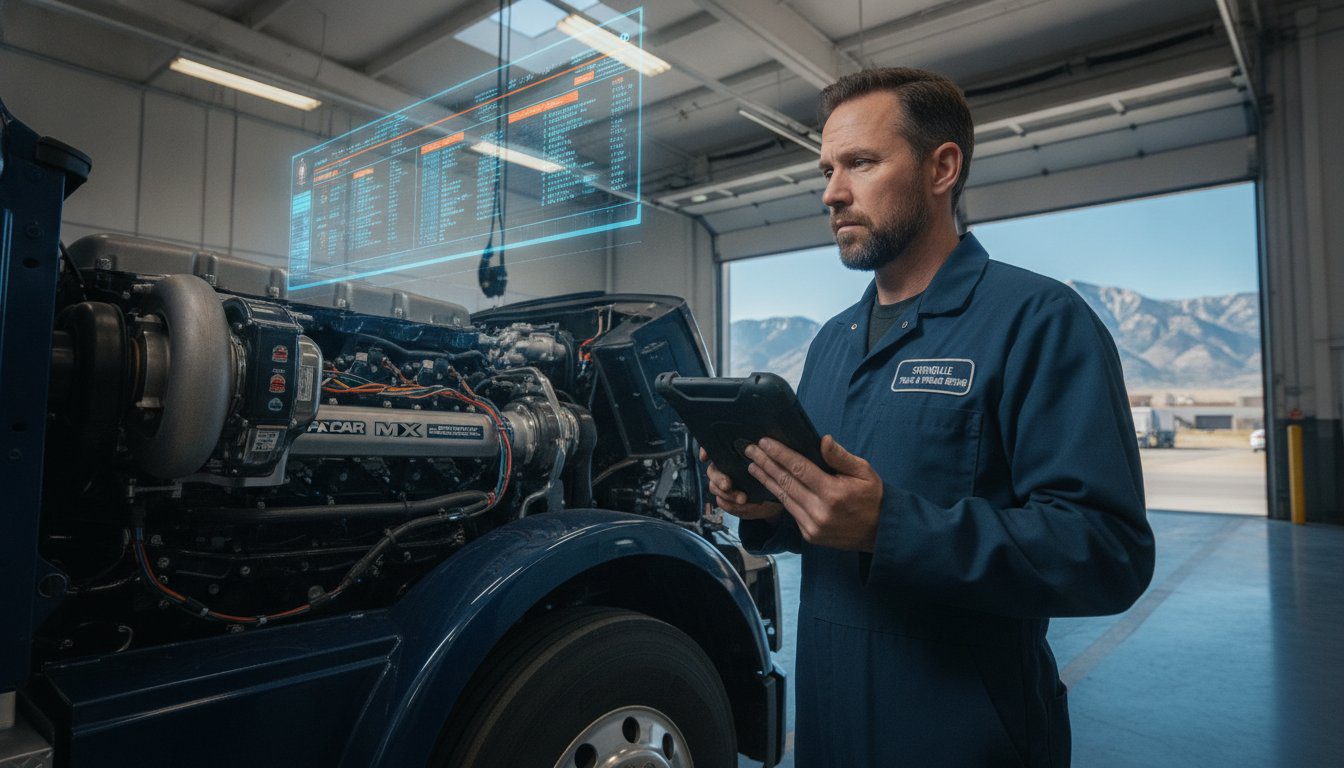
Common Kenworth Engine Problems: A 2026 Guide to PACCAR and Cummins Maintenance

An unscheduled engine failure on a Kenworth isn’t just a mechanical breakdown. It’s a direct hit to your bottom line that can sideline a truck for weeks and disrupt your entire delivery schedule. You’ve likely felt the frustration of staring at a dashboard warning, wondering if you’re facing a simple PACCAR software glitch or a catastrophic Cummins mechanical failure. It’s a stressful position that every fleet manager in Utah County knows too well, especially with the high stakes of mountain hauling and the pressure to keep every unit moving.
We understand that your priority is reliability and total control over your equipment. This guide will help you identify common Kenworth engine problems before they lead to an expensive in-frame overhaul. You’ll gain the technical clarity needed to troubleshoot symptoms and understand the latest 2026 maintenance standards for your PACCAR MX and Cummins X15 platforms. We’ll preview the specific vulnerabilities of each engine, discuss how new Utah emissions regulations impact your fleet, and show you how a proactive maintenance strategy protects your investment for the long haul.
Key Takeaways
- Learn to distinguish between PACCAR electrical faults and Cummins mechanical wear to accurately diagnose common Kenworth engine problems.
- Identify the specific leak points in the PACCAR MX-13 oil module and timing cover that often lead to unscheduled downtime if left unchecked.
- Master the symptoms of VGT sticking and EGR clogging in Cummins X15 engines to prevent performance loss and costly turbocharger replacements.
- Discover how to adjust your preventive maintenance intervals and fluid analysis programs to handle Utah’s unique high-altitude and steep-grade driving conditions.
- Understand how local, warrantied repair work from a specialized master craftsman provides a faster, more reliable alternative to standard dealership service.
Understanding the Kenworth Engine Landscape: PACCAR vs. Cummins
Kenworth’s 2026 lineup continues to offer a choice between the proprietary PACCAR MX series and the industry-standard Cummins X15. This dual-engine strategy allows fleet owners to balance weight savings against raw pulling power. If you’re hauling regional freight or weight-sensitive loads, the PACCAR MX-11 and MX-13 provide a lightweight, integrated solution. For those tackling steep Utah mountain passes or heavy-haul applications, the Cummins X15 remains the high-torque standard. Each platform has its own strengths, but they also bring unique challenges to your maintenance routine.
Understanding which block sits under your hood is the first step in diagnosing common Kenworth engine problems. A PACCAR engine often requires different oil specifications and sensor calibrations compared to a Cummins unit. These differences dictate your preventive maintenance schedule, especially regarding aftertreatment service intervals and valve adjustments. For example, the MX-13 might prioritize fuel system cleanliness to protect its high-pressure rail, while the X15 requires close monitoring of the VGT actuator to avoid performance loss.
The Role of Integrated Powertrains
Modern Kenworth trucks rely on the PACCAR Integrated Powertrain. This system links the engine directly with the TX-12 automated transmission. While this improves fuel efficiency, it creates complex communication loops. We often see communication faults where the engine and transmission fail to “handshake” correctly, leading to erratic shifting or phantom fault codes. Fixing these issues through expert diesel engine repair requires specialized diagnostic software that can read proprietary PACCAR codes. Without these specific tools, a general shop might misdiagnose a simple software glitch as a major mechanical failure, costing you unnecessary downtime.
Identifying Your Engine Model
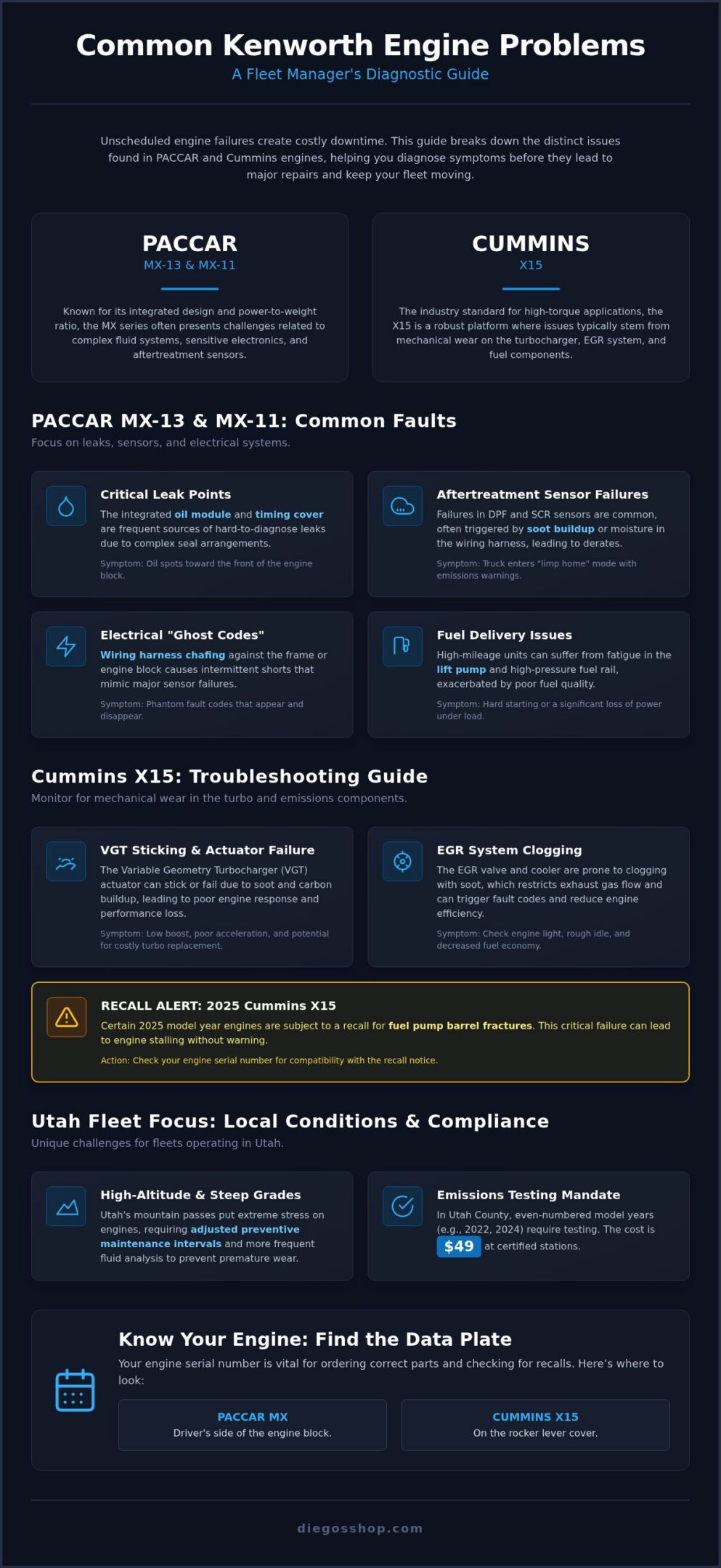
You can find your engine data plate on the driver’s side of the block for most PACCAR MX models, whereas Cummins usually places it on the rocker lever cover. Interpreting these serial numbers is vital for part compatibility. As of July 2026, knowing your engine generation is even more critical due to Utah’s updated emissions testing schedule and recent recalls. For 2026, even-numbered model years like 2022 and 2024 require emissions testing in Utah County, which costs $49 at certified stations. Additionally, certain 2025 model year Cummins X15 engines are subject to fuel pump barrel recalls. Having your serial number ready ensures you aren’t running on components prone to fracturing and stalling. As the parent company of Kenworth, PACCAR continues to refine these systems, but staying informed on your specific model is the only way to minimize downtime and keep your fleet compliant.
PACCAR MX-13 & MX-11 Issues: Leaks, Emissions, and Electrical Faults
The PACCAR MX-13 and MX-11 engines are prized for their power-to-weight ratio, but their compact, integrated design introduces specific vulnerabilities that fleet owners must monitor. One of the most persistent common Kenworth engine problems involves fluid management, specifically around the timing cover and the oil module. Unlike older designs, these modules integrate multiple functions into a single component. This means a failed seal can lead to complex leaks that are difficult to pin down without a clean engine bay and specialized pressure testing. If you notice oil spots toward the front of the block, it’s rarely a simple gasket fix.
Aftertreatment systems remain a significant pain point for the PACCAR platform. We frequently see DPF and SCR sensor failures that trigger immediate derates, often caused by soot accumulation or moisture intrusion in the wiring harness. For a deeper look at specific troubleshooting steps, specialized PACCAR MX engine maintenance protocols are essential to prevent these sensors from sending your truck into a “limp home” mode. Electrical “ghost codes” are another hallmark of the MX series, frequently stemming from wiring harness chafing where the loom vibrates against the engine block or frame. Over time, this wear leads to intermittent short circuits that mimic expensive sensor failures.
Fuel delivery concerns also surface in high-mileage units. The lift pump and high-pressure fuel rail are sensitive to fuel quality, and fatigue in these components often manifests as hard starting or a noticeable loss of power under load. Keeping these systems pressurized and clean is the only way to avoid a total fuel system overhaul.
Managing PACCAR Emissions Systems
The PACCAR regen cycle relies on sustained heat to incinerate particulate matter. Short-haul operations are the primary killer of PACCAR DPFs because the engine never reaches the operating temperatures required for a complete passive regeneration. As of July 2026, new software updates for DEF inducements have extended the window to address these fluid-quality issues from 4 to 160 hours, providing fleets more flexibility before a speed derate occurs. SCR efficiency codes typically indicate that the catalyst is no longer effectively reducing NOx emissions, often due to DEF quality issues or a failing decomposition tube.
Mechanical Wear Points
Precision is the key to longevity with the MX platform. Overhead valve adjustments are non-negotiable at the 150,000-mile mark to maintain fuel efficiency and prevent premature camshaft wear. You should also watch for weeping around the water pump pulley, as this is a primary warning sign of bearing failure that can lead to a catastrophic overheat. Implementing a rigorous fleet maintenance program is the most effective way to catch these leaks and wear patterns before they result in a roadside emergency. If you’ve noticed unexplained coolant loss, it’s time to have a specialist inspect the oil module seals.
Cummins ISX15 & X15 Troubleshooting: Turbochargers and Fuel Systems
While the PACCAR MX series handles the lightweight regional work, the Cummins X15 is the undisputed backbone of heavy-haul Kenworth fleets. It’s built for massive torque, but that performance comes with a specific set of mechanical demands. The Variable Geometry Turbocharger (VGT) is the most frequent performance killer we encounter. Soot and carbon buildup on the sliding nozzle prevent the turbo from adjusting to engine loads. This results in poor fuel economy, sluggish throttle response, and a noticeable lag when you’re trying to pull a heavy load over a mountain pass.
High-mileage units face a more severe threat from fuel pump plunger failure. We’ve seen this issue persist into the 2026 service cycle, often tracing back to the 2024 and 2025 model year recalls where fuel pump barrels were prone to fracturing. Even for trucks outside that recall window, the high-pressure fuel system is sensitive to contamination. Another common Kenworth engine problems indicator is liner pitting. The “wet sleeve” design of the X15 allows for efficient overhauls, but it requires a perfectly balanced cooling system. Without the right supplemental coolant additives, cavitation creates tiny bubbles that implode against the liner, eventually eating through the metal and contaminating your oil with coolant.
The Cummins VGT Actuator Problem
The VGT actuator is a precision electronic component that often fails long before the turbocharger’s mechanical assembly. When this actuator loses its position, the truck usually enters a “limp mode” to prevent over-boosting. You’ll eventually face the choice between cleaning the nozzle assembly or replacing the entire actuator. While cleaning is a tempting short-term fix, it won’t repair the internal electronic boards that often fail due to heat soak. In Utah, our extreme temperature swings and cold starts put immense stress on these electronics. Rapid thermal cycling can cause internal solder joints to crack, which makes a full replacement the only reliable way to ensure your truck stays on the road.
EGR System Maintenance
Excessive idling is the primary enemy of the Cummins EGR system. When an engine idles for long periods, it doesn’t generate the internal heat necessary to burn off carbon deposits, leading to a clogged EGR valve. You’ll recognize a leaking EGR cooler by white smoke in the exhaust and unexplained coolant loss without a visible external leak. It’s vital to integrate regular EGR inspections and pressure tests into your diesel maintenance routine. Catching a soot-clogged cooler early prevents that abrasive carbon from entering your cylinders, where it can scour the liners and lead to a premature engine overhaul. Keeping the EGR system clean is the best way to maintain the high-torque performance Cummins is known for.
Preventive Maintenance Strategies for Kenworth Fleets in Utah
Operating a fleet along the Wasatch Front presents challenges that standard OEM manuals rarely address. The combination of steep grades, high altitude, and extreme temperature swings creates a “severe service” environment for every truck in your lineup. To mitigate common Kenworth engine problems, you can’t rely on generic maintenance intervals. You need a strategy tailored to the specific stresses of Utah mountain driving.
A proactive approach shifts your focus from reactive repairs to controlled, scheduled service. This transition is essential for maintaining the tight tolerances of 2026 PACCAR and Cummins platforms. Follow these four critical steps to harden your fleet against unscheduled downtime:
- Step 1: Adjust your service intervals. High-altitude operation means your turbocharger works harder to provide the same boost, increasing internal heat and accelerating oil degradation.
- Step 2: Implement fluid analysis. Fluid analysis is a diagnostic tool that identifies microscopic wear metals and chemical shifts in your oil, coolant, and DEF before they cause a component failure.
- Step 3: Conduct seasonal air and cooling inspections. Check for boost leaks and radiator obstructions before the summer heat hits the 100-degree mark or winter temperatures drop below zero.
- Step 4: Replace sensors proactively. Emissions sensors have a finite lifespan. Replacing NOx and soot sensors at 250,000 miles can prevent a sudden roadside derate.
The ‘Severe Service’ Schedule
Mountain driving effectively doubles the wear on your engine’s internal components. When you’re pulling a full load up Spanish Fork Canyon, your engine stays at peak torque for extended periods, which shears oil molecules faster than flat-land hauling. For Kenworth fleets operating in Utah, we recommend shortening oil change intervals by at least 20% compared to the manufacturer’s long-haul guidelines. This ensures your lubricant maintains the viscosity needed to protect main bearings and camshafts. Additionally, remember that 2026 is an even-numbered year, meaning your 2022 and 2024 model year trucks are due for their $49 Utah County emissions test. Staying ahead of these legal and mechanical requirements keeps your trucks earning instead of sitting in a bay.
Cooling System Integrity
Your fan clutch is the unsung hero of your cooling system. In the thin air of the Rockies, your radiator’s efficiency drops, making the fan’s ability to pull air through the core vital. We often see common Kenworth engine problems like warped heads or blown head gaskets because a fan clutch failed to engage on a long climb. You must also maintain precise coolant chemistry. For Cummins X15 engines, this prevents the liner cavitation discussed earlier. For PACCAR engines, it protects the complex seals within the oil module. If you’re seeing white crusting around your hose connections, your system is already under pressure.
Don’t wait for a dashboard warning to tell you there’s a problem. Protect your bottom line by scheduling a professional preventive maintenance inspection today.
Expert Kenworth Engine Repair in Springville, Utah
Finding a reliable shop shouldn’t be as stressful as the breakdown itself. While dealerships often treat you like a number in a long queue, Diego’s Shop offers a different experience. We specialize in addressing common Kenworth engine problems with the precision of a master craftsman. Located in Springville, we serve the entire Wasatch Front, providing local expertise that understands how our mountain environment beats up your equipment. We don’t just clear codes; we find the root cause to ensure the repair lasts.
For owner-operators, the biggest fear is paying for a major repair only to have the same component fail 500 miles later. We eliminate that uncertainty by offering warrantied repair work on every engine we service. Whether it’s a PACCAR MX-13 oil module replacement or a Cummins X15 turbocharger overhaul, our work is backed by a commitment to durability. You get dealership-quality results with the personal accountability of a local specialist who stands behind every turn of the wrench.
Specialized Diagnostics and Tools
We utilize OEM-level diagnostic software to communicate with your truck’s ECM. This allows us to isolate complex PACCAR and Cummins faults accurately, which is the only way to reduce downtime. We skip the guesswork and move straight to the solution, getting your truck back on I-15 faster. Our shop is equipped to handle everything from simple sensor swaps to complete engine overhauls with total technical control—a standard of precision similar to the custom calibration N2 Speed provides for high-performance American vehicles. It’s about combining high-tech tools with a seasoned mechanic’s intuition to solve problems other shops miss.
Schedule Your Kenworth Service
We’re committed to keeping Utah’s commercial fleets moving. If you’re dealing with an active derate or simply want to get ahead of your next service interval, we’re ready to help. We provide clear, direct quotes for both engine repairs and comprehensive fleet maintenance programs. Don’t let a small mechanical quirk turn into a catastrophic failure on a steep grade. Trust Diego’s Shop for your next Kenworth engine repair and experience the difference that specialized, local expertise makes for your business.
Protect Your Fleet’s Performance for the Long Haul
Managing common Kenworth engine problems in 2026 requires a proactive stance and a deep understanding of your specific powertrain. From the integrated software loops of the PACCAR MX series to the mechanical resilience of the Cummins X15, every component deserves the attention of a specialist. We’ve seen how Utah’s unique driving conditions accelerate wear on turbos and aftertreatment systems. By implementing rigorous fluid analysis and adjusting for severe service, you can effectively protect the lifespan of your equipment and keep your operating costs predictable.
You don’t have to navigate these complex repairs alone. Diego’s Shop provides the specialized PACCAR and Cummins diagnostics needed to isolate faults quickly and accurately. Serving Springville and the entire Wasatch Front, we offer warrantied repair work that gives you total peace of mind before you hit the canyon. Our goal is to ensure your Kenworth remains a reliable asset for years to come. We take pride in the durability of our work and the success of the fleets we support.
Schedule Your Kenworth Engine Repair at Diego’s Shop Today. Let’s get your truck back on the road with the durability it was built for.
Frequently Asked Questions
Why is my Kenworth losing power on steep hills?
Loss of power on Utah’s steep grades is usually caused by a boost leak in the charge air cooler or a sticking VGT actuator. In high-altitude environments, your engine works harder to maintain compression, so even a small leak in a silicone hose can cause a significant drop in pulling power. You should also check for clogged fuel filters, which often restrict flow during high-torque demands.
What does the ‘Check Engine’ light with a PACCAR code P00AF mean?
PACCAR fault code P00AF indicates a performance issue with the Turbocharger Boost Control Module. This means the electronic actuator is unable to move the internal vanes of the turbocharger to the desired position. Because this is one of the common Kenworth engine problems we see, we recommend a diagnostic sweep to determine if the actuator needs recalibration or a full replacement.
How often should I clean the DPF on a Kenworth T680?
You should typically clean the DPF every 250,000 to 400,000 miles, though heavy idling or regional routes can shorten this interval. As of 2026, many fleets are moving toward a proactive 250,000-mile cleaning schedule to avoid the high cost of a full aftertreatment replacement. Monitoring ash levels during routine fleet maintenance is the best way to determine the exact timing for your T680.
Is the Cummins X15 more reliable than the PACCAR MX-13?
Both engines are designed to reach over one million miles with proper care, but they have different strengths. The Cummins X15 is the heavy-haul standard with a robust service network, while the PACCAR MX-13 offers superior weight savings and integration for regional freight. Reliability depends more on your specific application and your commitment to a rigorous preventive maintenance program than the brand alone.
What are the early signs of a turbocharger failure in a Kenworth?
Early warning signs of turbocharger failure include an unusual high-pitched whining sound, excessive black smoke under acceleration, and oil residue in the intake piping. You might also notice a gradual decrease in fuel economy or a slower response from the throttle. Catching these symptoms early can prevent metal shards from entering your engine’s intake and causing a catastrophic failure.
Can a bad DEF sensor cause my truck to go into derate mode?
Yes, a faulty DEF quality or level sensor will trigger a derate mode to ensure emissions compliance. In July 2026, new software updates increased the time you have to address these issues from 4 to 160 hours, but the truck will eventually limit your speed if the sensor isn’t replaced. This is a common point of frustration that requires accurate diagnostic software to resolve effectively.
Why is my Kenworth engine leaking coolant from the front of the block?
A coolant leak at the front of the block is usually tied to a failing water pump weep hole or a compromised timing cover gasket. On PACCAR engines, this can also indicate a failure in the oil module seals. Because these leaks can be intermittent, we use pressure testing to identify the exact source before it leads to a roadside overheat during a mountain climb.
Where can I find a certified Kenworth mechanic in Utah County?
You can find expert diesel engine repair and warrantied work at Diego’s Shop in Springville. We serve the entire Wasatch Front with specialized diagnostics for both PACCAR and Cummins platforms. Our team focuses on providing a master craftsman’s alternative to the dealership, ensuring your fleet stays moving with reliable, honest service that addresses common Kenworth engine problems at the source.