
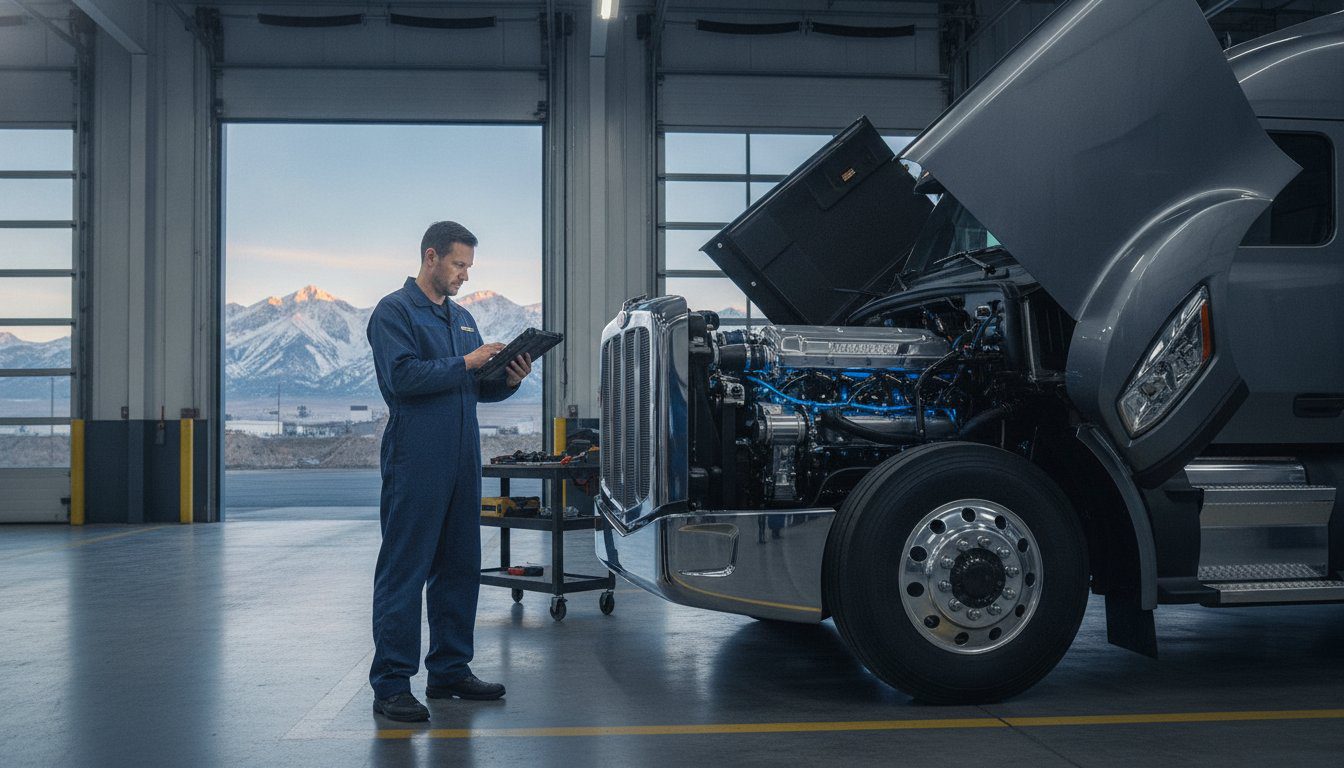
Common Diesel Engine Problems in Utah: 2026 Fleet Guide

For a commercial fleet on the Wasatch Front, a single “Check Engine” light halfway up Parleys Canyon is more than a mechanical failure; it is a direct threat to your bottom line. You already know that Utah’s vertical terrain and extreme temperature swings demand more from your equipment than a flat-land route ever would. Between the high altitude of the mountain passes and the biting cold of a northern winter, common diesel engine problems Utah drivers encounter can quickly escalate into expensive, unplanned downtime. It is a frustrating reality that many fleet managers simply accept as the cost of doing business in the West.
This 2026 guide will show you how to flip that script. We will explore how Utah’s unique geography impacts your turbochargers, cooling systems, and DPF health. You will discover professional maintenance strategies designed to lower your long-term costs and ensure your trucks pass every DOT inspection with confidence. We examine the specific technical challenges of the current year, from 2026 emissions compliance to preventing fuel gelling, so your fleet stays on the road and out of the shop. It is time to move from reactive repairs to a position of total control over your fleet’s performance.
Key Takeaways
- Understand how Utah’s high altitude and steep canyon grades put unique stress on turbochargers and cooling systems.
- Identify the root causes of common diesel engine problems Utah fleets encounter, from fuel gelling to diagnostic smoke signals.
- Learn why cold idling and short trips are the leading causes of DPF and EGR complications in the Wasatch Front climate.
- Adopt 2026 preventive maintenance standards, including updated oil change intervals, to ensure your fleet passes DOT inspections.
- Discover why specialized repair for brands like Peterbilt and Kenworth is essential for maintaining modern engine performance.
Utah’s Environmental Impact: Why Diesels Struggle in the Wasatch Front
Operating a commercial fleet along the Wasatch Front presents physical challenges that flat-land operators never have to consider. Utah is a gauntlet for heavy-duty machinery. The combination of thin mountain air, vertical climbs, and brutal temperature shifts creates a specific set of common diesel engine problems Utah mechanics see daily. These aren’t just minor inconveniences; they are environmental variables that can shorten the lifespan of your engine if you don’t adjust your fleet maintenance strategy accordingly.
Altitude and Air-Fuel Ratios
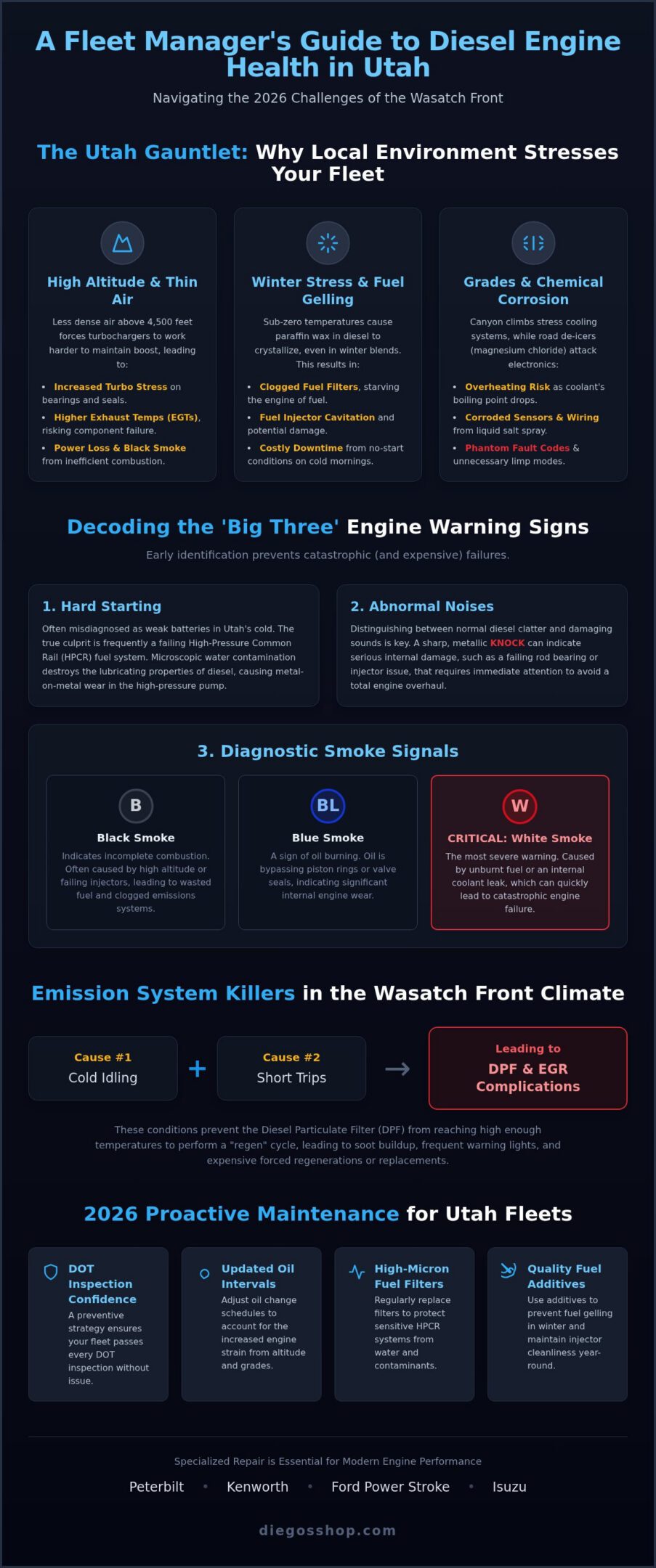
At elevations starting at 4,500 feet in Springville and climbing much higher in the surrounding passes, the air is significantly less dense. Diesel engines rely on a precise air-to-fuel ratio for efficient combustion. To compensate for the lack of oxygen, your turbocharger has to spin faster and work harder to maintain boost levels. This increased demand leads to higher exhaust gas temperatures (EGTs) and puts extra stress on turbo bearings and seals. If you notice a drop in power or a sudden increase in black smoke while pulling a load toward Park City, your engine is likely struggling to find the oxygen it needs to burn fuel cleanly.
Winter Stressors and Fuel Gelling
Utah winters introduce the chemical threat of fuel gelling. Diesel fuel contains paraffin wax. While this wax is normally liquid, it begins to crystallize when temperatures drop below the “cloud point.” While local fuel stations provide a winter blend, it often isn’t robust enough for the sub-zero nights common in the high desert. These wax crystals quickly clog fuel filters and can cause cavitation in your fuel injectors. Without proper preventive maintenance and high-quality additives, a cold start in January can lead to immediate fuel system damage and costly downtime for your entire fleet.
Steep Grades and Chemical Corrosion
The steep grades of Parleys Canyon and Provo Canyon put immense pressure on your cooling system. Engines generate massive heat under these sustained loads. At high altitudes, the boiling point of coolant actually drops, meaning a system that works fine in the valley might boil over on a mountain pass if the pressure cap or water pump is weak. Beyond the terrain, the magnesium chloride used to de-ice I-15 is a silent killer for modern diesel electronics. This liquid salt is highly corrosive; it eats through the protective coating on electrical sensors and wiring harnesses. This often leads to:
- Phantom fault codes that trigger unnecessary limp modes.
- DPF sensor failures caused by corroded connectors.
- Grounding issues that disrupt engine management systems.
Understanding these local factors is the first step in protecting your investment. By addressing the specific ways the Utah environment attacks your hardware, you can move from reactive repairs to a strategy of total reliability.
The ‘Big Three’ Diesel Engine Problems in 2026
Mechanical health in 2026 requires a deep understanding of how modern components fail under pressure. While environmental factors set the stage, the actual symptoms of common diesel engine problems Utah fleets encounter often fall into three primary categories. Identifying these signs early is the difference between a simple filter swap and a total engine overhaul. Our experience with high-mileage commercial rigs shows that ignoring these indicators always leads to more expensive repairs down the road.
Hard starting is frequently misdiagnosed. In our climate, fleet managers often blame weak batteries, but faulty fuel injectors in modern High-Pressure Common Rail (HPCR) systems are often the true culprit. Smoke also remains a vital diagnostic tool. Black smoke usually indicates incomplete combustion, often exacerbated by high-altitude air. Blue smoke suggests oil is bypassing the piston rings or valve seals, while white smoke is a critical warning of unburnt fuel or internal coolant leaks. Finally, distinguishing between normal diesel clatter and the sharp metallic knock of internal damage is a skill that saves thousands in core charges.
Fuel System Contamination and Failure
Water is the primary enemy of the HPCR systems found in 2026 Ford Power Stroke and Isuzu engines. Even a microscopic amount of moisture can destroy the lubricating properties of diesel fuel, leading to metal-on-metal contact inside the high-pressure pump. This contamination often results in catastrophic failure that sends metal debris through the entire fuel rail. Regular replacement of fuel filters with high-micron efficiency ratings is the only way to protect these sensitive components from the fuel quality issues found at some remote job sites. Maintaining fuel system integrity is the backbone of fleet reliability.
Overheating and Cooling System Integrity
Utah’s summer heat puts a massive load on radiators and fan clutches, especially when hauling medium-duty loads up I-15. A failing head gasket often starts as a subtle loss of coolant before manifesting as a full-scale overheat. Cavitation in the cooling system occurs when microscopic vapor bubbles collapse against the cylinder walls with enough force to pit the metal, eventually creating holes that allow coolant to enter the combustion chamber. Proper coolant chemistry is essential to prevent this liner pitting and ensure long-term durability. If you are noticing rising temperatures under load, scheduling professional fleet maintenance can prevent a roadside emergency.
Emission System Complications: DPF and EGR Issues
Modern diesel engines rely on complex after-treatment systems to meet strict air quality standards. While these components are efficient, they are notoriously sensitive to the operating conditions found along the Wasatch Front. Emission system failures are among the most common diesel engine problems Utah fleet managers deal with in 2026. With the new “High Emissions Heavy Duty Vehicle” fees now in effect for older rigs, keeping these systems in peak condition is a financial necessity to avoid unnecessary operational costs.
The primary frustration for many operators is “Limp Mode.” This is a programmed safety response where the engine computer drastically limits speed and power to protect the hardware. It usually triggers when the Diesel Particulate Filter (DPF) or Exhaust Gas Recirculation (EGR) system detects a critical fault. Entering Limp Mode while hauling a full load up a canyon is a high-stakes situation that every operator wants to avoid. Reliability starts with understanding why these systems fail in our specific climate.
DPF Regeneration Challenges in Utah
Diesel Particulate Filters require extreme heat to burn off accumulated soot through a process known as regeneration. Utah’s cold winters often prevent the exhaust system from reaching these optimal temperatures naturally. Short city trips and extended idling at job sites only make the problem worse. When passive regeneration fails, soot builds up, creating engine backpressure that kills your fuel economy. If your dashboard indicates a high soot load despite consistent highway driving, it’s a sign that the system needs a professional forced regeneration or a specialized cleaning to prevent a total blockage.
EGR Cooler Leaks and Carbon Buildup
The EGR system works by recirculating a portion of exhaust gas back into the engine to lower combustion temperatures. In heavy-duty brands like Kenworth and Peterbilt, the EGR cooler is a frequent failure point. Internal leaks in the cooler can allow coolant to seep into the intake, leading to white smoke and mysterious coolant loss. Carbon buildup is another persistent threat; it clogs valves and sensors, leading to rough idling and sluggish performance. Regular inspections can identify these leaks early. Preventive cleaning of the EGR valve is a simple step that prevents the need for a total system replacement later.
Maintaining high Diesel Exhaust Fluid (DEF) quality is also non-negotiable. Contaminated fluid or sensors damaged by the road salt mentioned earlier will trigger immediate faults. By staying ahead of these emission-related issues, you ensure your fleet remains compliant and, more importantly, productive.
Preventive Maintenance: Protecting Your Fleet from Utah’s Canyons
The vertical climbs of the Wasatch Front and the temperature swings of the high desert make standard manufacturer maintenance intervals insufficient. To avoid the most common diesel engine problems Utah operators face, your maintenance must be proactive. In 2026, the standard for fleets in extreme climates has shifted toward shorter oil change intervals and rigorous oil analysis. This diagnostic tool reveals internal wear, such as metal shavings or coolant contamination, before it leads to a catastrophic failure on a steep grade. Consistent care is the only way to ensure reliability for dot truck inspections near me, keeping your drivers safe and your company in compliance.
The Utah Diesel Maintenance Checklist
Utah’s low humidity and extreme cold create specific mechanical vulnerabilities. Proactive inspections address the common diesel engine problems Utah winters cause before they become emergencies. Use this checklist to harden your fleet against the elements:
- Cold Cranking Amps (CCA): Test every battery before the first October freeze. Weak batteries strain the starter and the sensitive electronics of modern injectors.
- Dry Rot Inspection: Our arid climate dries out rubber quickly. Check belts and hoses for cracking every 10,000 miles to prevent sudden bursts.
- Pressure Testing: Ensure your cooling system can maintain pressure at high altitudes, where the boiling point of fluid naturally drops.
Fleet Maintenance Strategies to Reduce Downtime
Success in fleet management requires a preventive maintenance schedule that accounts for more than just odometer readings. In heavy-duty applications, engine hours are often a better indicator of wear than mileage. For example, a truck idling for hours during a Utah winter storm or crawling through I-15 traffic is still accumulating engine wear. Implementing a proactive fleet maintenance program allows you to predict failures and schedule repairs during planned downtime rather than reacting to a canyon breakdown. This disciplined approach protects your bottom line and ensures your equipment is always ready for the long haul. If you want to eliminate the guesswork from your operations, it’s time to partner with a shop that understands the specific demands of the Wasatch Front.
Specialized Diesel Repair in Springville and the Wasatch Front
Solving the technical challenges discussed in this guide requires more than a generic toolkit and a standard scan tool. Modern diesel engines are sophisticated pieces of machinery that demand a higher level of technical mastery. Whether you are dealing with a clogged DPF or a failing high-pressure fuel pump, the common diesel engine problems Utah fleets face require a specialist who understands the 2026 regulatory and environmental landscape. Diego’s Shop provides this expertise from our Springville facility, offering easy access from I-15 for commercial operators across Utah County.
We specialize in light, medium, and heavy-duty diesel platforms, with specific expertise in Peterbilt, Kenworth, Isuzu, and Ford. For a commercial fleet, the value of warrantied repair work cannot be overstated. It represents a commitment to technical integrity and provides the financial peace of mind necessary to keep your operations profitable. Our focus is entirely on diesel technology; we do not service gasoline engines, allowing our team to maintain total control over the specialized skills required for modern diesel engine management.
Advanced Diagnostics and Mastery
Precision is the cornerstone of our diesel engine repair process. We utilize dealer-level software to perform accurate troubleshooting on advanced engine management systems, ensuring we identify the root cause of a fault rather than just treating the symptoms. Technicians who specialize solely in diesel technology possess a fundamental understanding of high-pressure combustion and complex after-treatment systems that general automotive shops cannot match. This master craftsman approach ensures that every repair, from a simple sensor replacement to a complete engine overhaul, is performed to the highest technical standards. We take pride in the durability of our work and the reliability of the fleets we maintain.
Trusted Local Service in Utah County
Successful diesel repair Utah requires more than just mechanical skill; it requires local knowledge of the Wasatch Front. We understand how the specific terrain and climate of our region impact your equipment. Our commitment to keeping Utah’s commercial fleets moving is backed by decades of hands-on experience and a no-nonsense approach to service. We invite you to visit our Springville facility for a professional diagnosis and a maintenance plan tailored to your specific fleet needs. We are here to ensure your trucks stay out of the shop and on the road where they belong. Rugged reliability is our promise to every customer.
Secure Your Fleet’s Future on the Wasatch Front
Utah’s vertical terrain and extreme climate don’t have to be the downfall of your commercial operation. By prioritizing proactive maintenance and understanding the common diesel engine problems Utah drivers encounter, you shift from reactive repairs to a strategy of long-term durability. We have covered how altitude strains your turbochargers, why winter demands specialized fuel care, and how modern emission systems require expert oversight to avoid the dreaded limp mode.
Reliability is built on technical precision and local expertise. At Diego’s Shop, we provide warrantied repair work and specialized service for Peterbilt, Kenworth, Isuzu, and Ford engines. Serving Utah County and the greater Wasatch Front, we focus exclusively on diesel technology to ensure your trucks remain compliant and productive. You deserve the peace of mind that comes from knowing your fleet is maintained by seasoned craftsmen who understand the specific demands of our region.
Schedule your expert diesel diagnostic at Diego’s Shop in Springville today. Let’s keep your fleet moving with confidence.
Frequently Asked Questions
Why is my diesel engine hard to start on cold Utah mornings?
Cold temperatures affect both battery chemistry and fuel viscosity. In Utah’s sub-zero winters, weak glow plugs or a battery with insufficient Cold Cranking Amps (CCA) often fail to generate the heat needed for compression ignition. Additionally, thick oil creates more resistance for the starter. Regular testing of your starting system before the first freeze is the best way to avoid being stranded at the yard during a winter storm.
What causes a sudden loss of power when driving up Utah canyons?
Sudden power loss under load is typically caused by inadequate boost pressure or fuel starvation. At high altitudes, your turbocharger must work harder; a small leak in a boot or a failing actuator becomes much more apparent on steep grades. Alternatively, a clogged fuel filter limits the high volume of fuel required for climbing. These common diesel engine problems Utah drivers face often trigger a “limp mode” to prevent internal engine damage.
How often should I clean the DPF on my commercial truck?
Most 2026 fleet standards recommend professional DPF cleaning every 150,000 to 200,000 miles, but Utah’s conditions can shorten this window. Frequent idling during winter or short-haul city driving prevents the exhaust from reaching temperatures needed for passive regeneration. If you notice a drop in fuel economy or more frequent active “regen” cycles, it is time for a professional inspection. Waiting for a dashboard warning often leads to more expensive cleaning or replacement.
Is black smoke from the exhaust always a major engine problem?
Black smoke indicates an air-fuel imbalance where the engine is receiving too much fuel or not enough oxygen. While it isn’t always a sign of total engine failure, it does signal a serious efficiency problem like a dirty air filter, leaking turbo hose, or a sticking fuel injector. In Utah’s thin air, this issue is magnified. Ignoring black smoke will eventually clog your DPF and lead to costly emission system repairs later on.
Can Utah’s road salt cause engine sensor failures?
Yes, the magnesium chloride and road salt used on I-15 are highly corrosive to electrical components. These chemicals seep into sensor connectors for the DPF, EGR, and ABS systems, causing “phantom” fault codes or total sensor failure. We recommend regular undercarriage washes during winter and applying dielectric grease to sensitive electrical connections. Protecting these sensors is a critical part of preventive maintenance for any commercial fleet operating along the Wasatch Front.
What is the most common cause of diesel engine overheating in the summer?
A failing fan clutch or a debris-clogged radiator is the most frequent culprit during Utah’s 100-degree summer days. When pulling heavy loads up Parleys Canyon, your cooling system is pushed to its absolute limit. If the fan clutch doesn’t engage properly or the radiator fins are blocked by road grime, the engine cannot shed heat fast enough. Regular pressure testing of the cooling system ensures your rig handles the heat without blowing a head gasket.
Why should I choose a diesel specialist over a general repair shop?
Diesel engines require specialized diagnostic software and a deep understanding of high-pressure fuel systems that general shops don’t possess. A specialist focuses exclusively on the unique tolerances and components of brands like Peterbilt and Kenworth. Choosing a dedicated expert ensures that your warrantied repair work is performed correctly the first time. This level of focus minimizes the risk of misdiagnosis and helps you avoid the common diesel engine problems Utah fleets experience from improper service.
How can I prevent fuel gelling during a Utah cold snap?
Preventing gelling starts with using high-quality winter-blend fuel and reliable anti-gel additives before the temperature drops. Paraffin wax in diesel begins to solidify at the “cloud point,” which can be as high as 32 degrees. Keeping your tanks full also reduces the amount of condensation that can freeze in your lines. If your truck is parked overnight in sub-zero temperatures, using an engine block heater and fuel heater is essential for a successful start.