

Commercial Truck Inspection Checklist: The 2026 Guide to Reliability and DOT Compliance

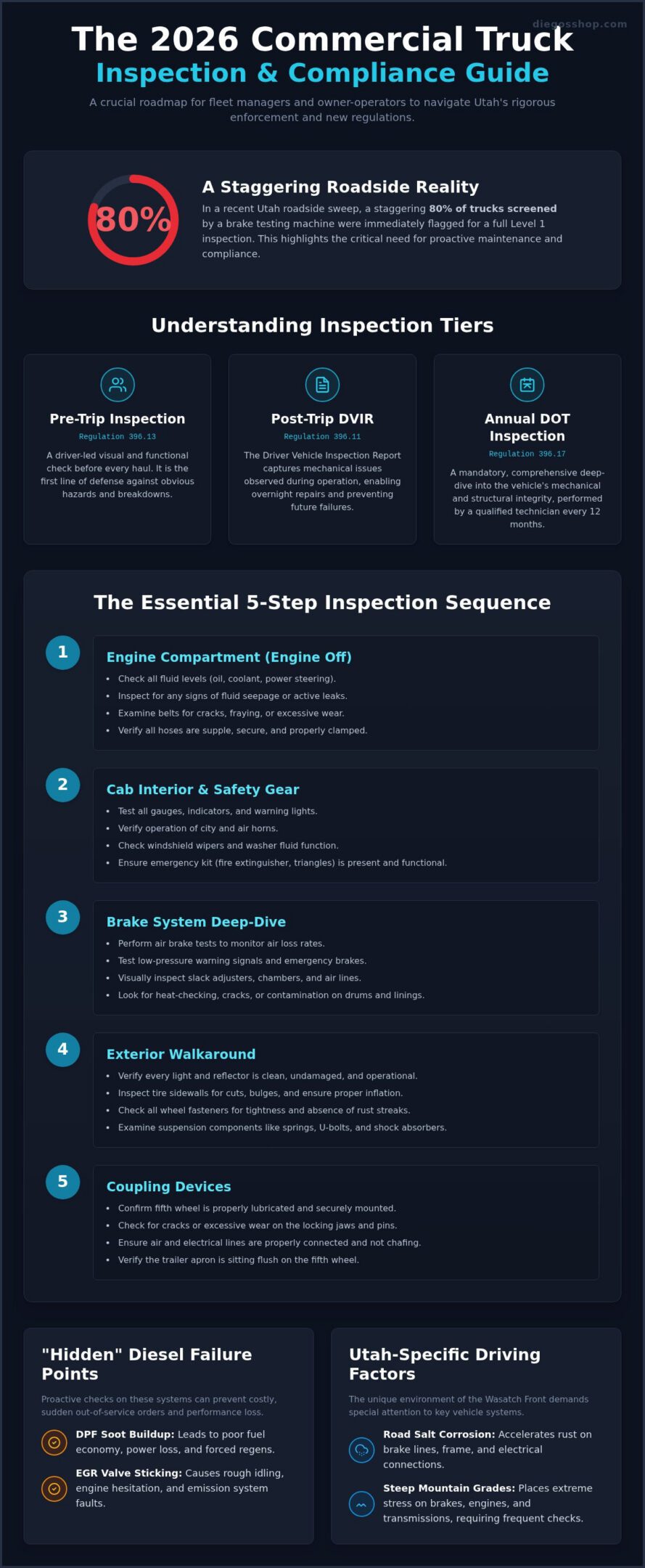
In a recent Utah roadside enforcement sweep, eighty percent of trucks screened by a brake testing machine were immediately pulled for full Level 1 inspections. That is a staggering number for any fleet manager or owner-operator to consider. When you are hauling freight along the I-15 corridor, the last thing you need is a surprise out-of-service order because of a preventable mechanical failure or an overlooked regulatory update. If you’ve been searching for reliable commercial truck brake repair Utah experts, you already know that staying ahead of the Utah Highway Patrol requires more than just luck.
We understand that the 2026 regulatory landscape, including new emissions fees for older heavy-duty diesels and the removal of safety inspection fee caps, adds a layer of complexity to your daily operations. You want to focus on the road, not on whether your paperwork and hardware will pass a random check. This guide provides a definitive 2026 inspection checklist designed to protect your bottom line. You’ll learn the critical inspection points that prevent costly fines, reduce unexpected downtime, and keep your diesel engines performing at their peak. From updated emissions requirements for even-numbered model years to essential brake system checks, we’ve mapped out everything you need to maintain total control of your fleet’s compliance.
Key Takeaways
- Master the specific requirements for Pre-Trip and Post-Trip DVIRs to ensure every haul starts and ends with full legal compliance.
- Identify “hidden” diesel failure points like DPF soot buildup and EGR valve sticking before they trigger an emergency out-of-service order.
- Counteract the harsh effects of Utah road salt and steep mountain grades by prioritizing professional commercial truck brake repair Utah services.
- Streamline your operations by converting routine inspection findings into warrantied repairs through a structured fleet maintenance schedule.
Understanding the Tiers of Commercial Truck Inspections
A Commercial vehicle inspection is a systematic safety and roadworthiness review. It’s not just a box to check; it’s a vital process that ensures every heavy-duty asset on the road meets federal safety standards. In 2026, these standards have become more rigorous, moving toward digital enforcement and stricter documentation. Understanding the different levels of these inspections is the only way to maintain a fleet that stays clear of out-of-service orders and costly DOT fines.
Compliance begins with distinguishing between the daily requirements of the driver and the deeper technical reviews required by law. While a driver might notice a small air leak, a certified technician identifies the root cause before it leads to a total system failure. This tiered approach creates a safety net that catches mechanical issues at various stages of wear. When your business relies on moving freight through the Wasatch Front, staying current on these tiers is essential for long-term reliability.
Pre-Trip vs. Post-Trip: Why Both Matter
The Pre-Trip inspection, governed by regulation 396.13, is your first line of defense against roadside breakdowns. It’s a visual and functional check performed before the truck moves. Drivers look for obvious hazards like leaking fluids, frayed belts, or flat tires. However, the Post-Trip Driver Vehicle Inspection Report (DVIR) under 396.11 is equally critical. It captures mechanical behaviors that only appear while the truck is in operation. For example, a driver might notice a pull in the steering or a squeal that suggests a need for commercial truck brake repair Utah services. Documenting these “active” issues at the end of a shift allows the maintenance team to perform repairs overnight. Failing to sign off on these reports isn’t just a safety risk; it’s a legal liability that can trigger heavy penalties during a DOT audit.
The Annual DOT Inspection Framework
Every 12 months, commercial motor vehicles must undergo a mandatory periodic inspection as required by 396.17. This is a comprehensive deep-dive into the truck’s structural and mechanical integrity. Unlike a daily walkaround, this inspection must be performed by a qualified individual who has the training and tools to measure component tolerances. They examine the frame, suspension, fuel systems, and steering components with precision. These annual reviews align perfectly with a proactive fleet maintenance strategy. By identifying thin brake linings or cracked drums during a certified inspection, you can schedule commercial truck brake repair Utah specialists to handle the work on your timeline rather than facing an emergency on a mountain grade. In 2026, keeping these records in a digital format is the standard for proving your fleet’s commitment to safety and compliance.
The Essential 2026 Commercial Truck Inspection Checklist
Maintaining DOT Compliance requires a disciplined, zone-based approach to every vehicle in your fleet. A systematic checklist ensures that no component is overlooked, from the smallest light bulb to the complex air brake systems that keep heavy loads under control. In 2026, the focus has shifted toward integrated electronic monitoring, yet the physical inspection remains the most reliable way to catch hardware fatigue before a roadside inspector does. Use this five-step sequence to verify roadworthiness. While these steps are vital for heavy-duty rigs, those looking to diversify their fleet’s utility can explore Custom Branded Pedicabs for unique urban transport and advertising opportunities.
- Step 1: The Engine Compartment. With the engine off, check all fluid levels and look for signs of oil or coolant seepage. Inspect belts for fraying and verify that all hoses are supple and securely clamped.
- Step 2: The Cab Interior. Test all gauges, the city and air horns, and the windshield wipers. Ensure that your emergency kit, including the fire extinguisher and reflective triangles, is present and fully functional.
- Step 3: Brake System Deep-Dive. Monitor air loss rates and test low-pressure warning signals. Inspect slack adjusters and look for signs of heat-checking on drums, which often signals a need for commercial truck brake repair Utah specialists.
- Step 4: Exterior Walkaround. Verify that every light and reflector is clean and operational. Check tire sidewalls for cuts and ensure all wheel fasteners are tight and free of rust streaks.
- Step 5: Coupling Devices. Confirm the fifth wheel is properly lubricated and locked. Inspect air lines and electrical pigtails for chafing or tangles that could lead to a connection failure.
The Engine and Fluid Integrity Check
Gasket fatigue is a common culprit for unexpected downtime. Look for moist spots around the cylinder head and oil pan that suggest a seal is beginning to fail. Heavy-duty serpentine belts should be checked for tension and any “chunking” in the ribs. For 2026 diesel models, the critical fluid level check requires verifying that Diesel Exhaust Fluid (DEF) levels and engine oil viscosity meet the specific sensor-calibrated thresholds to prevent forced derate conditions. Catching these leaks early preserves the durability of your diesel engine.
Brakes, Tires, and Suspension
Tire tread depth is a non-negotiable safety metric. You must maintain at least 4/32” on steer tires and 2/32” on all others to remain compliant. While the system is pressurized to max capacity, listen closely for the hiss of air leaks around valves and chambers. This is also the time to inspect leaf springs for cracks or any signs of shifting. If you notice uneven wear or sluggish brake response, it’s time to seek reliable DOT truck inspections in Utah County to address the problem. Professional commercial truck brake repair Utah services can resolve these issues before they lead to a failed roadside inspection. If your driver reports a soft pedal or unusual vibrations, trust your maintenance partner to perform a warrantied repair that keeps the truck moving.
Diesel-Specific Inspection Points: Beyond the Standard Walkaround
Standard inspections cover the basics, but diesel engines have unique failure points that standard DOT checks often miss. For a fleet to remain truly road-ready, you must look at the components that actually drive performance and emissions compliance. Modern diesel systems are complex. They require a specific set of technical eyes to catch issues like DPF face-plugging or EGR valve sticking before they trigger a forced derate. Catching these “hidden” faults is what separates a reliable fleet from one that is constantly sidelined by emergency repairs.
Turbocharger health is another critical metric to monitor during your walkaround. Listen for an unusual high-pitched whining or check the intake for signs of oil mist. These are early warning signs of bearing failure that can lead to catastrophic engine damage if ignored. Simultaneously, keep an eye on the DEF system. Crystallization around the injector or pump leaks can lead to “white death,” which eventually shuts down the engine. While engine health is paramount, remember that stopping is just as important as going. If your inspection reveals air system issues or thin linings, prioritize commercial truck brake repair Utah services to avoid being sidelined at a weigh station.
When managing Utah-Specific Inspection Factors, remember that high-altitude operation and mountain grades put extra stress on these systems. For 2026, Utah requires emissions testing for commercial vehicles with even-numbered model years, such as 2020 or 2022. This makes DPF and EGR health a matter of legal compliance as much as mechanical reliability. If you operate an older heavy-duty vehicle with a model year of 2009 or earlier, these checks are even more vital to avoid the new high-emissions fees implemented this year.
Emission Control System Monitoring
Watch your “Regen” frequency closely. If your truck is requesting manual regenerations more often than usual, it’s a leading indicator of engine health issues. It usually means the DPF is struggling with excessive soot, often caused by upstream issues like a sticking EGR valve. Visual cues are also important. Black smoke or visible soot at the tailpipe is a clear sign of a cracked DPF substrate. Professional diesel engine repair specialists can diagnose whether the issue is a simple sensor failure or a more expensive hardware replacement before it causes a breakdown.
Fuel System and Injector Performance
Fuel system integrity is vital for maintaining power and fuel economy. During the initial cold start, listen for “fuel knock” or a rough idle that smooths out as the engine warms up. This often indicates a leaking or clogged injector that is disrupting the combustion cycle. Check your fuel filters for water contamination or debris. Water is the enemy of high-pressure common rail systems and can cause immediate damage to sensitive components. Finally, inspect the high-pressure fuel lines for vibration-induced cracks. These lines operate under immense pressure; a small failure here can lead to a significant fire hazard or an immediate engine stall. Keeping your fuel system clean and secure ensures your diesel engine remains a dependable asset. If you find issues during these checks, commercial truck brake repair Utah specialists can often provide the comprehensive fleet maintenance needed to get your rig back in top shape.
Utah-Specific Inspection Factors: Preparing for the Wasatch Front
Operating a fleet in the Wasatch Front presents mechanical challenges that generic national checklists don’t address. Utah’s unique combination of high-altitude mountain passes and aggressive winter road treatments creates a high-stress environment for heavy-duty hardware. To maintain safety, you must inspect for regional stressors like accelerated oxidation and thermal fatigue. These environmental factors can turn a minor maintenance oversight into a major roadside failure during a winter storm or a steep descent.
Cold-start reliability is another major concern for Utah County winters. When temperatures drop in Springville and Provo, glow plugs and batteries must be in peak condition to handle the increased cranking demand. Simultaneously, high-altitude operation causes more moisture to accumulate in the air system. This makes your air dryer cartridges a critical failure point. If the dryer fails, moisture can freeze in the lines, leading to a total loss of brake control. Regular commercial truck brake repair Utah specialists recommend replacing these cartridges more frequently than the standard intervals to prevent winter freeze-ups.
The steep descents of Spanish Fork Canyon or Parley’s Canyon demand perfect brake performance. Frequent heavy braking leads to “heat checking,” which appears as small cracks on the surface of the brake drum. If these cracks grow or connect, the drum is at risk of catastrophic failure. Monitoring lining thickness is non-negotiable for mountain hauling. If you spot these signs, securing professional commercial truck brake repair Utah services immediately is the only way to ensure your drivers can navigate these grades safely.
Combating Road Salt and Undercarriage Damage
Salt brine used on Utah roads is notorious for “rust-jacking,” where oxidation builds up between components and forces them apart. This is particularly dangerous for air tank mounts and frame rails. During your inspection, look for bubbling paint or flaky metal around critical fasteners. Electrical harnesses are equally vulnerable. Salt intrusion can lead to phantom sensor codes or total lighting failures. Ensure all electrical connectors are sealed with dielectric grease to prevent moisture and salt intrusion. Frequent undercarriage wash-downs in Springville and Provo are not just about aesthetics; they are a vital part of preventive maintenance.
High-Altitude Cooling and Braking
Operation at high altitudes changes the boiling point of your coolant and the efficiency of your cooling system. Verify your coolant mix is correct for both extreme cold and high-heat mountain climbs. Inspect your engine brakes (Jake brakes) to ensure they engage quickly and provide the necessary retarding power on steep descents. Because of these extreme conditions, Utah truckers need a higher frequency of diesel maintenance than those operating on flat terrain. If your inspection reveals salt damage or heat-stressed drums, contact Diego’s Shop today for a comprehensive fleet review.
From Checklist to Road-Ready: Expert Fleet Maintenance in Springville
A checklist identifies the problem, but it doesn’t keep you on the road. Identifying a fault is only the first half of the compliance battle. When your pre-trip inspection reveals a thin brake lining or a leaking air chamber, you need immediate, reliable commercial truck brake repair Utah. Diego’s Shop in Springville specializes in turning those inspection notes into warrantied repair work that stands up to the rigors of the road. We don’t just find the problems; we provide the technical solutions that keep your fleet operational and compliant.
Choosing a diesel repair Utah specialist over a general repair shop offers a distinct advantage. Generalists often divide their attention between passenger cars and commercial rigs, which can lead to oversight. We focus exclusively on diesel engine repair and fleet maintenance. This specialization means we understand the specific tolerances and air system nuances of heavy-duty trucks. We create customized preventive maintenance plans for Utah County fleets that account for the unique environmental stressors we’ve discussed, such as mountain grades and road salt corrosion.
The Diego’s Shop Difference: Master Craftsmanship
We take pride in our technical skill and the durability of our work. Our diagnostic approach for medium and heavy-duty trucks is grounded in years of hands-on experience with Peterbilt, Kenworth, Isuzu, and Ford diesel systems. We don’t believe in temporary fixes or cutting corners. Our goal is to fix it right the first time to prevent return-to-shop downtime. Every warrantied repair we perform is a promise of quality and accountability. This master craftsman approach ensures that your truck isn’t just “fixed” but is truly road-ready for the long haul.
Scheduling Your Certified Inspection
Proactive maintenance shouldn’t be an afterthought. By integrating formal inspections into your weekly fleet schedule, you significantly reduce the stress of random DOT pull-overs. A professional sign-off from a certified shop provides the roadworthiness certification you need to operate with confidence. When you need commercial truck brake repair Utah or a comprehensive system review, trust the experts who speak your language. Don’t wait for a roadside failure or a costly fine to address your maintenance needs. Schedule your professional fleet inspection at Diego’s Shop today.
Secure Your Fleet’s Future on the Wasatch Front
Staying DOT-compliant in 2026 requires more than a casual walkaround. It demands a rigorous commitment to documentation and a deep understanding of how Utah’s environment impacts heavy-duty diesel systems. By mastering daily DVIRs and addressing diesel-specific failure points like DPF soot and brake drum heat checking, you protect your drivers and your bottom line. When your checklist reveals a safety concern, don’t leave the solution to chance. Professional commercial truck brake repair Utah specialists ensure that every component meets the highest standards of roadworthiness.
We provide specialized fleet preventive maintenance programs and warrantied repair work on all diesel engines. Our team is dedicated to keeping your operations running smoothly across Springville and the entire Wasatch Front. Keep your fleet road-ready with Diego’s expert maintenance services.
Your commitment to safety today ensures a more profitable and reliable haul tomorrow. Drive with confidence knowing your fleet is in expert hands.
Frequently Asked Questions
What are the most common reasons for a commercial truck to fail a DOT inspection?
Brakes and lighting systems consistently rank as the top reasons for DOT failure. Roadside inspectors look for worn linings, air leaks, and non-functional lamps. If your truck shows signs of heat checking on the drums or audible air loss, it’s likely to be pulled out of service. Seeking professional commercial truck brake repair Utah services before you reach the weigh station is the best way to avoid these common compliance hurdles.
How long should a thorough pre-trip inspection take for a Class 8 truck?
A thorough pre-trip inspection for a Class 8 truck should take approximately 15 to 30 minutes to complete properly. This timeframe allows a driver to conduct a full walkaround, check all fluid levels, verify air brake loss rates, and test interior safety controls. Rushing this process increases the risk of overlooking mechanical fatigue that could lead to an accident or a costly roadside violation during a long-haul trip.
Is a digital inspection checklist legally acceptable for DOT record-keeping in 2026?
Digital inspection checklists are legally acceptable for DOT record-keeping in 2026, provided they capture all required data points specified in FMCSA regulation 396.11. These electronic logs must be easily accessible for roadside inspectors and should include a driver’s signature and a mechanic’s sign-off for any repairs. Transitioning to digital systems helps fleet managers track maintenance trends and ensure that no safety reports are lost or improperly documented.
What is the fine for an out-of-service (OOS) violation in Utah?
Fines for out-of-service violations in Utah vary significantly depending on the severity of the mechanical failure and the specific safety risk involved. While the state removed maximum safety inspection fees in 2026, civil penalties for operating a vehicle with OOS defects remain substantial. These fines are often accompanied by towing costs and lost revenue from downtime. Maintaining a rigorous preventive maintenance schedule is the only reliable way to avoid these expensive legal penalties.
Does Diego’s Shop provide certified annual DOT inspections for commercial fleets?
Yes, Diego’s Shop provides comprehensive, certified annual DOT inspections for commercial fleets operating throughout the Wasatch Front. Our expert technicians perform deep-dive reviews of diesel systems and suspension components to ensure full compliance with federal standards. When our inspection identifies a safety issue, we offer warrantied repair work to get your rig back on the road. We specialize in keeping local fleets operational through structured preventive maintenance and expert diagnostics.
How often should I check my DPF and EGR systems during a routine inspection?
You should monitor your DPF and EGR systems during every routine preventive maintenance interval and at the first sign of increased regeneration frequency. In 2026, Utah’s stricter emissions standards for older heavy-duty trucks make these checks even more critical. Look for soot buildup or sticking valves that can cause engine derate. Regular commercial truck brake repair Utah visits should also include a scan of your diesel emission sensors to catch hardware fatigue early.
What emergency equipment is required to be in the cab during a roadside check?
Federal regulations require every commercial cab to be equipped with a fully charged fire extinguisher, three bi-directional reflective triangles, and spare electrical fuses. The fire extinguisher must be securely mounted and have a visual indicator showing it is pressurized. Missing or non-functional emergency equipment is a common violation that roadside inspectors check during every Level 1 inspection. Ensuring these items are present and in good condition is a baseline requirement for roadworthiness.
Can a driver be fined for a post-trip inspection that wasn’t properly documented?
A driver can absolutely be fined for failing to properly document a post-trip inspection report as required by regulation 396.11. Both the driver and the motor carrier are responsible for ensuring that a written or digital report is generated at the end of each day’s work. Failing to record a known mechanical defect is a serious violation that can lead to significant civil penalties and negatively impact your company’s CSA safety score.