
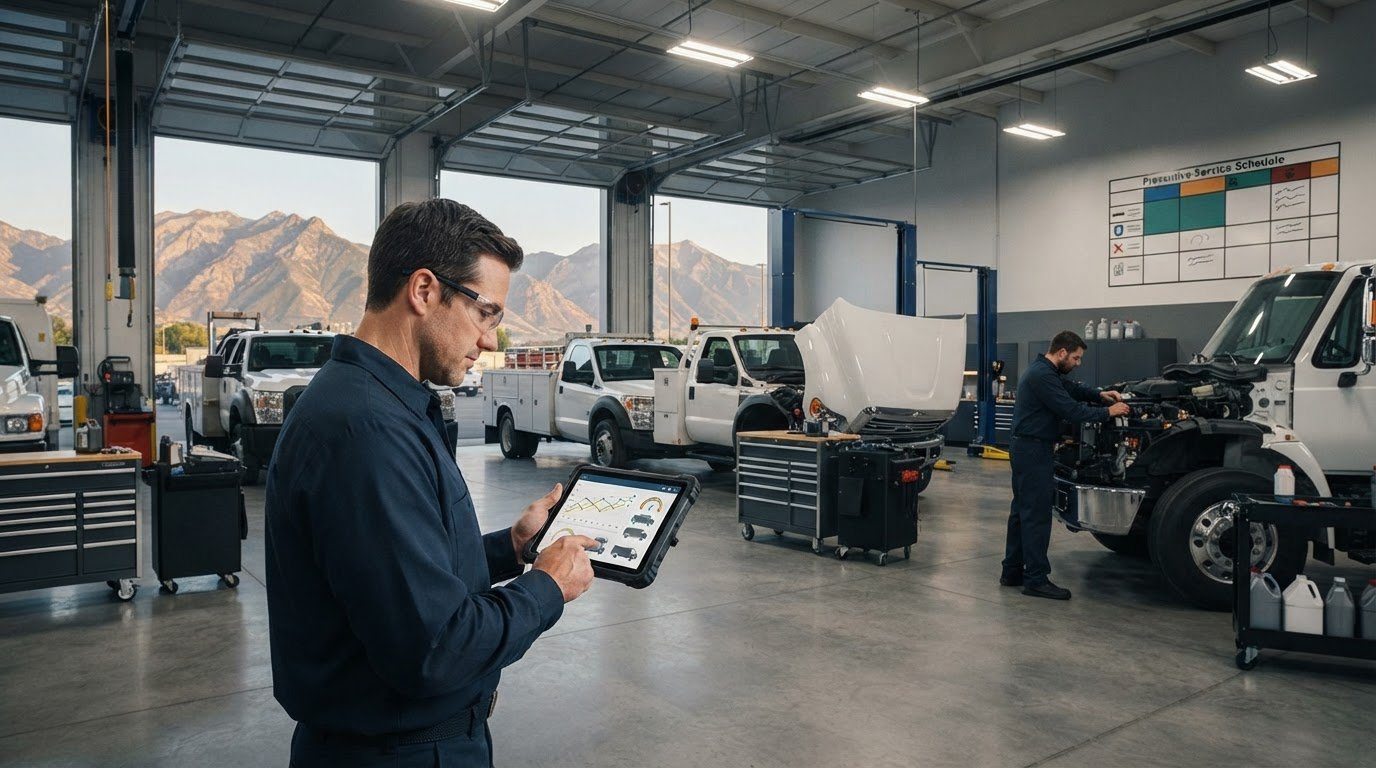
Creating a Dynamic Maintenance Schedule Based on Telematics Data

What if a telematics alert changed when you review a vehicle, but not what maintenance it actually needs? Fixed service intervals can miss differences in workload, while a stream of alerts can make it hard to separate an emerging concern from a signal that needs context. Creating a dynamic maintenance schedule based on telematics data means using vehicle trends to guide review, not letting software replace sound maintenance judgment.
This article outlines a repeatable way to prioritize signals, compare them with service history and maintenance guidance, and plan preventive maintenance around actual use. Keep scheduled service in view while using data to identify vehicles that may need attention sooner. For fleet accounts, this process makes it easier to coordinate maintenance across vehicles with different duties and operating demands. Certified diesel technicians can then use diagnostics and inspections to help determine the next step.
Key Takeaways
- Use telematics signals to prompt a maintenance review, not to replace technician judgment or scheduled preventive service.
- Creating a dynamic maintenance schedule based on telematics data starts with vehicle baselines, then weighs alerts against service history and maintenance guidance.
- Document each service decision so fleet accounts can track what was reviewed, what was completed, and what needs follow-up.
- Build recurring fleet preventive maintenance reviews around observed vehicle needs. Match diagnostics, fluid services, inspections, or forced regenerations to appropriate findings.
Why a Dynamic Fleet Maintenance Schedule Needs More Than Telematics Alerts
A dynamic fleet maintenance schedule is a reviewed plan that adjusts service timing when verified vehicle use or condition warrants closer attention. It doesn’t discard preventive maintenance or replace manufacturer guidance. Instead, it helps fleet managers account for differences between vehicles. For example, a truck that spends more time idling has a different usage profile from one that covers more road miles. Reviewing available engine-hour and mileage information together can help identify when scheduled service deserves attention.
Calendar-based planning provides a consistent starting point, but it may not reflect changes in workload or operating patterns between service dates. Telematics adds context, not certainty. A signal can prompt an earlier review, but it doesn’t prove a component has failed or mean every service interval should change. Use telematics data to guide review while keeping scheduled preventive service and sound maintenance judgment in place.
What telematics can and cannot tell a fleet manager
Depending on the vehicle and system, fleet data may include mileage, engine hours, idling patterns, or diagnostic trouble codes. Available signals vary, so make decisions using the information actually recorded for each vehicle. For a grounding overview of the technology, see What is Telematics?
A data alert is a reason to investigate, not a confirmed mechanical diagnosis. A trouble code or change in a usage trend can direct attention, but inspection and diagnostics help establish what is happening. Before changing service timing, compare the signal with the vehicle’s maintenance records and applicable guidance. This keeps the schedule responsive without treating every alert as a repair order or assuming telematics can predict every failure.
For fleet accounts, the practical approach is straightforward: use vehicle data to identify what deserves review, then use inspection and maintenance judgment to determine the response. This helps avoid unnecessary schedule changes while keeping preventive service and potential concerns in view.
How to Turn Telematics Data into a Practical Maintenance Schedule
Use a consistent review process so each vehicle signal leads to a clear, documented decision instead of an automatic change to the service plan. Manufacturer maintenance guidance remains the baseline. Review service timing when verified use or condition gives you a reason to do so.
A repeatable review process for mixed-use diesel fleets
Group vehicles with similar make, model, duty, and operating patterns before comparing their records. This gives you a more useful comparison than treating every truck as identical. A single fleet-wide interval may not fit vehicles with different workloads, so keep vehicle-specific requirements visible in the plan. Similar principles of tailored scheduling apply across diverse automotive operations, whether overseeing heavy commercial trucks or premium fleets managed by luxury vehicle rental providers such as Delta Rentals Dubai.
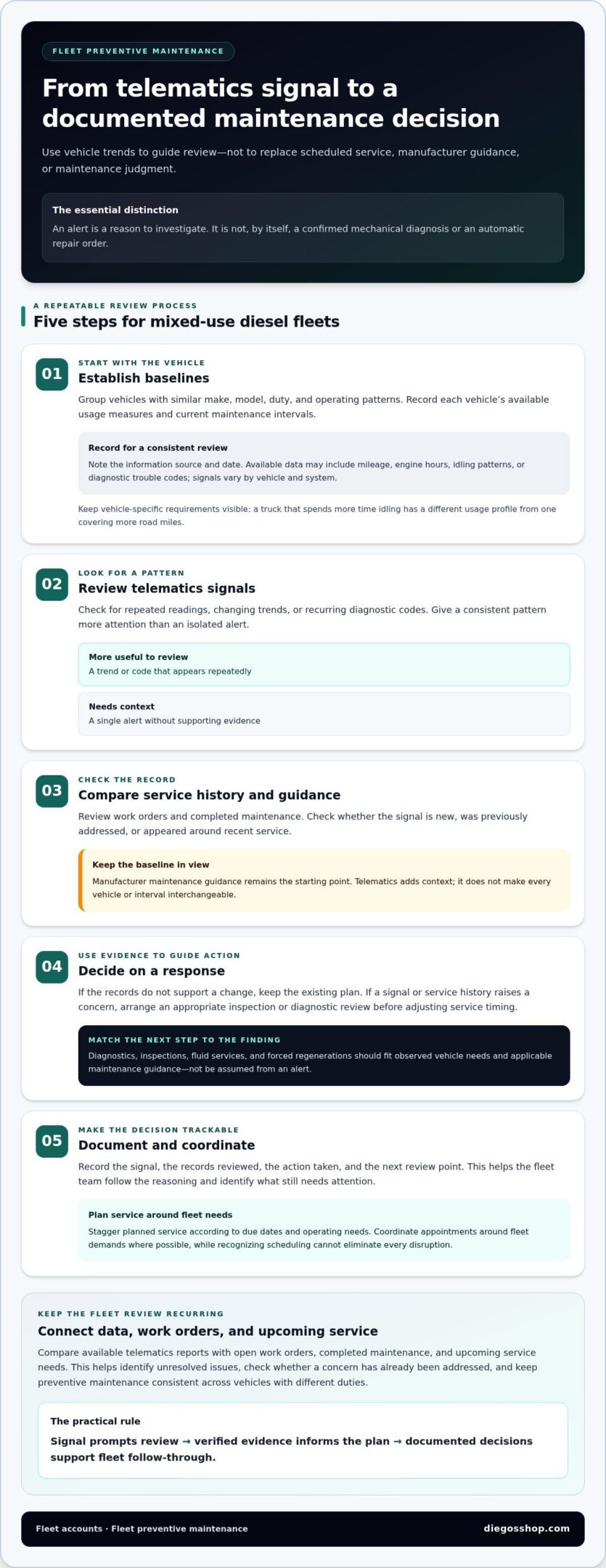
- Establish baselines. Record each vehicle’s available usage measures and current maintenance intervals. Note the source and date of the information so the team can review it consistently.
- Review signals. Look for repeated readings, changing trends, or recurring diagnostic codes. Give a consistent pattern more attention than an isolated alert.
- Compare service history. Check work orders and completed maintenance to see whether the signal is new, was previously addressed, or appeared around recent service.
- Decide on a response. Keep the existing plan if the records don’t support a change. If a signal or service history raises a concern, arrange an appropriate inspection or diagnostic review before adjusting service timing.
- Document the decision. Note the signal, records reviewed, action taken, and next review point. This lets the fleet team follow the reasoning and see what still needs attention.
Then stagger planned service according to due dates and operating needs. Coordinate appointments around fleet demands where possible, while recognizing that scheduling cannot eliminate every disruption. This is how creating a dynamic maintenance schedule based on telematics data becomes a practical process: the signal prompts a review, and verified evidence informs the plan.
For fleet accounts, consistent preventive maintenance and clear service records help organize decisions across vehicles. Diego’s Shop provides fleet preventive maintenance and diesel service to help keep that work on track.
Put Dynamic Scheduling into Practice with Fleet Preventive Maintenance
A schedule is useful when vehicle signals connect to maintenance records and a clear next step. Set a recurring fleet review to compare available telematics reports with open work orders, completed maintenance, and upcoming service needs. This helps fleet managers identify unresolved issues, see whether a concern has already been addressed, and keep preventive maintenance consistent across vehicles with different duties.
For example, if several vehicles are due for service but one is needed during a busy operating period, review its condition and history before coordinating an appointment around fleet demand. Large-scale transport operators such as phoenixbusorlando.com navigate these exact scheduling demands to keep extensive passenger fleets running safely without disruption. Schedule other vehicles at different times where practical. This supports more organized planning, without promising that scheduling can prevent every disruption.
Coordinate fleet data reviews with diesel service
Bring relevant telematics reports, vehicle history, and work orders to the preventive maintenance review. A recurring code or changing usage pattern may warrant further investigation, but it doesn’t automatically call for a particular service. Diagnostics can help clarify the concern. Fluid services, forced regenerations, and inspections should also match observed vehicle needs and applicable maintenance guidance, not an assumed response to an alert.
Diego’s Shop supports fleet accounts with fleet preventive maintenance and diesel diagnostics. Reviewing fleet records alongside the vehicle’s needs helps connect planning to practical shop work, whether the next step is routine service or a closer diagnostic assessment. Repairs are backed by a 100% warranty. For additional planning context, use this fleet maintenance guide alongside the diesel maintenance handbook.
Make Your Fleet’s Next Maintenance Decision Count
A useful maintenance plan adapts as vehicles, workloads, and operating demands change. Set a regular time to review fleet records, and update the plan when the evidence supports a different next step. Creating a dynamic maintenance schedule based on telematics data is an ongoing management practice, not a one-time setup.
For commercial fleets, pairing that process with experienced diesel service helps turn reviewed needs into planned work. Diego’s Shop focuses on diesel repair and fleet preventive maintenance, helping your team connect maintenance planning with practical service. The shop serves fleet accounts in Springville and across Utah County and the Wasatch Front, including Orem, Provo, Spanish Fork, Payson, Nephi, Lindon, and Pleasant Grove.
Schedule fleet preventive maintenance with Diego’s Shop to take a clear next step toward a more consistent plan for your fleet.
Frequently Asked Questions
Can telematics data replace a manufacturer’s maintenance schedule?
No. Keep the manufacturer’s maintenance schedule as the baseline. Don’t use telematics alone to extend or skip a specified service. A vehicle showing no unusual alert may still be due for scheduled maintenance. Use vehicle information to decide whether a review is warranted, then follow applicable guidance and verified inspection findings when planning the work.
What telematics data is useful for fleet maintenance scheduling?
Useful data helps explain a maintenance decision and can be matched reliably to the vehicle and its records. Depending on system coverage, that may include odometer readings, engine hours, idle patterns, or diagnostic codes. Check dates and vehicle identifiers before acting, since stale or misassigned data can distort a review. Compare trends for the same vehicle and service item.
How often should a fleet review its telematics-based maintenance schedule?
There isn’t one review interval that suits every fleet. Set a recurring review before fleet service planning, then bring it forward when vehicle duties change, a signal repeats, or service records show a developing concern. Choose a cadence your team can sustain and align with its service cycle. Address urgent safety or drivability concerns promptly rather than waiting for the next routine review.
Can one dynamic maintenance schedule work for mixed diesel vehicles?
A shared review process can work across a mixed fleet, but service timing should account for each vehicle’s requirements and operating demands. Keep common planning checkpoints while recording vehicle-specific intervals and exceptions. A pickup and a heavy-duty truck may need different maintenance timing, so don’t make them identical for convenience. Diego’s Shop provides fleet maintenance and preventive maintenance support in Springville and Utah County.