
How to Choose a Diesel Shop That Partners with Fleet Management Companies in 2026

The most skilled diesel technician in the country can’t keep your fleet moving if their front office refuses to touch your fleet management portal. Knowing how to choose a diesel shop that partners with fleet management companies is no longer just an accounting preference; it’s an essential operational requirement for vehicle uptime. When drivers sit stranded waiting on purchase order authorizations, administrative friction burns company revenue just as fast as mechanical failure.
You shouldn’t have to waste hours playing phone tag or mediating between an inflexible vendor and corporate fleet protocols. You need rigorous diagnostic accuracy under the hood paired with prompt, seamless billing compliance behind the desk. This guide delivers the exact criteria to select a dependable commercial diesel repair partner that eliminates administrative bottlenecks and protects your investment with warrantied repair work.
Below, we break down how to evaluate FMC portal integration, light through heavy-duty asset capabilities, and strict preventive maintenance protocols that keep your operations running on schedule.
Key Takeaways
- Administrative bottlenecks burn uptime just as fast as mechanical failures, making FMC portal fluency essential for your repair vendor.
- Master the exact technical and operational criteria for how to choose a diesel shop that partners with fleet management companies across light, medium, and heavy-duty platforms.
- Electronic estimate submissions and established billing processes eliminate hours of phone tag and accelerate repair authorizations.
- Prioritizing strict preventive maintenance schedules and warrantied repair work protects your commercial assets from recurring mechanical breakdowns.
- A dependable regional diesel partner bridges hands-on mechanical craftsmanship with rigorous corporate compliance to keep your operations moving.
Why Fleet Management Company Compatibility Dictates Fleet Uptime
Mechanical competence is only half the battle when keeping commercial assets on the road. A true partnership with a Fleet Management Company (FMC) means the repair facility actively integrates into third-party administrative workflows. Understanding how to choose a diesel shop that partners with fleet management companies protects your balance sheet from compounding administrative delays that park trucks just as effectively as blown head gaskets.
Software dashboards don’t turn wrenches, and physical service bays can’t operate in a digital vacuum. Fleets need commercial diesel partners that combine heavy-duty craftsmanship with rapid digital reporting. When a repair shop speaks the administrative language of your fleet management provider, vehicles move through service bays without friction.
The Hidden Cost of Administrative Repair Friction
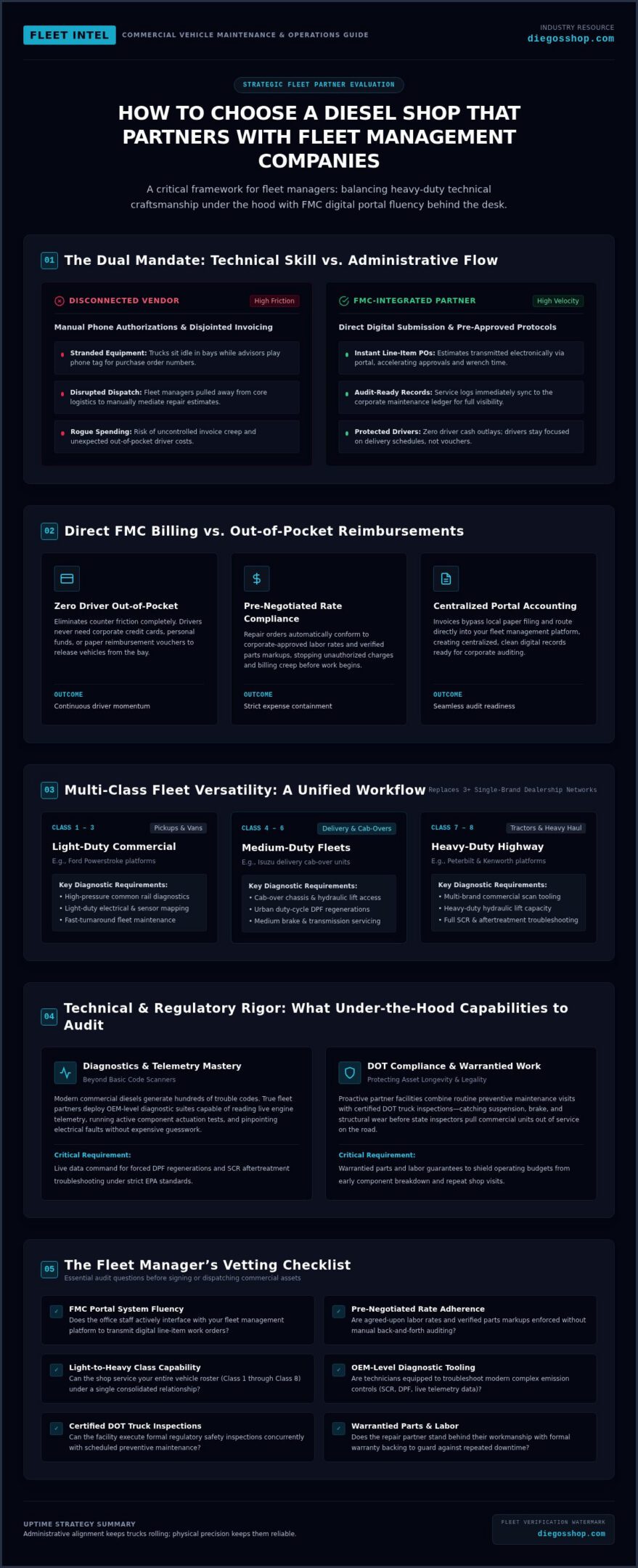
Unapproved estimates trap commercial trucks inside service bays for days. When a shop relies on manual phone calls for purchase order authorizations, your team loses valuable wrench time. Service advisors spend hours playing phone tag instead of turning wrenches. That delay pulls fleet managers away from core dispatch tasks and strands drivers at motels or terminals. Standardized digital reporting eliminates this bottleneck by transmitting line-item estimates instantly, keeping maintenance records transparent and audit-ready.
Consolidated Billing vs. Out-of-Pocket Reimbursements
Independent shops that integrate with corporate fleet networks process direct billing without complications. That workflow delivers tangible operational advantages:
- Zero driver out-of-pocket expenses: Drivers never need corporate credit cards or reimbursement vouchers at the counter.
- Rate compliance: Work orders automatically reflect pre-negotiated labor rates and verified parts markups, stopping invoice creep before it starts.
- Centralized accounting: Invoices route directly into your management portal, maintaining clean digital records across light, medium, and heavy-duty assets.
Choosing an integrated partner means your fleet avoids rogue spending while maintaining total visibility over every dollar invested in vehicle uptime.
Key Technical Qualifications to Require in an Independent Diesel Shop
Seamless administrative billing means very little if the technicians turning wrenches lack the equipment to solve complex mechanical faults. Modern commercial diesels generate hundreds of diagnostic trouble codes. A general repair facility simply cannot match the tooling required for heavy commercial duty cycles. Knowing how to choose a diesel shop that partners with fleet management companies requires auditing both front-office integration and physical diagnostic capabilities.
Fleet operators cannot afford repeat breakdowns caused by guesswork. You need master craftsmen executing expert diesel engine repair to ensure repairs hold up under demanding road conditions.
Multi-Class Fleet Versatility: Light, Medium, and Heavy Duty
Most commercial fleets run mixed weight classes. Your diesel provider should service light-duty pickups like Ford Powerstrokes, medium-duty Isuzu delivery cab-overs, and Class 8 Peterbilts or Kenworths with equal skill. Specialized facilities like IQ Truck Center illustrate the value of dedicated heavy-duty tooling and advanced diagnostic equipment for commercial fleets. A shop equipped with heavy hydraulic lifts and multi-class scan software saves your business from coordinating three separate brand dealerships, keeping the entire roster under a unified maintenance workflow.
Diagnostics and Emission Control System Mastery
EPA regulations have made diesel exhaust aftertreatment systems complex. Technicians must possess OEM-level diagnostic tools to read live telemetry, command forced regenerations, and troubleshoot Selective Catalytic Reduction (SCR) faults accurately. Routine visits should also confirm regulatory compliance through reliable DOT truck inspections, catching mechanical wear before state inspectors pull units out of service.
Warrantied Repair Work and Accountability
A reputable commercial partner backs their labor and installed parts with clear warranties. FMC partnerships depend on accountable vendors who guarantee durability, shielding your bottom line from early component failure. When reviewing an independent repair facility against a standard vetting checklist, demand documented warranty policies upfront. Working with a dependable regional operation like Diego’s Shop gives commercial managers the confidence that every repair is completed to exact specifications and backed by hands-on accountability.
Evaluating FMC Operational Processes: Portals, Authorizations, and Data
Software providers often claim automated repair approvals work without human intervention. In real fleet operations, electronic approvals depend entirely on the vendor’s administrative competence. A shop unfamiliar with commercial fleet interfaces can stall a repair for hours over missing line items or incorrect labor code formats. Assessing these digital interactions is a foundational step in mastering how to choose a diesel shop that partners with fleet management companies.
Leading commercial diesel facilities regularly navigate major fleet management platforms like Fleetio, Holman, Element, and ARI. By transmitting structured estimates directly into your software, these shops bypass call queues and expedite purchase orders. Consistent electronic data capture also feeds your corporate maintenance records, supporting reliable total-cost-of-ownership modeling and sustained proactive fleet maintenance across your fleet.
Mastery of Third-Party Approval Portals
Submitting a repair request through an FMC portal requires exact operational precision. Proficient service writers understand how corporate adjudicators review requests:
- Diagnostic code verification: Uploading confirmed fault codes and sensor readings alongside initial estimates validates the scope of work instantly.
- Granular line-item formatting: Separating labor hours, individual parts, shop supplies, and environmental fees prevents administrative rejection.
- National account compliance: Applying negotiated fleet terms upfront eliminates contentious billing disputes and payment holds.
Whether coordinating with comprehensive fleet management specialists like Fleetsauce or navigating proprietary third-party portals, a shop that masters these requirements moves trucks from diagnosis to active repair without delay.
Real-Time Repair Milestones and Status Tracking
Operational visibility keeps your dispatchers from operating in the dark. Instead of forcing your staff to make repetitive check-in calls, an integrated repair facility updates job milestones directly in your management interface. Knowing precisely when teardown finishes, parts arrive, and final quality checks conclude allows you to reposition standby power or reschedule delivery commitments with complete confidence. Administrative transparency delivers actionable control over daily routes.
The Fleet Manager’s Vetting Checklist for Local Diesel Shops
Generic vendor directories won’t tell you whether a local repair facility can manage your fleet’s physical footprint or handle corporate paperwork. You need a practical vetting framework before dispatching equipment to an unverified location. When determining how to choose a diesel shop that partners with fleet management companies, run prospective facilities through this five-step checklist to protect your assets and operational budget.
Step 1 & 2: FMC Billing Setup and Facility Infrastructure
Start with administrative onboarding and physical shop capacity:
- FMC onboarding readiness: Ask if their front office actively uses your specific management platform or holds active vendor status. If not, confirm their willingness to complete credentialing before work begins.
- Physical bay and lift capacity: Verify overhead bay doors accommodate high-cube box trucks and vocational equipment. Ensure heavy-duty hydraulic lifts can safely handle your heaviest axle configurations.
- Secure yard storage: Check that the facility provides locked, monitored perimeter fencing so commercial tractors, trailers, and cargo remain safe during scheduled service.
Step 3, 4, & 5: Service Turnaround, PM Protocols, and Warranties
Next, evaluate operational discipline inside the bays. Commercial units shouldn’t sit idle behind retail passenger vehicles. Inquire about dedicated fleet bay allocation to ensure fast turnaround on routine jobs. The shop must follow systematic commercial diesel maintenance intervals tailored to severe operating cycles, stopping minor component wear before it triggers roadside derates.
Finally, examine parts sourcing and accountability. A reliable partner maintains direct supply pipelines with reputable commercial parts distributors to prevent delivery delays. They should also provide written warranties covering engine, transmission, and aftertreatment repairs. If you manage routes across Utah County, partner with Diego’s Shop for your fleet maintenance to secure proven commercial craftsmanship backed by seamless corporate billing.
Why Utah Fleets Rely on Diego’s Shop for Seamless FMC Service
Finding a repair partner that satisfies corporate administrators and field technicians alike can feel impossible. Dealerships often bring bureaucratic red tape and extended wait times, while traditional independent garages frequently refuse third-party fleet billing networks. When evaluating how to choose a diesel shop that partners with fleet management companies, commercial operators along the Wasatch Front turn to Diego’s Shop as the ideal bridge between master craftsmanship and corporate process compliance.
Located in Springville, Utah, Diego’s Shop delivers dedicated commercial fleet maintenance and diesel engine repair tailored to the rigorous demands of Utah County operations. The facility eliminates administrative friction through active portal integration while backing every repair with dependable, warrantied repair work.
Wasatch Front Commercial Fleet Specialization
Operating commercial trucks along the high-traffic I-15 freight corridor demands heavy-duty durability. Steep mountain grades, heavy payloads, and freezing winter temperatures place exceptional strain on cooling packages, drivelines, and exhaust aftertreatment systems. Diego’s Shop provides advanced diagnostics across light, medium, and heavy-duty platforms, servicing Peterbilt, Kenworth, Isuzu, and Ford commercial vehicles with equal precision. Learn why regional logistics providers choose expert diesel repair in Utah over rigid dealership networks to keep their assets rolling through harsh seasonal weather.
Streamlined Corporate Billing with Master Craftsmanship
Administrative speed directly affects your operating margins. Diego’s Shop works directly within major fleet management workflows to submit structured estimates, upload trouble codes, and secure rapid purchase order approvals. That proactive communication keeps your trucks from sitting idle awaiting billing clearance. Fleet coordinators receive transparent milestone updates, allowing them to plan routes without chasing down repair status reports.
Disciplined preventive maintenance programs at Diego’s Shop identify mechanical wear and sensor issues before they cause costly roadside breakdowns. Every job carries the personal accountability of a dedicated specialist committed to keeping your business moving forward. Contact Diego’s Shop to establish your commercial fleet account, eliminate administrative delays, and protect your commercial fleet across Utah County.
Maximize Fleet Uptime with a Proven Service Partner
Administrative alignment is just as critical to fleet health as proper torque specs and diagnostic tooling. Knowing how to choose a diesel shop that partners with fleet management companies ensures your trucks spend less time waiting on purchase orders and more time generating revenue. Prioritizing third-party portal fluency, certified multi-class diagnostic capabilities, and written warranty backing protects your operational budget against costly repeat breakdowns.
From our convenient Springville location serving Utah County and the Wasatch Front, our team delivers expert diagnostics for light, medium, and heavy-duty commercial fleets. Every service visit is reinforced by comprehensive warrantied repair work to provide total peace of mind under severe operating conditions. You don’t have to choose between mechanical mastery and fast corporate administrative compliance. Partner with Diego’s Shop for dependable commercial fleet repairs and keep your business moving forward with complete confidence.
Frequently Asked Questions
Can an independent diesel repair shop bill my fleet management company directly?
Yes, independent diesel facilities routinely bill third-party fleet management companies directly once onboarded into their vendor networks. The shop submits electronic repair estimates, parts itemization, and labor records straight through your provider’s portal. This process removes the need for driver expense cards or cumbersome out-of-pocket reimbursements, keeping billing clean, centralized, and compliant with corporate accounting policies.
What information does a diesel shop need to process a third-party fleet repair order?
To process a repair order smoothly, the facility requires your fleet management company name, vehicle identification number (VIN), unit number, current mileage, and the driver’s contact details. The service writer also needs the direct portal link or fleet account number. Supplying this data at vehicle drop-off helps the shop submit diagnostic fault codes and repair scopes without unnecessary back-and-forth delays.
How do FMC-partnered diesel shops reduce vehicle downtime during major repairs?
Partnered shops accelerate turnaround by submitting standardized digital estimates directly into management portals, bypassing manual phone queues. Understanding how to choose a diesel shop that partners with fleet management companies ensures your service facility uploads diagnostic codes, parts availability, and repair milestones instantly. Fleet adjudicators review and issue purchase orders fast, allowing technicians to start engine overhauls or component rebuilds immediately.
Can a diesel shop perform certified DOT inspections while servicing an FMC vehicle?
Yes, qualified commercial diesel facilities can conduct certified annual DOT truck inspections during scheduled service or preventive maintenance visits. Bundling mandatory safety inspections with routine fluid changes or brake adjustments eliminates secondary service appointments. The shop documents passing criteria directly in the repair order, ensuring your vehicles remain legally compliant and road-ready without pulling them out of service twice.
Does Diego’s Shop service both light-duty pickups and Class 8 commercial tractors?
Yes. Diego’s Shop in Springville, Utah provides complete diesel engine repair and fleet maintenance across light, medium, and heavy-duty commercial platforms. The shop regularly services commercial Ford Powerstroke pickups, medium-duty Isuzu delivery trucks, and heavy-duty Class 8 haulers like Peterbilt and Kenworth. Every asset receives dedicated preventive maintenance and diagnostic scrutiny tailored to severe Intermountain West operating cycles.
What happens if a repair requires authorization beyond the fleet manager’s spending limit?
When unexpected mechanical issues push repair estimates past local authorization limits, the shop’s service writer submits supplemental documentation directly through the FMC portal. The submission includes detailed photos, diagnostic trouble codes, and broken-down estimates. The platform routes this data automatically to corporate executives for secondary sign-off, maintaining complete cost transparency while avoiding dropped calls and stalled bay time.
Why choose an independent diesel repair specialist over a national dealership chain?
Knowing how to choose a diesel shop that partners with fleet management companies often reveals clear advantages over rigid national dealerships. Independent specialists offer direct communication with master technicians, dedicated commercial bay availability, and fast turnaround without corporate dealership backlog. You receive personal accountability, disciplined preventive maintenance protocols, and reliable warrantied repair work designed to keep your regional routes operating smoothly.