
The Ultimate 2026 Commercial Truck Maintenance Schedule: Maximize Uptime

What if the difference between a profitable quarter and a financial disaster was hidden in a single skipped oil analysis? For fleet managers and owner-operators, the road is unforgiving, and a mechanical failure during a peak haul can derail your entire operation. You’ve likely felt the sting of emergency repair costs or the anxiety of a roadside DOT inspection. It’s frustrating when maintenance feels like a series of fires you’re constantly trying to put out rather than a controlled, professional process.
This guide delivers a definitive 2026 commercial truck maintenance schedule to help you regain control of your fleet. We’ll move beyond generic checklists to provide a tactical uptime strategy tailored for heavy-duty diesel performance. You’ll master the daily, mileage-based, and seasonal tasks necessary to extend your vehicle’s lifespan and make your maintenance budgeting predictable. We’ll cover everything from vital fluid checks to specialized engine protocols, ensuring your fleet remains compliant and ready for the specific demands of the Utah terrain. By the end of this article, you’ll have a repeatable framework that turns your shop into a center of reliability.
Key Takeaways
- Shift from reactive repairs to a proactive strategy that can extend your diesel fleet’s lifespan by up to 40%.
- Implement a tiered commercial truck maintenance schedule that prioritizes driver-led daily inspections to catch safety issues before they lead to DOT failures.
- Learn how to adjust service intervals based on your specific application; this ensures modern diesel engines receive oil and filter changes at the right frequency.
- Understand how to combat Utah-specific wear and tear, including managing turbocharger heat at high altitudes and brake stress from Wasatch Front canyon driving.
- Discover why partnering with a local specialist for warrantied repair work provides the accountability and expertise needed for total fleet reliability.
The ROI of a Proactive Commercial Truck Maintenance Plan
Operating a commercial fleet without a dedicated commercial truck maintenance schedule is a gamble with high stakes. Many fleet owners start with a “break-fix” mentality, only addressing issues when a truck stops moving. This reactive approach is the most expensive way to run a business. A proactive uptime strategy treats maintenance as a controlled operational cost rather than an emergency expense. By identifying wear before it triggers a failure, you can extend your vehicle’s lifespan by 30% to 40%. This longevity is essential when managing high-value assets like Peterbilt or Kenworth diesel trucks.
A well-maintained diesel powertrain operates at peak efficiency. Small issues like clogged filters or slightly misaligned injectors force the engine to work harder, burning more fuel. Over thousands of miles, these inefficiencies lead to thousands of dollars in wasted overhead. Documented service history also serves as a critical shield against liability. In the event of an accident or a DOT audit, having a clear record of every preventive task reduces insurance risks and proves your commitment to safety. It shows you aren’t just running trucks; you’re managing a professional operation.
Maintenance as Uptime Insurance
Think of scheduled service as a premium you pay to avoid a total loss. When you calculate the cost of one day of downtime, including lost revenue, towing fees, and driver wages, it far outweighs the price of a scheduled oil change. Modern diesel engines are sophisticated and less forgiving of neglect than older models. Adhering to specific vehicle service intervals is the only way to prevent catastrophic engine failure. At Diego’s Shop, we’ve seen how a simple oversight in a cooling system can lead to a massive engine overhaul. Professional oversight keeps these variables under control and keeps your wheels turning.
Protecting Your Fleet Investment
A rigorous maintenance log is a financial asset. When it’s time to cycle out equipment, a truck with a complete service history commands a significantly higher resale value. Buyers want proof of care. Implementing consistent fleet maintenance also stabilizes your annual operating budget. Instead of facing unpredictable, multi-thousand dollar repair bills, you have a predictable line item for preventive care. This structure provides immense peace of mind for both managers and drivers. Drivers feel safer and more respected when they operate equipment that is fundamentally sound, dependable, and well-cared for. It’s about building a culture of reliability that starts in the shop.
Daily, Weekly, and Monthly Maintenance Checklists
Establishing a culture of driver-led inspections is the backbone of any successful commercial truck maintenance schedule. Drivers are your eyes and ears on the road. They are the first to notice subtle changes in engine sound or steering feedback. By empowering them to perform rigorous daily checks, you catch small leaks or lighting failures before they result in costly citations. This isn’t just about checking boxes for paperwork; it’s about active, professional fleet management that prioritizes safety and uptime.
The Pre-Trip Inspection: Your First Line of Defense
A standard 10-minute walkaround protocol is essential for every diesel truck in your fleet. This routine should begin with a visual inspection for fluid leaks under the chassis. Drivers must verify that all lighting systems are operational and that steering components feel responsive without excessive play. Air brake systems require specific attention, including draining air tanks to remove moisture that can freeze or cause internal corrosion. A dry air system is a functional air system.
These checks aren’t just good practice; they are mandated by Federal maintenance regulations. If a driver skips a pre-trip inspection, they risk safety and legal compliance. Ensuring that emergency equipment, such as fire extinguishers and reflective triangles, is accessible and functional is a critical part of this daily habit. It takes very little time to verify these items, but it saves hours of frustration during a roadside stop.
Weekly and Monthly Deep Dives
While daily checks focus on immediate safety, weekly and monthly inspections look for developing wear in the powertrain and chassis. Inspect drive belts for glazing or cracks and check hoses for soft spots or bulging. Battery terminals often accumulate corrosion that can lead to starting failures, which is a major concern for heavy-duty diesel engines. Monthly tasks must include lubricating the fifth wheel and checking all chassis grease points to prevent premature component failure and metal-on-metal friction.
Managing tire pressure is another monthly priority. Under-inflated tires increase rolling resistance, which kills fuel economy and causes uneven tread wear. These deeper inspections directly prepare your vehicles for official dot truck inspections near me. When you maintain this rhythm, the formal inspection becomes a non-event rather than a source of stress. For fleets looking to tighten these protocols, partnering with a specialist for preventive maintenance ensures nothing is missed and every truck stays road-ready.
Mileage-Based Service Intervals for Diesel Engines
A commercial truck maintenance schedule isn’t a one-size-fits-all document. Your specific application determines how often your fleet needs professional intervention. While manufacturer manuals provide a baseline, they often assume ideal conditions. Real-world hauling, especially across diverse terrains, requires a more nuanced approach to mileage-based service. You must look beyond the odometer and consider the actual stress placed on the powertrain.
For modern heavy-duty diesel engines, oil is the lifeblood of the system. It doesn’t just lubricate; it manages soot and neutralizes acids. Oil and filter change frequency should align with your specific duty cycle. High-mileage line haulers might push intervals further, but local delivery trucks with high idle times need more frequent changes. Fuel filter maintenance is equally critical. You must replace both primary and secondary filters to protect sensitive injectors from contaminants and water. Clean fuel is the only way to maintain the high-pressure common rail systems found in modern rigs; partnering with React Fueling for reliable on-site delivery ensures your fleet always has access to the quality fuel it needs.
Don’t overlook the cooling system. Diesel engines rely on precise chemistry to prevent liner pitting and cavitation. Regularly testing Supplemental Coolant Additive (SCA) or Diesel Coolant Additive (DCA) concentrations is a non-negotiable part of preventive care. If the balance is off, you risk internal engine damage that a simple coolant flush won’t fix. Keeping the chemistry correct ensures the engine remains at a stable operating temperature under heavy loads.
Engine and Powertrain Intervals
Beyond fluids, mechanical adjustments keep the powertrain synchronized. Valve adjustments and overhead sets should be performed according to mileage milestones to maintain optimal fuel timing and power. Neglecting these leads to rough idling and decreased efficiency. Transmission and differential fluid services are also vital, especially when pulling heavy loads that generate extreme heat in the gear sets. A Severe Duty cycle is any operation involving 20% or more idling time or consistent mountain grades. By acknowledging these stressors, you can adjust your commercial truck maintenance schedule to prevent premature wear in the drivetrain.
Managing Modern Emission Systems (DPF & EGR)
Modern emission components are often the weakest link in fleet reliability if ignored. EGR valves require periodic cleaning to prevent carbon buildup that chokes the engine’s air intake. Similarly, DPF cleaning schedules must be strictly followed to prevent “limp mode” events that strand drivers on the shoulder. These systems are highly sensitive to soot accumulation and require specialized cleaning equipment to restore flow. Always prioritize high-quality DEF and replace DEF filters as part of your broader maintenance rhythm. These systems are complex, but disciplined care prevents them from becoming a liability that forces your trucks off the road.
Utah-Specific Maintenance: Altitude, Grades, and Salt
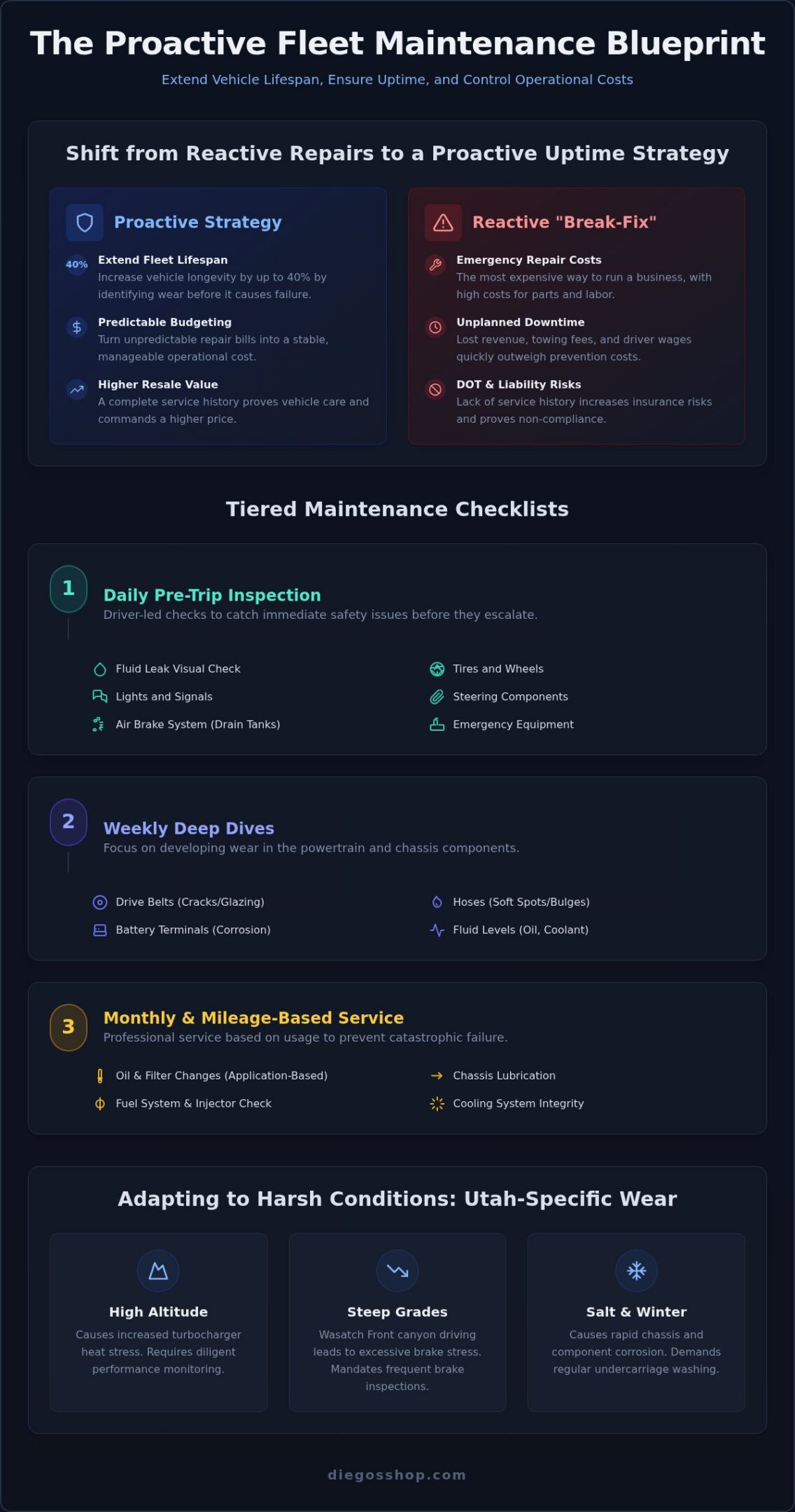
Utah isn’t just another state; it’s a gauntlet for commercial vehicles. Operating along the Wasatch Front means your Peterbilt or Kenworth trucks face a combination of high altitude, extreme temperature swings, and punishing vertical grades. These factors don’t just add wear; they change the fundamental requirements of your commercial truck maintenance schedule. Thinner air at high elevations forces turbochargers to spin faster to maintain boost levels, which generates significant internal heat. If your oil isn’t strictly managed, this heat can lead to oil coking and premature turbo failure.
The descent is just as demanding as the climb. Steep canyon grades put immense thermal pressure on braking systems, often leading to crystallized linings or warped rotors. We frequently see rigs that pass a standard inspection but struggle with the real-world stress of Parleys Canyon. Beyond the terrain, Utah’s winter road treatments present a chemical challenge. Magnesium chloride is a liquid brine that is far more corrosive than traditional rock salt. It creeps into wiring harnesses and eats through chassis coatings, causing electrical gremlins that are notoriously difficult to diagnose. Arid environments also mean fine particulate dust is a constant threat. You must monitor air filter restriction gauges closely to ensure your diesel engine isn’t choking on mountain debris.
Winter Prep for the Wasatch Front
Winter in Springville requires more than just a quick look at your tires. We prioritize coolant freeze point testing and block heater verification before the first frost hits Utah County. It’s also vital to replace air dryer cartridges every autumn. Moisture in your air lines will freeze in sub-zero temperatures, locking up your brakes and leaving your driver stranded. We also recommend proactive fuel system care to prevent gelling when temperatures plummet overnight. A professional winterization protocol is the only way to guarantee your fleet starts every morning.
The Impact of Steep Grades on Cooling
Summer hauls up steep grades require maximum radiator and fan clutch efficiency. Even a minor drop in cooling performance can lead to a derated engine or a total overheat during a climb. We check fan clutch engagement and transmission cooler flow to ensure your drivetrain stays within safe operating temperatures. Integrating these specialized checks into your diesel maintenance routine ensures your fleet stays reliable regardless of the elevation. If you want to protect your investment from Utah’s harsh environment, schedule a comprehensive fleet evaluation with our master technicians today.
Partnering with a Specialist for Fleet Reliability
Large corporate service centers often offer nationwide reach, but they frequently lack the personal accountability and deep local knowledge required for high-stakes hauling. A generic shop might treat your rig as just another ticket in a crowded queue. In contrast, a specialized local partner understands the specific stress your fleet faces on Utah roads. They provide a customized commercial truck maintenance schedule that accounts for your specific routes, load weights, and vehicle types. This partnership ensures that your maintenance isn’t just a checklist; it’s a strategic asset for your business.
When you work with a specialist, you aren’t just buying a service. You’re investing in a relationship with a master craftsman who takes pride in the durability of their work. This level of dedication is essential for maintaining the high standards of a professional fleet. It’s about having a reliable expert who maintains total control over complex mechanical situations, giving you the peace of mind to focus on your logistics. Accountability is the foundation of uptime.
The Diego’s Shop Difference
At Diego’s Shop, we pride ourselves on being seasoned specialists for the heavy-duty industry. We focus on medium and heavy-duty diesel platforms, with deep mastery of Peterbilt, Kenworth, Isuzu, and Ford systems. When you bring your fleet to us, you get direct communication with the technicians actually performing the work. There are no layers of corporate bureaucracy between you and the expert maintaining your engine. We stand behind our work with a warrantied repair work guarantee, providing the assurance that your investment is protected. We live and work in Springville, and we’re committed to keeping Utah County moving by delivering durable, honest service.
Get Your Fleet on a Schedule Today
Transitioning from a reactive “break-fix” cycle to a managed preventive plan is the most significant step you can take for your bottom line. We begin this process by performing a comprehensive baseline inspection on every vehicle in your fleet. This allows us to identify existing wear and prioritize repairs before they lead to roadside failures. From there, we build a repeatable commercial truck maintenance schedule that fits your operational needs and your budget. This structure turns unpredictable expenses into predictable investments.
Whether you manage three trucks or thirty, having a reliable partner for diesel repair utah services is essential for long-term success. We invite you to request a quote for our comprehensive fleet maintenance services. Let us handle the technical complexities so you can focus on your core business. Our goal is to ensure your fleet remains road-ready, compliant, and profitable. Reliable expertise. Total accountability.
Secure Your Fleet’s Performance for the Long Haul
Mastering a commercial truck maintenance schedule is the most effective way to eliminate the stress of unexpected breakdowns and high repair costs. By shifting to a proactive uptime strategy, you aren’t just fixing engines; you’re protecting your company’s reputation and bottom line. Remember that Utah’s unique environment demands specific attention to turbocharger heat and chassis corrosion. These aren’t just suggestions; they are the technical requirements for operating a reliable fleet in the Intermountain West.
Reliability starts with a partner who understands the high stakes of your operation. At Diego’s Shop, our expert technicians in Springville, UT, specialize in commercial fleet protocols and warrantied diesel repairs. We provide the mastery and accountability needed to keep your vehicles road-ready and compliant. Don’t wait for a major failure to rethink your service rhythm. Keep your fleet moving with a custom maintenance plan from Diego’s Shop and experience the peace of mind that comes from professional oversight. Your fleet is a massive investment. Let’s make sure it stays on the road where it belongs.
Frequently Asked Questions
How often should a commercial truck have a full preventive maintenance service?
Most heavy-duty trucks require a full preventive maintenance service every 15,000 to 25,000 miles, depending on the manufacturer and application. However, local delivery trucks or those operating in severe conditions like Utah’s mountains may need service every 10,000 miles. Following a consistent commercial truck maintenance schedule ensures you catch wear before it leads to a road-side failure. It’s the most reliable way to maintain total fleet uptime.
What are the most common maintenance items that lead to DOT violations?
Lighting failures, tire tread depth, and brake system issues are the most frequent causes of DOT inspection failures. Even a single burnt-out marker light or an audible air leak can trigger a violation. Regular pre-trip inspections are your best defense against these citations. Consistent shop-led inspections identify these issues during scheduled downtime rather than during a surprise roadside check. Professional oversight keeps your compliance record clean and your drivers on the road.
How does idling affect my truck’s maintenance schedule?
Excessive idling accelerates engine wear and shortens oil life by increasing soot accumulation and moisture in the crankcase. One hour of idling is often considered equivalent to 25 to 30 miles of driving. If your fleet has high idle times, you must shorten your service intervals to compensate for the additional engine hours. This adjustment is vital for maintaining modern diesel emission systems and preventing premature component failure. Accountability starts with tracking engine hours.
Do I need a different maintenance schedule for medium-duty vs. heavy-duty trucks?
Yes, medium-duty and heavy-duty trucks have different service requirements based on their design and duty cycles. Medium-duty trucks often operate in stop-and-go environments, which puts more stress on brakes and cooling systems. Heavy-duty trucks are built for sustained loads over long distances. Your commercial truck maintenance schedule should be customized to the specific platform and the weight it carries daily. This applies to all service-oriented fleets, including those performing junk removal san diego where heavy debris and frequent stops demand specialized attention. We treat every fleet as a unique, professional operation.
What is the difference between an A-Service and a B-Service?
An A-Service is a basic preventive maintenance check that focuses on safety items, fluid levels, and lubrication. It’s typically performed every 5,000 to 10,000 miles to catch emerging issues. A B-Service is more comprehensive, including an oil and filter change plus a deeper inspection of the drivetrain and chassis. This deeper service usually occurs every 20,000 to 30,000 miles to ensure the powertrain remains reliable. Both are essential for a durable fleet.
How often should DPF filters be cleaned or replaced in a commercial fleet?
Most modern diesel engines require DPF cleaning every 150,000 to 250,000 miles, but this varies based on idle time and fuel quality. If a truck performs frequent regenerations, it may need cleaning sooner to prevent ash buildup. Neglecting this leads to limp mode and potential filter replacement. Professional cleaning restores the filter’s capacity and prevents expensive downstream emission failures. It’s a technical service that requires specialized expertise to perform correctly.
Can proactive maintenance really lower my insurance premiums?
Many insurance providers offer lower premiums to fleets that provide documented proof of a rigorous maintenance program. A clean safety record and fewer roadside breakdowns reduce the carrier’s risk profile. By keeping detailed logs of your preventive protocols, you demonstrate a commitment to safety. This documentation proves to insurers that your fleet is professionally managed and less likely to experience a catastrophic failure. It’s about showing you’re in total control of your equipment.
Why is cooling system maintenance more critical at high altitudes like Utah?
Thinner air at high altitudes reduces the cooling efficiency of radiators, making the engine prone to overheating during steep climbs. The turbocharger also works harder to maintain boost, generating additional heat that the cooling system must dissipate. Maintaining the correct coolant chemistry and pressure is essential to prevent boiling and liner pitting. Regular checks ensure your fleet can handle the vertical demands of the Wasatch Front without overheating. Reliability requires mastering the environment.