
Diesel Fuel System Maintenance: Preventing Costly Failure in 2026

A single microscopic speck of water or a trace of grit in your fuel is all it takes to turn a profitable haul into a five figure repair bill. In 2026, the margin for error in High-Pressure Common Rail (HPCR) systems has vanished entirely. You already know that unpredictable downtime during peak season is a business killer, especially when Rocky Mountain diesel prices are sitting at $4.48 per gallon. It is frustrating to face increasing costs for injectors and pumps simply because of fuel quality issues at the pump that are beyond your control.
Rigorous diesel fuel system maintenance is your only real defense against these expensive, silent killers. You will learn the professional maintenance protocols that protect your engine from catastrophic damage and ensure 100% reliability for those demanding Wasatch Front mountain hauls. We will cover everything from advanced filtration strategies to the specific diagnostic signs of early pump wear. This guide provides the technical roadmap needed to maximize engine longevity and keep your fleet’s fuel efficiency at its peak performance through every season.
Key Takeaways
- Understand why modern 30,000+ PSI operating pressures leave no room for error when it comes to fuel purity.
- Identify the specific ways water and microbial growth destroy injectors and clog filters before you notice the symptoms.
- Learn to navigate the “Micron Myth” so you can select filtration that protects your rig without compromising fuel flow.
- Implement a 2026 diesel fuel system maintenance schedule that combines quick daily checks with professional 15,000-mile inspections.
- Ensure total reliability for heavy-duty mountain hauls with specialized diagnostics and professional tank decontamination services.
Why Modern Diesel Fuel Systems Require Precision Maintenance
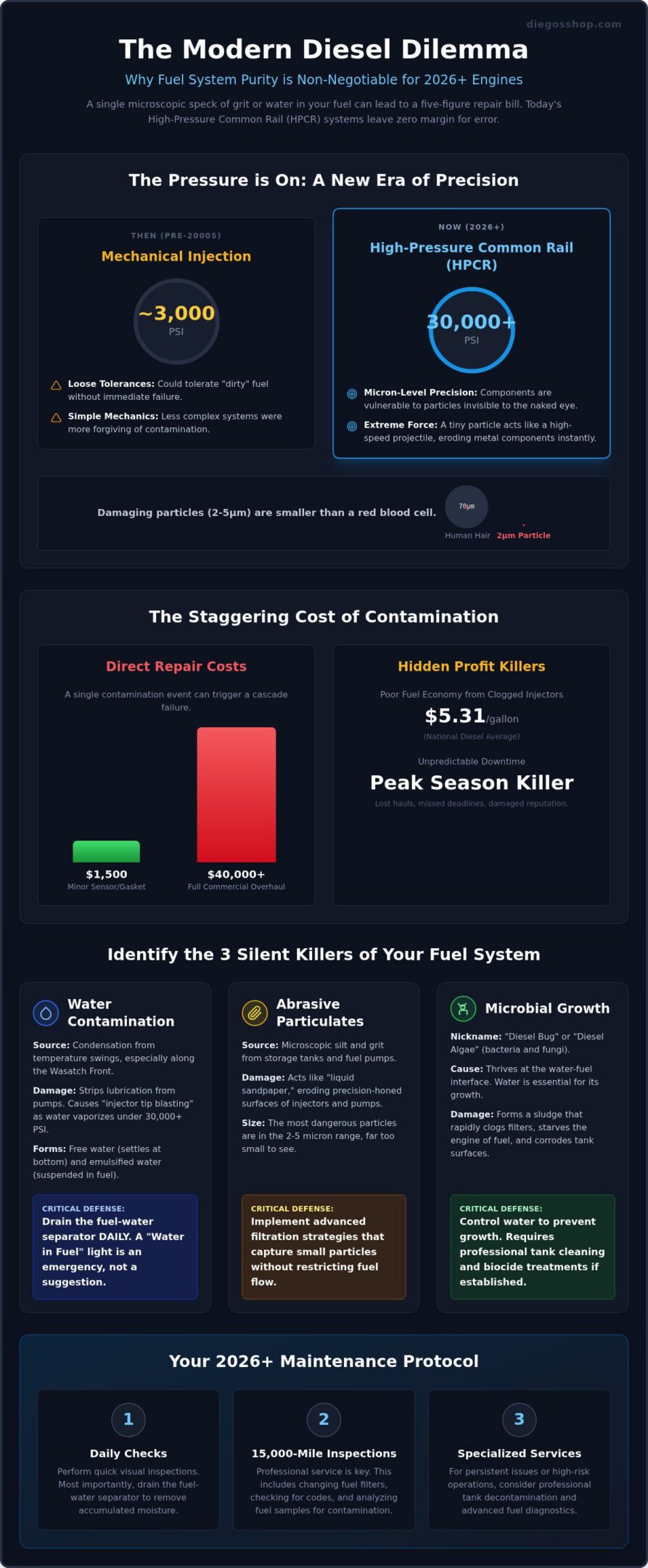
Modern diesel engines are feats of engineering that operate under extreme conditions. While older mechanical injection systems were built with loose tolerances that could tolerate “dirty” fuel, today’s High-Pressure Common Rail (HPCR) systems are far less forgiving. These systems operate at pressures exceeding 30,000 PSI. At this level of force, a single microscopic particle of grit doesn’t just clog a line; it acts like a high speed projectile that can erode metal surfaces in seconds.
This is why diesel fuel system maintenance has shifted from a “check it when it breaks” task to a precision discipline. When a component fails at 30,000 PSI, it often triggers a cascade failure. A single compromised injector can lead to improper fuel atomization, which causes cylinder washing or even melted pistons. Prevention is the only way to ensure your rig stays on the road rather than taking up space in a repair bay.
The Evolution of Diesel Injection
The gap between 1990s technology and 2026 diesel standards is massive. Older engines measured tolerances in thousands of an inch, but modern injectors are built to micron level precision. For reference, a human hair is roughly 70 microns wide, yet particles as small as 2 microns can cause significant wear in an HPCR pump. The introduction of Ultra-Low Sulfur Diesel (ULSD) also removed the natural lubricants that used to protect these parts. Now, your fuel filter and lubrication additives must do all the heavy lifting to prevent metal-on-metal contact. While electronic sensors provide more data than ever, they often signal a problem only after the damage has reached a critical point.
The True Cost of Neglect
The financial impact of skipping fuel services is staggering. In 2026, minor engine repairs like sensors or gaskets might cost under $1,500, but a full commercial overhaul can reach $40,000 or more. Beyond the direct repair bill, contaminated fuel systems kill your profit margins through poor fuel economy. A fleet that loses even a small percentage of its MPG due to clogged injectors will spend thousands more at the pump, especially with national diesel prices averaging over $5.31 per gallon. Choosing expert diesel engine repair for your scheduled maintenance is a strategic investment. It protects your engine’s longevity and ensures you aren’t blindsided by catastrophic downtime during a peak haul season.
The Three Silent Killers of Your Diesel Fuel System
Most catastrophic failures don’t happen overnight. They’re the result of “silent killers” that slowly degrade your components until the system reaches a breaking point. While high-pressure common rail technology provides incredible power and efficiency, it’s also highly sensitive to environmental factors. Professional diesel fuel system maintenance is designed to identify and neutralize these threats before they leave you stranded on the shoulder of I-15.
Along the Wasatch Front, regional climate factors play a major role in fuel health. Our extreme temperature swings create a cycle of condensation inside your tanks. When warm daytime air hits a cooling tank at night, moisture pulls out of the air and settles into your fuel. This water is the root cause of the most expensive repairs we see in the shop. It strips away the necessary lubrication from the fuel pump and can even cause “injector tip blasting,” where water droplets explode under 30,000 PSI of pressure, fracturing the metal components.
Microscopic silt and particulates are equally dangerous. While large debris is easily caught, silt in the 2 to 5 micron range acts like liquid sandpaper. It grinds down the precision-honed surfaces of your injectors, leading to poor spray patterns and lost fuel economy. Monitoring these threats through regular preventive maintenance ensures that your system remains sealed and protected against the elements.
Moisture and the Fuel-Water Separator
Water exists in your fuel in two forms: free water and emulsified water. Free water settles at the bottom of the tank, while emulsified water stays suspended in the fuel itself. Your fuel-water separator is the primary defense against both. Draining this separator daily is a non-negotiable habit for any serious operator. If your water-in-fuel (WIF) sensor illuminates, it isn’t a suggestion; it’s a critical alert that your filtration system is overwhelmed and water is likely reaching your high-pressure pump.
Microbial Contamination (Diesel Algae)
Where there is water, there is life. “Diesel bug” is a term for the bacteria and fungi that thrive in the interface between fuel and water. These microbes feed on the hydrocarbons and produce a thick, black slime that quickly chokes filters and corrodes tank walls. Retail biocides can sometimes stop a minor issue, but a systemic infestation requires professional tank cleaning and decontamination. Identifying this black sludge early can save you from a complete fuel system overhaul. Integrity in your fuel storage and handling is the only way to keep these microbes from taking over your fleet.
Evaluating Filters and Additives: What Actually Protects Your Engine?
Choosing the right components for diesel fuel system maintenance is about more than just finding a part that fits the threads. In 2026, the complexity of High-Pressure Common Rail systems means that your choice of filtration and additives is the primary barrier against a $40,000 overhaul. Many fleet managers fall for the “Micron Myth,” believing that a tighter filter is always superior. However, if a filter is too restrictive, it can starve the high-pressure pump of fuel, causing cavitation and internal damage that is just as destructive as contamination.
The risk is even higher when using “will-fit” aftermarket filters. While these parts are cheaper than OEM alternatives, they often lack the structural integrity to handle the pressure surges common in modern rigs. A collapsed filter media can send a wave of debris directly into your injectors. At Diego’s Shop, we prioritize warrantied repair work that utilizes components meeting or exceeding original manufacturer specifications. This ensures that the protection you pay for actually performs when your engine is under heavy load.
Understanding Filter Efficiency Ratings
To protect a modern fleet, you must understand the difference between nominal and absolute ratings. A nominal rating is an “average” efficiency, while an absolute rating tells you exactly what the filter will catch 99.9% of the time. For heavy-duty applications, we recommend a primary fuel-water separator paired with a high-efficiency secondary filter. The Beta Ratio is a formula that compares the number of particles before filtration to the number of particles after, providing a clear picture of a filter’s real-world efficiency at a specific micron size. High Beta Ratios are essential for maintaining the 2 to 5 micron purity required by Isuzu, Ford, and Kenworth systems.
The Role of Winter Additives in Utah
Utah’s climate presents unique challenges, particularly for drivers staying overnight in Spanish Fork or Provo. When temperatures drop, the paraffin wax in diesel fuel begins to crystallize, a process known as gelling. This can happen quickly when Rocky Mountain diesel prices are high and fuel sits in tanks longer. It’s critical to use a high-quality anti-gel additive before the cold hits. Unlike a de-icer, which is a “rescue” product used after fuel has already frozen, an anti-gel prevents the crystals from forming in the first place. Be careful not to over-treat your tanks; excessive additives can actually reduce the lubricity of the fuel, leading to premature wear on your injector tips. Balance and precision are the keys to a reliable winter operation.
The 2026 Diesel Fuel Maintenance Schedule for Commercial Fleets
Reactive repairs are a choice, not an inevitability. In the high stakes environment of Utah’s hauling industry, a structured diesel fuel system maintenance schedule is the only way to protect your bottom line. Waiting for a dashboard warning light often means the damage has already moved from the fuel lines into the cylinders. By the time an engine derates, you are likely looking at thousands in repair costs and lost revenue from missed hauls. A disciplined approach ensures that your HPCR system remains pressurized and protected against the contaminants discussed earlier.
Your maintenance plan should not be a one size fits all document. A long haul rig crossing state lines has different needs than a high idle construction truck working in Springville. For those managing multiple vehicles, a custom fleet maintenance strategy allows you to stagger services and prevent the logistical nightmare of having multiple trucks down at once. This schedule is built on the reality of 2026 engine technology, where precision is the standard.
The Daily and Weekly Routine
The most effective maintenance happens in the 60 seconds before an operator leaves the yard. This daily routine is your first line of defense against catastrophic failure. It includes:
- Draining the Water Separator: Do this every morning. As we noted, Utah’s temperature swings cause overnight condensation. Draining the bowl ensures that free water never reaches the high pressure pump.
- Visual Leak Inspection: Look for “sweating” or dampness around fuel lines and injectors. Even a minor external leak can introduce air into the system, leading to erratic rail pressure.
- Monitoring ‘Distance to Regen’: If your truck is requiring more frequent regenerations, it is often a proxy for poor fuel health. Inefficient fuel atomization leads to higher soot production, which chokes your DPF.
Advanced Diagnostics at the Shop
Every 15,000 miles, your fuel system needs a deeper evaluation that goes far beyond a simple oil and filter change. This is where professional specialized equipment becomes essential. We use advanced scan tools to monitor injector contribution and trim levels. If one injector is overcompensating for another, it’s a sign of internal wear that could lead to a cracked piston if left unaddressed. We also perform fuel pressure drop testing to identify lift pump fatigue before it leaves you stranded.
For a complete breakdown of these protocols, refer to The 2026 Diesel Maintenance Handbook. It provides the technical specifications needed for rugged reliability over the long haul. If your fleet hasn’t had a professional fuel system health check in the last six months, you are operating on borrowed time. Contact us at Diego’s Shop to schedule a comprehensive diagnostic inspection and secure your peace of mind.
Professional Fuel System Care at Diego’s Shop in Springville
Managing the complexities of 2026 diesel technology requires more than a general mechanic. At Diego’s Shop, we provide specialized diesel fuel system maintenance that addresses the specific vulnerabilities of modern HPCR systems. Our facility in Springville is equipped with specialized diagnostic equipment designed to interface with the advanced electronic engine management found in Peterbilt, Kenworth, Ford, and Isuzu fleets. We don’t guess; we use data to confirm rail pressure, injector trim levels, and pump health. This technical precision is how we maintain total control over even the most complex mechanical situations.
If your fuel has been compromised by the black slime of microbial growth or the abrasive silt discussed in previous sections, a simple filter change won’t solve the problem. We offer comprehensive fuel system flushing and tank decontamination services to remove contaminants at their source. This level of thoroughness is what separates a temporary fix from long term reliability. It’s about providing the peace of mind that comes from knowing your equipment is truly clean and protected. We take pride in the durability of our work and the performance of your fleet. This same standard of mechanical reliability is vital for personal vehicles as well; for those seeking quality used automatic cars, dsrautocare.co.uk offers a trusted selection maintained to professional standards.
Our Fleet-First Approach
We understand that for Utah County businesses, every hour a truck spends in the bay is an hour of lost revenue. Our fleet maintenance programs prioritize commercial partners to ensure your vehicles return to the road as quickly as possible. We maintain detailed service records that are essential for your reliable DOT truck inspections. Whether you are running light duty pickups for local deliveries or heavy duty OTR rigs crossing the Rockies, our protocols are designed to keep you compliant and safe. Our no-nonsense approach means you get the facts without unnecessary filler.
Get a Professional Assessment Today
Scheduling a professional diesel fuel system maintenance health check at our Springville shop is a straightforward process. During your first preventive maintenance visit, we perform a total system audit. This includes testing for moisture content in your fuel, inspecting all lines for signs of fatigue, and running an injector balance test to catch early wear patterns. We provide a clear, grounded report on your engine’s status and a roadmap for future care. You will know exactly where your fleet stands and what is required to keep it moving.
Don’t wait for a derate to force your hand. Trust your fleet to a master craftsman who takes personal accountability for every repair. Contact Diego’s Shop to schedule your fleet fuel system service and ensure your rigs are ready for the hardest hauls. Rugged reliability starts with professional precision. Quality work is our signature promise.
Secure Your Fleet’s Future on the Road
Modern diesel engines demand a level of precision that older maintenance routines simply can’t provide. Protecting your high pressure fuel system from the “silent killers” like moisture and microbial growth is the only way to avoid the catastrophic downtime that ruins peak haul seasons. By following a disciplined schedule and using absolute rated filtration, you ensure your rig remains efficient and reliable under the heaviest loads. Proper diesel fuel system maintenance is no longer a suggestion; it is a technical requirement for any operation running on the Wasatch Front.
Beyond the engine, ensuring your facility’s operational resilience is equally important; for commercial solar and standby generator solutions that protect your business from power interruptions, visit txensolar.com.
Diego’s Shop has served Utah County fleets for years with a focus on integrity and technical mastery. We utilize specialized HPCR diagnostic equipment to identify wear patterns before they trigger a system wide failure. All our services are backed by warrantied repair work, giving you the confidence that your engine is in the hands of a specialist who understands the high stakes of your business.
Schedule Your Professional Fuel System Maintenance at Diego’s Shop today to get a comprehensive health check for your fleet. Let’s keep your trucks moving with the rugged reliability they were built for.
Frequently Asked Questions
How often should I change my diesel fuel filters?
You should change your fuel filters every 15,000 miles or during every scheduled oil change. If your rig operates in high-idle environments or severe duty cycles, you may need to perform this service sooner to prevent pressure drops. Consistent diesel fuel system maintenance is the only way to ensure contaminants don’t reach the high-pressure pump.
What are the signs of a failing diesel fuel injector?
The most common signs include a rough idle, audible engine knocking, and a noticeable drop in fuel economy. You might also see white or black smoke from the exhaust or experience frequent “derate” events. These symptoms often indicate that an injector is no longer atomizing fuel correctly, which can lead to cylinder damage if ignored.
Is it necessary to use diesel fuel additives in the winter?
Yes, using an anti-gel additive is essential when temperatures drop along the Wasatch Front. Diesel contains paraffin wax that crystallizes in the cold, which can quickly choke your filters and stall the engine. A high-quality additive prevents this gelling process and provides the extra lubricity that modern ultra-low sulfur diesel often lacks.
Can bad fuel cause my DPF (Diesel Particulate Filter) to clog faster?
Contaminated or poor-quality fuel directly impacts the health of your DPF. When injectors are dirty or worn, they produce a “lazy” spray pattern that results in incomplete combustion and excessive soot. This extra soot loads the DPF much faster than normal, leading to more frequent regenerations and premature filter failure.
What is ‘diesel algae’ and how do I get rid of it?
Diesel algae is actually a microbial growth that lives in the layer where water meets fuel inside your tank. It creates a thick, dark sludge that blocks filters and corrodes metal components. Getting rid of it requires professional tank decontamination and a concentrated biocide treatment to kill the infestation at its source.
Why is my diesel engine losing power under a load?
Power loss under load is usually a sign of fuel starvation or a drop in rail pressure. This often happens because a fuel filter is reaching its capacity or the lift pump is failing to provide enough volume to the high-pressure side. We use specialized diagnostics to pinpoint whether the issue is a simple restriction or a mechanical failure in the pump.
Should I use OEM or aftermarket fuel filters for my fleet?
We always recommend using OEM filters or absolute-rated filters that meet specific micron requirements. Many “will-fit” aftermarket filters don’t have the structural integrity to handle the surges of a 30,000 PSI system. Investing in high-quality diesel fuel system maintenance components is much cheaper than replacing a set of ruined injectors.
Does Diego’s Shop offer fuel system diagnostics for all truck brands?
We provide comprehensive fuel system diagnostics for Peterbilt, Kenworth, Isuzu, and Ford systems. Our Springville shop utilizes specialized diagnostic equipment that allows us to see exactly how your injectors and pumps are performing in real time. We take pride in delivering accurate answers and warrantied repair work for fleets of all sizes.