
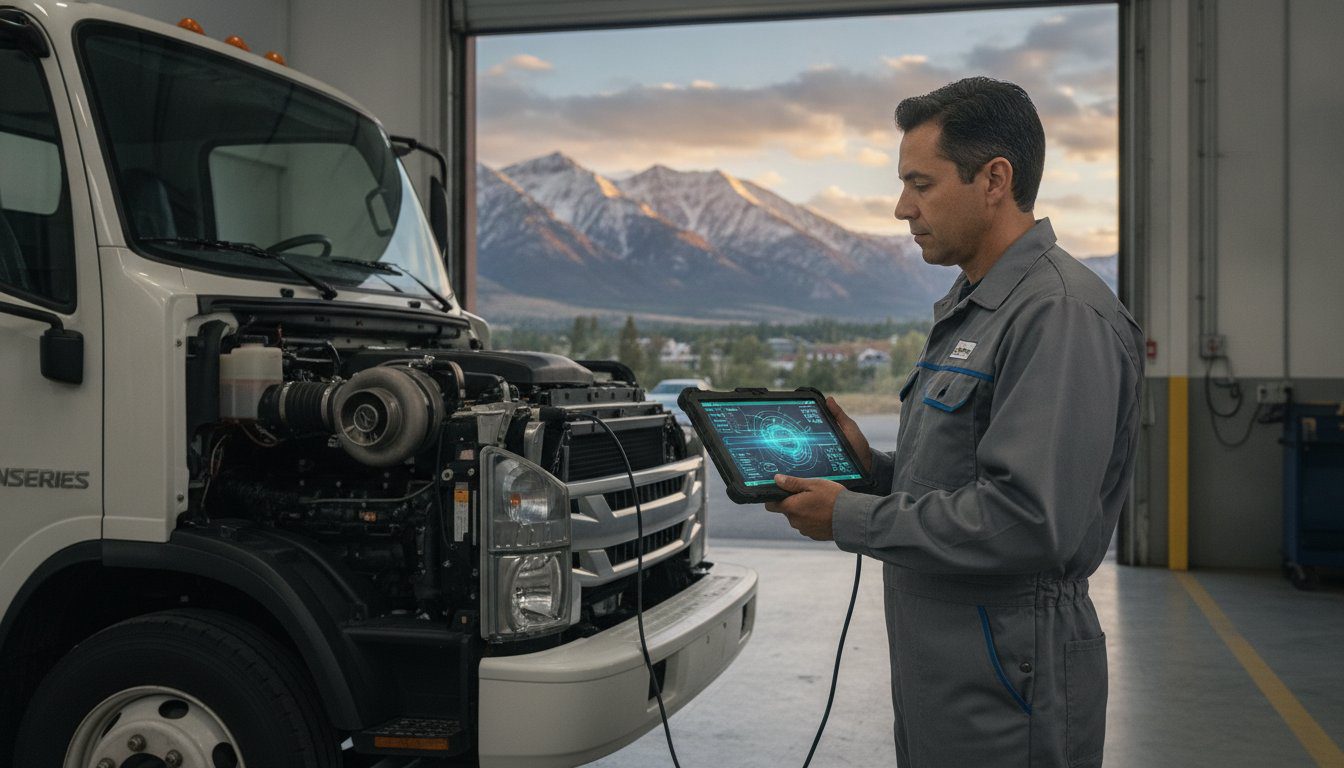
Common Isuzu Diesel Engine Problems: Expert Diagnostics for Utah Fleets

Imagine it’s 10:00 AM on a Tuesday when your driver calls from the side of I-15 in Spanish Fork because their N-Series truck just dropped into Limp Mode. For Utah fleet managers, unscheduled downtime isn’t just an inconvenience; it’s a direct hit to your bottom line and your reputation. You rely on these vehicles for last-mile delivery, yet common Isuzu diesel engine problems like DPF clogging and fuel system contamination often turn a productive route into an expensive towing bill.
We understand the frustration of technical failures that stall your operations. This guide identifies the most frequent Isuzu diesel failures and explains how specialized diagnostics in Utah County can prevent costly commercial downtime. You’ll gain a clear understanding of what causes these issues, from turbocharger wear to overheating. We also provide a professional maintenance plan designed to get your fleet back in service quickly and ensure these problems don’t recur. It’s about maintaining total control over your equipment and your schedule.
Key Takeaways
- Identify the specific mechanical vulnerabilities of the 4HK1-TC engine to stay ahead of common Isuzu diesel engine problems before they stall your deliveries.
- Learn how to spot early warning signs of overheating and fuel system contamination to avoid catastrophic engine failure in heavy Utah traffic.
- Understand why DPF and EGR issues trigger expensive “Limp Mode” failures and how specialized diagnostics resolve these errors efficiently.
- Discover why standard service intervals aren’t enough for local fleets and how critical valve adjustments extend the life of your commercial trucks.
- See how warrantied repairs and specialized software in Springville provide a faster, more reliable alternative to traditional dealership service.
Understanding Common Isuzu Diesel Engine Problems in Commercial Trucks
Isuzu diesel engines are the workhorses of the Utah delivery industry. They’re built for the long haul. However, even the legendary 4HK1-TC has its specific mechanical vulnerabilities. Most common Isuzu diesel engine problems we see in the current 2026 market aren’t caused by internal engine failure. Instead, they usually stem from neglected emission systems or fuel contamination. These engines utilize sophisticated electronic control modules (ECM) that require specialized diagnostic software to interpret correctly. Without the right tools, you’re just guessing. We believe in getting the diagnosis right the first time to protect your investment.
Identifying symptoms early prevents the dreaded Limp Mode. This is a software-induced state where the truck’s computer restricts engine speed and power to prevent physical damage. It effectively turns your commercial vehicle into a liability on the shoulder of the I-15. Because these engines are highly integrated, a fault in the exhaust system can shut down the entire powertrain. Solving these issues requires a master craftsman’s touch and a deep understanding of how these systems interact under heavy work cycles.
The Isuzu N-Series and F-Series Platforms
The NPR and NQR models are the backbone of fleets across Utah County, from Provo down to Spanish Fork. These trucks face unique stressors. The 5.2L and 3.0L Isuzu diesel engine models handle heavy payloads through varied Utah terrain, which puts immense pressure on the cooling and fuel delivery systems. The 3.0L engines often struggle with heat soak in stop-and-go city traffic, while the larger 5.2L variants are more susceptible to turbocharger fatigue during long climbs. Transitioning from reactive repairs to proactive fleet management is the only way to keep these vehicles profitable and compliant with Utah’s 2026 heavy-duty emissions standards.
Signs Your Isuzu Engine Needs Immediate Attention
Catching symptoms early is the difference between a minor adjustment and a catastrophic failure. You should train your drivers to watch for these red flags:
- Excessive smoke: White smoke often indicates raw fuel passing through the exhaust, while black smoke suggests a boost leak or restricted air intake.
- Unusual knocking: Loud rhythmic sounds often signal fuel injector timing issues. If ignored, these can lead to melted pistons or cracked liners.
- Dashboard “Regen” requests: If your truck asks for a manual regeneration frequently and the light won’t clear, your Diesel Particulate Filter is likely reaching a critical soot level.
The ‘Big Three’ Failures: Overheating, Fuel System, and Turbochargers
While the electronics manage the engine’s timing, the physical hardware of the 4HK1 and 6HK1 platforms faces intense mechanical stress daily. In our experience, three specific systems account for the majority of common Isuzu diesel engine problems seen in commercial fleets. These are thermal management, high-pressure fuel delivery, and turbocharger efficiency. Neglecting these areas often leads to a cascading failure where one minor leak or clog eventually ruins an entire engine block. We focus on these critical systems to ensure your trucks stay on the road instead of the shop floor.
Overheating is a primary concern for any truck operating on the Wasatch Front. We frequently see radiators clogged with road debris and viscous fan clutches that fail to engage when the engine hits peak operating temperature. A unique Isuzu-specific failure occurs at the oil cooler. When these internal seals fail, oil and coolant mix, creating a thick sludge that can destroy engine bearings in minutes. Diagnosing these common Isuzu diesel engine problems early is the only way to avoid a total engine overhaul.
Thermal Management in the Wasatch Front
Utah’s summer temperatures regularly exceed 90 degrees, pushing cooling system pressures to their absolute limit. To prevent cavitation and liner pitting, it’s essential to use SCA-heavy coolants specifically formulated for heavy-duty diesel sleeves. We always inspect the water pump and thermostat during routine preventive maintenance. This ensures the system can shed heat effectively during a heavy climb up Parley’s Canyon or while idling in heavy Salt Lake City traffic.
High-Pressure Common Rail (HPCR) Precision
The High-Pressure Common Rail (HPCR) system is a marvel of engineering, but it has zero tolerance for water or debris. One bad tank of fuel can bypass a low-quality filter and ruin an entire set of injectors. Whether your truck uses a CP3 or CP4 pump, maintaining fuel lubricity is critical for the longevity of the pump’s internal components. If you notice a sudden drop in fuel economy, Diego’s Shop can perform a high-pressure leak-down test to verify your system’s integrity.
Turbocharger Wear and VGS Issues
The turbocharger acts as the engine’s lungs. Carbon buildup often causes the Variable Geometry System (VGS) to stick, leading to overboost or underboost codes that trigger Limp Mode. Excessive play in the turbo shaft is another frequent issue that can lead to oil being sucked into the intake manifold. Technical research on turbocharger problems shows that lubrication failure is a primary culprit, making high-quality oil and regular filter changes non-negotiable for fleet survival.
Emissions System Headaches: DPF and EGR Valve Issues
Since the introduction of tighter emissions standards, the Diesel Particulate Filter (DPF) has become the primary source of unscheduled downtime for commercial trucks. For short-trip delivery vehicles operating in Provo or Orem, the engine rarely reaches the sustained temperatures required for a passive regeneration. This leads to rapid soot accumulation and frequent dashboard warnings. When the system can no longer clear itself, the computer triggers Limp Mode, which effectively grounds your vehicle. These are some of the most frustrating common Isuzu diesel engine problems because they often occur even when the mechanical components of the engine are technically sound.
Neglecting these warnings carries a heavy price. A critical danger of failed regeneration cycles is oil dilution. During a “regen,” the engine injects extra diesel into the cylinders to raise exhaust temperatures. If the cycle is constantly interrupted, that unburnt fuel can slip past the piston rings and into the oil pan. This thins your engine oil, destroys its lubricating properties, and can eventually cause total engine seizure. It’s a prime example of how a small exhaust issue can lead to a catastrophic engine failure if not addressed by a specialist.
Troubleshooting the EGR and DPF Connection
The Exhaust Gas Recirculation (EGR) valve and the DPF work in tandem, but they also fail in tandem. An EGR valve that sticks open or is heavily sooted will cause a rich fuel mixture, which in turn clogs the DPF twice as fast. We often see EGR cooler leaks that mimic a blown head gasket, producing white smoke and unexplained coolant loss. At Diego’s Shop, we use specialized software to perform a “Forced Regen” and diagnostic tests to determine if a DPF is truly dead or if it can be restored through professional cleaning. We don’t believe in parts-swapping; we believe in finding the root cause.
The Role of DEF in Modern Isuzu Reliability
Utah winters present specific challenges for Diesel Exhaust Fluid (DEF) systems. DEF freezes at 12 degrees Fahrenheit, making the tank heater and supply lines critical failure points. If the heater fails, the system won’t operate, and the truck will eventually derate its power. We also frequently find crystallized DEF buildup in the injector nozzles, which blocks fluid flow and triggers sensor errors. Utilizing expert diesel diagnostics services is the only way to accurately pinpoint whether the issue is a failed heater, a blocked nozzle, or a faulty NOx sensor. With 2026 emissions testing required in Utah County, keeping these systems in top shape is a legal necessity as much as a mechanical one.
Preventive Maintenance: The Key to Isuzu Longevity
Reliability isn’t a happy accident. It’s the result of a disciplined maintenance strategy. While Isuzu builds a durable engine block, the factory-recommended oil change intervals are often too optimistic for trucks idling in heavy Springville or Spanish Fork traffic. Severe-duty cycles require a more aggressive approach to prevent common Isuzu diesel engine problems like premature bearing wear or turbocharger sludge. When a truck spends hours idling at a delivery dock, the engine oil breaks down faster than the odometer suggests. We recommend service intervals based on engine hours, not just mileage, to ensure your lubricants maintain their integrity.
One of the most overlooked maintenance tasks is the overhead valve adjustment. Isuzu requires this precision service every 50,000 to 100,000 miles. If the valves are out of spec, you’ll experience poor fuel economy, increased soot production, and eventual valve train damage. We also prioritize cooling system flushes. Because these engines utilize various aluminum components, old coolant becomes acidic and causes internal corrosion. Regular flushes prevent this chemical breakdown from eating your radiator or oil cooler from the inside out.
Our comprehensive inspections catch the small issues that lead to big bills. We pressure test the air-to-air intercooler to find pinhole leaks or cracks in the plastic end tanks. These leaks sap engine power and force the turbocharger to overwork, which raises exhaust gas temperatures and accelerates DPF clogging. Catching a boost leak early saves your turbo and your emissions system simultaneously. It’s the difference between a simple seal replacement and a $4,000 repair bill.
Customized Fleet Service Plans
We work with you to schedule maintenance during your off-peak hours to keep your trucks on the road when they’re making you money. Tracking your service history meticulously also maximizes the resale value of your Isuzu NPR when it’s time to rotate your fleet. You can consult our 2026 diesel maintenance handbook for specific Isuzu schedules tailored to Utah’s unique climate and terrain. If you want to stop reacting to breakdowns and start managing your fleet with confidence, contact us for Preventive Maintenance today.
Essential Fluids and Filters for Isuzu Engines
We only use high-quality filters. OEM Isuzu filters outperform generic aftermarket options in high-pressure systems because they have superior filtration efficiency for microscopic contaminants. For DPF health, we strictly use 5W-40 or 15W-40 CJ-4/CK-4 rated oil. These “low-ash” oils are essential for preventing the particulate filter from plugging prematurely. We also test coolant acidity levels to prevent “wet sleeve” liner cavitation, a silent killer of heavy-duty diesel engines that can lead to catastrophic block failure. Using the right fluids is a promise of quality we make to every fleet owner.
Expert Isuzu Diesel Repair in Springville, UT: Why Trust Diego’s Shop?
Diego’s Shop serves as the master craftsman alternative to the slow and often impersonal dealership experience. We don’t just fix trucks; we manage the mechanical health of your fleet with a focus on durability and precision. Located in Springville, we’re positioned to support delivery routes across Provo, Spanish Fork, and the entire Wasatch Front. When your business relies on an NPR or NQR, you need a partner who understands the nuances of these platforms and can address common Isuzu diesel engine problems without the three-week wait. Our goal is a fast return to service and total control over your fleet’s uptime.
Our technical advantage lies in our specialized diagnostic software. We utilize Isuzu-specific tools to communicate directly with your truck’s ECM. This allows us to pinpoint the root cause of a fault code immediately. Many shops resort to expensive “parts-swapping” when faced with complex emissions or fuel system errors. We take a different approach. By identifying the exact failure point, we ensure your repair is both effective and economical. This directness is a hallmark of our no-nonsense service model. We prioritize integrity and accountability in every diagnosis.
Warrantied Repair Work for Peace of Mind
We stand behind every wrench turn. Our warrantied repair work is designed to meet the high-stress demands of commercial hauling in Utah’s varied climate. We provide transparent estimates and maintain clear communication from the moment your truck enters our bay until it’s back on the road. You’ll never be left wondering about the status of your vehicle or the cause of the failure. This commitment to accountability is why local fleet managers trust us for their diesel repair Utah needs. We deliver durable results that keep your business moving.
Schedule Your Isuzu Diagnostic Service
Downtime is the enemy of profitability. We’ve optimized our service protocols to fast-track diagnostics for commercial fleets. Whether you’re dealing with a recurring “Regen” light or a loss of power from the “Big Three” failures discussed earlier, our technicians move quickly to restore your truck’s performance. We match dealership standards for technical depth but exceed them in personal accountability. Don’t let common Isuzu diesel engine problems ground your operations or disrupt your delivery routes. Contact us today to ensure your fleet remains performance-ready and reliable. Precision service for hardworking machinery.
Secure Your Fleet’s Future with Precision Service
Managing a commercial fleet requires constant vigilance. By understanding the common Isuzu diesel engine problems that lead to “Limp Mode”, you’ve taken the first step toward securing your business operations. Success on the Wasatch Front depends on more than just reacting to failures; it requires a proactive partnership with a master craftsman who understands Isuzu N-Series and F-Series platforms. We focus on the critical balance of cooling, fuel, and emissions systems to keep your trucks profitable.
At Diego’s Shop in Springville, we provide expertise through specialized Isuzu diagnostic software and warrantied repair work. We don’t guess; we pinpoint the exact root cause to ensure a fast return to service. Our master technicians are dedicated to the integrity of your equipment and the reliability of your delivery routes across Utah County. Take total control of your maintenance schedule today and protect your bottom line from avoidable setbacks.
Schedule Your Isuzu Diesel Diagnostic at Diego’s Shop Today
We look forward to keeping your trucks performance-ready and your business on the move. Reliable service for the road ahead starts here.
Frequently Asked Questions
What is the most common reason for an Isuzu truck to enter Limp Mode?
The most frequent cause of Limp Mode is a failure in the emissions system, specifically regarding the Diesel Particulate Filter (DPF). When the engine’s computer detects that soot levels have exceeded safe limits or that a regeneration cycle has failed, it restricts power to prevent hardware damage. This protective state often triggers in delivery trucks that spend significant time idling or performing short routes that don’t allow the exhaust to reach cleaning temperatures.
How often should Isuzu diesel injectors be replaced?
Isuzu diesel injectors typically require replacement between 100,000 and 150,000 miles, though their actual lifespan depends on fuel quality and maintenance. High-pressure common rail systems are extremely sensitive to water and microscopic debris. To maximize the life of your injectors, you should change your fuel filters every 10,000 miles and only use high-quality diesel. We recommend a professional diagnostic if you notice a sudden drop in fuel economy or a rough idle.
Why is my Isuzu NPR losing power on hills?
Power loss during climbs is usually tied to a boost leak or a fuel delivery issue. A cracked air-to-air intercooler or a leaking turbocharger hose allows pressurized air to escape, which starves the engine of the oxygen needed for combustion. Additionally, a sticking Variable Geometry System (VGS) in the turbocharger can prevent the engine from generating enough boost under load. Clogged fuel filters are another frequent culprit that restricts the high-pressure fuel flow required for heavy pulls.
Does Diego’s Shop use Isuzu-specific diagnostic software?
Yes, we utilize specialized Isuzu diagnostic software to communicate directly with your truck’s electronic control modules. This capability allows us to perform deep-level tasks that generic scanners cannot, such as forced regenerations, injector flow testing, and precise sensor calibrations. Using the correct software ensures we find the root cause of the fault quickly, which prevents unnecessary parts-swapping and gets your fleet back on the road faster.
Can a clogged DPF cause total engine failure in an Isuzu?
A severely blocked DPF can lead to catastrophic engine failure through diesel fuel dilution of the engine oil. When the system repeatedly attempts to clear a clogged filter, extra fuel is injected into the cylinders. If the cycle is interrupted or the filter is too far gone, that unburnt fuel slips past the piston rings and into the oil pan. This thins the oil, destroys its lubricating properties, and can cause the engine to seize due to bearing failure.
What are the signs of a failing EGR cooler on an Isuzu 4HK1 engine?
The primary signs of a failing EGR cooler include unexplained coolant loss and white smoke from the exhaust pipe. You may also experience a rough idle or see a check engine light related to EGR flow. Because an internal cooler leak allows coolant to enter the intake stream, it often mimics the symptoms of a blown head gasket. A professional pressure test is the only way to verify if the cooler is leaking before it causes further engine damage.
How often do Isuzu diesel engines need valve adjustments?
Isuzu recommends performing a valve adjustment every 50,000 to 100,000 miles to maintain proper engine timing and efficiency. Correct valve clearance ensures the engine breathes properly and helps minimize soot production, which protects your DPF. Neglecting this critical service is one of the common Isuzu diesel engine problems that leads to increased engine noise, poor fuel economy, and eventual wear on the valve train components.
Is it better to clean or replace a soot-heavy Isuzu DPF?
Cleaning is a cost-effective solution if the internal ceramic core of the DPF is still structurally sound and not melted or cracked. Professional thermal cleaning can remove the ash buildup that a standard vehicle regeneration cannot. However, if the filter has been damaged by extreme exhaust temperatures or physical impact, replacement is the only reliable option. We use specialized diagnostics to determine the health of your filter before recommending a specific course of action.