
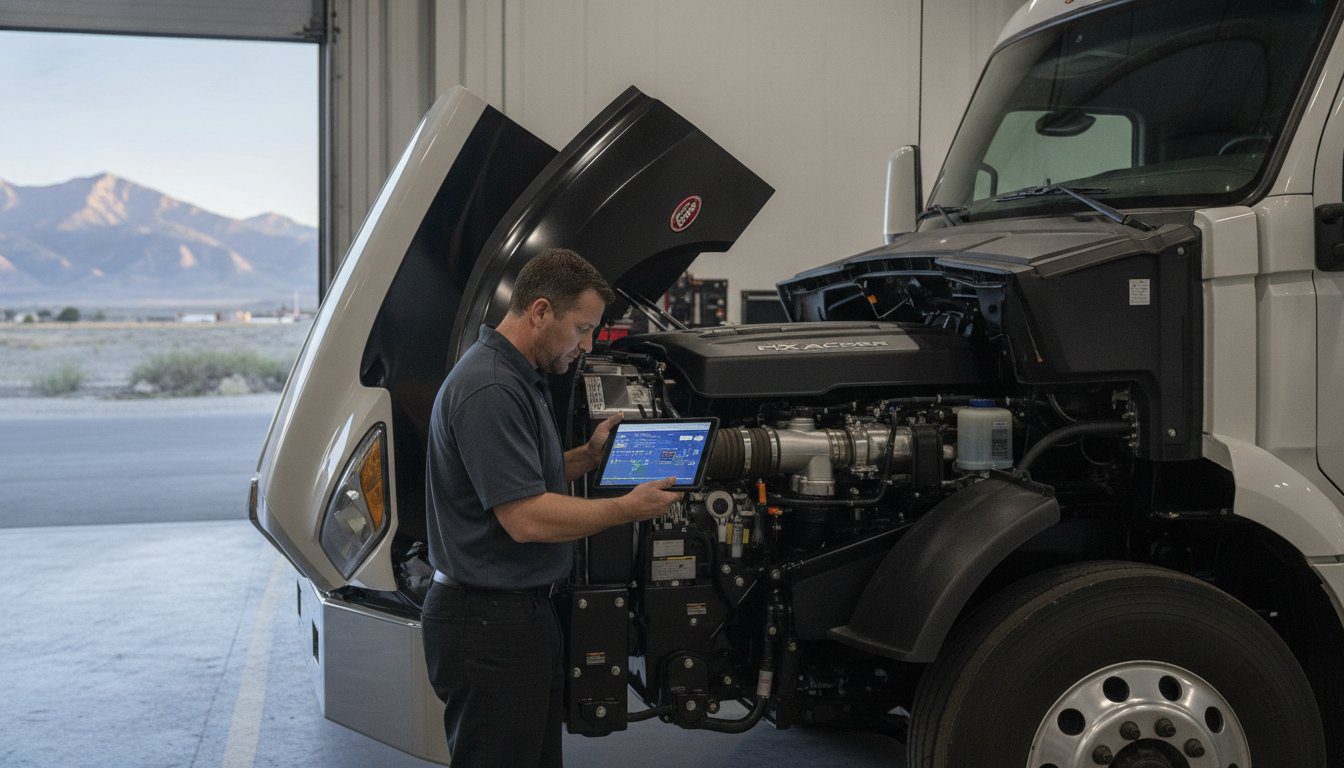
Common Kenworth Engine Problems: A 2026 Troubleshooting Guide for Utah Fleets

Your Kenworth isn’t failing because the heavy-duty iron is weak; it’s failing because modern engine management systems have become incredibly sensitive. You’ve likely watched your maintenance budget climb while dealing with common Kenworth engine problems that trigger constant derate cycles. It’s frustrating when a minor electrical fault or a sensitive sensor sidelines a truck that should be hauling freight across Utah County. We understand that for local fleet owners, downtime isn’t just an inconvenience; it’s a direct hit to your bottom line.
This 2026 troubleshooting guide identifies the most frequent failures, from Paccar MX-13 turbocharger issues to the high-pressure fuel pump faults found in Cummins X15 units. We’ll show you how to identify root causes before they lead to a $6,000 DPF replacement or a failed emissions test. You’ll also learn how to navigate Utah’s new $250 high-emissions registration fees and the 2026 compliance requirements for even-numbered model years. We’ll provide actionable steps to strengthen your preventive maintenance and introduce you to a reliable repair partner in Springville that treats your fleet with the integrity and technical mastery it deserves.
Key Takeaways
- Learn to interpret “soft” vs. “hard” fault codes on your dash to catch engine issues before they lead to a full derate.
- Identify specific model vulnerabilities, including Paccar wiring harness chafing and Cummins X15 high-pressure fuel pump failures.
- Discover why DPF “face plugging” is a primary cause of common Kenworth engine problems and how to prevent long-term aftertreatment damage.
- Understand how Utah’s high altitude and extreme summer temperatures impact your turbocharger efficiency and cooling system requirements.
- Gain a diagnostic strategy focused on finding the root cause of electrical and mechanical faults to ensure durable, warrantied repairs.
Identifying Early Warning Signs of Kenworth Engine Failure
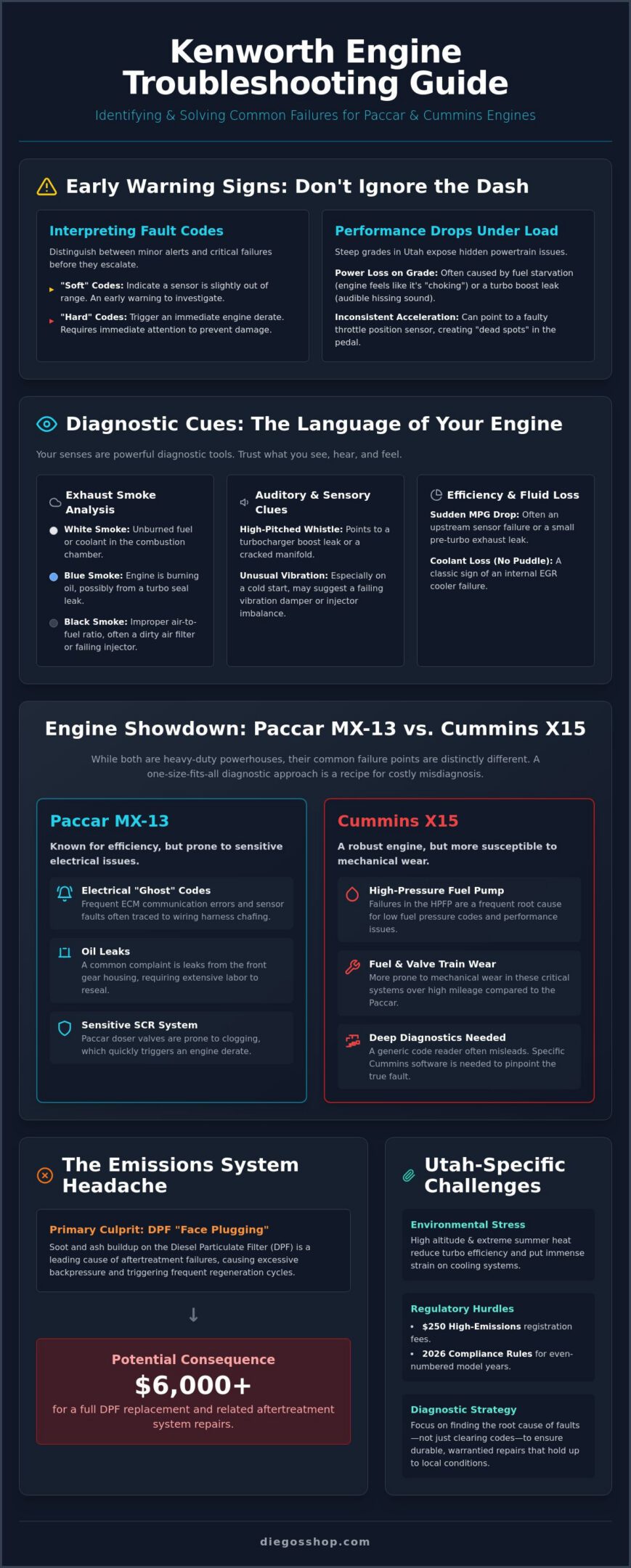
A dash light isn’t always a catastrophe, but ignoring it is a gamble. You need to distinguish between “soft” codes, which might indicate a sensor value is slightly out of range, and “hard” codes that trigger an immediate derate. Catching these early prevents the most common Kenworth engine problems from escalating into permanent hardware damage. While some amateur guides might mention checking spark plugs, it’s vital to remember your Kenworth’s diesel engine uses compression ignition and grid heaters. There isn’t a spark plug in the block. If you notice an erratic idle, don’t assume it’s just cold weather. It’s often the first sign of a failing fuel injector or a restricted air filtration system.
Keep a close eye on your fuel mileage. A sudden drop often signals an upstream sensor failure or a small exhaust leak before the turbo. As a master craftsman, I tell my clients to trust their senses. A high-pitched whistle usually points to a turbocharger boost leak or a cracked manifold. These aren’t just noises; they’re symptoms of lost efficiency that cost you money at the pump. Identifying these visual and auditory cues early helps you stay ahead of common Kenworth engine problems before they leave you stranded on the shoulder of I-15.
Visual and Auditory Diagnostic Cues
Exhaust smoke is a clear diagnostic language. White smoke often indicates unburned fuel or coolant entering the combustion chamber. Blue smoke suggests the engine is burning oil, possibly from a turbo seal. Black smoke usually means an improper air-to-fuel ratio, often caused by a dirty air filter or a failing injector. If you’re losing coolant but don’t see a puddle on the shop floor, you likely have an internal EGR cooler failure. This is a frequent issue for engines manufactured by Paccar, the parent company of Kenworth. You might also feel unusual engine vibrations during a cold start, which often points to a failing vibration damper or an injector balance issue.
Performance Drops Under Heavy Loads
Utah’s steep mountain passes, like Parleys Canyon, put immense stress on your powertrain. If your Kenworth loses power on a grade, you’re likely dealing with either fuel starvation or a turbo boost leak. A boost leak often creates a noticeable hiss under load, while fuel starvation feels like the engine is “choking” or cutting out. Don’t overlook the throttle position sensor. A faulty sensor causes inconsistent acceleration and dead spots in the pedal, making it difficult to maintain speed with a full load. We see these issues frequently in fleets that skip regular preventive maintenance, as small electrical faults eventually lead to major performance degradation.
Paccar MX-13 vs. Cummins X15: Specific Issues by Engine Model
Kenworth trucks are typically powered by one of two heavy-duty engines, and treating them as identical is a costly mistake for any fleet manager. While both are designed for high-mileage durability, their failure points and electronic architectures differ significantly. Understanding these nuances is the only way to effectively manage common Kenworth engine problems before they result in an unplanned tow. The Paccar MX-13 often struggles with electrical “ghost” codes, while the Cummins X15 is more prone to mechanical wear in the fuel and valve train systems. If you’re seeing persistent ghost codes on your dash, our team at Diego’s Shop can perform the deep-level diagnostics required to find the true source of the trouble.
Diagnostic software mastery is critical for these platforms because a generic code reader rarely tells the whole story. For instance, a Cummins might throw a low fuel pressure code that actually points to a failing high-pressure pump, whereas a similar code on a Paccar could simply be a chafed wire in the main harness. These complex systems exist to meet rigorous EPA diesel fuel standards, but they also introduce new failure points that require a master craftsman’s eye to resolve permanently.
The Paccar MX Series Challenges
The Paccar MX-13 is known for its compact design and efficiency, but it has specific vulnerabilities. Oil leaks from the front gear housing are a frequent complaint, often requiring extensive labor to reseat the seals correctly. We also see high sensitivity in the Paccar doser valves within the SCR system; if these valves clog, the engine will quickly enter a derate mode. Electronic control module (ECM) communication errors are another staple of common Kenworth engine problems in the MX series, usually caused by wiring harness chafing against the engine block or frame rails.
Cummins X15 Performance Bottlenecks
The Cummins X15 is a mechanical workhorse, yet it faces its own set of bottlenecks. High-mileage units often show signs of camshaft wear and rocker lever pitting, which can lead to catastrophic engine failure if left unchecked. The integrated fuel system is exceptionally efficient but requires strict adherence to filter change intervals to prevent high-pressure pump failure. Additionally, the turbocharger actuator on the X15 is prone to sticking due to soot buildup. Regular cleaning and calibration of this actuator can save you thousands in replacement costs while maintaining peak pulling power on Utah’s steep grades.
The Emissions Headache: DPF, EGR, and SCR Failures
Modern heavy-duty trucks are essentially chemical processing plants on wheels. While these systems are necessary for compliance, the aftertreatment stack is the primary source of common Kenworth engine problems in 2026. The Diesel Particulate Filter (DPF) is the most frequent cause of unplanned downtime. When soot levels rise beyond the system’s ability to self-clean, you face “face plugging.” This phenomenon happens when raw soot hardens on the front of the filter substrate, blocking exhaust flow. This creates massive backpressure that can warp valves or blow out turbocharger seals if you don’t address it immediately.
The Exhaust Gas Recirculation (EGR) and Selective Catalytic Reduction (SCR) systems add more layers of complexity. EGR valves often stick due to heavy carbon buildup, which chokes the engine and ruins combustion efficiency. Meanwhile, SCR systems rely on a sensitive network of NOx and DEF quality sensors. If one of these sensors sends an erratic signal to the ECM, the truck will enter a derate or “limp mode.” This safety protocol protects the aftertreatment hardware but leaves your driver stranded with a truck that won’t pull a load. Understanding these failures is the first step toward maintaining a reliable fleet.
Preventing Frequent DPF Regens
Utah County’s increasing traffic and stop-and-go hauls on I-15 are a nightmare for emissions health. Engines rarely reach the sustained thermal loads required for a passive regeneration cycle. This forces the truck into active regens, which consume more fuel and put more stress on the burner. Poor fuel quality also accelerates soot accumulation, leading to shorter service intervals for your filters. A single faulty fuel injector can dump enough unburned diesel into the exhaust stream to completely ruin a DPF in under 50 miles. Regular fuel system inspections are your best defense against these catastrophic costs.
Troubleshooting the Aftertreatment System
Don’t wait for a dash light to inspect your DEF system. Look for white, crusty deposits around the doser valve; this is crystallized DEF that prevents proper atomization. If the fluid can’t spray correctly, the chemical reaction in the SCR fails, and your NOx levels will spike. DEF pump failures are also frequent, often preceded by erratic pressure readings in your diagnostic logs. Many operators rely on forced regens to clear a fault code, but these are temporary fixes that mask deeper issues. A forced regen won’t fix a leaking EGR cooler or a failing sensor; it only buys you a few more miles before the root cause sidelines the truck again.
Maximizing Kenworth Uptime in Utah’s Harsh Climate
Utah’s geography presents a unique set of challenges that can turn minor maintenance oversights into major road calls. Operating a Kenworth at 4,500 feet or higher means your turbocharger is working significantly harder to provide the same boost pressure found at sea level. This extra work generates more heat and puts additional strain on the entire intake system. When you combine this with 100°F summer hauls on I-15, your cooling system is pushed to its absolute limit. If your radiator or charge air cooler isn’t in peak condition, you’ll see a spike in common Kenworth engine problems related to overheating and thermal derates.
The extreme temperature swings along the Wasatch Front also wreak havoc on electrical components. Plastic connectors and wiring looms expand and contract rapidly; this leads to the chafing and sensor faults that often sideline modern trucks. During winter months, fuel gelling becomes a legitimate threat, especially if your truck idles for long periods during a mountain storm. Cold starts in sub-zero temperatures put immense pressure on the grid heater and battery banks. We recommend a specialized winterization routine to ensure your fuel remains fluid and your sensors don’t freeze up.
Altitude and Air Intake Management
Air filter maintenance is twice as critical at high altitudes. In thin air, a slightly dirty filter creates a massive restriction that forces the turbo to spin faster, increasing the risk of a catastrophic failure. You must also monitor your charge air cooler (CAC) integrity. Even a pinhole leak in the CAC reduces boost efficiency and increases exhaust gas temperatures. This negatively impacts EGR cooling efficiency, as the system struggles to lower the temperature of the recirculated gas before it enters the combustion chamber.
Proactive Maintenance for Utah Fleets
Staying ahead of the curve requires a rigorous preventive maintenance schedule tailored to local conditions. We rely heavily on oil analysis to catch early engine wear. Metal shavings or coolant traces in the oil can warn us of liner pitting or bearing failure months before a breakdown occurs. For more detailed longevity tips, you can reference The 2026 Diesel Maintenance Handbook. If your fleet is struggling with reliability in these harsh conditions, contact Diego’s Shop to schedule a professional fleet inspection and protect your bottom line.
Expert Kenworth Repair and Diagnostics at Diego’s Shop
Dealerships often operate like assembly lines, prioritizing volume over precision. When you bring your truck to Diego’s Shop, you aren’t just another VIN in a queue. We understand that solving common Kenworth engine problems requires more than just clearing a code; it requires a master craftsman who understands the mechanical soul of the machine. Our diagnostic process goes beyond the surface. We investigate why a sensor failed in the first place, ensuring that a simple repair doesn’t turn into a recurring nightmare for your maintenance budget. We don’t just swap parts; we fix the root cause.
We provide warrantied repair work because we stand behind the durability of our craftsmanship. Whether it’s a complete engine rebuild or a complex electrical overhaul, our goal is to provide total control over the situation. We serve the greater Utah County commercial fleet community with a focus on dependability and integrity. Your uptime is our priority, and we maintain that through clear communication and comprehensive service delivery. We believe in building trust through results that keep your trucks moving and your costs predictable.
Specialized Fleet Support
OTR fleets and local delivery operations have vastly different needs. A truck hauling heavy loads across state lines requires different preventive measures than a Kenworth idling in Utah County traffic. We offer customized maintenance plans that address these specific duty cycles. By using specialized diagnostics for modern diesel engine management, we minimize your downtime and keep your fleet profitable. For more information on our specific service protocols, see our Expert Diesel Engine Repair page for full service details.
Trust and Accountability in Springville
The value of a personal name on the shop means hands-on expertise and personal accountability. We don’t hide behind a corporate logo. Diego’s Shop takes pride in handling the complex electrical and emissions repairs that other shops often avoid. We specialize in finding the root cause of the most stubborn common Kenworth engine problems, from wiring harness failures to sensitive SCR sensor issues. We provide the peace of mind that comes from knowing your equipment is in the hands of an expert who values technical skill and honest work. Our reputation is built on the durability of the machinery we service.
Keep your Kenworth on the road. Contact Diego’s Shop for Kenworth diagnostics in Springville today.
Secure Your Fleet’s Future on Utah Roads
Proactive management is the only way to stay ahead of common Kenworth engine problems in a high-altitude environment like Utah County. You now have the technical foundation to differentiate between sensor ghost codes on Paccar units and the specific mechanical wear patterns found in Cummins fuel systems. By identifying early warning signs and respecting the sensitivity of your emissions equipment, you can avoid the skyrocketing maintenance budgets that sideline so many commercial operations. Technical mastery is about more than just reading a code; it’s about understanding the root cause to prevent recurring failures.
At Diego’s Shop, we combine specialized diagnostics for Paccar and Cummins engines with a master craftsman’s touch. Our warrantied repair work on all diesel engine services provides the peace of mind you need to keep your trucks moving through the Wasatch Front. We’re conveniently located in Springville and ready to help you maintain total control over your fleet’s reliability and performance. We take pride in the durability of our work and the integrity of our service guarantees.
Schedule Your Kenworth Diagnostic Service at Diego’s Shop today. Your trucks are the lifeblood of your business, and we’re here to ensure they stay on the road where they belong.
Frequently Asked Questions
Why is my Kenworth check engine light always on?
Persistent check engine lights in Kenworth trucks are usually caused by sensitive sensors in the emissions aftertreatment system. These sensors monitor everything from NOx levels to DPF backpressure. If a sensor detects a value even slightly out of its narrow operating range, it triggers a fault code. While some are “soft” codes that don’t immediately affect performance, they often signal an underlying issue that will eventually lead to a derate if you don’t address it through professional diagnostics.
How often should I clean the DPF on a Paccar MX-13 engine?
Most Paccar MX-13 engines require a professional DPF cleaning every 200,000 to 400,000 miles, depending on your duty cycle. However, Utah’s specific environment often requires shorter intervals. If your fleet handles frequent stop-and-go deliveries in Utah County or experiences long idling periods during winter, soot and ash will accumulate much faster. Monitoring your fuel economy and regen frequency is the best way to determine when a deep cleaning is necessary to prevent face plugging.
Can a bad sensor cause my Kenworth to lose power on hills?
A faulty boost pressure or throttle position sensor will absolutely cause a loss of power on steep grades. These sensors tell the ECM exactly how much fuel and air the engine needs to maintain speed under load. When a sensor sends erratic data, the engine management system defaults to a conservative map to protect the hardware. This results in the “sluggish” feeling many drivers report when pulling heavy loads up Parleys Canyon or other local mountain passes.
What is the most common cause of Kenworth cooling system leaks?
Leaking EGR coolers and cracked plastic coolant reservoirs are the most frequent culprits in Kenworth cooling failures. The extreme temperature swings in the Wasatch Front cause these materials to expand and contract rapidly, leading to stress fractures. If you’re constantly topping off your coolant but see no visible puddles, the fluid is likely leaking internally through the EGR cooler and being consumed during combustion, which can lead to white exhaust smoke.
Is the Cummins X15 more reliable than the Paccar MX-13 in Kenworth trucks?
How does high altitude in Utah affect my diesel engine performance?
High altitude provides thinner air, which forces your turbocharger to spin at higher RPMs to meet boost requirements. This increased workload generates significantly more heat and places extra strain on the charge air cooler. If your intake system is even slightly restricted by a dirty filter, the engine will struggle to maintain power. You’ll notice higher exhaust gas temperatures and a potential drop in fuel efficiency as the ECM adjusts for the lower oxygen density.
What should I do if my Kenworth enters “Limp Mode” or derates?
You must pull over to a safe location and check your dash for specific instructions, such as a required parked regeneration. If a parked regen doesn’t clear the fault, the truck requires specialized diagnostics to identify the root cause, which is often a failed DEF pump or a NOx sensor error. Driving for extended periods in a derated state can cause permanent, expensive damage to the DPF substrate and other aftertreatment components.
Are Kenworth engine problems covered by Diego’s Shop warranty?
We provide warrantied repair work for all Kenworth engine services and diesel repairs performed at our facility. This commitment to accountability ensures that the work we do is durable and reliable for the long haul. We stand behind our craftsmanship because we believe in the master craftsman approach to diesel maintenance. Our goal is to provide Utah County fleets with total peace of mind and a repair partner they can trust for high-integrity service.