

7 Critical Signs Your Diesel Engine Needs Service Before a Breakdown

A diesel engine never fails without warning; it speaks through subtle changes in sound, smoke, and rhythm. If you’ve started noticing a slight hesitation during cold starts or an unfamiliar rattle under the hood, you’re likely seeing the first signs your diesel engine needs service. These machines are built for durability, but they rely on precise timing and pressure. When those parameters shift, even slightly, the countdown to a catastrophic breakdown has begun.
We understand the stress of unexpected downtime and the fear of high engine replacement costs. It’s frustrating to get conflicting advice from general shops that don’t understand the complexities of modern diesel management. You deserve the peace of mind that comes from knowing your equipment is reliable and compliant with Utah’s 2026 emissions standards. This article will teach you how to interpret seven critical warnings your engine gives, allowing you to schedule maintenance on your terms rather than waiting for a roadside emergency. From analyzing exhaust smoke to monitoring fluid consumption, you’ll learn exactly when to seek a specialist’s help to keep your fleet on the road.
Key Takeaways
- Learn to distinguish between normal engine operation and mechanical red flags like rhythmic ticking or heavy clunking sounds.
- Use exhaust smoke colors as a visual diagnostic tool to identify combustion chamber issues before they lead to total failure.
- Identify the subtle signs your diesel engine needs service, such as sudden fuel efficiency drops or the activation of “Limp Mode.”
- Understand why Wasatch Front winters demand specific attention to glow plugs and block heaters to prevent cold-start failures.
- Recognize the financial advantage of addressing minor sensor repairs today to avoid the high cost of a complete engine overhaul.
Interpreting Engine Noises: What Your Diesel is Telling You
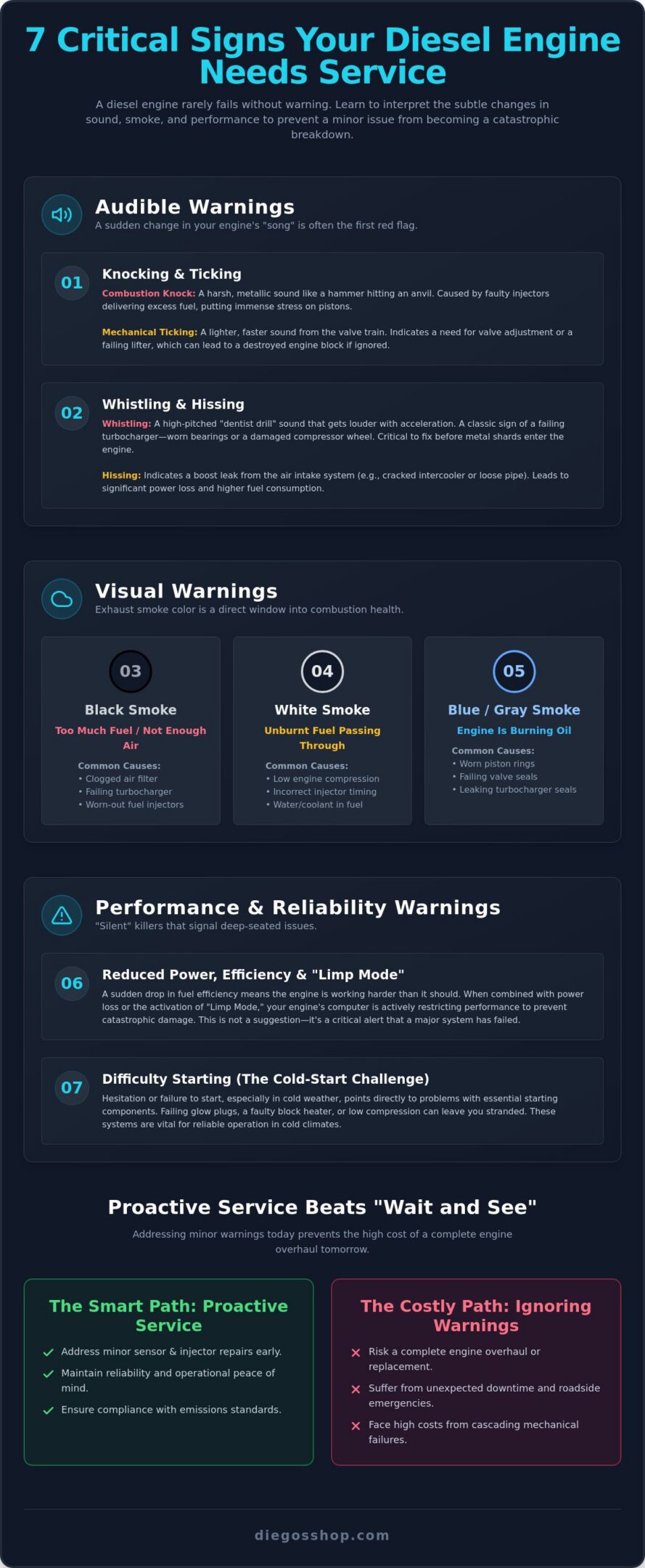
A healthy Diesel engine has a distinct, rhythmic cadence that experienced drivers recognize instantly. Because these engines operate under extreme compression, they are naturally louder than gasoline engines, but that doesn’t mean every noise is normal. A sudden change in the engine’s “song” is often one of the first signs your diesel engine needs service. Ignoring these acoustic warnings can turn a minor adjustment into a total mechanical failure.
Listening to your engine is a form of diagnostic work you can do every time you turn the key. While a steady purr indicates everything is in sync, sounds like rhythmic ticking, heavy clunking, or high-pitched whistling suggest that internal components are struggling. Differentiating between these sounds helps you understand whether the issue is a simple fuel delivery problem or a deep-seated mechanical failure that could sideline your truck for weeks.
Knocking and Ticking: Combustion vs. Mechanical Issues
When you hear a metallic sound, you need to determine if it’s coming from the combustion process or the hardware itself. Faulty fuel injectors are a common culprit for “combustion knock.” If an injector stays open too long or leaks, it dumps excess fuel into the cylinder, causing a violent explosion that mimics the sound of a hammer hitting an anvil. Engine knock is a symptom of premature fuel ignition. This shockwave puts immense stress on the pistons and connecting rods.
On the other hand, a lighter, faster ticking sound often originates in the valve train. This usually means the valves need adjustment or a lifter is failing. While it sounds less threatening than a heavy clunk, valve issues can eventually lead to a “dropped valve,” which effectively destroys the engine block. Mechanical clunking that stays consistent with engine speed is even more serious, often pointing to worn rod bearings or crankshaft issues. If you feel the noise through the floorboard, stop the engine immediately.
Whistling and Hissing: Turbocharger and Air Intake Warnings
Your diesel engine relies on a massive volume of air to maintain efficiency. If you notice a high-pitched siren or a whistling sound that gets louder as you accelerate, your turbocharger is likely failing. This “dentist drill” sound often indicates that the turbo’s internal bearings are worn or the compressor wheel is making contact with the housing. Catching this early is critical; if the turbo disintegrates, it can send metal shards directly into the engine intake.
Hissing sounds usually point to a boost leak rather than a mechanical failure of the turbo itself. These leaks often occur at the intercooler or the rubber boots connecting the intake piping. The intercooler plays a vital role in cooling the compressed air to maintain proper engine temperature and sound. When air escapes through a crack or a loose clamp, your engine loses power and consumes significantly more fuel. These are clear signs your diesel engine needs service to restore the airtight integrity of the system and prevent the engine from overworking itself to compensate for the lost pressure.
Exhaust Smoke Colors: A Visual Diagnostic Guide
Modern diesel technology has advanced to the point where visible exhaust should be virtually non-existent under normal operating conditions. If you see a plume of color behind your truck, it’s an immediate visual alert that your combustion cycle is failing. These colors serve as a window into the inner workings of your engine, revealing exactly which system is breaking down. In Utah’s 2026 regulatory environment, visible smoke isn’t just a mechanical problem; it’s a compliance risk. With mandatory emissions testing in Utah County and new fees for high-emission vehicles, ignoring these visual signs your diesel engine needs service can lead to fines and registration delays.
The health of your fuel injection system is directly tied to what comes out of the tailpipe. When the ratio of air to fuel is disrupted, the engine cannot complete a clean burn. This inefficiency doesn’t just sap your power; it creates a cascade of soot that will eventually choke your engine from the inside out. Identifying the color early allows you to address the root cause before you’re forced into an emergency shutdown.
Black, White, and Blue Smoke Meaning
Black smoke is the most common sight and typically signals an “over-rich” mixture. This happens when there’s either too much fuel being injected or not enough air reaching the cylinders. Common causes include clogged air filters, a failing turbocharger, or worn-out injectors. White smoke often indicates that fuel is passing through the engine without being burned. This might stem from incorrect injection timing or low cylinder compression. However, if the white smoke has a sweet smell, it’s likely coolant leaking through a blown head gasket. Blue smoke is a clear sign of oil consumption. This usually happens when oil bypasses worn piston rings or leaks through failing turbocharger seals, requiring immediate intervention to prevent oil starvation.
The High Cost of Clogged Emission Systems
When your engine produces excessive smoke, your Diesel Particulate Filter (DPF) bears the brunt of the damage. Improper combustion forces the DPF into frequent, costly regeneration cycles to burn off the extra soot. This puts immense strain on the entire exhaust system and significantly increases fuel consumption. Often, a failing EGR valve is the hidden culprit, sticking open and flooding the intake with exhaust gases that prevent a clean burn. Effective diesel engine repair must address these root combustion issues rather than just cleaning the filter. If your truck is struggling with frequent regens, consulting a fleet maintenance specialist can help you identify the underlying problem before the system reaches a point of total blockage. Precision diagnostics are the only way to ensure your engine remains both powerful and compliant.
Reduced Performance and The “Silent” Killers of Efficiency
While a loud knock or a plume of smoke demands immediate attention, the most dangerous threats to your engine often arrive quietly. A gradual loss of power or a slow decline in fuel economy might feel like normal wear and tear, but these are actually early signs your diesel engine needs service. In a high-pressure diesel system, even a minor drop in efficiency indicates that the engine is working harder than it should. This extra effort generates heat and friction, which eventually leads to the failure of expensive components like the turbocharger or the fuel pump.
When your truck’s computer detects a critical mismatch in sensor data, it may trigger “Limp Mode.” This is essentially a digital panic button. By drastically reducing power and RPMs, the Engine Control Module (ECM) protects the hardware from a total meltdown. If your vehicle suddenly feels like it’s pulling a heavy load on flat ground, it’s likely trying to save itself from a catastrophic failure. Sluggish acceleration is often traced back to a carbon-choked Exhaust Gas Recirculation (EGR) system, which prevents the engine from breathing properly and forces it to operate on “dirty” air.
Declining Fuel Economy and Power Loss
Monitoring your fuel logs is one of the most effective ways to track engine health. A 10% drop in MPG is more than a budget concern; it justifies a professional fleet maintenance check to identify the source of the waste. Often, this loss of efficiency stems from worn fuel injectors that no longer atomize fuel correctly, leading to incomplete combustion and wasted energy. As an engine ages, compression loss can also make the unit feel “tired,” requiring more throttle to maintain highway speeds. If you notice “dead spots” where the engine hesitates during acceleration, you’re likely dealing with a sensor failure that’s misreporting air or fuel pressure to the ECM.
The Role of Modern Diesel Diagnostics
In the past, mechanics could rely on their ears alone, but modern engines require a more sophisticated approach. Guessing at parts based on symptoms is a recipe for high repair bills and unresolved issues. Advanced diagnostic scanners allow technicians to identify “sensor drift,” where a component is still functioning but providing inaccurate data that saps performance. This precision ensures that we replace only what is necessary, protecting your bottom line. Modern diesel service is 50% mechanical and 50% digital. By combining hands-on expertise with specialized software, we can catch these silent killers of efficiency before they leave you stranded. Recognizing these signs your diesel engine needs service is the key to maintaining a profitable, reliable fleet.
Difficulty Starting: The Utah Cold-Start Challenge
Utah winters present a unique challenge for diesel owners. Along the Wasatch Front, temperatures often drop well below freezing, which directly impacts how your engine ignites. Unlike gasoline engines that use a spark, diesel engines rely on the heat generated by high compression. When the air and the engine block are frigid, achieving that critical ignition temperature becomes difficult. If you find yourself cycling the key multiple times or cranking the engine for more than a few seconds, these are clear signs your diesel engine needs service before the first major snowstorm leaves you stranded.
Hard starting in the morning is rarely just a “cold weather quirk.” It often indicates that air is entering your fuel lines overnight or that your injectors are beginning to fail. As previously discussed, a weak injector might function once the engine is warm, but it lacks the precision needed for a cold start. Your batteries also face extreme stress in this climate. A diesel engine requires significant amperage to turn over against high compression. Cold weather can sap a battery’s cranking power by nearly half, making a healthy charging system vital for reliability.
Glow Plugs and Fuel Gelling Issues
Glow plugs act as the heating elements that bridge the gap during a cold start. If a single plug fails, you might notice a rough idle or white smoke for the first few minutes of operation. However, if the control module fails, the engine likely won’t start at all. In Springville, where overnight lows can plummet, fuel gelling is another serious concern. This happens when the paraffin wax in diesel fuel solidifies, clogging your filters and starving the engine. To prevent this, always use winter-blend fuel or high-quality anti-gel additives before the temperature hits the freezing mark. Ensuring your block heater is functional is the best way to maintain peace of mind during a Utah County winter.
Cranking Speed and High-Compression Ignition
Slow cranking is far more dangerous for a diesel engine than for its gasoline counterparts. If the pistons don’t move fast enough, they can’t compress the air quickly enough to generate the heat needed for combustion. This puts immense strain on your starter motor and leads to “wash down,” where unburnt fuel strips the lubricating oil from your cylinder walls. Adopting the strategies found in the 2026 diesel maintenance handbook ensures your vehicle is prepared for these environmental extremes. If your truck feels sluggish during the morning start, it’s time to schedule a preventive maintenance check at Diego’s Shop to verify your glow plug system and battery health. Recognizing these signs your diesel engine needs service now protects your starter and ensures your fleet stays moving through the toughest winter months.
Taking Action: Why Precision Service Beats “Wait and See”
The temptation to “wait and see” is often the most expensive mistake a diesel owner can make. In the world of high-pressure fuel systems and complex emissions, a minor issue never resolves itself; it simply migrates to more expensive components. For example, replacing a $500 sensor today prevents the catastrophic failure that leads to a $15,000 engine overhaul. Commercial fleets, in particular, cannot afford to ignore minor vibrations or slight changes in performance. What feels like a small shudder today is often the precursor to a broken crankshaft or a thrown rod tomorrow.
Choosing a specialist over a generalist is the deciding factor in long-term reliability. While many general repair shops have basic code readers, they often lack the specialized diagnostic software required for modern diesel management. This leads to “parts cannon” repairs where components are replaced based on guesswork, whereas specialized centers like Grand Prix Cafe demonstrate the value of focused expertise in maintaining complex automotive systems. Precision diagnostics identify the root cause of the signs your diesel engine needs service, ensuring the repair is done right the first time.
Preventive Maintenance vs. Emergency Repair
Transitioning from reactive repairs to proactive fleet management is the only way to maintain a profitable operation. Building a schedule that catches signs before they become symptoms allows you to plan for downtime rather than being forced into it. This approach relies on more than just software; it requires a master craftsman’s “ear” for engine health. A seasoned technician can hear the subtle changes in timing or bearing wear that a digital scanner might miss during a routine check.
- Catching signs before they become symptoms: Regular inspections identify wear on belts, hoses, and injectors before they fail.
- Proactive fleet management: Transitioning to a scheduled maintenance program significantly reduces unscheduled downtime for commercial operations.
- Long-term durability: Addressing minor leaks and vibrations prevents the heat-related stress that kills diesel engines.
Expert Care at Diego’s Shop in Springville
At Diego’s Shop, we provide the specialized expertise that Utah County drivers depend on. Our facility is equipped with advanced diagnostics tailored for medium and heavy-duty systems, including Peterbilt, Kenworth, Isuzu, and Ford. We don’t just clear codes; we solve the underlying mechanical issues that cause them. Every repair we perform is backed by our commitment to integrity and accountability, providing the peace of mind you need for long-haul reliability.
For those operating Chrysler, Dodge, or Ram diesel vehicles, seeking out specialized knowledge is essential; establishments like Londonderry Dodge Chrysler Jeep Ltd. exemplify the type of dedicated service and brand expertise required to keep these high-performance engines running at their peak.
We understand that your truck is your livelihood. That’s why we offer warrantied repair work that guarantees the durability of our craftsmanship. If you’ve noticed any of the signs your diesel engine needs service mentioned in this guide, don’t wait for a roadside emergency to dictate your schedule. Take control of your maintenance today to protect your investment and your reputation. Contact us to schedule a comprehensive diagnostic session before your next haul and experience the difference that specialized diesel expertise makes for your fleet.
Protect Your Fleet with Proactive Diesel Care
Your diesel engine is a complex piece of machinery that relies on precision to perform. By learning to identify the subtle signs your diesel engine needs service, you move from reactive repairs to a strategy of total control. Whether it’s interpreting the color of your exhaust or addressing a slight hesitation during a Utah winter morning, early intervention is the key to longevity. Ignoring these warnings doesn’t just risk a breakdown; it threatens your bottom line and your safety on the road.
At Diego’s Shop, we specialize in providing the expert diagnostics and warrantied repair work that medium and heavy-duty trucks require. We offer specialized fleet maintenance for Utah County businesses, ensuring that every vehicle under our care remains reliable for the long haul. Our team combines technical skill with a commitment to integrity, giving you the peace of mind that your equipment is in capable hands.
Schedule Your Precision Diesel Diagnostic at Diego’s Shop Today and stay ahead of the next emergency. We are here to help you maintain your equipment with confidence and keep your fleet moving forward.
Frequently Asked Questions
Why is my diesel engine blowing black smoke under acceleration?
Black smoke usually indicates an “over-rich” fuel mixture where the engine has too much fuel or too little air. This is often caused by a restricted air filter, a failing turbocharger, or injectors that are sticking open. Addressing these issues early prevents soot from clogging your DPF. It’s one of the most common signs your diesel engine needs service to maintain combustion efficiency and power.
Is a knocking sound always a sign of engine failure in a diesel?
A knocking sound isn’t always a sign of total mechanical failure, but it always requires immediate attention. In many cases, you’re hearing “combustion knock” caused by a faulty fuel injector that’s firing at the wrong time. While this is less severe than a broken rod or bearing, ignoring it will eventually lead to piston damage. Identifying the specific rhythm helps us determine if the issue is fuel-related or mechanical.
How often should a commercial diesel truck undergo a full diagnostic check?
Commercial diesel trucks should ideally undergo a full diagnostic check every 15,000 to 30,000 miles, depending on the severity of service. For heavy-duty fleets operating in demanding environments like Utah County, more frequent checks catch sensor drift and minor leaks early. This proactive approach prevents the signs your diesel engine needs service from turning into an expensive roadside emergency. Regular diagnostics are the foundation of long-haul reliability.
What causes a diesel engine to have a “hard start” in cold weather?
Hard starts in cold weather are typically caused by a failure in the engine’s heating or electrical systems. Diesel engines require high heat for ignition, so a single failed glow plug or a weak battery can prevent the cylinders from reaching the necessary temperature. Additionally, extreme cold can cause fuel gelling, where wax crystals block the fuel filter. Using winter-blend fuel and checking your block heater are essential preventive steps.
Can I drive my truck if the DPF warning light is on?
You shouldn’t continue to drive long distances with a DPF warning light on. This light indicates that the filter is reaching its soot capacity and needs a regeneration cycle. If you ignore the warning, the truck’s computer will eventually force the engine into “limp mode” to prevent hardware damage. This drastically reduces power and often requires a professional shop to perform a forced regeneration or a manual cleaning of the filter.
Why has my diesel fuel economy suddenly dropped?
A sudden drop in fuel economy is often the result of a boost leak or failing fuel injectors. When air escapes through a cracked hose or intercooler, the engine works harder to maintain speed, burning significantly more fuel in the process. Worn injectors can also cause incomplete combustion, where unburnt diesel enters the exhaust. Monitoring your MPG is a reliable way to spot internal issues before they trigger a check engine light.
What is the difference between a general mechanic and a diesel specialist?
The primary difference lies in specialized diagnostic equipment and deep knowledge of high-pressure systems. Diesel specialists use OEM-specific software to communicate with the engine’s control module, allowing for precision adjustments that general shops cannot perform. We understand the unique stresses of medium and heavy-duty hardware. This expertise ensures that your repairs are durable and that your fleet remains compliant with modern emissions standards and registration requirements.