
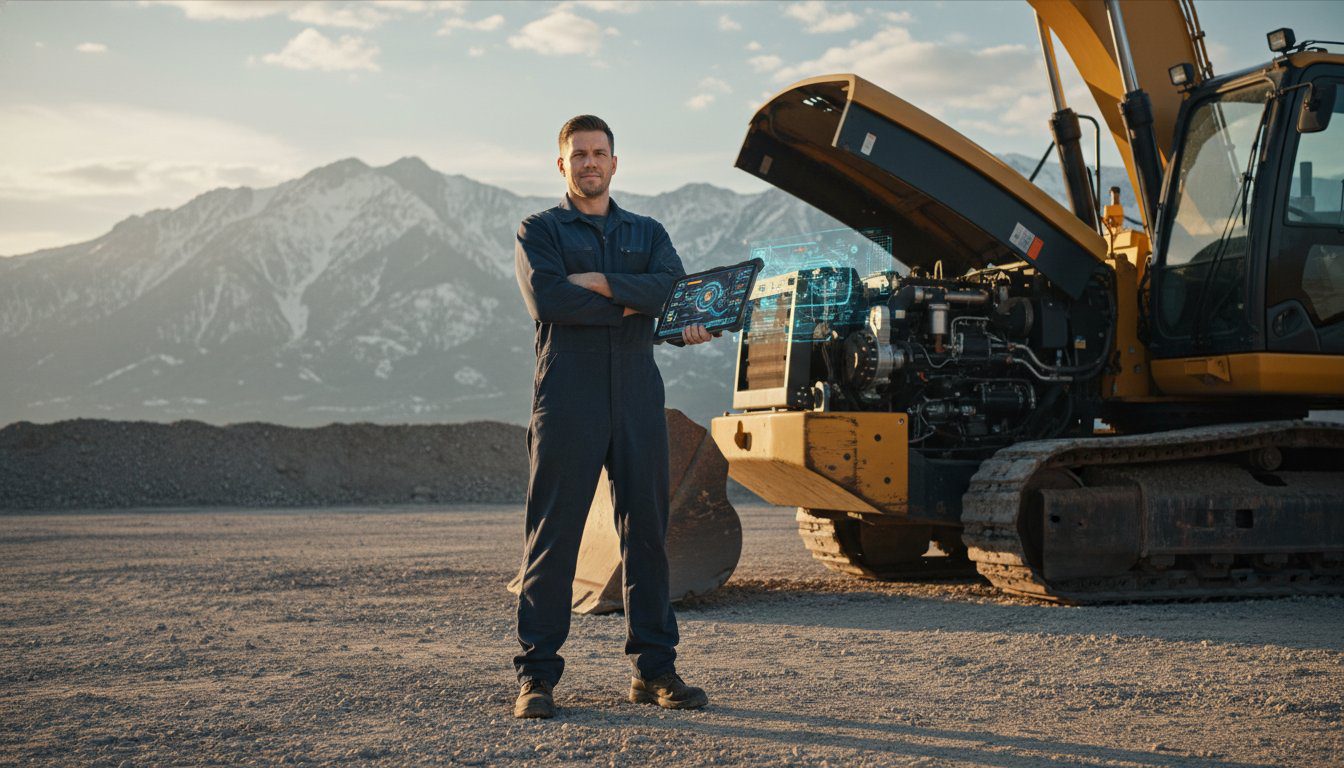
Diesel Engine Repair for Construction Vehicles: Maximizing Uptime in 2026

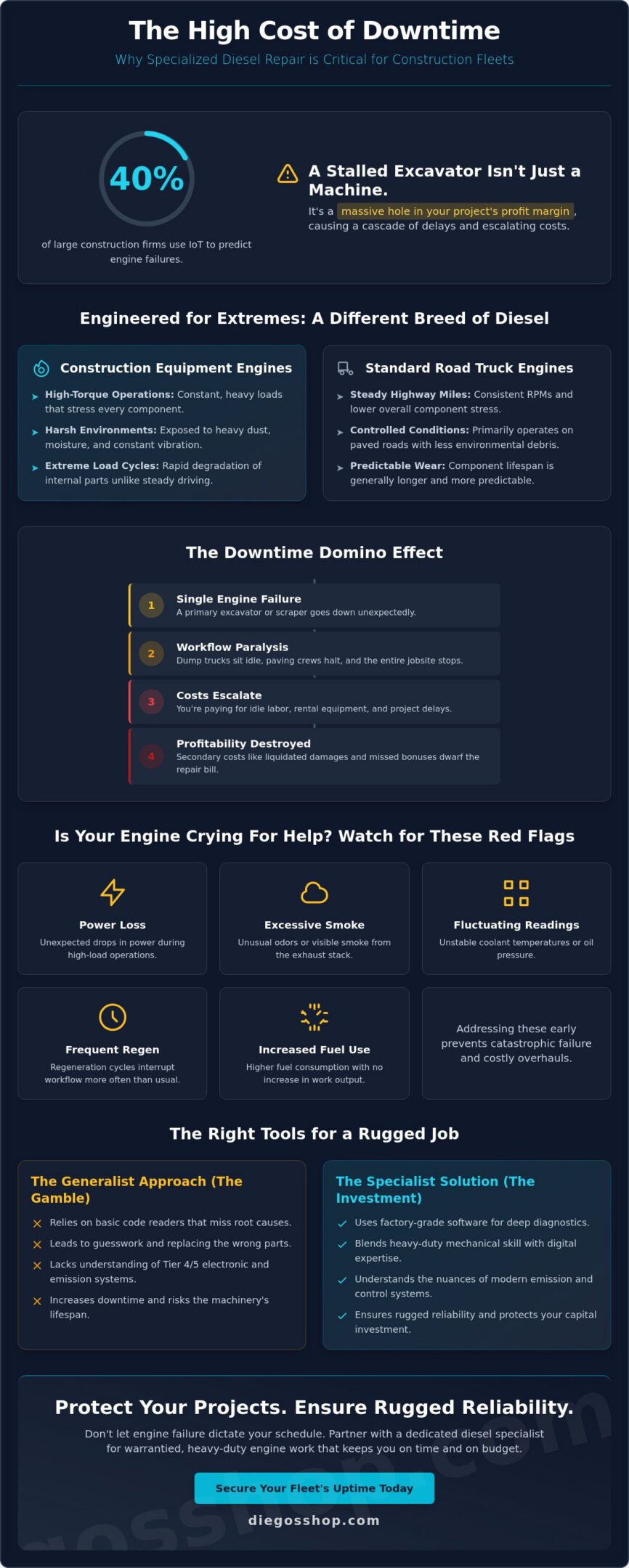
Did you know that 40% of large construction firms now use IoT sensors to predict engine failure before a single bolt shears? You know better than anyone that a stalled excavator isn’t just a mechanical issue; it’s a massive hole in your project profit margin. When your heavy equipment sits idle, your deadlines slip and your overhead climbs. It’s even more frustrating when you realize that general shops often lack the specialized mastery required for modern diesel engine repair for construction vehicles.
You deserve a partner who understands the urgency of a construction timeline and the technical complexity of Tier 4 Final or Tier 5 emission standards. Discover how specialized diesel mastery and proactive maintenance keep your heavy equipment running and your projects on schedule. We will break down the latest diagnostic technologies, the February 2026 EPA guidance on DEF system relief, and the proven strategies that ensure rugged reliability under the heaviest loads.
Key Takeaways
- Learn why high-torque construction engines require a more specialized diagnostic approach than standard road trucks to prevent catastrophic failure.
- Identify the root causes of power loss and “limp mode” through professional-grade diesel engine repair for construction vehicles.
- Master a five-step fleet maintenance protocol that uses comprehensive engine health audits to stop downtime before it starts.
- Understand why the extreme torque requirements of scrapers and excavators necessitate heavy-duty shop intervention rather than general repair.
- Discover how a dedicated service partner helps you maintain project schedules by providing warrantied, ruggedly reliable engine work.
Minimizing Downtime: The Critical Role of Diesel Engine Repair for Construction Fleets
Construction equipment isn’t built like a standard delivery truck. These machines are engineered for high-torque, high-load industrial environments where every component faces extreme stress. Consequently, diesel engine repair for construction vehicles requires a specialized set of skills that go beyond basic mechanical knowledge. A Diesel engine in a scraper or bulldozer operates under constant load cycles and environmental hazards like heavy dust and vibration. These conditions degrade internal components much faster than the steady highway miles seen by long-haul fleets. If your technician doesn’t understand these nuances, they aren’t just missing a repair; they’re risking your machinery’s lifespan.
For Utah contractors, the correlation between engine health and project profitability is absolute. If your engine fails, your project stops. This is why savvy fleet managers look at the Total Cost of Ownership (TCO) rather than just the initial purchase price. Reliability is the most valuable asset on a jobsite. When an engine is maintained with precision, the TCO drops because you aren’t paying for catastrophic failures, emergency rentals, or the logistical nightmare of a dead machine in a remote location. Professional maintenance ensures your capital investment continues to generate revenue instead of draining your reserves.
The High Cost of Equipment Failure
A single engine failure can paralyze an entire jobsite workflow. When a primary excavator goes down, the dump trucks have nothing to carry and the paving crew has nothing to lay. You’re still paying for that idle labor while the clock ticks on your project deadline. Secondary costs like liquidated damages or missed performance bonuses can quickly dwarf the actual repair bill. Rapid, accurate diagnostics are essential to minimize these losses. We don’t guess at the problem. We identify the root cause immediately to get your crew back to work and protect your bottom line.
Why 2026 Demands Advanced Technical Mastery
The days of “old school” mechanical tinkering are over. By 2026, modern Tier 4 Final and emerging Tier 5 standards have introduced complex electronic controls and sensitive emission systems that require sophisticated tools. Standard repair methods often fail to address the software-side issues that trigger limp mode or power loss. Modern diesel engine repair for construction vehicles now demands a blend of heavy-duty mechanical skill and digital expertise. At Diego’s Shop, we embrace this technical shift. We ensure your modern fleet receives the specialized care needed for long-term durability and rugged performance.
Diagnosing High-Stress Failure Points in Heavy Equipment Engines
Identifying why a machine has entered “limp mode” requires more than a basic code reader. While generic scanners might point to a broad sensor fault, they rarely uncover the mechanical root cause. For effective diesel engine repair for construction vehicles, we utilize factory-grade diagnostic software that interfaces deeply with the Engine Control Module. This level of specialist intervention allows us to see real-time data on fuel rail pressure, boost levels, and exhaust backpressure. Without these insights, you’re likely replacing parts based on a guess, which only adds to your downtime.
In the Wasatch Front, environmental factors play a massive role in engine wear. Our high-altitude conditions combined with fine construction dust create a punishing environment for intake systems and cooling packages. If your machine is exhibiting any of the following signs, it’s time for a professional evaluation before a small glitch becomes a total engine overhaul:
- Unexpected drops in power during high-load operations.
- Excessive smoke or unusual odors from the exhaust stack.
- Frequent, unprompted regeneration cycles that interrupt workflow.
- Fluctuating coolant temperatures or oil pressure readings.
- Increased fuel consumption without a corresponding increase in work output.
Fuel System Contamination and Injector Health
Modern high-pressure common rail systems are incredibly efficient but intolerant of debris. Moisture and dust are the primary enemies on a jobsite. Microscopic contaminants as small as two microns can score injector needles and nozzle seats; this damage leads to catastrophic injector failure and engine misfires. Precision fuel system cleaning and the use of high-quality filtration are the only ways to protect these sensitive components. If you suspect fuel issues, our team at Diego’s Shop can perform a comprehensive system audit to save your injectors and your schedule.
Emission Control Systems: DPF and EGR Challenges
Construction equipment often spends hours at low-speed idle. This practice is a leading cause of Exhaust Gas Recirculation (EGR) valve clogging. When carbon soot builds up, it restricts flow and creates excessive backpressure, which eventually chokes the engine. Regular truck egr service near me is vital to clear these deposits before they damage other components. Similarly, the Diesel Particulate Filter (DPF) must be monitored closely. If the DPF cannot complete its cleaning cycle, the resulting soot load will eventually force the machine into a hard shutdown, requiring expensive off-site cleaning or replacement. Proper diesel engine repair for construction vehicles ensures these systems remain clear and functional.
Technical Mastery: Why Construction Diesels Require Specialist Intervention
A standard heavy-duty diesel pickup might generate 1,000 lb-ft of torque, but that power is usually delivered in short bursts. In contrast, an excavator or scraper engine handles massive torque loads for ten hours straight. This continuous, high-stress duty cycle requires a level of diesel engine repair that general automotive shops simply aren’t equipped to handle. Construction diesels aren’t just larger versions of truck engines; they are distinct industrial machines with unique cooling requirements and vibration tolerances.
Properly performing diesel engine repair for construction vehicles requires specialized heavy-duty shop equipment. You can’t safely pull a 3,000-pound industrial engine block with a standard floor jack. We utilize high-capacity overhead cranes and heavy-duty engine stands designed specifically for industrial scales. This infrastructure allows us to perform deep internal work without compromising safety or precision. Without these specialized tools, a shop is likely cutting corners that will eventually lead to a premature failure on your jobsite.
Warrantied repair work is the only way to protect a high-value commercial asset. When you’re managing a fleet of Peterbilt, Kenworth, or Isuzu vehicles, you need more than a verbal promise of quality. You need a paper trail that proves the engine was serviced to manufacturer standards. This accountability is vital for your insurance coverage and the long-term resale value of your machinery. We treat every repair as a commitment to your project’s success, ensuring that our technical mastery translates directly into your uptime.
The Load-Bearing Performance Difference
Testing a construction engine isn’t about hearing it idle in a bay. We focus on sustained power delivery under extreme load. After any major overhaul or component replacement, we perform a rigorous calibration process. This ensures the fuel mapping and timing align perfectly with original manufacturer specifications. Precise calibration prevents the excessive heat buildup that often kills engines during the first few weeks back on the job. We don’t just fix the break; we restore the performance you paid for.
Brand-Specific Diagnostics and Parts
Proprietary software is the gatekeeper of modern engine health. General shops often rely on “one size fits all” scanners that can’t access the specific control modules found in Kenworth or Peterbilt systems. We use the right digital tools to talk to your machine, allowing us to identify sensor glitches that generic readers miss. We also prioritize OEM or high-quality aftermarket parts for critical components like turbochargers and oil pumps. This commitment to brand-specific expertise makes Diego’s Shop the authoritative choice for multi-brand fleet owners who demand rugged reliability.
5 Steps to Implementing a Construction Fleet Maintenance Protocol
Reactive repairs are the most expensive way to run a business. When you wait for a component to snap, you’re paying for the part, the emergency labor, and the lost project time. A proactive fleet maintenance strategy is your best defense against these unpredictable costs. By shifting your focus from fixing failures to preventing them, you ensure your equipment stays in the dirt and out of the shop. Follow these five steps to build a protocol that works.
- Step 1: Establish a Baseline. Conduct a comprehensive engine health audit for every machine in your inventory. This creates a historical record of compression levels, sensor performance, and existing wear patterns.
- Step 2: Schedule Fluid Analysis. Don’t just change the oil; analyze it. This identifies internal wear that isn’t visible to the naked eye during a standard inspection.
- Step 3: Implement Hourly Cycles. Use rigorous preventive maintenance cycles based on engine hours rather than calendar days. This accurately accounts for the high-idle and high-load realities of construction work.
- Step 4: Train Your Operators. Your operators are your first line of defense. They must know exactly how to spot and report early warning signs like unusual vibrations or changes in exhaust color.
- Step 5: Partner with Specialists. Secure a relationship with a shop that specializes in diesel engine repair for construction vehicles. This ensures you have expert technical support ready when complex issues arise.
The Power of Fluid and Oil Analysis
Spectrometric oil analysis identifies trace amounts of copper, lead, or tin to predict bearing failure months before a physical knock occurs. In construction environments, we look specifically for high levels of silicon, which indicates that dust is bypassing your air filtration system. Regular analysis allows us to catch these issues early, extending the life of high-value components like turbochargers and crankshafts. It’s a small investment that prevents a total engine rebuild later. If you’re ready to stop guessing about your engine’s health, partner with Diego’s Shop for a comprehensive fleet maintenance audit.
Operator Checklists and Daily Inspections
A no-nonsense daily inspection takes ten minutes but can save ten days of downtime. We recommend a simple routine that focuses on the highest-stress areas of the machine. Operators should check cooling packages for debris buildup, verify belt tension, and look for visible soot near exhaust manifolds that indicates a leak. Catching a loose clamp or a frayed belt today prevents a catastrophic overheat tomorrow. Consistency is the key to rugged reliability on the jobsite.
Diego’s Shop: Your Partner for Rugged Reliability in Utah County
Choosing a provider for diesel engine repair for construction vehicles isn’t just a technical decision; it’s a business partnership. At Diego’s Shop, we understand that your equipment is the heartbeat of your operation. Based in Springville, Utah, our team brings a master craftsman’s eye to every engine block we service. We don’t hide behind corporate jargon or vague timelines. Instead, we offer direct communication and a commitment to getting your machinery back into the dirt as quickly as possible. We treat your project deadlines with the same urgency you do.
Our expertise isn’t limited to a single class of machinery. We provide comprehensive engine services for light, medium, and heavy-duty vehicles, ensuring that every asset in your fleet receives specialized care. From the high-torque demands of a primary excavator to the reliability needed for your site trucks, we maintain total control over complex mechanical situations. Integrity is our standard. We believe in doing the job right the first time so you don’t have to worry about a repeat failure on the jobsite.
Serving the Wasatch Front with Integrity
Our deep roots in Utah County allow us to provide a level of service that national chains simply can’t match. We understand the specific demands placed on regional construction fleets, from the high-altitude grades to the abrasive dust of the Wasatch Front. Being local means we are accessible when you need us most. Over the years, we’ve built a reputation based on fundamental honesty and technical durability. When you bring your equipment to our Springville facility, you’re getting a partner who takes personal accountability for the result. We speak your language and we respect your time.
Comprehensive Fleet Support and Warranties
We provide more than just a quick fix; we offer long-term security through warrantied repair work. Whether we are performing a complete engine overhaul or a routine injector replacement, our work is backed by our commitment to quality. We manage fleet maintenance programs for a diverse range of equipment types, keeping your entire inventory in peak condition. We handle the technical heavy lifting and the detailed service records so you can focus on the build. A reliable engine is the foundation of a profitable project. Contact Diego’s Shop today for an expert diagnostic assessment.
Secure Your Project Timelines with Specialized Engine Mastery
Reliability on the jobsite isn’t a matter of luck; it’s the result of technical precision and a commitment to proactive care. You’ve seen how specialized diagnostics and fluid analysis identify internal wear before it halts production. By choosing a partner who provides expert diesel engine repair for construction vehicles, you’re protecting your bottom line and your reputation for on-time delivery. Modern engines require more than basic fixes. They demand the master craftsmanship that only a specialized shop can provide.
Diego’s Shop delivers expert service for Peterbilt, Kenworth, Isuzu, and Ford diesel platforms to ensure your entire fleet stays operational. Located in Springville, we serve the entire Wasatch Front with warrantied repair work that provides total peace of mind. Don’t let a preventable engine failure compromise your project’s success. Trust a team that values your uptime as much as you do.
Schedule Your Construction Fleet Diagnostic at Diego’s Shop today and experience the difference that professional accountability makes for your business. We look forward to keeping your heavy equipment running strong.
Frequently Asked Questions
What are the most common diesel engine problems in construction equipment?
Fuel contamination and emission system failures are the most frequent issues we see on the jobsite. Construction environments are filled with dust and moisture that can easily bypass standard filters, leading to scored injectors and pump damage. Additionally, overheating caused by debris buildup in the cooling package often leads to catastrophic head gasket failure if the machine isn’t monitored closely.
How often should construction equipment engines undergo professional diagnostics?
You should schedule professional diagnostics every 500 to 1,000 engine hours or at least twice per year. Construction engines operate under constant heavy load, which means calendar-based scheduling is often insufficient for preventing failure. Regular check-ups allow our technicians to identify sensor drifts and software glitches before they trigger a hard “limp mode” shutdown during a critical project phase.
Can a general mechanic repair Tier 4 Final diesel engines?
No, standard mechanics typically lack the proprietary software and specialized heavy-duty tools required for Tier 4 Final or emerging Tier 5 systems. These modern engines rely on complex aftertreatment and electronic control modules that require specific training to service. Choosing a specialist for diesel engine repair for construction vehicles ensures these sensitive systems are handled without violating emissions regulations or causing further damage.
What is the benefit of performing regular oil and fluid analysis?
Regular oil and fluid analysis provides a chemical snapshot of your engine’s internal health. By identifying trace metals like copper or lead, we can predict bearing wear or air intake leaks months before they cause a physical breakdown. This proactive data allows you to schedule diesel engine repair for construction vehicles during planned downtime rather than reacting to a mid-project failure that halts your entire crew.
How does idling for long periods affect construction vehicle engines?
Excessive idling leads to incomplete combustion and rapid soot buildup in the EGR and DPF systems. Since many construction machines sit idle while waiting for loads, they are prone to “wet stacking,” where unburnt fuel coats the cylinder walls and dilutes the engine oil. This process significantly reduces the lifespan of internal components and forces more frequent, expensive regeneration cycles.
Does Diego’s Shop provide warranties on heavy-duty engine repairs?
Yes, Diego’s Shop provides warrantied repair work on all major diesel engine services to give you total peace of mind. We stand behind our technical mastery with clear, documented protections for your high-value commercial assets. This commitment to accountability ensures that every repair meets original manufacturer specifications and provides the rugged reliability your projects demand.
Why is EGR service critical for construction equipment that operates at low speeds?
EGR service is critical because low-speed operation doesn’t generate the exhaust heat necessary to keep the valve clear of carbon deposits. When these valves clog, they create excessive backpressure that chokes engine performance and spikes fuel consumption. Regular cleaning is essential for any machine to ensure the engine breathes properly and maintains its torque capacity under heavy loads.