

Symptoms of a Bad EGR Valve in Diesel Engines: A 2026 Fleet Manager Guide

Did you know that over 78% of EGR-related fault codes are actually caused by carbon fouling rather than a total mechanical failure? For a fleet manager in 2026, mistaking a simple cleaning job for a full scale replacement is a costly error you can’t afford. Recognizing the common symptoms of a bad egr valve diesel early is the difference between a quick scheduled fix and a truck sidelined by a failed DOT inspection. With Utah’s 2026 emissions regulations now in full effect for even numbered model years, staying ahead of soot buildup is no longer optional for your bottom line.
We understand that unscheduled downtime is the most persistent threat to your operational efficiency. It’s frustrating when a single valve triggers a derate or spikes your fuel consumption across the fleet. This guide will show you exactly how to spot the warning signs of a failing EGR system before they lead to expensive repairs or registration suspensions. We will cover the specific performance drops to watch for, the impact of 2026 compliance standards, and the data driven methods used by modern maintenance teams to keep diesel engines running clean.
Key Takeaways
- Understand how the EGR valve regulates combustion temperatures and why its failure puts your entire diesel powertrain at risk.
- Learn to identify the primary symptoms of a bad egr valve diesel, including rough idling and power loss, before they trigger a costly engine derate.
- Discover how local factors like Utah’s idling habits and 2026 emissions regulations impact your fleet’s maintenance schedule.
- Decipher common fault codes like P0401 and P0404 to determine if your valve requires a professional cleaning or a full warrantied replacement.
- Implement proactive strategies to prevent the “domino effect” of soot buildup on your DPF and turbocharger, ensuring your trucks stay on the road.
What is an EGR Valve and Why Does it Fail in Diesels?
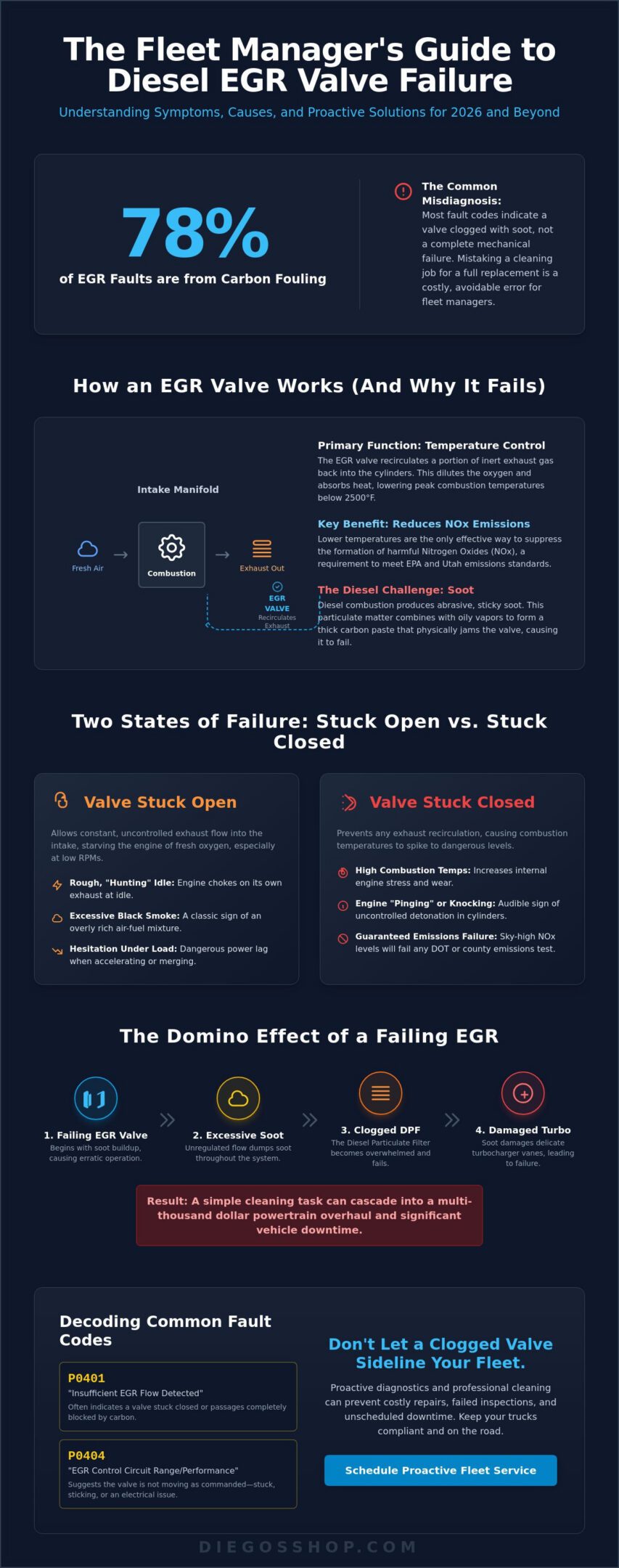
Identifying the symptoms of a bad egr valve diesel begins with a technical understanding of its role in the powertrain. The Exhaust Gas Recirculation (EGR) valve acts as a precision gatekeeper between your exhaust manifold and your intake system. Its primary job is to recirculate a metered portion of exhaust gas back into the engine cylinders. This process isn’t about re-burning fuel; it’s about temperature control. By introducing inert gases into the combustion chamber, the valve lowers peak combustion temperatures, which is the only effective way to suppress the production of nitrogen oxides (NOx).
NOx is a reactive gas formed at temperatures above 2500°F. Because diesel engines operate at higher pressures and temperatures than gasoline engines, they are naturally prone to high NOx output. Meeting EPA and Utah emissions standards requires the EGR valve to function with absolute precision. If the valve fails to open or close at the exact millisecond commanded by the ECM, the engine’s chemistry shifts, leading to increased emissions and internal stress.
The Mechanics of Exhaust Recirculation
The system works by diluting the oxygen density of the intake air. Since exhaust gas is mostly carbon dioxide and nitrogen, it doesn’t participate in the combustion reaction but absorbs heat instead. Most modern diesel fleets utilize one of two configurations. High-pressure EGR systems pull exhaust gas before it reaches the turbocharger, while low-pressure systems pull it after the Diesel Particulate Filter (DPF). Both systems rely on a cooling brick to bring the gas temperature down before it enters the intake. If the valve fails to meter this flow correctly, the air-fuel ratio becomes unbalanced, which is often when you first notice the symptoms of a bad egr valve diesel.
Why Diesel Engines are Harder on EGR Valves
Diesel engines face a unique challenge that gasoline engines don’t: particulate matter. Soot is a constant byproduct of diesel combustion. This fine, carbon-based dust is abrasive and sticky, especially when mixed with the oily vapors found in the intake track. Over time, this mixture creates a thick carbon paste that physically prevents the valve from moving. While some consumer sources claim these valves last a decade, commercial reality is different. Heavy duty trucks, especially those with high idle times or frequent short trips in Utah’s urban centers, see much faster accumulation.
Failure typically manifests in two states. A valve stuck open allows exhaust to flow constantly, which starves the engine of fresh oxygen at idle and causes massive amounts of black smoke. Conversely, a valve stuck closed prevents any recirculation. This leads to excessively high combustion temperatures, increased engine “pinging,” and a guaranteed failure during a Utah county emissions test. Because soot is a byproduct of every diesel combustion cycle, the symptoms of a bad egr valve diesel appear much earlier in heavy-duty trucks than in passenger vehicles.
5 Critical Symptoms of a Failing Diesel EGR Valve
A failing EGR valve is more than a minor mechanical nuisance; it’s a liability that threatens your entire powertrain. Recognizing the symptoms of a bad egr valve diesel early prevents a “domino effect” where excessive soot migrates to the Diesel Particulate Filter (DPF) and the turbocharger vanes. This cascading failure can turn a standard maintenance task into a multi-thousand dollar overhaul. For fleets operating in Springville or throughout Utah, these symptoms often lead to failed DOT inspections, especially under the 2026 registration requirements for high-emission heavy-duty vehicles.
Noticeable Performance Drops and Rough Idling
A valve stuck in the open position causes a “sloppy” or hunting idle. This happens because the engine is essentially choking on its own exhaust gases at a time when it requires a pure oxygen charge. You’ll likely notice hesitation under load, which creates a dangerous situation when a heavy-duty Peterbilt or Freightliner is attempting to merge into highway traffic. Conversely, if the valve fails to close during high-demand acceleration, you’ll experience a distinct loss of top-end power. An SAE International study on EGR systems confirms that these timing mismatches significantly disrupt combustion stability in heavy-duty diesel applications.
Excessive Smoke and Increased Fuel Consumption
Visible black smoke from the tailpipe is a classic indicator of an overly rich air-fuel mixture. When the EGR valve malfunctions, the engine control module (ECM) can’t accurately balance oxygen levels, leading to unburnt fuel exiting the system. This inefficiency isn’t just an environmental concern; it’s a direct hit to your bottom line. A 5% to 10% drop in MPG might seem minor on a single shift, but over 100,000 miles of fleet operation, that waste drains thousands from your operating budget. You should also listen for “pinging” or knocking sounds. This occurs when a stuck-closed valve allows combustion temperatures to skyrocket, causing the diesel fuel to ignite prematurely and violently.
The way these symptoms manifest can vary across different engine platforms. Ford Powerstroke drivers often report a “laggy” throttle response, while Cummins engines frequently trigger persistent fault codes related to mass airflow. In heavy-duty Peterbilt engines, the first sign is often a rapid increase in the frequency of DPF regeneration cycles. If your drivers report any of these symptoms of a bad egr valve diesel, scheduling a professional fleet maintenance check can prevent a total roadside breakdown. Keeping your equipment compliant and efficient requires a no-nonsense approach to these early warning signs.
The Root Causes: Why Diesel EGR Valves Fail in Utah
Understanding the root causes of failure is the only way to move from reactive repairs to a sustainable maintenance model. While some components wear out through simple friction, the EGR valve is an exception. It operates in a hostile environment where heat, pressure, and chemical byproducts collide. For fleet managers in the Intermountain West, these failures aren’t just about age. They’re often accelerated by “severe service” conditions that national maintenance schedules don’t always account for. Recognizing the symptoms of a bad egr valve diesel is the first step, but knowing why it’s happening allows you to protect the rest of your fleet.
Carbon Buildup and Soot Accumulation
Carbon soot is the primary enemy of every diesel emission system. During the combustion process, unburnt fuel particles create a fine dust that travels through the exhaust. When these particles hit the cooler surfaces of the EGR valve, they undergo a process called “coking.” This creates a hard, diamond-like carbon crust that physically seizes the valve’s mechanical linkages. Once the actuator can no longer move the valve arm, the system triggers a fault code. This is why consistent preventive maintenance is the only effective way to combat soot before it hardens. Low-quality fuel or neglected oil changes only accelerate this process by increasing the particulate load in your exhaust stream.
Another critical failure point involves the EGR cooler. If the internal cooling bricks develop a hairline crack, coolant begins to leak into the exhaust stream. This moisture mixes with dry soot to create a thick, sticky sludge. This sludge is far more destructive than dry carbon; it can ruin the valve, foul the intake manifold, and even lead to catastrophic engine hydrolock if left unaddressed. If you notice a sweet smell in the exhaust or a mysterious loss of coolant, the symptoms of a bad egr valve diesel are likely just the tip of the iceberg.
Environmental and Operational Factors
Springville trucks face unique EGR stress due to Utah’s high altitude. At 4,500 feet and above, the air is thinner. This lower oxygen density means the engine must work harder to maintain the correct air-fuel ratio. Richer combustion cycles produce more soot, which places a higher burden on the EGR system than a truck operating at sea level. Utah’s extreme temperature swings also play a role. Rapid cooling in the winter causes condensation inside the intake track, which turns dry soot into a paste that clogs sensors and actuators.
The “Idle Time Trap” is perhaps the most common cause of premature failure for commercial fleets in Utah County. Diesel engines don’t reach optimal combustion temperatures while idling. This “cold” combustion produces massive amounts of particulate matter. For a fleet truck that spends hours idling at a job site or in traffic, the EGR valve is essentially being sandblasted with soot. Eventually, the electrical actuator or the ECU communication line fails because the motor is constantly fighting against the resistance of built-up carbon. A seasoned master craftsman knows that these electrical failures are almost always a symptom of an underlying mechanical blockage.
Professional Diagnostics: Beyond the Check Engine Light
A Check Engine Light on a commercial truck is a generic warning, not a specific repair order. While a basic OBDII scanner might pull a code, it rarely reveals the root cause of the problem. For fleet managers, relying on surface-level data leads to “parts cannon” repairs; the expensive habit of replacing components until the light goes out. Efficiently managing the symptoms of a bad egr valve diesel requires a deeper look into the engine’s live data to distinguish between a mechanical failure, an electrical glitch, or simple carbon fouling.
Most EGR issues trigger specific diagnostic trouble codes (DTCs) that provide a starting point. Code P0401 indicates “Insufficient EGR Flow,” which usually points to a heavy carbon blockage in the valve or the delivery tubes. Code P0404 suggests a “Range or Performance” problem, meaning the ECU commanded the valve to a specific position, but the feedback sensor reported it somewhere else. We use live data streaming to monitor the EGR duty cycle and Mass Air Flow (MAF) readings in real-time. If the MAF doesn’t drop when the EGR valve is commanded open, we know the flow is physically blocked, regardless of what the valve motor is doing.
Step-by-Step Diagnostic Protocol
A professional diagnostic begins with a thorough visual inspection. We look for external soot staining around the valve housing, which indicates a gasket failure or a cracked casting. Next, we test the actuator. On 2026 model year electronic valves, this involves using a bi-directional scan tool to force the valve open and closed while monitoring the position sensor voltage. For older vacuum-actuated systems, we apply a manual vacuum to see if the diaphragm holds pressure. If the valve is physically seized but the electronics are functional, a professional cleaning is often sufficient to restore operation without the cost of a full replacement.
The Importance of Specialized Diesel Diagnostics
Commercial diesel diagnostics services require heavy-duty scanning equipment that can communicate with the specific proprietary languages of Cummins, Powerstroke, or Detroit Diesel engines. A common mistake is ignoring the sensors that support the EGR system. A skewed Manifold Absolute Pressure (MAP) sensor or a fouled MAF sensor can provide false data to the ECU, causing it to mismanage the EGR valve. This creates a ghost symptom where the valve appears bad, but the real issue is a dirty sensor upstream.
We also verify the integrity of the EGR cooler. Internal leaks can introduce coolant into the valve assembly, creating a thick sludge that mimics a standard soot blockage. If you replace the valve without pressure testing the cooler, the new part will likely fail within weeks. To ensure your fleet stays compliant and avoids unnecessary downtime, schedule a professional diagnostic session at the first sign of performance loss. Total control over your maintenance budget starts with accurate data.
Reliable EGR Service and Fleet Solutions at Diego’s Shop
Unscheduled downtime is the primary threat to your fleet’s profitability. When your drivers report the symptoms of a bad egr valve diesel, you need a service partner who understands the high stakes of commercial logistics. At Diego’s Shop, we don’t just clear fault codes and hope for the best. We provide comprehensive diesel engine repair and warrantied repair work designed to restore your vehicle’s peak efficiency. Our team approaches every emissions issue with the technical mastery of seasoned craftsmen, ensuring that every truck in your fleet operates at its maximum potential.
We believe in a proactive model of care. We integrate EGR system health into our broader fleet maintenance protocols to prevent soot buildup from becoming a recurring crisis. Our diagnostic process identifies whether a valve requires a professional cleaning or a full replacement based on the integrity of the internal components. This data-driven approach saves your business money by avoiding the “parts cannon” mentality. We handle the complexities of modern emissions systems so you can maintain total control over your operational schedule. Our commitment to integrity means we only recommend the services your trucks actually need.
Springville’s Choice for Commercial Diesel Repair
Serving Utah County and the Wasatch Front requires specialized knowledge of how high-altitude combustion affects diesel longevity. Our technicians have deep experience with the specific needs of Cummins, Ford Powerstroke, and Duramax engines. We understand how the “Idle Time Trap” in Springville accelerates the symptoms of a bad egr valve diesel. This specialized local expertise is why fleet owners consistently trust us for their dot truck inspections near me. We ensure your equipment meets all 2026 Utah emissions standards, helping you avoid the high-emissions heavy-duty vehicle fees that can drain your budget.
Schedule Your Diesel Inspection Today
Don’t wait for a total roadside failure or an expensive engine derate to address a sticking valve. A proactive inspection can identify carbon “coking” before it leads to a permanent mechanical failure. We offer custom fleet service plans tailored to your trucks’ specific duty cycles, whether you’re running long-haul routes or local delivery schedules. Our team handles light, medium, and heavy-duty diesel trucks with the same level of professional accountability. Contact us today to schedule a comprehensive diagnostic and keep your fleet on the road. Quality diesel service you can rely on.
Secure Your Fleet’s Future with Proactive EGR Maintenance
Maintaining a profitable fleet in 2026 requires a shift from reactive repairs to technical mastery. You’ve learned that identifying the early symptoms of a bad egr valve diesel is the first line of defense against the “domino effect” of soot damage. By understanding the impact of Utah’s high altitude and the necessity of specialized diagnostics, you can avoid the registration fees and unscheduled downtime that threaten your bottom line. Accurate data and timely intervention are the keys to long-term engine health.
Our certified diesel technicians are ready to help you maintain total control over your equipment. We provide warrantied repair work and expert diagnostics for commercial fleets throughout Springville and Utah County. Don’t let a clogged valve sideline your operations or lead to a failed inspection. We focus on durable solutions that keep your trucks moving and your business growing.
Schedule Your Expert Diesel Diagnostic at Diego’s Shop today to ensure your trucks remain efficient and compliant. We look forward to providing the reliable service your fleet deserves.
Frequently Asked Questions
Can I drive my diesel truck with a bad EGR valve?
You should not continue to operate a commercial diesel truck with a malfunctioning EGR valve for extended periods. While the vehicle may technically stay running, a stuck valve eventually triggers an engine derate or “limp mode” that severely limits your power and speed. Operating under these conditions causes rapid soot accumulation in the intake manifold and turbocharger, which turns a relatively simple valve repair into a much larger mechanical overhaul.
How much does it cost to replace a diesel EGR valve in 2026?
Verified industry data for 2026 indicates that diesel EGR valve replacement typically ranges from $250 to over $1100. This price variance depends heavily on the engine manufacturer and the complexity of the installation, with labor costs generally falling between $200 and $750. For fleet managers, the total cost of ownership is often lower when opting for a high-quality warrantied replacement rather than a budget part that may fail prematurely.
Will a bad EGR valve cause my truck to fail a Utah emissions test?
A faulty EGR valve is a primary reason for failing a Utah diesel emissions test in Salt Lake, Davis, Utah, Weber, or Cache counties. In 2026, even-numbered model years are due for testing, and any active fault codes or visible smoke will result in an immediate failure. Because the valve is critical for NOx reduction, any deviation in its performance prevents the vehicle from meeting the state’s mandatory compliance standards.
What is the difference between an EGR valve and an EGR cooler?
The EGR valve and the EGR cooler are separate components that work together to manage emissions. The valve is the mechanical gatekeeper that regulates the flow of exhaust gas into the intake, while the cooler is a heat exchanger that drops the temperature of that gas before it enters the engine. If the cooler fails, it often leaks coolant into the exhaust, which then sludges the valve and creates the symptoms of a bad egr valve diesel.
Can a bad EGR valve ruin my diesel engine?
A bad EGR valve can cause significant internal engine damage if you leave it unaddressed. Excessive carbon buildup from a stuck valve can foul fuel injectors and score cylinder walls, leading to a loss of compression over time. More critically, if the failure is linked to a leaking EGR cooler, coolant can enter the combustion chamber and cause catastrophic hydrolock, which effectively destroys the engine block and rotating assembly.
How often should a diesel EGR valve be cleaned or inspected?
We recommend inspecting the EGR system every 50,000 miles or during your annual preventive maintenance service. For trucks that experience high idle times or frequent short trips in urban Utah environments, more frequent inspections are necessary to clear soot before it hardens. Identifying the symptoms of a bad egr valve diesel during a scheduled check prevents the unscheduled downtime that disrupts your fleet’s delivery commitments.
Does a bad EGR valve affect the DPF (Diesel Particulate Filter)?
There is a direct link between EGR failure and Diesel Particulate Filter (DPF) clogging. When an EGR valve malfunctions, it typically causes the engine to run “rich,” which produces a massive amount of soot. This excess particulate matter quickly overwhelms the DPF, leading to more frequent regeneration cycles and eventually a total blockage. Neglecting the EGR valve often results in the premature and expensive replacement of the entire DPF.