

Diesel Diagnostics for Fleets: Reducing Downtime in Utah County (2026 Guide)

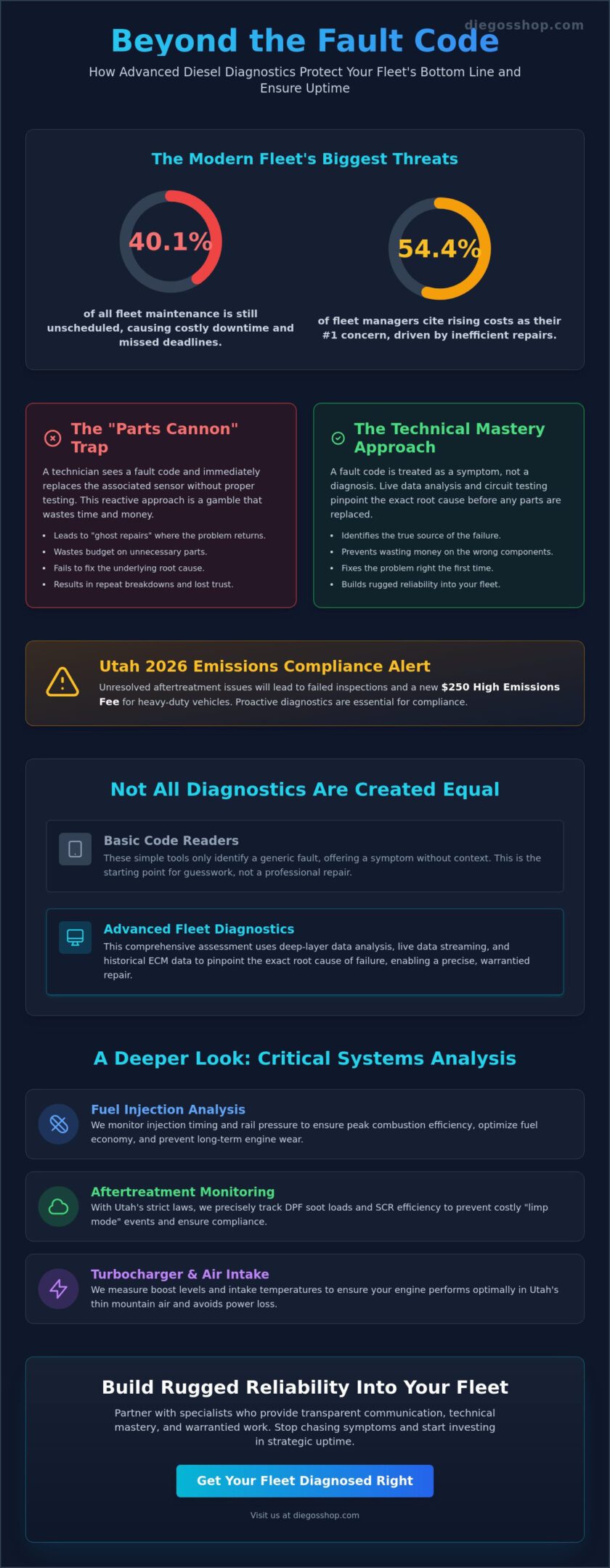
Did you know that 40.1% of all fleet maintenance in 2026 is still unscheduled, forcing managers to choose between missed deadlines and emergency repair bills? It’s no surprise that 54.4% of fleet managers now cite rising costs as their primary concern. You’ve likely experienced the frustration of a technician clearing a fault code without fixing the underlying problem, only to have the same truck break down two days later. When you invest in professional diesel diagnostics for fleets, you’re looking for answers, not just a reset button. With Utah County requiring emissions tests for even-numbered model years in 2026, an unresolved exhaust issue can lead to failed inspections and the new $250 High Emissions Heavy Duty Vehicle fee for your older rigs.
We believe that diagnostics should be a strategic tool that builds rugged reliability into your operations. This guide shows you how to move beyond simple fault codes to achieve maximum uptime on the Wasatch Front through technical mastery and honest communication. We will examine how advanced diagnostic protocols can eliminate unpredictable downtime and ensure your fleet meets Utah’s strict 2026 compliance standards with warrantied work that’s done right.
Key Takeaways
- Understand how modern digital assessments go beyond simple fault codes to pinpoint exact issues within your engine’s Electronic Control Module.
- Learn why professional diesel diagnostics for fleets are the only way to avoid the “parts cannon” and stop wasting money on sensors that don’t fix the root cause.
- Discover how advanced diagnostic protocols protect your margins by catching failures before they happen and optimizing fuel efficiency for heavy-duty hauls.
- Identify the specific challenges Utah’s altitude and freezing winters pose to your turbochargers and cold-start systems.
- See how partnering with a specialist committed to transparent communication and warrantied work ensures your fleet achieves rugged reliability.
What is Commercial Diesel Diagnostics for Fleets?
Commercial diesel diagnostics for fleets is a comprehensive digital and physical assessment of a vehicle’s Electronic Control Module (ECM) and its interconnected mechanical systems. It’s a common mistake to assume that “reading a code” is the same as diagnosing a failure. While a basic scanner might identify a generic fault, professional diagnostics involve deep-layer data analysis to find the root cause of an issue. In 2026, effective maintenance relies on these digital insights to keep trucks moving through the Wasatch Front without unexpected stops.
Modern fleet communication relies on standardized protocols to transmit health data. Heavy-duty vehicles typically use the J1939 data link, while light-duty trucks utilize On-Board Diagnostics (OBD-II) systems to report performance metrics. These systems allow technicians to view live data streams, which is essential because 53.7% of all fleet maintenance is now scheduled based on these predictive indicators. Diagnostics are the foundation of proactive care; they allow us to catch a failing sensor or a pressure drop before it turns into a roadside emergency.
The Evolution of Diesel Engine Management
By 2026, diesel engines have transitioned fully from mechanical machines to data-driven assets. Modern trucks are equipped with specialized sensors that provide high-fidelity data on everything from exhaust temperature to oil viscosity. This evolution has replaced traditional troubleshooting with technical mastery, where repairs are guided by hard evidence rather than guesswork. The Electronic Control Module serves as the brain of the truck, managing every combustion cycle and emissions adjustment in real time.
Key Systems Monitored During Fleet Diagnostics
A thorough diagnostic session at Diego’s Shop covers the critical systems that define your truck’s rugged reliability. We don’t just look for active faults; we analyze the health of components that are prone to failure under heavy loads. These systems include:
- Fuel Injection Analysis: We monitor injection timing and rail pressure to ensure peak combustion and prevent long-term engine wear.
- Aftertreatment Monitoring: With 2026 Utah emissions laws in full effect, we precisely track DPF soot loads and SCR efficiency to prevent “limp mode” events.
- Turbocharger and Air Intake: We measure boost levels and intake temperatures to ensure your engine isn’t struggling against Utah’s thin mountain air.
When diagnostics are done right, they provide a clear roadmap for repair priorities. This level of detail is what separates a reliable fleet from one that is constantly bleeding money into unscheduled repairs. We use these tools to ensure your trucks stay on the road, performing exactly as they were built to do.
Beyond the Code: Why Technical Mastery Matters
The “Parts Cannon” is a costly trap that many fleet managers fall into when they prioritize speed over accuracy. It happens when a mechanic sees a fault code and immediately replaces the sensor associated with it without testing the circuit. This reactive approach leads to “ghost repairs” where the light stays off for a day, but the underlying issue remains. True technical mastery means understanding that a code is a symptom, not a diagnosis. For example, a code for low fuel rail pressure could be a failing pump, a clogged filter, or simply a cracked wiring harness rubbing against the frame.
Experienced technicians look at the story behind the data. We use live data streaming during test drives to observe how the engine behaves under a real-world load. This is a critical part of systematic inspection, repair, and maintenance protocols required by federal law. By watching sensor values in real time, we can spot abnormalities that a stationary scan would miss. We then integrate these insights into our expert diesel engine repair workflows to ensure every fix addresses the root cause.
Interpreting Intermittent Faults
Intermittent faults are the enemy of uptime. These codes often disappear and reappear depending on engine temperature or road vibration. We don’t just clear these and hope for the best. We inspect wiring harness integrity and use historical ECM data to identify patterns. If a truck has thrown the same “soft code” five times in the last month, it’s a clear signal of an impending component failure that could sideline your driver in the middle of a route.
The Diego’s Shop Approach: Done Right
At Diego’s Shop, we believe in Rugged Reliability. We don’t rely on a single software tool; we use multiple diagnostic platforms to cross-validate our findings. This ensures that the information we give you is accurate and honest. When we provide diesel diagnostics for fleets, we back our conclusions with a clear explanation of the “why” behind the repair. Every diagnostic session is followed by warrantied repair work, giving you peace of mind that the job was finished correctly the first time. If you want to stop guessing and start fixing, reach out to our team for a comprehensive assessment.
4 Ways Advanced Diagnostics Protect Your Fleet’s Bottom Line
Advanced diagnostics are not just a technical necessity; they are a financial strategy. In a market where 54.4% of fleet managers identify rising costs as their top concern, every minute of idle time on the I-15 shoulder represents lost revenue. By utilizing professional diesel diagnostics for fleets, you transform your maintenance department from a cost center into a reliability engine. This approach ensures that your trucks aren’t just running; they are performing at the highest possible level of efficiency.
- Eliminating Unscheduled Downtime: Currently, 40.1% of all fleet maintenance is unscheduled. Diagnostics allow us to identify a failing EGR valve or a clogged DPF before it triggers a derate condition in the middle of a route.
- Optimizing Fuel Economy: Fuel remains a massive variable expense. Engines that run at peak efficiency through precise electronic calibration consume less fuel and produce fewer emissions.
- Extending Asset Lifespan: Vehicles over 10 years old represent 34% of total service spending. Detailed diagnostic oversight prevents minor sensor failures from cascading into catastrophic engine damage.
- Streamlining Repair Times: Mastery in diagnostics means we don’t guess. We identify the exact part needed immediately, reducing labor hours and getting your driver back on the road.
Reducing the Cost Per Mile
Maintaining a strict fleet maintenance budget requires a shift from reactive to predictive thinking. The ROI of preventing a single roadside breakdown often covers the cost of an entire year’s worth of diagnostic check-ups. We’ve seen how staying ahead of small issues keeps the cost per mile predictable and manageable. For instance, analyzing fuel trim data can signal a failing injector before it significantly impacts your MPG or causes cylinder wash, saving you thousands in fuel and engine wear over the long haul.
Compliance and Safety Benefits
Utah’s 2026 regulations are stricter than ever. With even-numbered model years required to pass emissions tests this year, and a $250 fee for older heavy-duty vehicles, staying ahead of the curve is mandatory. Many emissions inspection programs now focus heavily on the integrity of the aftertreatment system. Advanced diesel diagnostics for fleets pre-empt the issues that lead to failed DOT inspections, ensuring your fleet maintains a high safety rating. This protects your bottom line from significant fines and keeps your insurance premiums from spiking due to safety violations.
Specialized Diagnostics for Utah’s Wasatch Front
Utah fleets don’t just drive; they climb. Operating at altitudes of 4,500 feet and higher across the Wasatch Front puts unique stress on turbochargers and air intake systems. Thinner air requires your engine to work harder to maintain boost pressure, which can lead to premature wear if your wastegate or VGT actuators aren’t calibrated correctly. Our diesel diagnostics for fleets include specific high-altitude performance testing to ensure your trucks aren’t losing power when climbing Spanish Fork Canyon or Parley’s Summit.
Winter in Springville and Spanish Fork introduces another set of challenges. Sub-zero temperatures during January and February make glow plug and intake heater integrity vital for morning starts. We use advanced electrical diagnostics to test these components before the first frost hits, preventing your drivers from being stranded in the yard. For a comprehensive look at how to prepare your rigs for these regional extremes, check out The 2026 Diesel Maintenance Handbook. We also prioritize heavy-duty cooling system pressure tests to prepare for summer hauls, where 100-degree days can quickly turn a small leak into a catastrophic overheat event.
Brand-Specific Expertise: Peterbilt, Kenworth, and Beyond
Every manufacturer has its own digital language. Technical mastery means knowing the specific quirks of PACCAR and Cummins engines that dominate the heavy-duty market. We use specialized diagnostic protocols to monitor fuel maps and exhaust gas temperatures specifically for these platforms. International ProStars, for example, often require deep-dive analysis into steering and suspension sensor codes that can affect stability control systems on the I-15. Our shop also handles medium-duty diagnostics for Ford Powerstroke pickups and Isuzu N-Series delivery trucks, ensuring your entire mixed fleet receives the same level of Rugged Reliability.
Serving the Springville and Spanish Fork Corridors
We are a local partner for the construction, agriculture, and long-haul fleets that power Utah County. Being based in Springville gives us a logistical advantage, allowing us to provide rapid support for businesses operating along the Spanish Fork corridor. We understand that your reputation depends on meeting deadlines, and our role as your trusted partner is to ensure your equipment never lets you down. We provide honest assessments and warrantied work that keeps your commercial vehicles compliant and profitable. To ensure your rigs are ready for the mountain passes, schedule a specialized diagnostic session with our master technicians today.
Partnering with Diego’s Shop for Reliable Fleet Diagnostics
Rugged reliability isn’t a happy accident; it’s the result of technical mastery and honest assessments. At Diego’s Shop, we believe that every repair must begin with a deep understanding of the vehicle’s current health. When we perform diesel diagnostics for fleets, we don’t just hand you a list of parts to buy. We provide a comprehensive explanation of the “why” behind every recommendation. This transparency builds the trust necessary for a long-term partnership, ensuring you never pay for a repair that isn’t essential to your uptime.
Successful fleet managers are shifting away from reactive fixes. Since 53.7% of fleet maintenance in 2026 is now scheduled, we help you use diagnostic data to build a proactive preventive maintenance calendar. By identifying wear patterns in your fuel system or aftertreatment components early, we can schedule repairs during your fleet’s natural downtime. This strategic oversight keeps your trucks out of the shop during peak delivery windows and ensures that every mile driven is as profitable as possible.
Peace of mind is the ultimate goal for any fleet owner. We stand behind our technical mastery with 100% warrantied work on every repair we perform. This commitment to accountability means that when a job is “Done Right” at our shop, it stays fixed. You don’t have to worry about a truck returning two days later with the same fault code. We take personal pride in the durability of our work, treating your fleet’s success as a direct reflection of our own craftsmanship.
Schedule Your Fleet Health Check
Your first diagnostic intake at our Springville shop is a thorough process. We combine digital ECM scans with physical inspections to create a clear roadmap for your vehicle. We categorize our findings into immediate needs versus future maintenance, allowing you to manage your budget without compromising safety. This honest prioritization is why local businesses trust us to keep their operations running smoothly. We give you the facts, the data, and a clear plan of action to keep your trucks compliant with Utah’s 2026 emissions standards.
Trust the Local Experts
Spanish Fork and Springville fleets choose Diego’s Shop because we offer a level of personal accountability that generic dealers can’t match. While dealership labor rates in 2026 average $175 per hour, our independent shop provides superior technical expertise at a more competitive value. We speak your language and understand the specific pressures of the Utah County market. We are not a faceless corporation; we are your neighbors and your partners in success. If you are ready to experience the difference that professional mastery and honest service can make, it’s time to Partner with Diego’s Shop for Fleet Excellence.
Secure Your Fleet’s Future on the Wasatch Front
Every fleet manager knows that a truck in the shop is a truck losing money. By prioritizing professional diesel diagnostics for fleets, you move from reactive repairs to a strategy of Rugged Reliability. We have explored how technical mastery avoids the costly “parts cannon” and how regional expertise solves the unique challenges of Utah’s high-altitude climbs and freezing winters. Whether you operate Peterbilt long-haulers, Kenworth rigs, or Ford diesel pickups, your operation deserves a partner who values technical precision and honest communication.
Our 100% Warrantied Repair Work ensures that every diagnostic-led fix is built to last. This protects your margins from the 40.1% of maintenance that typically goes unscheduled across North America. It’s time to stop clearing codes and start ensuring your rigs are truly road-ready for the I-15 corridor. Trust the master craftsmen who understand the data behind the engine and the demands of the Utah landscape.
Schedule Your Fleet Diagnostic Service at Diego’s Shop today and experience service that is always Done Right. We look forward to keeping your fleet moving with confidence and capability.
Frequently Asked Questions
What is the difference between a check engine light and a diagnostic trouble code (DTC)?
A check engine light is a general visual warning on your dashboard, while a Diagnostic Trouble Code (DTC) is the specific alphanumeric string stored in the vehicle’s computer. The light tells you that a problem exists, but the DTC identifies the exact system or component that failed. We use professional scanners to retrieve these codes and begin the process of technical mastery to find the root cause of the alert.
Can I use a generic code reader for my heavy-duty commercial fleet?
Generic code readers are usually insufficient for heavy-duty commercial fleets because they lack access to proprietary manufacturer data and bidirectional testing capabilities. While a basic scanner might read a simple emission code, it won’t allow you to perform a forced DPF regeneration or test individual cylinder contribution. Professional diesel diagnostics for fleets require dealer-level software to access the deep-layer data needed for reliable, warrantied repairs.
How often should my fleet undergo a full diagnostic health check?
We recommend a full diagnostic health check during every preventive maintenance interval, typically every 15,000 to 25,000 miles. Since 40.1% of fleet maintenance in 2026 is unscheduled, regular digital check-ups are essential to identify “soft codes” before they become hard failures. This proactive approach ensures your rigs stay on the road and helps you maintain a predictable maintenance budget throughout the year.
Will a diagnostic service tell me exactly how much a repair will cost?
A diagnostic service identifies the source of a fault, but a physical inspection is required to determine the exact total cost of a repair. The scan might point to a low-pressure fuel code, but we must determine if the fix is a simple filter replacement or a full pump failure. We provide honest, transparent communication after the diagnostic phase so you understand the specific scope of work needed.
Why does my truck keep throwing the same DPF code after a manual regen?
If your truck keeps throwing DPF codes after a manual regeneration, it usually indicates an underlying engine issue that is “over-sooting” the filter. A manual regen only clears the symptom; it doesn’t fix a leaking EGR cooler or a faulty fuel injector that is causing poor combustion. Our technicians perform a comprehensive analysis to find why the aftertreatment system is failing, ensuring the repair is done right.
Do you provide diagnostic services for light-duty diesel pickups like the Ford F-250?
Yes, we provide comprehensive diagnostic services for light-duty diesel pickups including the Ford F-250, Chevy Silverado 2500, and Ram 2500. Our shop is equipped with specialized software for Powerstroke, Duramax, and Cummins engines found in these smaller fleet vehicles. Whether you manage heavy-duty long-haul giants or a crew of service pickups, we apply the same technical mastery to keep your entire fleet operational.
Can advanced diagnostics help improve my fleet’s overall fuel economy?
Advanced diesel diagnostics for fleets can significantly improve fuel economy by ensuring every engine parameter is optimized for peak performance. Faulty sensors or clogged air intakes can force an engine to over-fuel, which directly eats into your profit margins. By identifying these efficiency-robbing issues early, we help you maintain the highest possible MPG, which is critical as fuel remains a top operational expense in 2026.
What happens if a diagnostic tool doesn’t show any active fault codes but the truck is still underperforming?
If a truck is underperforming without active fault codes, it often indicates a mechanical failure that hasn’t yet triggered an electronic sensor threshold. We use live data streaming during a test drive to monitor boost pressure, fuel rail pressure, and exhaust backpressure in real time. This allows us to spot abnormalities that a stationary computer scan might miss, ensuring we find the root cause of your power loss.