
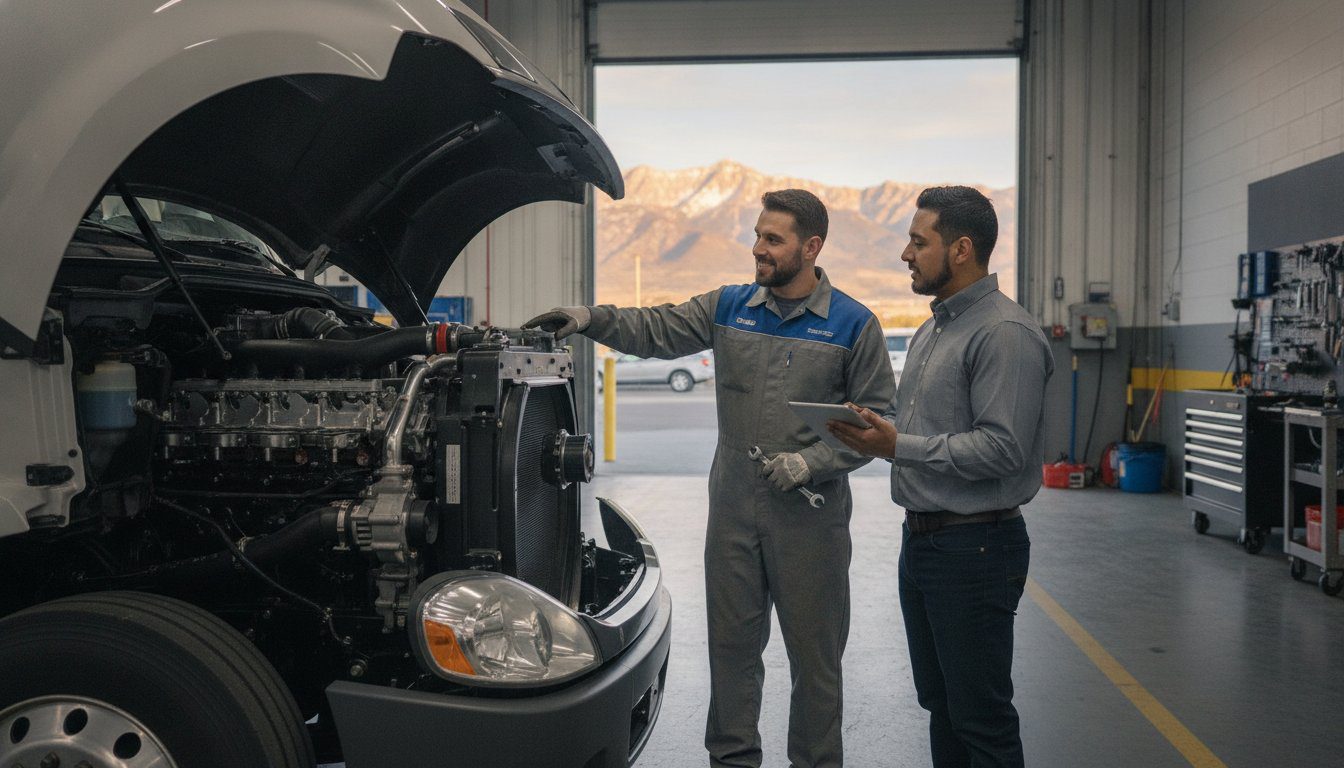
10 Critical Questions to Ask After a Major Diesel Repair: A 2026 Owner’s Guide

Driving your truck off the lot after a major engine overhaul isn’t the end of the repair process. It’s actually the most critical stage of your investment. You’ve likely spent thousands of dollars and endured significant downtime waiting for your equipment to get back in the game. It’s natural to feel a knot of anxiety about whether the job was truly done right or if you’ll be back on the side of the road next week. Knowing the specific questions to ask after a major diesel repair is the only way to ensure your vehicle is truly road-ready and that your hard-earned money is protected.
At Diego’s Shop, we believe the hand-off conversation is your final quality control gate. We’ve compiled this 2026 owner’s guide to help you verify technical work, understand your warranty terms, and build a maintenance plan that stops repeat failures before they start. Whether you’re managing a fleet or an individual rig, these expert-vetted questions provide the clarity you need to drive away with confidence. We’ll walk through exactly what to check on your invoice and how to hold your service provider accountable for the durability of their work.
Key Takeaways
- Learn why identifying the root cause of a failure is more important than simply replacing parts to prevent recurring engine issues.
- Discover the essential questions to ask after a major diesel repair to ensure your work is protected by a clear warranty on both parts and labor.
- Understand the importance of verifying part quality to maintain the durability and performance of your heavy-duty equipment.
- Master the critical first 500 miles by following expert-recommended break-in procedures and scheduling necessary follow-up inspections.
- Gain total peace of mind by establishing a maintenance plan that transitions your truck from emergency repair back to reliable operation.
Why the Post-Repair Consultation is Critical for Diesel Engines
Modern diesel engines aren’t just mechanical machines; they’re sophisticated computers on wheels. When a major failure occurs, it’s rarely an isolated event. A problem in the fuel system can quickly compromise your emissions components, leading to a cascade of expensive failures. This is why the conversation you have when picking up your truck is just as important as the repair itself. Knowing the specific questions to ask after a major diesel repair helps you transition from a state of emergency back to a state of reliable operation.
A certified diesel mechanic does more than just replace parts. They diagnose the system. A “part swapper” might fix the symptom, but a specialist identifies why the part failed in the first place. Without this debrief, you risk a “comeback,” which is industry talk for a truck that ends up back in the shop for the same issue two weeks later. Establishing a clear paper trail during this consultation also protects your future resale value and ensures your warranty is enforceable.
Understanding the Complexity of 2026 Diesel Systems
By 2026, diesel technology has reached a level of precision where even a microscopic amount of debris can ruin a high-pressure common rail system. These engines rely on complex interactions between fuel delivery, turbocharging, and emissions controls like the EGR and DPF. A successful repair must be verified through advanced diagnostic software that monitors real-time data under load. A simple lap around the block isn’t enough to confirm that your engine’s thermal management or regeneration cycles are functioning correctly. You need to know that the technician cleared all codes and verified that the system is communicating as intended.
Setting the Stage for a Long-Term Partnership
At Diego’s Shop, we don’t just hand over the keys. We use the post-repair meeting to educate our clients on what we found and how to prevent it from happening again. This transparency builds a foundation of trust. When you invest in professional diesel engine repair, you’re also investing in a partnership. Detailed service records and a clear understanding of the work performed provide essential documentation for future maintenance. Moving from an “emergency repair” mindset to a “preventive maintenance” strategy is the only way to protect your bottom line and keep your equipment on the road where it belongs.
Technical Verification: Questions About the Work Performed
When you step back into the shop to pick up your truck, your focus should shift to the technical specifics of the job. A major repair is an investment in your equipment’s future, and you need to verify that the work meets professional standards. This is the time to walk through the invoice with your technician. Knowing the right questions to ask after a major diesel repair ensures you aren’t just paying for a temporary fix, but for a long-term solution that keeps your fleet moving.
Root Cause vs. Symptom Management
The most important question you can ask is: “What was the root cause of the failure, and was it fully addressed?” In modern diesel systems, parts rarely fail in a vacuum. A clogged DPF might be the symptom, but a leaking fuel injector or a faulty EGR valve is often the actual cause. If the shop only replaces the DPF without fixing the upstream issue, you’ll be back in the shop within a few weeks. Ask specifically about the health of the fuel system, oil pressure, and cooling efficiency. You should also ask if your diesel maintenance schedule needs to be adjusted to account for these new components and prevent the failure from happening again.
Parts and Fluid Specifics
Don’t assume that every shop uses the correct fluids for your specific engine. 2026 diesel engines have extremely tight tolerances and specific requirements for oil grades and coolant types to protect sensitive emissions hardware. Ask for a list of the fluids used and verify they meet the manufacturer’s specifications. Using OEM-spec parts ensures that every component meets the exact metallurgical and dimensional tolerances required for high-stress heavy-duty operations. You should also request a list of all replaced gaskets and seals. This allows you to perform targeted visual inspections for leaks during your first few days back on the road. If you’re looking for a team that prioritizes this level of detail, Diego’s Shop provides the master-craftsman quality your truck deserves.
Digital and Software Verification
In the digital age of diesel repair, the hardware is only half the story. Ask your technician which Diagnostic Trouble Codes (DTCs) were present when the truck arrived and if those codes are now cleared. It’s also vital to ask if the repair required any software updates or ECU recalibrations. Modern components, especially in the fuel and emissions systems, often need to be “introduced” to the engine’s computer to function at peak efficiency. Verify that all modules are communicating correctly before you leave the lot to avoid unexpected derate modes or warning lights during your next haul.
Warranty and Accountability: Protecting Your Investment
A major diesel overhaul is a significant financial commitment. You shouldn’t leave the shop without a clear, written understanding of how that investment is protected. The quality of the work is only as good as the accountability behind it. When you’re finalizing your paperwork, the specific questions to ask after a major diesel repair should focus on the legal and financial safeguards provided by the service center.
Start with the basics: what is the exact duration and mileage limit of the warranty? A standard warranty might cover 12 months, but for heavy-duty applications, mileage limits are often more relevant. You also need to know if the coverage includes both parts and labor. Many shops offer “parts-only” warranties, which can be a trap for owners. If a small component fails and requires fifteen hours of labor to access and replace, a parts-only warranty leaves you with a massive bill. Finally, ask if the warranty is valid at other locations. For fleet operators traveling across the Wasatch Front, knowing whether you can seek service at a partner shop or if you must return to the original bay is vital for logistical planning.
Understanding Warrantied Repair Work
In Utah County, “Warrantied Repair Work” isn’t just a phrase; it’s a standard of quality that separates master craftsmen from general mechanics. High-quality expert diesel repair in Utah depends on meticulous documentation. You must keep all digital and physical service records to prove that you’ve followed the required maintenance intervals. Ask the shop what specific actions, such as using unapproved oil grades or missing a scheduled valve adjustment, could void your protection. Clear communication now prevents expensive disputes later.
The “What If” Scenario
Real accountability means having a plan for when things go wrong. Ask the shop about their specific process if the truck needs to return for the same issue. How do they prioritize “comebacks” in their schedule? You don’t want your rig sitting at the back of the line for a mistake the shop made. Clarify the timeline for warranty claims and inspections before you drive away. At Diego’s Shop, we handle major fleet overhauls with a focus on standing behind every bolt we turn. We provide a clear roadmap for warranty support so you can focus on your route, not your repair bill.
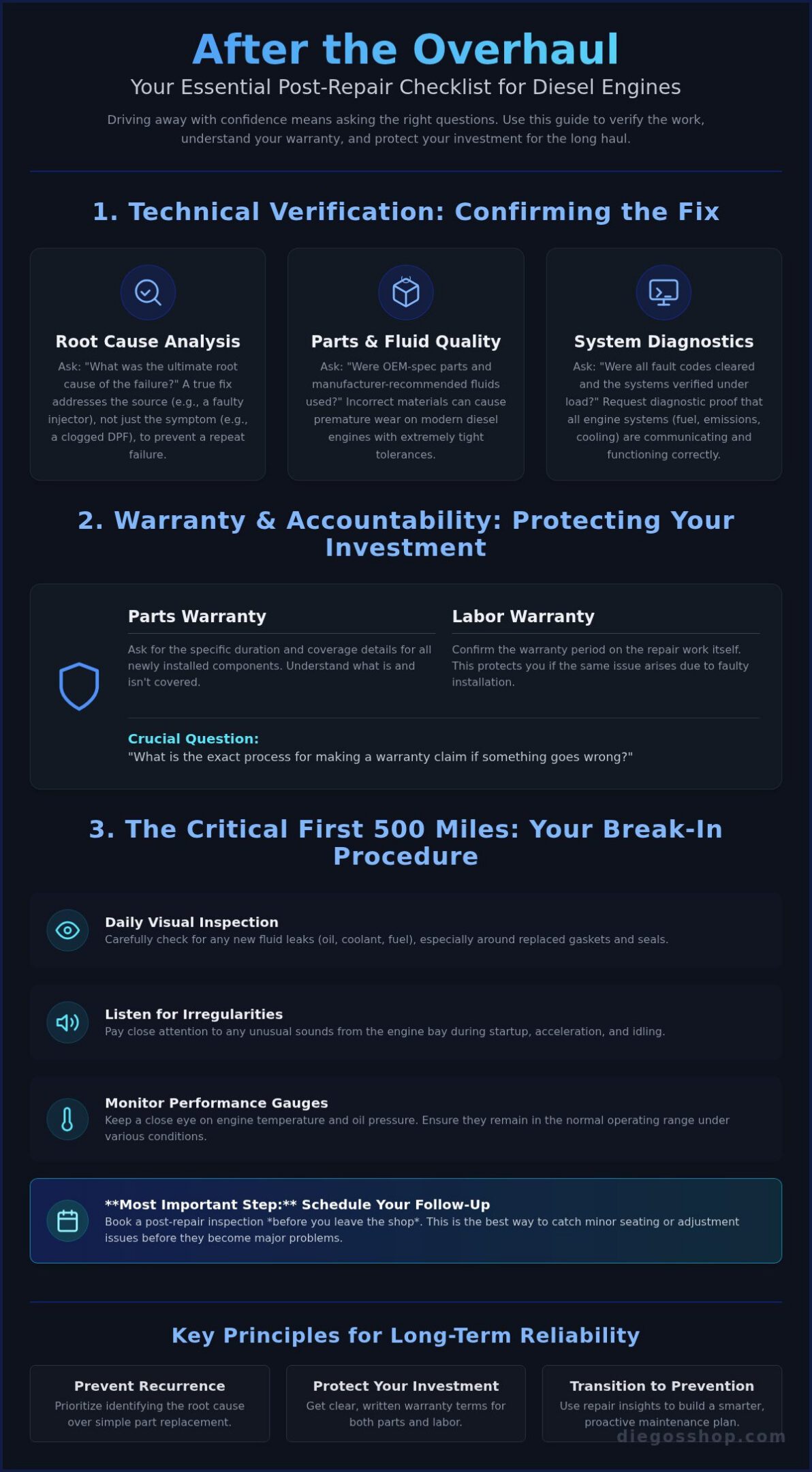
Post-Repair Care: The Critical First 500 Miles
The first 500 miles after a major overhaul are the most important miles your truck will ever drive. This is the shakedown period where new components settle and the quality of the installation is truly tested. One of the primary questions to ask after a major diesel repair is whether your technician recommends a specific break-in procedure. This isn’t just a suggestion; it’s a technical requirement for the longevity of your engine. You need to know exactly how to handle RPM limits and towing restrictions during these initial trips to ensure the work holds up under pressure.
The Diesel Break-In Period
When you have new piston rings or bearings installed, they require a specific heat-cycle process to seat correctly. This means you should avoid prolonged idling or maintaining a constant speed for hours at a time. Varying your engine load helps the components wear in evenly. While it might feel safer to take it easy, babying a new diesel engine can actually be detrimental to ring seating because it fails to generate the combustion pressure required to push the rings against the cylinder walls. We typically recommend bringing the truck back for a “nut and bolt” check and an early oil change after the first few hundred miles to catch any minor adjustments before they become major issues.
Monitoring Emissions and Fluids
Your exhaust aftertreatment system, including the DPF and SCR, needs close monitoring during the first few days back on the road. Watch for active regeneration cycles and ensure they complete without interruption. You should also check your fluid levels every morning for the first week. Small leaks can develop as gaskets heat up and cool down for the first time. Integrating these checks into your broader fleet maintenance plan ensures that a single loose fitting doesn’t lead to a catastrophic failure. If you want a shop that walks you through every mile of the break-in process, contact Diego’s Shop today for expert service.
Normal Signs vs. Red Flags
It’s common to smell a bit of “burn-off” during the first few miles as new paint or residual oil on the manifold heats up. This is usually normal. However, you must be able to identify immediate red flags. If you notice any of the following, pull over safely and call the shop immediately:
- The sweet, distinct smell of burning coolant.
- Thick blue or white smoke from the exhaust after the engine is warm.
- A sudden change in turbocharger sound or a noticeable loss of boost pressure.
- Any metallic knocking or heavy vibration that wasn’t there before.
Staying vigilant during this window protects your warranty and your equipment. We take pride in our work, and we want to ensure your truck stays on the road for the long haul. Reliable service depends on this shared commitment to post-repair care.
Why Diego’s Shop Prioritizes the Post-Repair Debrief
At Diego’s Shop, we don’t view the completion of a repair as the end of our responsibility. The post-repair debrief is a critical component of our master-craftsman philosophy. We believe in total transparency and accountability for every bolt we turn. When you pick up your vehicle from our Springville location, we take the time to walk you through the work performed. This process ensures you have a clear understanding of your vehicle’s current health and the specific steps we’ve taken to secure its longevity. We actively encourage the questions to ask after a major diesel repair because a well-informed owner is our best partner in preventing future downtime.
Expertise Across All Tiers
Our team handles a diverse range of equipment across the Wasatch Front. Whether you’re operating a light-duty Ford Powerstroke or a heavy-duty Peterbilt or Kenworth, we apply the same rigorous standards to every job. Our specialization in Isuzu and other medium-duty platforms allows us to serve commercial fleets with precision. Because we understand the regulatory environment in Utah County, our shop has become a hub for DOT truck inspections. We ensure that your engine isn’t just running well, but that your entire rig meets the safety standards required to stay legal and profitable. Our promise is simple: rugged reliability for the long haul.
Schedule Your Next Inspection
The goal of any major repair should be to move out of the “emergency fix” cycle. We help our clients transition into a structured preventive maintenance schedule that identifies wear before it leads to a roadside failure. During your hand-off, we’ll discuss the next logical steps for your truck’s care, including follow-up checks on your DPF and EGR systems. We invite you to be part of the maintenance solution by staying vigilant and communicating any changes in performance. If you’re ready to experience a higher level of diesel service, contact our team for a detailed walkthrough of your truck’s health. Trust your diesel to the experts at Diego’s Shop. We maintain total control over complex repairs so you don’t have to.
Take Command of Your Truck’s Future
Investing in a major engine overhaul is the first step toward restoring your equipment’s reliability. However, true long-term performance depends on the clarity of the hand-off. By mastering the questions to ask after a major diesel repair, you eliminate the uncertainty that often follows a significant shop visit. You now know how to verify technical work, enforce your warranty protections, and navigate the critical shakedown period with confidence.
At Diego’s Shop, we specialize in the complex diagnostics required for modern diesel emissions systems. Based in Springville, we serve medium and heavy-duty commercial fleets across the entire Wasatch Front with a focus on master-craftsman accountability. We don’t just fix the immediate failure; we identify the root cause to keep your business moving and your downtime minimal. Our team is ready to provide the technical debrief you need to feel secure on the road.
Get the peace of mind your fleet deserves; contact Diego’s Shop today. Your truck is built for the long haul, and we’re here to ensure it stays that way.
Frequently Asked Questions
How long should a warranty last on a major diesel engine overhaul?
A standard warranty for a major diesel engine overhaul usually lasts for 12 months or 100,000 miles, though terms vary by shop and parts manufacturer. You should always verify if the coverage includes both parts and labor. At Diego’s Shop, we focus on providing warrantied repair work that gives fleet owners peace of mind. Always get these terms in writing before leaving the lot to ensure your investment is protected against premature component failure.
Is it normal to smell burning oil after a major diesel repair?
It’s common to smell burning oil or “burn-off” for the first few miles after a major repair. This usually happens as residual fluids or fingerprints on the exhaust manifold and engine block heat up for the first time. However, this smell should disappear within the first day of operation. If the odor persists or if you see visible smoke or fresh leaks, it’s a red flag that requires an immediate inspection by your technician.
Do I need to change my oil sooner after a major engine repair?
Yes, you should typically schedule your first oil change much sooner after a major engine rebuild. We often recommend a “break-in” oil change between 500 and 1,000 miles. This service is vital because it flushes out any microscopic metallic particles or assembly lubricants that accumulate during the initial seating of new components. This proactive step is a key part of the questions to ask after a major diesel repair to ensure long-term engine health.
Can I tow a heavy trailer immediately after a diesel engine rebuild?
You should avoid towing maximum weight loads immediately after a rebuild. Most master craftsmen recommend a graduated break-in period for the first 500 miles. This allows new piston rings and bearings to seat properly under varying RPMs and moderate loads. Constant high-stress towing right off the lot can generate excessive heat before the components have stabilized. Always ask your mechanic for specific towing restrictions based on the internal parts replaced during your repair.
What should I do if my “Check Engine” light comes back on the day after a repair?
If your “Check Engine” light or a derate warning appears shortly after a repair, you should pull over safely and contact the shop immediately. Modern diesel engines are complex, and a new part can sometimes trigger a sensor calibration issue or reveal a secondary fault in the emissions system. Don’t clear the codes yourself. Let the technician scan the system to identify the specific fault and verify if it’s related to the recent warrantied work.
Are OEM parts always better than aftermarket parts for diesel trucks?
OEM parts are generally preferred for major diesel repairs because they’re built to the exact metallurgical and dimensional tolerances of the original manufacturer. This is especially critical for high-pressure fuel systems and DPF components. While some high-quality aftermarket parts exist, they may not offer the same comprehensive warranty support. Using OEM-spec components ensures that your engine maintains its original performance standards and remains reliable under the heavy-duty stress of commercial fleet operations.
How do I know if the root cause of my diesel engine failure was actually fixed?
You’ll know the root cause was addressed when your technician can explain exactly why the failure happened, rather than just what broke. A professional shop will provide a diagnostic report showing cleared trouble codes and verified system data. For example, if a turbo failed, they should confirm the oil supply lines were cleaned or replaced. This technical debrief is one of the most important questions to ask after a major diesel repair to prevent recurring downtime.
Should I ask to see the old parts that were replaced?
Asking to see the old parts is a reasonable request that promotes transparency and trust. Examining the failed components, such as a scored piston or a clogged EGR cooler, helps you understand the severity of the issue and confirms the work was necessary. Most reputable shops are happy to show you the old parts during the pick-up process. It’s a simple way to verify the scope of the repair and learn how to prevent similar failures in the future.