
What Does a Diesel Fuel Knock Sound Like? How to Tell in 2026

A diesel’s familiar clatter isn’t automatically a problem, but a new, sharper metallic knock deserves attention. If you’re asking what does a diesel fuel knock sound like, listen for a sound that stands out from the engine’s usual rhythm and may change when the engine is working harder. That can help you decide what to observe next, but it can’t confirm the cause on its own.
It’s understandable to worry that driving could make a new noise worse, especially when it’s hard to tell whether fuel, an injector, or another component is involved. This guide explains how a possible combustion knock differs from normal diesel clatter, what conditions may contribute to it, and which details are useful to note.
Pay attention to when the sound starts, whether it changes as the engine warms or works under load, and whether other symptoms appear. These observations can help you choose a sensible next step, including when to stop driving and seek a specialist inspection instead of relying on sound alone.
Key Takeaways
- To answer “what does a diesel fuel knock sound like,” compare a sharper, more pronounced knock with your engine’s familiar clatter. Sound alone can’t identify the cause.
- Track when the noise occurs and whether it changes with engine temperature, load, or RPM. These patterns can help a technician decide what to inspect.
- Fuel quality, injector operation, and combustion conditions may contribute to a knock. A deeper, rhythmic sound can also come from a mechanical issue.
- Check the dashboard and owner’s manual. Stop safely if the noise is severe or comes with a warning indication, overheating, or sudden loss of performance.
- A specialist inspection can help distinguish possible causes through vehicle-specific checks and testing rather than guesswork.
What Does a Diesel Fuel Knock Sound Like?
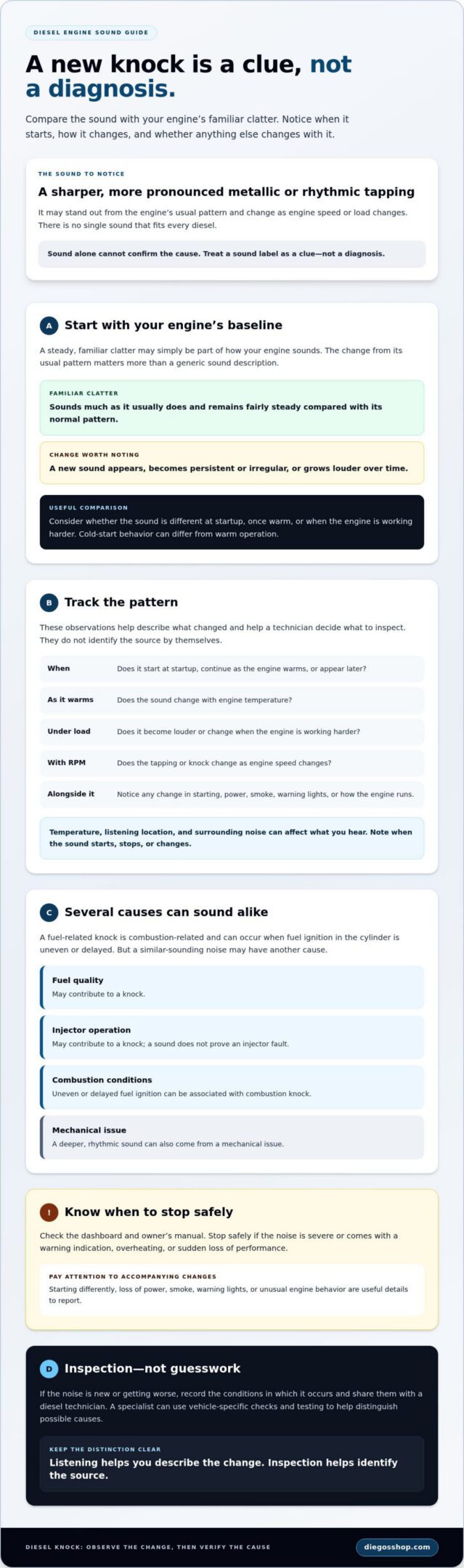
A fuel-related diesel knock is often described as a sharper, more pronounced metallic or rhythmic tapping than the engine’s familiar clatter. If you’re wondering what does a diesel fuel knock sound like, listen for a new sound that stands out from the engine’s usual pattern, not just any tick or rattle. There’s no single sound that fits every diesel.
Diesel fuel knock is a combustion-related noise that can occur when fuel ignition in the cylinder is uneven or delayed. The sound alone can’t confirm its cause, and inspection is needed to identify the problem. The basic process behind engine knock is explained in Engine knocking, including how ignition delay can contribute to diesel combustion noise.
How a fuel-related knock may sound
You may hear a repetitive tap or knock that seems more distinct than the engine’s regular sound. It might change as engine speed or load changes, but the pattern varies by engine and operating conditions. Temperature, where you’re listening from, and surrounding noise can also affect what you hear. Note when the sound starts, stops, or changes rather than relying on a sound label.
Diesel clatter versus a new knock
Diesel combustion and fuel-injection events create normal operating noise, so a steady clatter may simply be part of how your engine sounds. The most useful comparison is with its established baseline: has the noise become louder, more irregular, or persistent? A particular pitch or rhythm doesn’t prove an injector or fuel-system fault.
Pay attention to what happens alongside the sound. Does it appear only at startup, continue as the engine warms, or change when the engine is working harder? Have you also noticed a change in performance? These observations help describe the issue, but they don’t identify the source. A sound that seems fuel-related could have another cause, so treat it as a clue, not a diagnosis.
If the noise is new or getting worse, record the conditions in which it occurs and share them with a diesel technician. Comparing the sound with your engine’s normal behavior is a useful first step. Testing and inspection provide the next one.
Normal Diesel Clatter or a Fuel Knock? Understand the Difference
A diesel’s usual clatter can sound unfamiliar if you’re new to the vehicle, but the engine’s own baseline is the best reference. A noise that’s steady and familiar may be normal for that engine. A sudden, persistent, or progressively louder change deserves closer attention. A new noise pattern matters more than a generic sound label.
Diesel combustion and fuel-injection events contribute to operating noise. The diesel combustion process helps explain how combustion pressure changes can produce audible noise, but what you hear varies with engine design and operating conditions. Cold-start behavior may differ from warm operation, and sound can be harder to judge from outside the cab or in a noisy setting.
| What to observe | Familiar clatter | Change to investigate |
|---|---|---|
| Timing | Sounds much as it usually does at startup or once warm. | Appears suddenly or changes noticeably as the engine warms. |
| Consistency | Remains fairly steady compared with the engine’s normal pattern. | Becomes persistent, more irregular, or progressively louder. |
| Under load | Changes in a way you recognize during ordinary driving or work. | Gets noticeably louder or changes along with engine behavior. |
| Other signs | No new changes in starting, power, smoke, or dashboard warnings. | Noise comes with a change in power, starting, smoke, warning lights, or how the engine runs. |
Clues that may fit familiar engine noise
If the sound is consistent with what you’ve heard during previous normal operation, it may simply be characteristic of your engine. Expected noise differs across engine designs, and cold starts can sound different from a warmed engine. If you’re unsure what’s normal for your vehicle, check the owner’s manual or ask a qualified diesel technician rather than relying on a universal sound comparison.
Changes that deserve closer attention
A new knock that continues, gets louder over time, or appears with other changes is a reason to investigate. Note whether the engine starts differently, loses power, produces smoke, displays a warning light, or runs unusually. These clues don’t point to one certain fault, but they help explain what changed and when.
This comparison can help you organize observations, not diagnose the cause. If the baseline is unclear or the noise has changed, a hands-on inspection is more useful than guessing. For owners in Springville, Utah County, and the Wasatch Front, diesel repair and diagnostics are available through Diego’s Shop.
What Can Cause a Diesel Fuel Knock: Why Sound Is Not a Diagnosis
A knock can offer a clue, but it can’t identify a failed part by itself. The same reported sound may come from combustion, fuel delivery, or a mechanical component. Engine design and control systems also affect how a diesel runs and sounds, so a technician needs vehicle-specific information before drawing conclusions.
Fuel and injection-related possibilities
The details depend on the engine and its systems. Modern diesel controls manage engine operation and emissions, and the relevant checks can vary by vehicle. A technician should use information suited to that make, model, and engine rather than assume one explanation applies to every diesel.
Other noises that can be mistaken for fuel knock
Valvetrain components, engine accessories, or internal mechanical parts may produce sounds that an untrained listener could mistake for combustion knock. A deeper or more rhythmic noise doesn’t prove a specific mechanical failure, just as a sharper tap doesn’t prove an injector fault.
Where the sound seems to come from, when it occurs, and how it changes with engine speed or load can help narrow the possibilities. Those clues need to be considered alongside vehicle-specific inspection and testing. A useful description for a technician includes when the noise began, what the engine was doing, and whether you noticed other changes.
So, what does a diesel fuel knock sound like? It may be a clue to a combustion issue, but different problems can sound alike, and the same issue may sound different across engines. Avoid replacing parts or changing how the engine is operated based only on a sound description. For broader context on the inspection and repair process, read this expert diesel engine repair guidance.
What to Do When Your Diesel Engine Starts Knocking
A new knock calls for careful observation, not risky roadside troubleshooting. If the sound is severe or rapidly worsening, or you notice a warning indication, overheating, or sudden loss of performance, focus on getting to a safe place and seeking prompt help. Follow your vehicle’s instructions and use your judgment based on the symptoms. Don’t assume it’s safe to continue driving.
Observations to record before requesting help
Once you’re safely parked, note what was happening when the noise began. A short sound clip can help a technician, but record it only while parked and without putting yourself near traffic or moving engine parts. Include the conditions around the sound, since that context can help guide an inspection.
- When it happens: Note whether the knock occurs at startup, idle, during acceleration or under load, or after the engine warms.
- What changed: Record any warning lights, smoke, difficult starting, power loss, or unusual engine behavior.
- Recent events: Mention recent service and any known change in fuel, without assuming either caused the noise.
- Vehicle guidance: Check the owner’s manual for model-specific warnings and safe operating instructions.
Don’t touch hot engine components or reach near belts, fans, or other moving parts to locate the sound. A description and recording are useful details, but they don’t replace a proper inspection.
When to stop driving and arrange an inspection
Treat a loud or quickly worsening knock as urgent, especially if it comes with a warning light, overheating, smoke, or a sudden change in performance. If the vehicle’s manual directs you to stop for a warning, follow that guidance. When you’re unsure, prioritize a safe stop and seek professional advice rather than testing the engine by continuing to drive.
For a new but less severe noise, note whether it persists or changes, then contact a qualified diesel technician for guidance on the next step. The right decision depends on the vehicle’s condition, warning indications, and manual, so there’s no blanket rule that every knock can be driven through.
For drivers in Utah County, Diego’s Shop in Springville is a local option for diesel diagnostics and repair. To learn about the inspection and repair process, see diesel diagnostics and repair.
How a Diesel Technician Finds the Source of a Knock
A sound is a starting point, not a parts diagnosis. A diesel technician considers what you heard alongside when it happens, how the engine behaves, and what inspection and testing show for that specific vehicle. This approach helps avoid replacing an injector or another component based only on a description of the noise.
What to expect during a professional assessment
The technician will ask when the knock began and whether it changes with startup, engine temperature, speed, or load. They may try to confirm the concern under appropriate, safe operating conditions. The next steps depend on the engine design, reported symptoms, and relevant service information, so there isn’t one test or sequence that applies to every diesel.
Depending on the vehicle and findings, an assessment may include a visual inspection and vehicle-specific diagnostic checks. The technician uses those results to distinguish possible combustion-related noise from sounds that may come from other engine components. If the noise can’t be safely or consistently reproduced, your notes about when it occurs can still help guide the investigation.
That’s why the question “what does a diesel fuel knock sound like” can’t be answered with a sound label alone. A careful assessment connects the noise to the engine’s operating conditions and other evidence before identifying a likely source. The repair decision should follow the findings, not a guess based on pitch or rhythm.
Choosing a diesel repair shop for the next step
When you speak with a shop, share when the noise started, what makes it change, and whether you’ve noticed warning lights, smoke, starting trouble, or a change in performance. Mention any recent service or known fuel change too. A short recording can help if you made it safely while parked, but your description of the conditions is just as useful.
Diego’s Shop provides diesel diagnostics, repair, and preventive maintenance for light, medium, and heavy-duty diesel vehicles in Springville and across Utah County and the Wasatch Front. The shop works on vehicles including Peterbilt, Kenworth, Isuzu, and Ford. For a new knock that needs a closer look, learn about diesel engine repair at Diego’s Shop.
Use the Sound as a Clue, Then Choose Your Next Step
So, what does a diesel fuel knock sound like? It may be sharper or more pronounced than your engine’s usual clatter, but no sound description can confirm the cause. Pay attention to what changed, when the noise happens, and whether warning lights, smoke, overheating, or a performance change appear alongside it.
Those observations help you explain the concern, not diagnose it. A knock may relate to combustion, fuel delivery, or another engine component, so vehicle-specific inspection is the sensible next step when the noise is new, persistent, or getting worse. If the sound is severe or comes with serious warning signs, stop safely and seek prompt help.
Diego’s Shop provides diesel repair for light, medium, and heavy-duty vehicles, serving commercial fleets and residential owners across Utah County and the Wasatch Front. If you’re in Springville and need help deciding what to do about a new engine noise, contact Diego’s Shop about diesel engine repair. Share when the noise occurs and what else you’ve noticed so the shop can help you choose a next step.
Frequently Asked Questions
Is a knocking sound normal in a diesel engine?
Some regular clatter is normal in diesel engines because combustion and fuel injection create operating noise. What matters is whether the sound matches what you’ve heard from your engine during normal operation. A new, persistent, irregular, or increasingly loud knock deserves attention, particularly if starting, power, smoke, or engine behavior also changes. Cold starts and engine design can affect sound, so check your owner’s manual or ask a qualified diesel technician if you’re unsure what’s typical.
Can bad diesel fuel cause an engine knock?
Fuel quality or contamination can contribute to abnormal combustion noise in some circumstances, but a knock alone doesn’t prove fuel is the cause. Note any known change in fuel and when the noise began, then share those details with a technician. Avoid assuming that adding a product or changing parts will solve it. A vehicle-specific inspection can help distinguish a possible fuel-related issue from injector, combustion-control, or mechanical causes that may produce similar sounds.
Can a diesel injector cause a knocking sound?
Yes, an injector concern can contribute to a combustion-related knock, but sound alone can’t confirm injector failure. Fuel delivery and combustion behavior depend on the specific engine and its controls, and other issues can sound similar. Tell a technician when the noise occurs and whether you’ve noticed changes in starting, power, smoke, or engine behavior. Testing and inspection can help determine whether an injector is involved before any repair decision is made.
Can I keep driving if my diesel engine is knocking?
It depends on the severity of the noise and any other symptoms, so don’t assume continued driving is safe. If the knock is loud or rapidly worsening, or you notice a warning indication, overheating, smoke, or sudden performance loss, stop safely and seek prompt help. Consult your owner’s manual for vehicle-specific warnings. For a new or persistent noise, contact a qualified diesel technician and describe what you observed before deciding whether to drive farther.
What is the difference between diesel knock and engine rod knock?
Diesel knock usually describes noise associated with combustion, while rod knock refers to a possible mechanical noise from an engine’s connecting rod or bearing area. Both may be described as rhythmic knocking, and sound alone can’t reliably distinguish them. A deeper sound or a change with engine speed isn’t proof of rod damage. A technician needs to consider the engine’s operating conditions and inspection or test results to identify the source accurately.
Will a diesel knock go away on its own?
It might change or become less noticeable as conditions change, but that doesn’t establish that the underlying issue has resolved. A knock related to operating conditions may sound different after startup or as the engine warms; a persistent or worsening noise still needs attention. Note when it starts and stops, and watch for warning lights, overheating, smoke, or performance changes. If the noise is severe or accompanied by concerning symptoms, stop safely and seek prompt help.