
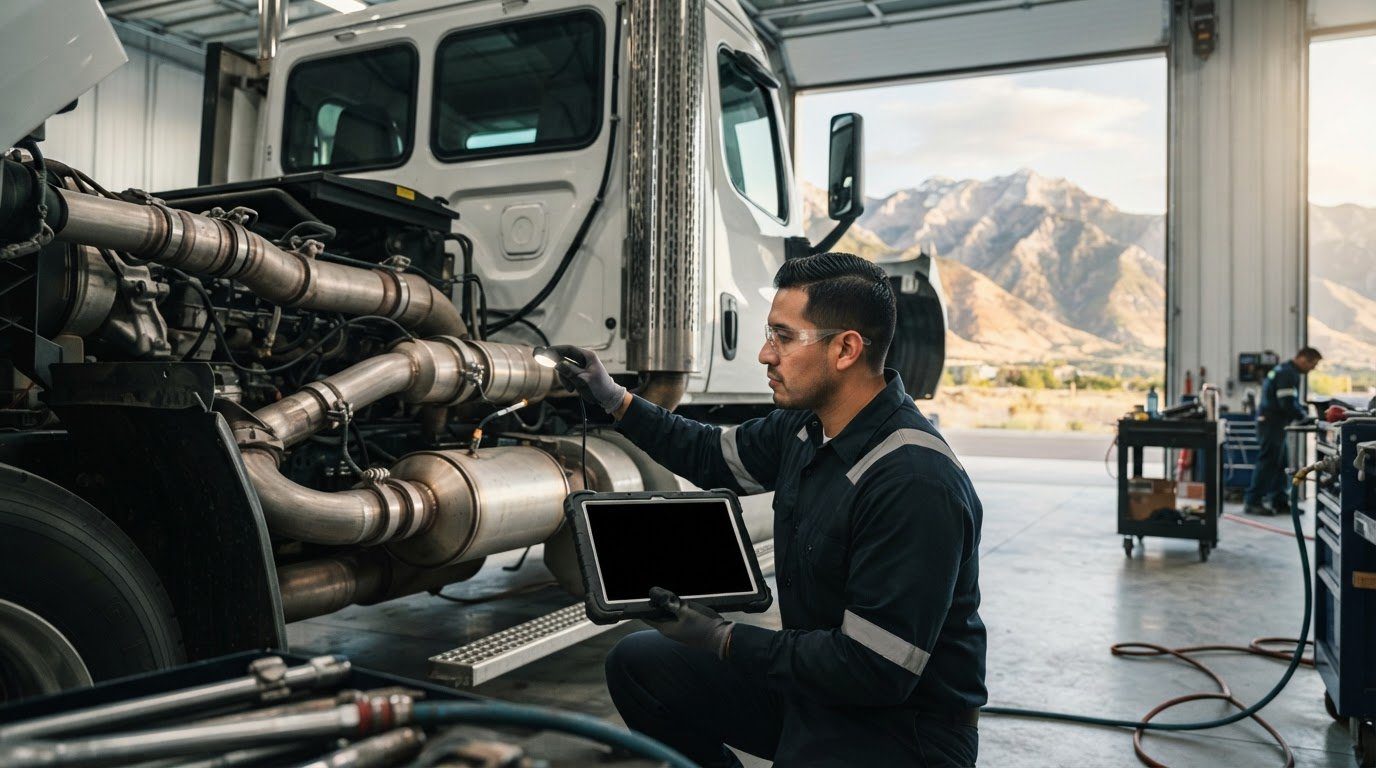
Troubleshooting Aftertreatment System Fault Codes: A Commercial Fleet Guide

An aftertreatment warning light isn’t just a minor sensor glitch; it’s a high-stakes countdown to a forced derate that can paralyze your entire operation. You’ve likely felt the frustration of watching a truck sit in a dealer backlog for two weeks just to address a simple sensor failure, all while your revenue disappears. It’s a common pain point for fleet managers who are juggling complex EPA regulations and multi-stage sensors that seem designed to fail. We understand that every hour of downtime is a direct hit to your bottom line and your reputation for reliability.
This guide will teach you how troubleshooting aftertreatment system fault codes systematically can prevent these costly states and keep your drivers moving. You’ll learn to identify the root causes behind common alerts like SPN 3216 or SPN 3251 and execute an efficient diagnostic sequence right in the field. We’ll also cover how a dedicated local partner in Utah County can provide the technical mastery needed to stay ahead of evolving emissions standards. By the end of this article, you’ll have a clear path to regaining control over your emissions maintenance and avoiding the tow truck entirely.
Key Takeaways
- Learn how the ECM monitors your multi-stage emissions network to signal potential failures before they lead to a forced derate.
- Master a logical, step-by-step process for troubleshooting aftertreatment system fault codes that prioritizes simple physical checks over costly sensor swaps.
- Decode the specific language of SPN and FMI structures to identify precisely which component is impacting your vehicle’s performance.
- Understand the critical difference between basic telematics and advanced shop diagnostics for resolving complex heavy-duty engine failures.
- Discover how proactive fleet maintenance from a local Springville specialist keeps your trucks on the road and out of the dealer backlog.
Understanding Aftertreatment System Fault Codes and Why They Trigger
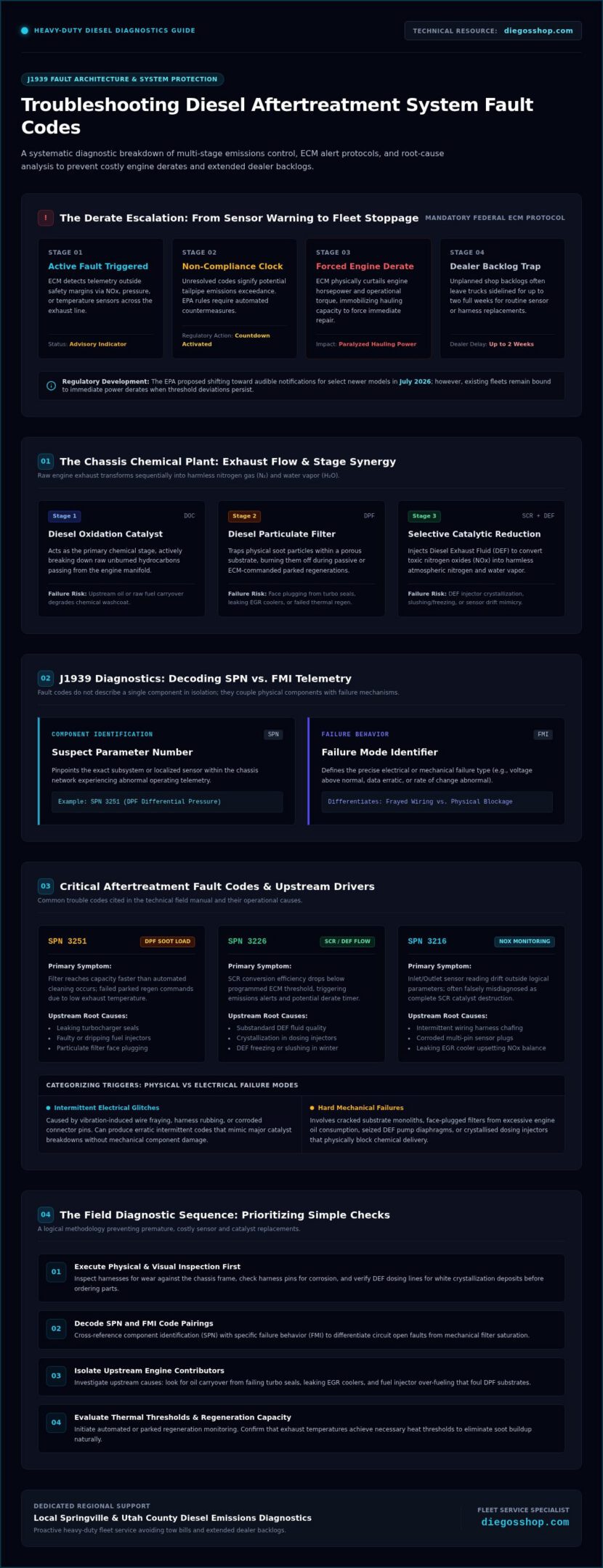
The modern diesel aftertreatment system operates as a high-tech chemical plant mounted to your truck’s chassis. It functions as a multi-stage emissions control network, transforming raw engine exhaust into harmless nitrogen and water vapor before it leaves the tailpipe. The Engine Control Module (ECM) serves as the central command, monitoring a continuous stream of data from temperature, pressure, and NOx sensors. When you’re troubleshooting aftertreatment system fault codes, you’re looking for the exact point where this data flow broke down or drifted outside of acceptable parameters.
Leaving these fault codes active is a recipe for operational disaster. Federal regulations require manufacturers to implement an engine derate when the system detects a failure that could increase tailpipe emissions. This protective mechanism isn’t just a suggestion; it physically limits your truck’s power to force a repair and prevent environmental non-compliance. While the EPA proposed shifting toward audible notifications for some newer models in July 2026, the reality for most fleets remains the same: ignore the light, and your truck will eventually crawl to a halt.
The Core Components of Modern Diesel Emissions Systems
Reliability depends on the synergy between three main stages. The Diesel Oxidation Catalyst (DOC) first breaks down hydrocarbons, followed by the Diesel Particulate Filter (DPF), which traps and burns off physical soot particles. Finally, the Selective Catalytic Reduction (SCR) catalyst uses Diesel Exhaust Fluid (DEF) to convert nitrogen oxides into nitrogen and water. If any single component in this chain fails, the entire system loses its effectiveness. Maintaining this component synergy is the only way to ensure long-term fleet reliability and avoid the expensive tow bills associated with a total system shutdown.
Why the ECM Triggers an Aftertreatment Fault Code
The ECM triggers a code whenever a sensor provides a reading that falls outside of pre-programmed safety margins. These triggers generally fall into two categories: intermittent electrical glitches caused by frayed wiring and hard mechanical failures like a cracked filter or a crystallized DEF injector. Understanding the difference is vital for effective troubleshooting aftertreatment system fault codes. Because these components are highly interdependent, a faulty NOx sensor can often mimic a failing SCR catalyst, leading inexperienced shops to replace expensive parts unnecessarily. Soot loading thresholds specifically prompt automated warnings when the pressure differential across the filter indicates that a manual or parked regeneration is required to prevent a total blockage.
Common Diesel Aftertreatment Fault Codes and What They Mean
Categorizing codes by subsystem streamlines your initial diagnostic process. Instead of chasing ghosts, you can pinpoint whether the issue lies in the DPF, the SCR, or the sensors themselves. Most modern trucks use J1939 protocols, where a Suspect Parameter Number (SPN) identifies the component and a Failure Mode Identifier (FMI) describes the specific electrical or mechanical failure. Mastering this code structure is the foundation of effective troubleshooting aftertreatment system fault codes. It’s about data. Recurring codes often signal deeper engine health issues like excessive oil consumption or a leaking EGR cooler. Addressing these root causes through proper engine maintenance practices is the only way to ensure long-term compliance and performance.
DPF Restrictions and Regeneration Fault Codes
Frequent soot load codes like SPN 3251 indicate the DPF is reaching its capacity faster than the system can clean it. You might see failed parked regeneration commands when the ECM determines that exhaust temperatures won’t reach the required threshold. Upstream engine issues, such as a failing turbo seal or a faulty fuel injector, accelerate particulate filter face plugging by sending raw oil or fuel into the filter. If these codes keep returning, a professional diesel engine repair assessment can identify the upstream engine failure before it ruins your expensive SCR catalyst.
SCR and DEF Efficiency Fault Codes
Efficiency codes like SPN 3226 often stem from poor DEF quality or crystallization inside the dosing lines. In harsh Utah winter conditions, DEF can freeze or slush, leading to pump failures and restricted flow. SCR catalyst degradation codes are also common when unburned fuel or coolant contaminates the catalyst surface, essentially “poisoning” the chemical reaction. Keeping your DEF tank full and using high-quality fluid helps mitigate these issues during extreme temperature swings along the Wasatch Front.
Sensor Malfunctions: NOx, Temperature, and Pressure
Sensor failures represent a high percentage of active fault codes. Pre- and post-catalyst NOx sensors (SPN 3216 and 3226) have high failure rates due to their constant exposure to extreme heat and chemical particulates. Exhaust temperature sensors guide the regeneration process safely; if they provide erratic data, the ECM will abort the cleaning cycle to prevent a fire. Delta pressure sensors are equally critical. They measure the pressure drop across the DPF to calculate soot levels. A clogged pressure tube or a failed sensor will lead to inaccurate soot calculations, triggering unnecessary derates or allowing the filter to plug completely.
Diagnostic Tools vs. Professional Diesel Shop Inspection
Handheld scanners serve as essential tools for initial remote screening, yet they have distinct technical limits. Fleet telematics systems provide real-time data that helps managers spot trouble before a driver even notices a light on the dash. However, software commands cannot fix physical hardware blockages or exhaust leaks. When you’re troubleshooting aftertreatment system fault codes, you must differentiate between a digital signal and a mechanical failure. A handheld tool might tell you a sensor is reading high, but it won’t tell you if the wire is frayed or if the sensor itself has melted. True reliability comes from comprehensive troubleshooting that eliminates recurring fleet issues rather than just masking symptoms for a single shift.
What Handheld Scanners Can and Cannot Do
These portable devices excel at reading active codes, checking readiness monitors, and forcing basic parked regenerations. They’re perfect for a driver to use at a rest stop to see if they can limp the truck to a service bay. These tools fall short when it’s time for deeper diagnostics. They cannot perform electrical pin-out tests to verify harness integrity, nor can they execute a high-pressure smoke test to find tiny leaks in the charge air cooler or exhaust manifolds. Most fleet managers find that cleared codes often return within a single driving cycle because the underlying mechanical condition hasn’t changed. Effective troubleshooting aftertreatment system fault codes requires the advanced bi-directional controls found only in professional-grade shop software.
The Risks of Clearing Codes Without Fixing Root Causes
Clearing codes to bypass active engine derate safety protocols is a dangerous gamble that rarely pays off. These protocols exist to meet U.S. Environmental Protection Agency (EPA) standards and protect the engine from self-destruction. If you ignore emissions faults, you risk causing permanent catalyst substrate damage. This turns a simple sensor fix into a total SCR replacement that can cost upwards of $8,000. Choosing professional, warrantied repair work early provides long-term financial benefits that a quick reset simply can’t match. We focus on fixing the problem right the first time to keep your fleet operational and compliant. Secure your fleet’s future by investing in accurate diagnostics instead of temporary patches.
Step-by-Step Troubleshooting Process for Aftertreatment Faults
Troubleshooting aftertreatment system fault codes requires a disciplined, logical approach to avoid wasting thousands of dollars on unnecessary parts. Many fleet managers make the mistake of immediately replacing a sensor just because the ECM reports a high reading. Instead, you must establish a standardized workflow that prioritizes low-cost, non-invasive physical checks. Keeping systematic records of these findings doesn’t just solve the current issue; it helps optimize your long-term commercial truck performance by identifying recurring failure patterns across your fleet. These diagnostic steps integrate seamlessly with standard dot truck inspections near me protocols, ensuring your vehicles remain both compliant and reliable on the road.
Steps 1 to 3: Initial Assessment and Visual Inspection
- Step 1: Code Retrieval. Pull all active and inactive codes using a professional-grade scanner. Inactive codes often reveal intermittent wiring issues or early signs of component degradation that haven’t yet triggered a full derate.
- Step 2: Exhaust Leak Inspection. Thoroughly inspect all exhaust piping upstream of the DPF. Even a pinhole leak at a gasket or flex pipe allows oxygen to enter the stream, which skews NOx sensor readings and prevents the system from reaching the high temperatures required for regeneration.
- Step 3: Wiring Harness Audit. Check wiring harnesses for chafing, heat damage, or loose ground connections. In Utah’s harsh environment, road salt frequently causes “green crust” corrosion inside connectors, leading to the very sensor malfunctions we’re trying to solve.
Steps 4 to 5: Live Data Monitoring and Component Testing
Once you’ve cleared the visual checks, monitor live sensor data during a forced regeneration cycle. Watch the temperature sensors to ensure the Diesel Oxidation Catalyst (DOC) is effectively generating the heat needed to clean the DPF. If the temperatures don’t climb as expected, you likely have a fuel dosing issue rather than a failed filter. Perform physical pressure tests with a mechanical gauge to verify sensor accuracy against manufacturer specifications. If your digital reading says 3.0 psi of backpressure but your mechanical gauge shows 0.5 psi, you’ve confirmed a sensor failure without unbolting the filter.
To verify the DEF doser spray pattern, remove the injector from the decomposition tube while keeping the lines connected. Place the nozzle into a clean container and command a doser quantity test using your diagnostic software. The output should be a fine, uniform conical mist; any dripping, “jetting,” or heavy crystallization on the nozzle indicates a clogged injector that needs cleaning or replacement. If your fleet is struggling with recurring alerts that your current tools can’t resolve, schedule a professional diagnostic at our Springville shop today.
How Diego’s Shop Resolves Complex Emissions Failures
Diego’s Shop in Springville, Utah, stands as the premier diesel specialist for commercial fleets across Utah County. We don’t just read codes; we solve the systemic mechanical failures that cause them. Our team possesses specialized technical mastery of modern emissions systems, providing a reliable alternative to slow, expensive dealerships. We understand that fleet managers need technical expertise paired with personal accountability to keep their operations profitable. When you’re troubleshooting aftertreatment system fault codes, our shop provides the precision diagnostics required to keep your business moving along the Wasatch Front.
Advanced Diagnostics and Warrantied Repairs along the Wasatch Front
Our Springville repair facility utilizes advanced diagnostic equipment that mirrors or exceeds dealer-level capabilities. We provide comprehensive support for major heavy-duty brands, including Peterbilt and Kenworth, ensuring your specific engine platform receives expert care. Transparency is the foundation of our service. We provide clear, direct communication regarding every repair, backed by dependable service guarantees. You’ll never be left wondering about the status of your equipment or the integrity of the work performed. We take pride in the durability of our diesel engine repair and warrantied repair work, giving you total peace of mind that the job was done right the first time.
Proactive Fleet Maintenance to Prevent Costly Derate Days
The most effective way to handle emissions issues is to catch them before they trigger a highway derate. Routine inspections and sensor calibrations identify drifting values long before they paralyze a truck. We encourage fleet managers to move beyond reactive repairs and adopt a structured fleet maintenance program. Our preventive maintenance protocols are designed to identify the soot loading issues and sensor degradations discussed earlier in this guide. By catching these problems in the shop, you avoid the expensive towing fees and lost revenue that define unexpected downtime.
A well-maintained aftertreatment system is a reliable one. Our team works with you to build a maintenance schedule that fits your specific duty cycle and equipment needs. This grounded, hardworking approach ensures your trucks stay compliant with evolving emissions regulations without sacrificing uptime. Don’t let a simple sensor failure dictate your delivery schedule. Keep your trucks earning and Schedule your fleet diagnostic service with Diego’s Shop today.
Keep Your Fleet Moving with Precision Diagnostics
Success in commercial trucking depends on staying ahead of the derate countdown. You’ve learned that effective troubleshooting aftertreatment system fault codes requires looking beyond the digital alert to find the mechanical root cause. Whether it’s a restricted particulate filter or a failing SCR catalyst, reactive patches only lead to more downtime. Proactive fleet maintenance is your best defense against unexpected repairs and expensive towing fees. By identifying sensor drifts and physical leaks early, you ensure your trucks stay compliant and productive.
Diego’s Shop provides the technical mastery your fleet deserves. Our Springville, Utah, facility uses advanced dealer-level diagnostic equipment to deliver accurate results without the long dealer wait times. We specialize in warrantied repair work for medium and heavy-duty diesel commercial fleets, ensuring every job meets the highest standards of durability. Don’t let a warning light stall your operation. Bring your fleet to Diego’s Shop for expert aftertreatment diagnostics. We’re here to keep your business on the road with integrity and expertise.
Frequently Asked Questions
What is the most common cause of aftertreatment system fault codes?
Faulty sensors, particularly NOx and exhaust temperature sensors, are the most frequent triggers for these alerts. These components operate in extreme heat and chemical environments, leading to high failure rates over time. Other common causes include contaminated Diesel Exhaust Fluid (DEF) and excessive soot accumulation within the DPF. Identifying these root causes early through troubleshooting aftertreatment system fault codes prevents a simple sensor glitch from cascading into a total system shutdown.
Can I safely drive my commercial truck with an active emissions fault code?
Driving with an active emissions code is risky because it usually triggers a timed countdown to a forced engine derate. While the truck might feel fine initially, the ECM will eventually restrict horsepower and speed to ensure regulatory compliance. Ignoring these lights can lead to permanent damage to the DPF or SCR catalyst, turning a minor repair into a five-figure replacement. It’s always safer to seek professional diagnostics before the vehicle enters a limp mode.
How long does a typical aftertreatment diagnostic service take at a professional shop?
A comprehensive diagnostic inspection typically takes between one and three hours depending on the complexity of the fault. This timeframe allows technicians to pull ECM data, perform visual inspections of the exhaust piping, and run bi-directional tests on components like the DEF doser. At Diego’s Shop, we utilize dealer-level diagnostic equipment to provide rapid, accurate results. Our goal is to minimize your downtime by identifying the failure point without the long wait times common at dealerships.
Why does my diesel truck keep requesting a forced DPF regeneration?
Frequent requests for forced regeneration usually indicate that the DPF is loading with soot faster than the system can clean it during normal operation. This often happens due to excessive idling, short-haul duty cycles, or upstream engine issues like a leaking turbo seal or faulty fuel injector. If the system can’t complete a passive regen, it will prompt the driver for a parked cycle. Persistent requests suggest a mechanical restriction that requires a professional inspection to resolve.
What happens during a professional diesel aftertreatment system inspection?
A professional inspection begins with a full ECM scan to retrieve active and inactive fault codes. Technicians then perform a physical audit of the exhaust system to check for leaks, harness corrosion, and sensor integrity. We also monitor live data during a commanded regeneration to verify that temperatures and pressures meet manufacturer specifications. This systematic approach ensures that we address the root cause of the issue rather than just clearing a symptom, providing a durable solution for your fleet.
How does cold Utah weather affect commercial diesel aftertreatment systems?
Extreme Utah winters pose unique challenges because Diesel Exhaust Fluid (DEF) can freeze at temperatures below 12 degrees Fahrenheit. While tanks are heated, crystallization can still occur in the dosing lines or injectors during short trips where the system doesn’t reach full operating temperature. These crystals create flow restrictions that trigger efficiency codes. Troubleshooting aftertreatment system fault codes in the Wasatch Front requires understanding these environmental impacts to ensure reliable winter operation for your commercial vehicles.