

Reliable Light Duty Fleet Maintenance for Utah Diesel Trucks

Treating a light-duty diesel fleet like a standard gasoline passenger car is a guaranteed way to drain your company’s bottom line. When your trucks are sidelined by misdiagnosed engine issues or neglected preventive care, your business stops moving. You need equipment that works as hard as you do, but general repair shops often lack the specialized knowledge required to keep high-performance diesel engines running at peak efficiency.
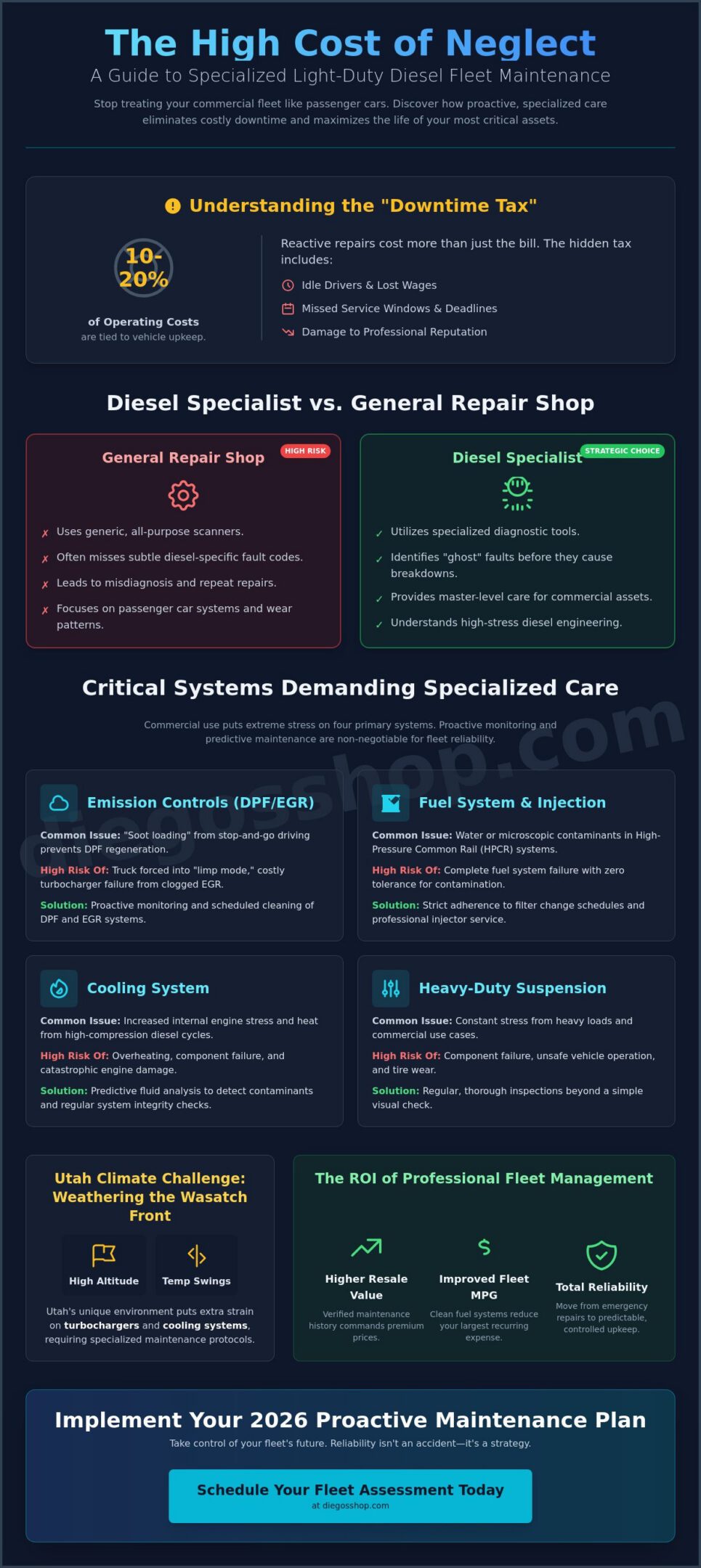
We understand the stress of watching repair bills climb while your drivers sit idle during peak hours. Reliable light duty fleet maintenance isn’t just about fixing what’s broken; it’s about protecting the 10 to 20 percent of your operating costs typically tied to vehicle upkeep. This guide explains how specialized maintenance strategies reduce costly downtime and significantly extend the life of your commercial fleet. You’ll discover how partnering with a local expert in Springville provides the predictable schedules and technical precision your business demands. We’ll show you how to move away from emergency repairs and toward a model of total fleet reliability.
Key Takeaways
- Learn how to eliminate the “Downtime Tax” by treating fleet care as a proactive investment rather than a reactive expense.
- Understand why specialized diagnostic tools are essential for identifying failures in modern diesel systems before they lead to roadside breakdowns.
- Discover how to protect your turbochargers and cooling systems from Utah’s unique combination of high altitude and extreme temperature fluctuations.
- Implement a structured 2026 light duty fleet maintenance plan to ensure your trucks remain compliant and reliable throughout the year.
- Identify the technical differences between a general repair shop and a diesel specialist to ensure your commercial assets receive master-level care.
The Strategic Value of Specialized Light Duty Fleet Maintenance
Light duty fleet maintenance is more than a simple checklist of oil changes and tire rotations. It is a specialized, proactive discipline designed to keep commercial assets in peak condition. For local service industries across Utah, Class 1 through 3 diesel trucks serve as the essential backbone of daily operations. Whether you are hauling heavy equipment to a job site in Provo or making time-sensitive deliveries across Salt Lake County, your trucks are your primary revenue generators. Treating these high-performance tools like standard passenger vehicles is a strategic mistake that leads to premature wear and avoidable mechanical failures.
Every hour a truck sits in a shop represents a “Downtime Tax” on your business. This tax includes the obvious cost of the repair bill, but it also carries the hidden weight of idle drivers, missed service windows, and potential damage to your professional reputation. Moving from a reactive “fix-it-when-it-breaks” mindset to a predictive maintenance model eliminates these expensive surprises. By identifying wear patterns before they cause a roadside breakdown, you maintain total control over your operational schedule. You don’t just fix problems; you prevent them from happening in the first place.
Why Diesel Fleets Require a Unique Approach
Diesel engines operate on high-compression cycles that create significantly more heat and internal stress than gasoline engines. Modern light-duty diesels also feature incredibly complex management and emission control systems that require specialized diagnostic expertise. Beyond the engine itself, the massive torque output of these powerplants places extreme demands on transmissions and drivetrains. A general shop might miss the subtle signs of a failing injector or a restricted diesel particulate filter. Specialized care ensures these systems are managed by technicians who understand the specific engineering of a diesel workhorse.
The ROI of Professional Fleet Management
Investing in professional fleet management delivers a measurable return on investment. Consistent, documented inspections directly correlate to higher resale values when you decide to cycle out your assets. Buyers pay a premium for trucks with a verified history of professional upkeep. Additionally, maintaining fuel system integrity through scheduled filter changes and injector cleaning improves overall fleet MPG. This reduces one of your largest recurring expenses. When you combine this with warrantied repair work, you gain the peace of mind that comes from knowing the job was done right. Reliability is not an accident; it’s the result of a deliberate maintenance strategy.
Critical Diesel Systems in Light Duty Maintenance
Effective light duty fleet maintenance requires a deep understanding of the four primary systems that face the highest failure rates in commercial use: emission controls, high-pressure fuel injection, cooling, and heavy-duty suspension. Unlike passenger vehicles, a commercial diesel truck operates under constant stress. This makes specialized diagnostic tools indispensable. General-purpose scanners often miss deep-seated manufacturer codes or “ghost” faults that only a diesel-specific interface can detect. Relying on generic software leads to misdiagnosis, which keeps your trucks off the road and drives up repair costs.
Beyond digital diagnostics, fluid analysis serves as a vital predictive tool. By testing oil and coolant samples, we can identify microscopic metal shavings or chemical imbalances that signal internal engine wear long before a component fails. This “blood test” for your truck allows you to schedule repairs during slow periods rather than reacting to a catastrophic breakdown on the highway.
Emission Controls: DPF and EGR Service
Most light-duty diesel trucks in Utah face “soot loading” issues caused by stop-and-go driving or excessive idling at job sites. These duty cycles prevent the exhaust from reaching the temperatures needed for a natural Diesel Particulate Filter (DPF) regeneration. Without proactive monitoring, the filter becomes restricted, eventually forcing the truck into “limp mode” during a critical delivery. Regularly cleaning the Exhaust Gas Recirculation (EGR) valve is equally important. A carbon-caked EGR valve can lead to turbocharger failure, turning a simple maintenance task into a multi-thousand-dollar repair.
Fuel System Integrity and Injection
Modern High-Pressure Common Rail (HPCR) systems are precision-engineered to deliver fuel at incredible pressures. These systems have zero tolerance for water or microscopic contaminants. Following a strict schedule for diesel fuel system maintenance is the only way to protect your injectors. General technicians often overlook subtle signs of injector wear, such as slight changes in idle quality or fuel trim variations. Catching these early protects the entire engine block from damage. If you suspect your fuel system is losing efficiency, it’s time to consult with experts who specialize in diesel performance.
Braking and Suspension for Loaded Trucks
Commercial trucks rarely travel empty. Constant weight puts immense pressure on the drivetrain and suspension components. If your drivers report sagging in the rear or a harsh ride, you likely need leaf spring repair near me to restore load-carrying capacity and safety. Standard brake pads also won’t cut it for commercial hauling. We utilize heavy-duty friction materials designed to dissipate heat during steep Wasatch Front descents, ensuring your fleet stops reliably every time.
Diesel Specialist vs. General Shop: Making the Right Choice
Choosing where to send your trucks for service is a decision between technical mastery and mere convenience. Many fleet owners mistakenly believe that a light-duty diesel is just a larger version of a standard gasoline engine. This misconception often leads them to general repair shops that lack the specific training required for high-compression powerplants. Effective light duty fleet maintenance demands a specialist who understands the unique engineering of Ford, Chevy, and Ram diesel platforms. Each manufacturer uses distinct fuel delivery and turbocharging strategies that require a tailored approach. Convenience is a tempting trap. Mastery is the only path to reliability.
A specialist provides more than just a quick fix; they offer a deep understanding of diesel engine repair that generalists simply cannot match. When you partner with a dedicated diesel shop, you gain access to technicians who live and breathe these engines. They don’t have to guess why a Duramax is losing prime or why a Power Stroke is throwing a low-boost code. They already know the answer because they see these specific issues every day. Technical expertise is the ultimate time-saver for a busy commercial operation.
The Tooling and Diagnostic Gap
The difference between a specialist and a generalist often starts with the equipment. Generic OBD-II scanners can read basic codes, but they often fail to access the manufacturer-specific data streams needed for complex troubleshooting. Specialized shops invest in OEM-level diagnostics that allow for bi-directional testing of injectors, turbo actuators, and emission components. Professional light duty fleet maintenance also requires heavy-duty bay equipment. Standard automotive lifts might struggle with the weight of a fully loaded Class 3 service truck. Specialized shops use high-capacity lifts and heavy-duty tooling designed specifically for the mass and scale of commercial diesel assets.
Accountability and Personal Service
Working with a local Springville shop brings a level of personal accountability that large, generic chains often lack. We take pride in our technical skill and the durability of every job we perform. A specialist saves you time by identifying “pattern failures” common to specific model years before they lead to a major breakdown. This proactive approach is backed by a warrantied repair work guarantee, which ensures your investment is protected. You aren’t just a number on a spreadsheet; you’re a partner in the local economy. Expert service is the foundation of commercial trust.
Utah Fleet Maintenance: Weathering the Wasatch Front
Utah’s environment is notoriously hard on commercial machinery. Operating a fleet along the Wasatch Front means your trucks must endure temperature swings ranging from sub-zero winters to summer days exceeding 100°F. These extremes create a punishing cycle of expansion and contraction in engine components. Effective light duty fleet maintenance in this region requires more than just standard care; it necessitates a strategy tailored to high-altitude operation and local environmental hazards. Dealing with these extremes requires a partner who prioritizes integrity and technical precision.
Altitude plays a significant role in how diesel engines perform. In the thin air of the Utah valleys and surrounding mountain passes, turbochargers must work harder to provide the necessary oxygen for combustion. This increased workload generates higher exhaust gas temperatures, which can lead to turbocharger fatigue or cooling system failure if not managed correctly. The corrosive road salts used throughout Utah County during the winter months present a constant threat to the structural integrity of your fleet. We prioritize thorough undercarriage inspections to identify and treat oxidation on fuel lines and electrical harnesses before they cause a breakdown.
Winterization and Cold Starts
Utah winters demand reliable cold-start performance. When temperatures plummet, diesel fuel is susceptible to gelling, where wax crystals form and block the fuel filters. We verify the operation of glow plugs and block heaters to ensure your drivers aren’t stranded on a frigid morning. Battery health monitoring is equally critical. Diesel engines require immense cranking power to turn over in cold weather. We test every battery’s cold cranking amps to ensure they meet the high-crank-amp requirements of a commercial diesel powerplant.
Summer Cooling and Heavy Hauling
Summer brings its own set of challenges, particularly when hauling heavy equipment through steep canyon grades. Overheating is a common cause of downtime during the Utah summer. We recommend regular cooling system flushes to prevent liner cavitation and ensure maximum heat dissipation. Transmission fluid also takes a beating during heavy hauling in the heat. By maintaining strict service intervals for your transmission, you protect the drivetrain from premature wear. If your trucks are struggling with the heat, you need the specialized diesel repair Utah businesses rely on for durability. Contact us to set up a summer reliability check for your entire fleet.
Implementing Your 2026 Fleet Preventive Maintenance Plan
Transitioning from a chaotic, reactive repair cycle to a structured plan is the single most effective way to protect your company’s bottom line. In 2026, the regulatory and economic environment in Utah demands a higher level of technical precision. With new fees for high-emission vehicles and strict biennial emissions testing schedules along the Wasatch Front, you can’t afford a disorganized approach. Viewing light duty fleet maintenance as a strategic investment in business continuity ensures your trucks stay on the road while competitors are sidelined by preventable failures.
Effective management starts with meticulous record-keeping. This isn’t just for internal tracking; it’s essential for passing dot truck inspections near me. A clear paper trail proves that your fleet is safe, compliant, and professionally maintained. This documentation also protects you during insurance disclosures regarding the use of aftermarket parts, which must now be equivalent in performance to manufacturer standards under 2026 Utah law. By maintaining total control over your service history, you build a culture of reliability that permeates your entire operation.
Step-by-Step Implementation
- Step 1: Conduct a full baseline diagnostic. Every vehicle in your fleet needs a comprehensive top-to-bottom evaluation. We identify existing wear and prioritize repairs to establish a clean slate for every asset.
- Step 2: Establish mileage-based and hour-based service intervals. We don’t guess when a truck needs service. By setting strict intervals based on actual usage and the specific demands of Utah’s terrain, we catch issues before they escalate.
- Step 3: Train drivers on pre-trip inspections. Your drivers are your first line of defense. Training them to report early symptoms, such as unusual exhaust color or subtle changes in turbo boost, allows us to address problems during scheduled downtime.
The Diego’s Shop Advantage
We don’t offer generic solutions. We customize fleet maintenance to align with your specific operational demands and the durable, hardworking nature of your diesel machinery. Whether you’re managing even-numbered model year vehicles due for 2026 emissions testing or heavy-duty trucks facing new registration fees, we provide the technical mastery needed to keep your fleet compliant and profitable. Technical skill is our pride, and your uptime is our mission.
Our team takes personal accountability for the work we perform. We understand that your professional reputation is built on the reliability of your equipment. Ready to secure your fleet and eliminate the uncertainty of emergency repairs? Request a Custom Fleet Service Plan today to partner with a local expert who understands the specialized needs of Utah diesel trucks. Reliability is a promise of quality we deliver every day.
Secure the Long-Term Reliability of Your Fleet
Running a successful commercial operation in Utah requires equipment that never quits. You’ve seen how specialized care for emission systems and high-pressure fuel components prevents the expensive “Downtime Tax” from draining your profits. Transitioning to a structured 2026 preventive plan isn’t just about compliance; it’s about maintaining total control over your business continuity. Every decision you make today impacts the durability of your assets tomorrow.
General shops often lack the specialized diagnostics and technical mastery needed for modern Ford, Chevy, and Ram diesel platforms. By choosing a partner who provides warrantied repair work and expert-level diagnostics, you ensure your trucks are ready for the steep canyon grades and extreme temperature swings of the Wasatch Front. Professional light duty fleet maintenance is the foundation of a durable, hardworking business. It’s the difference between a fleet that merely survives and one that thrives.
Don’t wait for a roadside emergency to address your vehicle health. Take the lead by establishing a relationship with a master craftsman who takes personal accountability for your uptime. Keep your fleet on the road—Schedule your maintenance at Diego’s Shop today. We look forward to helping you build a more reliable future.
Frequently Asked Questions
How often does a light-duty diesel fleet need maintenance compared to gas?
Diesel engines generally require more frequent attention to filters and fluids than gasoline counterparts. While some modern gas engines allow for extended oil intervals, a commercial diesel fleet benefits from shorter cycles to protect high-pressure fuel systems. We typically recommend inspections every 5,000 to 7,500 miles, depending on your idle time and load weights. This frequency ensures that small leaks or soot buildup don’t escalate into expensive engine repairs.
Is a specialized diesel shop more expensive than a general mechanic?
A specialist might have a different rate, but the total cost of ownership is lower. General shops often lack the specific diagnostic software for diesel platforms, leading to “parts cannon” repairs where they replace components until the problem disappears. We use OEM-level tools to identify the exact failure point immediately. This efficiency reduces your labor costs and eliminates the “Downtime Tax” caused by repeated visits for the same unresolved issue.
What are the most common signs of DPF failure in light-duty trucks?
Common indicators include a noticeable drop in fuel economy, frequent regeneration cycles, and a loss of engine power. If your truck enters “limp mode” or displays a dashboard warning for exhaust restriction, the filter is likely heavily loaded with soot. Addressing these signs early through professional light duty fleet maintenance prevents the filter from cracking. A cracked DPF cannot be cleaned; it must be replaced, which is a significantly more expensive outcome.
Can regular maintenance help my fleet pass DOT truck inspections?
Yes, a structured maintenance plan is the most effective way to ensure you pass every inspection. We perform thorough safety checks on braking systems, suspension components, and lighting as part of our routine service. By identifying worn leaf springs or leaking wheel cylinders during scheduled downtime, we help you avoid the fines and “out of service” orders that occur during roadside DOT inspections. Documented service history also proves your commitment to safety.
Does Diego’s Shop service all major light-duty diesel brands?
We provide expert service for the “Big Three” diesel platforms: Ford Power Stroke, Chevy/GMC Duramax, and Ram Cummins. Each of these engines has unique engineering quirks and specific “pattern failures” that our technicians are trained to identify. We use manufacturer-specific diagnostic interfaces to perform bi-directional testing on injectors and turbo actuators. This ensures your specific brand of truck receives the technical precision it was designed to handle.
How does high altitude in Utah affect my diesel fleet’s maintenance needs?
High altitude means thinner air, which forces your turbocharger to work harder to maintain boost pressure. This increased workload generates more internal heat and places additional stress on the cooling system. We adjust your light duty fleet maintenance schedule to include more frequent air filter replacements and cooling system pressure tests. These steps are vital for preventing turbocharger fatigue and ensuring your trucks don’t overheat during steep climbs in the surrounding canyons.
What is the benefit of warrantied repair work for a commercial fleet?
Warrantied repair work provides the financial predictability every business owner needs. If a covered component fails within the warranty period, the cost of the replacement and labor is handled, protecting your cash flow from unexpected hits. It also serves as a promise of quality from our shop. We stand behind our technical skill and the durability of the parts we install, giving you total peace of mind that the job is done right.
Can you help set up a recurring preventive maintenance schedule?
We customize every schedule based on your fleet’s specific duty cycle, whether you track by mileage or engine hours. Our team analyzes your typical loads and driving environments to determine the ideal service windows for your trucks. This proactive approach moves your business away from the chaos of emergency repairs and toward a predictable, managed model. We take the guesswork out of fleet care so you can focus on your core business operations.