
Preventive Maintenance for Fleets: The Complete Guide to Reducing Downtime

A truck stranded on the side of the highway isn’t just an inconvenience; it’s a direct hit to your bottom line. Unpredictable breakdowns, failed DOT inspections, and spiraling repair bills drain your resources and damage your reputation. But you can trade reactive chaos for proactive control. A well-executed preventive maintenance strategy is the foundation of any reliable and profitable commercial fleet, turning your vehicles from unpredictable liabilities into dependable assets.
This guide provides the complete framework to make that happen. We will walk you through every step of building and implementing a maintenance plan that keeps your fleet running strong and compliant. You’ll gain a clear, structured system for reducing costly downtime, lowering overall repair costs, and ensuring your assets are always safe and ready to roll. It’s time to take control of your fleet’s health and secure your profitability, the way it should be-done right.
Key Takeaways
- Move beyond reactive repairs by understanding why a proactive strategy is non-negotiable for fleet profitability and reliability.
- Access a comprehensive checklist of core inspection components specific to commercial diesel trucks to ensure no critical system is overlooked.
- Learn how to build a custom preventive maintenance schedule tailored to your fleet’s unique vehicles, age, and operational demands.
- Define the essential roles and responsibilities for drivers, technicians, and managers to ensure your program is implemented effectively.
What is Preventive Maintenance (and Why It’s Non-Negotiable for Your Fleet)
In the world of commercial diesel fleets, there are two ways to handle maintenance: you can react to problems, or you can prevent them. Reactive maintenance-fixing a truck only after it breaks down on the road-is the most expensive, disruptive way to manage your assets. The alternative is a proactive strategy built on rugged reliability: a comprehensive preventive maintenance program.
At its core, preventive maintenance is a schedule of planned service, inspections, and component replacements designed to identify and correct potential issues before they cause catastrophic failures. It’s the difference between a scheduled oil change in the shop and a blown engine on the interstate. This approach directly impacts your bottom line by maximizing uptime, improving fuel efficiency, and enhancing safety, ultimately lowering your Total Cost of Ownership (TCO).
The True Cost of Downtime
A breakdown costs far more than the tow and repair bill. When a truck is sidelined, you must account for the lost revenue for every day it’s not on the road, the driver’s wages while they wait, and potential late fees or reputational damage with your customers. This principle extends beyond vehicles to the operational facilities that support them; proactive businesses often explore Water Heater Services and other building systems to prevent costly disruptions. Emergency roadside repairs are always more expensive than planned service, turning a manageable expense into a major financial hit.
Preventive Maintenance vs. DOT Inspections
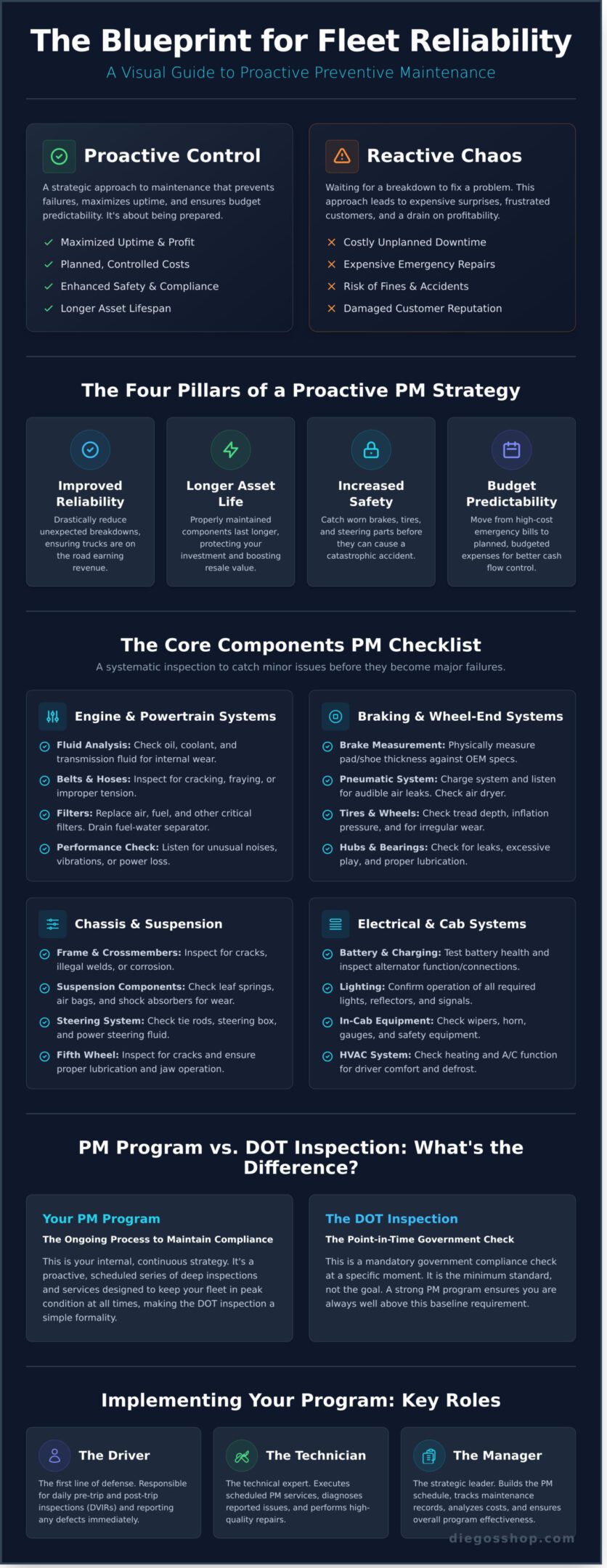
It’s crucial to understand that a PM program and a DOT inspection are not the same. A DOT inspection is a mandatory government compliance check at a specific point in time. Your internal PM program is the ongoing, disciplined process that ensures your vehicles are always in a state of compliance. A strong PM strategy makes passing DOT inspections a routine, stress-free event.
Key Benefits of a Proactive PM Strategy
Implementing a disciplined PM plan delivers measurable, mission-critical advantages for your entire operation. It moves your maintenance from an unpredictable cost center to a strategic investment.
- Increased Safety: Catching worn brake pads, thinning tire treads, or failing steering components before they lead to an accident protects your drivers and the public.
- Improved Reliability: Drastically reduce the frequency of unexpected breakdowns, ensuring your trucks are on the road earning revenue, not on the shoulder waiting for a tow.
- Longer Asset Life: Well-maintained engines, transmissions, and chassis last significantly longer, protecting your investment and increasing the vehicle’s resale value.
- Budget Predictability: Shift from unpredictable, high-cost emergency repair bills to planned, budgeted maintenance expenses, giving you greater control over your cash flow.
The Core Components of a Diesel Fleet PM Program: A Comprehensive Checklist
A truly effective preventive maintenance program goes far beyond a simple oil change. It’s a comprehensive, systematic inspection designed to catch minor issues before they become catastrophic failures that sideline your assets. This master checklist is built on technical mastery and aligns with the rigorous best practices established by industry leaders like the Technology & Maintenance Council (TMC). Use it to ensure your PM service is always done right.
Engine and Powertrain Systems
The heart of your truck demands meticulous attention. These checks ensure the powertrain operates with maximum efficiency and reliability, protecting your most expensive components from premature wear.
- Fluid Analysis: Go beyond just changing fluids. Analyze engine oil, coolant, and transmission fluid samples to diagnose internal wear and contamination issues early.
- Belts, Hoses, and Clamps: Visually and physically inspect for signs of cracking, fraying, softness, or improper tension. A failed hose can lead to immediate engine shutdown.
- Filters and Separators: Replace the air filter, fuel filters, and drain the fuel-water separator. Clean air and fuel are critical for performance and longevity.
- Performance Check: Listen for unusual noises, vibrations, or changes in engine performance during operation. Note any issues for further diagnostics.
Braking and Wheel-End Systems
Safety is non-negotiable. A thorough inspection of the braking and wheel-end systems is a cornerstone of any responsible preventive maintenance schedule, ensuring your trucks can stop safely under any load.
- Brake Measurement: Don’t just glance. Measure brake pad and shoe thickness against OEM specifications. Check drums and rotors for heat cracks or excessive wear.
- Pneumatic System Integrity: Charge the system and listen carefully for air leaks at all lines, fittings, and valves. Check air dryer function.
- Tire and Wheel Inspection: Check and adjust tire pressure, measure tread depth, and look for signs of irregular wear that could indicate alignment or suspension problems.
- Wheel-End Components: Inspect wheel bearings for excessive play or noise. Check wheel seals for any signs of lubricant leakage.
Electrical and Emissions Systems
Modern diesel trucks rely on complex electrical and aftertreatment systems. Proactive checks prevent frustrating no-start situations, compliance violations, and costly component failures.
- Battery and Charging System: Test battery health, clean terminals of any corrosion, and verify the alternator is charging correctly.
- Lighting and Visibility: Activate and inspect all lights-headlights, brake lights, turn signals, and marker lights-to ensure full functionality and compliance.
- Wiring Harnesses: Visually inspect all accessible wiring for chafing, corrosion, or damage, securing any loose connections.
- Aftertreatment Systems: Service the Diesel Particulate Filter (DPF), Exhaust Gas Recirculation (EGR), and Selective Catalytic Reduction (SCR) systems according to OEM intervals.
Chassis, Suspension, and Cab
The truck’s foundation handles immense stress. Regular lubrication and inspection of the chassis and suspension are vital for driver comfort, vehicle stability, and structural integrity.
- Lubrication: Methodically lubricate every grease point (zerk) on the chassis, steering linkage, and driveline to prevent seizure and wear.
- Suspension Components: Inspect leaf springs for cracks, check shock absorbers for leaks, and examine airbags for damage or dry rot.
- Steering System: Check all steering components, including the tie rods and steering box, for looseness or excessive play.
- Frame Inspection: Carefully inspect the frame rails and cross-members for cracks, rust, or damage, especially on vocational trucks subjected to heavy or uneven loads.
Building Your Custom Preventive Maintenance Schedule
A generic checklist is a recipe for inefficiency and missed service opportunities. A truly effective preventive maintenance schedule is customized to your fleet’s unique operational demands. The right service interval isn’t a guess-it’s a calculated decision based on vehicle type, age, application, and manufacturer recommendations. To get it done right, we build plans based on three proven methodologies.
Scheduling by Mileage
For over-the-road (OTR) trucks that consistently accumulate high mileage, this is the most direct approach. It ties maintenance directly to the wear and tear from travel, ensuring service is performed when needed. A typical schedule might look like this:
- Service ‘A’: A routine inspection every 15,000 miles.
- Service ‘B’: A more comprehensive service every 45,000 miles.
This method’s success depends entirely on diligent and accurate mileage tracking for every asset in your fleet.
Scheduling by Engine Hours or Time
This method is ideal for vocational trucks-like dump trucks, cement mixers, or utility vehicles-that spend significant time idling or operating PTOs. For these assets, mileage doesn’t tell the whole story of engine wear. Instead, service is triggered by engine run time (e.g., every 250 hours) or a simple calendar date (e.g., quarterly) for low-use or seasonal equipment.
Creating Tiered Service Intervals (A, B, C Service)
To streamline your maintenance process, group tasks into tiered service levels. This structure ensures both efficiency for routine checks and comprehensive coverage for major components over time.
- A-Service: A frequent, basic inspection covering critical safety and fluid checks like tires, brakes, lights, and oil levels.
- B-Service: A more detailed service that includes all A-Service tasks plus key replacements like fuel filters, air filters, and chassis lubrication.
- C-Service: A major, less frequent overhaul. It includes all A and B tasks plus deeper inspections and replacement of components like coolant, belts, and hoses.
The Importance of Record Keeping
In fleet management, what isn’t documented didn’t happen. Meticulous record-keeping is non-negotiable. Whether you use a simple logbook, a spreadsheet, or advanced fleet management software, every service and repair must be recorded. Detailed records are the backbone of any successful preventive maintenance program, proving DOT compliance, protecting your assets, and significantly increasing resale value.
Overwhelmed? Let our experts build a custom PM plan for your fleet.
Implementing Your PM Program: Tools and Best Practices
A detailed plan is an excellent start, but its success hinges on consistent execution and follow-through. Effective implementation requires a coordinated effort from your entire team-drivers, technicians, and managers-supported by the right tools and reliable partners. This is where your preventive maintenance strategy transforms into tangible results, ensuring your fleet remains a dependable and profitable asset.
The Driver’s Role: Daily Vehicle Inspection Reports (DVIRs)
Your drivers are the first line of defense in identifying potential vehicle issues. Thorough pre-trip and post-trip inspections are non-negotiable, as they catch minor problems like worn belts, low fluids, or windshield chips before they escalate into major failures. A detailed DVIR provides the critical, real-time data that feeds your entire maintenance program, turning a driver’s daily observations into actionable service tickets.
Even a small chip can quickly spread, compromising the windshield and leading to costly replacements and downtime. This is a perfect example of a minor issue that preventative maintenance should address. Specialized mobile services are ideal for this; for instance, while based in Denmark, Alt Autoglas shows how on-site glass repair can be handled efficiently to minimize vehicle downtime.
Choosing a Maintenance Partner: In-House vs. Outsourced
While an in-house team offers direct control, it also comes with significant overhead for staffing, training, and equipment. For many fleets, partnering with a specialized diesel repair shop is a more cost-effective and reliable solution that provides:
- Access to certified master technicians with deep expertise.
- Use of advanced diagnostic software for accurate troubleshooting.
- Elimination of high capital costs for specialized tools and equipment.
A trusted partner like Diego’s Shop ensures every service is done right, using the correct procedures and warrantied parts to maximize your uptime.
Leveraging Technology: Telematics and Fleet Software
Modern technology makes managing fleet maintenance more efficient than ever. Telematics systems automatically track key data points like mileage, engine hours, and diagnostic trouble codes (DTCs), triggering alerts when service is due. This data integrates seamlessly with fleet management software to streamline your preventive maintenance scheduling, document all work performed, and maintain a complete, compliant service history for every asset in your fleet.
Partner with Diego’s Shop for Maintenance Done Right
Creating a plan is the first step, but consistent execution is what protects your assets and your bottom line. Managing a comprehensive preventive maintenance program is a significant task that demands time, specialized tools, and deep technical knowledge. For fleet managers across Utah, this is where a trusted partner becomes invaluable. Diego’s Shop moves beyond simple repairs to offer a complete maintenance solution, giving you the freedom to focus on your core business operations with total peace of mind.
Expertise in All Major Diesel Brands
Our ASE-certified technicians possess a deep mastery of modern diesel systems. We have the advanced diagnostic equipment and hands-on experience to service your entire fleet, from light-duty pickups to heavy-duty long-haul giants. We understand the unique demands of each vehicle class and deliver service that is precise, efficient, and built to last.
- Light-Duty Pickups: Ford, Ram, and GM
- Medium-Duty Workhorses: Isuzu, Hino, and Freightliner
- Heavy-Duty Haulers: Peterbilt, Kenworth, Volvo, and Mack
Customized Fleet Maintenance Plans
Your fleet isn’t generic, and your maintenance plan shouldn’t be either. We reject the one-size-fits-all approach. Instead, we work directly with you to develop a custom maintenance schedule based on your specific vehicles, their applications, mileage, and your operational goals. Our objective is clear: to build a proactive strategy that maximizes your uptime, improves reliability, and minimizes your long-term costs.
Warrantied Work and Honest Communication
Trust is the foundation of our business. We stand behind every service and repair with a comprehensive warranty, ensuring our work meets the highest standards of quality and durability. You can expect clear, upfront communication and transparent pricing on every job. Our mission isn’t just to fix trucks; it’s to build a long-term partnership dedicated to your fleet’s success. Let us handle the complexities of your fleet’s preventive maintenance so you can get back to running your business. Learn more about our commitment to rugged reliability at diegosshop.com.
Your Partner in Uptime and Reliability
Ultimately, transforming your fleet’s health from a reactive problem into a proactive asset is the key to long-term success. A structured approach isn’t just about avoiding breakdowns; it’s about building a dependable operational rhythm that fuels growth and customer satisfaction. Implementing a comprehensive preventive maintenance program is your most powerful strategy against the unexpected downtime and costly emergency repairs that can cripple your schedule and your budget. It’s the definitive way to take control of your assets and your bottom line.
When you’re ready to implement a program that delivers real results, partner with the experts who get it done right. At Diego’s Shop, our certified mastery of modern diesel technology ensures every inspection and repair is performed to the highest standard. Serving fleets across Utah County and the Wasatch Front, we stand behind our work with a 100% warranty, giving you complete peace of mind. Let our team build a maintenance strategy that keeps your vehicles on the road and your business moving forward.
Schedule a Fleet Maintenance Consultation Today.
Frequently Asked Questions About Preventive Maintenance
What is included in a typical preventive maintenance service for a truck?
A typical service includes a comprehensive inspection of all critical systems. This means an engine oil and filter change, checking and topping off all essential fluids like coolant and transmission fluid, and a thorough brake system evaluation. Our certified technicians also inspect tire pressure and tread depth, test the battery and charging system, and ensure all lights, belts, and hoses are in reliable working condition. It’s a complete health check for your vehicle.
How much does a fleet preventive maintenance program cost?
The cost of a fleet program varies based on your specific needs, including vehicle type (e.g., a Ford F-350 vs. a Peterbilt), the type of oil used, and the frequency of service. While there isn’t a single flat rate, we provide honest, transparent quotes tailored to your fleet. Think of it not as a cost, but as a crucial investment in reliability that prevents larger, more expensive repairs down the road.
How often should I perform preventive maintenance on my diesel trucks?
The ideal service interval depends on the manufacturer’s recommendations and how you use your trucks. For heavy-duty diesel trucks, a common interval is every 15,000 to 25,000 miles. However, vehicles operating in severe conditions-like frequent stop-and-go city driving or heavy hauling-may require more frequent checks. We help you create a custom schedule that ensures rugged reliability and protects your engine, ensuring every service is done right and on time.
What’s the difference between preventive maintenance and a standard oil change?
A standard oil change is just one component of a complete preventive maintenance service. While an oil change is vital, a PM service is a comprehensive, bumper-to-bumper inspection. Our technicians check your truck’s brakes, tires, suspension, electrical systems, and fluid levels to identify potential issues before they become catastrophic failures. It’s the difference between a simple task and a complete strategy for vehicle health and long-term dependability.
Can a good PM program really save my business money?
Absolutely. A well-executed PM program is one of the best investments you can make. It drastically reduces costly, unplanned downtime and emergency roadside repairs. By catching small issues early, you avoid major component failures. Furthermore, properly maintained vehicles run more efficiently, saving you money on fuel and extending the operational life of your entire fleet. It directly protects your bottom line and keeps your business moving forward.
What are the most common issues found during preventive maintenance checks?
Our certified technicians commonly identify several key issues during PM checks. The most frequent findings include worn brake components, incorrect tire pressure, and uneven tread wear, which can impact safety and fuel economy. We also often find dirty fuel and air filters that restrict performance, weakening batteries that are close to failure, and minor fluid leaks that could lead to significant engine or transmission damage if left unaddressed.
How can I effectively track maintenance schedules for a dozen different vehicles?
For a fleet that size, a simple spreadsheet can track basic mileage and dates. However, for true efficiency, dedicated fleet management software is the best solution, often integrating with vehicle telematics for real-time alerts. As your trusted partner, we can also help manage your schedule. We maintain detailed service records for every vehicle and can send you timely reminders, ensuring no truck ever misses a critical service appointment.