
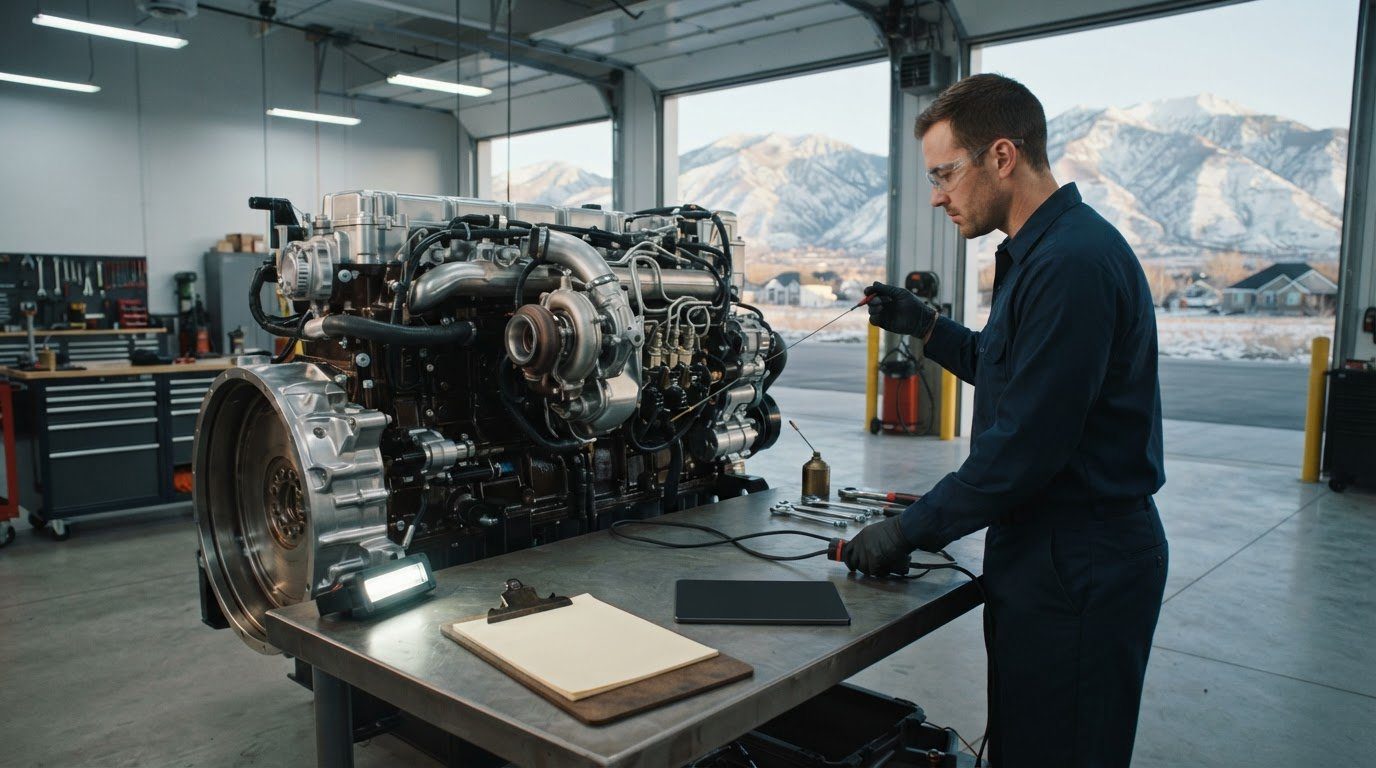
Post-Overhaul Diesel Engine Break-In Procedure: A Practical Guide

The safest post-overhaul diesel engine break-in procedure isn’t a universal mileage recipe. Too much idling, excessive load, or advice meant for a different engine can put a fresh rebuild at risk. Start with the engine manufacturer’s instructions and the rebuild provider’s guidance.
If you’re unsure how long to idle, how hard to work the engine, or when to schedule its first follow-up service, the answer depends on the instructions for your engine and rebuild. Careful operation matters, but “babying” every engine isn’t a substitute for following its specifications. This guide shows how to build a practical break-in plan around the engine, its operating conditions, and the instructions that apply to your rebuild.
You’ll learn what to check before the first start, how to vary engine speed and load without guessing, and which warning signs need prompt attention. We’ll also cover what to monitor and how to plan early maintenance, so you can protect a work truck or fleet vehicle as it returns to service.
Key Takeaways
- Build the post-overhaul diesel engine break-in procedure around the written instructions for the specific engine and rebuild, not a generic mileage target.
- Use the applicable specifications to guide decisions about idling, engine load, RPM, and oil rather than relying on blanket advice.
- Keep an operating log of conditions, readings, inspections, and changes to make emerging concerns easier to identify.
- Know which unusual symptoms call for stopping safely and getting a professional assessment instead of continuing the break-in.
- Keep engine identification, overhaul records, and monitoring notes together to help a diesel technician assess concerns and plan follow-up maintenance.
What a Post-Overhaul Diesel Engine Break-In Is, and Why the First Operating Period Matters
A post-overhaul diesel engine break-in procedure is the engine-specific plan for operating a rebuilt engine during its initial period in service. It isn’t a universal mileage target or a set of rules for every diesel. The goal is to operate the engine in a way that matches the parts, machining, and assembly work completed during the overhaul.
Some renewed components need to settle into their working relationship under controlled operating conditions. For example, piston rings and cylinder walls must work together to form an effective seal. The overview of engine break-in explains this general process, but the exact approach for a rebuilt diesel comes from its engine builder and rebuild provider.
Keep first-start and commissioning checks separate from the break-in period that follows. Initial checks confirm that the engine is operating as intended after assembly. Break-in guidance covers how to operate it afterward. Both matter, so follow the written instructions for checks, operating conditions, and required follow-up rather than improvising.
What changes after a diesel engine overhaul?
The overhaul scope affects which components were renewed and what needs attention during operation. An in-frame repair may replace or recondition selected components, while a complete overhaul may involve more parts and machine work. Component fit and cylinder finish can also affect the instructions. Don’t assume a fixed break-in duration without guidance for the specific engine and rebuild.
Use the written instructions to identify which procedures apply to the work performed. A general recommendation may not fit the parts or specifications in your engine.
Why is there no single break-in schedule for every diesel?
Manufacturer guidance, rebuild scope, installed components, and intended duty cycle all affect the plan. A truck returning to regular fleet work may face different operating demands from a vehicle used lightly. Cummins, Caterpillar, and Detroit Diesel are examples of distinct engine families, so a recommendation for one shouldn’t automatically be applied to another.
The engine-specific procedure governs break-in, not a generic schedule found online. Before operating the vehicle, locate the written directions from the engine builder and rebuild provider. If the directions address the same issue differently, resolve the conflict before proceeding. This gives owners and fleet managers a clear basis for protecting the overhaul and planning a controlled return to service.
How to Follow a Post-Overhaul Diesel Engine Break-In Procedure
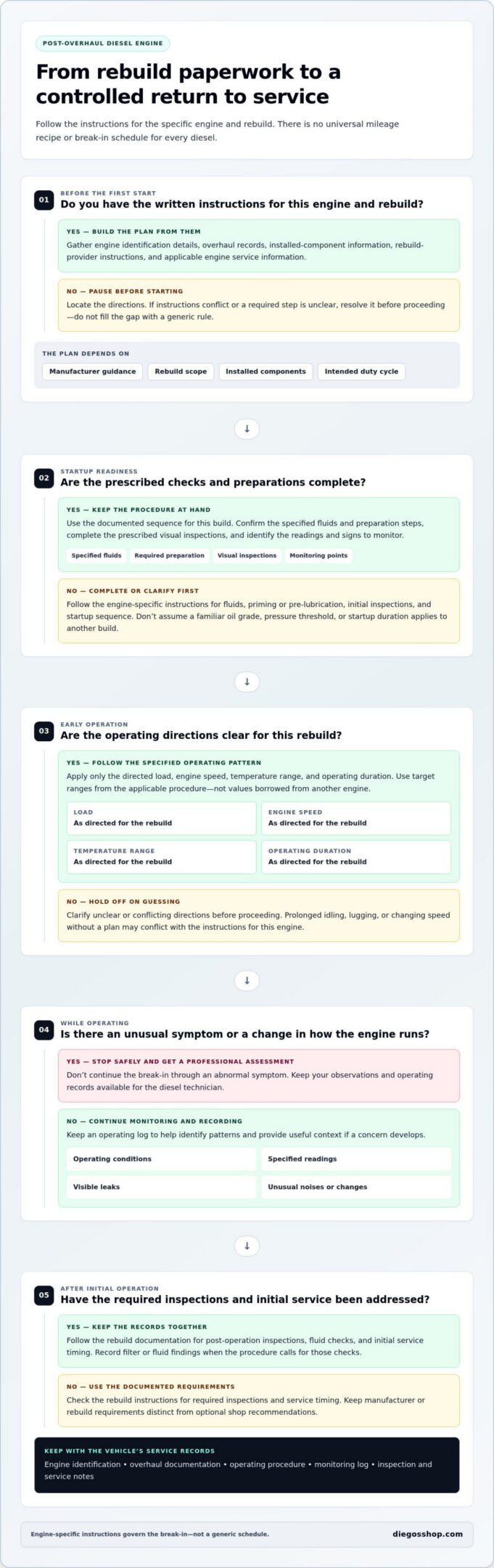
A reliable post-overhaul diesel engine break-in procedure begins with the paperwork, not the ignition key. Use the rebuild provider’s written instructions and the applicable engine service information to make a step-by-step plan. If directions conflict or a required step is unclear, resolve that before starting the engine instead of filling the gap with a generic rule.
Before the first start: confirm the rebuild and startup instructions
Gather the engine identification details, rebuild documentation, information about installed components, and relevant service instructions. Review the specified fluids, pre-lubrication or priming steps, and initial inspection sequence for this engine. Don’t assume a familiar oil grade, pressure threshold, or startup duration applies to a different build.
Use the documented checks as your starting checklist:
- Confirm the specified fluids and any required preparation steps.
- Complete the prescribed visual inspections before starting.
- Identify the readings and signs the instructions require you to monitor.
- Keep the written procedure available during startup and early operation.
During early operation: follow the specified operating pattern
Apply only the load, engine speed, temperature range, and operating duration directed for the rebuild. Some technical break-in discussions address loading and limiting long idle periods, including the guidance in this Engine Professional break-in reference. Use such material as context, not as a replacement for the instructions governing your engine. Prolonged idling, lugging, or changing speed without a plan may conflict with those instructions.
Record observations as you go, using the procedure’s target ranges rather than values borrowed from another engine. Note operating conditions, specified readings, visible leaks, unusual noises, and changes in how the engine runs. A clear record can reveal patterns and give a technician useful context if a concern develops.
After initial operation: inspect and service as directed
Follow the rebuild documentation for post-operation inspections, fluid checks, and initial service timing. Record filter or fluid findings when the specified procedure calls for those checks. Keep required manufacturer or rebuild instructions distinct from optional shop recommendations so the next maintenance decision is clear.
For a work truck or fleet vehicle, keep the procedure and operating log with its service records. If the engine develops an abnormal symptom or the instructions call for an inspection, diesel repair support can help assess the concern before the vehicle returns to routine work. Diesel engine repair support can also help owners and fleet managers plan follow-up maintenance.
Break-In Advice: Idling, Load, RPM, and Oil Compared
Conflicting break-in advice often sounds certain: idle for a set time, keep the engine below a particular speed, or change the oil after a standard distance. Those rules can’t account for every engine design or overhaul scope. Use the table to identify common claims, then follow the written instructions for your rebuild.
| Operating question | Common blanket claim | Specification-led response |
|---|---|---|
| How long should it idle? | Let it idle for an extended period to “settle in.” | Follow the documented startup and idling directions. Warm-up instructions don’t automatically justify prolonged idling. |
| Should it run under load? | Keep all load off, or apply heavy load to seat components. | Use only the load and operating pattern prescribed for the engine and rebuilt components. |
| What RPM is safe? | Stay below one universal RPM limit. | Use the specified speed range and avoid lugging, overspeeding, or abrupt heavy loading. |
| Which oil and when should it be changed? | Use a particular oil type or a standard first-service interval. | Follow the rebuild and manufacturer requirements for oil and service timing. |
The Engine Builders Association break-in guide offers industry context on operating a rebuilt engine. Treat it as general reference material, not a substitute for the instructions tied to your engine.
Should a freshly overhauled diesel idle for a long time?
Startup and warm-up directions address initial operation, but they don’t establish a universal rule for extended idling. Follow the rebuild documentation for how the engine should idle and what to check. If it runs roughly, shows a warning light, or produces a reading outside the specified range, don’t treat the symptom as routine break-in. Seek prompt assessment.
Should you drive under load or keep engine RPM low?
Load and speed guidance depends on the engine and the work performed. Controlled operation means staying within the documented pattern, not lugging the engine at low speed, overspeeding it, or applying abrupt heavy load. Don’t substitute a generic RPM band, mileage target, or load percentage for the written directions.
Which oil and first service interval should you use?
Use the oil grade and applicable requirements specified for the engine and overhaul. The same applies to the first oil and filter service: timing comes from the documented procedure, not a common internet interval. For routine maintenance after the break-in requirements are complete, review the shop’s diesel oil change interval guidance. Keep routine service advice separate from rebuild-specific instructions.
A Post-Overhaul Diesel Engine Monitoring Checklist for the First Operating Period
A written log turns early operation into useful information. It helps you spot changes, compare readings with the engine’s specifications, and give a technician a clear account if something seems wrong. Keep the log with the rebuild documents and follow the monitoring steps in the post-overhaul diesel engine break-in procedure.
What should you record after each operating period?
Make an entry after each operating period or inspection required by the rebuild instructions. Record the vehicle and engine, date, engine hours or mileage, duty conditions, and any readings specified in the procedure. Note what you inspected and whether anything changed since the previous entry.
- Specified readings, such as oil pressure and coolant temperature, compared with the engine’s stated normal ranges.
- Fluid loss or visible leaks, including where you observed them.
- Changes in smoke, engine sound, or vibration.
- Warning indicators, when they appeared, and any accompanying symptoms.
Patterns matter. A reading may appear acceptable on its own yet shift across successive checks. Record the conditions around each observation, since changes in duty or operating conditions can help explain a trend.
Which symptoms mean you should stop and get the engine assessed?
Don’t treat every change as routine break-in. A warning light, severe or sudden noise, overheating, an abrupt pressure change, or substantial fluid loss can signal a problem that needs assessment. If continued operation could risk engine damage or vehicle safety, stop in a safe place and arrange diagnostic attention.
Before seeking assessment, note the warning or symptom, when it began, the operating conditions, relevant readings, and whether the issue changed after stopping. Keep the engine identification, rebuild records, and log together. Clear details help a technician assess the concern without guesswork.
How should fleet operators manage break-in consistently?
Give drivers one written checklist tailored to each engine and rebuild. Identify the vehicle, engine, applicable instructions, and responsible operator on the log. Use a shared reporting process so readings and concerns reach the person responsible for maintenance instead of staying in an individual driver’s notes. Carry the same recordkeeping into broader fleet preventive maintenance planning.
For help assessing a concern or planning follow-up diesel maintenance, discuss diesel engine care with Diego’s Shop.
When to Get Professional Diesel Repair Support After an Overhaul
Break-in is not a reason to keep operating through a clear warning sign. If the engine develops a symptom outside its written procedure, seek assessment instead of assuming it’s part of normal operation. A warning indicator, abnormal noise, overheating, a sudden change in a required reading, or visible fluid loss may call for diagnosis. Stop safely if continued operation could put the engine or vehicle at risk.
What information helps diagnose a post-overhaul concern?
Bring the engine identification and records showing what work was completed. Connecting symptoms to the overhaul and operating conditions gives a technician more useful context for the assessment.
- Overhaul scope, installed-part details, and service records.
- The written break-in instructions and any required inspection steps.
- Your operating log, including duty conditions, readings, and when symptoms began.
- Warning indicators, changes in sound or performance, and any visible leaks or fluid loss.
Record diagnostic messages and observations before making changes, when it’s safe to do so. Don’t clear diagnostic information or alter operating conditions just to see whether a symptom disappears. If the vehicle is unsafe to operate, prioritize stopping safely and arranging an assessment.
How does a diesel specialist support a reliable return to service?
A diesel specialist can review the records, assess the reported concern, and perform preventive maintenance suited to the engine and its operating history. Follow-up can help identify leaks, abnormal readings, or developing performance issues that need attention. It supports reliability, but it doesn’t replace the engine-specific break-in instructions or required service steps.
Diego’s Shop provides diesel engine repair and preventive maintenance for light-, medium-, and heavy-duty vehicles. For individual owners and fleet managers, an accurate assessment can help clarify what documented symptoms mean and what maintenance should follow. Keep the rebuild provider’s instructions at the center of any repair or return-to-service decision.
What is the next step for owners and fleet managers?
Have the post-overhaul diesel engine break-in procedure, engine identification, rebuild records, and monitoring log ready when discussing the vehicle. Ask operators to report new symptoms promptly rather than relying on a generic schedule or continuing without guidance. Consistent records help technicians understand what changed and when.
For diesel repair support in Utah County and the Wasatch Front, get dependable diesel repair support from Diego’s Shop.
Put Your Overhauled Diesel Engine on a Clear Path Forward
A sound post-overhaul diesel engine break-in procedure starts with the written instructions for the specific engine and rebuild. Follow those directions for startup, load, speed, oil, and service timing instead of relying on generic rules. Then keep an operating log. Changes in readings, sound, smoke, or fluid levels can give a technician useful clues when a concern develops.
Follow-up maintenance supports a reliable return to work for individual vehicles and commercial fleets. Diego’s Shop provides diesel engine repair for light-, medium-, and heavy-duty vehicles, along with preventive maintenance and warrantied repair work.
If you’ve noticed an unusual symptom or need help planning follow-up care, get diesel repair support from Diego’s Shop. Follow the engine-specific procedure, keep clear records, and address changes promptly as you return the vehicle to service.
Frequently Asked Questions
How long should you break in a diesel engine after an overhaul?
Follow the break-in duration specified by the engine manufacturer and rebuild provider. There’s no single mileage or operating-hour target for every overhaul. The required period can depend on the engine and the work completed. Check the written post-overhaul diesel engine break-in procedure for operating limits, monitoring steps, and the first service interval. If the instructions are missing or unclear, get them clarified before relying on a generic schedule.
Can you drive a diesel truck normally after an engine overhaul?
Not necessarily. Return the truck to regular duty according to the rebuild instructions, including any limits on load, engine speed, and operating conditions. Don’t assume it’s ready for full routine use simply because it starts and runs. Track readings and symptoms during the specified break-in period. If a warning appears or the engine behaves abnormally, stop safely if needed and arrange an assessment before continuing work.
Should a freshly rebuilt diesel engine idle before driving?
Follow the documented startup and warm-up instructions for that engine. These directions address initial operation, but they don’t automatically call for extended idling. Use the rebuild provider’s instructions to determine what to do after startup and before driving. If it runs roughly, displays a warning, or shows readings outside its specified range, don’t dismiss the issue as normal break-in behavior.
Should you keep RPM low during diesel engine break-in?
Use the speed guidance in the engine-specific procedure rather than trying to keep RPM low at all times. The right operating range depends on the engine and rebuilt components. Avoid lugging the engine, overspeeding it, or applying abrupt heavy load, but don’t invent a universal RPM ceiling. Follow the prescribed operating pattern and record required readings to identify changes during early operation.
What oil should you use after a diesel engine overhaul?
Use the oil grade and specifications required by the engine manufacturer and rebuild instructions. Don’t choose an oil based only on general break-in advice or assume a particular formulation suits every diesel. The same applies to additives: use them only if the applicable instructions call for them. Follow the documented timing for the first oil and filter service, since the correct interval can depend on the engine and overhaul.
What happens if a diesel engine makes noise or loses fluid after an overhaul?
Unusual noise or fluid loss can indicate a concern that needs assessment, so don’t automatically treat it as normal break-in. Stop safely if continued operation could risk engine damage or vehicle safety, especially if there’s overheating, a warning indicator, or a sudden change in a required reading. Note when the symptom began, the operating conditions, and any related readings. Share those details and the rebuild records with a diesel technician.
Does every diesel engine need the same break-in procedure after an overhaul?
No. The procedure can differ with the engine family, manufacturer instructions, overhaul scope, and components installed. An in-frame repair may involve different work from a complete overhaul, so the operating guidance may differ too. Use the written directions for the specific engine and rebuild instead of borrowing another engine’s schedule. Keep the instructions with the vehicle’s service records so operators and technicians can refer to the same procedure.