
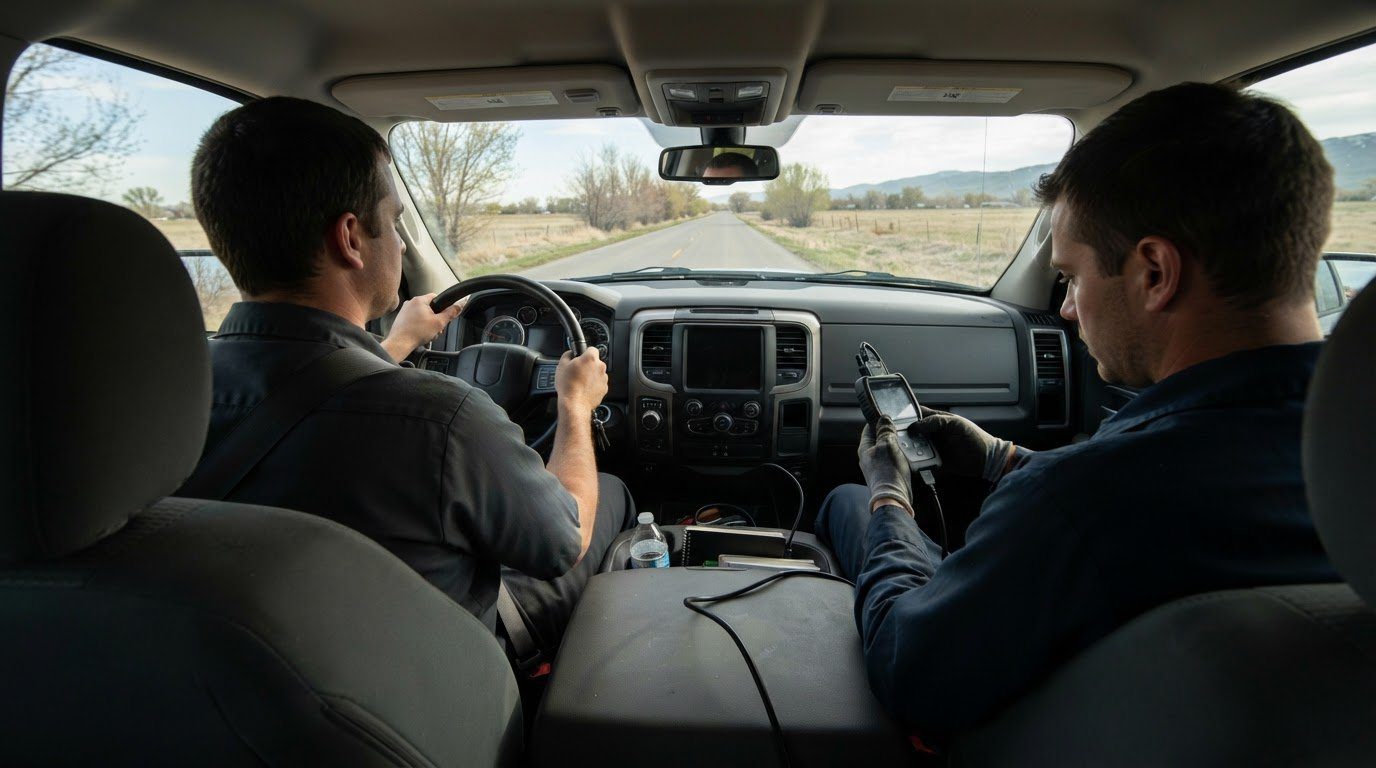
P0299 Underboost Fault Code on Duramax: Read Boost Data

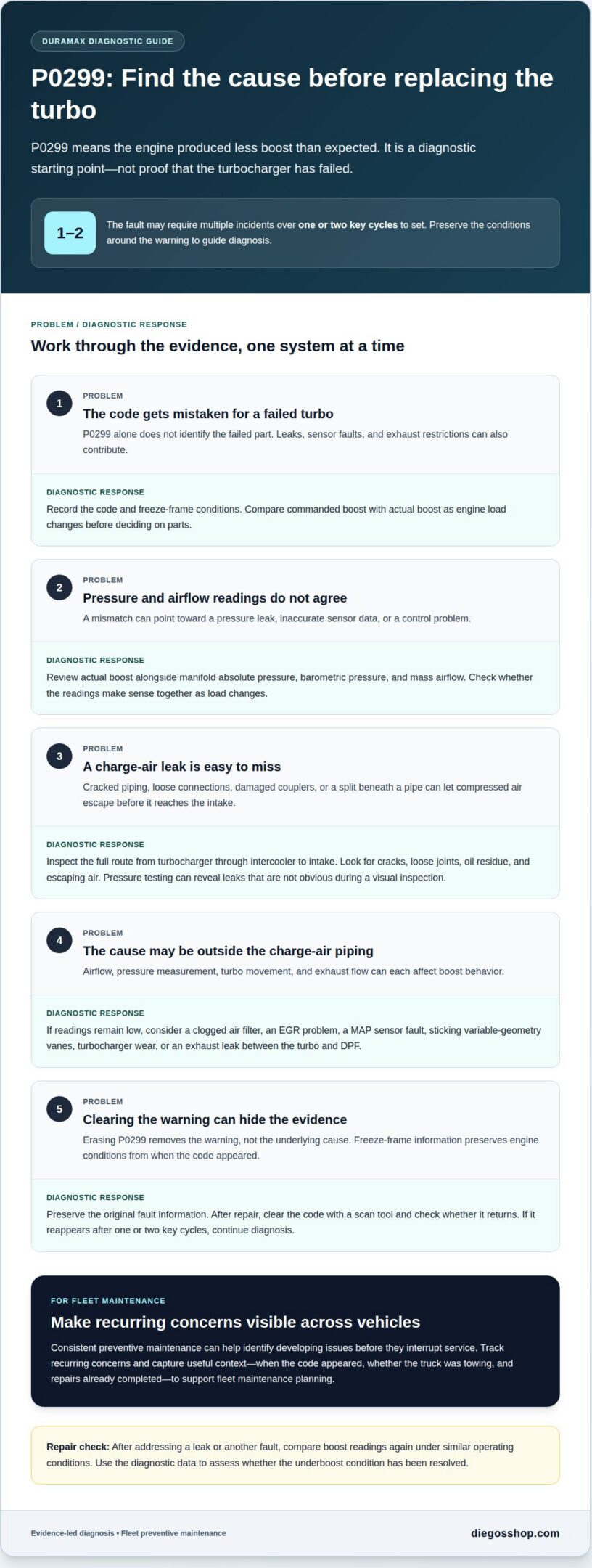
The turbo isn’t automatically the problem when a Duramax sets P0299. The code means the engine produced less boost than expected. P0299 underboost fault code diagnosis for a Duramax starts by comparing commanded boost with live boost and intake-pressure readings, not by assuming the turbo needs replacement.
A low reading can point to a leak in the charge-air system, including cracked intercooler piping, or to another issue affecting pressure data. The code alone doesn’t identify the failed part. This guide explains how P0299 underboost fault code diagnosis on a Duramax uses scan data and freeze-frame information to narrow the cause, and why inspecting piping matters before deciding on repairs.
Key Takeaways
- P0299 may require multiple fault incidents over one or two key cycles to set, so the conditions around the warning matter.
- Freeze-frame information preserves engine conditions from when the code appeared; the U.S. Environmental Protection Agency explains that scan tools can retrieve this data.
- After a repair, use diagnostic data to assess whether the underboost condition has been resolved before clearing the code.
- For fleet vehicles, consistent preventive maintenance can help identify developing issues before they interrupt service.
Boost and intake pressure live data
Live scan data compares requested boost with measured pressure as engine load changes. These readings help distinguish a pressure leak from a sensor or airflow problem.
Boost and Intake Pressure Readings
Boost and intake pressure readings are scan-tool measurements of pressure entering the engine and pressure produced by the turbocharger. Compare commanded boost with actual boost while reviewing manifold absolute pressure, barometric pressure, and mass airflow data. These values should make sense together as engine load changes. A mismatch can point toward a leak, a sensor issue, or a control problem. The U.S. Environmental Protection Agency explains that a scan tool connected to the data link connector can retrieve diagnostic trouble codes and freeze-frame information.
To diagnose P0299, first record the code and freeze-frame conditions, then compare live pressure and airflow readings as load changes. Next, inspect the charge-air path and related exhaust components, using the data to guide further testing rather than replacing the turbo based on the code alone.
Boost Leak Inspection
A boost leak inspection checks the pressurized path from the turbocharger through the intercooler to the intake. Look for cracked piping, loose connections, damaged couplers, and signs of escaping air. A leak can reduce the pressure reaching the engine even when the turbo is producing boost. A visible crack in intercooler piping is one possible cause of an underboost code. Pressure testing can help locate leaks that aren’t apparent during a visual inspection.
A clogged air filter can restrict incoming airflow, while an EGR problem can affect air and boost behavior. An exhaust leak between the turbocharger and DPF can also trigger codes or related problems. If live readings show pressure below the requested level, inspect these paths before concluding that the turbo has failed.
What Is the P0299 Code?
P0299 reports that the Duramax produced less boost than expected. It’s a diagnostic starting point, not proof that the turbocharger needs replacement. The code may require multiple fault incidents over one or two key cycles before setting. That pattern makes the conditions around the fault useful for diagnosis.
Some GM Duramax 6.6 diesel engines from model years 2011 through 2017 may experience turbocharger failures. That does not mean every P0299 on those trucks comes from a failed turbo. Diagnosis should distinguish turbo wear from leaks, sensor faults, or exhaust restrictions before a repair decision.
A P0299 code alone doesn’t establish whether a truck is safe to drive. Treat it as a fault requiring diagnosis before heavy towing. Turbo bearing and shaft wear can allow oil into the turbine and compressor housings. That oil can clog the DPF, restrict exhaust flow, and contribute to low boost.
Yes, a faulty manifold absolute pressure sensor can contribute to P0299. Its reading helps the engine computer assess intake pressure, so inaccurate data can distort the boost diagnosis.
TSB 15457 is associated with aligning a leaking downpipe and DPF. That bulletin reference doesn’t establish a recall or prove it applies to every P0299. A downpipe leak can also make DPF pressure-sensor readings inaccurate.
After repairs, preserve the original fault information, clear P0299 with a scan tool, then check whether it returns. Clearing the code erases the warning, not the cause. If it reappears after one or two key cycles, continue diagnosis instead of repeatedly clearing it. A returning code means the underboost condition still needs attention.
Cracked intercooler piping
A crack in intercooler piping can release compressed air before it reaches the intake. The turbo may be working, yet boost at the engine remains lower than expected. Check the full charge-air route, including pipe joints, couplers, and bends. A split underneath a pipe can be easy to miss, so examine surfaces and connections closely.
Oil residue, loose couplers, or a visible split can help identify a leak. A technician can pressure-test the charge-air system to reveal leaks that aren’t obvious at rest. After repairing damaged piping or a failed connection, compare boost readings again under similar operating conditions. This helps confirm whether the leak caused the low reading or another fault remains.
Other possible causes include sticking variable-geometry turbo vanes, a faulty manifold absolute pressure sensor, turbocharger wear, or an exhaust leak between the turbo and DPF. Each affects airflow, pressure measurement, or exhaust flow differently. Soot buildup, for example, can keep turbo vanes from moving freely, while a sensor fault can report pressure inaccurately. Diagnosis should identify the cause before parts are replaced.
Repairs may involve replacing cracked piping, correcting a connection, addressing a sensor fault, or repairing turbocharger or exhaust problems. Repair cost depends on the cause and is provided after a quote request; the damaged component, access, and related repairs affect the quote. Don’t assume a pipe replacement will solve P0299 until boost data supports that conclusion.
Arrange a focused inspection of the charge-air path and related systems before approving parts replacement. Confirming the cause makes the repair decision clearer.
Diego’s Shop
Diego’s Shop helps Duramax owners and fleet managers move from a P0299 warning to a repair decision grounded in diagnosis. Diesel engine repair can address faults involving the turbocharger, charge-air system, or related engine components. For commercial fleets, preventive maintenance also helps track recurring concerns and plan repairs around vehicle needs.
Share details such as when the code appeared, whether the truck was towing, and any repairs already completed. This context can help connect the warning to operating conditions and guide the next diagnostic steps. Fleet maintenance planning can also keep recurring issues visible across vehicles, rather than treating each warning as an isolated event.
Contact Diego’s Shop to discuss a Duramax P0299 concern or fleet maintenance needs.
Turn the fault into a clear next step
Use the diagnostic findings to guide a repair decision, not simply erase the warning. A careful P0299 underboost fault code diagnosis on a Duramax helps connect the fault with the truck’s operating history and gives the next service decision a solid basis.
For commercial operators, recording recurring concerns can support fleet maintenance planning across vehicles. Diego’s Shop provides diesel engine repair, preventive maintenance, and fleet maintenance, helping owners address individual repair needs while keeping ongoing maintenance in view.
Share the code history and symptoms with the shop to discuss a practical next step for your truck or fleet. Contact Diego’s Shop for help and move forward with a clear plan.
Frequently Asked Questions
What does P0299 underboost mean on a Duramax diesel?
P0299 means the engine’s boost pressure fell below the level it was expected to produce. The code identifies a performance mismatch, not a specific failed part. A Duramax technician uses it to guide further checks, including sensor data, air leaks, and turbocharger operation. That distinction matters: replacing the turbo based on the code alone can miss the actual cause.
What symptoms and warning lights accompany a Duramax P0299 code?
The check-engine light may be the main visible sign, and the truck may still feel normal. A Duramax owner has reported continuing to pull normally while towing with P0299 present. So, normal-feeling power doesn’t rule out a stored fault. Note any change in pulling response and when the light appears, such as during a loaded climb or towing.
What boost pressure readings should a Duramax produce under load?
There isn’t one boost-pressure target that applies to every Duramax under every load. The expected reading depends on engine calibration and operating conditions. A modified LLY, for example, can show mismatched mass airflow, manifold pressure, and barometric pressure readings. Interpret those values alongside commanded boost and the conditions when the code set, rather than relying on one isolated figure.
How can you test a Duramax turbocharger actuator, vane position, and boost leaks?
A technician can compare commanded and reported vane-position data with a scan tool, then assess whether the actuator responds as commanded. Soot-related sticking can interfere with variable-geometry vanes. For leaks, inspect charge-air connections and piping, then pressure-test the system to reveal escaping air. On a Duramax in Utah County, these checks help distinguish a control issue from a leak.
What repairs fix P0299 on a Duramax, and what do they typically cost?
Repairs may include replacing cracked intercooler piping, correcting a loose connection, fixing a sensor fault, or repairing turbocharger or exhaust problems. Cost depends on the cause, damaged component, access, and related repairs; Diego’s Shop provides an honest quote for the work.