
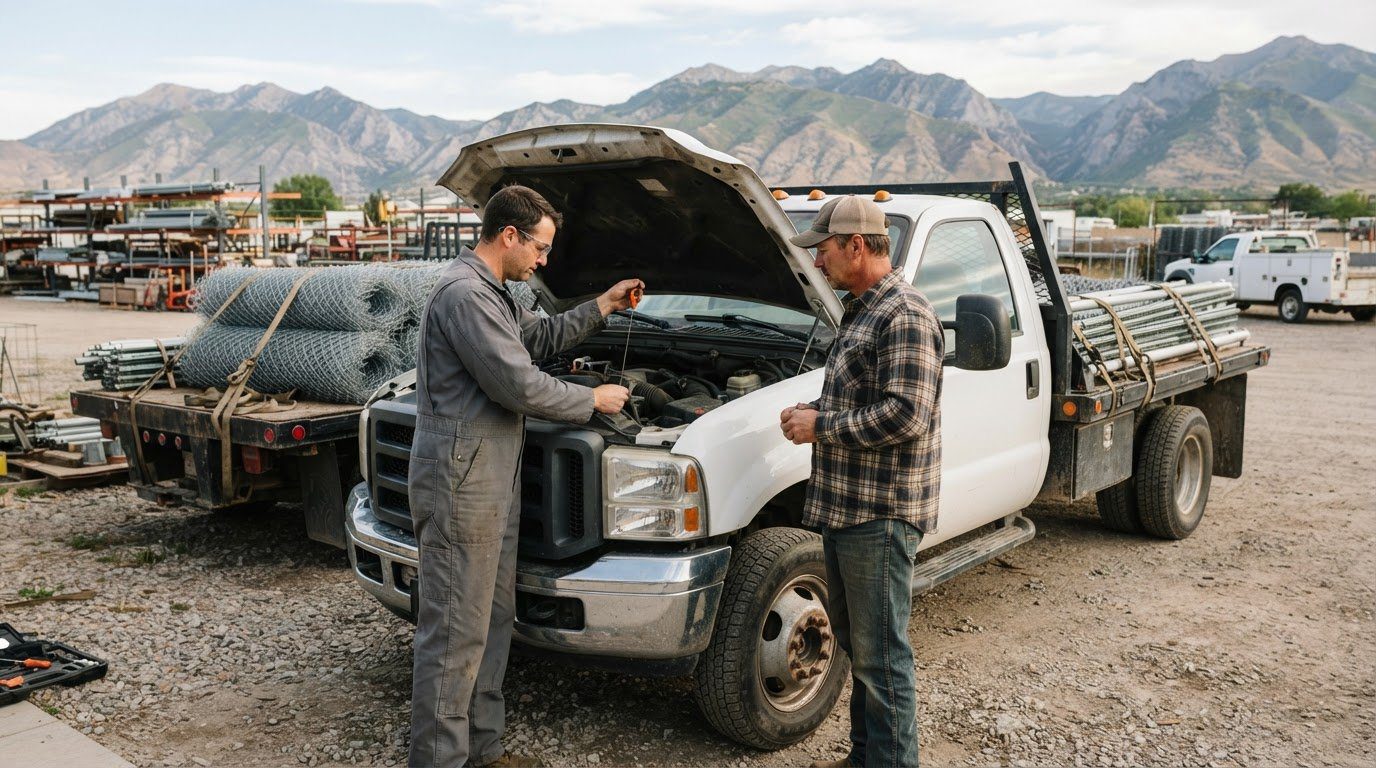
Maintenance Estimates for Fencing Company Trucks in Spanish Fork

A fencing fleet depends on trucks that are ready for the work ahead. Maintenance for fencing company trucks in Spanish Fork starts with matching preventive care to each vehicle’s use and workload. A clear plan helps keep service needs organized.
A practical plan supports daily operations while making room for repairs that need attention. This guide covers what to consider when planning fleet maintenance, how preventive care fits into ongoing service, and what information helps shape a plan for your trucks.
Diego’s Shop provides diesel fleet maintenance and preventive maintenance for commercial fleets. Discuss your trucks’ needs and workload with the shop to plan service around your operation. The right approach depends on each vehicle’s condition, use, and maintenance history.
Key Takeaways
- A fleet estimate can help organize maintenance needs around each truck’s condition and workload.
- Regular preventive maintenance plans give fencing fleets a structured way to manage service over time.
- Understand how commercial vehicle inspection and maintenance requirements relate to your fleet’s operation.
- Explore fleet maintenance support and request a free estimate to plan the next step for your trucks.
Free maintenance estimates
A free estimate helps a fence company understand the maintenance needs of its trucks before planning fleet care. For maintenance of fencing company trucks in Spanish Fork, the estimate should consider each vehicle’s condition, workload, towing demands, and role. A truck hauling posts and panels to an installation may face different demands from a service vehicle carrying lighter equipment.
Towing and heavy loads can place added strain on brakes, suspension, and drivetrain components. Frequent hauling makes these areas important to review during maintenance planning, particularly when trucks carry fencing materials over varied routes. Report changes in braking, handling, or unusual noises so a technician can assess them.
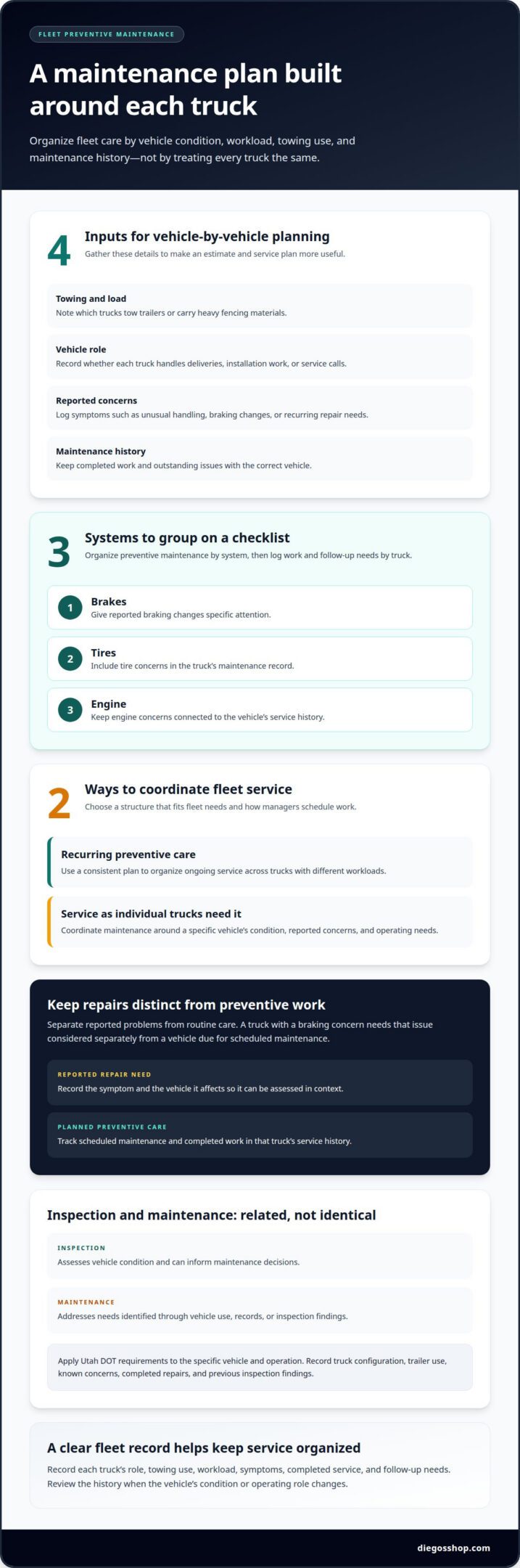
To make maintenance planning useful, gather information about how each vehicle is used. Relevant details include:
- Which trucks regularly tow trailers or carry heavy fencing materials.
- How the vehicles are used, such as deliveries, installation work, or service calls.
- Known concerns, such as unusual handling, braking changes, or recurring repair needs.
- Existing maintenance records that show completed work and outstanding issues.
Organize priorities by vehicle, separating reported problems from routine preventive care. For example, a truck with a braking concern needs that issue considered separately from a vehicle due for scheduled maintenance. This helps fleet managers plan work around operating needs instead of treating every truck the same.
Before approving work, review what the estimate covers and how it separates identified repairs from planned maintenance. Each truck’s condition, towing use, and requested work affect the recommended service. A clear estimate gives fleet managers a practical basis for scheduling care and discussing ongoing maintenance.
Regular maintenance plans
A useful maintenance plan reflects the work each truck handles. A vehicle towing a trailer to fence installations may need different attention from one used for estimates and local trips. For maintenance for fencing company trucks in Spanish Fork, organize service around each vehicle’s use, reported concerns, and completed work.
Diego’s Shop provides fleet and preventive maintenance for diesel trucks. Keep service records by vehicle, including completed work and issues needing follow-up. This gives fleet managers a clear maintenance history to support planning.
- Record each truck’s regular role, towing use, and recurring workload.
- Group checklist items by system, such as brakes, tires, and engine.
- Log completed service, reported symptoms, and follow-up needs by vehicle.
- Review records when operating needs or truck condition changes.
For example, review the history of a truck that frequently hauls fencing materials alongside any reported braking or tire concerns. This helps separate planned preventive care from repairs that need specific attention. Vehicle-by-vehicle records also make it easier to coordinate maintenance across the fleet.
Near Spanish Fork, fleet options include recurring preventive care or maintenance coordinated as individual trucks need service. The right structure depends on fleet needs and how managers schedule work. A consistent approach to maintenance for fencing company trucks in Spanish Fork can make service history and upcoming needs easier to follow.
For a practical starting point, explore fleet maintenance planning and consider how a consistent checklist could support your fences and installation schedule.
What Utah DOT inspection and maintenance rules apply to commercial fencing trucks?
For commercial fencing trucks in Utah, inspection and maintenance needs depend on the vehicle and how it is operated. A pickup towing a trailer to a fence installation has different equipment and demands from a service truck carrying tools. Identify each truck’s configuration, towing use, and commercial role before planning its inspection and service.
A safety inspection and routine maintenance are related but distinct. An inspection assesses vehicle condition, while maintenance addresses needs identified through use, records, or inspection findings. For example, a brake concern should be included in maintenance planning as well as reviewed during inspection.
Keep a clear record for each fleet vehicle. Include identifying details, trailer use, known concerns, completed repairs, and previous inspection findings. This information helps a technician assess the truck in context and distinguish recurring issues from new ones.
- Record which trucks tow trailers or carry fencing materials.
- Keep inspection findings and repair records with the correct vehicle.
- Separate immediate repair needs from routine preventive work.
- Review the truck’s use when its role or towing demands change.
Apply Utah DOT requirements to the specific vehicle and operation rather than assuming every truck has the same requirements. A commercial truck safety inspection can help assess vehicle condition and inform maintenance decisions. The truck’s configuration and actual use are central to that review.
For a professional review of commercial truck safety needs, schedule a D.O.T. safety inspection. Clear records and a vehicle-specific assessment help keep inspection findings connected to practical fleet maintenance.
Diego’s Shop
Diego’s Shop helps fencing businesses organize truck care around fleet needs. When service records show recurring issues, or a truck needs attention before returning to work, professional fleet maintenance can help address those needs. Preventive maintenance also supports a more consistent approach across vehicles with different workloads.
For diesel trucks with engine concerns, Diesel Engine Repair can address the repair side of fleet care. Warrantied repair work is also available for qualifying repairs. These services fit into a broader maintenance approach, rather than replacing the need to assess each truck’s condition and use.
Bring your fleet’s maintenance priorities and vehicle concerns to Diego’s Shop. Contact the shop to discuss fleet maintenance and ongoing care for your fencing company’s diesel trucks.
Build Your Next Fleet Maintenance Step
Turn maintenance priorities into a plan that fits your fleet’s work schedule. For maintenance for fencing company trucks in Spanish Fork, discuss each vehicle, its workload, and the care your operation needs with Diego’s Shop. This keeps the conversation focused on practical support for your diesel fleet.
Diego’s Shop offers Fleet Maintenance and Preventive Maintenance, with Diesel Engine Repair for diesel engine concerns. Request a free maintenance estimate to discuss how those services may fit your trucks and ongoing fleet needs.
Start the conversation with the information that matters most to your operation, such as the trucks needing attention and your maintenance priorities. Contact Diego’s Shop to discuss truck maintenance and take a steady next step toward caring for your fleet.
Frequently Asked Questions
What routine maintenance should fencing company trucks receive?
Follow each truck manufacturer’s maintenance schedule and account for the vehicle’s actual condition. A professional service visit can review engine fluids, filters, battery and charging performance, steering, and reported warning signs. For a truck used at dusty installation sites, include filter condition in the review. Vehicle-by-vehicle records help managers spot recurring needs and plan fleet maintenance.
How often should fencing trucks be serviced based on mileage and operating conditions?
Service timing depends on the manufacturer’s schedule, mileage, engine hours, and workload. A truck that idles for long periods, tows trailers, or carries materials may need closer attention than one used lightly. Track mileage and operating patterns for each vehicle, then use that history to plan professional service instead of applying one interval to the entire fleet.
What maintenance schedule does the manufacturer recommend for work trucks?
The manufacturer’s schedule for the specific truck provides the starting point for service intervals and required maintenance items. Recommendations can differ by model, engine, and operating conditions, so use the correct owner’s manual and maintenance schedule for each vehicle. A diesel truck’s service records help a technician compare completed work with the manufacturer’s plan and identify upcoming maintenance needs.
Which Spanish Fork shops service and repair commercial work trucks?
Based in Springville, Diego’s Shop serves commercial fleets in Spanish Fork and throughout Utah County and the Wasatch Front, including Orem, Provo, Payson, Nephi, Lindon, and Pleasant Grove. The shop provides diesel truck fleet maintenance, engine repair, and DOT safety inspections. These services can support fencing businesses with diesel work trucks that need ongoing maintenance or help addressing a repair concern. Diego’s Shop specializes in diesel vehicles, not gasoline engine services.
How should trucks be maintained when hauling fence posts, panels, trailers, and tools?
Have a professional assess the truck and trailer for the loads being hauled. Service planning should account for cargo distribution, towing frequency, and changes in handling or braking. Secure equipment and stay within the vehicle and trailer ratings. Report unusual vibration, pulling, or warning lights promptly so a technician can assess the concern.