
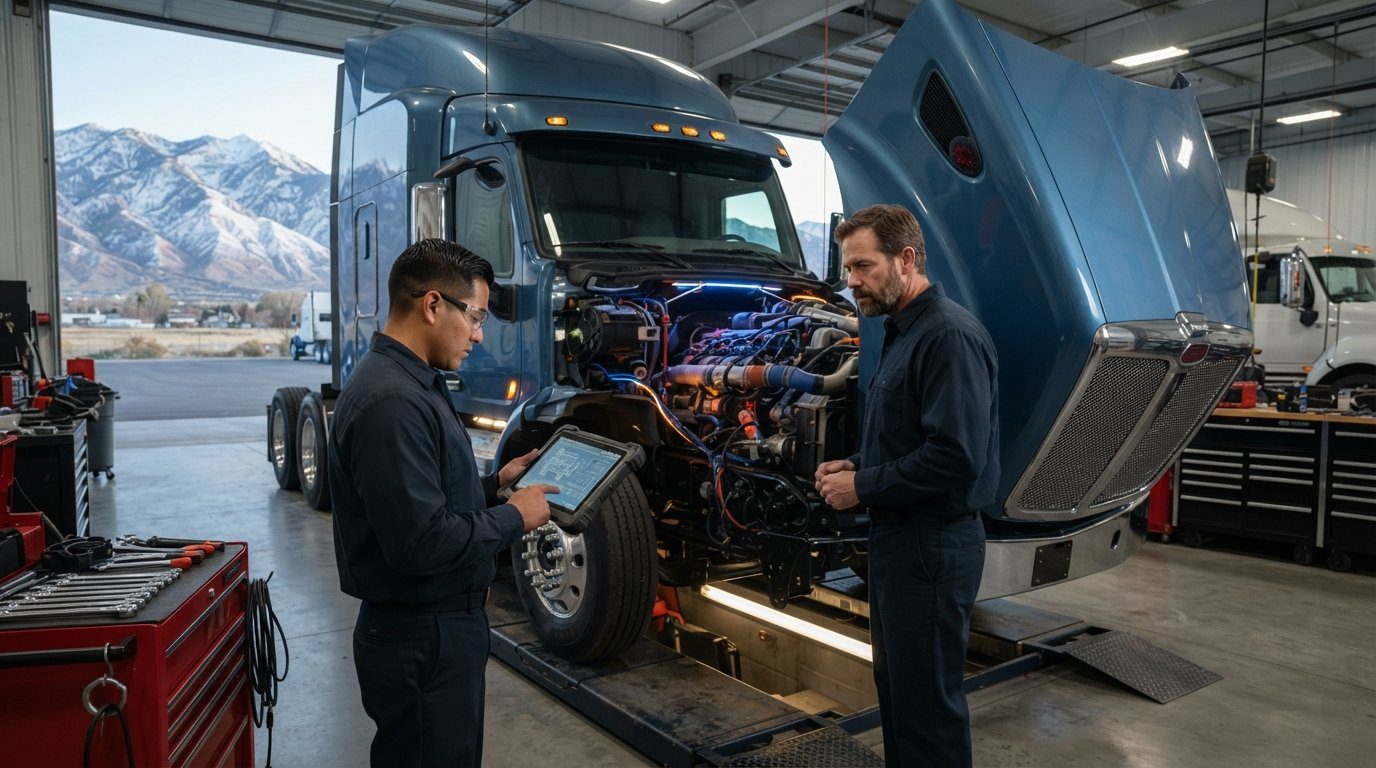
Kenworth T680 Engine Specialist in Utah County: How to Choose the Right Shop

What if the best way to judge a repair shop isn’t by its claims, but by how clearly it explains the diagnosis? If you’re searching for a kenworth t680 engine specialist utah county, look for a shop that will confirm your truck’s engine configuration, investigate its symptoms, and explain what it recommends before you authorize work.
The wrong repair choice can lead to repeat work and more time off the road. Before approving service, find out what the technician has confirmed, how the findings support the recommended repair, and what details to check about the work. Those answers matter as much as a shop’s familiarity with Kenworth trucks.
This guide explains what T680 experience should involve and how to evaluate a shop’s diagnostic process and communication. You’ll also find questions to ask before approving engine work and details to have ready when discussing your truck. Diego’s Shop, based in Springville, provides diesel diagnostics and repair for Kenworth vehicles in Utah County. Confirm your T680’s model year and engine configuration with the shop before scheduling.
Key Takeaways
- Have the T680’s model year, engine configuration, warning messages, and symptom history ready when you contact a shop.
- Ask how the shop will investigate the concern and connect its findings to the recommended repair.
- Compare shops using a practical checklist: Kenworth experience, repair scope, diagnostic explanation, and communication.
- When choosing a kenworth t680 engine specialist utah county, confirm the shop services your truck’s specific configuration.
- Diego’s Shop is based in Springville and provides Kenworth diesel diagnostics and repair, preventive maintenance, and warrantied repair work across Utah County and the Wasatch Front.
Need a Kenworth T680 engine specialist in Utah County? Start with the repair problem
An engine concern can disrupt a work schedule quickly, especially when a commercial truck is tied to deliveries or fleet commitments. But a warning light or drop in performance doesn’t confirm that the engine has failed. Similar symptoms can have different causes, so the right first step is diagnosis, not guessing which part needs replacing.
The T680 name alone doesn’t tell a technician everything needed to assess your truck. Its model year, VIN, and engine information help identify the configuration and relevant service information. The Kenworth T680 model overview offers background, but your truck’s own details should guide a repair discussion. If you’re looking for a kenworth t680 engine specialist utah county, describe the concern and confirm that the shop works on your configuration.
When a T680 engine concern calls for professional diagnosis
Before contacting a shop, note what changed and when. Record warning lights or fault messages, unusual noises, smoke, and changes in power or operation. Mention whether the issue is new, intermittent, or has returned after earlier service. This history helps the technician understand whether the concern is recurring or may relate to previous repairs. If the truck has a safety concern or a severe change in how it operates, arrange a prompt assessment rather than trying to identify the failed part from symptoms alone.
Be specific, but don’t treat an indicator or symptom as a confirmed diagnosis. A warning message signals that something needs attention; testing and inspection help establish the cause. Before approving repairs, ask the shop to explain which findings support its recommendation.
Why the T680 model year and engine details matter
Have the model year and VIN ready when you call. If you can identify the engine from the truck’s records or identification label, share that information too. Don’t assume the engine family based on the T680 name. Configurations and service requirements can vary, so ask the shop to confirm it can assess your specific truck before scheduling.
Pair those details with a concise symptom history: when the issue began, whether it is constant or intermittent, and what work has already been done. This gives the shop a useful starting point without turning your observations into a diagnosis. A sound repair decision begins with accurate truck information, followed by evidence from the assessment.
What a thorough Kenworth T680 engine diagnosis should establish
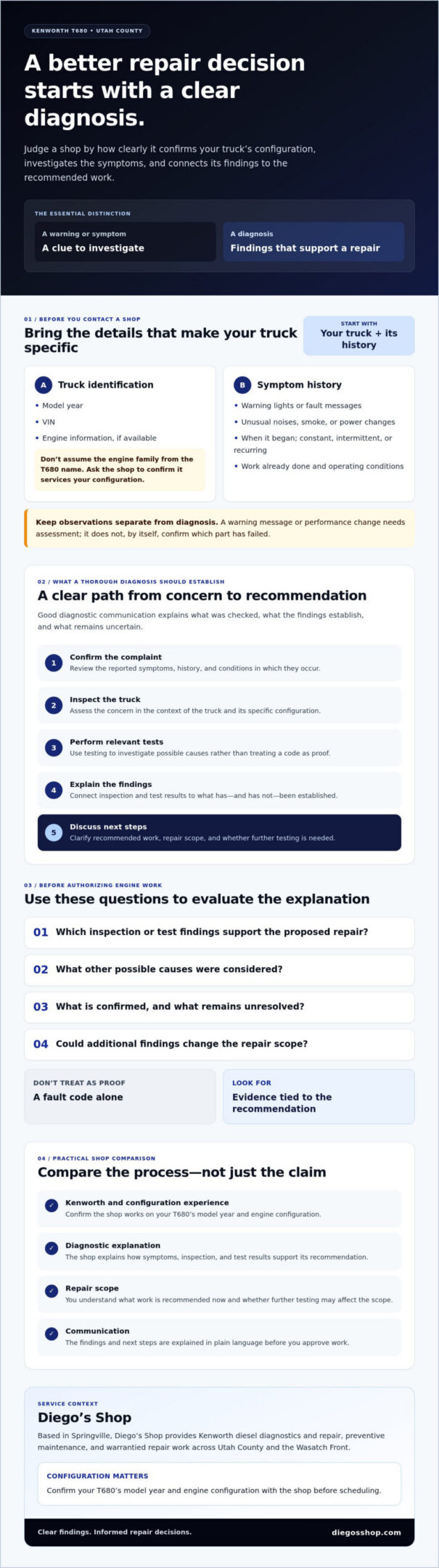
A useful diagnosis does more than identify a fault message. It connects your reported concern to inspection and test results, then explains what those results establish and what remains unclear. The process should follow a clear sequence: confirm the complaint and operating conditions, inspect the truck, perform relevant tests, interpret the findings, and discuss next steps.
Evidence-based engine diagnosis connects test results to a repair recommendation without treating a symptom or code as proof on its own.
Questions to ask about symptoms, fault codes, and inspection findings
Ask whether the technician will review the truck’s history and the conditions in which the concern appears. For example, does a performance issue happen consistently or only under particular operating conditions? That context can help guide the investigation. Fault codes are useful clues, but a code alone doesn’t prove that the named component has failed.
Before approving work, ask for a plain-language explanation of the inspection and test results. Useful questions include:
- Which findings support the proposed repair?
- What other possible causes were considered?
- Are any questions still unresolved, or is further testing recommended?
An initial assessment may identify likely areas to investigate without establishing the full repair scope. Clarify what has been confirmed, what work is recommended now, and whether additional findings could change the scope. This helps you make an informed decision without assuming every possibility has already been ruled in or out.
How engine, emissions, and electronic-system concerns may interact
Depending on the truck’s configuration and symptoms, an assessment may need to consider engine controls, electronic systems, or aftertreatment. Similar symptoms can have more than one possible cause. A warning or performance change may point the technician toward a system to investigate, but testing is needed to determine what applies to your T680.
Ask which systems the shop plans to assess and why those checks fit your truck’s configuration and complaint. A clear explanation distinguishes observed facts from possibilities and shows how the relevant tests inform the recommendation. If credentials are part of your comparison, ask what training or qualifications apply to heavy-duty diesel work. Automotive Service Excellence (ASE) certification information can help you understand one credentialing resource, but it doesn’t replace questions about the shop’s experience with your truck.
If you’re comparing a kenworth t680 engine specialist utah county, use the diagnostic conversation to judge how clearly the shop explains its reasoning. You can also discuss Kenworth diesel diagnostics with Diego’s Shop and ask whether it services your T680 model year and engine configuration.
Compare T680 repair shops in Utah County with a practical checklist
Compare shops by how well they answer questions about your truck and explain the work, not by broad claims alone. Ask whether they service your T680’s model year and engine configuration and accept its vehicle class and intended use. Experience with Kenworth or heavy-duty diesel vehicles is useful context, but you still need a clear plan for your specific concern.
| What to compare | What to ask | What to clarify |
|---|---|---|
| Relevant experience | Have you worked on this T680 model year and engine configuration? | Does the shop accept this truck’s class and intended use? |
| Diagnostic explanation | How will you investigate the symptoms I reported? | Which inspection or test findings support the diagnosis? |
| Repair scope | What work are you recommending, and why? | What is confirmed now, and what may require further assessment? |
| Communication | Who will explain findings and request approval? | How will the shop contact me if the scope changes? |
Questions that reveal relevant Kenworth and heavy-duty diesel experience
Be direct: “Do you service this T680 configuration, and do you accept a truck used for my type of work?” Then ask who will explain the inspection findings and obtain approval before repair work begins. A useful answer addresses your truck and symptoms rather than relying only on general claims of expertise. If the shop can’t confirm whether it services your configuration, resolve that before arranging service.
How to assess estimates, authorization, and repair warranty terms
Request an itemized explanation of the diagnosed issue and proposed work. It should make clear what the shop found, what it recommends, and what remains uncertain. Before authorizing repairs, ask how the shop handles additional findings. Confirm whether it will pause and contact you before expanding the approved scope, and how your authorization will be documented.
Ask for repair warranty terms in writing. Confirm what work and components are covered, how long coverage applies, and what exclusions or conditions may affect it. Don’t assume terms are the same from one shop to another. Review the specific coverage before approving work. The Federal Trade Commission’s guide to how to choose a repair shop offers general advice on comparing repair estimates and understanding shop practices.
Use the same questions with each kenworth t680 engine specialist utah county you consider. Clear, specific answers make it easier to compare providers and understand what you’re authorizing.
Plan T680 engine service near Springville and across Utah County
A little preparation can make your first conversation with a repair shop more productive. Gather the truck’s details, summarize the symptoms, and collect relevant diagnostic or repair records. Then explain how the truck is used and any scheduling constraints that matter to your operation. This helps the shop understand the request and confirm whether it services your T680’s model year and engine configuration.
Information to have ready before requesting service
Keep the key information together so you can give a clear account without relying on memory:
- Truck details: Model year, VIN, engine information, and current mileage.
- Symptoms: When the concern began, what you observed, and whether it changes with operating conditions.
- Service history: Relevant maintenance records, previous fault-code information, and documentation of earlier repairs.
- Contact details: The appropriate owner or fleet contact who can discuss findings and approve work.
If the issue appears during a particular type of operation, include that context. For example, note whether it happens consistently or intermittently and describe any changes you’ve observed. Records can help clarify what has already been checked, but they don’t replace an assessment of the current problem. For general background on repair planning, see this diesel engine repair guide.
Planning around truck use and service coordination
Explain the truck’s work demands and any scheduling constraints when you contact a shop. Describe how the vehicle is used, how the concern affects its work, and who should receive updates. Before service begins, ask how the shop will contact you if its findings point to additional work and how it will get approval before changing the repair scope.
Diego’s Shop is based in Springville and serves commercial fleets and vehicle owners across Utah County and the Wasatch Front. Its diesel services include diagnostics and repair for Kenworth vehicles. Confirm your T680’s model year and engine configuration with the shop before scheduling. If recurring service coordination is part of your fleet needs, the fleet maintenance planning guide offers broader context.
If you’re looking for a kenworth t680 engine specialist utah county, share your truck details and symptoms with Diego’s Shop and ask whether it can assess your configuration. Discuss Kenworth diesel engine service and confirm the next steps before arranging service.
Choose Diego’s Shop for Kenworth diesel service in Utah County
A local shop can be a practical place to discuss a Kenworth diesel concern, but confirm that it’s a fit for your particular T680 before arranging service. Diego’s Shop is based in Springville and serves commercial fleets and vehicle owners across Utah County and the Wasatch Front. Its services include diesel diagnostics and repair for Kenworth vehicles, preventive maintenance, and warrantied repair work.
That service background makes Diego’s Shop a local option to contact, not a claim of exclusive T680 specialization. Ask whether the shop currently services your truck’s model year and engine configuration and can assess the symptoms you’re experiencing. Confirm current availability and ask for the warranty terms that apply to any proposed work. For broader local context, read about Diego’s Shop diesel repair in Utah.
What Diego’s Shop can discuss with T680 owners and fleet managers
Share what the truck is doing, its model year and engine details, and how it’s used. A fleet manager can also explain how the issue affects the truck’s operating role and who should receive updates. These details support an informed conversation about whether the shop’s diesel repair services fit your needs. Confirm configuration coverage and the diagnostic process directly rather than assuming every T680 is serviced in the same way.
Your next step for Kenworth T680 engine service
Before contacting the shop, prepare the truck details and a concise description of the concern. Mention when it began, whether it changes under different operating conditions, and whether previous diagnostics or repairs are documented. Ask what records or information to bring, how the shop will communicate its findings, and what to expect before approving additional work.
If you’re searching for a kenworth t680 engine specialist utah county, use the first conversation to confirm fit, not to assume a diagnosis or outcome. Discuss your truck’s configuration, symptoms, and service options, then decide how to proceed. Contact Diego’s Shop to discuss Kenworth diesel repair and confirm whether it can assess your T680.
Discuss your Kenworth T680 service needs with Diego’s Shop.
Take the next step toward a clear T680 repair plan
Choosing a kenworth t680 engine specialist utah county involves more than finding a nearby shop. Confirm that the shop services your truck’s model year and engine configuration, then look for a diagnosis that connects test findings to the recommended work. Bring the VIN, symptom history, and previous repair records so the conversation can begin with useful details.
Diego’s Shop is based in Springville and serves Utah County and the Wasatch Front. Its diesel services include Kenworth diagnostics and repair, preventive maintenance, and warrantied repair work. Contact the shop to confirm T680 fit, current availability, and the warranty terms for any proposed repair.
Contact Diego’s Shop to discuss your Kenworth T680 and ask what information to have ready before arranging service. A clear conversation is a practical first step toward making an informed repair decision.
Frequently Asked Questions
Can Diego’s Shop service a Kenworth T680?
Diego’s Shop provides diesel repair services for Kenworth vehicles, but that doesn’t establish coverage for every T680 model year or engine configuration. Before arranging service, ask whether the shop can assess your specific truck. Have the model year, VIN, engine information, and a concise description of the concern ready. Those details help the team respond accurately and explain an appropriate next step.
What engine is in a Kenworth T680?
The engine in a Kenworth T680 depends on its model year and configuration, so don’t identify it from the truck name alone. Check the vehicle documents, VIN records, or engine identification information. If you’re unsure, ask a qualified technician to confirm the configuration. Sharing accurate engine information helps a repair shop determine whether it can assess your specific truck.
How do I know if my Kenworth T680 needs engine repair?
Warning lights, unusual noises, smoke, reduced performance, or recurring fault messages are reasons to seek an assessment, but none confirms a specific failure on its own. Note when each symptom occurs and whether it’s getting worse or changing with operating conditions. A technician should review the concern and relevant inspection or test findings before recommending engine repairs. Seek prompt assessment if the truck has a safety concern or a severe operating change.
What should I ask a shop before approving T680 engine work?
Ask what the diagnosis established, which findings support the proposed repair, and exactly what work is included. Clarify what has been confirmed and what remains uncertain. Ask how the shop will contact you if it finds additional issues and whether it will get approval before changing the repair scope. Request written warranty terms, including applicable coverage and exclusions. Confirm that the shop services your T680’s model year and engine configuration.
Does Diego’s Shop provide diesel engine repair in Utah County?
Yes. Diego’s Shop is based in Springville and serves commercial fleets and vehicle owners across Utah County and the Wasatch Front. Its services include diesel diagnostics and repair for Kenworth vehicles, preventive maintenance, and warrantied repair work. For anyone searching for a kenworth t680 engine specialist utah county, the shop is a local option to contact. Confirm current availability, T680 configuration coverage, and applicable warranty terms directly.
What information should I provide when calling about a T680 engine problem?
Share the truck’s model year, VIN, engine details, mileage, and a clear description of the symptoms. Note when the issue began, any warning messages, whether it changes with operating conditions, and any previous diagnosis or repair work. Service records and fault-code documentation can help explain the history. If you manage a fleet, describe the truck’s work requirements and scheduling constraints so the shop understands the operating context.