
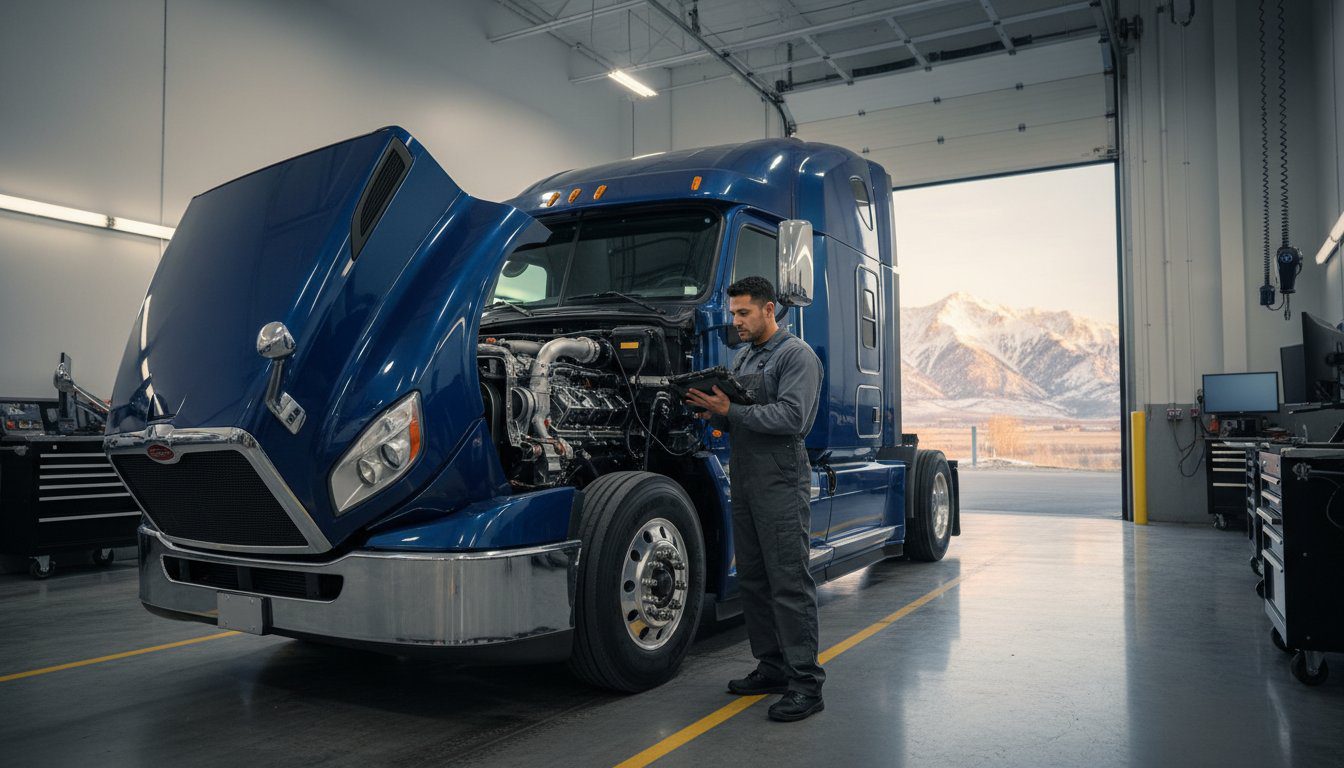
How to Get My Truck Back on the Road Fast: A Guide to Minimizing Diesel Downtime

Every day your vehicle sits in a service bay, you’re losing between $400 and $800 in potential revenue. When a complex DPF failure or a mysterious engine code sidelines your rig, the pressure to get my truck back on the road fast becomes more than just a goal; it’s a necessity for your business survival. You shouldn’t have to choose between a speedy turnaround and a repair that actually holds up under a full load.
We understand the frustration of “quick-fix” mechanics who address symptoms rather than root causes, only for your truck to break down again two states away. It’s stressful to manage modern diesel emissions systems that feel like a black box of sensors and potential failures. You need a partner who values your uptime as much as you do and possesses the specialized tools to provide immediate diagnostic clarity.
This guide reveals the professional strategies and specialized diesel services that master craftsmen use to slash repair times while ensuring the work is durable. You’ll discover how precision diagnostics, proactive fleet maintenance, and warrantied repair work keep your commercial fleet moving and your delivery schedules on track. Let’s look at how to minimize downtime and restore your peace of mind.
Key Takeaways
- Quantify the high daily cost of vehicle downtime and understand why “quick fixes” often lead to more expensive, recurring failures.
- Learn how advanced diesel diagnostic software pinpoints complex faults in EGR and DPF systems to get my truck back on the road fast.
- Compare the capabilities of roadside service versus a specialized diesel bay to choose the most efficient repair path for your specific breakdown.
- Discover how a proactive preventive maintenance schedule identifies soot buildup and suspension wear before they become emergency roadside issues.
The Real Cost of Truck Downtime and Why Speed Matters
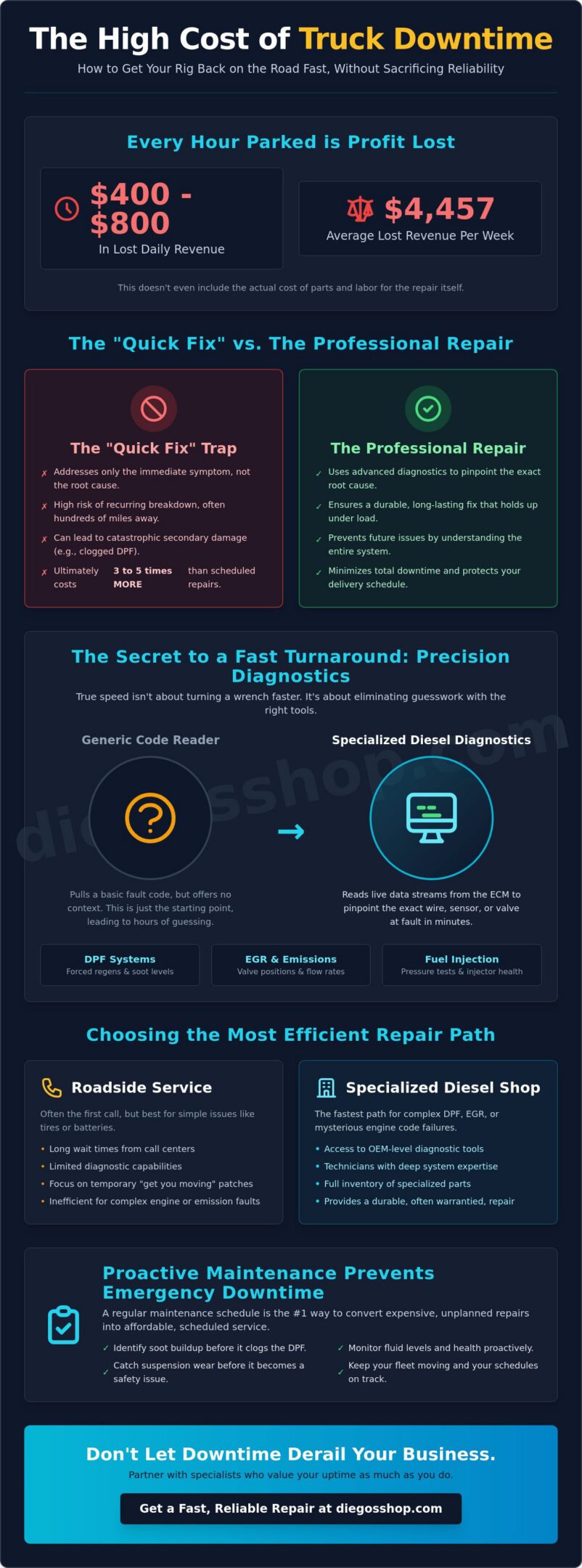
Every hour your wheels aren’t turning, your bottom line is bleeding. Industry data shows that the average truckload revenue per truck per week was $4,457 in 2024. That breaks down to roughly $637 per day in lost revenue alone. When you add the actual cost of parts and labor, most operators face a daily loss between $400 and $800. This financial hit creates an urgent need to get my truck back on the road fast, but rushing into a “quick fix” often backfires. True speed comes from an accurate diagnosis, not just the fastest arrival time.
A patch-job might get you moving for fifty miles, but it rarely lasts. Research indicates that unplanned repairs can cost 3 to 5 times more than scheduled maintenance. A rushed repair that fails two states away doesn’t just double your bill; it destroys your reputation with clients. You’re dealing with missed delivery windows and the psychological stress of explaining delays to a frustrated dispatcher. Our goal is to balance immediate turnaround with the long-term integrity of your diesel engine to ensure you don’t end up back in a service bay next week.
Understanding Commercial Downtime in Utah County
Mountain grades along the Wasatch Front don’t forgive mechanical weakness. If your engine is struggling with soot buildup or a failing turbo, the steep climbs on I-15 will expose those flaws quickly. Modern diesel emission control systems are particularly sensitive to these high-load environments. Relying on a national call-center for roadside assistance often results in long wait times and generic advice. Local expertise in Springville provides the technical mastery needed to handle these specific regional challenges with precision.
Identifying Critical vs. Non-Critical Failures
Knowing when to stop is as important as knowing how to fix the problem. Safety-first issues like a sudden drop in oil pressure or steering instability require an immediate pull-over. However, many drivers fall into the “Limp Mode” trap. They try to push through a fault code to finish a route, but driving with a clogged DPF can cause thousands of dollars in secondary damage. When you’re trying to get my truck back on the road fast, the smartest move is to stop before a minor sensor issue turns into a total engine seizure. While waiting for a specialized diesel mechanic, check your fluid levels and note exactly when the fault occurred to speed up the diagnostic process.
Specialized Diesel Diagnostics: The Secret to a Fast Turnaround
Speed in the diesel world isn’t about how fast a mechanic turns a wrench. It’s about how quickly they identify the root cause of a failure. Diesel diagnostics is the process of using specialized software to communicate directly with the vehicle’s engine control module (ECM). This digital handshake allows a technician to see exactly what the truck is “feeling” in real time. The most efficient way to get my truck back on the road fast is to eliminate the guesswork that plagues general repair shops. While a generic scanner might pull a basic fault code, it doesn’t provide the context needed to solve complex issues in EGR, DPF, or high-pressure fuel injection systems.
There’s a significant difference between reading a code and interpreting diesel data. A code is just a starting point. A true specialist looks at live data streams, sensor voltages, and historical freeze-frame data to understand why that code was triggered. Specialized Diesel Diagnostics training, such as the curriculum offered at Montana Tech, highlights that modern troubleshooting requires a deep understanding of how these electronic systems interact. Generic shops often spend hours guessing and replacing expensive sensors, whereas a specialist spends minutes pinpointing the exact wire or valve at fault. This precision is what keeps your delivery schedule intact.
Modern Diesel Engine Management Systems
Today’s Kenworth, Peterbilt, and Isuzu trucks are essentially rolling computers. They rely on an intricate web of sensors to monitor everything from exhaust temperature to boost pressure. Technical mastery of this technology prevents the “parts cannon” approach, where a mechanic keeps throwing new parts at a problem hoping one will stick. ECM diagnostics represent the foundation of fast diesel repair by providing an immediate digital map of system performance. If you’re struggling with a recurring check engine light, a qualified diesel technician can often find the solution before a general mechanic even finishes opening the hood.
Why Specialized Tools Beat General Scanners
Specialized diagnostic tools provide deep-level access to manufacturer-specific fault codes that generic scanners simply can’t see. Whether you’re running a Cummins power plant or a Ford Powerstroke, these tools allow for bi-directional testing. We can force a DPF regeneration or test individual fuel injectors while the engine is running to catch intermittent issues that don’t always throw a permanent code. This level of detail is a core component of expert diesel engine repair. By monitoring real-time data under load, we ensure the fix is accurate the first time, helping you get my truck back on the road fast without the fear of a return visit for the same issue.
Roadside Service vs. Specialized Shop: Which is Faster?
Choosing between a roadside service van and a specialized diesel bay is a decision that determines if you’ll be moving in hours or stuck for days. Roadside assistance feels like the fastest option because a technician arrives quickly. However, it’s often a gamble. If the technician lacks the specific tools or parts for your heavy-duty rig, you’ve simply paid for a diagnosis you can’t use. To get my truck back on the road fast, you must distinguish between a minor fix and a complex failure that requires a controlled environment.
Many roadside repairs create a “back on the road” illusion. A temporary patch might clear a code or stop a leak just long enough to get you fifty miles down the interstate before the system fails again. This leads to a second, more expensive tow and even more lost revenue. For Springville-based fleets, the preference is almost always for a local hub that provides warrantied repair work. This ensures the job is done right the first time, meeting the high standards required for commercial operations.
Limitations of Roadside Assistance for Diesel Engines
Modern diesel engines require surgical cleanliness, which is nearly impossible to achieve on a windy shoulder in Utah County. Dust and debris can easily contaminate open fuel lines or sensitive injectors. Furthermore, roadside vans rarely carry heavy-duty lifting equipment. If your repair involves major component replacement, a roadside tech simply won’t have the leverage or safety gear to finish the job. They also frequently lack the high-level software needed for complex calibrations or forced DPF regenerations on the side of I-15.
The Advantage of a Dedicated Diesel Bay
A specialized shop offers a level of precision and resource access that a mobile van can’t match. Inside a dedicated bay, technicians have immediate access to a full inventory at a diesel parts center. This eliminates the hours spent waiting for a delivery driver to find your location. Shops also provide a controlled environment for precision work on turbos and fuel systems, ensuring no contaminants compromise your engine’s longevity.
Quality shop work is backed by a commitment to safety and compliance. We strictly follow federal regulations for inspection, repair, and maintenance to ensure every rig we service is legally and mechanically sound. In a shop setting, multiple master craftsmen can collaborate on a single complex issue, combining their technical mastery to solve problems faster than a lone roadside tech could. This team-based approach is the most reliable way to get my truck back on the road fast while maintaining total control over the repair quality.
How Preventive Maintenance Prevents Emergency Downtime
The fastest repair is the one you never have to make. While most drivers only search for how to get my truck back on the road fast once they’re already stranded, the most successful operators focus on staying on the road. Preventive maintenance is the only way to shift your business from a reactive “panic” mode to a proactive, profitable schedule. Consistent inspections allow master craftsmen to catch leaf spring wear or EGR soot buildup weeks before these issues trigger a roadside emergency.
For commercial rigs, fleet maintenance isn’t just a chore; it’s a financial strategy. By identifying failing components in a controlled shop environment, you avoid the 3 to 5 times higher cost associated with unplanned roadside failures. You gain the ability to schedule service during your fleet’s natural downtime, ensuring that your trucks are always ready for the next high-value load.
The 2026 Diesel Maintenance Protocol
Modern engine health relies on the “Big Three” systems: Fuel, Air, and Cooling. We focus on water separator integrity, turbocharger efficiency, and cooling system pressure to prevent the most common causes of engine derate. Annual and semi-annual reliable DOT truck inspections in Utah County serve as your best early-warning system. These mandatory checks are more than just a legal requirement; they’re a technical deep-dive that exposes hidden vulnerabilities in your suspension, brakes, and emissions hardware.
Custom Maintenance Plans for Utah Fleets
Operating along the Wasatch Front requires a specialized approach to service intervals. The combination of high-altitude air and steep mountain grades puts unique stress on diesel power plants. We adjust maintenance schedules to account for these heavy-load environments, ensuring your oil and filters are changed before they lose their protective properties. Every preventive service we perform is backed by our commitment to warrantied repair work, giving you peace of mind that your equipment is legally compliant and mechanically sound.
A local partner in Springville understands the specific demands of your routes better than a generic corporate chain. We maintain detailed service logs for every vehicle, allowing us to predict failures based on your specific mileage and duty cycle. This level of oversight is the most reliable way to get my truck back on the road fast by ensuring it never leaves the road unexpectedly. Schedule your proactive fleet review today to keep your business moving forward.
Diego’s Shop: Your Partner for Fast, Reliable Diesel Repair
When your revenue depends on a functioning engine, you don’t have time for excuses or vague timelines. Diego’s Shop operates on a foundation of technical mastery and no-nonsense service. We specialize exclusively in diesel engine repair and fleet maintenance, ensuring every rig in our bay receives the attention of a specialist. Our primary objective is to get my truck back on the road fast by applying years of hands-on experience to every diagnostic challenge. We possess the specialized tools and the specialized knowledge that general repair shops simply cannot match.
Utah County businesses trust our warrantied repair work because we stand behind every bolt we turn. Whether you manage a single heavy-duty dump truck or a fleet of light-duty diesel pickups, we provide the same level of rigorous attention to detail. We understand the specific demands of local industry, from construction to long-haul transport. We don’t just fix symptoms; we restore the mechanical integrity of your vehicle to prevent recurring downtime. This commitment to quality is what keeps our clients moving forward with confidence.
Master Craftsmen in Springville
Our team brings personal accountability to the service bay. The “Diego’s Shop” name represents a promise of integrity and durable results. We possess extensive experience with major brands, including Peterbilt, Kenworth, Isuzu, and Ford diesel systems. We focus on the Wasatch Front’s hardest-working trucks, ensuring they have the power and reliability to conquer local grades and meet strict delivery windows. This is not a generic corporate presence; it’s a shop where master craftsmen take pride in technical skill and the longevity of the work performed.
Getting Back on the Road Today
We’ve streamlined our intake process to support commercial fleets in distress. From the moment you place the initial diagnostic call, our team moves with purpose to identify the failure and source necessary components. We believe clear communication is essential during the repair process. You’ll always know the status of your vehicle and the exact steps we’re taking to resolve the issue. This transparency eliminates the uncertainty that often accompanies complex technical services, allowing you to manage your logistics with precision.
Don’t let a mechanical failure stall your business growth. We provide the specialized expertise and efficient turnaround you need to stay competitive in a demanding market. We maintain total control over every repair to ensure your fleet remains a reliable asset rather than a liability. Trust Diego’s Shop to get your diesel back on the road fast.
Restore Your Fleet’s Performance and Profitability
Minimizing downtime is a strategic move that protects your bottom line and your professional reputation. We’ve explored how specialized diagnostics eliminate the guesswork that leads to recurring failures. You also know that a proactive maintenance schedule is the most effective way to avoid the high costs of emergency roadside repairs. When a breakdown does occur; choosing a dedicated diesel bay over a temporary roadside patch ensures your vehicle receives the technical mastery it deserves.
Our team is ready to help you get my truck back on the road fast with diagnostic clarity and long-lasting repairs. We provide expert service for Peterbilt, Kenworth, and Ford diesel systems across Springville and the entire Wasatch Front. Every job is backed by our commitment to warrantied repair work for your total peace of mind. Get Your Truck Back on the Road with Diego’s Shop today and experience the difference of master craftsmanship.
Your rig was built to work hard. We’re here to make sure it stays that way so you can focus on the road ahead.
Frequently Asked Questions
How long does a typical diesel engine diagnostic take?
A comprehensive diesel diagnostic usually takes between one and two hours. Our technicians use advanced software to communicate with your truck’s ECM, pinpointing the exact source of the fault. This precision avoids the time-consuming “parts cannon” approach and ensures we only repair what is actually broken. This is the first step to get my truck back on the road fast with total accuracy.
Can I drive my truck to the shop if the check engine light is flashing?
No, you should pull over and shut down the engine immediately if the light is flashing. A flashing indicator signals a severe failure that can lead to catastrophic engine damage or a total seizure within minutes. Driving in this state often forces the vehicle into “Limp Mode,” which significantly complicates the repair process and increases your total downtime and costs.
What is the most common cause of sudden diesel engine power loss?
Clogged fuel filters or a restricted Diesel Particulate Filter (DPF) are the most frequent causes of sudden power loss. These components can become restricted by contaminants or excessive soot buildup, starving the engine of fuel or blocking exhaust flow. Regular preventive maintenance catches these issues early, ensuring your engine always has the air and fuel it needs to perform under heavy loads.
Do you provide warrantied repair work for commercial fleets?
Yes, we provide warrantied repair work for all commercial diesel engines we service. We stand behind the technical mastery of our craftsmen and the durability of the parts we install. This guarantee provides peace of mind for fleet managers who need reliable equipment that stays on the road. It’s our way of ensuring professional accountability for every rig in our bay.
Why is my diesel truck blowing black smoke and losing power?
Black smoke typically indicates an incorrect air-to-fuel ratio, often caused by a failing turbocharger, leaking intercooler, or sticking fuel injectors. The engine is receiving too much fuel or not enough air for complete combustion. Our specialized diagnostic tools can pinpoint the exact component failure in minutes, allowing us to restore your engine’s efficiency and power without unnecessary delays or guesswork.
How can I minimize downtime for my medium-duty delivery fleet?
The most effective strategy is to establish a proactive fleet maintenance schedule. By identifying suspension wear or EGR soot buildup during scheduled service, you eliminate the risk of emergency roadside failures. This proactive approach is the most reliable way to get my truck back on the road fast by ensuring it never has to leave the route for an unplanned repair.
Is it better to repair an EGR system or replace it entirely for speed?
Replacement is often the faster and more reliable choice for minimizing immediate downtime. While cleaning a fouled EGR valve might seem cheaper, it carries a high risk of recurring issues that can sideline your truck again within weeks. Installing a new, warrantied component ensures a long-lasting fix, allowing your rig to return to service with full confidence in its emissions system.
What should I have ready when I call for an emergency diesel repair?
Have your vehicle’s VIN, current mileage, and a specific description of any fault codes or symptoms ready before you call. This information allows our team to prepare the correct diagnostic software and check our parts inventory before your truck even arrives at the shop. Clear communication at the start of the process is essential for achieving the fastest possible turnaround time.