
How to Diagnose Diesel Fuel in Engine Oil with Symptoms and Tests

A rising engine-oil level can signal that diesel fuel is entering the crankcase, but smell and appearance alone can’t confirm dilution. Diagnosing diesel engine fuel in oil starts with tracking dipstick readings consistently; laboratory oil analysis is the reliable way to measure fuel dilution. If the level is climbing or the oil seems unusually thin, treat it as a warning and investigate the cause.
It’s understandable to want a clear answer before putting more miles on a truck or fleet vehicle. This guide explains the symptoms to watch for, how to collect and interpret basic checks, and what oil analysis can reveal. You’ll also learn how technicians assess injectors and other possible leak points, so you can distinguish a useful clue from a confirmed diagnosis and take the next step with confidence.
Key Takeaways
- Compare dipstick readings using the same checking method and engine conditions to spot changes that may point to contamination.
- Use visual and smell checks as clues, not proof; a laboratory oil analysis can measure fuel dilution.
- Injector faults are one possible source of fuel entering the crankcase, alongside issues in other parts of the fuel system.
- Build oil checks into fleet preventive maintenance so unusual trends can be investigated before they disrupt vehicle operations.
Driver checks for contamination symptoms
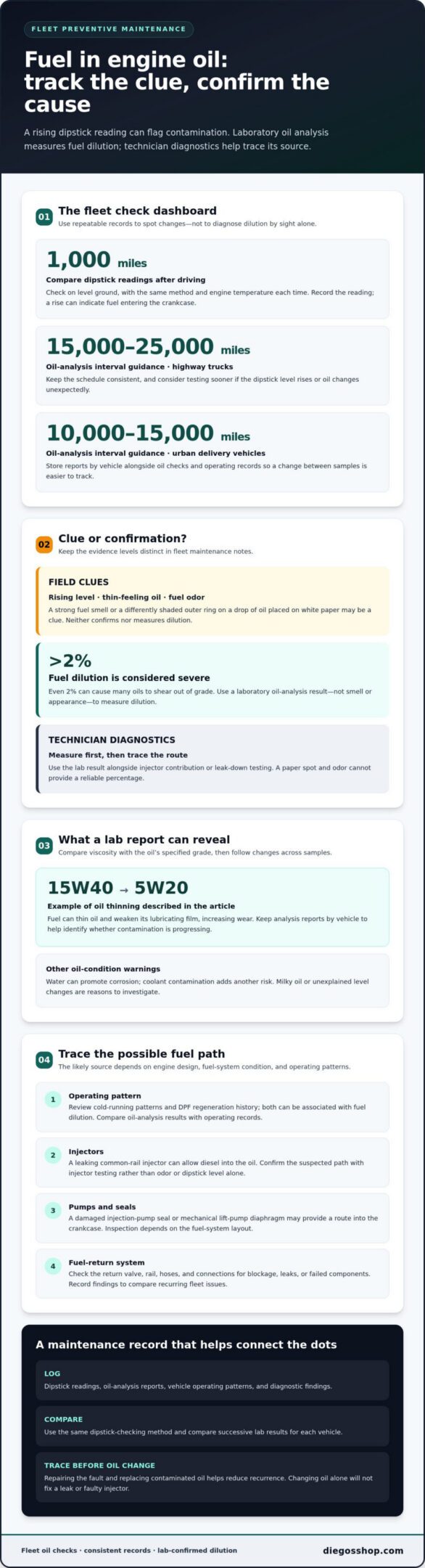
- Check the dipstick on level ground, using the same method and engine temperature each time. Record the reading, then compare it after driving 1,000 miles. A rising level can indicate fuel entering the crankcase. A sharp increase over a short drive deserves prompt investigation.
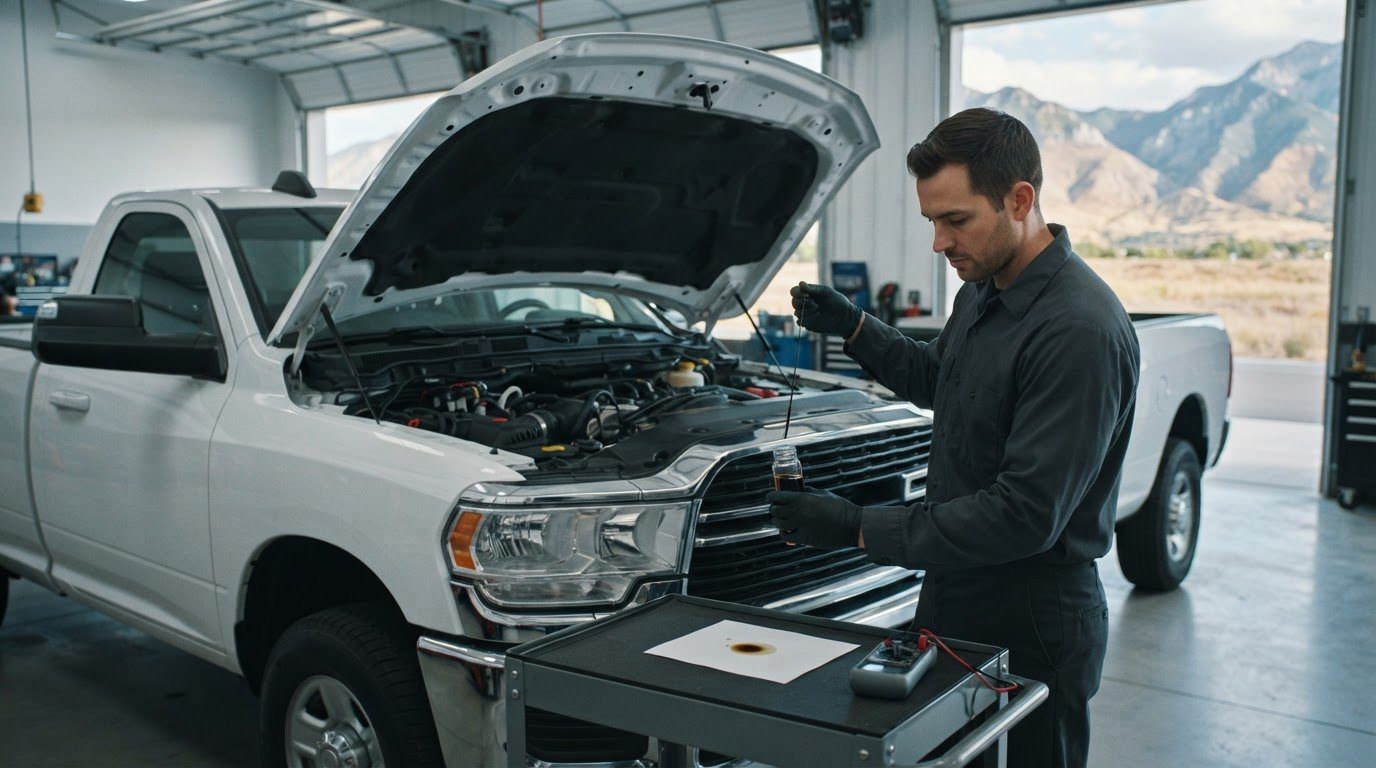
- Notice a fuel odor, but don’t treat it as proof. Diesel in the oil may smell strong, yet smell alone can’t confirm dilution. For a simple visual clue, place a drop from the dipstick on white paper. A differently shaded outer ring may suggest fuel, but this test cannot measure dilution.
- Track oil condition alongside fleet maintenance records. Oil analysis intervals in the research guidance are 15,000-25,000 miles for highway trucks and 10,000-15,000 miles for urban delivery vehicles. Follow a consistent schedule, and consider testing sooner when the dipstick level rises or oil changes unexpectedly.
- Don’t assume fresh oil restores protection while contamination continues. Fuel can thin the oil and weaken its lubricating film; contamination may also affect how oil additives protect engine surfaces. Water can promote corrosion, while coolant contamination adds another risk. Treat milky oil or unexplained level changes as reasons to investigate.
- Plan repairs around the contamination’s cause and extent. A complete oil-system flush typically takes 1 day; carbon-buildup restoration takes 4-6 hours when performed properly. Major cleanup involving engine disassembly can take 5-10 business days, depending on parts availability and contamination severity. Changing oil alone won’t stop a leak or faulty injector.
Fuel dilution testing and injector diagnostics
Use laboratory oil analysis to measure dilution, then trace how fuel is entering the crankcase. A disciplined approach to diagnosing diesel engine fuel in oil helps guide repairs and prevent repeat contamination.
-
Recognize Fuel Dilution Signs
Note rising oil level, thin-feeling oil, or fuel odor, but treat these as clues rather than proof. A laboratory result above 2% fuel dilution is considered severe, and even 2% can cause many oils to shear out of grade. Avoid judging engine safety by smell or appearance alone.
-
Test Fuel Dilution
Submit a clean oil sample for laboratory analysis to measure fuel dilution. When diagnosing diesel engine fuel in oil, use the result alongside injector testing, not as a substitute. A technician can perform an injector contribution test or leak-down check to identify a leaking injector. Paper spots and odor cannot provide a reliable percentage.
-
Assess Viscosity and Wear Effects
Compare the report’s viscosity reading with the oil’s specified grade. Fuel can thin oil from 15W40 to 5W20, weakening the lubricating film and increasing wear. Keep reports by vehicle in fleet maintenance records; a change between samples can help show whether contamination is progressing and guide the next diagnostic step.
-
Identify Fuel Contamination Causes
Have the technician trace the source before changing oil. DPF regeneration can contribute to dilution, while a leaking common-rail injector or damaged injection-pump seal can allow fuel into the crankcase. Repair the fault and replace contaminated oil to reduce recurrence; an oil change alone won’t fix the cause. Injection-system service typically takes 2-3 days.
What causes diesel fuel to contaminate engine oil?
Trace the route fuel could take into the crankcase before replacing the oil. The likely source depends on engine design, fuel-system condition, and operating patterns.
- Review cold-running patterns and DPF regeneration history. An engine that runs cold can be associated with higher fuel concentrations in its oil. Diesel particulate filter regeneration can also contribute to fuel entering the crankcase. Compare oil-analysis results with operating records to see whether dilution tracks repeated cold use or regeneration cycles.
- Check injector operation when testing points to a cylinder leak. Common-rail injectors can fail and allow diesel into engine oil. A technician can inspect injector performance and look for signs of leakage. Don’t assume injectors are responsible based on odor or a rising dipstick reading alone; confirm the suspected path through diagnostics.
- Inspect the injection pump and lift pump for possible leak paths. A damaged injection-pump seal or mechanical lift-pump diaphragm can let fuel reach the crankcase. The inspection depends on the engine’s fuel-system layout. Include pump seals and diaphragms in the diagnostic process when injector testing doesn’t explain the contamination.
- Examine the fuel-return system for restrictions or damage. Check the return valve, rail, hoses, and connections for blockage, leaks, or failed components. A return-system problem can disrupt fuel flow and help identify where further testing is needed. Record findings in fleet maintenance notes to compare recurring issues across vehicles.
- Use engine-specific evidence before considering less common internal faults. A reported Ford Dover/Leman case traced fuel contamination to a porous piston wall in cylinder four; sleeving resolved it. For a diesel with repeat contamination, arrange a thorough diesel fuel system diagnostic to trace the cause before continued operation worsens oil condition.
Diego’s Shop: Diesel Engine Repair
Diego’s Shop provides diesel engine repair when oil analysis or diagnostic checks point to a fuel-system fault or engine concern. For commercial operators, fleet maintenance and preventive maintenance programs help organize service needs and address developing issues before they disrupt regular operations.
Bring oil-analysis results, dipstick records, and any changes in engine performance to the repair discussion. These details help focus troubleshooting on the suspected source, such as an injector or another fuel-system component. Diego’s Shop provides warrantied repair work, giving fleet operators a clear repair record to support ongoing maintenance planning.
If you suspect fuel dilution or see it recurring across fleet vehicles, contact Diego’s Shop to discuss diesel engine repair and maintenance.
Make the Next Maintenance Decision Count
Use the results of diagnosing diesel engine fuel in oil to guide the next maintenance decision, not just close out one repair. For fleet managers, a confirmed cause can help refine inspection priorities around vehicle duty cycles, recurring operating conditions, and service history. Understanding those operating stresses is critical across all demanding environments, whether servicing commercial transport or maintaining rugged 4x4s for remote overlanding expeditions with operators like myafricanadventures.com. This gives technicians a clearer basis for planning work and helps keep maintenance decisions consistent across the operation.
Build those findings into your team’s upcoming maintenance plans. An evidence-led approach keeps attention on the work that matters and gives fleet decisions a practical foundation.
Contact Diego’s Shop to discuss your diesel maintenance needs.
Frequently Asked Questions
What are the symptoms of diesel fuel dilution in engine oil?
Symptoms can include increased oil consumption, reduced engine power, or cylinder-wall glazing as contamination worsens. These signs can also have other causes, so record when they appear and whether they change after maintenance or a shift in operating patterns. For fleet vehicles, note symptoms by unit and route. Those records help technicians connect performance changes with service history.
How can you test engine oil for diesel fuel dilution at home or in a lab?
At home, use dipstick readings and a paper spot as preliminary clues, not measurements. Don’t use those checks to assign a dilution percentage or decide the oil is safe. For a reliable result, submit a clean oil sample for laboratory analysis. Follow the lab’s sampling and labeling instructions, and identify the vehicle so results can be matched to its service record.
How do you diagnose fuel dilution using an oil analysis report, including viscosity and flash point?
Read the reported fuel-dilution result alongside viscosity and flash point, rather than relying on one value alone. Fuel contamination can lower viscosity and flash point; compare the measurements with the oil’s specified grade and the lab’s interpretation. For fleet tracking, retain earlier reports for the same vehicle. Changes between samples can help identify a developing issue.
How can faulty injectors cause diesel fuel in the oil, and how are they tested?
A faulty common-rail injector can leak fuel into a cylinder, allowing it to pass the cylinder wall and enter the crankcase. Technicians can compare injector contribution across cylinders and perform leak-down checks to identify a problem unit. On some engines, inspecting injectors with the valve covers removed can reveal leakage while the fuel system is running.
Is it safe to drive a diesel engine with fuel in the oil, and what damage can it cause?
Avoid putting an engine under load when its oil is heavily diluted. Diesel fuel can thin the oil and weaken the protective film, increasing engine wear. Severe contamination can also be associated with cylinder-wall glazing, increased oil consumption, and power loss. If a fleet vehicle shows these problems, take it out of service safely and arrange diagnosis before returning it to work.