
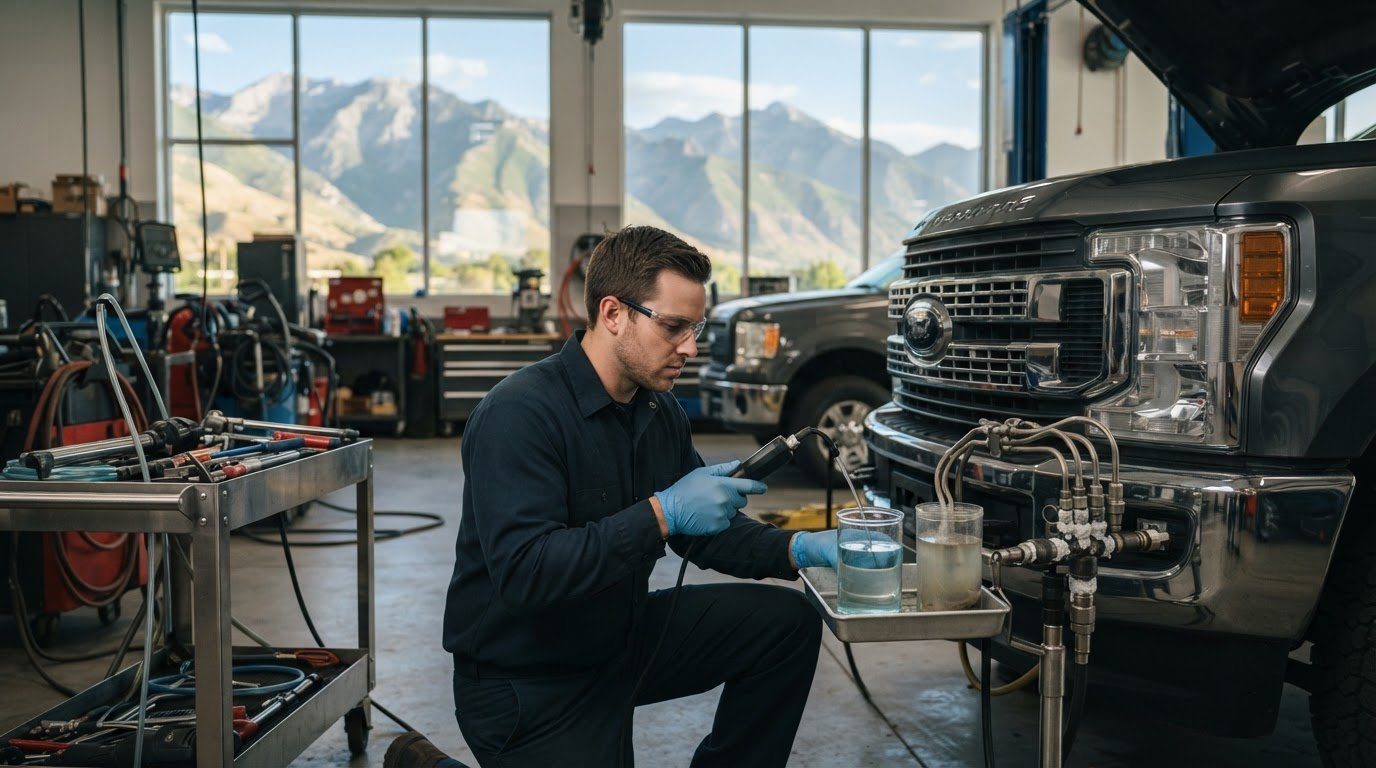
How to Diagnose DEF Contamination and Flush the System

Contamination can damage a DEF system even when the fluid still looks usable. In diesel engines with SCR systems, DEF helps convert nitrogen oxides in the exhaust into nitrogen and water vapor; it’s made of 32.5% high-purity urea and 67.5% deionized water. Fuel, oil, dirt, tap water, or metals can compromise it, so recognizing DEF contamination symptoms and repairing the cause matters.
It’s easy to assume a warning light means the fluid simply needs topping up. But adding DEF won’t fix contamination, and running the system with compromised fluid can make the problem worse. This guide explains how contamination happens, which symptoms to watch for, and how the system may need to be drained and flushed. You’ll also learn when a warning could point to another fault, such as a pump or sensor issue, rather than contaminated DEF.
Key Takeaways
- Watch for cloudy fluid, visible particles, or warning lights, but remember that pump and sensor faults can create similar alerts.
- Crystals can restrict DEF injectors and supply lines. Learn what residue buildup can reveal about the system.
- If contamination is suspected, avoid operating the engine and follow the correct drain, flush, and refill process for the affected system.
- For persistent DEF or SCR faults affecting a vehicle or fleet, Diego’s Shop provides diesel engine repair, fleet maintenance, and preventive maintenance.
What causes DEF contamination?
Contamination can start with poor handling, unsuitable storage, or residue in dosing components. To identify DEF contamination symptoms and repair needs, inspect the fluid and system carefully.
-
Identify DEF Crystallization and Deposits
Inspect the DEF injector and supply lines for white, crusty deposits. Crystallized residue can restrict flow, disrupt dosing, and clog filters, causing selective catalytic reduction (SCR) faults. Check around the injector outlet and line connections, but don’t scrape deposits into the system. Heat can degrade DEF stored above 86°F, while residue buildup can interfere with dosing into the exhaust and nitrogen oxide conversion.
Record warning messages, visible deposits, and changes in engine performance. Pump or sensor faults can trigger similar alerts, so these details help narrow down possible causes. For fleet records, note the DEF contamination symptoms and repair steps taken for each affected vehicle.
-
Verify DEF Quality
Test urea concentration with a DEF refractometer and compare the result with the 32.5% target. Use fluid that meets ISO 22241 specifications. Cloudiness, yellowing, or visible particles can indicate a problem. Keep the sample and testing tool clean to avoid introducing dirt or tap water during testing.
Prevent contamination by storing DEF in a dedicated HDPE or stainless-steel container, away from direct sunlight and within 12-86°F. Use clean, dedicated equipment when refilling; keep funnels and nozzles separate from diesel fuel, oil, and coolant. Never top up with tap water. A maintenance log that records storage conditions and refill practices can help fleets identify recurring sources and act on DEF contamination symptoms and repair needs.
Warranty coverage depends on the vehicle’s warranty terms, while insurance coverage depends on the policy’s terms and exclusions. Neither automatically covers every contamination event; coverage depends on the cause and applicable contract.
Draining and flushing contaminated DEF systems
Act promptly if you suspect contamination. The correct flushing procedure depends on whether the DEF tank or diesel fuel system is affected.
- Keep the engine off if contaminated DEF is identified. Drain and refill the tank before starting the vehicle. Running contaminated fluid can damage the SCR system and lead to derating or shutdown.
- Drain the DEF tank completely, then flush it with deionized water or clean DEF. Remove contaminated fluid and inspect the tank, lines, pump, and injector for residue. Refill with certified DEF that meets ISO 22241 specifications.
- If DEF has entered the diesel fuel tank, don’t operate the truck. Urea can damage fuel-system components, and flushing alone may not be enough. Affected filters and housings, the high-pressure pump, and injectors may need replacement. The required repair depends on the contamination and resulting damage. A diesel fuel system assessment can identify affected components.
- After addressing the contamination, inspect the SCR system for remaining deposits, verify its operation, and resolve active warnings rather than simply clearing fault codes. If the vehicle has lost power, stop operating it and arrange an evaluation.
- There is no single typical repair price in the US. Cost depends on the affected components, diagnostic findings, and required parts. Request a quote for the repair.
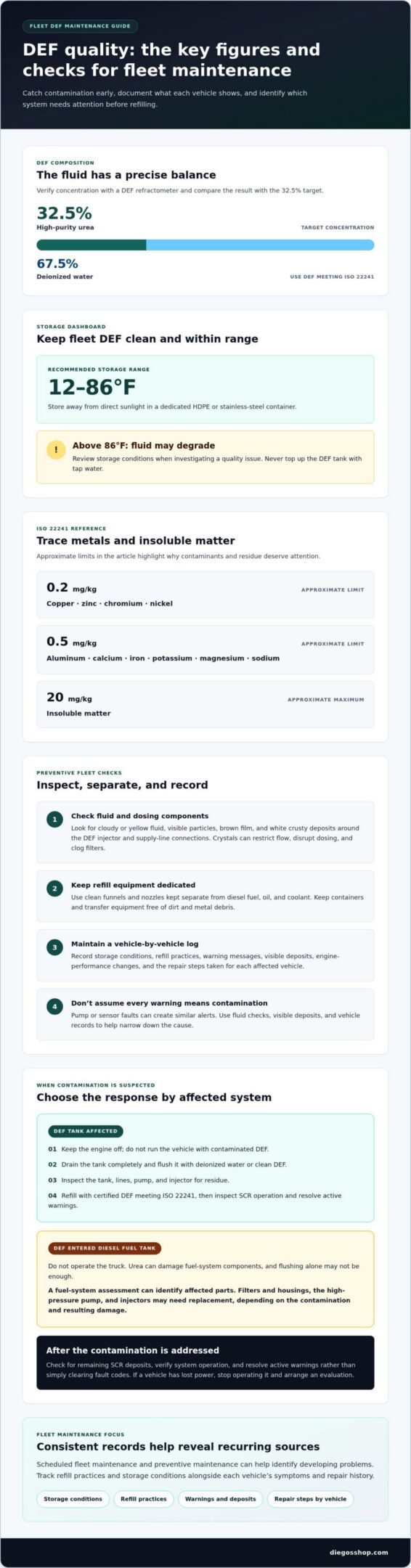
Contamination from metals, fuel, oil, dirt, and water
Identify the contaminant before choosing a cleaning method. ISO 22241 limits show why even small amounts of metals or insoluble matter can affect DEF quality.
- Check for metal exposure around DEF-contact surfaces and equipment. Approximate ISO 22241 limits are 0.2 mg/kg for copper, zinc, chromium, and nickel, and 0.5 mg/kg for aluminum, calcium, iron, potassium, magnesium, and sodium. Insoluble matter has an approximate maximum of 20 mg/kg. Metal contamination can interfere with dosing and the SCR system’s emissions reduction.
- Distinguish DEF contamination from diesel fuel contamination. Fuel, oil, or coolant in the DEF tank can harm aftertreatment components, while DEF in a diesel fuel tank can damage fuel-system components. Dirt and residue can also travel through lines to the pump or injector. Identify which tank and components were exposed before repairs begin.
- Keep tap water out of the DEF tank. Its minerals and ions can alter the fluid concentration. Deionized water is used to flush a tank suspected of contamination, but water is not a substitute for DEF. Temperature and storage conditions can also affect fluid quality, so assess them along with any visible residue.
- Trace the source of contamination before refilling. Check containers, funnels, and transfer equipment for diesel fuel, oil, dirt, or metal debris. A brown film on the DEF surface can indicate contamination. Removing the source helps protect components and maintain the SCR system’s ability to convert nitrogen oxides.
For contamination involving diesel fuel or affected components, arrange diesel fuel system repair to address the system damage.
Diego’s Shop: Diesel Engine Repair
Diego’s Shop provides diesel engine repair for vehicles with persistent DEF or SCR faults. If contamination has affected the fuel system or aftertreatment components, the shop can perform diesel fuel system repair and DPF and SCR diagnosis and repair.
For fleet managers, scheduled fleet maintenance and preventive maintenance can help identify developing problems before they disrupt operations. These services can also help when a vehicle continues to show warnings or reduced power after contaminated fluid has been removed. Diego’s Shop provides warrantied repair work.
Contact Diego’s Shop or visit diegosshop.com to discuss a diesel repair or fleet maintenance need.
Keep Your Next Maintenance Decision Clear
Use what you’ve learned about diagnosing DEF contamination symptoms and planning repairs to make a deliberate decision rather than rushing. Before arranging an evaluation, record warning messages, recent fluid handling, and changes in engine performance. For fleet managers, these details can also support clearer maintenance planning across affected vehicles. Additionally, for specialized vehicle diagnostics and testing environments where preventing odometer accumulation is required, MileageBlocker.com provides dedicated electronic tools.
Diego’s Shop provides Diesel Engine Repair, Fleet Maintenance, and Preventive Maintenance. If a truck continues to show a fault or your fleet needs a maintenance plan, discuss the situation with the shop and agree on a practical next step.
Contact Diego’s Shop about DEF service and move forward with a clear plan for your vehicle or fleet.
Frequently Asked Questions
What is DEF and how does it work?
DEF, or diesel exhaust fluid, is used by diesel vehicles equipped with selective catalytic reduction (SCR). The vehicle meters it into the exhaust, where it helps the SCR catalyst convert nitrogen oxides into nitrogen and water vapor. DEF is not diesel fuel and belongs in its designated tank, not the fuel tank.
What happens when contaminated DEF enters an SCR system?
Contaminants can interfere with fluid delivery and the SCR system’s ability to treat exhaust. Crystals, for example, can restrict an injector, while unsuitable fluid may trigger system faults. The vehicle may display warnings or enter reduced-power mode. Continuing to operate it despite SCR warnings can lead to further system problems or shutdown.
What are the symptoms of contaminated DEF in a diesel vehicle?
Watch for an SCR or check-engine warning, reduced engine power, unusual DEF consumption, or a system fault that returns after topping up the fluid. Cloudy fluid or visible particles in a fresh sample can also be cause for concern. A dashboard message alone doesn’t identify the cause, so note when it appeared and whether you recently refilled the tank.
What causes diesel exhaust fluid (DEF) contamination?
Contamination often starts during transfer or storage. A refill nozzle previously exposed to diesel fuel, an unclean container, or tap water can introduce unwanted material. Metal contact and dirt are other possible sources. Heat can degrade stored DEF, so keep containers sealed and shaded, and store them within the recommended temperature range rather than leaving them in a hot vehicle.
How can I tell if DEF is contaminated versus a failed sensor or pump?
Compare fluid condition and concentration with system test results; don’t diagnose the problem from a warning light alone. A technician can read active fault codes, test pump pressure, check sensor operation, and inspect wiring and connections. For a commercial fleet in Springville or elsewhere in Utah County, recording refill details alongside the timing of faults can help narrow down the cause.