
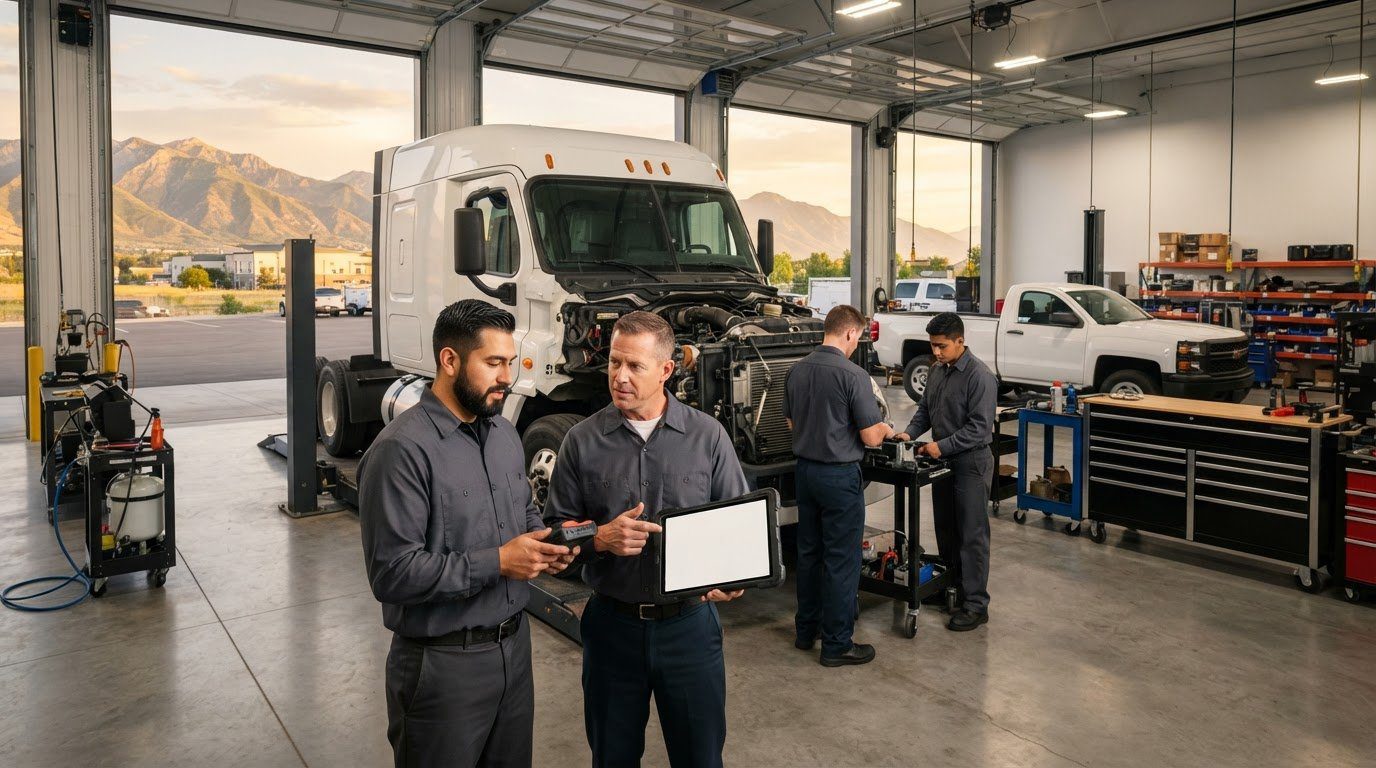
How to Choose a Long-Term Fleet Service Partner for Your Diesel Fleet

A dependable fleet relationship is built in the shop, long before a breakdown puts a vehicle out of service. Inconsistent maintenance or limited diesel expertise can make schedules harder to manage and allow small issues to become larger disruptions. Knowing how to choose a long-term fleet service partner starts with looking beyond one repair and assessing the support your vehicles need over time.
Consider diagnostic and repair capability, preventive maintenance, clear service records, and accountability for the work performed. Also look for a service resource equipped to support the range of vehicles your operation depends on, from light-duty trucks to heavy-duty equipment. A lasting relationship should make maintenance easier to plan and help keep your fleet ready for the work ahead.
This practical framework covers service depth, preventive care, accountability, and regional fit. Diego’s Shop provides diesel diagnostics, repairs, preventive maintenance, and warrantied repair work for commercial fleets across Utah County and the Wasatch Front. Use the criteria ahead to assess what dependable long-term support looks like for your fleet.
Key Takeaways
- Use a practical framework for how to choose a long-term fleet service partner, based on your operation’s needs rather than a single repair experience.
- Compare diesel diagnostics, repair scope, preventive maintenance, and vehicle-class coverage against your fleet’s full mix.
- Look for a service relationship that supports planned maintenance as well as repairs, with clear accountability for work performed.
- Build an evaluation checklist around your vehicles, duty requirements, diesel systems, and ongoing maintenance needs.
- See how Diego’s Shop’s diesel repair, diagnostics, preventive maintenance, and warrantied repair work support commercial fleets across Utah County and the Wasatch Front.
How to Choose a Long-Term Fleet Service Partner for Your Operation
One breakdown can put a vehicle out of service, disrupt schedules, and threaten customer commitments. Choosing a long-term fleet service partner means more than finding someone to handle the next repair. It means establishing a dependable repair resource that understands your vehicles and supports their maintenance over time.
To assess how to choose a long-term fleet service partner, focus on four factors: diesel expertise, preventive care, coverage across your vehicle mix, and accountability for repair work. The right fit depends on what you operate, how you use the vehicles, and the service they need.
Fleet management covers a broad set of responsibilities, but a hands-on diesel service partner has a specific role: diagnosing and repairing vehicles and helping maintain them. Repair expertise differs from fleet software, which organizes information, and vehicle suppliers, which provide vehicles. Assess a service relationship by the work it does to support your diesel equipment.
What a long-term fleet service relationship should deliver
Continuity across diagnostics, repairs, and preventive maintenance gives a fleet a consistent repair resource instead of a series of one-off fixes. Scheduled maintenance can help managers plan service and identify developing needs, while clear repair information helps them understand what work was performed. Neither eliminates breakdowns, but ongoing maintenance gives the operation a stronger basis for planning than waiting until a vehicle needs repair.
Consider your full range of vehicles and operating demands. A fleet with light- and medium-duty trucks, heavy-duty equipment, OTR long-haulers, or dump trucks may need broader coverage than a single vehicle example suggests. Diego’s Shop provides diesel diagnostics, repairs, preventive maintenance, and warrantied repair work for light-, medium-, and heavy-duty vehicles, including Peterbilt, Kenworth, Isuzu, and Ford.
Why regional diesel expertise matters in Utah
A regional shop can be a practical service resource when your commercial vehicles operate across nearby communities. Diego’s Shop is based in Springville and serves commercial fleets across Utah County and the Wasatch Front. Its regional service connects hands-on diesel repair and maintenance with fleets working in the area, from long-haul operations to dump-truck fleets.
As you assess fit, consider where your vehicles operate alongside their duty class, diesel systems, and maintenance needs. Regional relevance matters, but it should be weighed alongside repair depth and consistent accountability. These are the foundations of a service relationship built around the fleet, not just the next repair.
Evaluate Diesel Repair Depth, Diagnostics, and Fleet Vehicle Coverage
A fleet’s repair needs depend on more than its most visible truck. Light-, medium-, and heavy-duty diesel vehicles can have different operating demands and maintenance needs, so assess coverage across the whole fleet. OTR long-haulers and dump trucks, for example, may belong to the same operation but serve different roles. Matching vehicle classes and brands to repair capability can reduce the need to divide service across multiple resources.
Match service capability to the vehicles in your fleet
Start with an inventory of the vehicles you rely on, including duty class, make, and typical use. Then compare that inventory with the diesel diagnostics, repairs, and preventive maintenance available to support them. Broad class and brand coverage can make it easier to organize maintenance and repair work through a consistent service relationship.
Diego’s Shop works on light-, medium-, and heavy-duty diesel vehicles, including Peterbilt, Kenworth, Isuzu, and Ford. Its commercial fleet work ranges from OTR long-haulers to dump trucks. This breadth gives fleet operators a relevant basis for considering repair and maintenance coverage across a varied vehicle mix.
Look for diagnostics that support informed repairs
Modern diesel vehicles rely on engine management and emissions control systems. Diagnostics help identify system faults and provide useful information for deciding what repair work is needed. Look for a clear path from diagnosis to repair, so the focus stays on addressing the issue rather than treating a fault code as the full answer.
Fleet partnerships can also mean different things. The U.S. General Services Administration describes an end-to-end fleet management solution in a broader fleet context. A hands-on diesel repair relationship has a narrower purpose: diagnostics, repairs, and maintenance for the vehicles themselves.
As you consider how to choose a long-term fleet service partner, match your fleet’s diesel needs to the repair capability available. Diego’s Shop provides diesel diagnostics and repair, along with preventive maintenance and warrantied repair work.
Compare Preventive Maintenance and Repair Accountability, Not Just Convenience
A long-term relationship should make service more consistent and easier to plan. Convenience matters, but it isn’t enough on its own. Compare a reactive-only approach, where service happens after a fault or failure, with ongoing maintenance that creates regular opportunities to identify potential issues and plan attention around operating needs.
That distinction is central to how to choose a long-term fleet service partner. Preventive maintenance can’t guarantee that a vehicle won’t break down, and it shouldn’t be treated as a promise of savings. Its value is in creating a deliberate maintenance rhythm instead of relying only on unexpected repairs.
Why preventive maintenance belongs in the partnership
Inspections and scheduled maintenance give technicians opportunities to notice wear or other concerns before they develop into more serious problems. For a fleet manager, planned attention also creates a clearer basis for coordinating vehicle service and operating schedules. A maintenance relationship supports ongoing care between repairs, rather than ending once a single fault is addressed.
Diego’s Shop provides preventive maintenance for commercial diesel fleets. Fleet operators can make that service part of a continuing approach to vehicle care, with maintenance shaped around the fleet’s vehicles and operating demands. Regular attention informs planning, while each vehicle’s condition determines the work it needs.
How to assess repair quality and accountability
Repair accountability begins with understanding the findings and the work being performed. A clear explanation of the issue and an understandable scope of work help fleet managers make informed decisions and keep service records useful. Documenting repairs alongside maintenance helps show what was addressed, when it was done, and what may need attention next. Records support continuity, but they don’t replace sound diagnosis or guarantee a particular outcome.
Diego’s Shop provides warrantied repair work for diesel vehicles. For fleet operators, this adds an accountability element to the repair relationship without implying a particular warranty term or coverage. Clear repair information also makes it easier to manage service history across vehicles and base maintenance decisions on work performed.
Convenient service may solve an immediate problem. Preventive maintenance and accountable repair work provide a stronger foundation for ongoing fleet care. Diego’s Shop connects those needs through diesel repair and maintenance for commercial fleets in Utah County and the Wasatch Front.
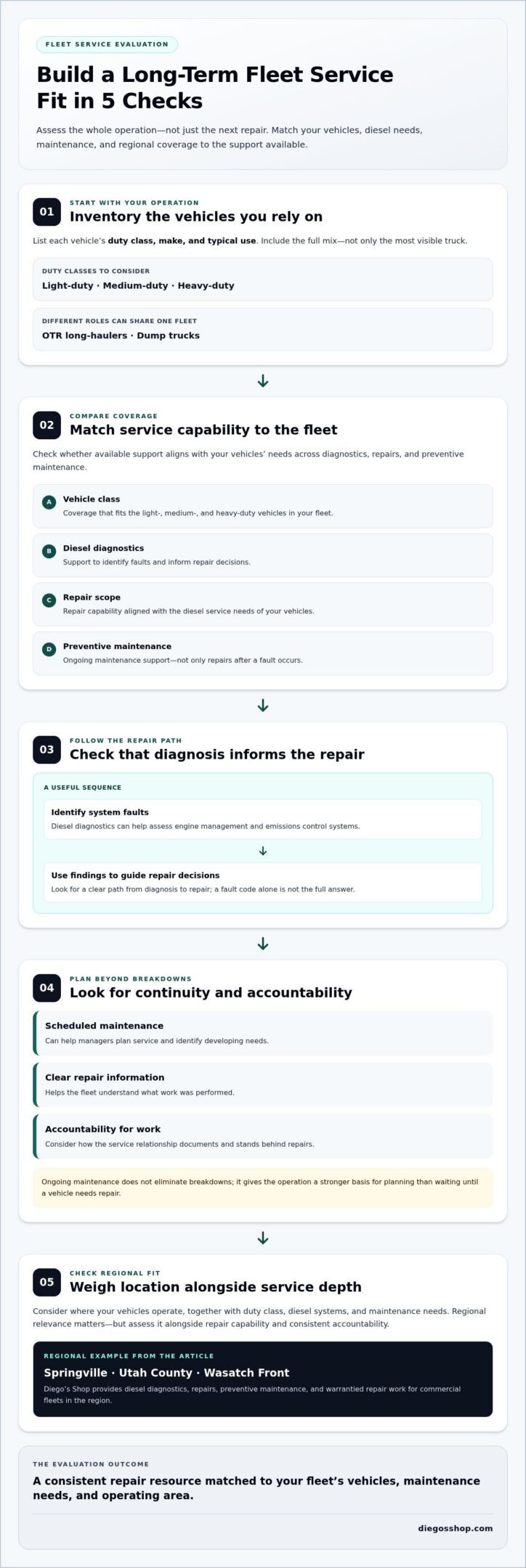
Use a Practical Fleet Service Partner Evaluation Checklist
A clear fleet inventory makes it easier to compare your operating needs with a shop’s repair and maintenance capabilities. Use this checklist to turn broad expectations into practical criteria focused on your vehicles, their work, and the service relationship you need.
Build a clear picture of your fleet’s service needs
- Inventory the fleet. List each vehicle’s duty class, make, and typical use. Include the full mix, from light-duty trucks to heavy-duty vehicles, and note specialized units such as OTR long-haulers or dump trucks.
- Identify diesel systems and diagnostic needs. Record recurring faults, diagnostic concerns, and the systems that require attention. This helps clarify the diesel repair capability your operation depends on.
- Separate routine care from urgent repairs. Note recurring preventive maintenance needs separately from current diagnostic or repair priorities. This helps you plan ongoing service without losing sight of vehicles that need attention now.
- Define repair accountability. Decide what clear communication and useful service records should include for your operation, such as repair findings, scope of work, and a record of completed maintenance.
- Check vehicle-class coverage. Consider whether one repair resource can support the fleet’s range of diesel vehicles and brands. A varied fleet may need broader capability than a single truck or equipment type suggests.
Turn the evaluation into an ongoing service plan
Use your inventory and priorities to organize maintenance planning. Keep a consistent record of completed repairs, recurring service needs, and issues that require follow-up. These records give fleet managers a practical reference for scheduling attention and discussing future work. For additional guidance, see a fleet maintenance guide.
Diego’s Shop provides diesel diagnostics, repairs, preventive maintenance, and warrantied repair work for light-, medium-, and heavy-duty commercial vehicles. Based in Springville, the shop serves fleets across Utah County and the Wasatch Front, including operations with vehicles ranging from long-haulers to dump trucks. This service scope supports fleet managers looking for hands-on diesel repair and ongoing maintenance in the region.
Use your checklist to compare your fleet’s needs with repair capability, maintenance support, and repair accountability. Diego’s Shop provides diesel fleet service for these needs.
Why Diego’s Shop Fits Long-Term Diesel Fleet Service in Utah
A strong fleet service partner should match your vehicles’ duty classes and diesel repair needs, support preventive maintenance, and make repair work accountable. Regional fit matters too: a capable shop is most useful when its service aligns with where your commercial vehicles operate. These criteria provide a practical way to assess how to choose a long-term fleet service partner, beyond convenience or a single repair.
A single diesel service relationship for varied fleet needs
Diego’s Shop is a Springville, Utah diesel repair shop serving commercial fleets across Utah County and the Wasatch Front. Its repair and maintenance work supports light-, medium-, and heavy-duty diesel vehicles, giving fleets with different vehicle classes a regional resource for ongoing service. Commercial fleet examples include OTR long-haulers and dump trucks, each with distinct roles and maintenance requirements.
The shop provides diesel diagnostics and repairs, preventive maintenance, and warrantied repair work. Its vehicle experience includes Peterbilt, Kenworth, Isuzu, and Ford. For a fleet manager, this combination offers a practical basis for managing varied diesel service needs through one repair relationship, rather than treating every vehicle as if it has the same demands.
That breadth doesn’t mean every vehicle needs the same maintenance approach. A useful service relationship takes the fleet’s mix into account, including vehicle class, brand, operating use, and repair priorities. Consistent attention to those needs can help managers organize service and maintain a clearer picture of work performed.
Take the next step toward dependable fleet service
Before starting a conversation, outline your fleet size, vehicle types and brands, typical operating demands, current diagnostic concerns, and recurring maintenance priorities. Note which needs are routine and which vehicles require repair attention. A clear overview helps focus the discussion on the work your fleet depends on.
Diego’s Shop provides hands-on diesel diagnostics, repair, preventive maintenance, and warrantied repair work for commercial fleets in its Utah service region. Share your fleet’s requirements and discuss how these services can support its vehicle mix and ongoing maintenance needs. Start a fleet service conversation with Diego’s Shop.
Build a Stronger Foundation for Fleet Reliability
Choosing a lasting service partner means matching your fleet’s diesel needs with repair capability, regular preventive care, and clear accountability. A practical fleet inventory and checklist can help you weigh vehicle coverage and maintenance priorities before you commit. That’s the core of how to choose a long-term fleet service partner: look beyond a single repair and consider the support your operation will need over time.
Diego’s Shop provides diesel diagnostics and repairs for light-, medium-, and heavy-duty vehicles, along with preventive maintenance and warrantied repair work. Based in Springville, the shop serves commercial fleets across Utah County and the Wasatch Front.
Bring your fleet’s vehicle types, operating needs, and maintenance priorities into the conversation. Talk with Diego’s Shop about diesel fleet service and take a clear next step toward dependable support for your vehicles.
Frequently Asked Questions
What should I look for in a long-term fleet service partner?
Look for diesel repair and diagnostic capability that matches your vehicles, preventive maintenance support, and clear accountability for repair work. Consider whether service coverage fits your fleet’s duty classes, brands, and operating needs. A partner should support scheduled maintenance as well as repairs, with understandable findings and service records that help you plan ongoing care. These factors give you a practical basis for evaluating the relationship beyond one repair.
How can I tell whether a repair shop can support my entire diesel fleet?
Compare the shop’s service scope with an inventory of your fleet, including vehicle classes, brands, diesel systems, and typical uses. A fleet with light-, medium-, and heavy-duty vehicles may need broader coverage than a shop focused on one truck type. Diego’s Shop provides diagnostics and repairs for all three duty classes, including Peterbilt, Kenworth, Isuzu, and Ford vehicles, and serves commercial fleets ranging from OTR long-haulers to dump trucks.
Is preventive maintenance important when choosing a fleet service partner?
Yes. Preventive maintenance gives your fleet a planned way to inspect vehicles and address maintenance needs, rather than relying only on repairs after a fault or failure. It can help identify potential issues earlier and give managers a clearer basis for scheduling service. It can’t guarantee uptime or prevent every breakdown, but it makes ongoing vehicle care part of the service relationship. Diego’s Shop provides preventive maintenance for commercial diesel fleets.
How does diesel diagnostic capability help a commercial fleet?
Diesel diagnostics help identify system faults and inform decisions about the repair work a vehicle needs. This matters for modern vehicles with engine management and emissions control systems, where a fault indication is a starting point for investigation, not necessarily the full diagnosis. Diego’s Shop provides diesel diagnostics and repairs for light-, medium-, and heavy-duty vehicles, helping commercial fleets connect diagnostic findings with hands-on repair support.
Can one diesel repair shop service different truck brands and vehicle classes?
Yes, a diesel repair shop can support multiple brands and classes if its service capability covers the fleet’s needs. Diego’s Shop works on light-, medium-, and heavy-duty diesel vehicles, including Peterbilt, Kenworth, Isuzu, and Ford. Its commercial fleet work includes OTR long-haulers and dump trucks. This range can help fleet managers organize varied diesel repair and maintenance needs through one shop relationship.
What does warrantied fleet repair work mean for a long-term service relationship?
Warrantied repair work means the repair is backed by a warranty, adding an accountability element to the service relationship. It gives fleet managers a record of covered repair work and a reference point if a related concern arises. Warranty coverage and terms can vary by repair, so avoid assuming a particular duration or scope. Diego’s Shop provides warrantied repair work as part of its diesel services for commercial fleets.