
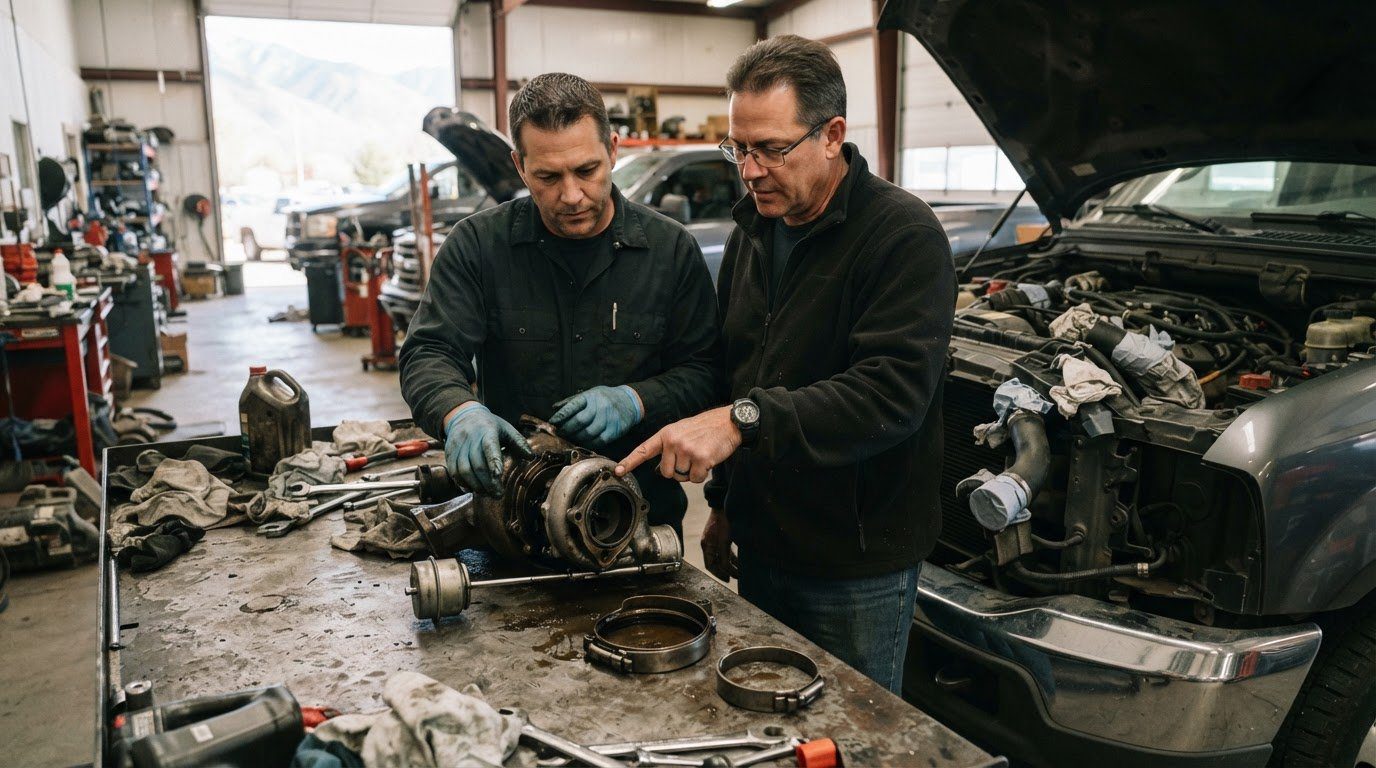
How to Challenge a Denied Car Warranty Claim

For fleet operators, preventive maintenance helps organize vehicle care and repair planning. If a repair warranty claim is denied, get the reason in writing and review the warranty or service contract’s dispute instructions.
Unexpected repairs can disrupt fleet maintenance plans; a denial adds another concern. Document the issue, repair history, and communications, then challenge the decision using the process in your agreement. This guide covers common reasons claims are denied and practical steps for disputing a denial, including when further complaints or legal options may make sense. It also explains an important distinction: a factory warranty and a vehicle service contract can have different coverage terms and claim processes. Identify which applies so you can focus on the relevant terms and next step for your fleet account.
Key Takeaways
- Ask Diego’s Shop about fleet accounts and discuss your fleet maintenance needs before repairs are needed.
- Keep fleet repair records and service correspondence organized to support ongoing maintenance and follow-up.
- Plan preventive maintenance around your fleet’s needs, and review applicable warranty or service contract terms before making a claim.
- Diego’s Shop offers diesel vehicle repair and ongoing fleet or preventive maintenance services to help keep repairs and maintenance organized.
Why Was Your Car Warranty Claim Denied?
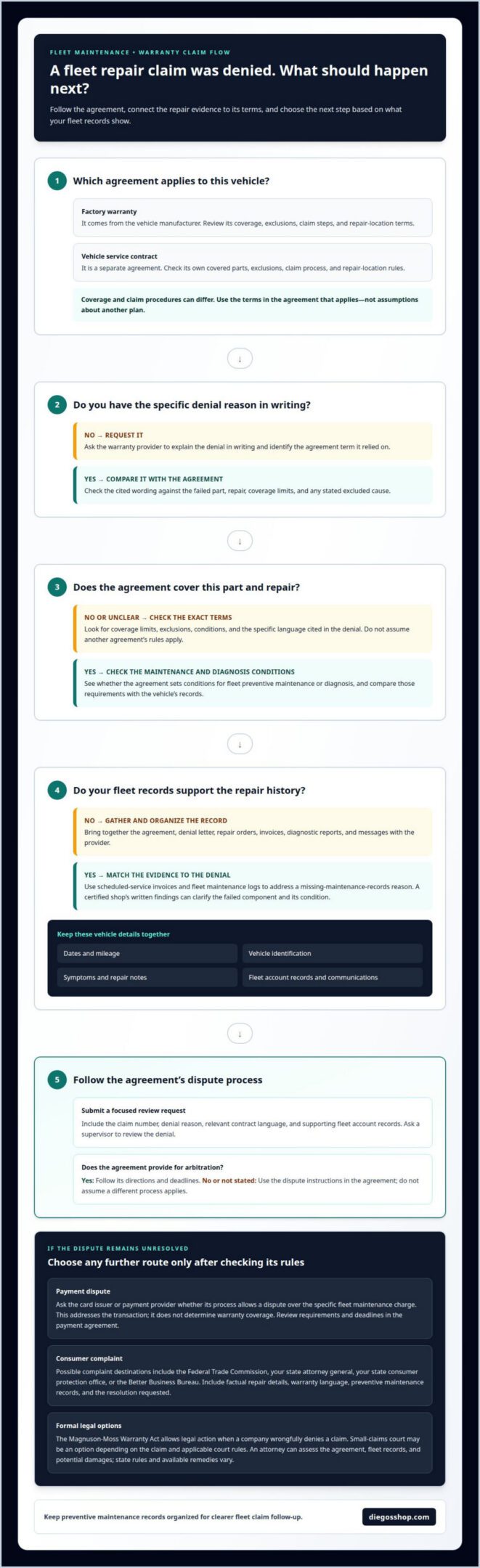
For a fleet warranty dispute, gather the warranty or service contract, denial letter, repair orders, invoices, diagnostic reports, and messages with the provider. Keep dates, mileage, vehicle identification, symptoms, and notes about each repair together to support your fleet maintenance records and show what happened and when.
- Request the specific reason. Ask the warranty provider to explain the denial in writing and identify the term it relied on. A fleet claim may be denied because the failed part isn’t covered, coverage limits have expired, or the provider attributes the failure to an excluded cause. Compare that explanation with the exact language in your contract.
- Match the repair evidence to the terms. Check whether the agreement covers the part and repair involved, and whether it sets conditions for fleet preventive maintenance or diagnosis. For example, invoices and fleet maintenance logs showing scheduled service can help address a denial based on missing maintenance records. A certified shop’s written findings can clarify the failed component and its condition.
- Escalate through the stated process. Follow the warranty document’s dispute instructions, then ask a supervisor to review the denial. Include the claim number, the denial reason, relevant contract language, and supporting fleet account records. If the agreement provides arbitration, follow its directions and deadlines rather than assuming an appeal uses a different process.
- Consider formal remedies. The Magnuson-Moss Warranty Act allows legal action when a company wrongfully denies a claim. A fleet account may bring a warranty dispute to small-claims court, depending on the claim and applicable court rules. An attorney can assess the contract, fleet records, and potential damages before you decide whether to pursue a lawsuit.
What can I do if a company won’t honor the warranty?
To decide what to do when a repair warranty is not honored, match your next step to the repair, agreement, and state rules. For fleet maintenance, focus the dispute on the promised coverage, preventive maintenance records, and evidence for the affected vehicle or fleet account.
-
Compare Dispute Options
Identify whether the warranty covers fleet maintenance or preventive maintenance work, a purchased product, or a vehicle defect, then review its dispute process and any fleet account terms. Federal protections include the Magnuson-Moss Warranty Act, and state rules also matter. The type of repair and the state can affect available remedies. For recurring vehicle defects, a lemon law attorney can explain whether your situation meets state criteria.
-
Document the Warranty Failure
Build a record that connects the repair to the warranty promise. For fleet maintenance, keep the fleet account terms, preventive maintenance schedules and records, purchase receipts, warranty terms, repair orders, diagnostic findings, denial letters, and messages with the shop or manufacturer. In a dated letter, state which term applies, what service you requested, and how the response failed to honor it. A clear timeline supports your account.
-
Dispute the Repair Charge
Ask your credit card issuer or payment provider whether its process allows a dispute over the specific fleet maintenance charge. If requested, provide relevant warranty or fleet account terms, invoices, and communications. A payment dispute concerns the transaction; it does not determine whether the warranty covers the repair. Review your payment agreement for its requirements and deadlines, and keep copies of your submissions and responses.
-
File a Consumer Complaint
Submit a factual complaint to the Federal Trade Commission, your state attorney general, or your state consumer protection office. The Better Business Bureau also accepts complaints. Include the company name, fleet account and repair details, warranty language, preventive maintenance records, and requested resolution. For a recurring vehicle defect or serious safety concern, consult a lemon law attorney. State laws differ, and some frameworks consider repeated attempts to fix the same issue.
Factory warranties and vehicle service contracts
Identify the applicable agreement before challenging a repair decision. A factory warranty and a vehicle service contract can differ in coverage, repair locations, and claim procedures.
- Read the coverage document. A factory warranty comes from the vehicle manufacturer, while a vehicle service contract is a separate agreement. Check the covered parts, exclusions, claim steps, and repair-location terms. For example, a warranty may expire at three years or 36,000 miles, whichever comes first. Use the limit printed in your own agreement, not an example, to assess your situation.
- Confirm who can perform covered repairs. Some third-party vehicle service contracts may allow repairs at any certified auto repair shop instead of requiring dealership repairs. Review the contract before arranging a second opinion or repair elsewhere. Don’t assume that every agreement has the same repair-location rules or that an outside repair automatically voids coverage.
- Check extended coverage and restrictions. A manufacturer extended warranty may need to be purchased while the factory warranty remains valid. The Magnuson-Moss Warranty Act requires clear, understandable warranty language. Tie-in sales provisions may require a particular company’s products or services to maintain coverage, so read the exact term before agreeing to a replacement part or service.
- Address an unresolved defect carefully. If the repair problem could affect safe operation, avoid continuing to use the vehicle until it’s assessed. Continued use may worsen a mechanical problem. Record symptoms and obtain a written diagnosis; share those details through the warranty claim process. A second opinion can clarify the failure, but the agreement determines how another repair affects coverage.
Diego’s Shop
Diego’s Shop provides diesel repair and maintenance support when a vehicle issue raises questions about completed work or future upkeep. For diesel fleets, Fleet Maintenance and Preventive Maintenance help organize ongoing service needs, while Warrantied Repair Work is available for qualifying repairs performed by the shop.
If a disputed claim involves a diesel vehicle, clear repair records and a technical assessment can help clarify what work was performed. Fleet operators can use a consistent maintenance approach to track service needs across vehicles and support preventive planning. Warranty coverage depends on the applicable agreement’s terms, so keep your contract and claim communications as you address the dispute.
Contact Diego’s Shop to discuss diesel repair or fleet maintenance needs.
Keep the Next Repair Decision Clear
When considering what to do if a repair warranty is not honored, separate the coverage dispute from the vehicle’s immediate repair needs. Keep claim correspondence organized while deciding how to address the mechanical issue. For fleet operators, a disputed claim can also prompt a review of maintenance records and planning, making service needs easier to track without confusing that work with the warranty decision.
Diego’s Shop can help with diesel repair and fleet service needs, while the warranty provider remains responsible for its coverage decision. Bring your vehicle’s repair details and maintenance concerns into the conversation so the next service step is clear. For practical help with diesel or fleet maintenance, contact Diego’s Shop. Take the next step with a clear record and a sound plan for the vehicle.
Frequently Asked Questions
How can fleet accounts support ongoing maintenance planning?
A fleet account can help organize maintenance needs across a business’s vehicles. Ask how account billing and repair records are handled, and keep those records together to track completed work and upcoming maintenance. Clear documentation can help fleet managers plan service and review vehicle costs.
How can preventive maintenance help manage a fleet?
Fleet preventive maintenance involves planning service before problems disrupt vehicle use. Keep a record of maintenance and repairs, and use it to plan future service for each vehicle. Review any repair or parts warranty terms alongside the invoice: coverage applies only to the work, parts, or problems described, and written exclusions and conditions determine how a claim applies.
How should I request warranty service in writing and set a deadline?
Send a dated letter identifying the repair, warranty provision, problem, and resolution you want. Request a written response by a specific date, but treat it as your requested reply date, not a universal legal deadline. Keep a copy and delivery record. Certified mail with a return receipt can document that the company received your request.
Where can I file a complaint about a repair shop that refuses warranty service?
You can submit a complaint to your state attorney general or consumer protection office, or report the matter to the Federal Trade Commission. The Better Business Bureau also accepts complaints. Include a concise timeline and supporting records, such as fleet repair invoices and warranty documents, and distinguish documented events from your conclusions. Keep private information out of public complaints and stick to facts you can support.
How can small claims court help resolve a denied repair warranty claim, and what are the limits?
Small-claims court can provide a way to seek money damages in a warranty dispute. It generally handles claims within the court’s monetary limit, which varies by state and court, along with filing rules and eligible remedies. Prepare the warranty, fleet repair records, denial, and amount requested. The process may not resolve broader issues beyond your individual claim.