
Hidden Costs of Choosing the Cheapest Diesel Mechanic

The lowest repair quote can become the most expensive choice. The hidden costs of choosing the cheapest diesel mechanic often emerge later as repeat repairs, vehicle downtime, or maintenance that was postponed instead of addressed. A low estimate is not automatically a bad choice, but the work it covers matters.
For a fleet, the real comparison is how a repair decision affects reliability and ongoing maintenance, not just the initial bill. This article explains what to look for in a diesel repair provider, how incomplete diagnostics or parts choices can lead to additional work, and why preventive maintenance belongs in the cost picture. You’ll have a clearer way to weigh repair estimates against the needs of your trucks and fleet schedule.
Key Takeaways
- Compare repair estimates by the diagnostic work, parts, and labor each one includes, not by the total alone.
- Consider how deferred maintenance can affect fleet reliability and lead to additional repair needs.
- Look for clear explanations of the repair and the work needed to address the underlying problem.
- Use preventive maintenance planning to make fleet repair decisions more consistent and easier to manage.
1. Choosing a diesel repair provider
Compare diesel quotes line by line: diagnosis, labor, parts, and repair scope. Ask what test supports the diagnosis and which work is essential now. For example, a fuel-system fault should be supported by an explained test result, not an unexplained parts replacement.
To avoid unnecessary repairs, ask for a clear explanation of each recommended job and how it relates to the fault. Separate urgent repairs from maintenance that can be scheduled later. Approve work in stages so additional tasks do not proceed without your authorization.
State protections vary, so the rules depend on where you authorize the repair. Review your state’s requirements for written estimates, approval of added work, and itemized invoices. Don’t assume one state’s process applies nationwide.
Downtime costs depend on the vehicle’s role and the work delayed. Calculate lost billable hours or loads, substitute-vehicle expenses, driver time, and delivery disruption. For a fleet, consider how one truck out of service affects scheduled routes and available capacity.
Low-cost work can lead to repeat repairs if diagnosis misses the root cause, installation is incomplete, or a replacement part fails early. For example, replacing a component without addressing the fault that damaged it can leave the original problem unresolved.
Diesel repair warranty terms vary by shop and repair. Compare the coverage period, how parts and labor are handled, any exclusions, and the process for reporting a covered problem. Get the terms in writing with the repair invoice.
Diesel maintenance and repair needs
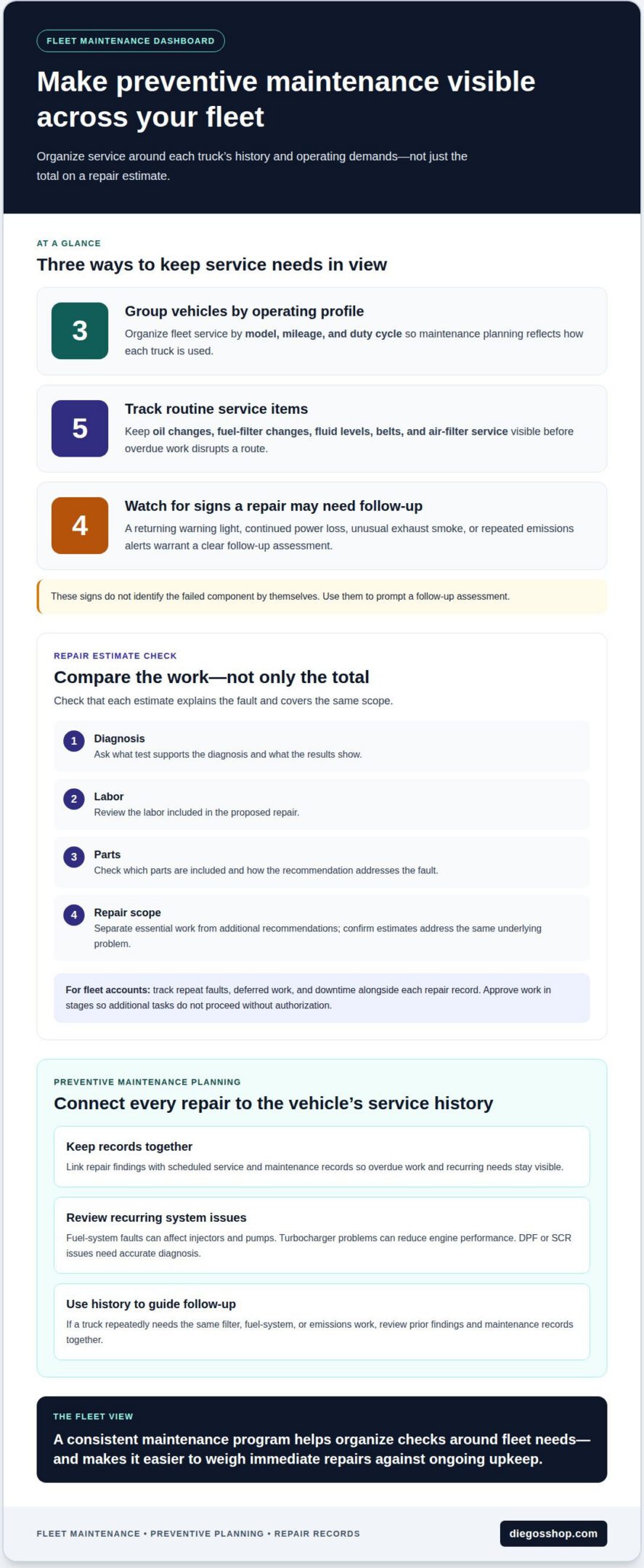
A diesel maintenance program should follow the truck’s service schedule and operating demands. For a fleet, group vehicles by model, mileage, and duty cycle. Track oil and fuel-filter changes, fluid levels, belts, and air-filter service so overdue work is visible before a minor issue disrupts a route.
Some problems need more than routine checks. Fuel-system faults can affect injectors and pumps, while turbocharger problems can reduce engine performance. Diesel particulate filter (DPF) or selective catalytic reduction (SCR) issues also need accurate diagnosis. Replacing a part without finding the cause can leave the original fault active and lead to repeat work.
After a repair, watch for signs that the problem remains. A warning light that returns, continued loss of power, unusual exhaust smoke, or repeated emissions-system alerts can indicate an incomplete diagnosis or repair. These signs don’t identify the failed component by themselves, but they do warrant a clear follow-up assessment.
For fleet preventive maintenance, connect each repair to the vehicle’s history and scheduled service. If a truck repeatedly needs the same filter, fuel-system, or emissions work, review its prior findings and maintenance records together. Addressing small problems early can help prevent more extensive repairs. A consistent fleet maintenance program helps organize those checks around the fleet’s needs.
Diesel maintenance needs can include fuel filter and oil changes, glow plug or injector replacements, turbocharger maintenance or repair, and diesel particulate filter cleaning or replacement. Diesel engines rely on high-pressure components that require attention, so repairs should account for those systems as well as visible symptoms. Regularly checking fluids, filters, and belts is recommended for diesel truck maintenance, while keeping air filters serviced and the vehicle maintained is recommended to improve diesel fuel economy.
Addressing minor diesel vehicle problems before they escalate can help avoid expensive repairs. Ownership costs also include fuel, specialized fluids, and complex engine systems, which can make routine diesel maintenance more involved. Keep a consistent record of work so fleet service needs stay visible and your team can respond before a small fault becomes a larger repair.
3. How do diesel repair estimates compare between low-cost and reputable shops?
A diesel repair estimate should explain the diagnosed fault and proposed work. Compare whether each estimate includes testing, labor, parts, and follow-up steps. A lower total may reflect a narrower repair scope, not better value. For example, replacing a sensor is different from diagnosing why it triggered a warning. The hidden costs of choosing the cheapest diesel mechanic can include work left outside the initial scope.
Look for specific details. The estimate should identify the affected system, describe the repair, and distinguish necessary work from additional recommendations. If one estimate proposes a fuel-system repair and another recommends replacing a component, compare the diagnostic reasoning. Confirm that both address the same underlying problem.
For fleet accounts, consistency matters across vehicles. Track repeat faults, deferred work, and downtime alongside each repair record. If several trucks show similar emissions alerts, consider whether each estimate addresses the underlying issue. A limited fix may leave the fleet facing the same fault again.
Don’t compare estimates by total alone. Check whether each covers the same work, parts, and testing, then weigh the plan against vehicle use and maintenance history. To spot the hidden costs of choosing the cheapest diesel mechanic, look for work omitted from the written scope that may still be needed to resolve the problem.
Need help reviewing an estimate? Discuss your repair estimate and the work it covers.
After improving fuel quality and adding a cetane booster, a local fleet estimated annual savings of $125k, even after accounting for better fuel and additives costs.
Diego’s Shop
Diego’s Shop helps fleet operators make repair decisions with their vehicles’ maintenance needs in view. Fleet maintenance and preventive maintenance help organize service priorities, while diesel engine repair addresses diagnosed engine problems. For fleet operators, this offers a practical way to consider immediate repairs and ongoing upkeep rather than judging an estimate by its total alone.
Turn to Diego’s Shop when a diesel repair estimate raises questions or recurring maintenance needs are affecting fleet planning. Repair work is warrantied, giving you written coverage terms to review alongside the work performed. Contact Diego’s Shop to discuss your fleet’s repair or maintenance needs.
Set a stronger standard for the next repair
The hidden costs of choosing the cheapest diesel mechanic are easier to manage when repair decisions support your fleet’s long-term operating plan. Before the next repair, set a shared standard for deciding what needs prompt attention, what can be scheduled, and what information managers need to approve work. Apply it consistently across vehicles and service records. This gives your team a clear basis for evaluating recommendations instead of treating every repair as an isolated decision.
Diego’s Shop can help with diesel engine repair, fleet maintenance, and preventive maintenance. Contact Diego’s Shop to discuss your fleet’s needs and plan a practical next step. A thoughtful standard can make the next decision clearer and help your fleet move forward with confidence.
Frequently Asked Questions
What hidden fees can appear on a cheap diesel mechanic’s invoice?
Possible additions include diagnostic charges, shop supplies, disposal fees, storage, or taxes, depending on the repair and shop. Before authorizing work, identify which charges are separate from the quoted repair. When the invoice arrives, compare each line with the approved work and ask for an explanation of any new charge. For a fleet, track recurring fees across invoices.
How can I verify a diesel mechanic’s certifications, experience, and reviews?
Check the exact credential, issuing organization, and current status, then consider whether the mechanic has experience with your engine type and repair system. Reviews are most useful when they describe specific work, such as emissions diagnosis or fleet repairs, rather than offering general praise. Look for consistent details about communication, explanations, and how the shop handled follow-up concerns.
How much can diesel vehicle downtime cost owner-operators and fleets?
Downtime costs depend on the vehicle’s role and the work delayed. Account for lost billable hours or loads, substitute-vehicle expenses, driver time, delivery disruption, and reduced fleet capacity.
What warranties do diesel repair shops typically offer on parts and labor?
Warranty terms vary by shop and repair. Compare the stated coverage period, how parts and labor are covered, exclusions, and how to report a covered problem. Get the terms in writing with the repair invoice.