

Fleet Maintenance ROI Calculator: Quantifying the Value of Expert Diesel Service

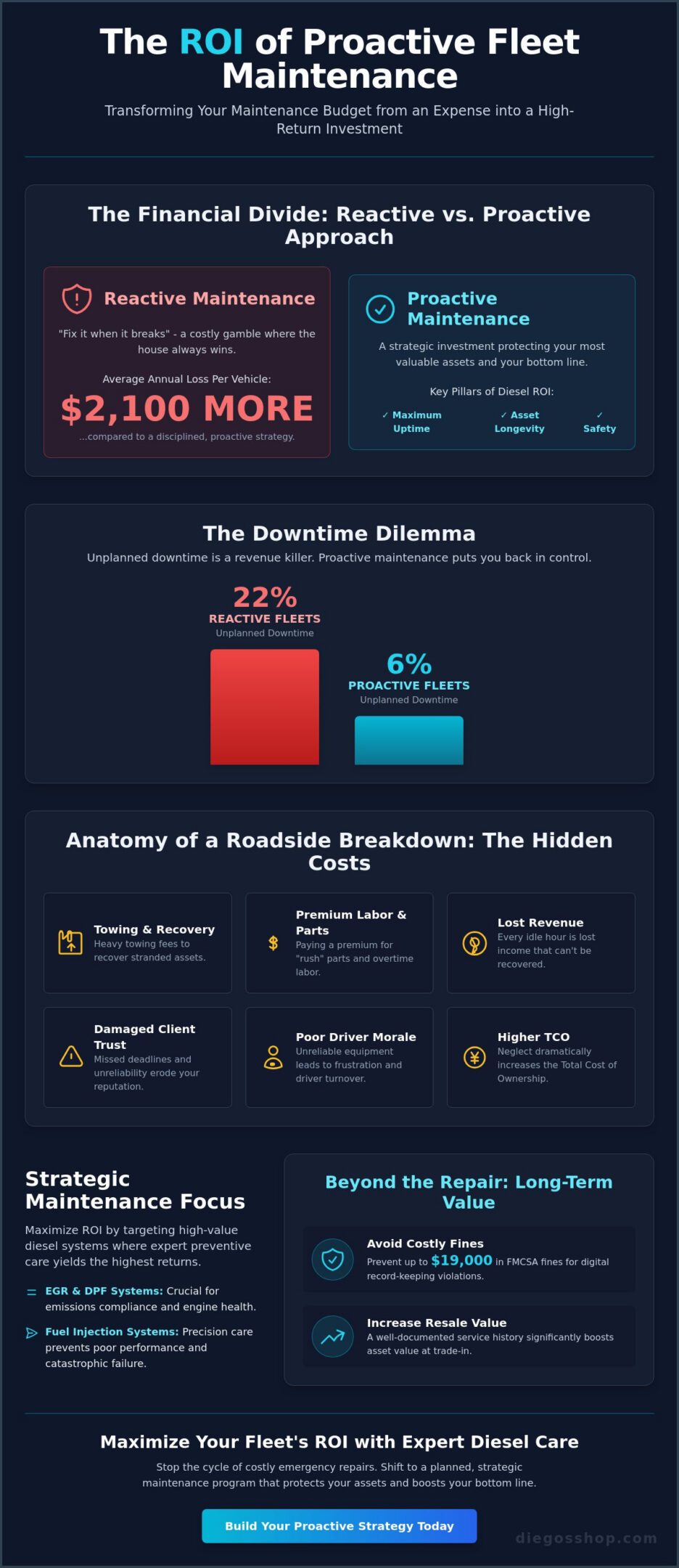
Fleets relying on reactive maintenance lose an average of $2,100 more per vehicle every year compared to those using a disciplined, KPI-driven approach. You likely already feel the sting of unpredictable downtime during peak seasons, but translating that frustration into a business case for the front office is a constant challenge. It’s natural to wonder if your preventive maintenance program is truly saving money or simply adding to your overhead costs.
This article provides a clear framework for a fleet maintenance ROI calculator to help you quantify the true value of expert diesel service. You’ll discover why proactive diesel engine repair and fleet maintenance aren’t just expenses; they’re your most effective tools for reducing the total cost of ownership. We’ll explore how to avoid $19,000 FMCSA fines for digital record-keeping violations, reduce unplanned downtime from 22% to just 6%, and ensure your aging diesel assets remain productive. By focusing on warrantied repair work and precise preventive care, you can transform your shop’s performance into a measurable financial win.
Key Takeaways
- Learn how to differentiate between simple spending and strategic investment using a specialized fleet maintenance ROI calculator designed specifically for heavy-duty diesel engines.
- Uncover the true financial impact of reactive maintenance, including the hidden expenses of roadside failures and damaged client trust across Utah County.
- Identify the high-value diesel systems, such as EGR and fuel injection, where focused preventive maintenance yields the highest returns on your service budget.
- Understand how partnering with a specialized diesel shop for warrantied repair work provides the long-term mechanical reliability needed to protect your fleet’s bottom line.
- Discover actionable steps to reduce your total cost of ownership by shifting from costly emergency repairs to planned, expert diesel engine care.
Defining Fleet Maintenance ROI in the Diesel Industry
Many fleet managers view maintenance as a necessary evil or a line item to be slashed during lean months. True Return on Investment (ROI) is fundamentally different from simple cost-cutting. While slashing your budget might save a few dollars today, it often invites catastrophic failure next quarter. In the heavy-duty world, a fleet maintenance ROI calculator must account for the specialized nature of high-compression engines and complex emissions systems that gas-powered vehicles simply don’t have.
Diesel fleets operate under extreme stress and carry heavier loads. Unlike light-duty gas vehicles, a diesel truck is a specialized industrial asset designed for constant production. This requires a sophisticated fleet management strategy that prioritizes the three pillars of diesel ROI: maximum uptime, extended asset longevity, and unwavering safety. When you treat proactive maintenance as an insurance policy, you aren’t just paying for an oil change. You’re buying protection against a $20,000 engine overhaul and the logistical nightmare of a dead truck on the side of the interstate.
Beyond the Software: The Mechanical Reality of ROI
Data dashboards are popular, but they don’t turn wrenches. You can track every fault code in the world, but if you don’t have a master craftsman to execute the repair, that data is just noise. High-quality diesel service focuses on the Total Cost of Ownership (TCO). This includes the purchase price, fuel, insurance, and the massive cost of unplanned repairs. “Cheap” maintenance often uses inferior parts or overlooks critical wear patterns in the EGR or DPF systems. This short-sightedness leads to a much higher TCO over the vehicle’s life. Specialized diesel expertise ensures that every dollar spent on service actually extends the life of the asset.
Key Metrics for Your ROI Calculation
To use a fleet maintenance ROI calculator effectively, you need accurate inputs that reflect your daily operations. Uptime percentage is your most critical metric. If a truck isn’t moving, it isn’t generating revenue. You should also track emergency repair frequency. A high number here is a leading indicator that your preventive program is failing. Finally, consider asset resale value. A well-documented history of expert diesel engine repair and consistent maintenance can significantly increase the price when it’s time to cycle out an aging asset. These metrics prove that professional service pays for itself through increased reliability and long-term value.
The High Cost of Reactive Maintenance: Why ‘Fixing It Later’ Fails
Reactive maintenance is a gamble where the house always wins. When you wait for a component to fail before addressing it, you aren’t saving money; you’re just deferring a much larger bill with added interest. In Utah County, a roadside breakdown involves far more than just the mechanical fix. It triggers a chain reaction of expenses that a standard fleet maintenance ROI calculator might miss if it only looks at parts and labor. The true cost includes the logistical nightmare of recovering a stranded vehicle and the immediate loss of billable hours.
A proper Benefit-Cost Analysis (BCA) reveals that the price of neglect extends deep into your brand reputation. When a delivery is missed or a construction site is stalled because a truck is stranded on I-15, your clients don’t care about your maintenance budget. They only see unreliability. This frustration often trickles down to your drivers. Operating equipment that constantly breaks down kills morale and increases turnover. In an industry facing a chronic driver shortage, keeping your team in safe, reliable trucks is a vital retention strategy. Replacing a seasoned driver is often more expensive than a full year of scheduled service.
Anatomy of an Emergency Repair Bill
Emergency repairs are inherently inefficient and expensive. You’ll face heavy towing fees and out-of-network markups from shops that know you’re in a bind. Verified data shows that fleets with a reactive approach experience 22% unplanned downtime, compared to just 6% for those using a KPI-driven model. You’re also paying a premium for “rush” parts and overtime labor. Every hour that commercial vehicle sits idle, it’s losing revenue that can never be recovered. These hidden leaks in your cash flow are why a proactive approach is the only sustainable path. If you’re tired of the “fix it when it breaks” cycle, consider how fleet maintenance in Springville can stabilize your operations.
The Long-Term Damage of Neglect
Neglect creates a “domino effect” within a diesel engine. For instance, ignoring soot buildup leads to premature failure of the EGR and DPF systems. These aren’t just minor fixes; they’re major overhauls that could have been avoided with consistent preventive maintenance. When a turbocharger fails because of contaminated oil, metal shavings can migrate through the entire system, turning a single component failure into a total loss. Reactive shops often treat the symptom without finding the root cause, leading to recurring issues that drain your resources. Expert care identifies these patterns early, stopping a small leak before it becomes a catastrophic engine failure. Professional oversight ensures your assets stay on the road where they belong.
Building Your Fleet Maintenance ROI Calculator: 5 Essential Inputs
To build a functional fleet maintenance ROI calculator, you must move beyond high-level estimates and look at the actual costs leaking from your operation. A spreadsheet is only as good as its inputs. Start by documenting your total annual spend on all maintenance and repairs. Next, estimate the hourly cost of vehicle downtime. Third, factor in the fuel efficiency losses caused by poorly maintained engines. Fourth, calculate the extended lifespan of assets under professional care. Finally, compare the cost of a preventive maintenance plan against your historical emergency failure rates. This comparison usually reveals that proactive service is significantly cheaper than reactive chaos.
Input 1: The Downtime Variable
A downed commercial vehicle is a liability that continues to accrue costs every hour it sits. To find your cost per hour, combine the lost revenue the truck would have generated with the fixed costs that don’t stop, like insurance and permits. Don’t forget to include driver wages during idle time. If your driver is waiting for a tow instead of making deliveries, you’re paying for zero productivity. Many contracts also include stiff penalties for missed delivery windows. These compounding expenses are why reducing downtime from 22% to 6% is the fastest way to improve your bottom line.
Input 2: Fuel and Efficiency Gains
Diesel engines rely on precise fuel delivery and air ratios. When injectors become dirty or sensors fail, your fuel economy drops immediately. Industry data suggests that fleets using data-driven maintenance can see significant fuel savings; even a small drop in MPG across a fleet of ten trucks can cost thousands of dollars over a year. Expert tuning and regular fuel system cleaning ensure your engines burn fuel efficiently. This keeps your operating costs predictable and prevents the pump from draining your profits.
Input 3: Salvage and Resale Value
The ROI of your maintenance program is also realized at the end of the vehicle’s life. A documented service history from a diesel repair utah specialist proves the asset was cared for by professionals. Buyers pay a premium for “maintained” trucks over those that were merely “repaired” after breaking. Well-maintained diesel engines can often run for hundreds of thousands of extra miles. This longevity delays the massive capital expenditure of buying new equipment, providing a massive boost to your long-term ROI. Accurate record-keeping turns your shop floor into a value center.
Strategic Maintenance: Where the Highest Returns Are Found
Achieving a high return on investment requires focusing your resources where they matter most. Not every repair carries the same weight in your fleet maintenance ROI calculator. Systems like the Exhaust Gas Recirculation (EGR), Diesel Particulate Filter (DPF), and fuel injection are the most frequent sources of expensive, avoidable failures. When these systems fail, the bill isn’t just for a single part; it’s for the extensive labor and the potential damage to the engine core. Choosing expert diesel engine repair specialists ensures these complex systems are handled with the precision they require, something a generalist auto shop simply can’t offer.
DOT inspections should be viewed as a strategic diagnostic window rather than a regulatory hurdle. While a typical annual DOT inspection costs between $150 and $350, it serves as a comprehensive health check that can prevent out-of-service orders. By catching a worn tie rod or a leaking wheel seal during a scheduled inspection, you avoid the much higher costs of a roadside repair. You also stay clear of the 2026 CVSA North American Standard Out-of-Service Criteria. High-quality parts also play a vital role. Cutting corners with “will-fit” components often leads to repeat failures, which doubles your labor costs and destroys the accuracy of your ROI projections.
The ROI of Specialized Diagnostics
Throwing parts at a dashboard light is a fast way to drain your maintenance budget. Master technicians use specialized diagnostic software for brands like Peterbilt, Kenworth, and Isuzu to pinpoint the exact failure point. This precision allows for a small sensor replacement before it cascades into a massive turbocharger failure. Accurate diagnostics ensure that every dollar you spend is a targeted strike against downtime, not a blind guess. This level of technical control is essential for maintaining a healthy profit margin.
Preventive Maintenance as a Profit Center
Your maintenance schedule shouldn’t be generic. It must align with your specific route demands, whether you’re hauling heavy loads through the canyon or doing stop-and-go deliveries in the city. Early oil analysis and fluid monitoring provide a window into the internal health of your engine. By identifying metal shavings in the oil or coolant contamination early, you can plan for repairs during scheduled downtime. This proactive stance reduces the Total Cost of Repair over the vehicle’s life and turns your shop into a profit center by keeping your drivers on the road. If you’re ready to see how professional oversight changes your bottom line, it’s time to schedule your fleet service assessment.
Maximizing ROI with Diego’s Shop: Your Utah Fleet Partner
Data and spreadsheets provide the map, but expert mechanical execution is what actually moves the needle. Diego’s Shop provides the deep technical expertise required to back up the projections in your fleet maintenance ROI calculator. We focus on serving the Wasatch Front with a clear mission: keeping commercial vehicles on the road and out of the shop. Whether you manage light, medium, or heavy-duty diesel fleets, our team tailors maintenance plans to the specific stress your trucks face on Utah roads. This local focus ensures your assets remain productive during the busiest seasons.
One of the biggest leaks in fleet profitability is paying for the same repair twice. Choosing “cheap” or uncertified labor often results in recurring failures that destroy your ROI. We provide the financial security of warrantied repair work in Springville. This commitment to quality means your maintenance budget goes further. You aren’t just buying a fix; you’re investing in a durable solution that protects your bottom line. When every repair is backed by accountability, your total cost of ownership stays predictable and manageable.
The Diego’s Shop Advantage
We take a no-nonsense, master craftsman approach to complex diesel technology. Our shop isn’t a high-volume assembly line; it’s a center for technical mastery where personal accountability is the standard. We understand that your fleet is your livelihood. This perspective drives our commitment to integrity and dependability. When we handle your fleet maintenance, we treat every engine as if it were our own. This grounded, hardworking philosophy ensures that small issues are caught before they become catastrophic failures. We maintain total control over complex mechanical situations so you can focus on your business.
Getting Started with a High-ROI Plan
Transforming your maintenance from an expense into a profit center starts with a clear understanding of your current fleet health. You can schedule an initial fleet health assessment to identify immediate risks and long-term opportunities for savings. Our professional preventive maintenance protocol is designed to eliminate the 22% unplanned downtime that plagues reactive fleets. We provide the detailed service records and mechanical precision needed to maximize asset lifespan and resale value. Accountability and expertise are the foundations of a profitable fleet. Partner with Diego’s Shop to protect your fleet’s ROI and ensure your trucks are always ready for the next mile.
Protect Your Assets and Your Profits
Transitioning from a reactive mindset to a strategic maintenance program is the most effective way to stabilize your company’s cash flow. By using a fleet maintenance ROI calculator, you can clearly see that the cost of expert prevention is always lower than the price of unexpected failure. You’ve seen how professional oversight reduces unplanned downtime and protects your reputation with every on-time delivery. Reliable equipment isn’t just a convenience; it’s a competitive advantage that keeps your best drivers behind the wheel.
Diego’s Shop provides the mechanical mastery and personal accountability your fleet deserves. We specialize in expert diesel service for Peterbilt, Kenworth, Isuzu, and Ford models, serving Springville and the entire Wasatch Front. Every job we perform is backed by our commitment to warrantied repair work, giving you total peace of mind. Stop guessing about your maintenance spend and start investing in the long-term durability of your engines. It’s time to turn your shop floor into a source of measurable growth.
Secure Your Fleet’s Future with Diego’s Shop today. Your trucks are built to work hard, and we’re here to make sure they never stop.
Frequently Asked Questions
What is a good ROI for fleet maintenance?
A strong ROI is reflected in a significant reduction in annual maintenance costs. Industry data shows that fleets with a reactive approach spend an average of $4,800 per vehicle per year, while those with a KPI-driven approach spend just $2,700. This represents a massive saving that directly impacts your bottom line. You should also see unplanned downtime drop from 22% to approximately 6%, which keeps your assets productive and revenue-generating.
How do I calculate the cost of downtime for my fleet?
You calculate downtime by combining lost revenue per hour with fixed operating costs and driver wages. If a truck isn’t moving, it still accrues insurance, permit, and labor costs without bringing in any income. Using a fleet maintenance ROI calculator helps you track these specific variables accurately. You must also factor in potential contract penalties or missed delivery windows that damage long-term client relationships.
Is preventive maintenance really cheaper than fixing trucks as they break?
Proactive care is significantly less expensive because it prevents the “domino effect” of component failure. A small fix during a scheduled service prevents a $10,000 roadside disaster or a catastrophic engine overhaul. Verified data proves that proactive fleets save thousands of dollars per vehicle annually compared to those that wait for a breakdown to occur. It’s the difference between a planned expense and an emergency crisis.
How much can I save on fuel with better diesel maintenance?
Active maintenance of fuel systems and engine sensors can reduce fuel costs by up to 14%. Diesel engines rely on precise air-to-fuel ratios; any imbalance caused by dirty injectors or clogged filters leads to immediate efficiency losses. Keeping your fleet tuned to factory specifications ensures you aren’t wasting money at the pump. These savings often cover the cost of the preventive service itself.
Does professional maintenance improve the resale value of my trucks?
Professional maintenance significantly increases resale value by providing a documented history of expert care. Buyers pay a premium for assets with verified records of warrantied repair work and consistent preventive service. This documentation proves the engine has been protected from neglect, making it a much lower risk for the next owner. A well-maintained truck can command a much higher price than one with a spotty repair history.
What are the most important maintenance tasks for diesel engine ROI?
Focus on high-value systems like the EGR, DPF, and fuel injection for the highest return on your service budget. These components are prone to soot buildup and contamination that cause total engine failure if ignored. Regular oil analysis and fluid monitoring also provide early warnings, allowing you to schedule repairs during planned downtime. Identifying these issues early is the key to avoiding the most expensive repairs in the diesel industry.
How often should I review my fleet maintenance ROI data?
You should review your fleet maintenance ROI calculator data at least quarterly to identify emerging cost trends. This frequency allows you to adjust your preventive schedules based on real-world wear and tear rather than guesswork. Regular reviews help you spot spikes in emergency repair costs early, so you can address root causes before they drain your annual budget. Consistent tracking ensures your maintenance strategy remains profitable.
Can a local diesel shop help me lower my total cost of ownership?
A local specialist lowers your total cost of ownership by providing master-level diagnostics and durable repairs that generalist shops often miss. By focusing on mechanical precision and personal accountability, a dedicated partner ensures your fleet stays compliant and productive. This expertise prevents repeat failures and keeps your trucks running longer, delaying the need for expensive new vehicle purchases. Local accountability means the work is done right the first time.