
Fixing Fuel Dilution in a Diesel Engine Starts With Its Causes

Fuel in the oil is a warning, not a problem to ignore. Fixing fuel dilution in a diesel engine starts with finding how diesel is entering the crankcase. Excess fuel can thin the oil and reduce its ability to protect engine parts. Changing the oil without fixing the cause can leave the underlying problem unresolved.
A rising oil level or changes in engine performance may point to fuel dilution, but the cause is not always obvious. Short trips, extended idling, low operating temperatures, and fuel-system faults can all affect combustion. This article explains what fuel dilution is, how it happens, and why operating conditions matter. Identifying the underlying cause helps determine the appropriate repair and protect reliable engine operation.
Key Takeaways
- Fuel in the crankcase can thin engine oil and reduce its ability to protect moving parts, so identifying the cause matters as much as changing the oil.
- Injector, sensor, and PCV system inspections can help trace how unburned fuel is reaching the oil.
- Short trips, extended idling, and low operating temperatures can leave fuel and other contaminants in the oil; operating conditions also affect maintenance needs.
- For diesel fuel-system concerns or ongoing fleet upkeep, Diesel Engine Repair and preventive maintenance can help address underlying issues and support consistent maintenance planning.
What Is Fuel Dilution?
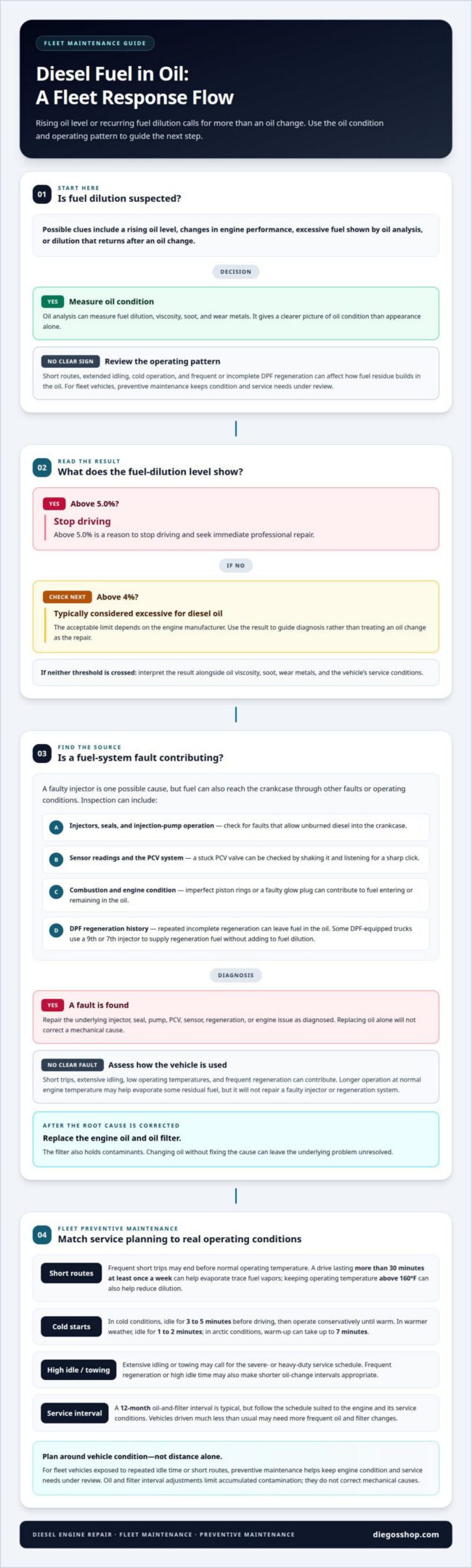
Fuel dilution occurs when diesel enters the crankcase and mixes with engine oil. Above 4% is typically considered excessive for diesel oil, though the acceptable limit depends on the engine manufacturer.
Fuel Dilution Versus a Faulty Injector
Fuel dilution means diesel has entered the engine oil. A faulty injector is one possible cause, but replacing the oil alone will not correct a leaking injector or poor fuel atomization. A technician can inspect injectors, seals, and injection-pump operation, then assess sensor readings and the PCV system. These checks help determine whether a fuel-system fault or operating conditions are contributing to the contamination.
Diagnosis and repair costs depend on the cause and scope, including injector or pump work and oil and filter replacement; pricing is provided after a quote request. Fuel dilution above 4% is typically excessive, while above 5.0% is a reason to stop driving and seek immediate professional repair.
DPF Regeneration and Post-Injection Fuel
DPF regeneration can contribute to dilution when post-injection fuel does not fully oxidize during frequent regeneration cycles. Some DPF-equipped trucks use a 9th or 7th injector to supply fuel for regeneration without adding to fuel dilution. The system design and regeneration process matter: repeated incomplete regeneration can leave fuel in the oil, so diagnosis should distinguish a regeneration-related cause from a leaking injector.
For a suspected injector leak, the repair addresses the injector, seals, or injection pump fault allowing unburned diesel into the crankcase. Inspection can include injector condition, sensor readings, and PCV valve operation. A stuck PCV valve can be checked by shaking it and listening for a sharp click. After correcting the root cause, replace the engine oil and filter.
Frequent short trips can prevent complete combustion and contribute to fuel dilution. Failed or frequent DPF regeneration can also play a role. Longer operation at normal engine temperature may help evaporate some residual fuel, but it will not repair a faulty injector or regeneration system.
How does oil become diluted?
Diesel can pass imperfect piston rings and enter the crankcase, where unburned fuel and exhaust gases mix with the oil. A faulty glow plug can leave fuel unignited and affect oil condition over time. Some fuel dilution is normal in internal combustion engines, but continued contamination can lower oil viscosity and reduce protection. Fixing fuel dilution in a diesel engine starts with understanding how fuel reaches the oil.
Operating temperature affects how much fuel residue remains in the oil. When a diesel engine reaches normal operating temperature, some residual fuel can evaporate. Frequent regeneration, extensive idling, and repeated cold operation can change how quickly contamination builds. Oil analysis can measure fuel dilution, viscosity, soot, and wear metals, giving a clearer picture of oil condition than appearance alone.
Set oil-change intervals according to how the vehicle is used, not just distance traveled. Extensive idling or towing may call for the severe- or heavy-duty service schedule. Frequent regeneration or high idle time may also make shorter intervals appropriate. A truck that spends long periods idling faces different oil stress from one operating steadily at normal temperature.
Replace the oil filter with the engine oil, since the filter also holds contaminants. A 12-month interval is a typical oil-and-filter service interval, but follow the schedule suited to the engine and its service conditions. For vehicles driven much less than usual, oil and filter changes may need to be more frequent than the typical service interval. These adjustments limit accumulated contamination but don’t correct mechanical causes. A sound plan for fixing fuel dilution in a diesel engine also addresses faults such as worn piston rings or a faulty glow plug.
Short trips, idling, and engine operating temperature
Repeated cold starts and long idle periods can leave diesel fuel unburned. Engine temperature and driving patterns influence how much fuel remains in the oil.
Short Trips and Engine Warm-Up
Frequent short trips may end before a diesel engine reaches normal operating temperature. Combustion can remain incomplete, allowing fuel and moisture to linger instead of evaporating from the oil. A drive lasting more than 30 minutes at least once a week can help evaporate trace fuel vapors. Keeping operating temperature above 160°F can also help reduce dilution.
Cold Weather and Extended Idling
Cold-weather operation and extended idling can cause incomplete combustion and cylinder-wall wetting. Fuel can wash past the piston and enter the oil, while prolonged idling keeps the engine from operating under normal driving conditions. This pattern can contribute to wet stacking, associated with incomplete combustion during cold, low-load operation. In cold conditions, idle for 3 to 5 minutes before driving, then operate conservatively until warm.
Maintenance and Driving Habits
Prevention combines suitable driving habits with maintenance that reflects actual engine use. In warmer weather, idle for 1 to 2 minutes before driving; in arctic conditions, warm-up can take up to 7 minutes. Avoid relying on extended idling to complete active DPF regeneration. A freeway drive can support the regeneration process, while oil analysis helps monitor fuel dilution, viscosity, soot, and wear metals.
For fleet vehicles exposed to repeated idle time or short routes, schedule preventive maintenance to help keep engine condition and service needs under review.
Diego’s Shop: Diesel Engine Repair
Diego’s Shop provides diesel engine repair and diesel fuel system repair when fuel dilution points to an engine or fuel-system problem. If oil analysis shows excessive fuel, the oil level keeps rising, or dilution returns after an oil change, addressing the underlying cause matters more than repeatedly replacing the oil.
For commercial vehicles, fleet maintenance and preventive maintenance help organize service around vehicle condition and operating demands. This helps fleet managers address recurring engine concerns and plan maintenance consistently, rather than treating each oil issue as an isolated event. Repairs focus on the diesel engine or fuel-system problem contributing to the concern.
Contact Diego’s Shop to discuss diesel engine repair or maintenance for your vehicle or fleet.
Turn Engine Clues Into a Maintenance Plan
A recurring oil concern can reveal a pattern across a work fleet, rather than a one-off repair. Use that pattern to guide maintenance planning: note which vehicles make short trips, spend extended periods idling, or have repeated engine issues, then prioritize the units that need attention. This gives fleet managers a clearer basis for coordinating service and reducing avoidable disruption.
Fixing fuel dilution in a diesel engine means addressing the underlying cause as part of a sound maintenance plan. Diego’s Shop provides Diesel Engine Repair, Fleet Maintenance, and Preventive Maintenance to support that work. For fleet accounts, consistent service planning helps organize maintenance around each vehicle’s operating demands.
Contact Diego’s Shop to discuss fleet maintenance and decide on a practical next step. A clear plan starts with understanding the engine and how it works.
Frequently Asked Questions
How do you tell if your oil is diluted?
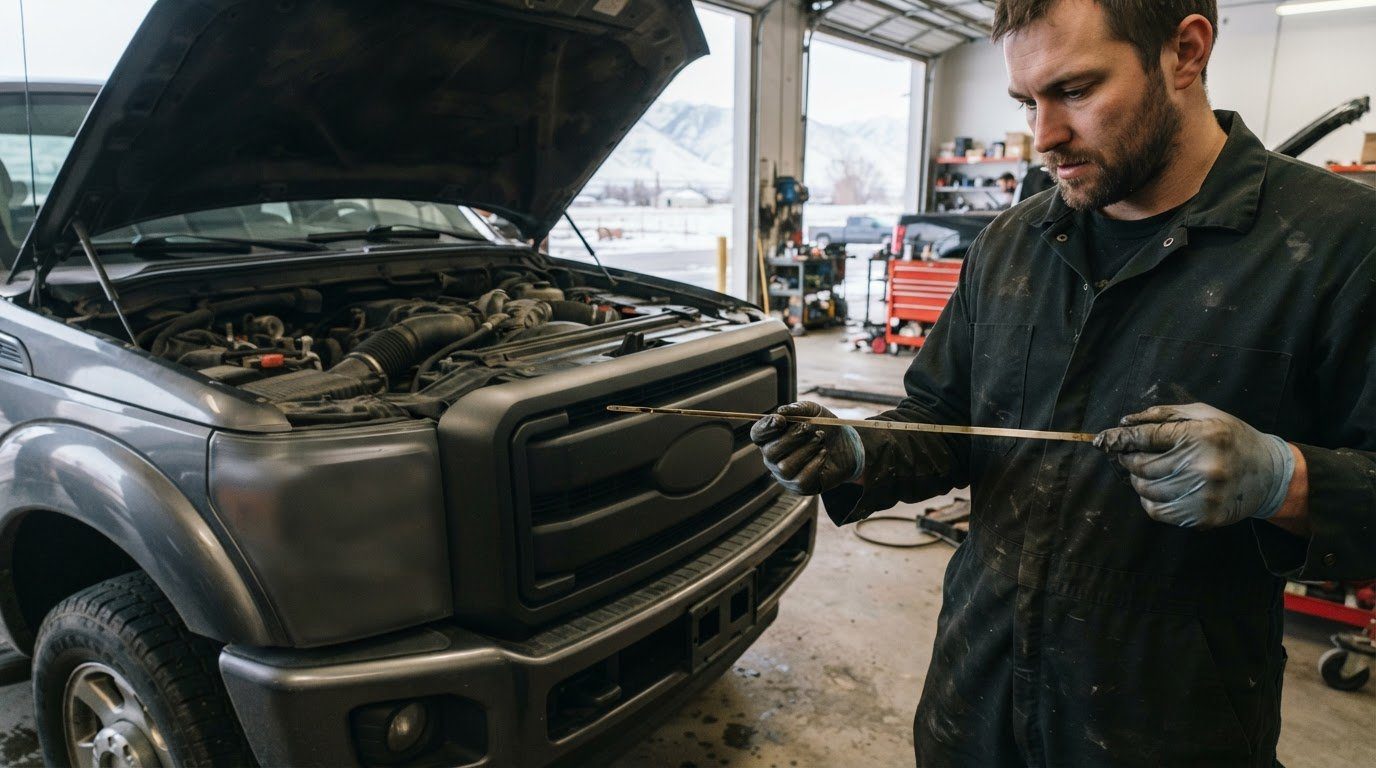
Use the dipstick to track the oil level, and treat an unexplained rise as a warning sign. Diluted oil may seem thinner or smell of diesel, but those clues cannot measure the amount of fuel present. Used-oil analysis can confirm dilution. Record readings consistently so changes stand out, rather than relying on a single observation.
When Does It Need Immediate Professional Repair?
Fuel dilution above 5.0% in diesel oil is a reason to stop driving and seek immediate professional repair. At that level, contaminated oil can provide less protection for engine components. Continuing to operate the engine won’t address why fuel entered the crankcase. Rising oil levels or worsening engine concerns also call for prompt diagnosis from an auto repair shop like Fix My Car.
What causes fuel dilution in a diesel engine?
Fuel dilution develops when unburned diesel reaches the crankcase. Possible causes include leaking or sticking injectors, poor fuel atomization, imperfect piston-ring seals, and faulty cold-start aids such as glow plugs. Frequent regeneration can also contribute if post-injection fuel does not fully oxidize. Identifying the cause helps target the repair instead of treating only the contaminated oil.
What are the symptoms of diesel engine fuel dilution?
An oil level that rises between checks can signal fuel contamination. The oil may also seem thinner or have a diesel odor, but these clues do not confirm the degree of dilution. Engine wear may increase if contaminated oil offers less protection. Compare oil-level observations over time and use oil analysis to distinguish a warning sign from a confirmed result.
How can you test engine oil for fuel dilution?
Used-oil analysis is the most reliable way to determine the fuel dilution percentage. Laboratory analysis can also assess viscosity, soot, and wear metals, providing useful context beyond a visual oil check. For fleet maintenance, track each vehicle’s results over time. Comparing samples can reveal a developing pattern and guide follow-up diagnosis.