
Diesel Oil Change Interval: The Definitive Guide

Ask three different people about the right diesel oil change interval, and you’ll likely get three different answers. Your owner’s manual gives you one number, your mechanic suggests another, and online forums offer a dozen conflicting opinions. This leaves you caught between the fear of causing expensive, irreversible engine damage by waiting too long and the frustration of wasting money on services you don’t need. When your truck is your livelihood or your most valuable asset, that kind of uncertainty isn’t just confusing-it’s stressful.
This guide is here to provide the clear, expert-backed answers you deserve. We will cut through the noise and deliver a comprehensive breakdown of how to determine the correct oil change schedule for your specific vehicle and its unique demands. You will learn precisely how factors like towing, idling, climate, and oil quality affect your engine’s health. By the end, you will have a reliable, fact-based maintenance plan to maximize engine life, avoid costly repairs, and gain complete confidence that you are protecting your investment for the long haul.
Key Takeaways
- Your owner’s manual provides a baseline, but your actual driving conditions-especially severe use-are what truly determine the correct service schedule.
- The ideal diesel oil change interval varies significantly between light-duty trucks, commercial vans, and heavy-duty rigs; our guide provides the expert-recommended mileage for each.
- Heavy towing, frequent short trips, and excessive idling drastically reduce oil life, requiring more frequent changes to prevent premature engine wear.
- Using the correct API-rated oil and high-quality filters is critical for engine protection, and knowing the warning signs of degraded oil can help you prevent costly damage.
Manufacturer Recommendations vs. Real-World Use: Finding the Right Balance
Your vehicle’s owner’s manual is the definitive starting point for maintenance. It contains the manufacturer’s tested guidelines for your specific engine and is the foundation for a proper diesel oil change interval. However, treating this guide as an absolute rule without considering how you actually use your vehicle is a common and costly mistake. The key to engine longevity is understanding the difference between the manufacturer’s ideal scenario and the demands of your daily work.
Decoding Your Owner’s Manual
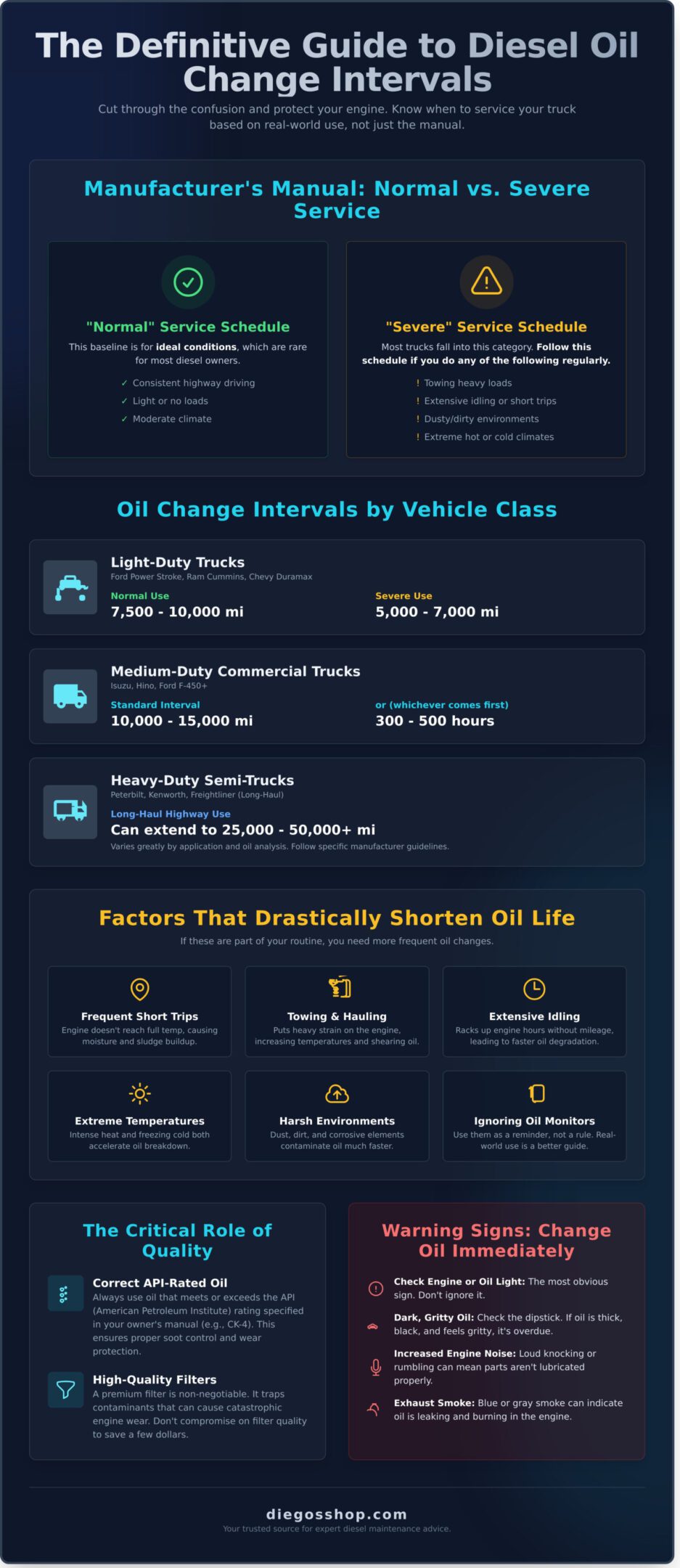
Inside your manual, you will typically find two separate maintenance schedules: ‘normal’ and ‘severe.’ The ‘normal’ schedule assumes ideal operating conditions-consistent highway driving with light loads in a moderate climate. Advancements in both engine technology and the science behind motor oil quality and filters allow modern diesels to have longer service intervals under these perfect circumstances. But for most diesel owners, ‘normal’ is rarely the reality.
When to Switch to the ‘Severe Service’ Schedule
The ‘severe service’ schedule is designed for the real world. Your diesel engine is operating under severe conditions if you regularly engage in any of the following activities:
- Towing or Hauling: Consistently pulling trailers or carrying heavy loads puts significant strain on the engine and oil.
- Extensive Idling: Common in commercial work and heavy traffic, idling accumulates engine hours without adding mileage, leading to oil degradation.
- Frequent Short Trips: Driving short distances prevents the engine from reaching full operating temperature, which can lead to sludge buildup.
- Harsh Environments: Operating in extremely dusty, dirty, or corrosive environments (e.g., construction sites, farms) contaminates oil faster.
- Extreme Temperatures: Both intense heat and freezing cold accelerate the breakdown of motor oil.
Most commercial trucks, work vans, and personal pickups used for demanding tasks fall squarely into the severe category. For these vehicles, mileage is an incomplete metric. Engine hours often provide a more accurate picture of oil life. If there is any doubt, adhering to the more frequent severe diesel oil change interval is the most reliable way to protect your investment and ensure rugged reliability.
Diesel Oil Change Intervals by Vehicle Class
Not all diesel engines are created equal. A Peterbilt engine designed for a million miles of highway service has vastly different lubrication demands than a Ford F-250 used for local contracting. The correct diesel oil change interval depends entirely on the engine’s class and, most importantly, how you use the vehicle. While manufacturers provide a baseline, many factors affecting oil change intervals, including load, idle time, and operating environment, are the true deciding factors. The following are trusted, real-world guidelines to help protect your investment.
Light-Duty Trucks (Ford Power Stroke, Ram Cummins, Chevy Duramax)
For the workhorses most people drive, maintenance is straightforward but critical. These trucks are versatile, meaning their service needs can vary dramatically. While many modern trucks feature an oil life monitoring system, we recommend using it as a reminder, not a rule.
- Normal Use: For daily driving and light-duty work, a range of 7,500 to 10,000 miles is a reliable target.
- Severe Use: If you are frequently towing heavy loads, hauling materials, or operating in dusty conditions, shorten that interval to 5,000 to 7,000 miles to ensure maximum engine protection.
Medium-Duty Commercial Trucks (Isuzu, Hino, Ford F-450+)
These vehicles are the backbone of local and regional commerce, and their maintenance schedules are often more complex. For fleet managers and owner-operators, tracking service by engine hours or fuel consumed can be more accurate than mileage alone. A consistent schedule is non-negotiable for maintaining uptime and reliability. A typical service window for these trucks is between 10,000 to 15,000 miles or 300-500 engine hours, whichever comes first.
Heavy-Duty Semi-Trucks (Peterbilt, Kenworth, Freightliner)
The service requirements for Class 8 trucks are in a league of their own, designed around extreme use and longevity. The proper diesel oil change interval is dictated by the truck’s application.
- Long-Haul Highway Use: Engines running consistently at highway speeds can safely extend intervals to 25,000 to 50,000 miles or more. This is only possible with the use of high-quality synthetic oils and advanced filtration systems.
- Vocational Use: For dump trucks, cement mixers, or garbage trucks that see extensive idling and stop-and-go work, the interval reverts to an hours-based schedule, typically between 500-700 engine hours.
Key Factors That Drastically Shorten Your Oil Change Interval
Your manufacturer’s service schedule is a solid starting point, but it’s designed for ideal operating conditions. The reality is that most hard-working diesel engines face severe service demands that break down oil much faster. Understanding how your specific usage impacts engine oil is the key to setting a reliable diesel oil change interval that ensures rugged reliability and protects your investment.
If your vehicle operates under any of the following conditions, you must adjust your maintenance schedule accordingly. Ignoring these factors leads to premature wear and costly repairs.
Heavy Towing and Hauling
When you tow a heavy load, your engine works harder and generates significantly more heat. This extreme temperature accelerates the thermal breakdown of your oil, reducing its ability to lubricate and protect critical components. Furthermore, higher combustion pressures can force more soot past the piston rings and into the crankcase, contaminating the oil and reducing its effectiveness. As a trusted guideline, if you tow or haul heavy loads regularly, you should shorten your standard oil change interval by 25-40%.
Excessive Idling and Stop-and-Go Traffic
Many owners believe if the wheels aren’t turning, the engine isn’t working hard. This is a critical misunderstanding. Excessive idling and constant stop-and-go driving are incredibly tough on diesel oil. The engine rarely reaches its optimal operating temperature, leading to incomplete combustion. This results in fuel dilution, which thins the oil, and sludge formation, which can clog vital oil passages. For delivery, service, or fleet vehicles, tracking engine hours is a far more accurate metric than mileage for determining the correct diesel oil change interval.
Operating in Extreme Climates and Conditions
Your operating environment plays a major role in oil longevity. From scorching summer heat to frigid winter starts, extreme temperatures and contaminants put immense stress on your engine’s lifeblood. Pay close attention if you operate in:
- Hot Climates: High ambient temperatures accelerate oil oxidation, causing it to thicken and lose its protective properties much more quickly.
- Cold Climates: Short trips in freezing weather prevent the engine from burning off condensation. This moisture contaminates the oil, leading to sludge and internal corrosion.
- Dusty Environments: Operating on construction sites, farms, or dirt roads overwhelms the air filter. Fine abrasive particles of dust and silica will enter the oil, causing rapid wear on bearings, cylinders, and rings.
The Critical Role of Oil Quality and Filters
Determining the correct diesel oil change interval for your truck involves more than just looking at the odometer. The quality of the products you put into your engine is a critical factor that directly impacts its health, performance, and longevity. Using the wrong specification of oil or a low-grade filter is a costly mistake that can lead to premature wear and catastrophic engine failure.
At Diego’s Shop, we believe in getting the job done right, and that starts with using the best materials for your vehicle. Investing in premium oil and filters isn’t an expense-it’s essential protection for your engine.
Conventional vs. Full Synthetic Diesel Oil
The debate between conventional and synthetic oil is straightforward when it comes to diesel engines. While conventional oil can get the job done under normal conditions, full synthetic oil offers superior protection in every category.
- Heat Resistance: Synthetic oil resists thermal breakdown far better than conventional oil, which is crucial for hardworking turbo-diesel engines that run at high temperatures.
- Engine Cleanliness: It contains advanced detergents that prevent sludge and soot buildup, keeping internal components cleaner and running more efficiently.
- Cold-Start Protection: Synthetics flow better in cold weather, ensuring critical engine parts are lubricated instantly upon startup, reducing wear.
While more expensive upfront, the durability of full synthetic oil can allow for a longer, safer diesel oil change interval, providing better value and peace of mind over the long haul.
Understanding API Ratings and Viscosity
Not all diesel oil is created equal. To ensure you’re using the right product, you must check two key specifications: the API rating and the viscosity. The American Petroleum Institute (API) certifies oil quality, with API CK-4 being the current standard for modern diesel engines. This rating ensures the oil is formulated to protect against oxidation, shearing, and aeration while being compatible with modern emissions systems.
Viscosity, such as 15W-40 or 5W-40, measures the oil’s thickness and ability to flow at different temperatures. Always use the viscosity grade recommended by your engine manufacturer for your specific climate and operating conditions. Using an oil that doesn’t meet these specifications can void your warranty and damage your engine.
Don’t Overlook the Oil Filter
The highest quality oil is useless if the filter isn’t doing its job. A diesel engine oil filter is responsible for capturing abrasive soot, metal particles, and other harmful contaminants. A cheap, poorly constructed filter can clog quickly, triggering the bypass valve. When this happens, unfiltered oil is sent directly back into your engine-the exact outcome an oil change is meant to prevent.
Always pair a premium oil change with a high-quality OEM or equivalent filter. This ensures comprehensive protection and is a non-negotiable step in reliable diesel maintenance. If you’re unsure which products are right for your truck, the trusted technicians at Diego’s Shop can provide the expert guidance you need.
Warning Signs Your Diesel Needs an Oil Change Immediately
Following a recommended diesel oil change interval is the best way to maintain engine health, but sometimes your truck will tell you it needs service sooner. Your engine provides clear, unmistakable signs when its oil is degraded and can no longer protect vital components. Ignoring these warnings puts your vehicle at risk of severe, costly damage.
Checking the Dipstick: More Than Just the Level
With a diesel engine, oil color isn’t a reliable indicator; it turns dark quickly due to soot. Instead, focus on texture. Rub a small amount of oil between your fingers. If it feels gritty or abrasive, it’s saturated with contaminants and has lost its protective qualities. A milky or frothy appearance is an even more serious red flag, signaling coolant contamination that requires immediate professional diagnosis.
Changes in Engine Performance and Sound
Your engine’s behavior is a direct reflection of its internal health. Pay close attention to these critical changes:
- Increased Engine Noise: Old, broken-down oil loses its viscosity, leading to less lubrication. This can cause a louder-than-usual engine noise, including ticking or knocking sounds.
- Reduced Performance: If you notice your truck struggling to tow, accelerating slower, or a drop in fuel economy, degraded oil could be the culprit.
- Dashboard Warning Lights: A ‘Check Engine’ or ‘Low Oil Pressure’ light is a non-negotiable warning. It means your engine is in immediate jeopardy and requires urgent attention.
When in Doubt, Get a Professional Opinion
These symptoms are your engine’s way of asking for help. Guesswork isn’t a strategy when it comes to the heart of your vehicle. A professional oil service is more than just a drain and fill; it’s a comprehensive check to ensure there are no underlying issues causing premature oil breakdown. If you observe any of these signs, it’s time to shorten your current diesel oil change interval and seek an expert opinion.
Don’t risk it. Schedule a comprehensive diesel oil service at Diego’s Shop. We have the certified technicians and diagnostic tools to get it done right, ensuring your engine’s rugged reliability and longevity.
Protect Your Investment with Maintenance Done Right
Ultimately, determining the correct diesel oil change interval for your vehicle goes beyond the owner’s manual. As we’ve covered, your engine’s health depends on a careful balance between manufacturer guidelines and your unique, real-world operating conditions. Factors like heavy towing, frequent idling, and the quality of your oil and filters play a decisive role in preventing premature wear and tear. Waiting for warning signs is a risk that can lead to significant, avoidable damage.
Don’t leave this critical task to guesswork. At Diego’s Shop, our certified diesel mechanics have the technical mastery to service all major brands, from light-duty pickups to heavy-duty fleets. We provide honest, reliable service backed by our comprehensive fleet maintenance programs and 100% warrantied repair work, giving you complete peace of mind. Schedule Your Expert Diesel Maintenance Service Done Right.
Partner with us to keep your diesel engine performing with rugged reliability for every mile ahead.
Frequently Asked Questions About Diesel Oil Changes
What happens if you wait too long to change diesel engine oil?
Waiting too long to change your diesel oil causes serious, preventable damage. Old oil thickens into sludge, losing its ability to lubricate and cool critical engine parts. This leads to increased friction, overheating, and accelerated wear on components like bearings and pistons. Ignoring this vital maintenance can result in significant power loss, poor fuel economy, and ultimately, catastrophic engine failure. Sticking to a proper service schedule is the most effective way to protect your investment.
Why is a diesel oil change more expensive than one for a gas engine?
The higher cost of a diesel oil change comes down to volume and specialized materials. Diesel engines are built for heavy-duty work and typically hold two to three times more oil than a comparable gas engine. Furthermore, diesel oil is a more complex, robust formula with specific additives designed to handle high compression and soot buildup. The filters are also larger and more durable to match the engine’s demands. This ensures your powerful engine gets the protection it requires.
Can I really go longer between changes with full synthetic oil?
Yes, full synthetic oils are engineered for superior performance and longevity, allowing for a longer diesel oil change interval compared to conventional oils. They resist thermal breakdown and oxidation more effectively, maintaining their protective qualities for more miles and hours. However, you must always adhere to the specific recommendations in your vehicle’s owner’s manual. Factors like heavy towing or frequent idling can still shorten the ideal interval, so consulting a certified technician is always a wise decision.
Is it necessary to use a specific brand of oil for my diesel truck?
While brand loyalty is common, the most critical factor is not the brand name but the oil’s specifications. You must use an oil that meets the viscosity grade (like 15W-40) and API service classification (like CK-4) required by your engine’s manufacturer. Using the correct specification ensures proper lubrication and protection for your specific engine. As long as the oil meets these certified standards, the brand itself is a matter of preference or professional recommendation.
How do engine hours translate to miles for oil change intervals?
There isn’t a perfect formula, but a widely accepted industry guideline is that one hour of engine run time is equivalent to roughly 25-30 miles of driving. This is crucial for vehicles that spend significant time idling, using a Power Take-Off (PTO), or operating in heavy traffic. In these cases, mileage is a poor indicator of engine wear. Tracking engine hours provides a far more accurate measure for determining your diesel oil change interval.
What is oil analysis and is it necessary for my truck?
Oil analysis is a diagnostic procedure where a sample of your used engine oil is tested for contaminants, metal particles, and chemical breakdown. For a fleet manager or commercial operator, it is an invaluable tool for monitoring engine health and preventing major failures. For most privately owned light-duty trucks, it is not essential if you adhere to a robust maintenance schedule. However, it can provide peace of mind and early detection of internal engine issues.