

Diesel Engine Noise Diagnosis: A Master Craftsman’s Guide to Identifying Trouble

A diesel engine doesn’t just fail; it tells you exactly how it plans to break down long before the smoke starts. To the untrained ear, a new rattle is just noise. To a master craftsman, it’s a diagnostic roadmap. If you’ve noticed a sudden change in your engine’s rhythm, performing a proper diesel engine noise diagnosis is the only way to prevent a minor vibration from turning into a total loss. You’re right to worry about the high cost of repairs and the revenue lost while your truck sits in a bay.
We understand that your fleet is your livelihood. That’s why we’ve built this guide to help you translate those metallic protests into actionable information. We’ll break down the difference between a harmless tick and a terminal rattle, helping you determine the urgency of your repair. Whether you’re dealing with a modern emissions system fault or a mechanical knock, we’ll show you how to identify the source and find a trustworthy specialist in Utah County who can keep you on the road. It’s time to replace uncertainty with technical expertise and the peace of mind that comes from a job done right.
Key Takeaways
- Differentiate between normal diesel clatter and the specific frequencies of mechanical failure to avoid unnecessary downtime.
- Discover how a professional diesel engine noise diagnosis uses advanced electronic tools to isolate internal issues without a full engine teardown.
- Learn to recognize “Red Zone” symptoms that require an immediate engine shutdown to prevent catastrophic failure and protect your bottom line.
- Understand the value of combining master craftsman experience with modern diagnostic software to ensure accurate, warrantied repair work for your fleet.
- See why specialized expertise in heavy-duty systems like Peterbilt and Kenworth is the key to maintaining vehicle uptime across Utah County.
Understanding Diesel Clatter vs. Abnormal Engine Noise
A diesel engine is a heavy-duty machine built on the principle of compression ignition. Unlike gasoline engines that rely on spark plugs, diesels squeeze air until it is hot enough to ignite fuel the moment it hits the cylinder. This rapid pressure rise creates the signature “clatter” every owner recognizes. However, a successful diesel engine noise diagnosis starts with knowing the difference between healthy combustion and mechanical distress.
Modern common-rail systems have transformed the acoustic profile of these engines. Older mechanical systems were notoriously loud because they dumped fuel into the chamber in one aggressive event. Today’s high-pressure systems are significantly quieter, using electronic precision to manage the combustion cycle. Whether you are running a Cummins, a Powerstroke, or a Duramax, you should expect a consistent, rhythmic hum once the engine reaches operating temperature. A healthy Cummins often has a deep, steady thrum, while a Powerstroke might exhibit a more rapid, crisp chatter. You must establish this baseline when the engine is healthy so you can spot a change in character the moment it occurs.
The Physics of Combustion Noise
Fuel timing dictates the sound your engine makes. If fuel enters the cylinder too early or too late, the pressure spike happens at the wrong point in the piston’s stroke. Pilot injection is a small, preliminary spray of fuel that occurs before the main combustion event to pre-heat the chamber and soften the pressure rise, which significantly reduces engine noise. While a louder rattle is normal during a cold start as metal components expand and oil begins to circulate, that noise should taper off quickly. Persistent, sharp knocking usually points toward an engine knock in diesel engines caused by timing issues or fuel delivery imbalances.
When “Loud” Becomes “Broken”
You need to listen for the rhythm. A healthy engine is predictable. An erratic rattle, a metallic “tink,” or a heavy thud that changes with engine load signals a problem that requires an immediate diesel engine noise diagnosis. High-torque diesel engines operate under immense internal stress; a small vibration can quickly escalate into a catastrophic failure.
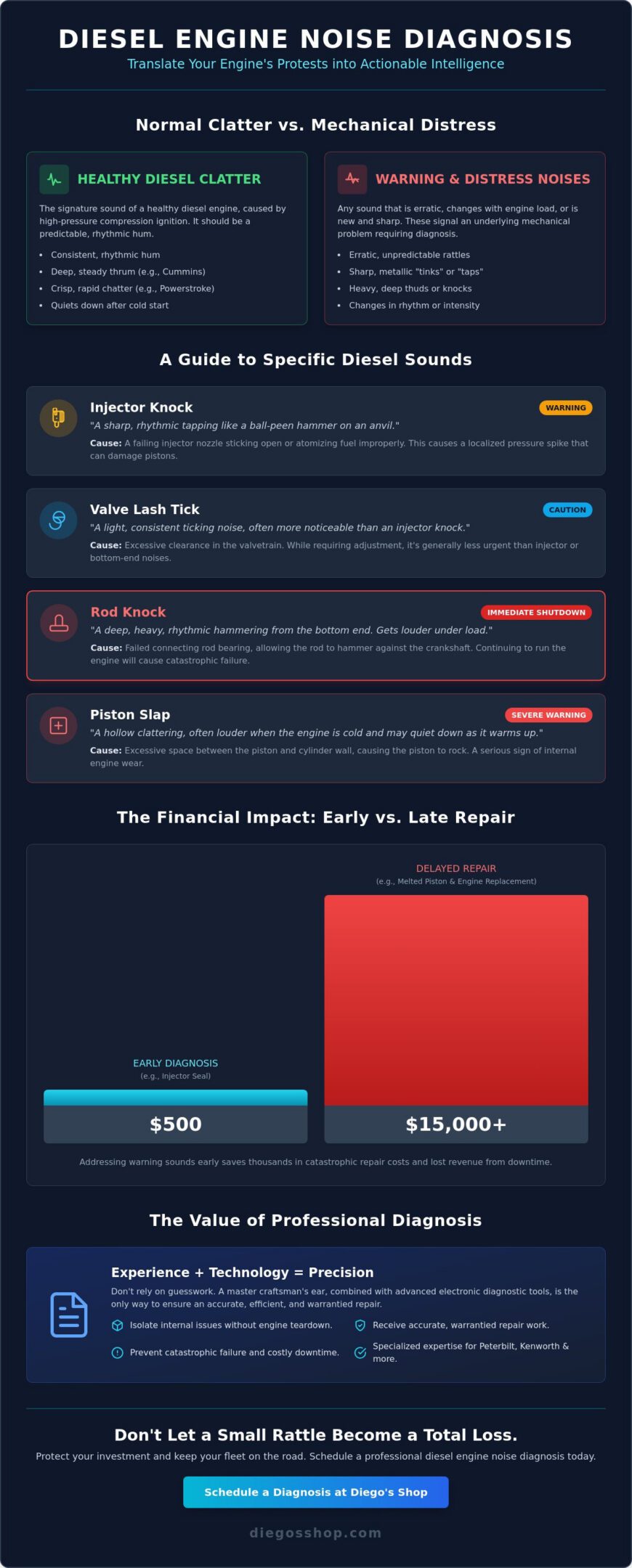
Consider the financial reality of diesel maintenance. We often see trucks where a simple $500 injector seal replacement was ignored for too long. That minor leak eventually leads to localized overheating or a melted piston. By the time the owner brings it in, the repair cost has jumped from a few hundred dollars to a $15,000 complete engine replacement. Catching the sound early isn’t just about maintenance. It’s about protecting your investment and keeping your fleet operational. Precision beats guesswork every time.
Decoding the Symptoms: A Guide to Specific Diesel Sounds
A successful diesel engine noise diagnosis relies on your ability to isolate specific frequencies. Every component in a high-pressure diesel system produces a unique acoustic signature. When these signatures change, they provide a direct line of sight into the health of your valvetrain, fuel system, and rotating assembly. Identifying these sounds early allows you to address mechanical wear before it transforms into a roadside emergency.
Fuel Injector “Tick” vs. Valve Lash Issues
A sharp, rhythmic tapping that sounds like a ball-peen hammer hitting an anvil often points to a failing fuel injector. This “injector knock” occurs when a nozzle sticks open or fails to atomize fuel properly, causing a localized pressure spike. In contrast, valve lash issues produce a lighter, more consistent ticking. While light-duty diesels require periodic valve adjustments, a sudden onset of injector knock demands immediate attention to prevent piston melt-down. Research into the acoustic analysis of engine noise confirms that vibration patterns are often the first indicator of these fuel delivery faults.
Deep, heavy thuds coming from the bottom end of the block are usually more serious. Rod knock is a rhythmic, metallic hammering that typically gets louder under load or as RPM increases. It signals that a bearing has failed, leaving the connecting rod to hammer against the crankshaft. Piston slap sounds similar but often presents as a hollow clattering when the engine is cold, sometimes quieting down as the pistons expand to fit the cylinder bores. If you hear these sounds, our team at Diego’s Shop can perform a precision inspection to determine if a rebuild is necessary.
Turbocharger Whine and Boost Leaks
A healthy turbocharger has a subtle, high-pitched whistle. If that whistle transforms into a screeching “dentist drill” sound, the internal bearings are likely failing, or the compressor wheel is contacting the housing. Hissing sounds, on the other hand, usually indicate a boost leak. Cracked intercooler boots or leaking gaskets allow pressurized air to escape, which forces the turbo to overwork. This leads to higher Exhaust Gas Temperatures (EGTs) and can eventually cook your turbocharger if left unaddressed.
High-pitched squealing is almost always related to the belt drive system. A worn serpentine belt or a seized idler pulley will protest loudly, especially during cold starts or under high electrical load. Rattling is often less critical but no less annoying. Before assuming the worst, check for loose exhaust heat shields or brackets. However, if the rattle is internal and metallic, it may indicate slack in a timing chain or a failing vibration dampener. Scheduling a professional diesel engine noise diagnosis can quickly separate these external nuisances from internal mechanical play.
The Professional Diagnostic Protocol at Diego’s Shop
Hearing a noise is only the beginning. A true master craftsman doesn’t just guess based on a sound; they use a systematic protocol to verify the root cause. At Diego’s Shop, our diesel engine noise diagnosis process blends decades of hands-on experience with high-end technology. This rigorous approach ensures we never perform unnecessary work or replace parts that aren’t broken. We treat your vehicle with the accountability it deserves, focusing on the durability of the repair rather than a quick fix.
Electronic Scan Tools and Data Logging
We begin by plugging into the engine’s brain. Using OEM-level software, we perform a cylinder contribution test to see which specific cylinder is underperforming. By monitoring fuel rail pressure and timing variances in real-time, we can often see an injector fault before we even open the hood. This digital footprint is vital for modern common-rail systems where manual adjustments are no longer an option. This level of precision is why we consider Expert Diesel Engine Repair to be the foundation of our diagnostic service. We use data to eliminate the guesswork that often leads to high costs and lost revenue.
The Importance of Physical Verification
Technology has its limits. A scan tool might tell us a cylinder is misfiring, but it won’t tell us if the culprit is a broken valve spring or a worn bearing. That’s where mechanical verification comes in. We use a mechanical stethoscope to pinpoint internal sounds with surgical accuracy. By listening to the block, the cylinder head, and the individual accessories, we can confirm exactly where the metal-on-metal contact is occurring. This hands-on expertise allows us to maintain total control over complex mechanical situations.
We also perform a physical inspection of the oil and filter. Cutting open an oil filter allows us to look for metal shavings, which acts like reading the “DNA” of your engine. Different types of metal, such as brass, aluminum, or steel, tell us exactly which internal component is shedding material. We refuse to “throw parts” at a problem without a confirmed diagnosis. Every repair we recommend is backed by physical proof and confirmed data. This disciplined approach is how we keep your fleet on the road and provide the peace of mind you need to run your business effectively. Our goal is to find the truth behind the noise and provide a permanent solution.
Urgency Assessment: When to Pull Over and When to Schedule
Not every sound requires a tow truck. However, ignoring the wrong one can end a career. A professional diesel engine noise diagnosis helps you categorize sounds into “fix now” or “fix later.” This distinction is critical for DOT inspection readiness. An audible exhaust leak or a loose accessory can lead to a failed inspection, resulting in costly fines and a damaged safety rating. We help you prioritize these tasks to maintain compliance while maximizing your vehicle’s uptime.
The goal is to balance engine health with the need to keep your fleet on the road. We understand that every hour your truck sits in a bay is an hour of lost revenue. By understanding the urgency behind different mechanical protests, you can make informed decisions that protect your bottom line. We provide the technical clarity you need to stay in total control of your maintenance schedule.
Critical Failure Warnings
Heavy, rhythmic knocking combined with a drop in oil pressure is the ultimate red zone. If you hear this, pull over immediately. Continuing to drive will almost certainly result in a thrown rod or a seized block. Modern trucks often enter “limp mode” when the ECM detects severe timing or pressure issues. This reduced power state isn’t a suggestion; it is a final electronic warning to save the engine from total destruction. For those managing high-mileage trucks, our Fleet Maintenance Guide provides a roadmap for preventing these catastrophic failures before they start.
Scheduled Repairs for Non-Critical Noises
Not all noises are terminal. A slight whistle from an exhaust manifold or a faint chirp from a serpentine belt can usually wait for the next service window. These sounds indicate wear, but they don’t always signal an immediate breakdown. We recommend planning these repairs during your fleet’s natural downtime to avoid unexpected revenue loss. Using our Diesel Maintenance Handbook allows you to stay ahead of wear and tear by tracking component life cycles.
Preventive maintenance is the most effective “noise cancellation” strategy available. It ensures that components like tensioners, injectors, and gaskets are replaced before they start protesting. If you are unsure whether a sound is a minor nuisance or a major threat, don’t leave it to chance. A precision diesel engine noise diagnosis can save you thousands in avoidable damage. Contact Diego’s Shop today to schedule an inspection and keep your fleet moving safely with the confidence of a master craftsman’s oversight.
Why Utah County Trusts Diego’s Shop for Diesel Diagnosis
Utah County drivers don’t have time for guesswork or vague estimates. When your livelihood depends on a heavy-duty engine, you need a partner who understands the unique environmental and mechanical stresses of the Wasatch Front. Diego’s Shop has built a reputation for excellence by focusing on the specific needs of commercial fleets and owner-operators. We provide specialized expertise in Peterbilt, Kenworth, Isuzu, and Ford diesel systems, ensuring that your specific platform receives the precision it requires. We don’t just fix trucks; we maintain the backbone of local commerce.
A proper diesel engine noise diagnosis is more than just a service. It’s a commitment to the longevity of your vehicle and the safety of your drivers. We combine technical precision with a no-nonsense approach to maintenance that prioritizes your bottom line. This allows us to reduce downtime and keep your trucks where they belong: on the road. Our shop is founded on the principles of integrity and accountability. This means you get honest answers, clear communication, and durable results every time you walk through our doors. We take personal pride in the quality of our warrantied repair work.
Our Springville Facility and Capabilities
Our Springville facility is designed to handle the largest equipment in your fleet with ease. We’ve equipped our bays with the same high-level diagnostic tools used by major manufacturers, but we deliver that technology with the personal accountability of a master craftsman. Our team is dedicated to Utah’s hardest-working trucks, from local delivery vans to long-haul sleepers. We’ve earned our Utah Diesel Repair reputation by providing transparent, data-driven diagnostics that owners can trust. We understand the nuances of different engine architectures, whether it’s the high-pressure common rail of an Isuzu or the heavy-duty demands of a Kenworth rotating assembly.
Get a Professional Diagnosis Today
Don’t let a small rattle grow into a catastrophic engine failure that costs you thousands in lost revenue. Experience the peace of mind that comes from a confirmed, warrantied repair performed by specialists who speak your language. We make scheduling your diesel engine noise diagnosis straightforward and efficient because we respect your time and your schedule. Our process is designed to get you in, identify the fault, and provide a clear path forward without the hassle of corporate runaround.
Contact Diego’s Shop today for a diagnostic consultation. Let us show you the difference that hands-on expertise and a commitment to quality can make for your fleet’s performance. We maintain total control over complex mechanical situations so you can focus on running your business. Quality is our promise; reliability is our signature.
Protect Your Fleet with Precision Diagnostics
A diesel engine is a complex machine that rewards attention and punishes neglect. By learning to differentiate between normal combustion and mechanical distress, you’ve taken the first step toward protecting your investment. A professional diesel engine noise diagnosis is the only way to move from uncertainty to a confirmed plan of action. Whether you’re managing a single truck or a commercial fleet, catching a fault early keeps you on the road and prevents the high costs of catastrophic failure.
At Diego’s Shop, we bring Springville-based master craftsmanship to every inspection. Our specialist expertise covers light, medium, and heavy-duty diesel systems, providing you with the technical clarity you need. We offer warrantied repair work on all major diesel brands to ensure your vehicle returns to service with total reliability. Don’t let a mystery sound disrupt your revenue or your safety. We maintain total control over the most complex mechanical issues so you can stay focused on your route.
Schedule Your Expert Diesel Diagnosis at Diego’s Shop today. We’re here to provide the honest, dependable service your business deserves. Your engine has a story to tell; let’s make sure it’s one of longevity and performance.
Frequently Asked Questions
Is it normal for a diesel engine to knock?
Yes, a certain level of “clatter” is normal due to the nature of compression ignition. However, a rhythmic, heavy metallic knock is never normal. Distinguishing between standard combustion noise and mechanical failure is the core of a professional diesel engine noise diagnosis. If the sound changes significantly under load or increases with RPM, it indicates a fault that needs immediate attention to prevent internal damage.
What does a bad fuel injector sound like?
A bad injector typically produces a sharp, rhythmic tapping or “pinging” sound, often called injector knock. This happens when fuel isn’t atomized correctly or the injector sticks open, causing a localized pressure spike in the cylinder. Unlike valve noise, which is usually lighter and more consistent, injector knock sounds like metal hitting metal. It often gets louder during acceleration and can lead to serious piston damage if ignored.
Why is my diesel engine making a whistling sound when I accelerate?
A whistling sound usually points to an issue with the turbocharger or the boost system. While a faint whistle is normal for a spooling turbo, a loud, high-pitched screech suggests failing bearings or compressor wheel damage. If the whistle sounds more like a hiss, you likely have a boost leak in an intercooler boot or a gasket. This allows pressurized air to escape, causing the engine to lose power.
Can a diesel engine noise be caused by bad fuel?
Yes, contaminated or low-quality fuel can cause noticeable engine noise. Water or debris in the fuel disrupts the combustion cycle, leading to erratic idling and “clatter” as the injectors struggle to maintain a consistent spray pattern. Poor fuel can also cause premature wear on the fuel pump and injectors. Always check your fuel filters for signs of contamination if you notice a sudden change in your engine’s acoustic signature.
How much does a professional diesel engine noise diagnosis cost?
The cost of a diesel engine noise diagnosis depends on the complexity of the engine and the tools required to isolate the fault. A basic diagnostic involves using electronic scan tools to check cylinder contribution and fuel rail pressure. More advanced inspections might include mechanical stethoscopes or oil analysis. Investing in an accurate diagnosis early prevents the high costs associated with misdiagnosis and unnecessary parts replacement during the repair process.
What is the difference between rod knock and an injector tick?
Rod knock is a deep, heavy thud coming from the bottom of the engine, while an injector tick is a high-pitched, crisp tap from the top. Rod knock typically indicates a failed bearing and is most audible under load or during deceleration. An injector tick is related to fuel delivery and timing. Telling them apart is vital, as rod knock requires a full rebuild, while injector issues are often localized repairs.
Is a squealing sound always a bad belt in a diesel truck?
Squealing is most commonly caused by a worn serpentine belt or a failing idler pulley, but it isn’t the only cause. A seized accessory, such as an alternator or A/C compressor, can also cause the belt to scream as it slides over a stationary pulley. In some cases, a high-pressure exhaust leak at the manifold can mimic a squeal. A physical inspection is always necessary to confirm the source before replacing parts.
How can I tell if my turbocharger is failing by the sound?
A failing turbocharger often emits a distinct, mechanical grinding or a very high-pitched whining sound that changes with engine RPM. If you hear metal-on-metal scraping, the compressor wheel is likely hitting the housing due to excessive shaft play. Additionally, a sudden “whoosh” sound under acceleration indicates a blown boost pipe. These sounds signal that the turbo can no longer maintain the pressure needed for efficient combustion and requires immediate service.