
Diesel engine has power but won’t accelerate? Find out why

Sluggish acceleration can affect fleet performance, but the engine isn’t always the problem. Restricted fuel or airflow, a boost issue, exhaust trouble, or a transmission fault could be responsible. Symptoms offer clues, but systematic diagnosis helps identify the cause and guide fleet maintenance.
It’s easy to suspect the engine when a truck feels sluggish, especially under load. Note when power drops, whether warning lights or unusual smoke appear, and whether engine speed rises without the vehicle gaining speed. These observations can help inform preventive maintenance for fleet vehicles.
This guide explains how to narrow down the cause, what observations to make, and when to seek professional diagnosis. Fuel delivery, air intake, turbocharger operation, exhaust components, and the drivetrain can all affect acceleration. Understanding these systems can help fleet accounts choose a sensible next step.
Key Takeaways
- Prioritize fleet preventive maintenance to identify developing performance problems before they disrupt operations.
- Fleet maintenance and fleet accounts can help keep commercial vehicle service needs organized.
- Track when acceleration drops and note warning lights, smoke, or unusual engine behavior to help narrow down the cause.
- Seek professional diagnosis when power loss persists or symptoms point to a fault that basic observations can’t isolate.
1. How Do You Diagnose Power Loss Issues Systematically?
Start by noting the conditions that trigger the problem. Does acceleration fade on hills, after the engine warms up, or when the truck carries a load? Record dashboard warnings, exhaust smoke, unusual noises, and whether engine speed rises without vehicle speed increasing. These details can help distinguish an engine issue from a transmission or drivetrain fault.
With the vehicle parked and switched off, look for fresh oil around the valve cover, oil pan, and filter, then check the dipstick level. Low oil can reduce lubrication and, in some vehicles, trigger a protective power limit. A leak alone doesn’t establish the cause, so note its location and severity alongside warning lights or changes in engine behavior.
If you suspect an electronic control issue, note any warning lights and have the engine computer’s diagnostic codes read. A faulty sensor or wiring problem can send incorrect information to the control module, which may limit fuel delivery or boost. A code identifies a system to test, not necessarily the failed part. For example, reduced power with an exhaust warning calls for checking related readings and components.
Watch the temperature gauge during operation. If it rises above its normal range or a temperature warning appears, stop driving when safe and let the engine cool. Overheating can trigger reduced power, and continued operation risks further damage. If your diesel engine has power but won’t accelerate, compare the temperature, oil condition, electronic codes, and driving conditions before concluding the engine is at fault.
2. When Should You Seek Professional Diesel Engine Diagnosis?
Arrange professional diagnosis if power loss returns, worsens under load, or occurs with hard starting, rough running, or unusual exhaust smoke. A diesel that surges on a grade and then struggles to restart may have a fuel-delivery fault, not just restricted airflow. Several faults can cause similar symptoms, so testing is important before replacing parts.
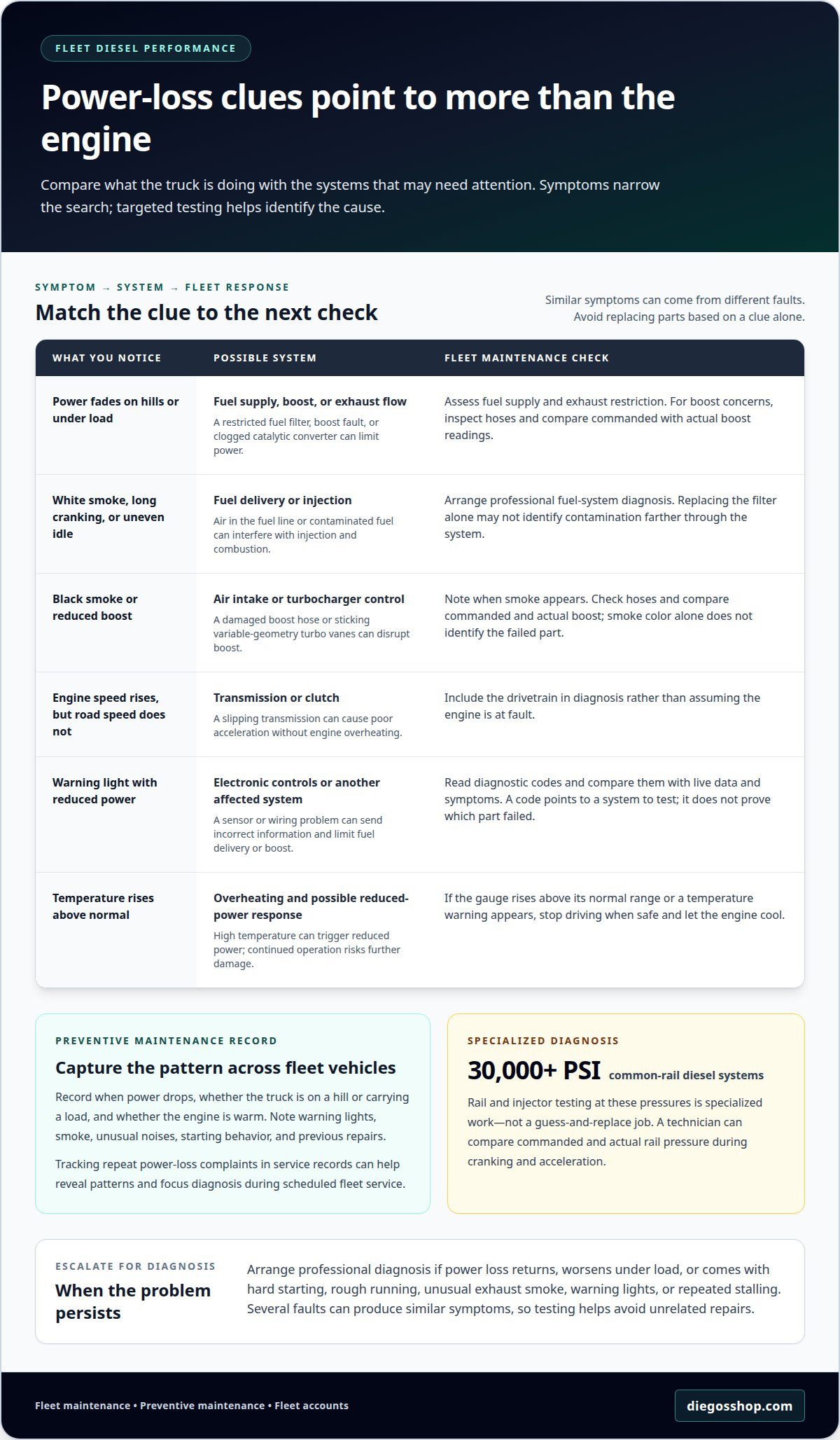
Fuel injection needs prompt attention if the engine cranks longer than usual, idles unevenly, or produces white smoke. Air entering the fuel line can reduce injection-pump pressure and prevent complete combustion. Contaminated fuel can also restrict flow or interfere with injector operation. Replacing the filter alone won’t identify contamination farther through the system.
Modern common-rail diesel systems operate well above 30,000 PSI. That pressure makes rail and injector testing specialized work, not a suitable guess-and-replace job. A technician can compare commanded and actual rail pressure during cranking and acceleration, then assess whether a pump, pressure-control component, injector, or fuel restriction explains the readings.
Seek prompt diagnosis if warning lights appear alongside reduced power, smoke, or repeated stalling. Diagnostic codes can identify affected systems, but they don’t prove which component failed. Testing should compare the codes with live data and symptoms. A sensor fault and low fuel pressure, for example, can both limit engine output but require different repairs.
For recurring fuel or acceleration problems, professional diesel diagnosis can help pinpoint the fault before parts are replaced. Share when the symptoms occur, how the engine starts, and any changes in smoke or warning lights.
3. Diesel engine loss of power or poor performance
A restricted fuel filter can starve a diesel engine during acceleration, particularly under load. A clogged catalytic converter can also restrict exhaust flow and limit power. If the engine struggles more as demand rises, technicians assess fuel supply and exhaust restriction rather than assuming the engine is worn out. Replacing a filter won’t fix a separate exhaust blockage.
Turbocharger faults can cause another pattern. A damaged boost hose can reduce pressure, while sticking variable-geometry turbo vanes can disrupt boost control. Compare commanded and actual boost readings, inspect hoses, and assess turbo operation together. A turbo that appears to spin freely can still have a control fault. Incorrect boost can reduce acceleration even when the engine idles smoothly.
Exhaust smoke offers useful clues. White smoke can mean fuel isn’t burning completely; air in the fuel line may reduce injection-pump pressure. Black smoke can accompany an air or boost problem, but smoke color alone doesn’t identify the failed part. Note when smoke appears, such as at startup, during steady driving, or on a hard pull, and compare it with engine data.
If engine speed rises but road speed doesn’t, consider the transmission or clutch. A slipping transmission can cause poor acceleration without overheating the engine. If engine speed itself struggles to rise, fuel delivery, airflow, boost, and exhaust systems may need attention. Matching the symptom to the affected system helps avoid replacing unrelated parts. For fleet vehicles, tracking repeat power-loss complaints in service records can reveal patterns.
Persistent loss of power calls for targeted testing. Request diesel engine diagnosis to identify the system causing the performance issue.
Diego’s Shop: Diesel Engine Repair
Diego’s Shop diagnoses and repairs diesel engines when poor acceleration, fuel-delivery faults, or ongoing power loss needs professional attention. Commercial operators can use fleet maintenance and preventive maintenance to manage recurring issues and organize service across vehicles. Record when each truck loses power, its operating conditions, and previous repairs to help focus diagnosis.
When testing identifies an engine problem, repair work targets the cause rather than treating sluggish acceleration as a single fault. Repairs are warrantied, giving customers clear coverage for the work performed. For fleet accounts, a preventive maintenance approach can also help spot developing performance concerns during scheduled service instead of waiting for a breakdown.
If a diesel vehicle continues to lose power or your fleet needs a maintenance plan, contact Diego’s Shop to discuss the next step.
Make the Next Fleet Repair Decision With Confidence
When a diesel engine has power but won’t accelerate, turn the symptoms into useful information. Note whether the issue affects one vehicle or several, occurs under load, or returns after service. For a fleet, add these observations to maintenance records to reveal recurring patterns and support preventive maintenance planning. This context helps a technician assess the problem beyond a warning light or diagnostic code and helps fleet accounts plan service needs.
If the cause remains unclear or power loss keeps returning, share the symptom history instead of replacing parts by guesswork. A focused discussion can help determine what information and diagnosis are needed next. Contact Diego’s Shop for help with your fleet’s diesel performance and maintenance needs. A sound next step starts with clear details and a practical plan.
Frequently Asked Questions
Could a fleet vehicle’s power loss be outside the engine?
Not necessarily. If a diesel engine has power but won’t accelerate, the cause may be outside the engine, such as a slipping transmission or restricted exhaust. For fleet maintenance, note whether engine speed rises while road speed barely changes; that pattern points toward the drivetrain. If engine speed also struggles to rise, fuel delivery, air supply, or boost control may need testing.
How Can Fleet Maintenance Help Diagnose Power Loss Systematically?
Compare symptoms in similar driving conditions. For example, note whether a truck accelerates normally without a load but loses power while towing or climbing. For fleet accounts, recording warning lights, smoke, and recent performance changes for each vehicle can help a technician reproduce the issue and distinguish a consistent fault from one that appears only under specific operating conditions.
What Does Power Loss Under Load Mean for a Fleet?
Power loss under load means the vehicle struggles more when the engine must move a heavier load or climb a grade. A truck might drive normally on level roads but lose speed while towing uphill. Fleet preventive maintenance records can help identify whether this concern occurs under particular operating conditions. Added demand can reveal restricted fuel flow, insufficient boost, or another problem that is less noticeable during light, steady driving.
How Can Fleet Preventive Maintenance Help Avoid Power Loss?
Follow a consistent preventive maintenance schedule and keep service records for each vehicle. For fleets, tracking repeat complaints, filter service, and repair history can reveal patterns before the same performance issue affects other trucks. Scheduled inspections can catch developing concerns early, rather than relying only on a warning light or waiting for acceleration to deteriorate.
When Should a Fleet Seek Professional Diesel Engine Diagnosis?
Arrange professional diagnosis when power loss persists, returns after a repair, or occurs with smoke, difficult starting, or repeated stalling. For fleet accounts, recording these symptoms can help track recurring concerns across vehicles. Modern common-rail diesel systems operate well above 30,000 PSI, so fuel-pressure and injector concerns require appropriate diagnostic equipment. A technician can compare system readings with the symptoms and determine which area needs further testing.