
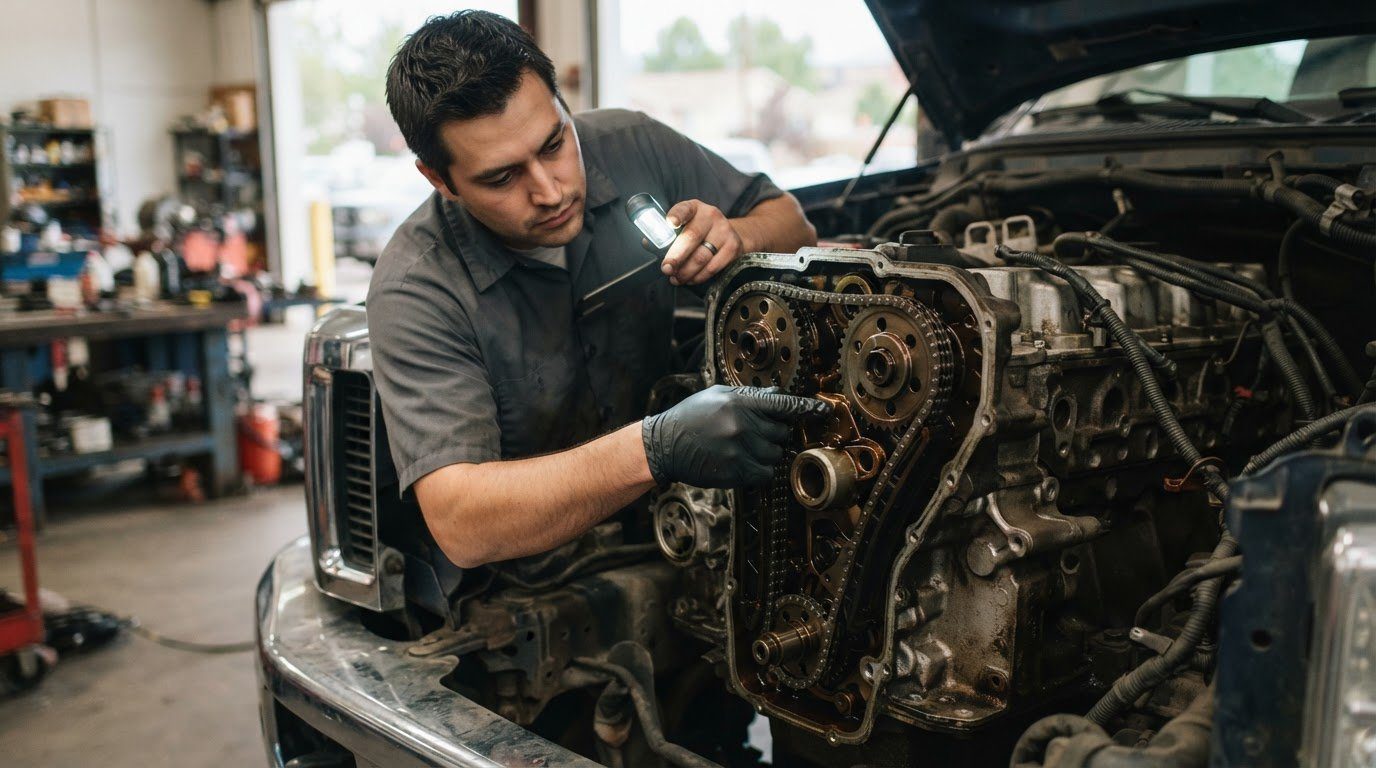
Diagnosing a Stretched Timing Chain on a Diesel by Its Warning Signs

A brief cold-start rattle can matter even when it quickly fades. Diagnosing a stretched timing chain on a diesel means weighing that sound alongside camshaft or crankshaft correlation codes, engine performance, and oil condition. No single warning sign proves the chain is stretched, because sensor faults, low oil pressure, or other engine issues can produce similar symptoms.
If you’re concerned about a rattle or check-engine light, you’ll want clear evidence before deciding what to do next. This guide explains how technicians assess possible timing-chain wear, why oil pressure and maintenance matter, and how diagnostic findings help distinguish chain problems from other faults. You’ll also learn when continued operation could risk further engine damage and how preventive maintenance supports diesel reliability.
Key Takeaways
- Camshaft or crankshaft correlation codes can point to a timing issue, but they don’t prove the chain is stretched.
- A brief cold-start rattle can be an early warning; rough idle, hard starting, and reduced power add context.
- Oil condition and pressure affect chain tension, so consistent preventive maintenance matters for diesel reliability.
- For diesel fleets, tracking recurring symptoms and maintenance needs can help identify when professional engine diagnosis is needed.
Check-engine codes related to camshaft or crankshaft position
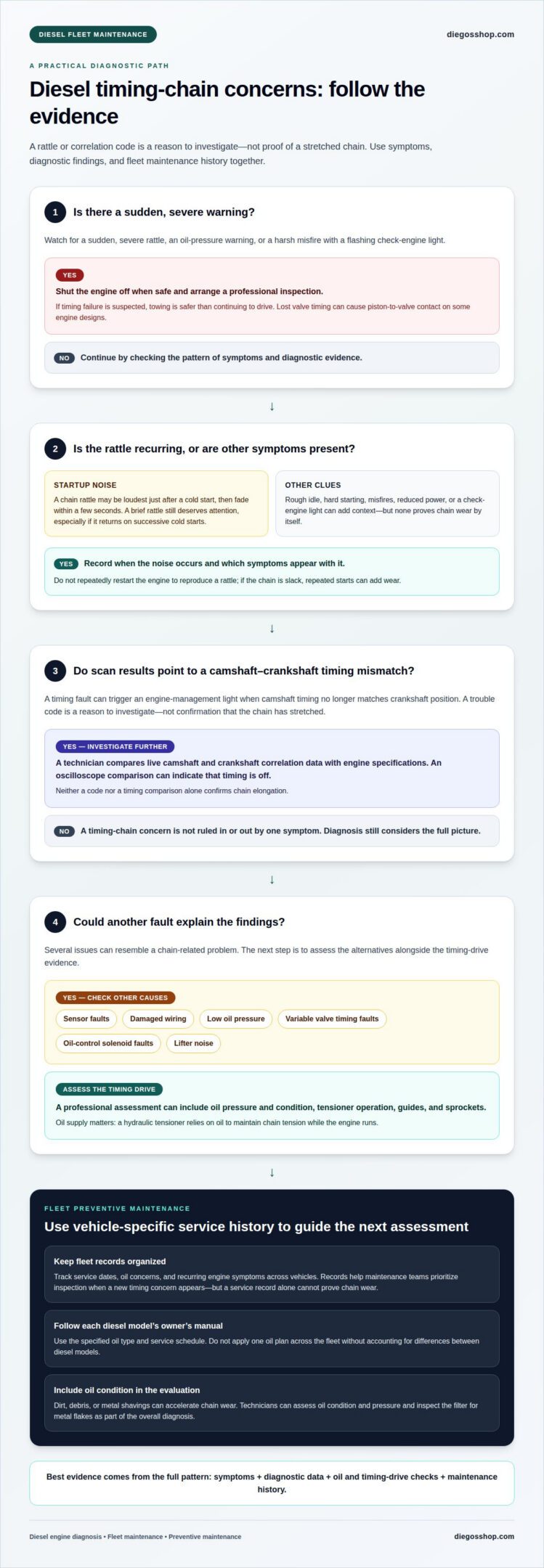
A timing-chain fault can trigger an engine-management light when camshaft timing no longer matches crankshaft position. A trouble code is a reason to investigate, not proof that the chain has stretched.
Camshaft and Crankshaft Synchronization
The timing chain links the crankshaft and camshaft, keeping valve movement synchronized with piston travel. Wear at the chain joints increases its effective length, which can shift valve timing and affect starting or power. Similar symptoms can come from other components, so diagnosis must consider the full picture.
Correlation Data and Timing Fault Codes
A technician scans trouble codes and compares live camshaft and crankshaft correlation data with the engine’s specifications. An oscilloscope comparison can indicate that timing is off, but neither finding alone confirms chain elongation. Diagnosis also considers sensor faults, damaged wiring, low oil pressure, and variable valve timing or oil-control solenoid faults, all of which can resemble a chain-related problem.
In the United States, the cost depends on engine access, labor, and the parts required. Request a quote to establish the price for diagnosis and any needed repair.
Yes. On some engines, lost valve timing can cause piston-to-valve contact and severe internal damage. The exact damage depends on the engine and how the failure occurs.
Repair time varies by engine: some jobs take a day, while others take several days and may require engine removal. A repair kit generally includes the chain, sprockets, tensioner, and guides.
If timing failure is suspected, towing is safer than continuing to drive. For a sudden, severe rattle, an oil-pressure warning, or a harsh misfire with a flashing check-engine light, shut the engine off when safe and arrange a professional inspection.
Cold-start rattling and other warning signs
A timing-chain rattle may be loudest just after a cold diesel start, then fade within a few seconds. A weak tensioner can allow chain slack before oil pressure builds, causing tapping or rattling. Worn guide edges can also let the chain move more than intended, increasing noise and wear. Even a brief rattle deserves attention, especially if it returns on successive cold starts.
Notice whether other symptoms accompany the startup noise. Chain wear can disrupt valve timing, leading to rough idling, hard starting, misfires, reduced power, or a check-engine light. These are clues, not proof of a stretched chain. A technician considers the pattern, including when the rattle occurs and whether drivability symptoms or timing-related codes appear.
Other faults can sound similar. Lifter noise and low oil pressure may cause cold-start rattling, while a weak tensioner can let the chain slacken and produce tapping that worsens over time. Checking oil pressure and tensioner operation helps distinguish a timing-drive concern from other sources. Sound alone cannot identify the faulty part, so diagnosis weighs it alongside engine behavior and other findings.
Don’t repeatedly restart the engine to reproduce a rattle. If the chain is slack, repeated starts can add wear. A sudden, severe rattle, an oil-pressure warning, or a harsh misfire with a flashing check-engine light calls for shutting the engine off when safe and arranging a professional inspection. If timing failure is suspected, towing is safer than driving, since lost valve timing can cause piston-to-valve contact on some engine designs.
Oil servicing and chain wear prevention
Fleet preventive maintenance helps managers keep oil service on schedule across diesel vehicles. A hydraulic timing-chain tensioner relies on oil supply to maintain chain tension while the engine runs, and its check valve and plunger must also function properly. For fleet accounts, consistent service records help technicians relate an engine concern to the vehicle’s maintenance history.
Follow each vehicle’s owner’s manual for the correct oil type and service schedule. Don’t apply one oil plan to an entire fleet without accounting for differences between diesel models. Contaminants such as dirt, debris, or metal shavings can accelerate chain wear. During diagnosis, technicians can assess oil condition and pressure and inspect the filter for metal flakes as part of the overall evaluation.
Organized fleet records make it easier to track service dates, oil concerns, and recurring engine symptoms across vehicles. This information helps maintenance teams prioritize inspection when a new timing concern appears. It also gives technicians useful context, though a service record alone cannot prove chain wear.
To check the oil level manually, follow the owner’s manual procedure with the engine off and the vehicle on level ground. A professional assessment can include oil pressure and condition, tensioner operation, guides, and sprockets. These findings help distinguish oil-supply concerns from timing-drive wear.
Keep diesel maintenance organized with preventive maintenance support.
Diego’s Shop
Diego’s Shop helps diesel owners and fleet operators address engine concerns with diesel engine repair, fleet maintenance, and preventive maintenance. If a cold-start rattle, timing-related code, or change in engine performance raises concern, professional diagnosis can identify the fault and guide the next repair decision.
For fleets, tracking recurring symptoms and maintenance history helps technicians assess patterns across diesel vehicles and plan preventive work. If timing-chain wear is suspected, share the warning signs and relevant service history during the assessment. This context supports a focused diagnosis rather than relying on one symptom alone.
Contact Diego’s Shop to discuss a diesel engine concern or fleet maintenance needs.
Make the next maintenance decision with confidence
For a diesel vehicle or fleet, a developing engine concern is also a maintenance planning issue. A professional assessment can determine whether the timing drive needs attention and inform the next repair decision. That’s the practical value of diagnosing a stretched timing chain on a diesel before a suspected fault disrupts vehicle use.
Diego’s Shop provides diesel engine repair, fleet maintenance, and preventive maintenance for diesel owners and fleet operators. For a fleet, discussing recurring engine concerns alongside maintenance planning helps connect repair decisions to each vehicle’s service needs.
Contact Diego’s Shop to discuss your diesel engine or fleet maintenance needs, and take the next step toward a clear plan.
Frequently Asked Questions
What Are the Causes of Timing Chain Problems?
Timing-chain wear develops as repeated engine use wears the pins, bushings, and plates at the chain joints, increasing its effective length. High temperatures and pressure also stress the chain over time. Poor oil condition can contribute, since dirt, debris, or metal particles accelerate wear; inadequate oil supply can also affect tensioner operation. Worn guides or sprockets, and a failing tensioner, can compromise the timing drive too.
What are the symptoms of a stretched timing chain in a diesel engine?
Possible signs include startup rattling, hard starting, rough idling, misfires, reduced power, and a check-engine light. For example, recurring startup noise alongside rough running gives a technician more reason to investigate the timing system than one symptom alone. These signs can also stem from other engine faults, so their pattern and diagnostic findings guide the assessment.
How can a professional diagnose timing chain stretch on a diesel without removing the engine?
To diagnose a stretched timing chain on a diesel without removing the engine, a professional can combine a trouble-code scan, live camshaft and crankshaft data, and an oscilloscope comparison. The assessment can also cover oil pressure and condition, along with related components. On some modern diesel models, the chain is at the rear, making direct inspection difficult.
How does a professional measure diesel timing chain elongation or wear against manufacturer specifications?
A technician follows the manufacturer’s procedure and published limits for the specific engine. There is no universal slack measurement that confirms elongation across diesel models. Assessment can include timing-mark alignment, chain slack, tensioner function, and guide and sprocket condition. Engine design determines access, so the inspection method and acceptable limits depend on the vehicle’s engine model.
What diagnostic trouble codes and scan-tool readings indicate a stretched diesel timing chain?
Camshaft-to-crankshaft correlation faults and timing-related engine-management codes can prompt an inspection of the timing drive. When diagnosing a stretched timing chain on a diesel, a technician reviews live correlation data and may compare sensor signals with an oscilloscope. No reading alone proves elongation: sensor or wiring faults, variable valve timing problems, oil-control solenoids, and low oil pressure can produce similar patterns. Interpretation depends on engine-specific data.