
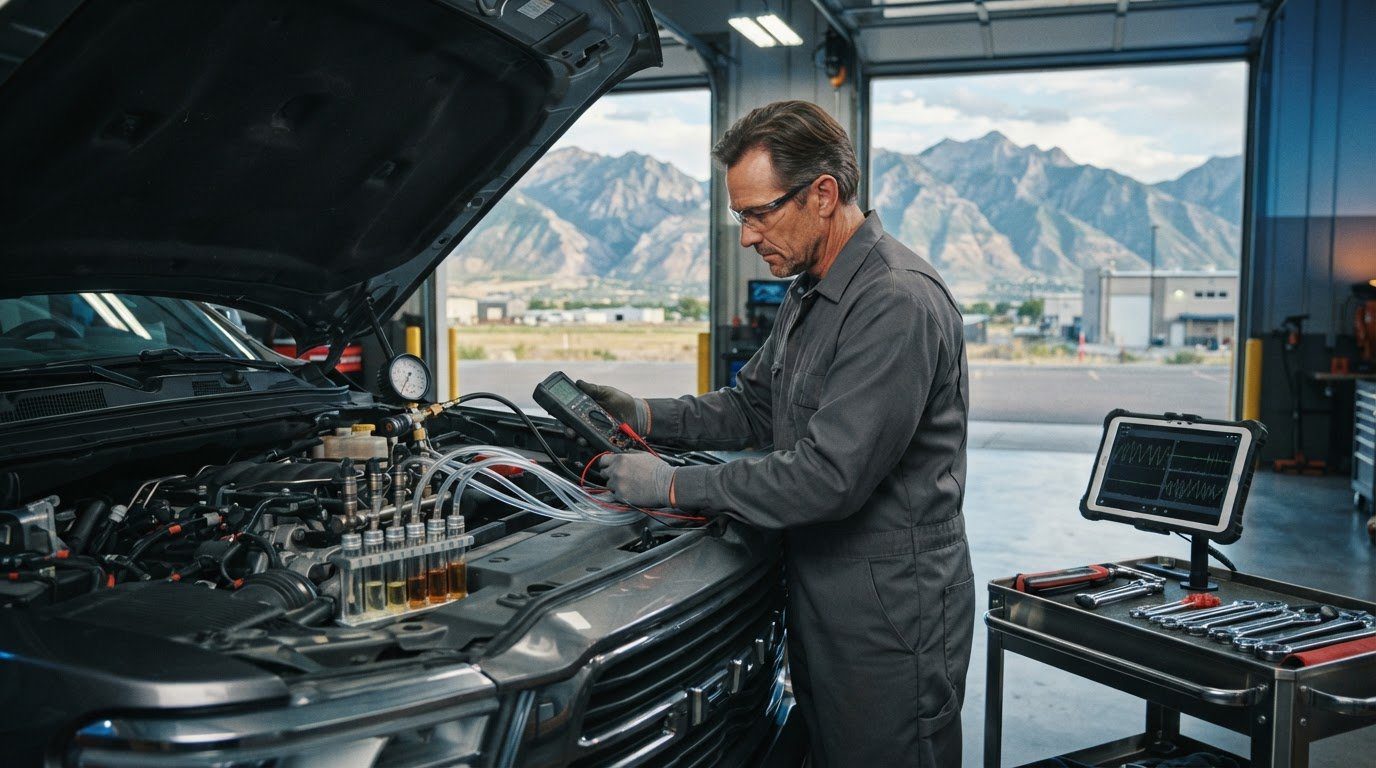
Common Rail Diesel Injector Failure Analysis: Symptoms, Testing, and Next Steps

A rough idle, hard start, smoke, or falling fuel economy can point to an injector, but none proves one has failed. Sound common rail diesel injector failure analysis separates symptoms from causes, since wiring faults, fuel contamination, or a high-pressure pump problem can create similar signs.
For fleet operators, an unverified diagnosis can mean avoidable repairs and more time out of service. The right next step is a systematic assessment, not replacing injectors based on symptoms alone. This guide explains what common warning signs can indicate, how checks such as cylinder contribution, back-leak flow, and electrical testing help narrow down the fault, and why the rest of the fuel system matters. You’ll also learn how accurate diagnosis supports preventive maintenance and more reliable fleet planning. When testing points to a repair, Diego’s Shop backs repair work with a 100% warranty.
Key Takeaways
- Use common rail diesel injector failure analysis to guide testing, not to treat a symptom as proof of a failed injector.
- Follow an ordered diagnostic process, then compare readings with the correct manufacturer service information for that engine.
- Include fuel condition and other contributing system faults in repair planning to help prevent recurring problems.
- Document findings and follow-up as part of fleet preventive maintenance and better-informed service planning.
Common rail diesel injector failure symptoms: clues, not a diagnosis
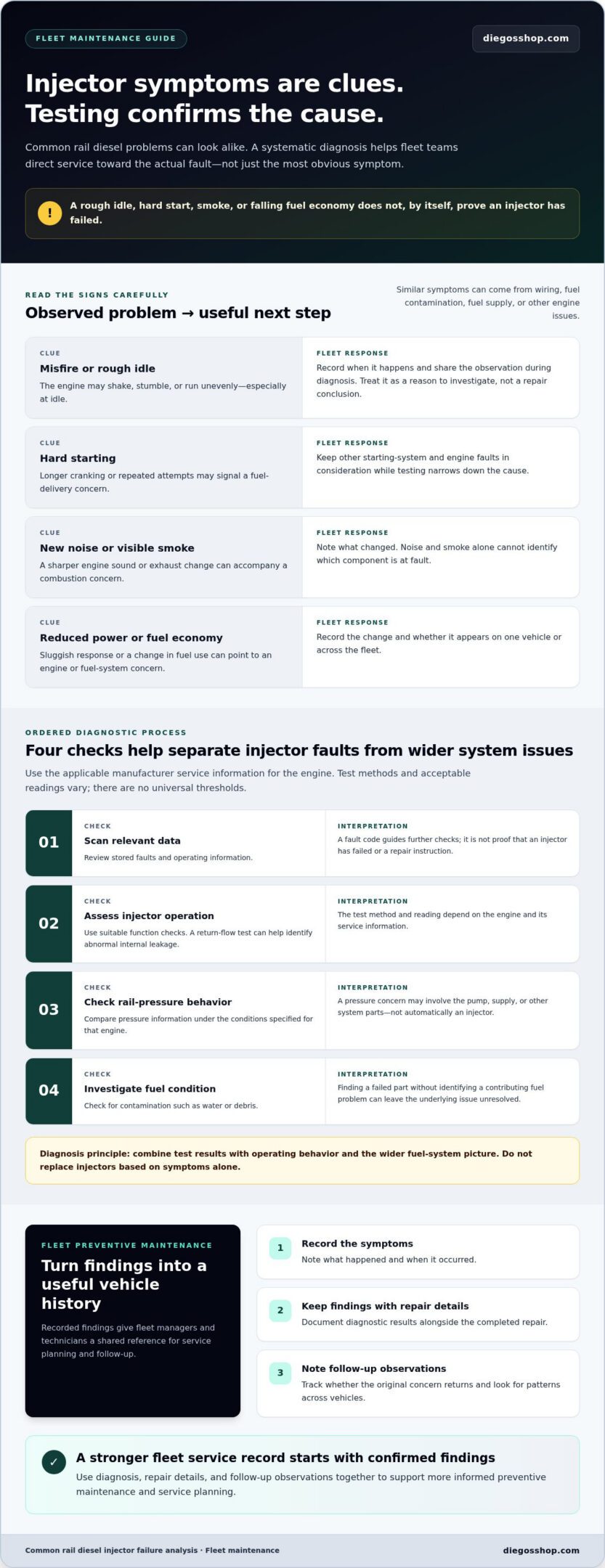
Rough running, hard starting, smoke, reduced power, or poor fuel economy can raise concern about a common rail injector. These signs are useful clues, but they don’t confirm the cause. Air or fuel supply problems, electrical faults, or other engine issues can produce similar behavior. Replacing injectors based on symptoms alone risks missing the fault that needs attention.
A symptom tells you what the engine is doing; testing determines whether an injector is responsible. That distinction matters for fleet maintenance: a sound diagnosis helps direct service toward the actual problem instead of adding unnecessary work.
Which symptoms can point to a common rail injector problem?
Use changes in how the engine starts, runs, and responds as reasons to investigate. Note when they occur and whether they affect one vehicle or appear across a fleet. That context can help technicians assess the problem.
- Misfire or rough idle: The engine may shake, stumble, or run unevenly, especially at idle. An injector concern is one possibility, not a conclusion.
- Hard starting: Longer cranking or repeated attempts to start can signal a fuel-delivery issue, but other starting-system or engine faults may also be involved.
- Unusual combustion noise: A new knock or sharper engine sound deserves attention. Noise alone can’t identify which component is at fault.
- Smoke: Visible exhaust changes can accompany poor combustion. Their appearance doesn’t prove an injector has failed.
- Reduced power or fuel economy: Sluggish response or a change in fuel use can point to an engine or fuel-system concern. Fleet operators can record these changes and share them during diagnosis.
Good common rail diesel injector failure analysis starts with these observations, then uses testing to confirm or rule out an injector fault. For motorists seeking professional vehicle inspection and repair services in New Zealand, platforms like My Auto Shop connect drivers with certified mechanics for accurate diagnostics.
How technicians analyze common rail diesel injector failure
A reliable diagnosis moves from electronic information to component checks, then considers the fuel system as a whole. A fault code narrows the investigation, but it doesn’t prove that an injector has failed. Technicians interpret codes alongside test results and the engine’s operating behavior.
What tests help separate injector faults from wider fuel-system problems?
- Scan relevant data. Computerized diagnostics can show stored faults and operating information that help direct further checks. A code is a starting point, not a repair instruction.
- Assess injector operation. Technicians evaluate how the injectors perform using suitable function checks. A return-flow test can help identify abnormal internal leakage, but its method and interpretation depend on the engine.
- Check rail-pressure behavior. Compare pressure information under the conditions specified for that engine. A pressure concern may involve the pump, supply, or other parts of the system, so it shouldn’t automatically be blamed on an injector.
- Investigate fuel condition. Check for contamination, such as water or debris, that could affect fuel-system components. Finding a failed part without identifying a contributing fuel problem can leave the underlying issue unresolved.
Test methods and acceptable readings vary by engine. Technicians should use the applicable manufacturer service information rather than rely on universal thresholds. AutoTechnician’s overview of Causes and Symptoms of Common Rail Injector Failure also discusses why failure analysis should consider more than the injector alone.
For fleet operators, recording diagnostic findings can help guide repair decisions and maintenance planning. If testing points to a diesel fuel-system concern, diesel fuel-system diagnostics and repair can help move the vehicle toward a confirmed next step.
From confirmed injector findings to fleet repair and prevention
Once testing confirms an injector fault, repair planning should follow the evidence. Technicians also need to investigate contributing fuel-system conditions, such as contamination or another fault that could affect the repair. Addressing the confirmed problem without considering its cause may leave fleet managers with an incomplete service plan.
For fleet accounts, recorded findings can help identify patterns across vehicles and support more informed maintenance decisions. A consistent fleet maintenance plan helps organize service history and follow-up. For broader repair context, see this guide to diesel engine repair.
How can fleet maintenance reduce repeat injector-related disruption?
Keep useful records for each vehicle, then use them when planning follow-up and preventive maintenance. A clear history gives fleet managers and technicians a shared reference point, whether tracking fuel system performance or scheduling routine servicing like a commercial vehicle transmission flush Auckland fleets rely on for demanding operating cycles.
- Record the symptoms and when they occur.
- Keep diagnostic findings with the completed repair details.
- Note follow-up observations, including whether the original concern returns.
Diego’s Shop provides diesel diagnostics, fuel-system repair, and Preventive Maintenance programs for diesel vehicles and fleets. This systematic approach to common rail diesel injector failure analysis can support better-informed service planning without assuming every similar symptom has the same cause.
Utah County and Wasatch Front fleet operators can schedule diesel service for diagnosis and repair. Repairs carry a 100% warranty.
Put a clear service plan in motion
For a fleet, the next useful step is turning confirmed findings into a record your team can act on. Keep the diagnosis and follow-up with the vehicle’s maintenance history, so future service decisions have a reliable starting point. That discipline helps common rail diesel injector failure analysis contribute to a stronger fleet maintenance plan, rather than becoming a one-time repair decision.
Diego’s Shop focuses exclusively on diesel repair and uses computerized diagnostics to support informed service decisions. For help addressing a diesel concern and planning the right next step for your operation, arrange diesel diagnostic service with Diego’s Shop. A dependable maintenance plan starts with a clear diagnosis. Move forward with confidence.
Frequently Asked Questions
Can a fault code confirm that a common rail diesel injector has failed?
No. A code can point to a system or circuit concern, but it doesn’t always identify the injector as the cause. Share the code and any changes in how the truck behaves with the technician. Reviewing when the warning appeared and whether it returns can help place the code in context before repair decisions are made.
What are the most common signs of common rail injector failure?
Possible signs include rough idle, misfire, difficult starting, unusual combustion noise, smoke, poor fuel economy, or reduced power. Note when a concern occurs, such as during startup or while the truck is working, and whether it affects one vehicle or several. That detail helps technicians assess the engine and wider fuel system rather than relying on symptoms alone.
Can contaminated diesel fuel cause common rail injector problems?
Yes. Contamination can affect precision fuel-system components, so common rail diesel injector failure analysis should consider fuel condition as well as injector operation. If a truck develops a concern after refueling or fuel-system service, record that history for the technician. The right checks depend on the vehicle, and replacing one part may not address a contributing system condition.
When should a fleet truck with possible injector trouble be inspected?
Arrange diagnosis when starting, idle, power, smoke, or combustion-noise problems persist or begin affecting the truck’s availability. Record when the issue started and any changes noticed by drivers. Fleet operators in Springville, Orem, Provo, Spanish Fork, Payson, Nephi, Lindon, Pleasant Grove, and nearby Utah County communities can use documented findings to guide repair and preventive-maintenance planning.